Llanfairfechan

We have been introduced to the pleasures of Llanfairfechan by Jon Savage, the historian of Punk.   It’s a beautiful, early twentieth-century model development, designed by Herbert North, who lived here (his grandfather, Richard Luck, settled here in the 1850s), having previously worked as an assistant to Lutyens.   He published books on The Old Cottages of Snowdonia and The Old Churches of Snowdonia.  

His own house, Wern Isaf, but previously called ‘Rosebriers’ is the best, up on the hill and constructed on a curious inverted butterfly plan and beautifully preserved, with elaborate arts-and-crafts detailing, not big.   This is his signature over the front door:

image

Next is the Church Institute, down in the village, which North designed free of charge and where he liked to perform pageants.   They would have performed Under Milk Wood this year if it hadn’t been banned by the Thomas estate.   It was opened in 1911, incorporated a rifle range during the first world war, and still has a strong atmosphere of pre-war village life:

image

Beyond is the Churchmen’s Club, built in 1927 for the Church of England Men’s Society and now surrounded by chickens:

image

image

image

image

Above the Church Institute is The Close, a planned development of model houses, each of which was expected to cost no more than £1,000.   £1,000 could buy you a lot in those days – a small garden, a hipped-roof garage, an inglenook, all designed in a spirit of art-and-crafts utopianism.   Everyone was out trimming their hedges:

image

image

Standard

Plas Rhianfa

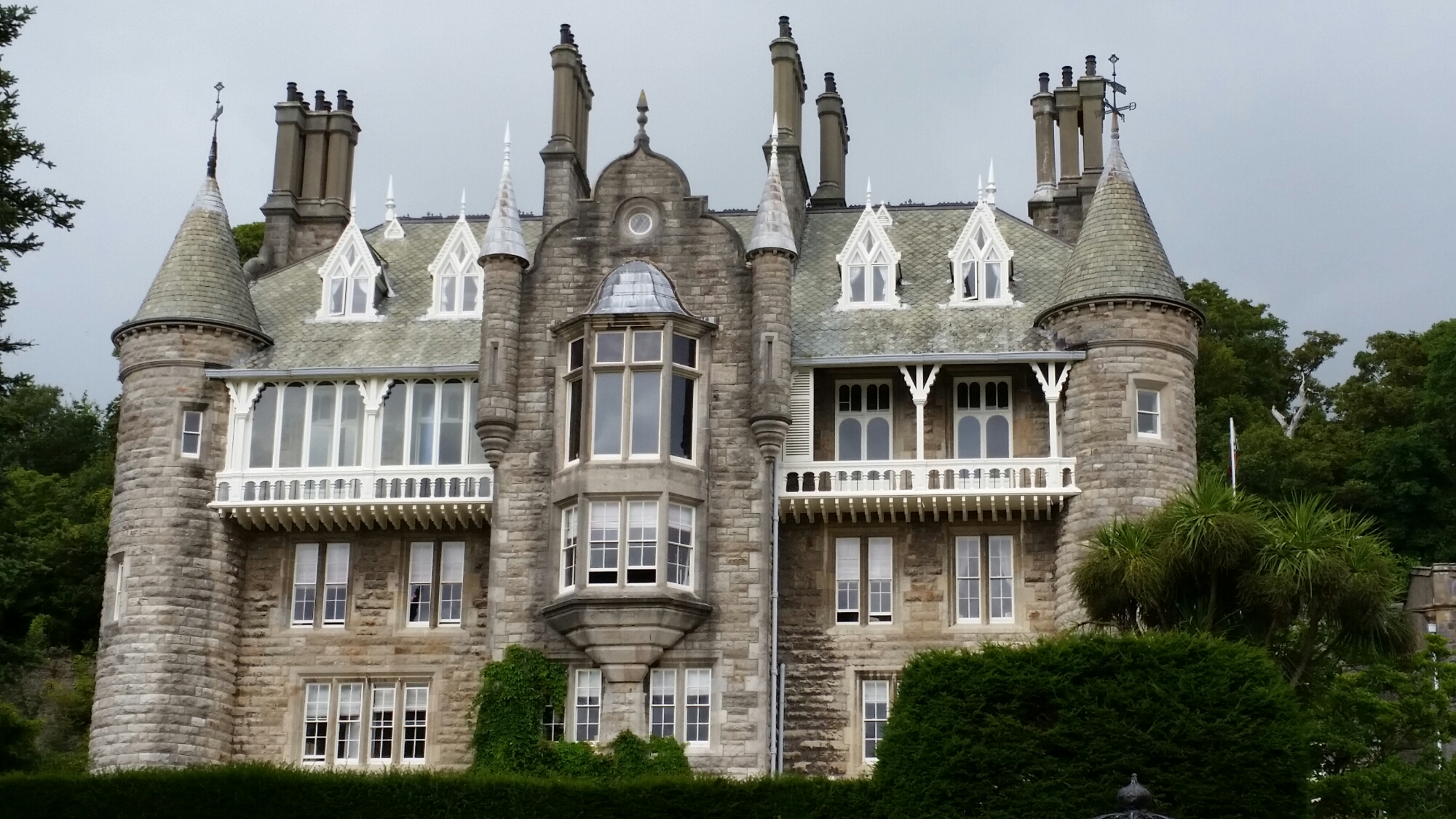
Now that it’s been converted from holiday apartments into a luxury hotel, I was able to get permission to poke around Plas Rhianfa, a François 1er chateau on the banks of the Menai Straits.   I’ve always been interested in it because my grandmother died here at the beginning of the second world war.   My grandparents were staying with Sir Harry Verney, who had served in Asquith’s government and owned Claydon.   She was buried nearby, but I’ve never been able to find the grave.

This is the house:

image

It was designed by a Liverpool architect, Charles Verelst, on the instructions of Lady Sarah Hay Williams, one of the daughters of the original owner.   She lived at Bodelwyddan and had been taught to draw by Peter de Wint.   I particularly liked the summer house: Continue reading

Standard

Llanddwyn Island

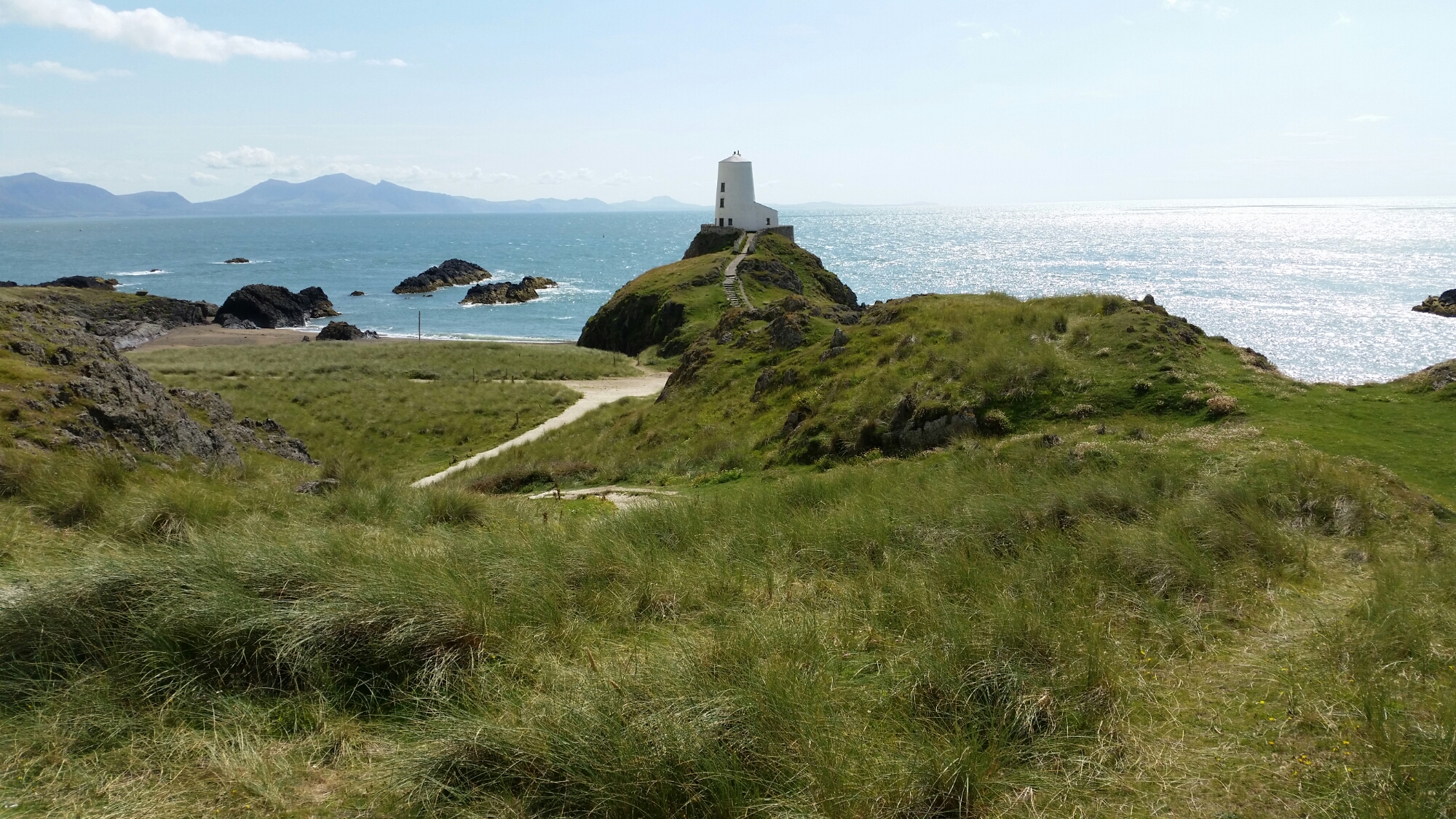
At the end of Llanddwyn Beach lies Llanddwyn Island, the site of an early Christian settlement.   Cut off by high tide, I have always regarded it as a semi-magical place with its row of four pilots’ cottages, two crosses and ruined lighthouse overlooking the Atlantic ocean.   Island of the blessed, it’s called.   Each year I cannot help but notice that access to it is more heavily policed.   I suppose that this is an inevitable consequence of increased mass tourism and the need to look after the natural habitat.  It just increases the urge to seek solitude.

This is the lighthouse, built in 1824 at the behest of the Trustees of Caernarvon Harbour:

image

image

And these are the pilots’ cottages, which had a lifeboat and a gun to summon the crew from Newborough:

image

Standard

Menai Bridge

Menai Bridge is the middle class stronghold of Anglesey, where I always assume retired Professors from the University of Bangor live and where the Duchess of Cambridge is occasionally spotted shopping in Waitrose.   There’s the noble bridge itself, a monument to Thomas Telford’s engineering skill, connecting Anglesey to the mainland for the first time on 26 April 1825:

image

Continue reading

Standard

Jeremy Hutchinson

I was summoned to the bedroom yesterday morning to listen to the voice of Jeremy Hutchinson, aged 99 and the Emeritus Professor of Law at the Royal Academy, being interviewed by Helena Kennedy.   It was the authentic voice of Bloomsbury (his mother Mary was Clive Bell’s mistress):  strong, clear, sceptical and anti-establishment, speaking up for the rights of the poor and the criminal justice system.   I knew that he had defended Lady Chatterley.   I hadn’t known that he had defended the man who stole Goya’s portrait of Wellington from the National Gallery and who got off scot free for the theft, but was put in gaol for destroying the frame.

Standard

Newborough

I like the fact that Newborough, our local village/town, was new in 1303 when Dafydd ap Gwylim described it as ‘Tref Nibwrch, tref llawn obaith’ (Newborough town, town full of hope).   It was originally the site of a royal court – a lys – and it’s been downhill ever since, although according to the Companion Guide to Wales, it was ‘once the centre of a thriving mat, cord, and net-making industry’.   Not in our time, it hasn’t been.   When we started coming in the 1970s, it had a garage, a butcher, a post office, two grocers and two small supermarkets.   Now there’s a single supermarket and so far the post office.   But this year a café has opened in what was the butcher’s:

image

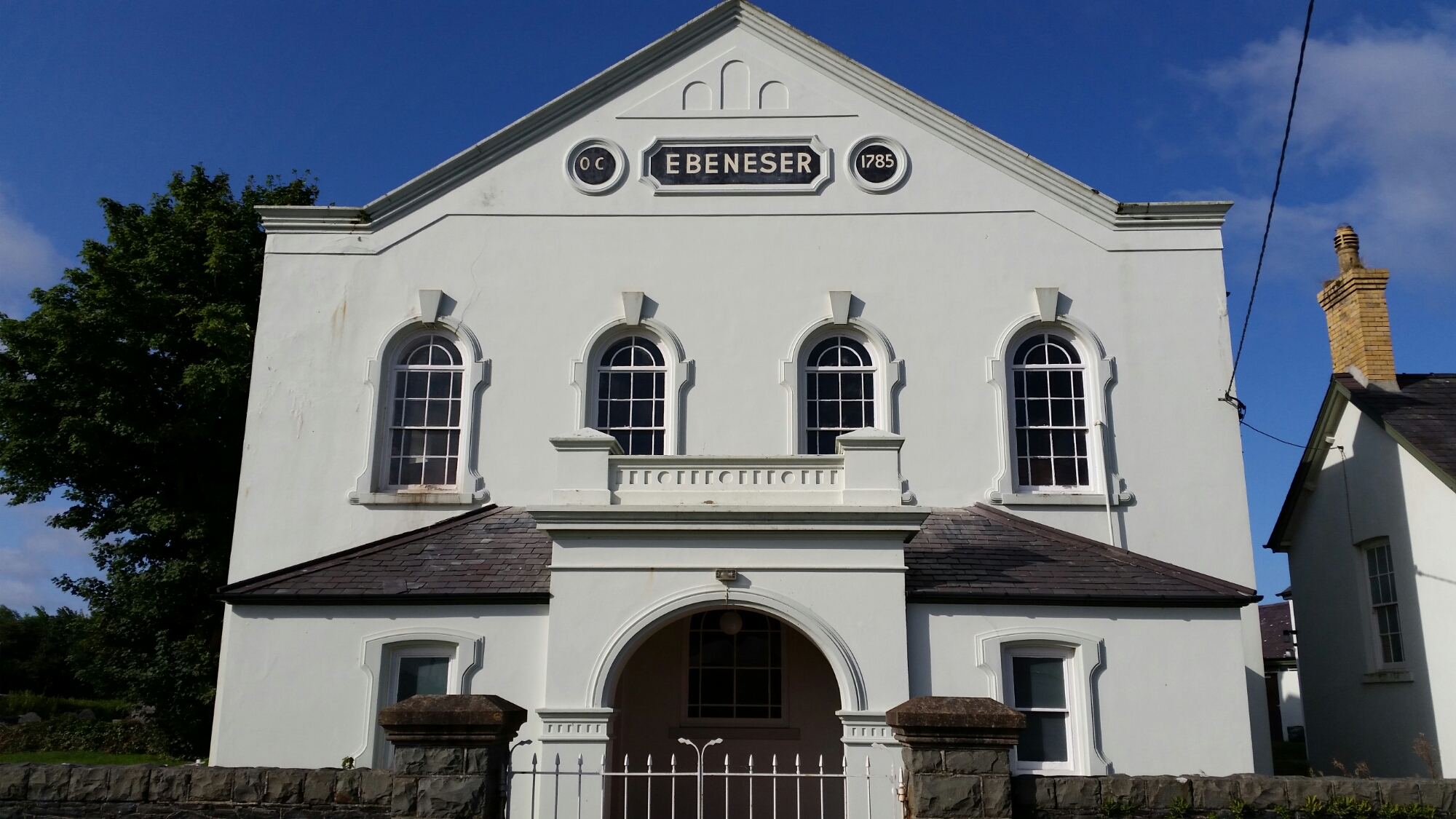
There’s the Ebeneser Wesleyan Methodist Chapel, which says 1785 prominently on the façade, but dates from the mid-nineteenth century:

image Continue reading

Standard

Maurice Wilks

We are staying, as we always stay, in the cottage where Maurice Wilks designed the land rover.   He worked for Hillman Motor Car Company in Coventry in the early 1920s and then spent two years with General Motors.   After returning to work for Hillman, he was appointed chief engineer at Rover in 1930, where his older brother was already works manager (he had previously been managing director of Hillman) and was to become managing director in 1934.   Wilks bought a smallholding on Anglesey and used an American army jeep to travel round it during the war.   He and his brother had the idea of designing a version of the jeep for British farmers which they decided to call a Land Rover.   The first land rover rolled off the assembly line on 11 March 1948.   It’s clear that Wilks belonged to a peculiarly British strand of manufacturing, strong in engineering and technical invention, more interested in high quality production than in volume, good with his hands and at carpentry.   He had the idea for the Range Rover in 1952.   So, next time I see a great Chelsea tractor, I will think of Maurice Wilks bumping around in a prototype over the boggy fields of south-west Anglesey. Continue reading

Standard

Gallinioch Bach

One of my favourite things in Anglesey is the little stall which is placed outside the gate of a local farm from which one can buy vegetables, including small tomatoes and huge cucumbers and occasionally eggs, on the basis of trust.   I like the unpredictability of it (it’s on a back road down to the Straits).   We try and go every day in order to buy something of what’s on offer.

image

Standard

Llanddwyn Beach

I got up early in order to be able to walk out to the beach.   It was stormy (the remains of Hurricane Bertha), with the wind blowing high.   But it never disappoints, the great stretch of sea from Caernarvon Castle round Abermenai Point to the ruined lighthouse on Llanddwyn Island.

This is my first view of the beach:

image

I had forgotten that my morning walk to buy the papers was six miles long:

image

Standard

Anglesey

The second half of our holiday is a retreat to Anglesey where I have been going every year for the last 41 years and Romilly for longer.   It’s not exactly Martha’s Vineyard, but has been gradually coming up in the world since the 1970s when it was hard to get to and consisted only of small seaside towns and caravan sites.   I’ve always liked it for its slightly nondescript character, flat fields and the views across the Menai Straits toward Snowdonia, and, above all, for Llanddwyn beach in the south-west corner.

We took the slow road through the mountains, up the Vale of Llangollen where the Ladies lived, along the road laid out by Thomas Telford of which some of the toll booths still survive.

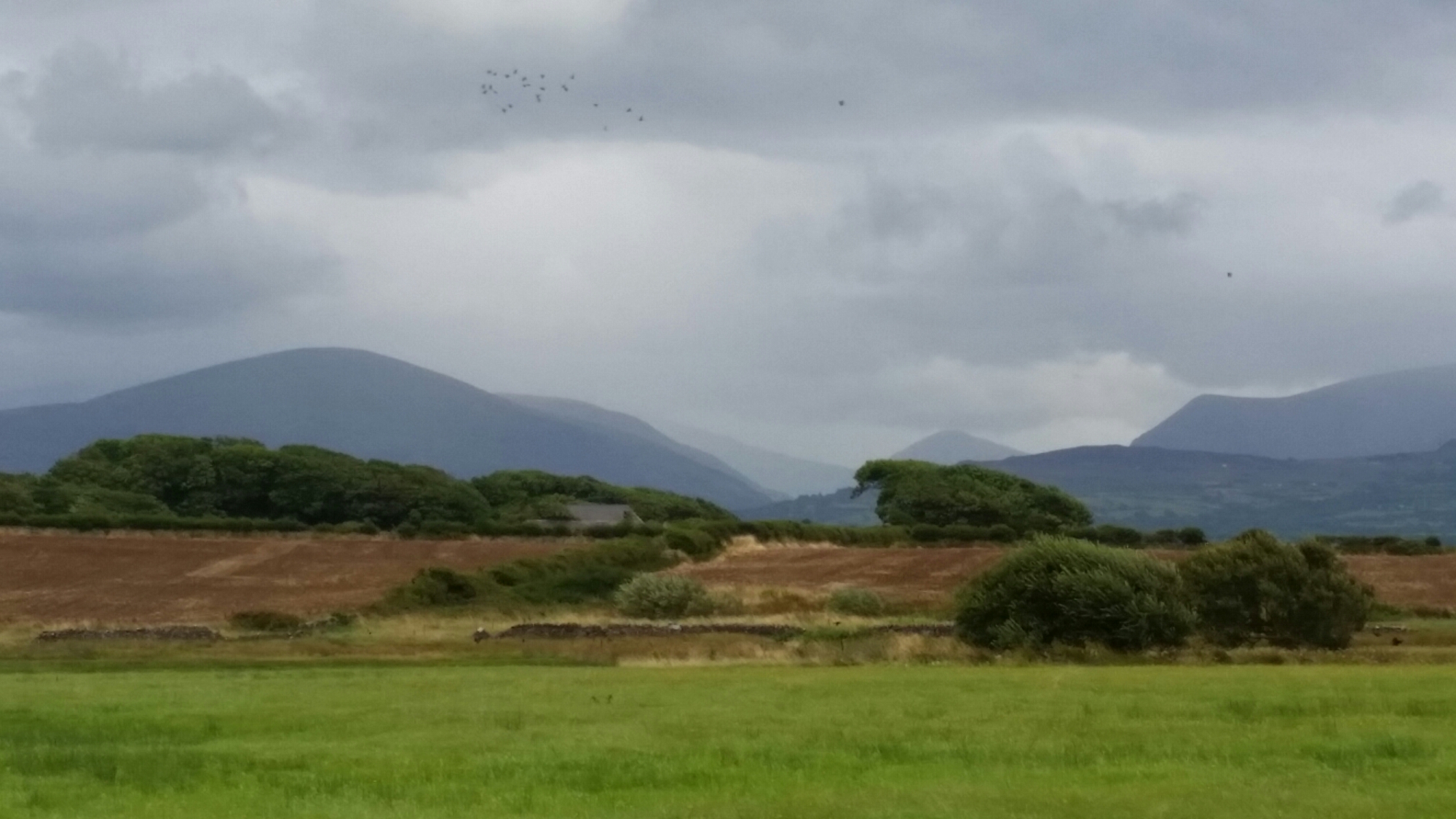
This is our first view of the mountains:

image

image Continue reading

Standard