Stephen Cox (1)

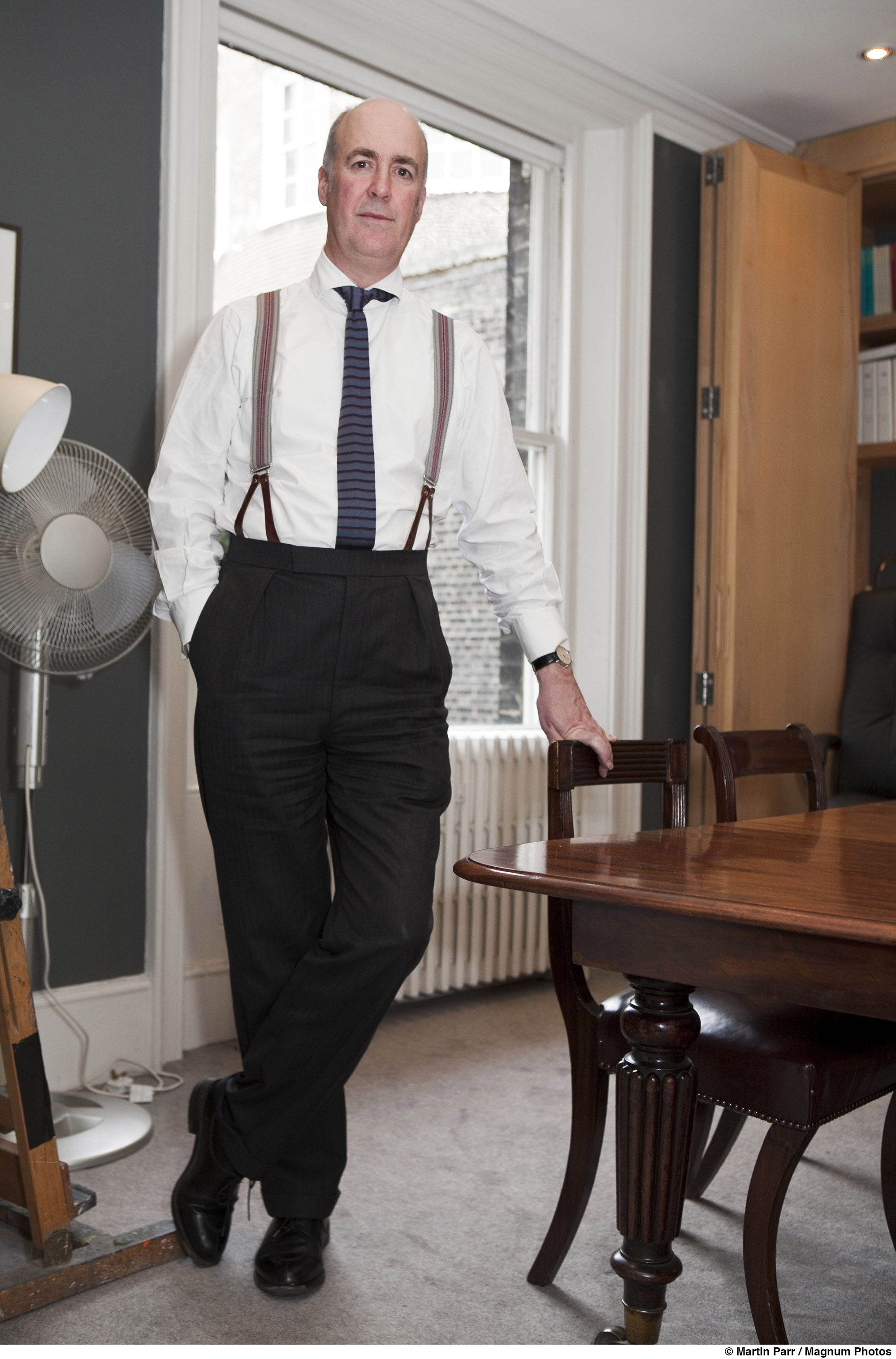
I was asked to come to the unveiling of a new work by Stephen Cox in Apple Tree Yard, where Lutyens worked on the plans for New Delhi and Wheeler’s used to be.   It’s at the back of a new building by Eric Parry, with whom Cox has worked before.   I realised that the façade of the new building is one I had recently admired in walking across St. James’s Square:  quite plain, unornamented, faced in smooth black brick at the upper levels and black porphyry on the piano nobile below, following the rhythms of adjacent buildings, with an effective, semi-classical, big basalt office building behind.

This is the building from St. James’s Square:-
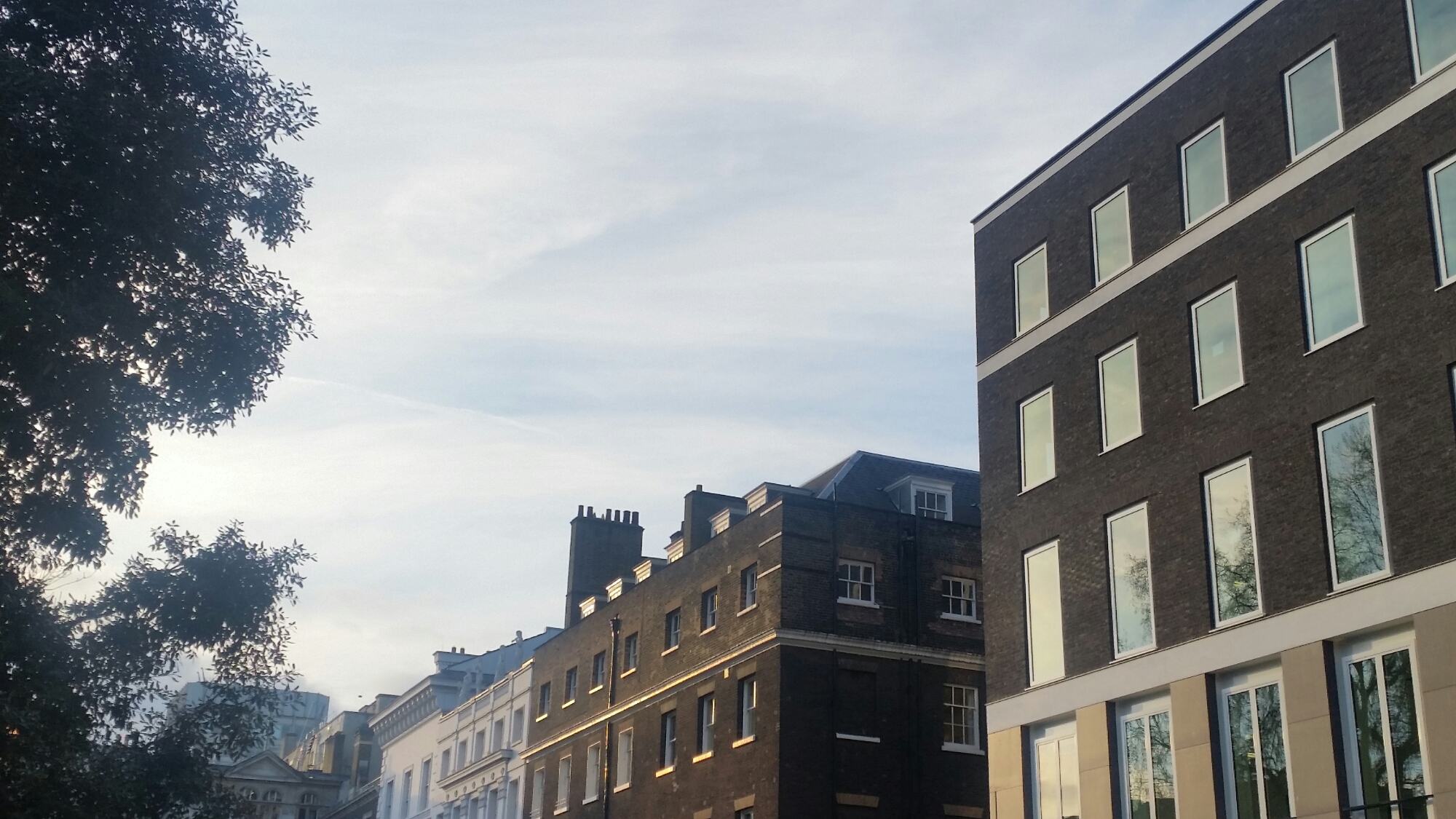
image Continue reading

Standard

John Bolding & Sons

I came out of Bond Street underground station one morning last week and noticed the elaborate terracotta sign signalling the premises of John Bolding & Sons, of Grosvenor Works in Davies Street.   It was a company founded in 1822 in South Molton Lane, a manufacturer and supplier, as the sign says, of sanitary appliances – the highest quality basins and baths to the residents of Mayfair and beyond, made often in brass and technologically sophisticated.   It bought out its rival, Thomas Crapper, in 1966, only to go bust three years later:-

image

Standard

The Upholsterer’s Room

We had dinner tonight in the Upholsterer’s Room at the back of A.V.Fowlds, a café in Addington Square off the Walworth Road.   It was cold, lit by braziers, but magnificently nineteenth century, with a lorry parked inside and thirty people squished in to eat:-

image Continue reading

Standard

Bermondsey (2)

We went on an expedition to see an exhibition of knitting at the Fashion and Textile Museum in Bermondsey High Street.   I had never been to the museum which has an idiosyncratic coloured façade by the Mexican architect Ricardo Legorreta, but which is presumably as much an expression of its former owner, Zandra Rhodes, who established the museum:-

image Continue reading

Standard

22 Old Bond Street

One of the unexpected consequences of writing this blog is that it has made me pay more attention to buildings which I would otherwise pass by.   So it was that yesterday I realised how fine the façade of 22, Old Bond Street is, which I have walked past a thousand times without noticing.   Pevsner thinks it likely to be by William Flockhart, who worked for Ricketts and Shannon and whose office was at 27a.   He describes it as ‘outrageously lush’.   But a bit of lushness cheers up a winter’s afternoon.   By chance, David Rosen was there and told me that when he first knew it, it was the office of Hubert Givenchy:-

image Continue reading

Standard

Melvyn Tan

We went to a small concert performance by Melvyn Tan in Ravenscourt Park, the scene of the first telephone call from Brown’s.   He played Beethoven’s Piano Sonata Op 7, followed by a series of short pieces based on Bist du bei mir composed in honour of Judith Serota when she stood down as Director of the Spitalfields Festival, together with several more which Melvyn himself had commissioned, two of which were being played for the first time in the composers’ presence.   It began with a piece by Judith Weir and included work by Peter Maxwell Davies and Richard Rodney Bennett, each a small distillation of the composer’s style, variously allusive and atonal, played with flourish:

image

image

Standard

Robert S. Pirie

I have been very sorry to hear news of the death of Bob Pirie, a great book collector and anglophile, lawyer, banker, specialist in the works of Donne, and all-round colourful character.   I first met him in Boston in the mid-1970s when he invited me to lunch at the Club of Odd Volumes and I used to see him when I was in New York and vice versa.   He was one of the people involved in the early days of the American Associates of the Royal Academy.   I will miss his advice.

Standard

Late Rembrandt

I slipped into an early morning viewing of Rembrandt:The Late Works, really only to be able to commune with a small number of the greatest works before they return home:  the extraordinary Conspiracy of the Batavians under Claudius Civilis which is owned by the Royal Academy of Fine Arts in Sweden, but lent to the Nationalmuseum;  The Syndics, of course, from the Rijksmuseum;  the two portraits from the National Gallery in Washington, acquired, I note, in 1942 (there is detailed information about the provenance of these and other paintings online in order to make clear their immunity from seizure);  the astonishing Jacob blessing the Sons of Joseph from Kassel where I have never been;  and what is presumed to be his last work, Simeon with the Infant Christ in the Temple, also from Stockholm, so profound even if, or perhaps because, unfinished.   As rich an exhibition as I’ve seen in a long while.

Standard

Brown’s Hotel

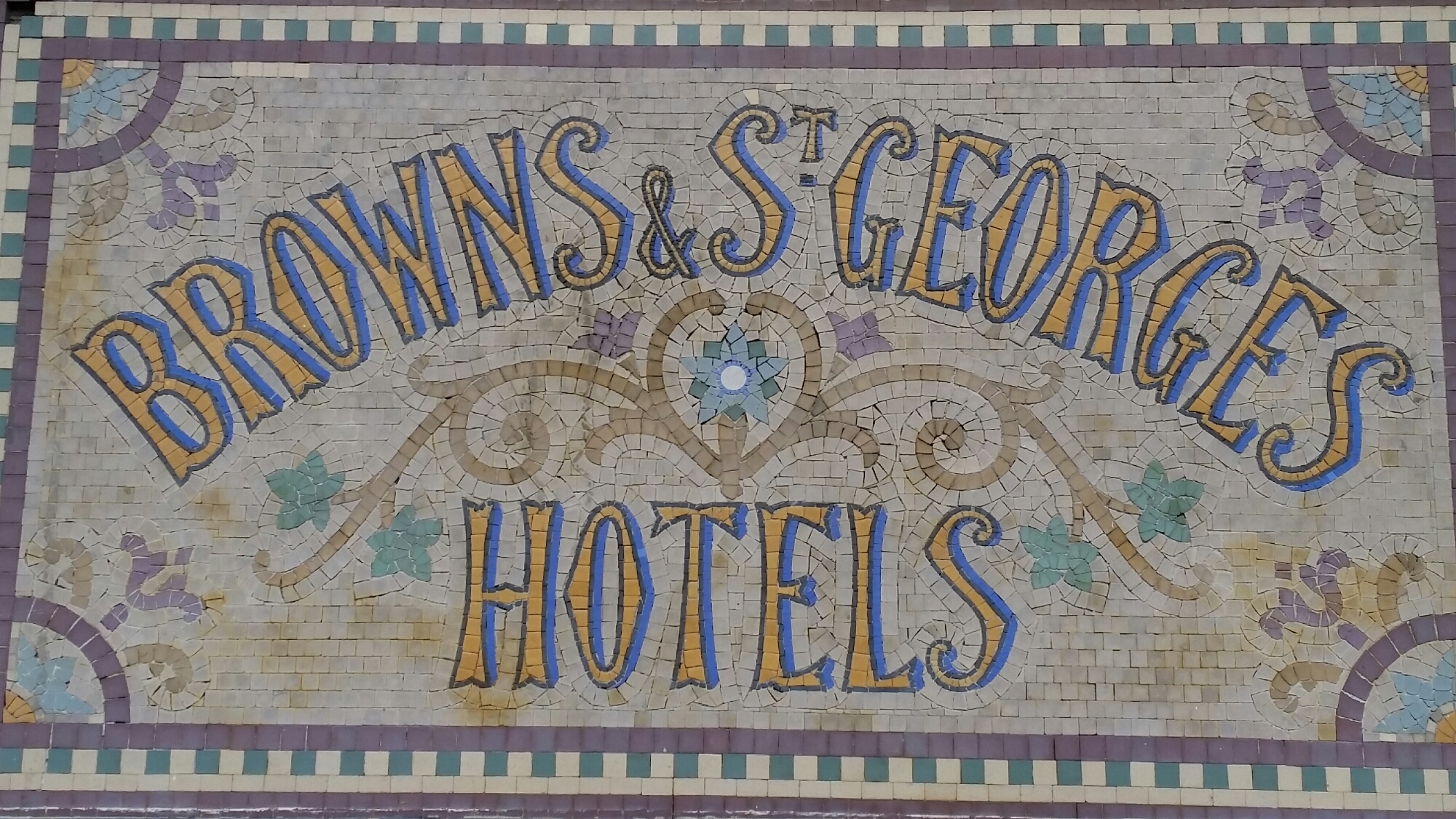
As I was walking past Brown’s Hotel at lunchtime today, I noticed, which I never had before, that there are mosaic plaques along the façade which announce that it is Brown’s and St. George’s Hotel.   Brown’s itself was opened by Lord Byron’s butler in 1837 (or was he his valet ?) and his ambitious wife Sarah, who had been Lady Byron’s maid.   In 1859, it was taken over by James Ford, who had owned stables in Oxford Street, before setting up Ford’s Hotel in Manchester Square.   In 1889 (at least this is the date given in The London Encyclopedia) his son, Henry Ford, who had been the recipient of the first telephone call ever made in 1876 by Alexander Graham Bell from Brown’s, was able to buy St. George’s Hotel on Dover Street behind.   The plaques mark the moment of the opening of the new stucco front when the two hotels were combined:

image

Standard

Die schöne Magelone

We went to Die schöne Magelone, a seldom performed song cycle by Brahms:  seldom performed not because they are not wonderful musically, but because it is not clear what the connecting narrative should be and if it should be in German.   On this occasion, the narrative was supplied by Iain Burnside (in English).   He gave one an understanding of the chivalric adventure, half explaining what was going on, but not so as to diminish the singing of Roderick Williams, who afterwards was awarded an honorary degree.

Standard