I have fallen behind on my choice of paintings for the Director’s Cut of the Public Catalogue Foundation. I wanted to include Jean Cooke’s self-portrait entitled Et jamais je ne pleure et jamais je ne ris (it’s a phrase from Baudelaire’s Fleurs du mal) because, when I arrived at the Royal Academy, she dominated the meetings of the General Assembly. Extremely small, she had a squeaky voice. Whatever she said was treated with awe. She lived in a cold cottage in Birling Gap, had been married to John Bratby (of kitchen sink fame) and once drove a Morgan.
Tag Archives: London
Catherine Goodman (12)
What is it that is so satisfying about sitting for one’s portrait. Many people will think that it’s simply vanity, the delayed gratification of being depicted for posterity. But it’s more than that. It’s partly being allowed to do nothing, and feeling faintly virtuous in doing nothing. Then, there’s the companionship, the chitchat which accompanies a sitting. Somehow it feels like a collaboration, as if one is party to the act of portraiture by contributing to it not just what one looks like, but one’s past history. Catherine said that it was good that I had been so grumpy one sitting as this would be one strand in the portrait. It’s a composite, not just a snapshot. At least, that’s the theory.
Today was meant to be my last sitting. It’s not clear if it was. It was slightly tense because of the pressure to finish. No gossip. Short breaks. Lots of looking at the picture from a distance and in the mirror. It was too wet to judge and I still haven’t seen it.
Mozart in London
Mention of Johann Christian Bach reminds me that we should be celebrating the 250th anniversary of Mozart’s visit to London (maybe others already are). He arrived on 23 April 1764 with his father, mother, and older sister, Maria Anna. They took lodgings over a barber’s shop in Cecil Court. He was already known across Europe as a prodigy, had proposed marriage to the young Marie Antoinette, met Goethe in Frankfurt, and been introduced to Madame de Pompadour in Versailles. I like to think that Reynolds might have passed him in Frith Street (or Filth Street as it was then called).
Catherine Goodman (11)
Here we are again, bicycling through London, unable to cross Tower Bridge, weaving through Vincent Square to my morning sitting in Whistler-land. Because I was a bit early, I made a brief detour to pay my respects to Tudor House on Cheyne Walk where Swinburne lived with Rossetti. Catherine told me that all the cast of Mike Leigh’s new film about Turner had been required to take drawing lessons along the Thames. She let me take photographs of her studio. First, the bit of wall which I contemplate every sitting:
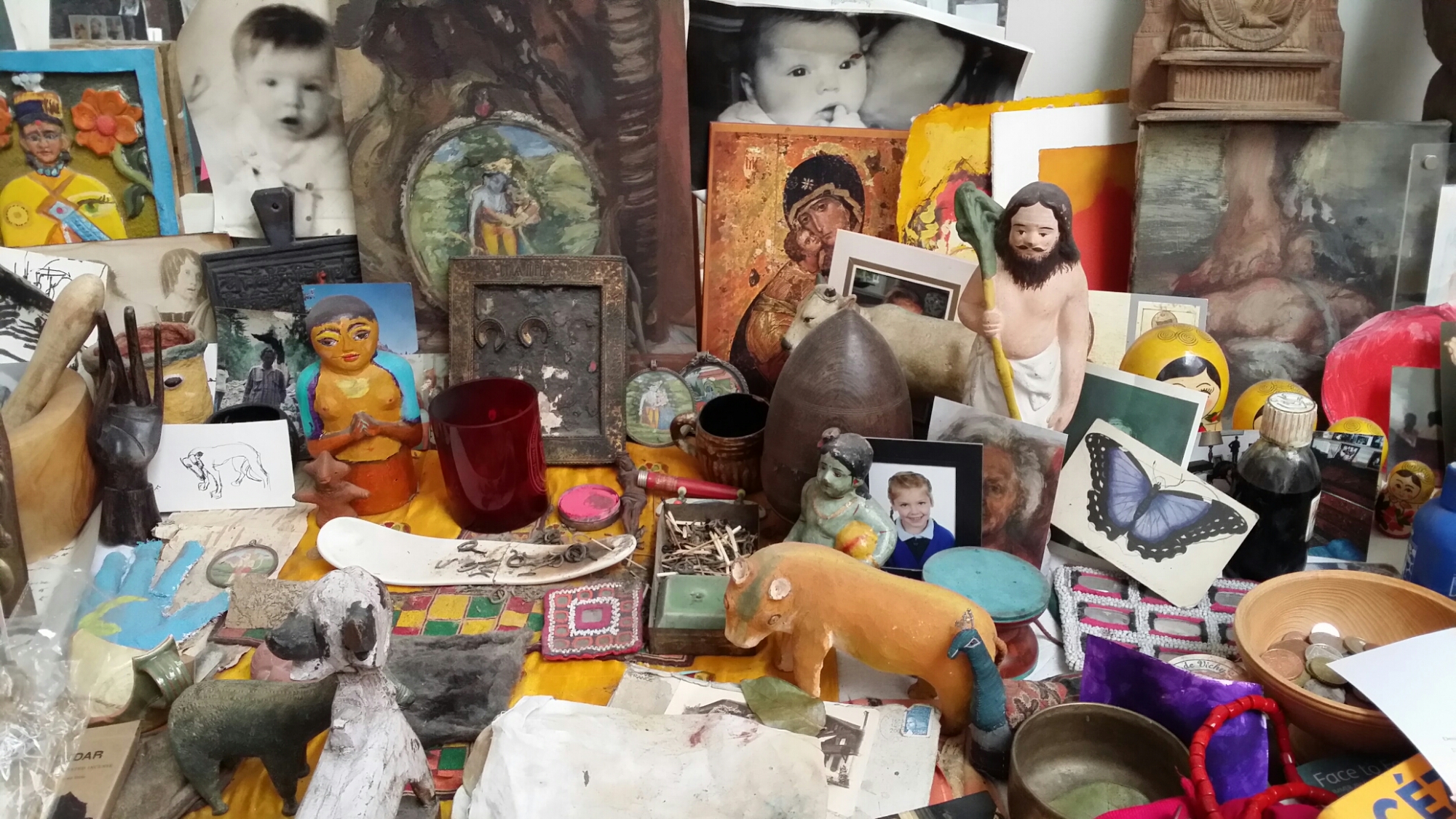
Next the table behind where she stands, which has a very characteristic mix of family photographs and relics of Indian tours:
William Kent
We finally made it to the William Kent exhibition – ‘Kentino’ as he was known by Lady Burlington. He came across as more solid and serious than I had expected, spending a seriously long time in Italy, acting partly as a dealer in pictures, a copyist and supplier of antiquities, and I had never seen the magnificent pearwood model he produced as a design for a new Royal palace. He absorbed so much of Italian baroque style that he was able to glitz up the interiors of dour neo-Palladian houses on his return. But he was a terrible painter and so much of his work was on decorative schemes that it is easier to understand his talent in the state rooms of Burlington House, in Chiswick House, Holkham and Houghton than it is in an exhibition.
Catherine Goodman (10)
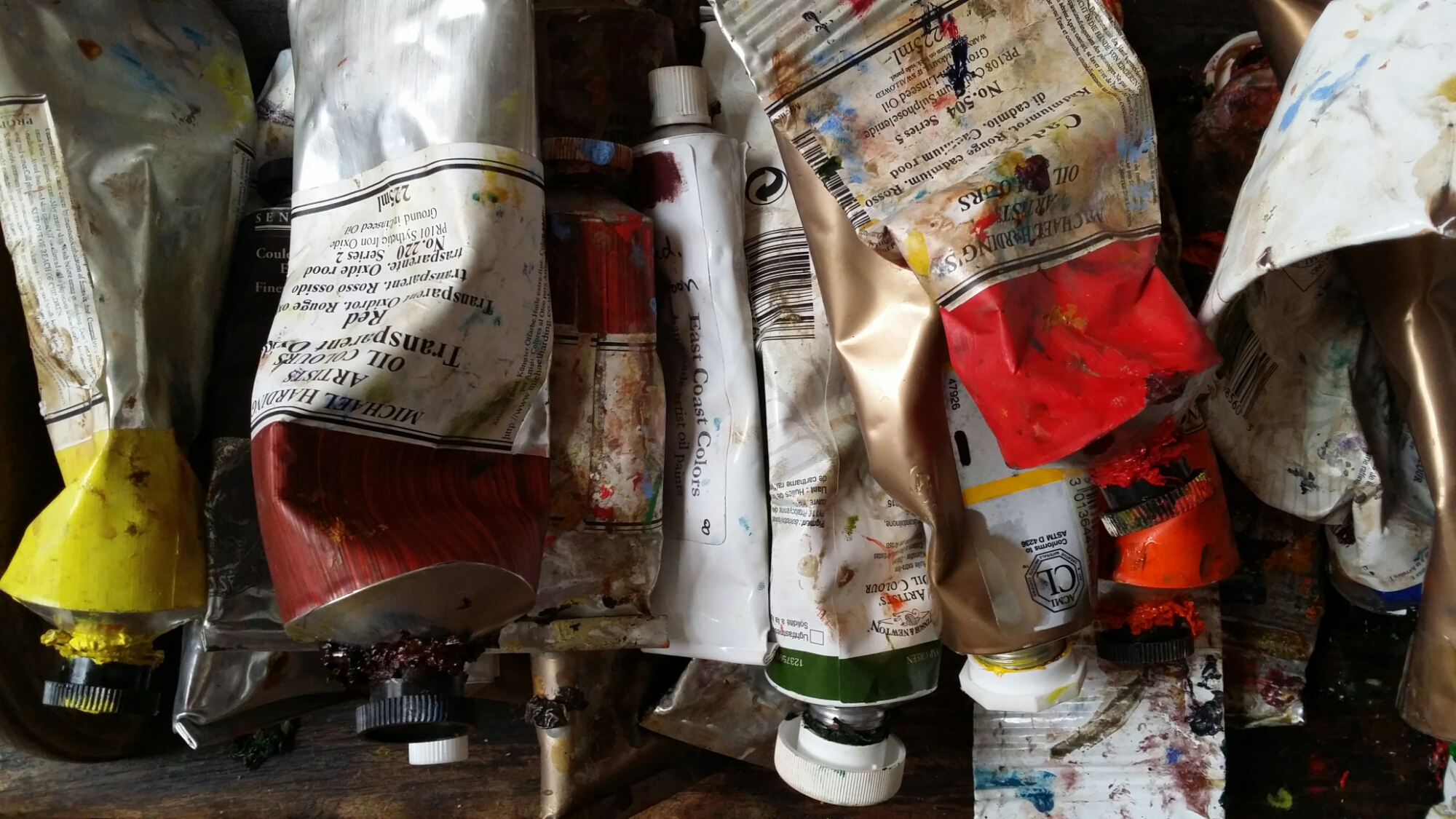
Catherine has promised to complete my portrait over the course of the bank holiday weekend. I like being back in the studio and realise that I’ll miss the sittings when they’re finished. At half time when I’m allowed a cup of coffee and a stretch, I realised that she has a spectacular array of tubes of paint. I asked how much a tube costs. She picked up a tube of red paint which cost £120. She let me photograph the tools of the trade. First, the tube of red paint:
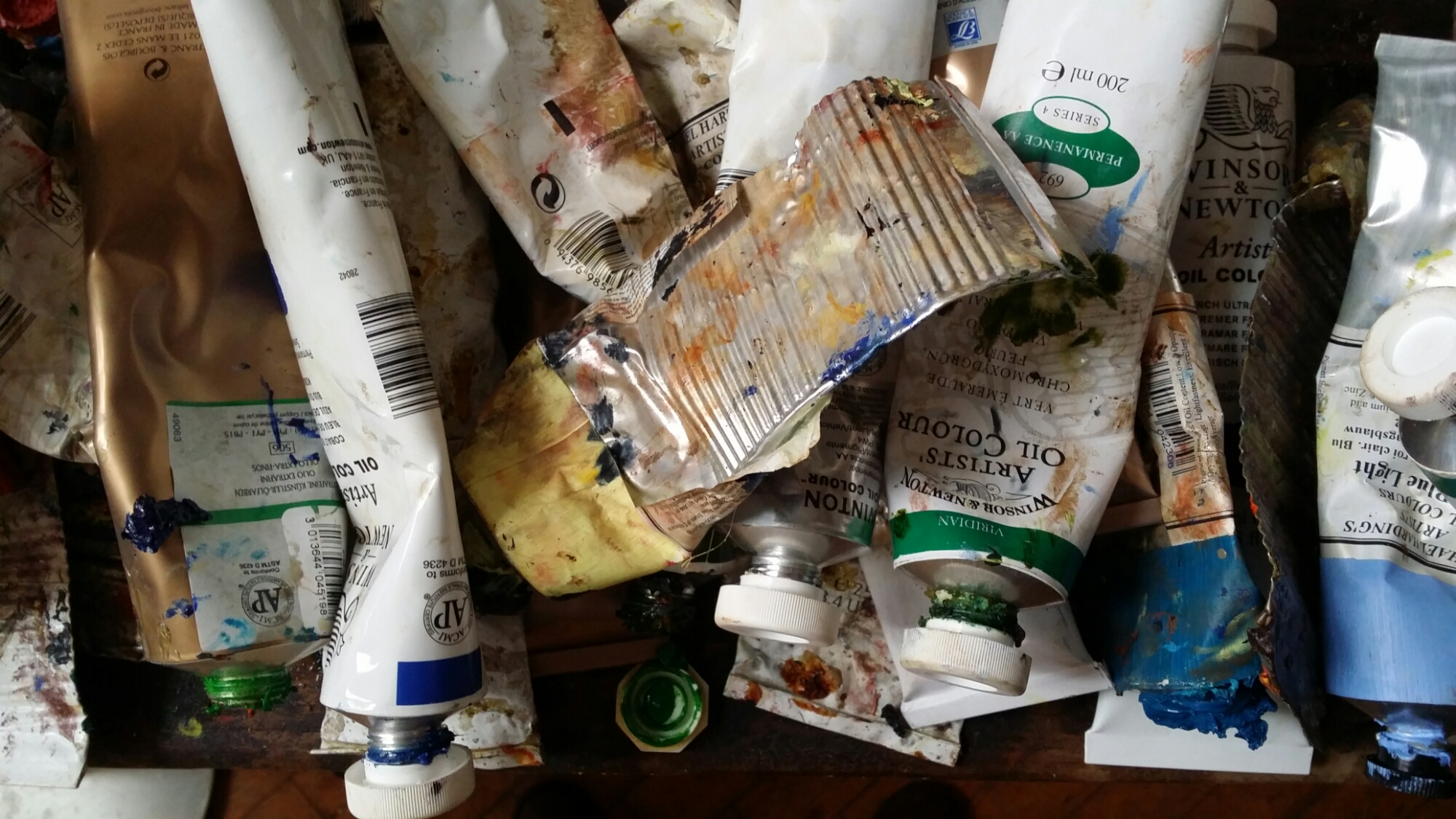
More tubes:
Then the palette from which she’s working:
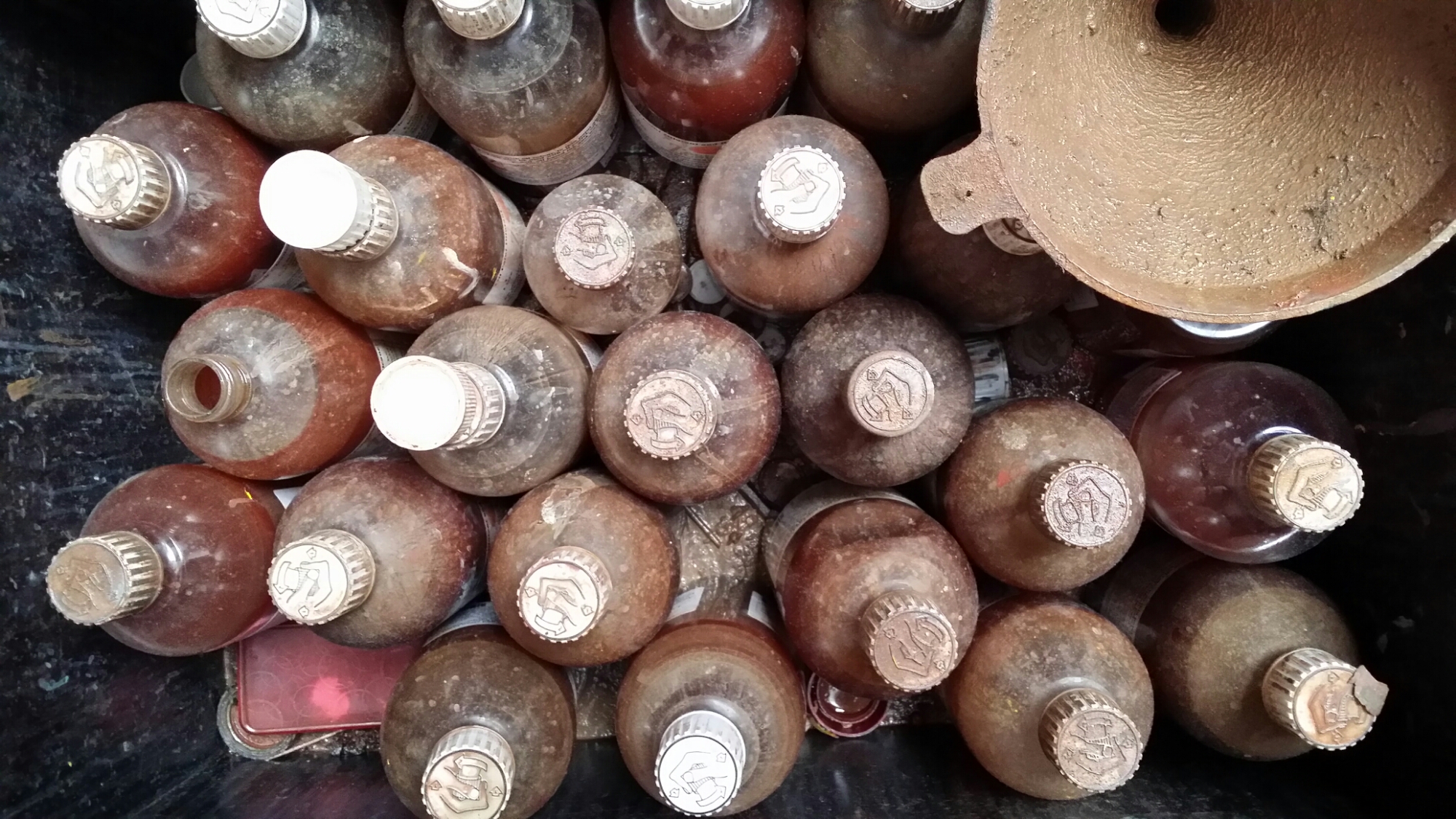
Lastly, the trunk of turps:
Johann Christian Bach
Our old friend, David Fielding, the opera director, came to supper tonight and told us about Johann Christian Bach, who arrived in London in 1762, composed a number of operas, including Carattaco, now seldom performed, became music master to Queen Charlotte, and made friends with Karl Friedrich Abel, with whom he shared lodgings in Meard Street. They organised subscription concerts on Wednesday afternoons in Carlisle House and later in Hanover Square. Abel was a friend of Gainsborough, who swapped a painting of a Pomeranian bitch and puppy (now in the Tate) for lessons on the viola da gamba. When Abel died of the drink in 1787, Gainsborough wrote how he would ‘never cease looking up to heaven…In hopes of getting one more glimpse of the man I loved from the moment I heard him touch the string’.
Kenneth Clark (2)
I have thought many times in recent weeks of the two occasions when I met Kenneth Clark. The first must have been in 1981 when we were invited to stay by friends in a small pavilion at Parfondeval in the farming hinterland outside Dieppe. As we were having a drink in the evening, I looked across the lawn and saw a familiar figure sitting on the terrace of the chateau in a bath chair. It was Kenneth Clark. He and his second wife Nolwen lived in the other pavilion. A plan was hatched that I might look at the many lectures he had given on the subject of modern art and not long afterwards I visited them in their bungalow in the grounds of Saltwood Castle. There in an old steel filing cabinet was an array of lectures he had given in the 1930s. I still regret not having taken up the suggestion of publishing them. I handed over the task to Nick Coker who died not long after Clark himself. We remained friends of Nolwen and went to concerts with her at the Barbican where she encouraged us to eat ginger biscuits.
Phyllida Barlow
I was unfamiliar with Phyllida Barlow’s work until she had an exhibition in the Hauser and Wirth building next door to St. James’s Piccadilly. It was a great and glorious, adventurous mess. Not long after (in 2011) she was elected an RA. Now her work is everywhere, in the Duveen Gallery in Tate Britain, about to be in the new Hauser and Wirth gallery outside Bruton in Somerset, in Venice and Pittsburgh and West Palm Beach. I like and admire her new exhibition of drawings at Hauser and Wirth in Savile Row, which shows the intellectual discipline which underlay her early drawings, before she developed her later, doodling freedom.
Kenneth Clark (1)
This morning I went to an early morning viewing of the Kenneth Clark exhibition at Tate Britain. There he was, the great aesthete, in the portrait by Graham Sutherland, open necked and slightly dandified, also being painted on the banks of the river Alde by Charles Sims, who was dressed in a Homburg hat and spats. Clark’s taste in early Italian art is revealed as less sure than expected, including some duds he bought for the National Gallery, whilst his taste in artists of his own time was wide ranging and confident, buying work from Henry Moore’s first exhibition, by illustrators like Ardizzone and fine work by Victor Pasmore and Graham Bell (Anne Olivier Bell is described on a label as Bell’s ‘friend’, but she was also his fiancée and lover). He supported the young Lucian Freud with a grant of £500. Throughout one hears recordings of Dame Myra Hess playing at the National Gallery during the second world war.


You must be logged in to post a comment.