Tonight, I was asked to say a few words to a group who were about to have dinner in the Royal Academy Schools. I thought they might find it interesting to have a look at the picture which Johann Zoffany painted of the St. Martin’s Lane Academy not long after he arrived in London from Germany in 1760. I hadn’t looked at it carefully myself. What it shows is the most important academy in London before the Royal Academy itself. It was based in a courtyard off St. Martin’s Lane, was much more democratic than the Royal Academy (the subscription was two guineas for the first year and a guinea and a half thereafter), and more casual, a drop-in centre for evening classes in drawing. The person in the front looking out at the spectator is George Michael Moser, a Swiss artist who was committed to the community of artists and became the first Keeper of the Royal Academy. In the background, putting equipment away in a cupboard, is John Malin, who was the first member of staff of the RA.
Tag Archives: London
Janet Stone
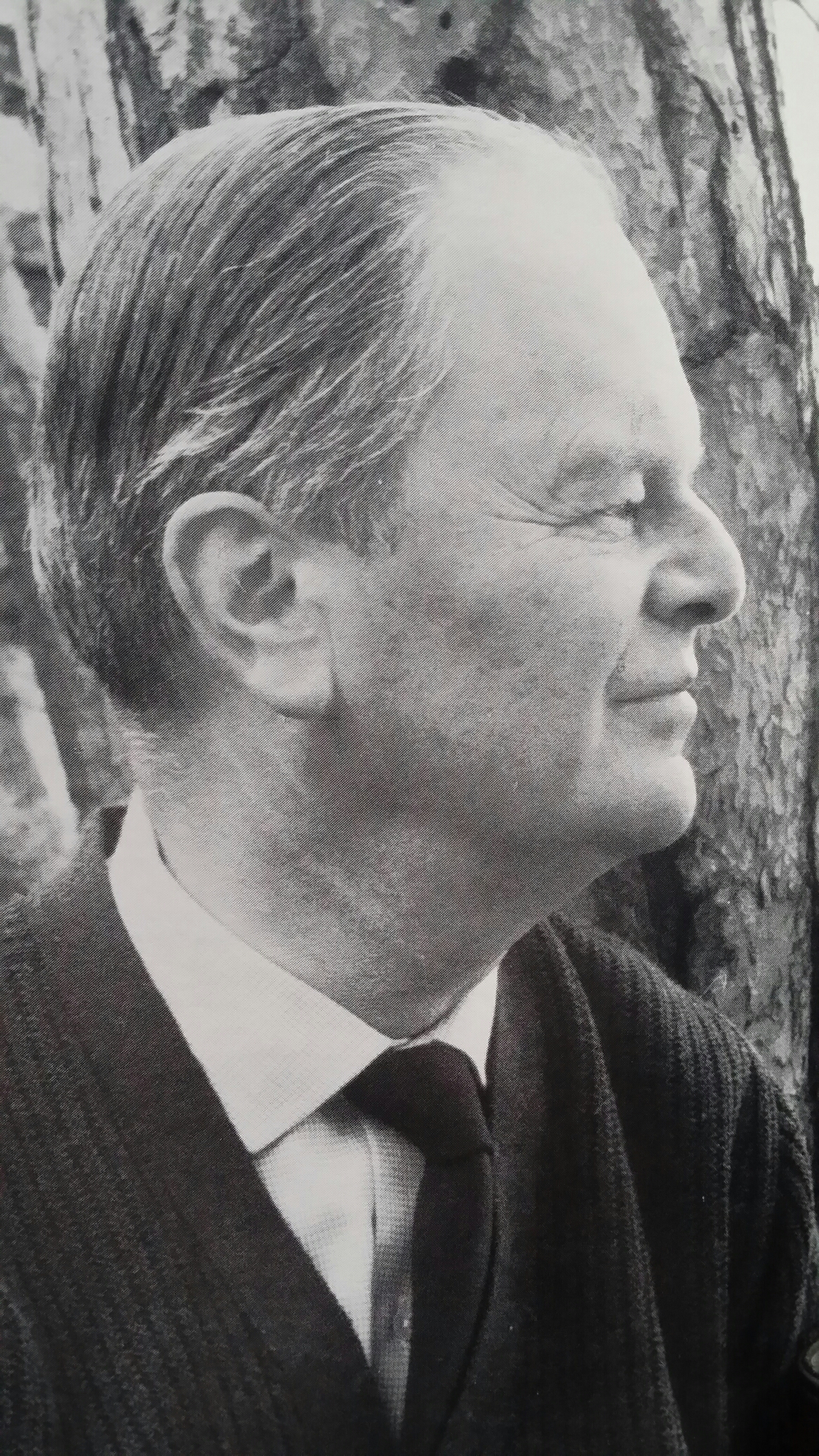
I have been investigating the career of Janet Stone in connection with a review I’m writing of the Kenneth Clark exhibition at Tate Britain. The daughter of a bishop and sister of two, she was one of Kenneth Clark’s many lovers, the recipient of more than 1,500 letters from him (currently unavailable for consultation at the Bodleian), describing herself as ‘his sink’. The wife of Reynolds Stone, the old Etonian wood engraver, they lived in the Old Rectory in Litton Cheney. She gave a collection of photographs to the National Portrait Gallery which, so far as I know, have never been exhibited. I used to see her occasionally in Salisbury in broad-brimmed Edwardian hats and remember spotting her as a guest (presumably of John Sparrow who she photographed in a tea cosy) at an Encaenia lunch at All Souls. This is her photograph of Kenneth Clark:
Janet with Daisy Gili:
Beauty
An unusual start to the day in that I was asked to chair a discussion organised by the All Party Parliamentary Group on Design on the subject of Beauty in Public Life. Luckily, chairing the session meant that I didn’t have to speak about it. Richard Rogers described how he had not been allowed by senior civil servants ever to use the word beauty and lamented the fact that policy makers and parliamentarians seldom included artists and architects. Nick Raynsford MP, the chairman of the Parliamentary Group, revealed that he was one of only two MPs who had been to art school and therefore were comfortable about speaking about art in the House of Commons. Sam Jacob, of the architectural practice FAT (soon to disband after they have provided Britain’s contribution to the Venice Biennale), talked about the experience of designing New Islington in Manchester where they had the temerity to ask the clients what they thought about beauty. The President of the Royal Academy described how he had had been a closet believer in the concept of beauty throughout his painting career. The discussion was – perhaps inevitably – inconclusive because the idea of beauty remains philosophically slippery in spite of the good efforts of Alberti and Edmund Burke. Should it be defined top down by artists and architects, as happened after the second world war, or should it be defined bottom up by engaging the public in the discussion of aesthetics ? The majority took the latter view, but recognised the difficulties of getting the civil service and politicians to engage with it.
Henry Kissinger
Some years ago, I was invited to lunch with Henry Kissinger. I wasn’t able to go. I have always regretted it. Tonight he came to the RA in celebration of his ninetieth birthday. Whatever the views of historians of his role in the past, he spoke with extraordinary authority about international relations, referring to the first mission of the British to China in the late eighteenth century and to the ideas of Bismarck in the nineteenth, talking about diplomacy with a long historical and philosophical dimension.
Sanctioning Day
One of the enjoyable rituals of the Summer Exhibition is Sanctioning Day, when members of the Summer Exhibition committee meet to approve the hang. We meet at 11 am and move from gallery to gallery. Whoever has been responsible for the hang in a room speaks to it, talking through problems and issues, pointing out where members’ work has been hung, sometimes pointing out work by artists who might be members or have been considered. Occasionally, minor suggestions are made by the President or members of the committee: how a work might be centred or a juxtaposition improved or where the work of James Turrell would look best. Then, the artist who has hung the room is congratulated, the room is sanctioned by the President, and there is a small round of applause.
Tom Stuart-Smith (1)
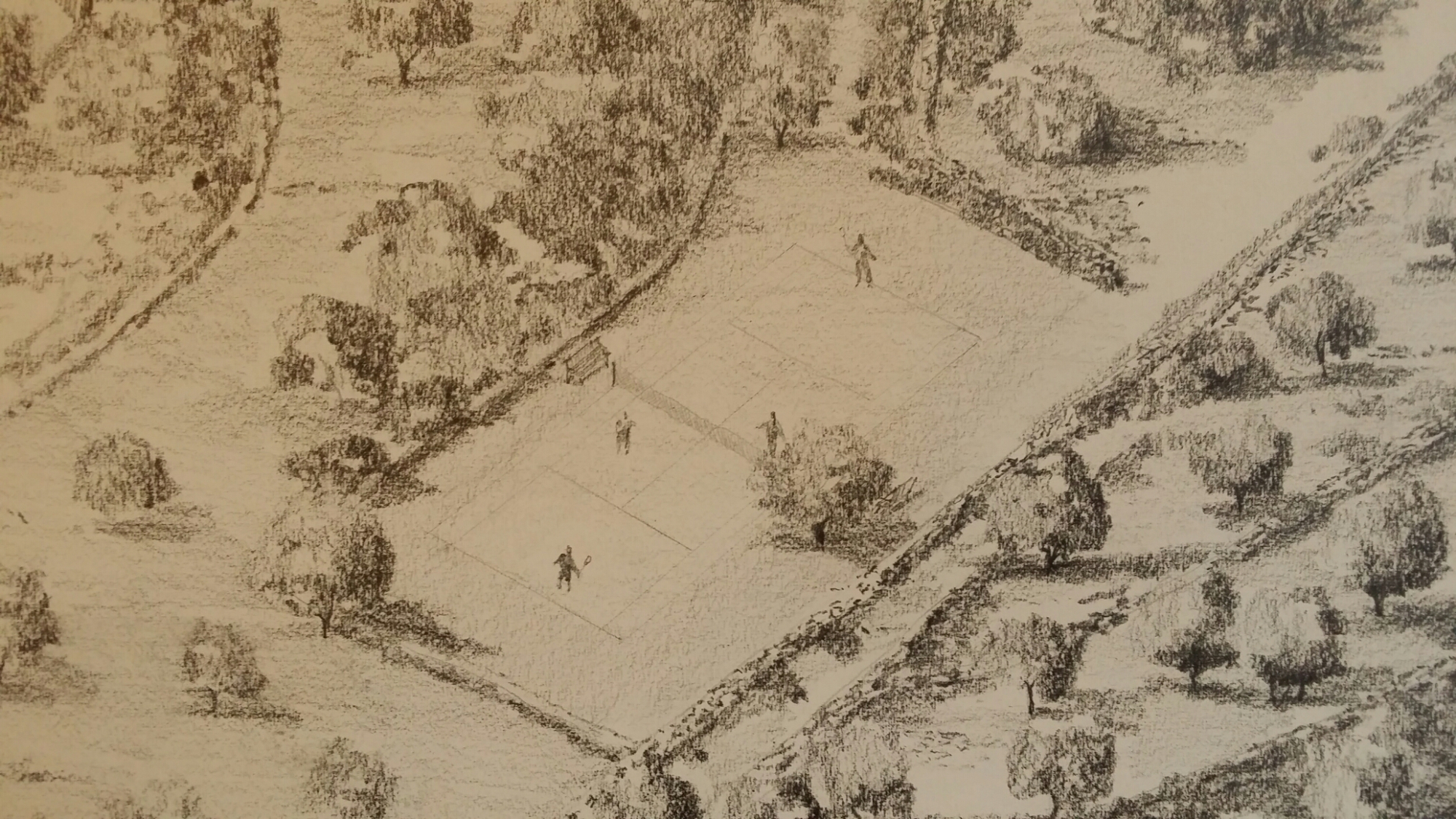
It being nearly summer, people are sitting out having lunch in the Keeper’s House garden at the RA. It was designed (at spectacularly short notice) by Tom Stuart-Smith. He has just had an exhibition of his drawings at the gallery at the back of Alan Baxter’s offices in Cowcross Street. Not only does he conceptualise all his projects through drawings, but he requires all his staff to do so as well. He won the contract through a beautifully presented drawing done not by him, but by a member of his staff. It’s a skill which may have lost currency in art teaching, but remains a pleasure to behold:
Liane Lang
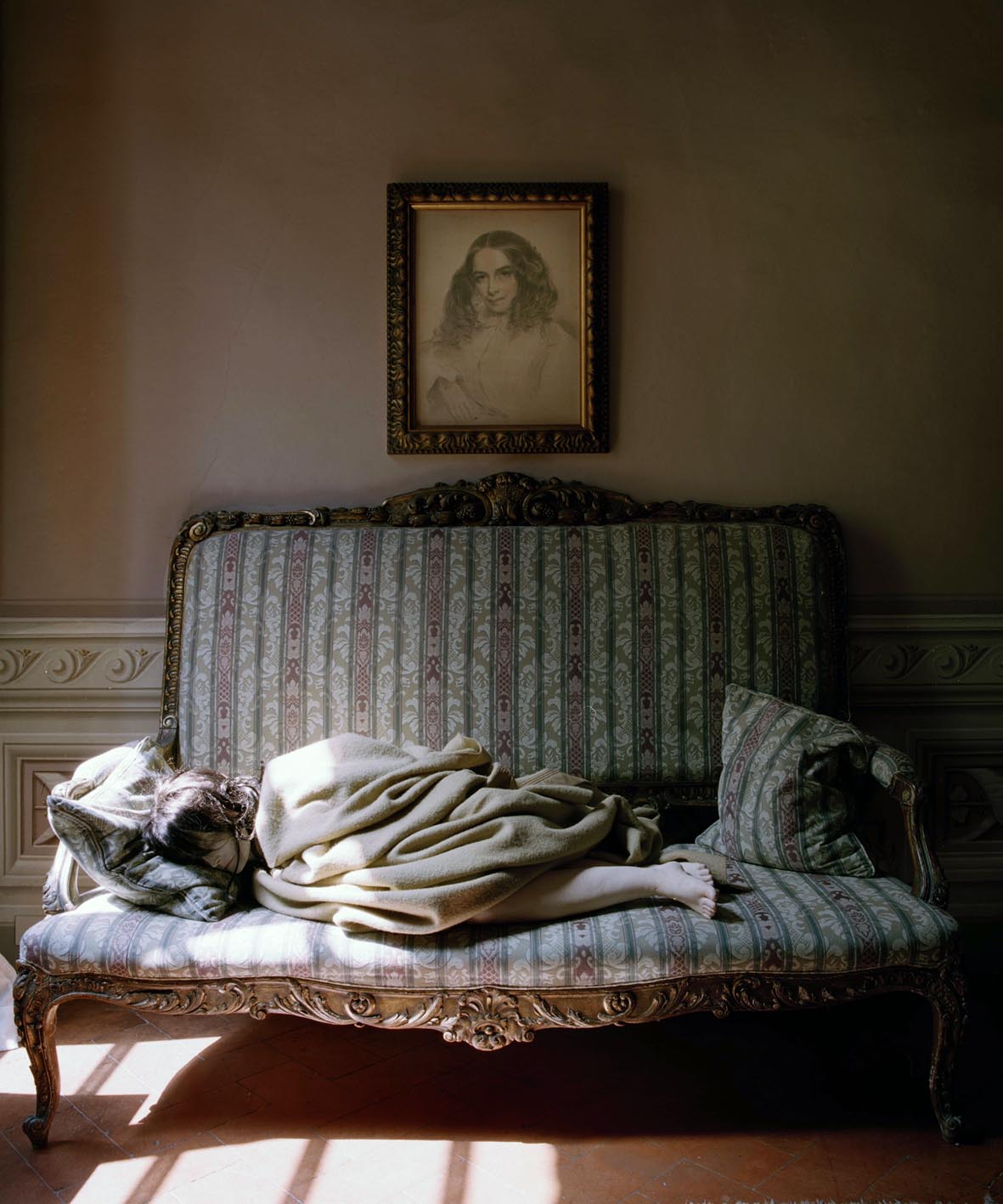
This morning I went to a talk by Liane Lang, a German-born artist who studied at the Royal Academy Schools and whose work I very much admire for the way that it combines history, fiction and installation. Her most recent project is based on the Casa Guidi, the Brownings’ house just south of the Palazzo Pitti in Florence and re-imagines Elizabeth Barrett Browning in situ as a doll. I found it slightly spooky because years ago, when I was fourteen, I stayed in the house which the Brownings lived in in Asolo. When I was coming down to dinner one evening as a suggestible teenager, I saw an elderly lady come out of the upstairs drawing room and cross the landing to the bedroom next door. I’ve always assumed that the lady was Elizabeth Barrett Browning.

Green Park
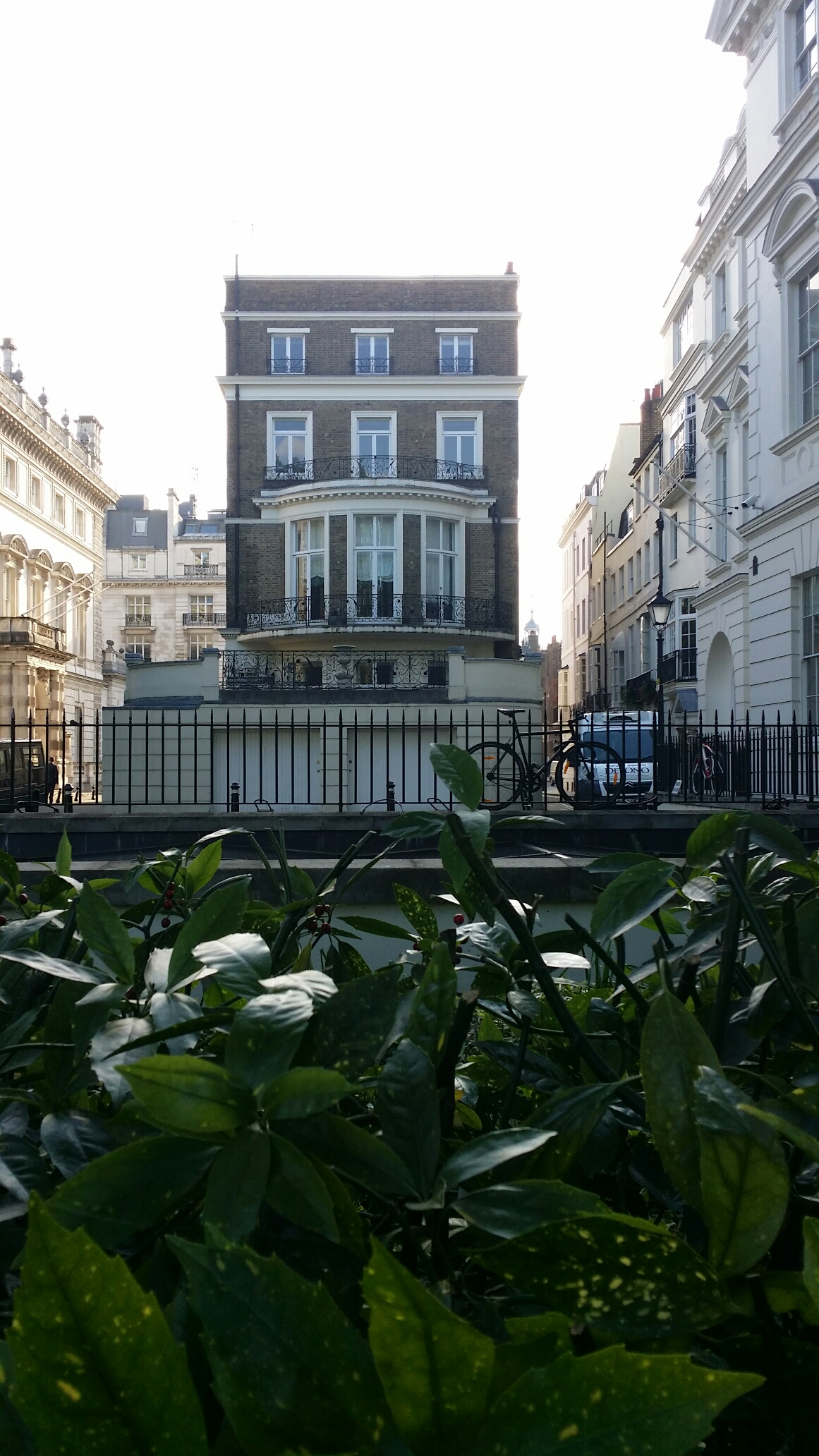
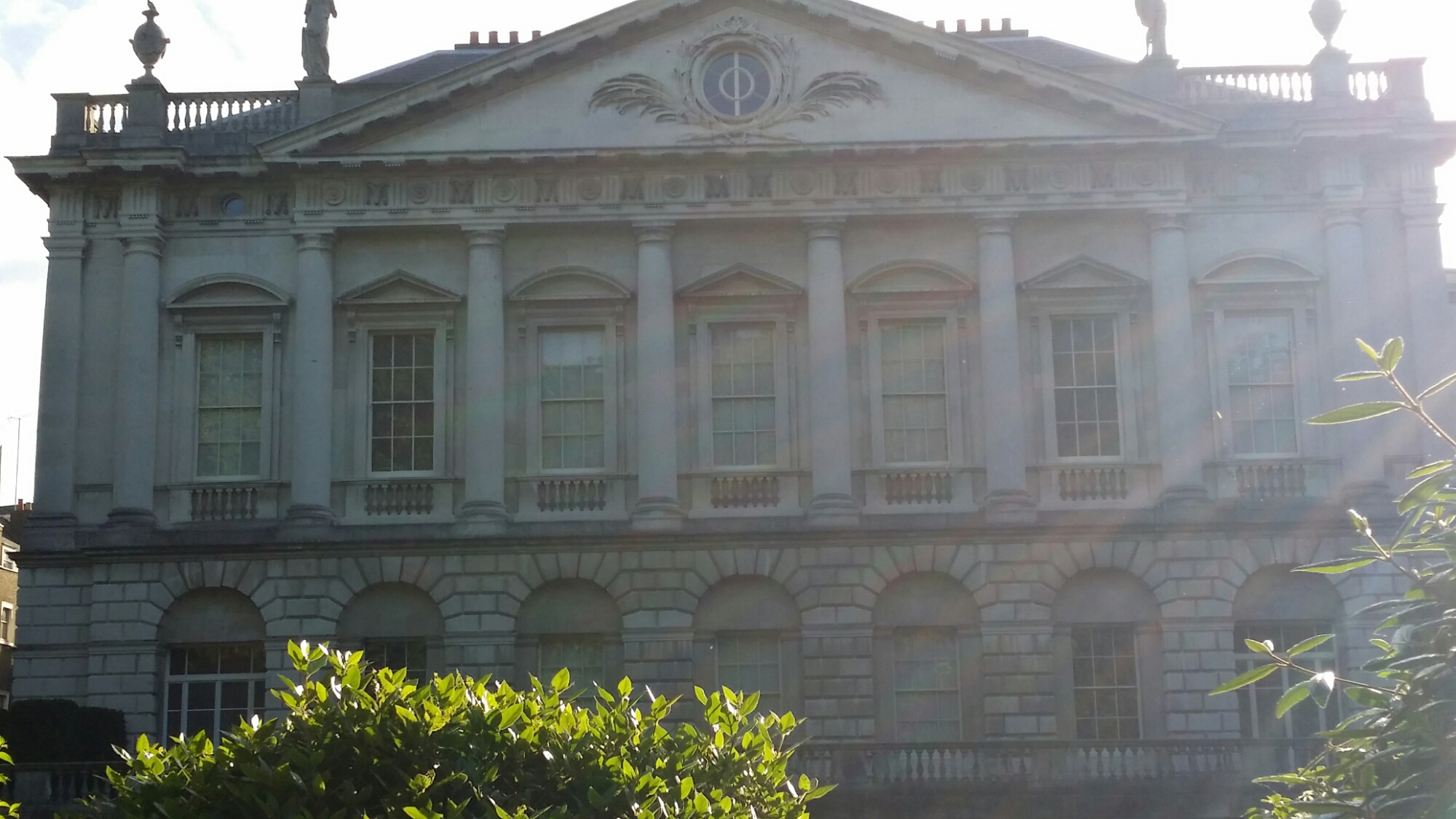
When it’s sunny, as it is this morning and was yesterday, I take a short detour on my morning walk in order to walk up the side of Green Park. I like the views of the grand mansions which back on to the park, shut up tight after the entertainment of the night before. It starts with Lancaster House, built for the Duke of York in 1825 by Benjamin Dean Wyatt with an interior by Charles Barry and now used by the Foreign Office.
Immediately to the north is Bridgewater House by Barry, where parts of the Orleans collection were hung and could be visited by artists on the recommendation of an RA:
There’s a curious building just south of Bridgewater House which looks as if it’s stranded on the beachfront at Brighton:
The facade of Spencer House is hard to see, protected as it is by shrubbery. But at least one can see bits of John Vardy’s detailing and remember that for much of the postwar period it was converted into offices for the Economist:
Catherine Goodman (9)
I’ve sneaked an extra hour at lunchtime to attend another sitting as time is running out. Catherine said I look completely different, probably because I am in work mode, half way through a difficult day. Hannah Rothschild, who is a fellow sitter, part of the invisible community which flits in and out of Rossetti Studios, aware of one another but never meeting, has asked me why I say ‘I am sitting to Catherine Goodman’ not ‘I am sitting for Catherine Goodman’. The former feels correct. I am sitting to her, as an honour, not performing a service for her, as a task.
The Golden Child
Some time before Christmas, I was approached out of the blue by an editor at Harper Collins and asked if I would consider writing an introduction to a new paperback edition of Penelope Fitzgerald’s first novel, The Golden Child. I accepted because I am a great admirer of The Blue Flower and my interest was piqued. It’s a novel about the internal workings of the British Museum. My text was more severely edited than anything I have ever written and a passage was deleted at the request of the company lawyers. Now, only a few months later, the edition has appeared.


You must be logged in to post a comment.