Illustrated Book Design

I have been encouraged to put together a list of the illustrated books whose design I most admire.   I have enjoyed the challenge.   This is my list:-

1.  I would choose my early paperback edition of Rings of Saturn, but I can’t locate my copy, so will have to opt for the first edition of Austerlitz, when Sebald switched to being published by Hamish Hamilton.   The typographic designer isn’t credited, but I assume it was Michael Mitchell, the dentist who established Libanus Press in a house on the Green at Marlborough and was responsible for the distinctive combination of text and black-and-white illustration which is so important to the experience of reading Sebald.

2.  Edmund de Waal, The White Road.   This is a Sebaldian combination of text and black-and white illustration, designed by John Morgan, who worked for Derek Birdsall.   It’s a typographically very intelligent book, using a mixture of an elongated font and italics (Morgan also does all the graphics for David Chipperfield).

3.  Antony Gormley, On Sculpture.   Thames and Hudson have been producing very beautiful books recently.   I first noticed a different order of attention to quality of typography and layout in Alexandra Harris’s Romantic Moderns.   Gormley’s book of his lectures and broadcasts was designed by Jesse Holborn, who I assume is related to Mark Holborn who edited the book.

4.  Orlando Gough’s Recipe Book.   This was published in 2012 by Toast.   I assume it was designed by Jamie Seaton, the proprietor of Toast who has a good eye for design and typography.

5.  The Cereal Guide to London.   I’m an admirer of the layout of books produced by Cereal, a company based in Bristol.   The designer is Rich Stapleton, who was trained in engineering and product design and is one half of the duo who established Cereal.

6.  Eating With The Eyes by Harry Pearce.   More photography than text, but both text and photography beautifully laid out by Harry Pearce of Pentagram and published by Unit Editions.

7.  The Company of Artists:  The Origin of the Royal Academy of Arts in London.   This was designed, incredibly beautifully, by Derek Birdsall who has now retired to Deal.   He’s the maestro.

8.  Tess Jaray, The Blue Cupboard.   I haven’t got a copy in front of me (my books have been shipped to Bedford), but I remember being very admiring of the design and layout which was done by her daughter, Georgia Vaux.

I realise that the great majority of these books, Sebald apart, are recent, which suggests a renaissance in book design and typography.   I also notice that designers and typefaces are too often not credited.

Am happy to receive other nominations.

Standard

Stoke-by-Nayland

Lunch in Stoke-by-Nayland, in prosperous country high above the Stour valley.   No time for anything more than a furtive glimpse of its great Perpendicular church with its flint walls and brick tower through the yew trees of the churchyard:-

image Continue reading

Standard

Fairlight Hall

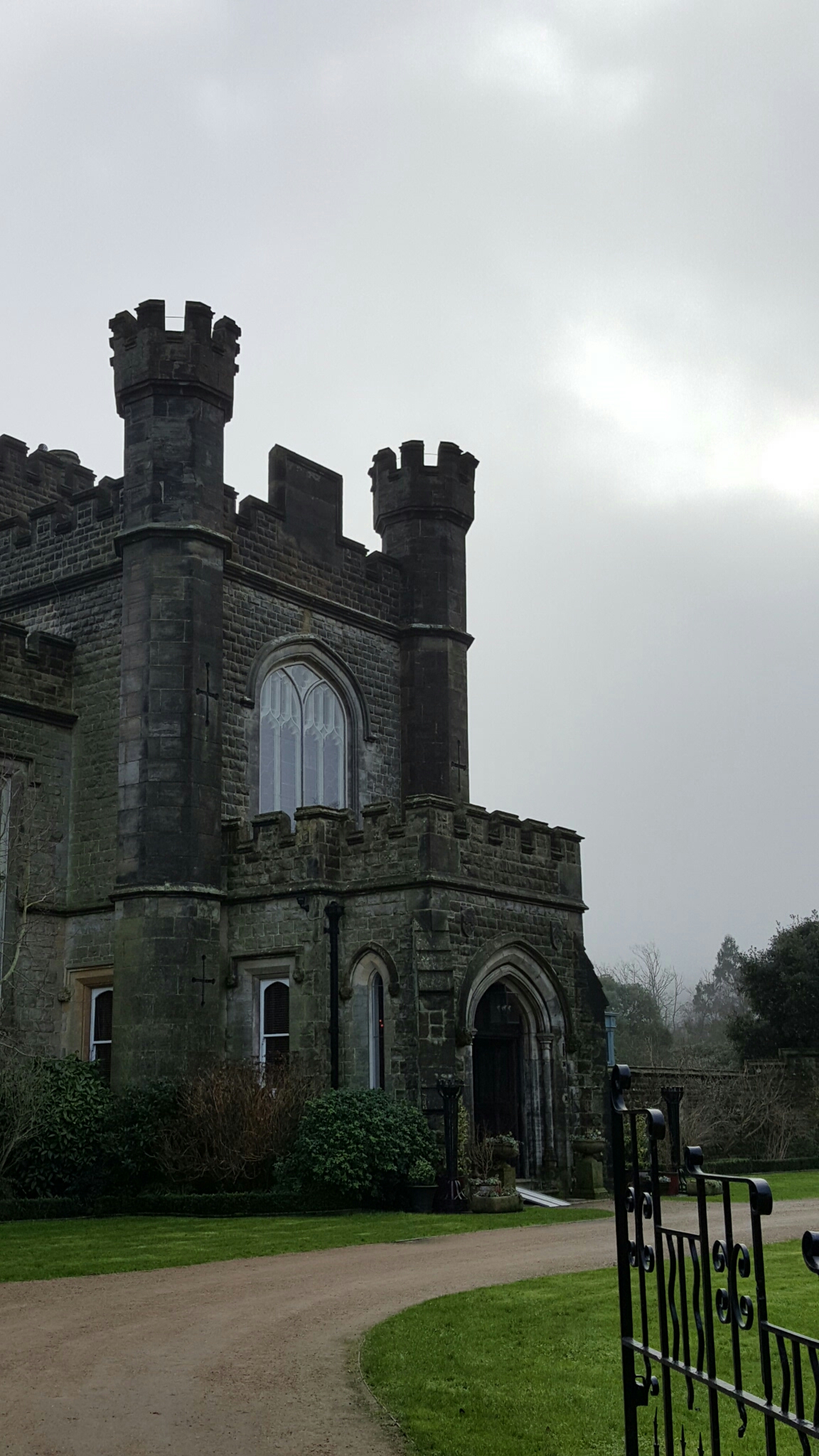
We sped through the foggy Sussex countryside to attend a morning concert by Garam Cho, a young Korean concert pianist who came second in last year’s Hastings’ International Piano Concerto Competition.   She played Bach, Beethoven, Mendelssohn and Liszt.   The concert was held in Fairlight Hall, a large Victorian castle in the hills east of Hastings, designed by John Crake, a pupil of Decimus Burton.   The original owner was William Drew Lucas Shadwell, born Drew, who took his uncle’s name on inheriting his fortune (his uncle had developed Hastings, including its racecourse).   His wife Florentia was fiercely devout and wrote evangelical novellas for the Religious Tract Society.   The estate was alcohol-free.   But William turned to Catholicism and died in Florence en route to Rome:-

image Continue reading

Standard

George Weidenfeld

I’m very sad to read of the death of Lord Weidenfeld.   He was one of my Trustees at the National Portrait Gallery – worldly, extremely well connected and shrewd.   He rang me up one day and asked me if I was free for lunch.   I wasn’t.   He said, ‘A pity, as I wanted you to meet Henry Kissinger’.   I used to enjoy the amazing dinners he held several times a week in his apartment on Chelsea Embankment which were the nearest thing I have experienced to eighteenth-century salons:  full of writers, thinkers, diplomats.   He founded the Club of Three to promote cultural relations between Britain, America and Germany.   Not to forget his role as a publisher.   I last saw him in November having lunch at the Carlyle.

Standard

Burlington House Façade

The absence of a large poster for Ai Weiwei – or, indeed, for Painting the Modern Garden, our next major exhibition – means that the full breadth of the Burlington House façade is visible, including the figures who were placed in niches on the attic storey when Sidney Smirke added an extra floor to Lord Burlington’s piano nobile.   They are those who were regarded as the greatest artists of the time.   Reynolds, of course, and Wren, both by Edward Stephens (although where did Stephens get this idea of Reynolds as a robust young figure in an academic gown ?):-

image

Continue reading

Standard

Lisa Jardine (2)

We went yesterday to the memorial event for Lisa Jardine organised by the University of London and the staff of the Centre for Editing Lives and Letters, which she founded, as well as Queen Mary where she spent so much of her academic career and University College where she and CELL recently migrated.   It felt as if there were a thousand people, all of whom had been touched or influenced in some particular and special way by her personality and teaching:  faculty, university adminstrators, former students, fellow researchers, Dutch scholars, each had admired her passionate intellectual enthusiasms, but also spoke invariably of the strength of her emotional support.  We all miss her.

Standard

Annie Swynnerton (2)

I have been trying to find out a bit more about Annie Swynnerton who seems to me worthy of record.   There is almost no information in the archive except a little note from her to George Clausen in 1922 ‘anxious for news’.   She was described as ‘a talented artist and an accomplished woman, though scarcely one of whom it could be said she possessed a charm of manner.   Indeed, by maintaining the courage of her convictions she was at times embarrassingly outspoken’.   She lived in Rome after her marriage to Frank Swynnerton in 1880 till his death in 1910.   Interestingly, she painted Henry James in 1922.   It was Sargent’s portrait of Henry James which had been slashed in the Summer Exhibition of 1914.   Laura Knight met her at the end of her life on Hayling Island.   She died in 1933.

Standard

Annie Swynnerton (1)

There is an intriguing and wide-ranging article in this week’s LRB which refers amongst other things to the author’s great-grandmother, Annie Swynnerton, as the first woman to be elected to the RA.   She was born in Manchester, educated at the Manchester School of Art and the Académie Julian and then studied in Rome.   In 1879, she and a fellow student, Susan Dacre, founded the Manchester Society of Women Painters and in 1889 she signed the National Union of Women’s Suffrage Societies’ Declaration in Favour of Women’s Suffrage.   Much admired by, amongst others, Watts and Sargent, she was elected an ARA in 1922.   Laura Knight is remembered as the first female full RA, elected not until in 1936, so it is a relief to discover that she was not quite the first to be elected after Moser and Kauffman.

Standard

Everything We Touch (4)

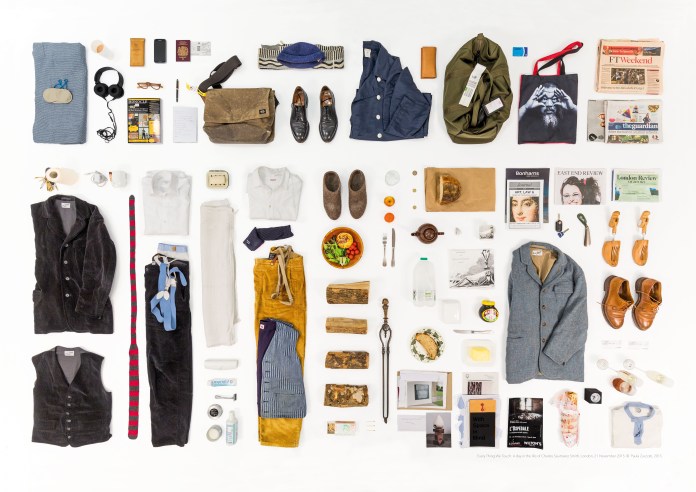
Several people asked me to publish the full photograph of the small display of the detritus of my life mounted at the Design Museum before Christmas.   It has now just arrived and I am posting it accordingly, in spite of the realisation that these things are unconsciously revealing, not just the marmite pot and the blue braces, but the vest from a company which is now defunct, all so immaculately laid out for the archaeologists of the future:-

PZ_Image.jpg


Standard

Bryant and May Factory

I wandered in to the old Bryant and May match factory, scene of the strike in 1888 and subject of an essay by Patrick Wright in A Journey Through Ruins.   Wiĺliam Bryant and Francis May started importing Swedish matches in 1850.   In 1855 they acquired a patent to manufacture safety matches from red phosphorus and potassium chlorate and in 1861 they opened the Fairfield Works, a massive factory, rather German in character with its red and black brick.   The workers were first radicalised in 1871 in protest at the planned imposition of a tax on matches and again went on strike in 1888 led by the theosophist Annie Besant.   It’s all quiet now after being converted into apartments in 1987:-

image Continue reading

Standard