Wells Cathedral

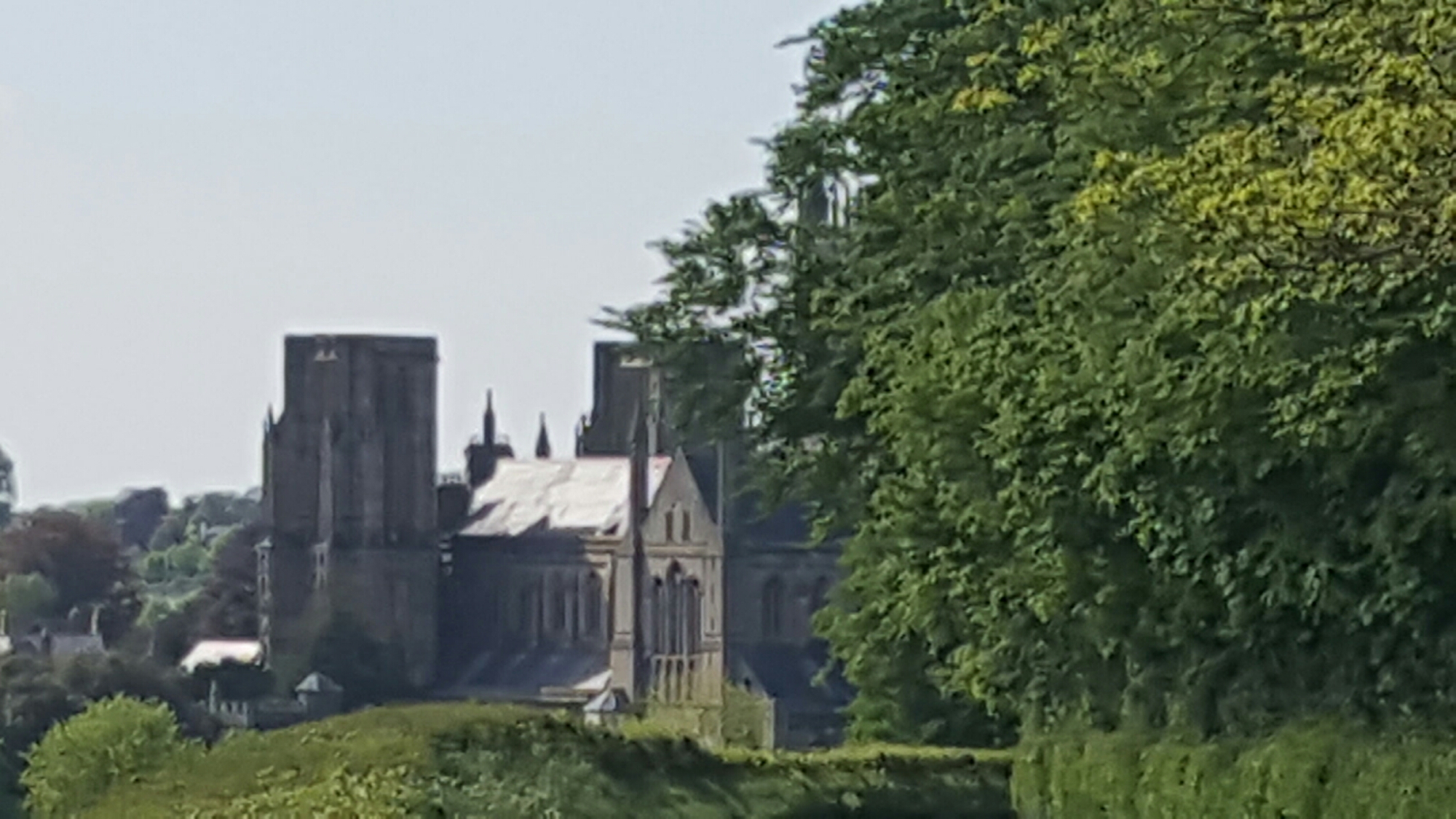
Our first view of Wells Cathedral was from the east, much larger than expected, like a monastic church in France:-
image

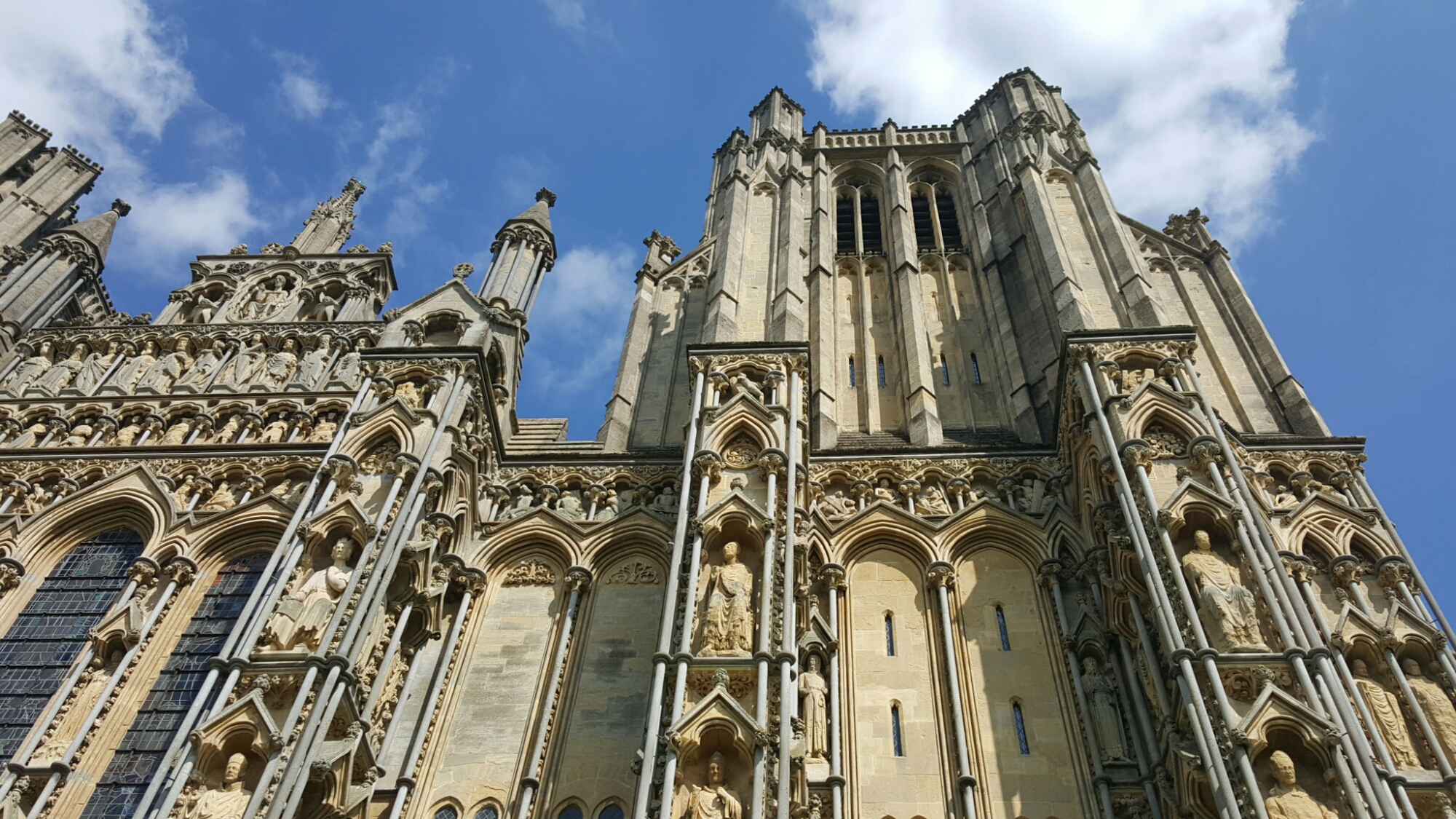
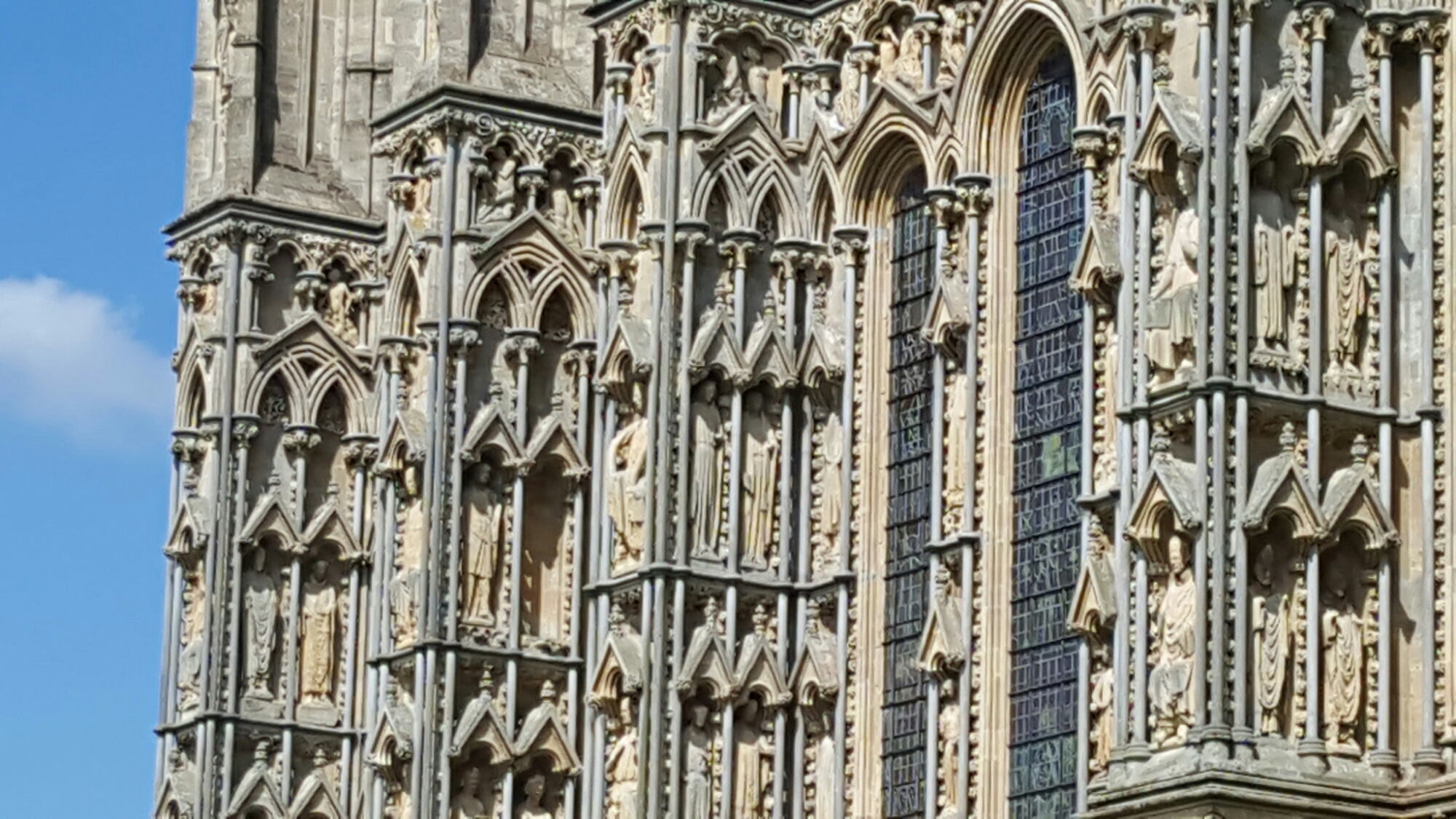
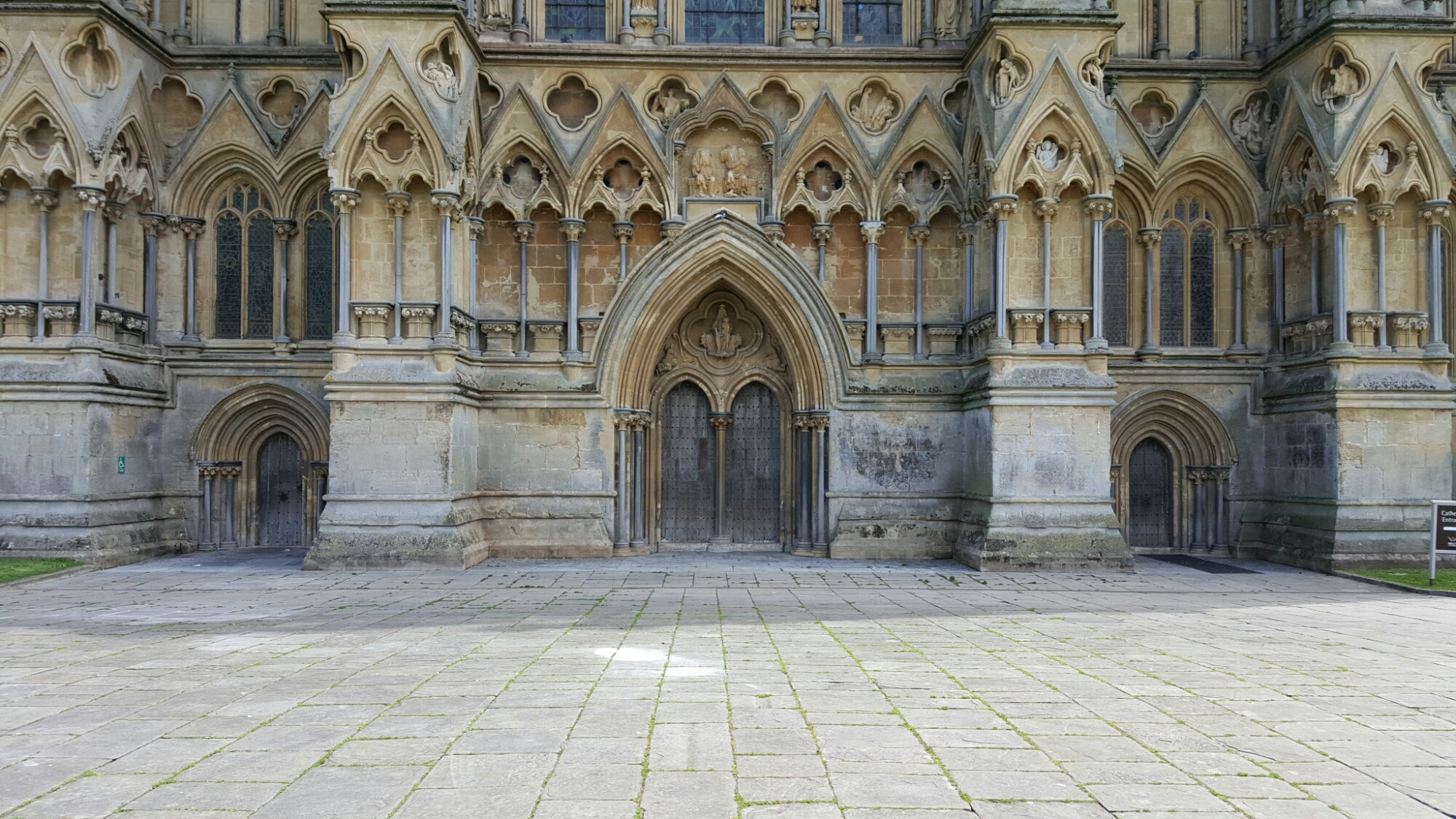
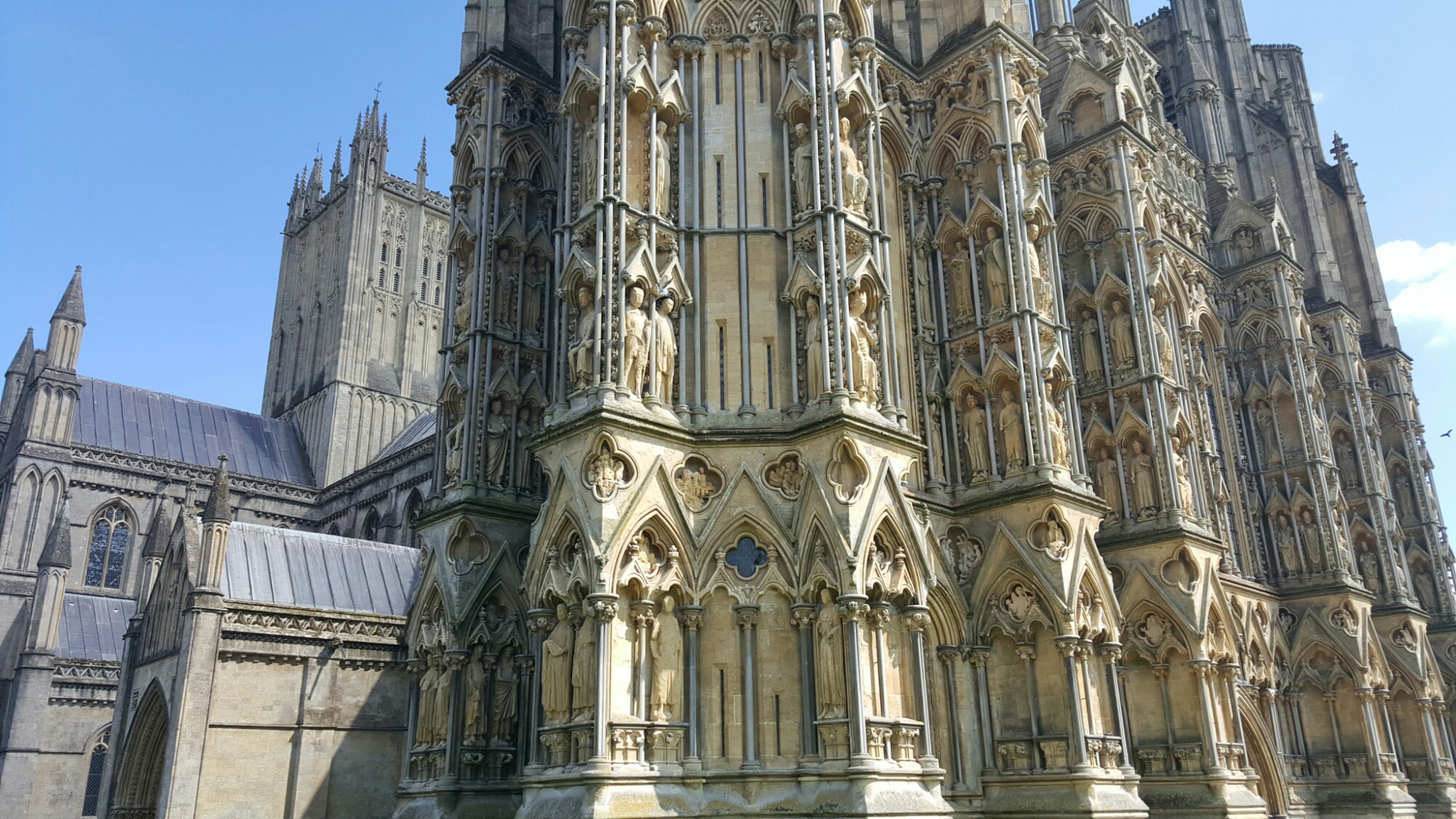
We had a guided tour of the west front, originally grandly polychromatic and constructed between 1215 and 1248 under the supervision of Adam Lock and Thomas Norreys:-
image

image

image

image

image

image

Inside is fine, squatter than many:-

image

There is good carving:-

image

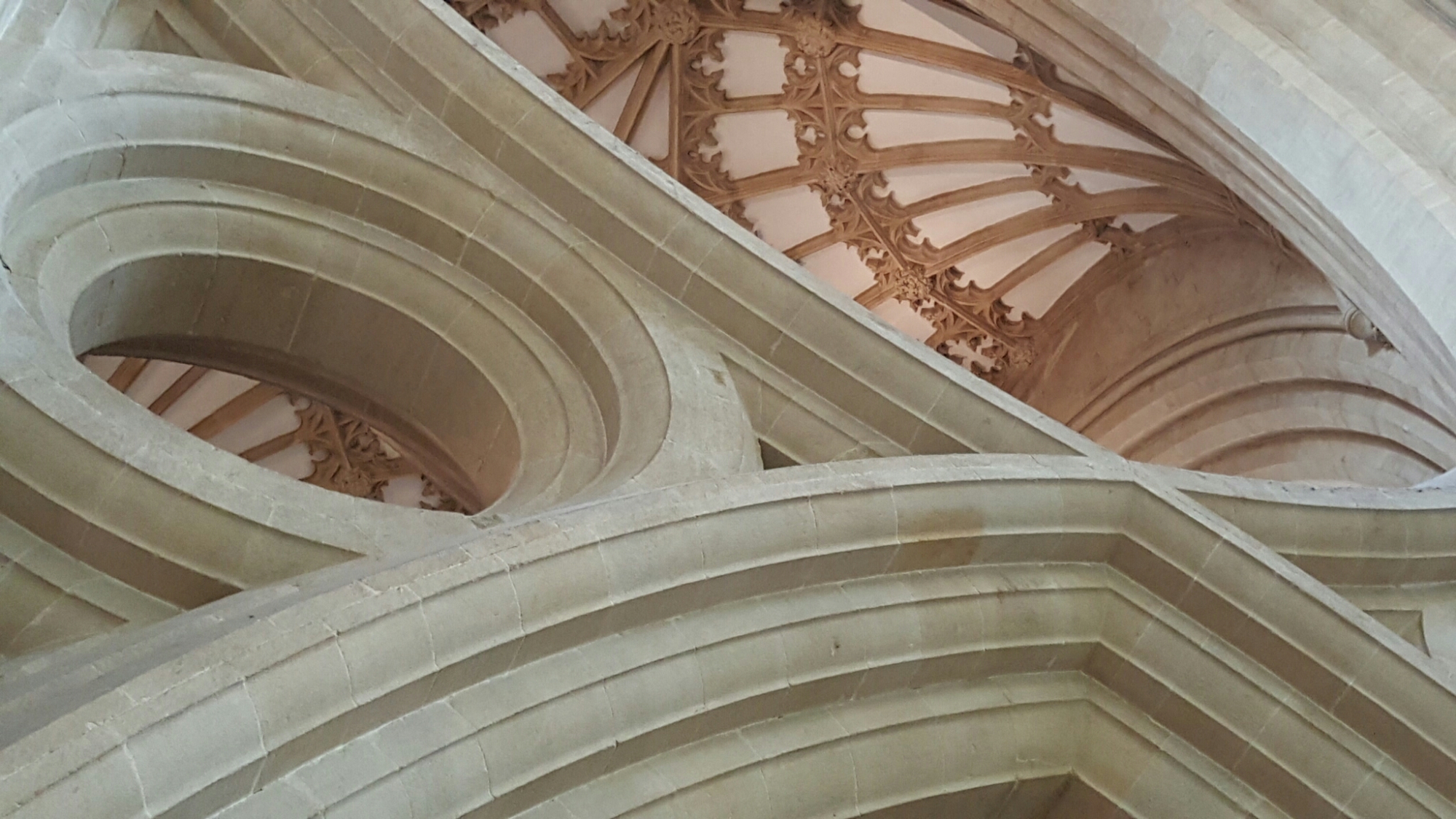
We liked the amazing scissor beam arches designed in the mid-fourteenth century to support the tower:-
image

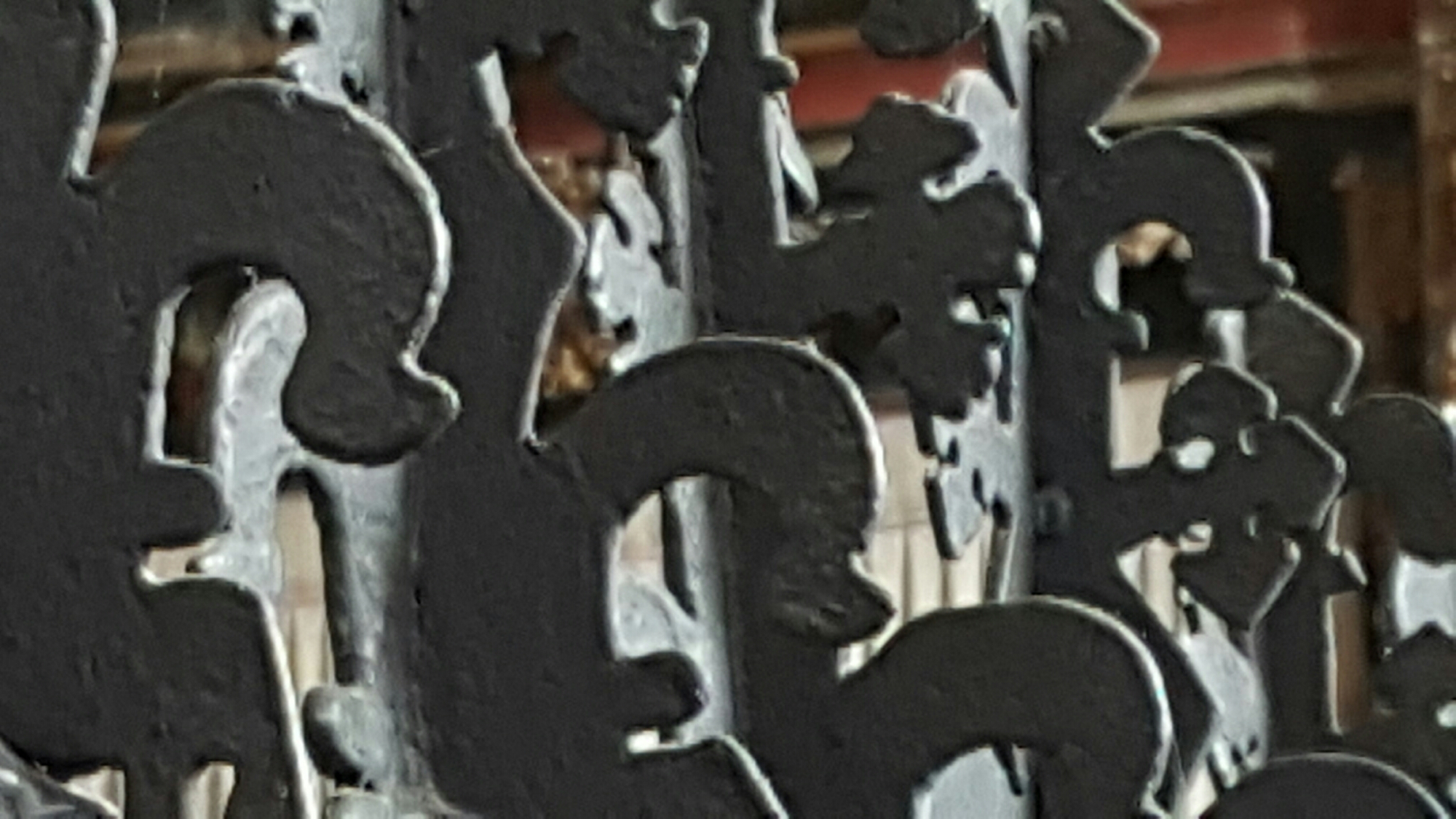
We enjoyed the transi tomb of Thomas Bekynton, the Bishop of Bath and Wells in the mid- fifteenth century with his skeleton below and Chantry Chapel above and metal railings to keep the public out:-

image

image

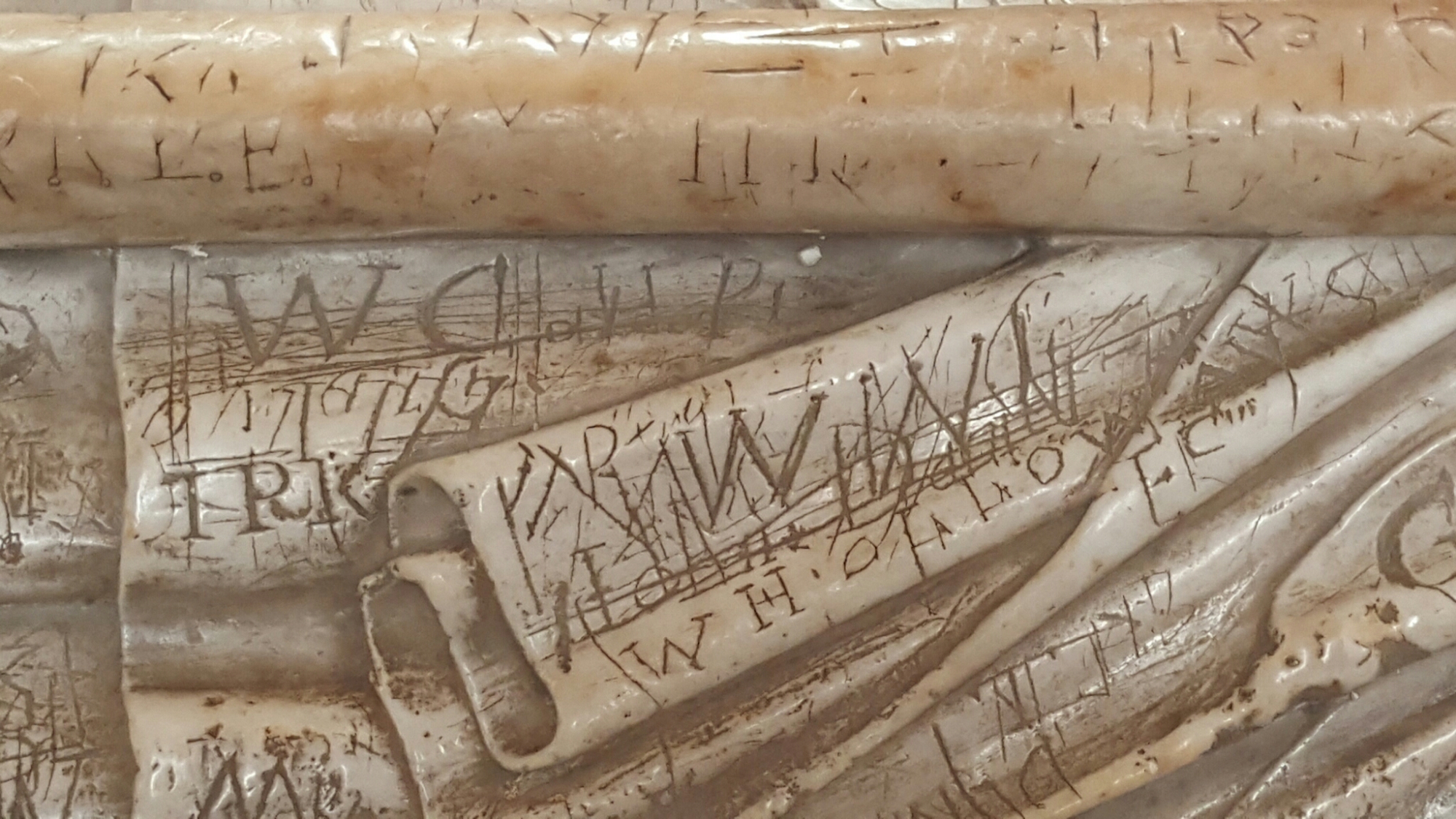
Graffiti on the tomb of Ralph of Shrewsbury:-
image

The door through to the Choir:-

image

The door into the Undercroft:-

image

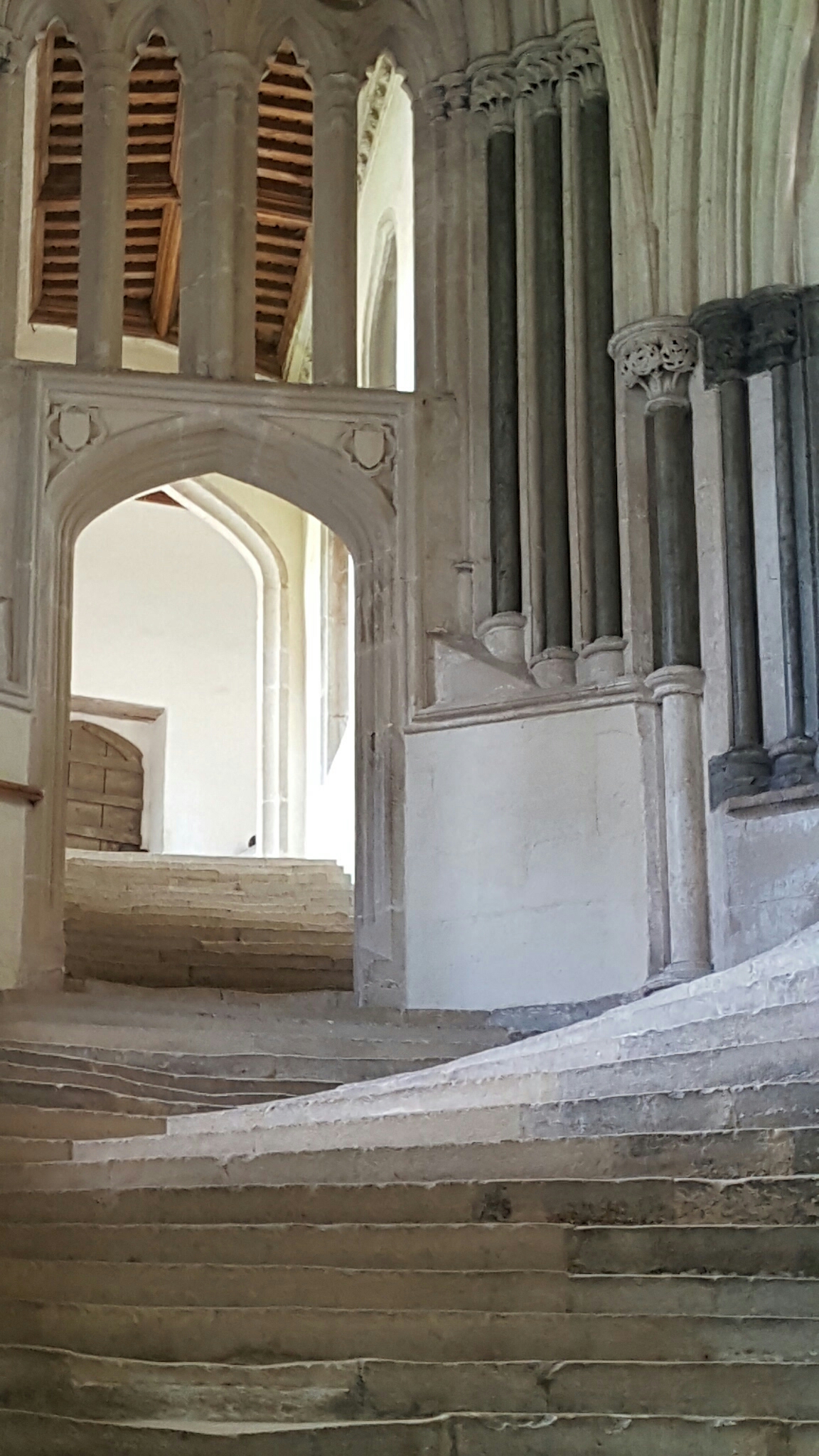
We ended by trying to recreate – without success – the famous Frederick Evans photograph of the Chapter House steps:-
image

Standard

Roth Bar and Grill

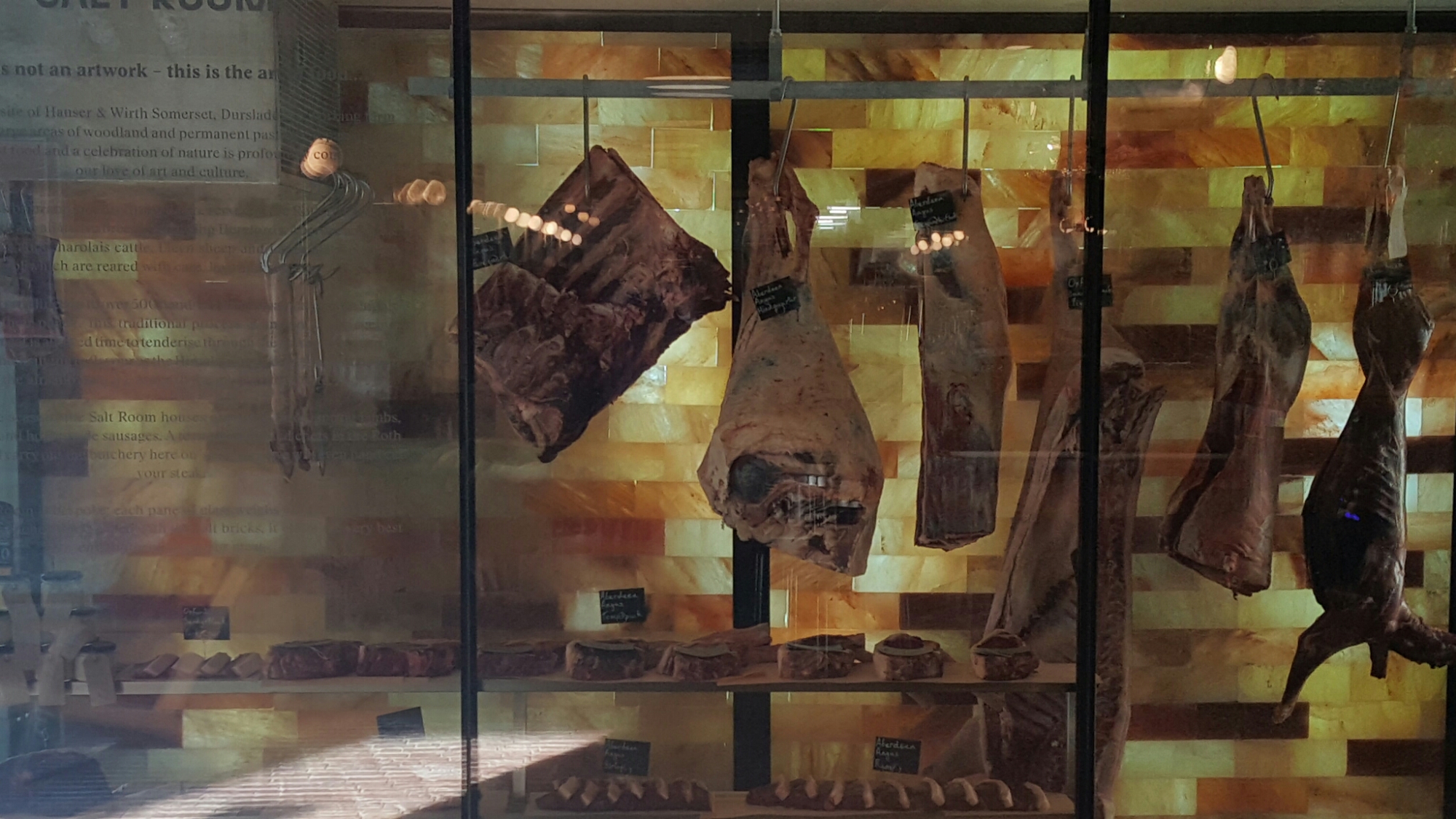
I have seldom enjoyed such delicious meat as is served by the Roth Bar and Grill.   It can be seen before it is eaten in the Salt Room which looks like an art installation and is lined with hand-cut Himalayan salt bricks.   Good for the steak:-

image

Standard

Stourhead

We went over the hill by Alfred’s Tower to see the gardens at Stourhead, but at noon there were so many people that we retreated and returned in the early evening when the crowds had gone to enjoy the Virgilian walk round the lake.   The first view across the lake was picture perfect:-

image

The Temple of Flora, first to be completed:-

image

image

The sleeping Ariadne in the grotto with a quotation from Pope:-

image

The cottage orné:-

image

The Pantheon prominently at the end of the lake:-

image

image

The temple of Apollo inspired by Baalbec:-

image

If one averts one’s eyes from the virulent rhododendra and tries to forget the monkey puzzles and later pines, then it is almost possible to reconstruct the mood of meditative neoclassical reflection which inspired Henry Hoare II (‘Henry the Magnificent’) to commission Henry Flitcroft to build these temples in his garden.

Standard

Durslade Farmhouse

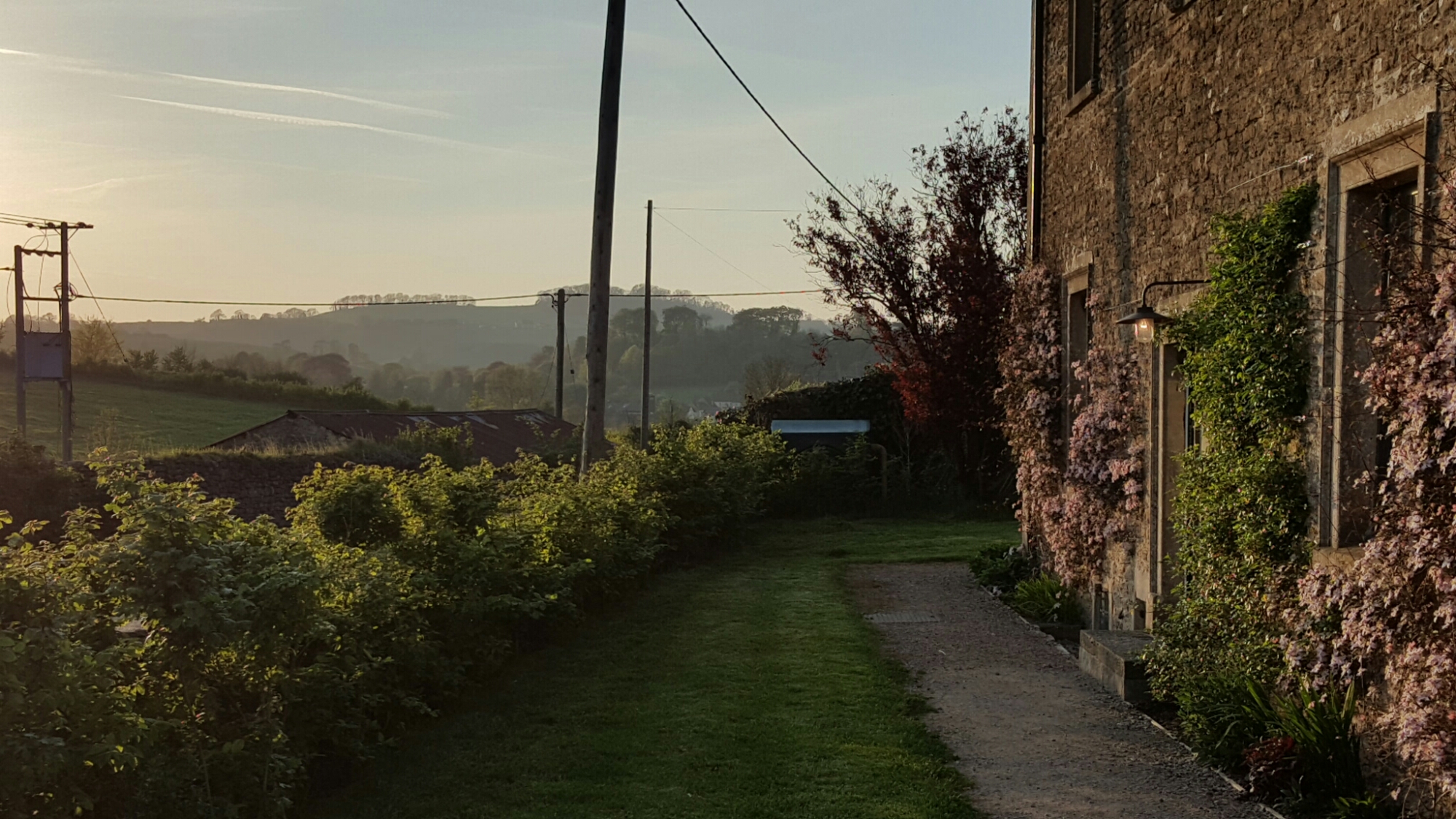
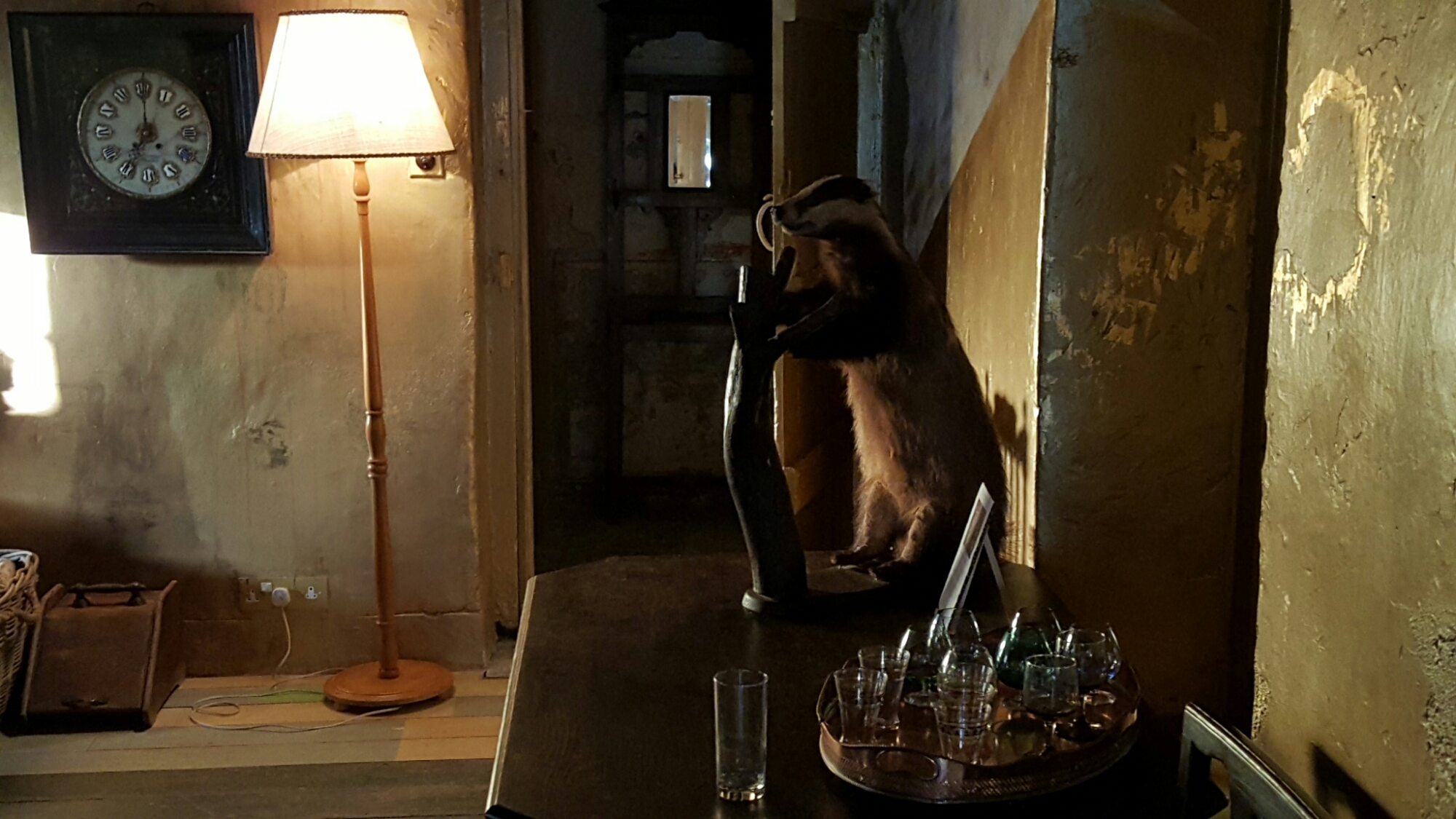
We have been spending the weekend at Durslade Farmhouse which is attached to, and run by, Hauser and Wirth in Somerset.  It’s an old and previously rundown farmhouse which has been restored under the supervision of Luis Laplace, an Argentinian architect, trained in Buenos Aires, who is now based in Paris and is adept at combining the rusticity of a Somerset farmhouse with an atmosphere of art luxe:-

image

image

image

image

image

image

Standard

York Watergate (2)

I was pleased to have Edward Chaney’s scholarly comments on my blog about York House.   I knew about Balthazar Gerbier’s possible involvement in its design as he described the impatience of the Duke of Buckingham to get going on the renovation of York House in his Discourse concerning the…Principles of Magnificent Building and may well have been an eminence grise in its design, as Summerson long ago suggested.   But I didn’t know that the attribution of the Watergate to Stone was made not by his son Nicholas, another sculptor, but by his nephew Charles Stoakes (or, according to George Vertue, his grand nephew), a jobbing builder who inherited his uncle’s business books and listed ‘Some of the most Eminentt Workes that my Uncle Mr Nikcolas Stone did in England in Holland in Scotland’ which included the attribution of the Watergate.   Since the list was made long after Stone’s death, I can see that inaccuracies may have crept in.

Standard

Lennox Gardens

I was a bit early for drinks in Cadogan Square so found a park bench to sit on in the middle of Lennox Gardens as someone had accidentally left the gate open.   It’s not my normal patch – I’ve barely been to Cadogan Square since the death of Denis Mahon – but I could not help but be impressed by the calm and the greenness of a square laid out between 1882 and 1886 on a site previously occupied by a cricket ground and before that Cattleugh’s nursery, which specialised in the sale of pines:-

image

image

Standard

York Watergate (1)

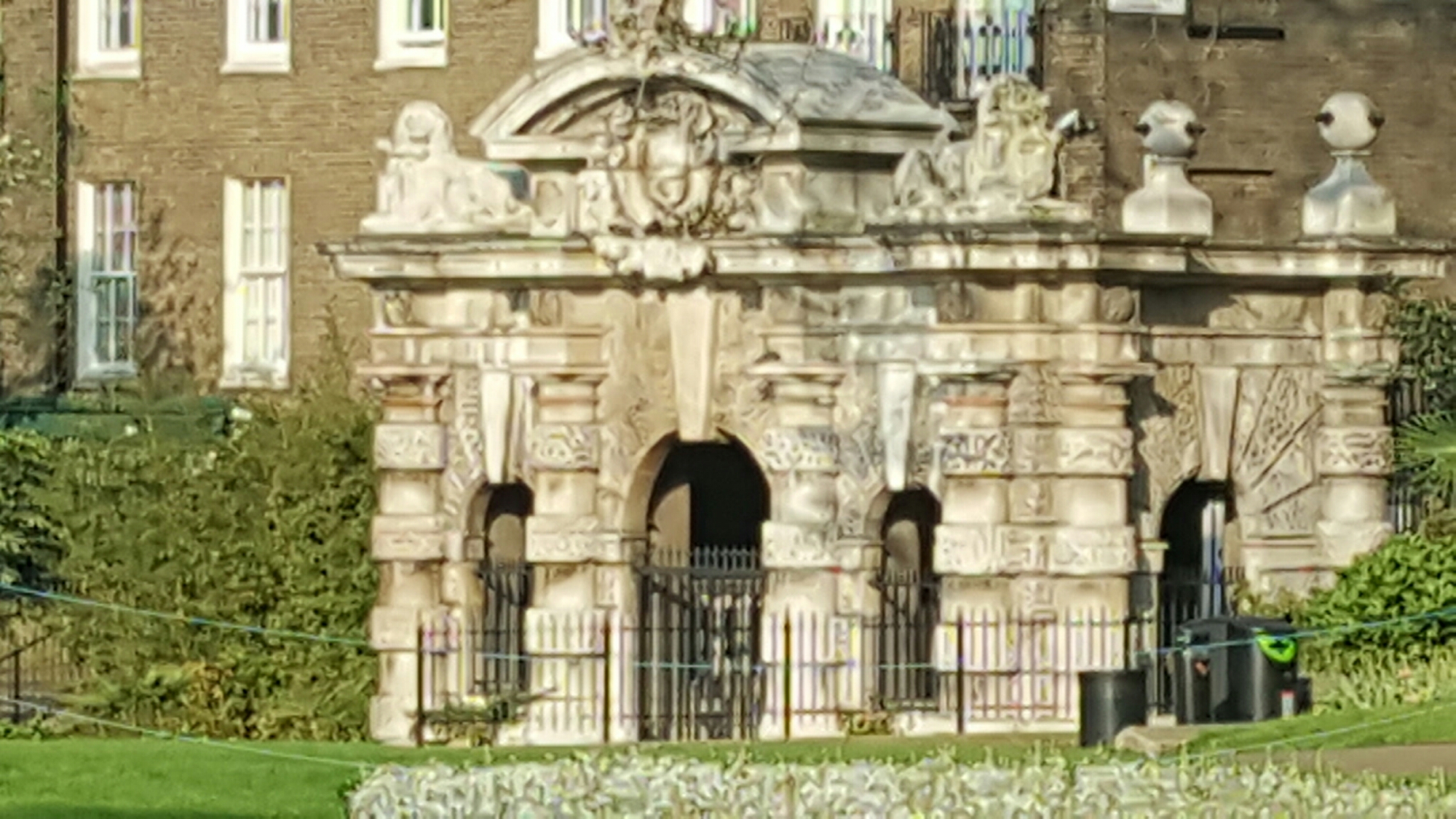
It was such a beautiful, crisp early summer morning that I walked from Blackfriars to Piccadilly by way of Embankment Gardens.   I realised that I have never known the history of the York Watergate, a curiously unobtrusive memento of Caroline London half buried in the gardens close to Charing Cross station.   It marks where the banks of the Thames originally were before the construction of Victoria Embankment by Joseph Bazalgette and was the entrance to the original York House, one of the great Thames-side mansions, called York House because it was owned by the Archbishops of York.   York House was acquired by the Duke of Buckingham in 1624 and the Watergate was added two years later.   Its attribution is disputed, but a list made by Nicholas Stone’s nephew Charles Stoakes of ‘Some of the Eminent Workes’ undertaken by his uncle includes ‘The water Gate att Yorke House (which) hee desined and built’.   This seems perfectly plausible as an attribution, as it looks more like the work of a sophisticated artisan following continental models than a work by Inigo Jones himself:-

image

image Continue reading

Standard

Unilever House

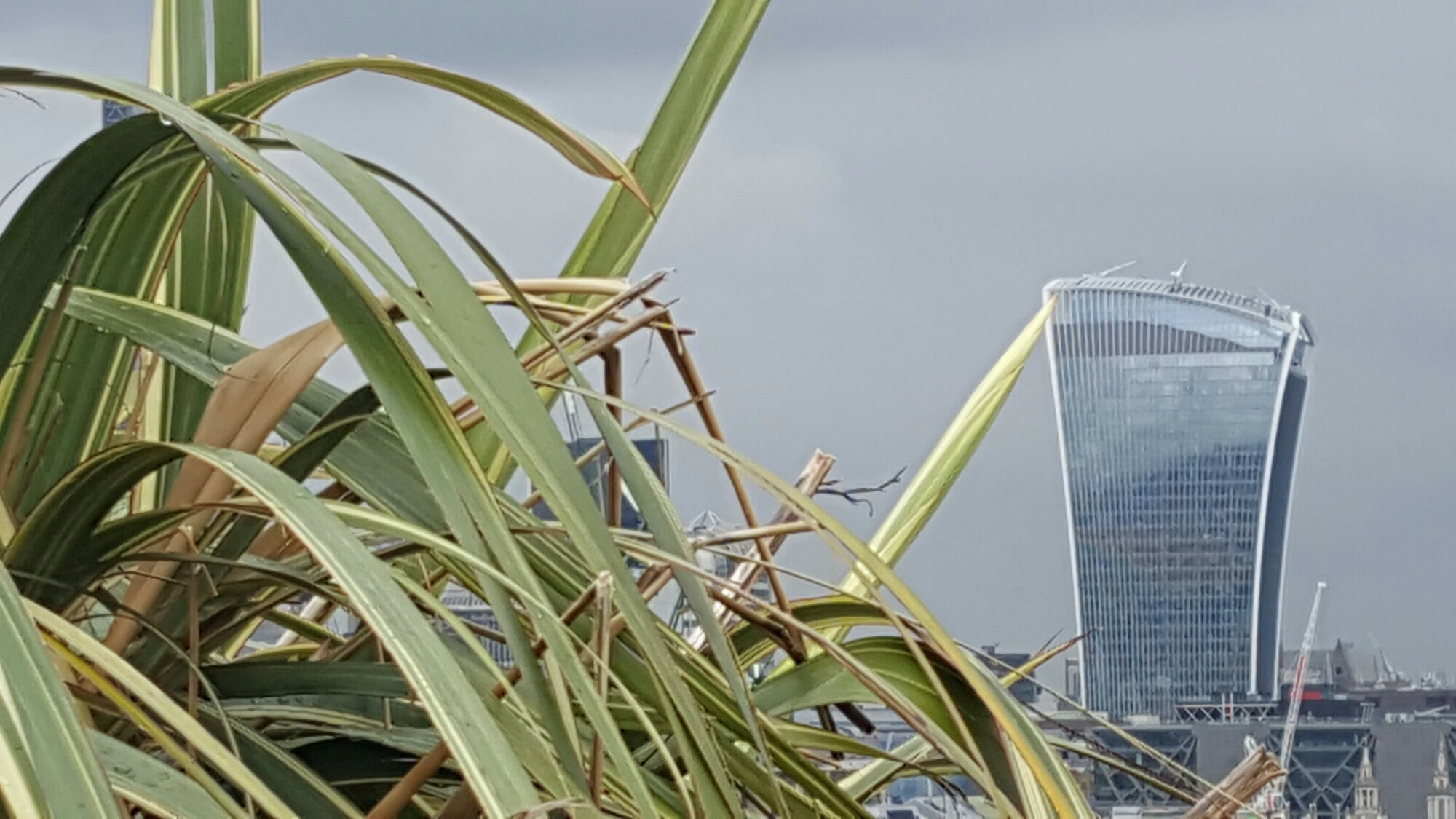
We had an All Staff Meeting this afternoon on the eighth floor of Unilever House which is normally closed to all but Unilever staff.   There was a small spiral staircase up onto the roof, which, like many London rooftop views, gives one a different view of the city.   Even the Walkie Talkie looked faintly interesting extending out of the potted shrubs:-

image

And Herzog and de Meuron’s brick ziggurat made sense seen from a distance as if growing mesolithically out of Giles Gilbert Scott’s power station:-

image

Standard

Luxury and Culture

We had a debate yesterday about the nature of the relationship between luxury and culture chaired by Will Gompertz.   There can be no doubt that companies dealing in luxury goods are increasingly involved in the world of art.   One only has to think of the Prada Foundation in Milan and the Fondation Cartier and the Fondation Louis Vuitton in Paris.   Luxury brands use many of the techniques of fine art to promote their goods in order to enhance the association, including works designed by artists and the aestheticisation of display.   Equally, there is a good case to be made that big name artists are behaving increasingly like brands, with their own shops and easily identifiable and replicable products.   So the question was:-   where do the boundaries lie ?  Is it a question of intent, whereby artists seldom, if ever, think purely in terms of commercial aims and objectives, whereas luxury brands always must ?   Is it to do with the different arenas of display as between the big shop and the gallery/museum ?  Should one resist the commodification of art ?

What does seem paradoxical is that the world of luxury is able and willing to use the vocabulary of art, taste, aesthetics, judgment, quality in a way that the art world won’t.

Standard

Painting with Light

I managed – annoyingly – to miss the private view of Tate Britain’s exhibition Painting with Light last night, but managed to catch up with it this morning.   I hadn’t realised that David Hill of Hill and Adamson was Secretary of the Royal Scottish Academy, so brought a painter’s sensibility to the composition of their panoramic views of Edinburgh seen from the Castle or Calton Hill.   Their work was admired by Elizabeth Eastlake, wife of the Director of the National Gallery (and PRA), as showing ‘no attempt to idealise a rather rugged style of physiognomy…we felt that the spirit of Rembrandt had revived’ and by William Etty who felt that Adamson’s photographs were ‘revivals of Rembrandt, Titian and Spagnoletto’.   There are also wonderful photographs by Roger Fenton who was ‘photographer to the British Museum’.

Standard