Whitechapel Bell Foundry

The film about the Whitechapel Bell Foundry has now been made more widely available by The Gentle Author in a columnn in Spitalfields Life which includes information about the latest state of the plans drawn up by Bippy Segal for his boutique hotel – that it will have a rooftop swimming pool where night-time swimmers can cavort in immediate view of the adjacent mosque and that there will be a big bell on its roof, ringing in the change in Whitechapel from employment in real industry to the decadence of luxury tourism:-

http://spitalfieldslife.com/2019/06/20/a-film-about-the-whitechapel-bell-foundry/
Standard

Trafalgar Square

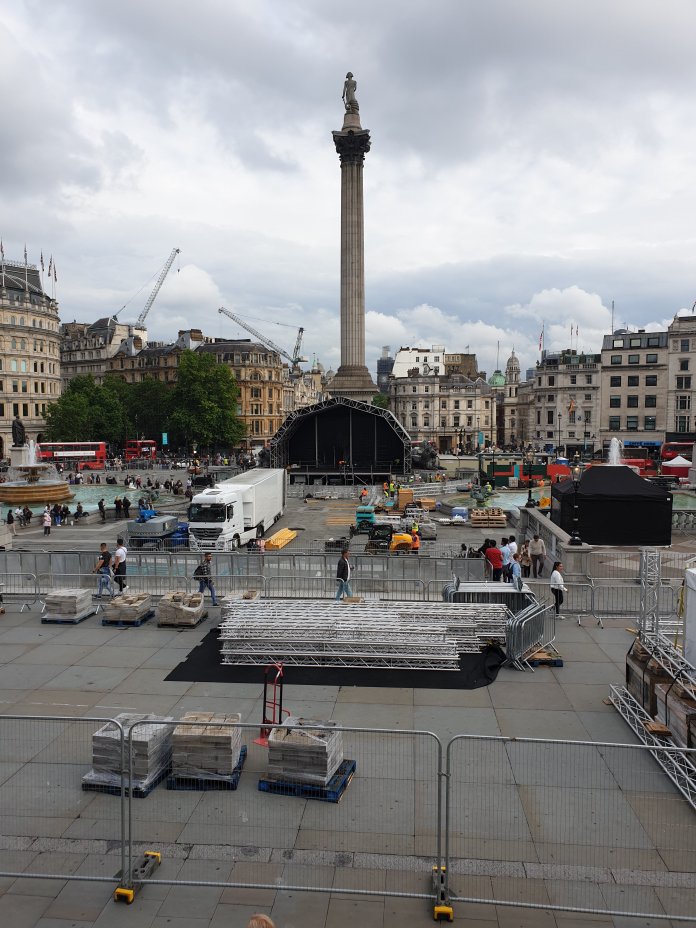
I saw a tweet recently commenting on what an incredible mess Trafalgar Square has become. I thought of this comment this evening as I looked down from the steps of the National Gallery on what is nowadays being used far too often as privatised performance space, not as one of the great, democratic open squares of central London where, as Sean Scully reminded me shortly afterwards, he was able to come as a young Irish child living in Highbury to feed the pigeons and absorb the lessons of British history:-

Standard

Lina Bo Bardi

I went to see the multi-screen homage to the multifarious creative life of Lina Bo Bardi, A Marvellous Entanglement by Isaac Julien at Victoria Miro. It was filmed mostly in various locations in Salvador – the Casa do Benin, which she designed jointly with the French photographer, Pierre Verger, the staircase at the Museu de Arte Moderna (MAM) Bahia, where he filmed a sequence of dance by a local choreographer, and Coaty, a social housing project, now ruined. The style is meditative and allusive. ‘We can leave the historic Bo Bardi to the historians. Of course there is a great documentary to be made about her, that’s just not what we’re doing. The thing we want to communicate is the architecture, the movement, the dynamism of it. And to use her ideas’.

Standard

Lumière Mysterieuse

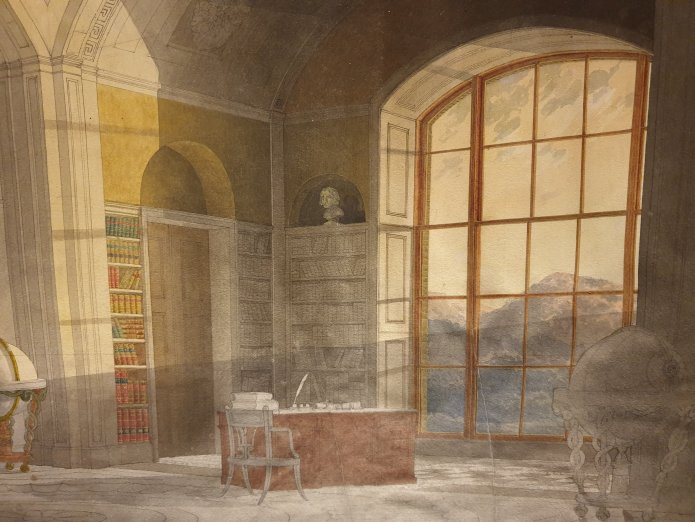
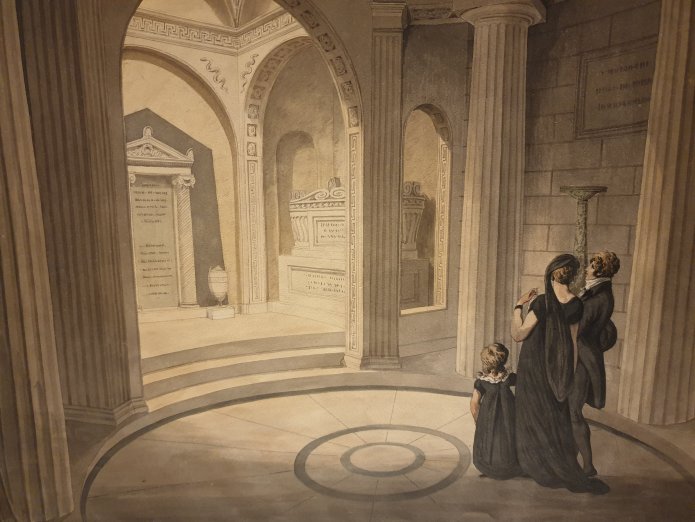
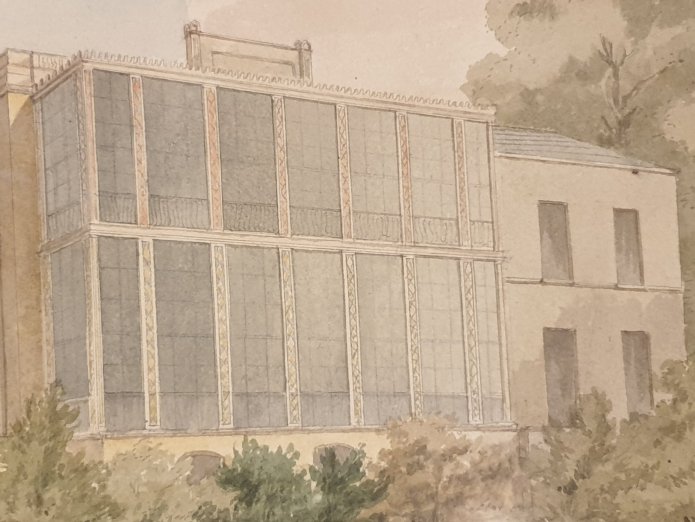
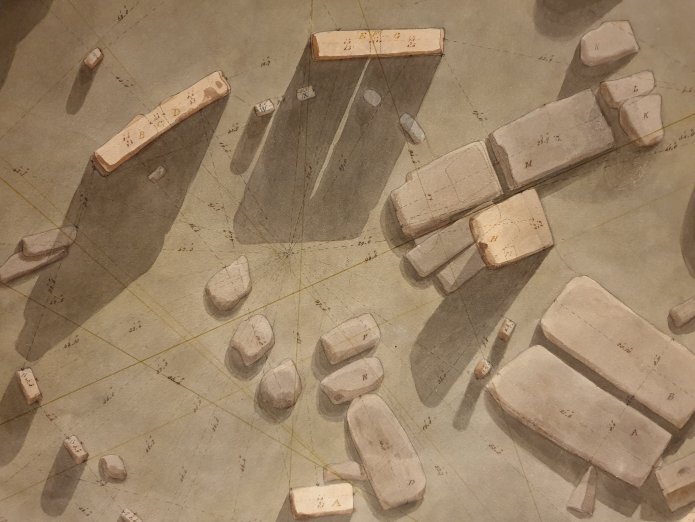
I went to the Soane Museum’s small, but very choice exhibition on his use of light in his buildings and perhaps more how those who illustrated his buildings, particularly J.M. Gandy, used and responded to the fall of light.

Gandy did a view of the Library at Cricket Lodge, Somerset on 29 January 1803:-

His view of the Desenfans Mausoleum at 39 Charlotte Street in 1807:-

This is the amazing conservatory which Soane planned, but never built, at the back of Pitzhanger Manor:-

Henry Parke did a beautiful aerial view of Stonehenge in August or September 1817 for Soane’s lectures to students of the Royal Academy:-

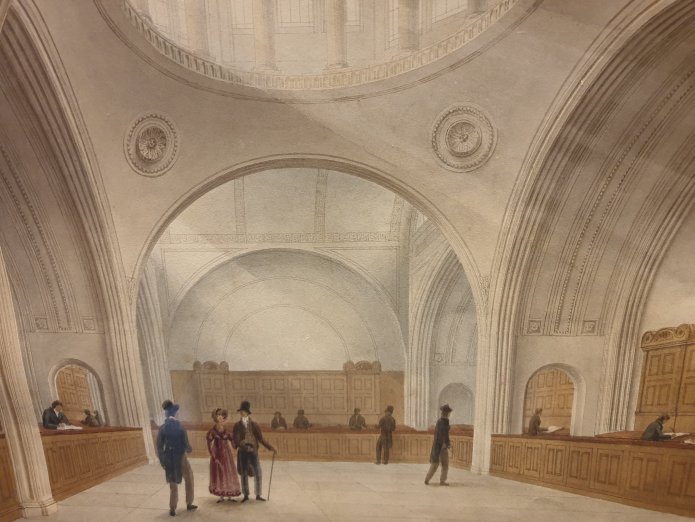
The South-East Transfer Office at the Bank of England:-

Downstairs, the Museum has commissioned three beautiful modern photographs of Soane’s work, two at the Museum and one at Dulwich, by Hélène Binet, the Swiss architectural photographer.

Standard

Jerwood Makers Open 2019

We went to see this year’s Jerwood Makers Open at the Jerwood Space in Union Street, but in due course to travel to Sleaford, Manchester, Scunthorpe and Torquay, a good national run to show work which oddly and fascinatingly has nearly all been made in Walthamstow.

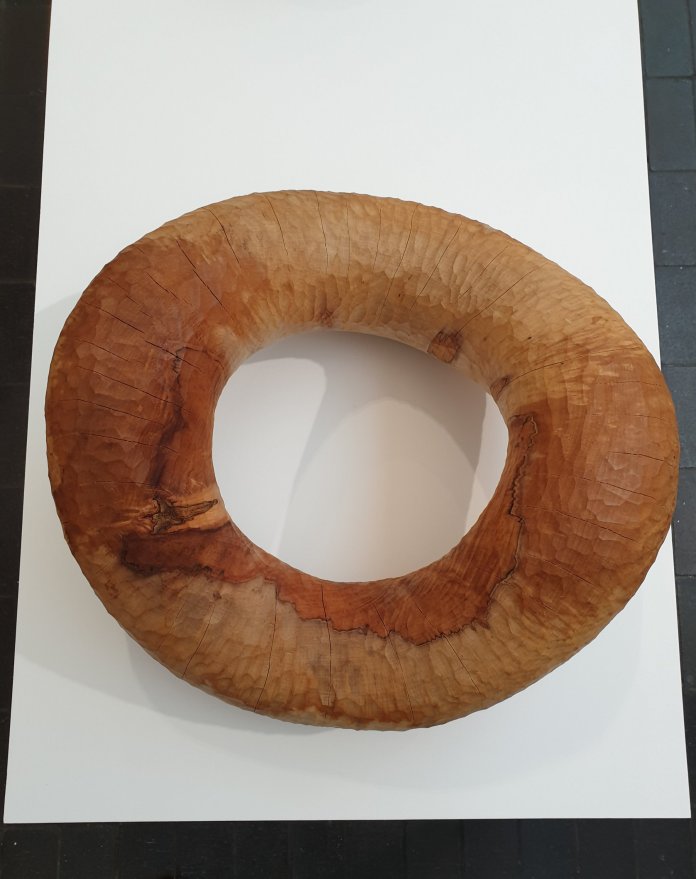
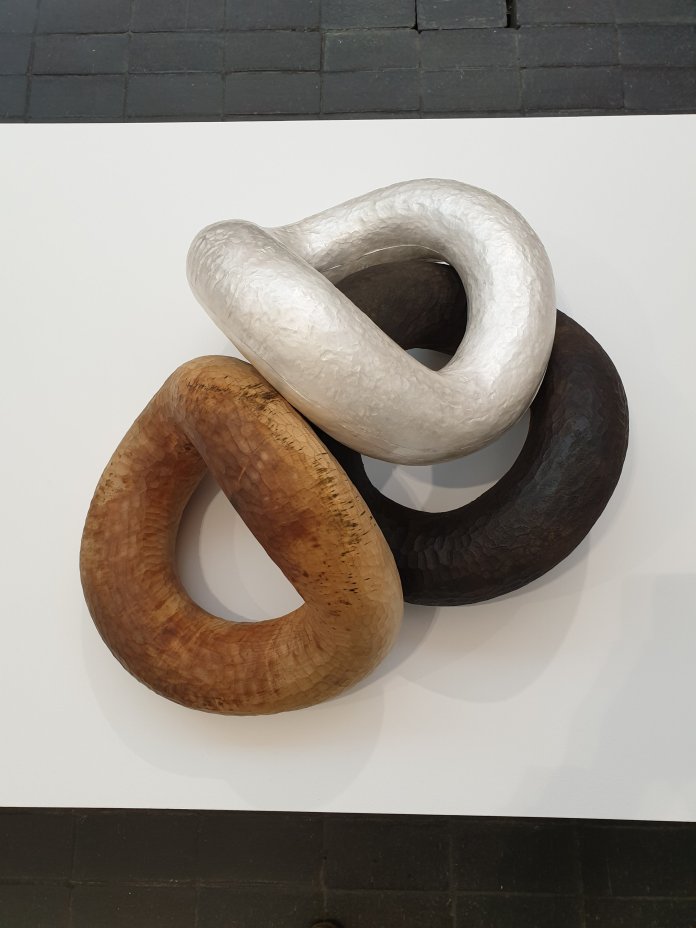
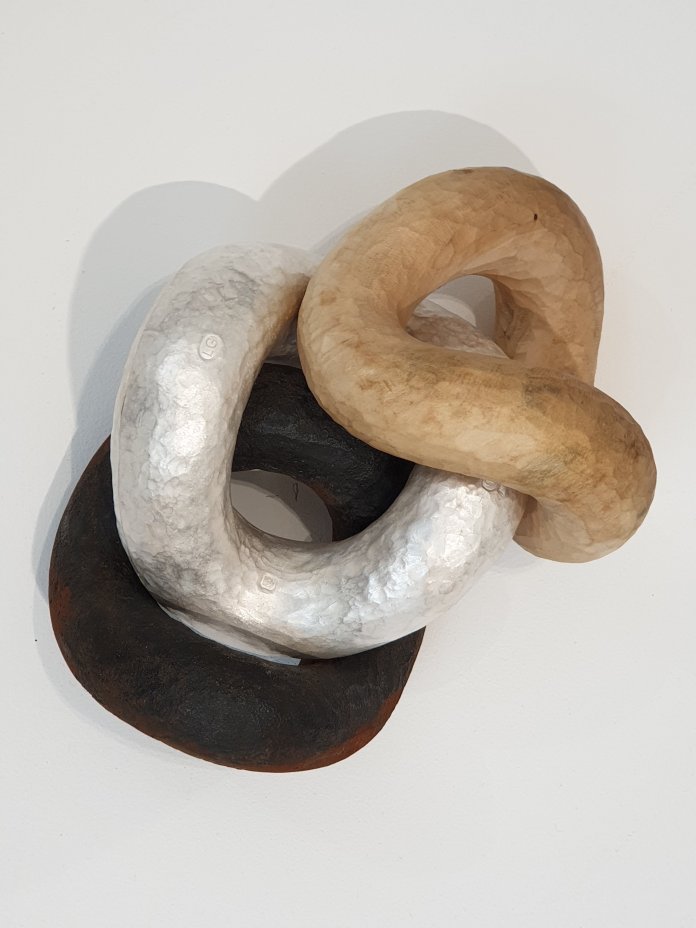
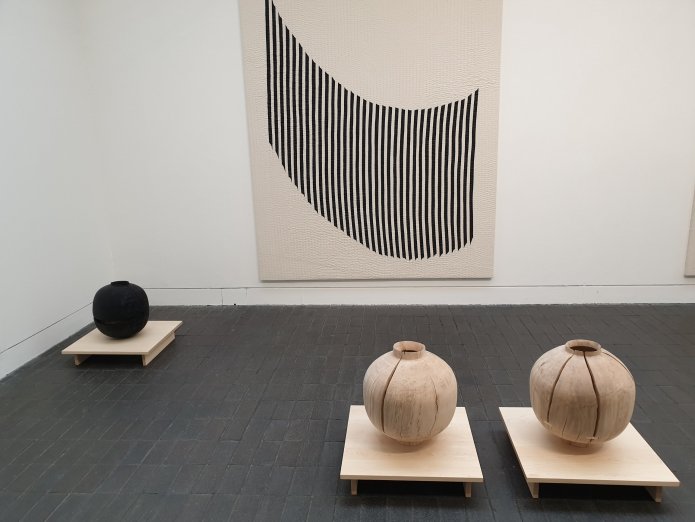
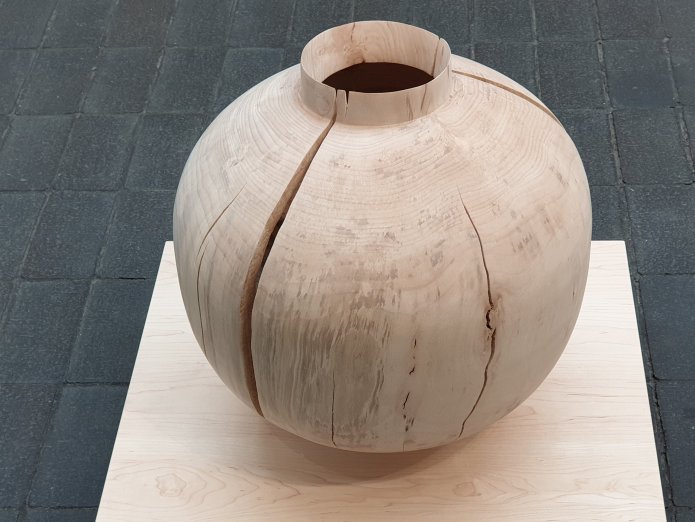
We were particularly interested to see the work of Lucie Gledhill who has worked for a long time with Romilly – indeed, was the person responsible for reintroducing her to the making of jewellery, working as what she calls her translator. But she has always worked independently as a maker, developing different types of chain, on this occasion exhibiting differently sized chain links made out of wood, iron and silver.

This is the biggest wood ring (the photographs don’t do the scale of the work justice):-

They then grow smaller:-

And smaller still:-

I also like and respect the work of Forest + Found, which we have previously seen at Make in Bruton:-

Standard

The Whitechapel Bell Foundry

The campaign to save the Whitechapel Bell Foundry has gone quiet of late because it has been hard to maintain the momentum of the campaign through the longueurs of the planning process. But it is coming to a crunch as Tower Hamlets have to make a decision as to whether to allow a New York venture capitalist to convert a great and important historic site into a boutique hotel or whether, instead, the United Kingdom Building Preservation Trust should be allowed to take the property over and restore it to being, once again, a working foundry.

Do please watch the short film they have made which makes the case for its preservation very powerfully:-

http://www.savethewhitechapelbellfoundry.com/

Standard

The Debate

Of course, like so many others, I watched the televised debate of the contenders to be leader of the Conservative party, apart from Boris Johnson, who shirked the opportunity – I hope to his eternal discredit.

For what it’s worth (it’s been pointed out, correctly, that I have no qualifications for commenting on politics), I thought Michael Gove came out of it best: robust, quick on his feet, and confident. I had previously had very little idea of Sajid Javid, who spoke with thoughtfulness and dignity. But it was clear from the applause that the only candidate who has any opportunity and the determination to reach out to younger, swing voters, as represented by the audience, is Rory Stewart who offers a different style of politics: more concerned to listen, a bit rough at the edges, oddly earnest, but with the advantage of being humane.

Standard

Old Town

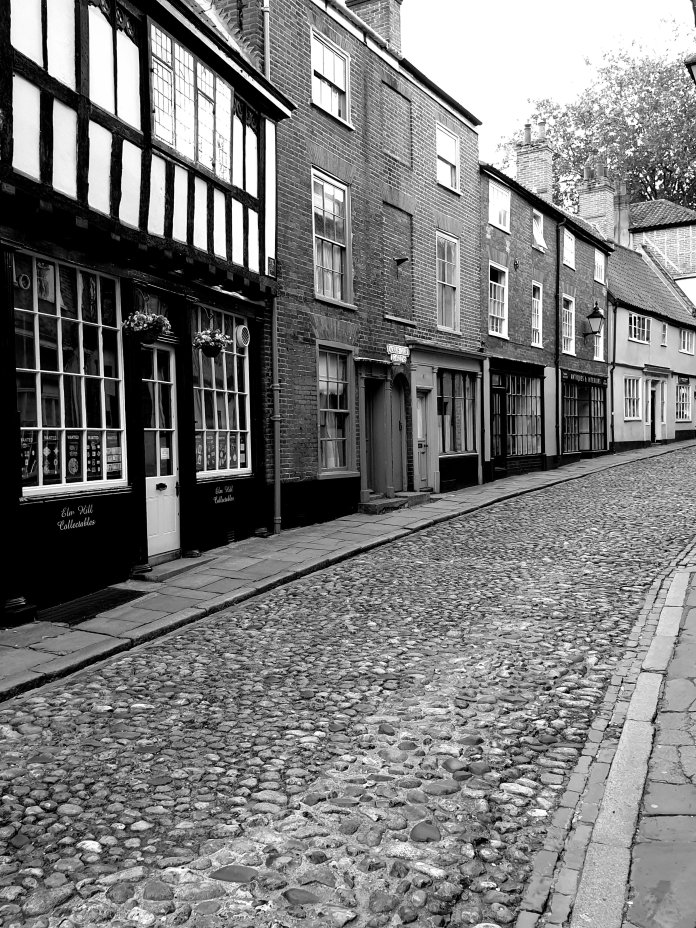
In the interests of historical accuracy, I feel that I should record that, as I thought, the original location of Old Town, my favourite clothier, now long established in Holt, was at 32, Elm Hill in Norwich, the original Old Town, where they moved in 1992 and opened a shop ‘selling dustpans, brushes, enamel ware, hurricane lamps and balls of string’. In her twenty fifth anniversary history of the shop, Miss. Willey describes how ‘We had no definite plan other than to open a shop selling a selection of household items. In hindsight I suppose we were feeling a sense of loss at the changing face of the traditional high street’. I remembered this on my way to tea at the Britons Arms yesterday afternoon:-

Standard

E.O. Hoppé (2)

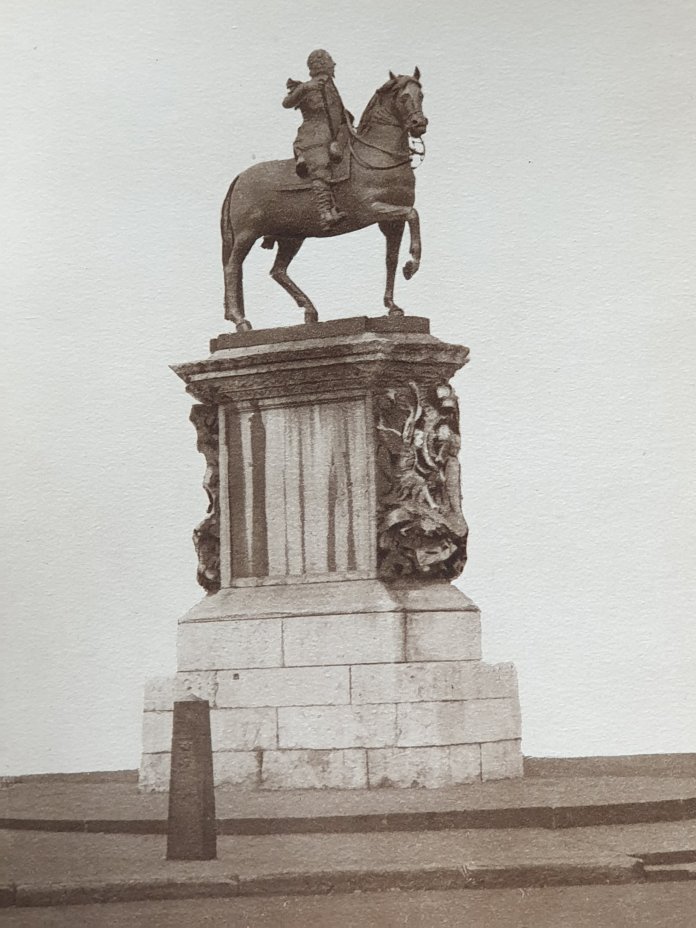
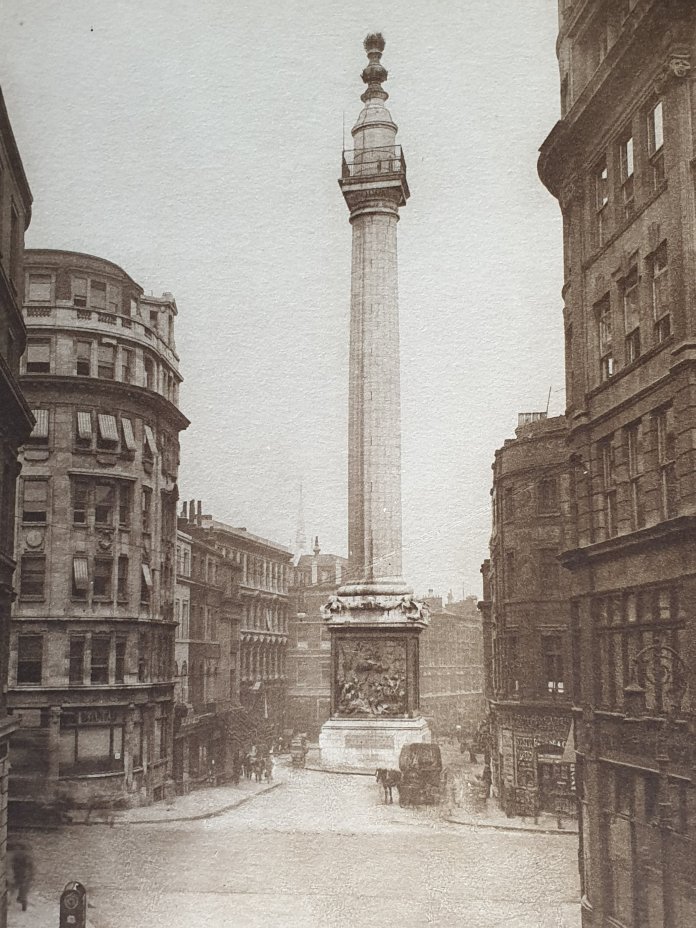
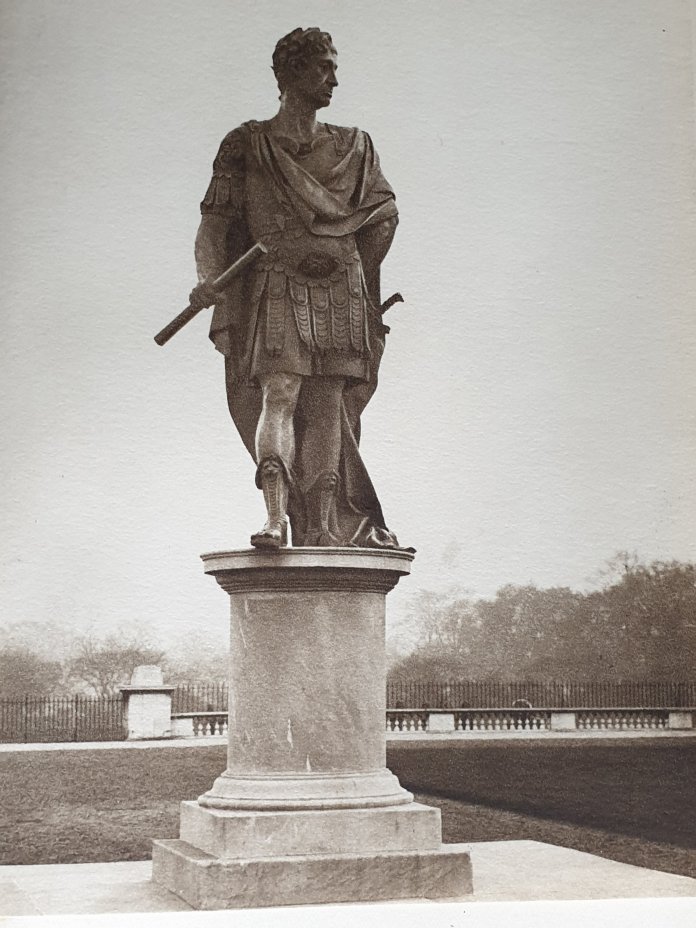
Although unaware of Hoppé’s status as a portrait photographer, I have discovered that I do own a copy of a book for which he provided beautiful sepia photographs, 40 of which were tipped in: that is, Tancred Borenius’s Forty London Statues and Public Monuments, published by Methuen in 1926. Borenius was by then the Durning-Lawrence Professor at University College, London and, like other émigré art historians (most notably, Wittkower and Pevsner) had become interested in the art – particularly the medieval art – of his adopted country. The book is a survey of London’s public statuary and Borenius must have asked Hoppé to take the photographs specially for the book.

Here is Charles I, isolated from his surroundings in Charing Cross:-

The Monument:-

Charles II:-

So, it goes on, ending with the W.H. Hudson Memorial in Hyde Park.

Standard

E.O. Hoppé (1)

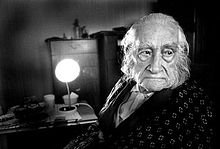
I confess my ignorance: I was not aware of E.O. Hoppé’s work as a photographer before admiring the atmospheric images he published in 1926 in a book entitled Picturesque Great Britain in the Sainsbury Centre’s exhibition on W.G. Sebald. Sebald would have known of him because, like Sebald himself, Hoppé was German. He arrived in London in 1900 to work for Deutsche Bank, was given a camera as a birthday present in 1903, married the sister of a friend, and left Deutsche Bank to set up a photographic studio in Baron’s Court in 1907. Incredibly well known in the 1920s as a fashionable portrait photographer, close friend of George Bernard Shaw, he moved to topographical work in the late 1920s, and subsequently sold his photographic archive to the Mansell Collection in 1954 where it was categorised by subject, not the name of the photographer, so his name disappeared nearly entirely from public view. It’s a very Sebaldian life story – loss, fame, talent, exile.

I hope I am not transgressing copyright by reproducing this picture of him:-

Standard