
It’s Roy Strong’s birthday today. 91. I remembered that somewhere in our family album was a picture I took of him at The Laskett.
Here he is, circa 2000:-
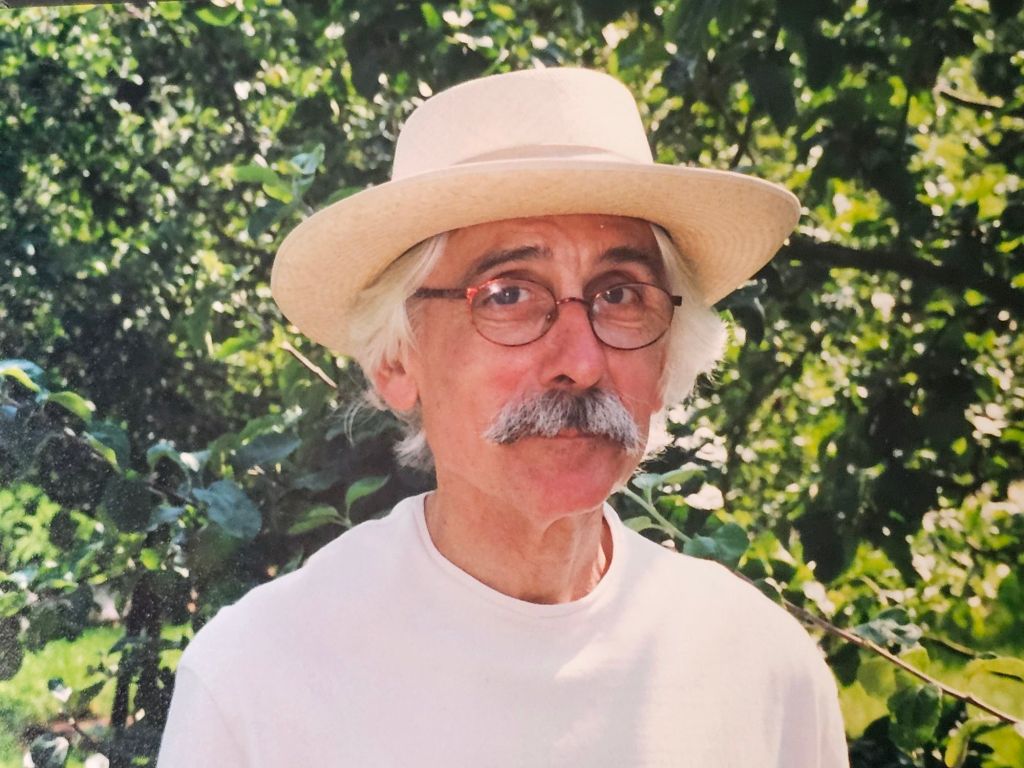
It’s Roy Strong’s birthday today. 91. I remembered that somewhere in our family album was a picture I took of him at The Laskett.
Here he is, circa 2000:-
My reflections on the Vanbrugh tercentenary have just appeared in my inbox:-
https://www.vanbrugh300.co.uk/media/reconsidering-john-vanbrugh
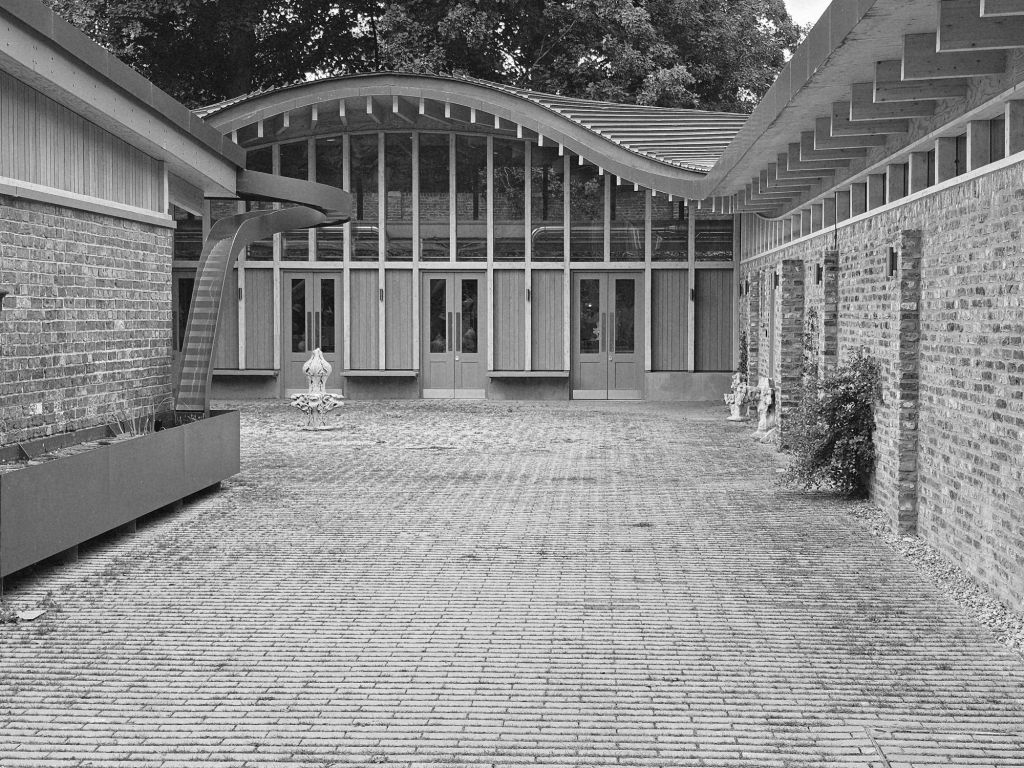
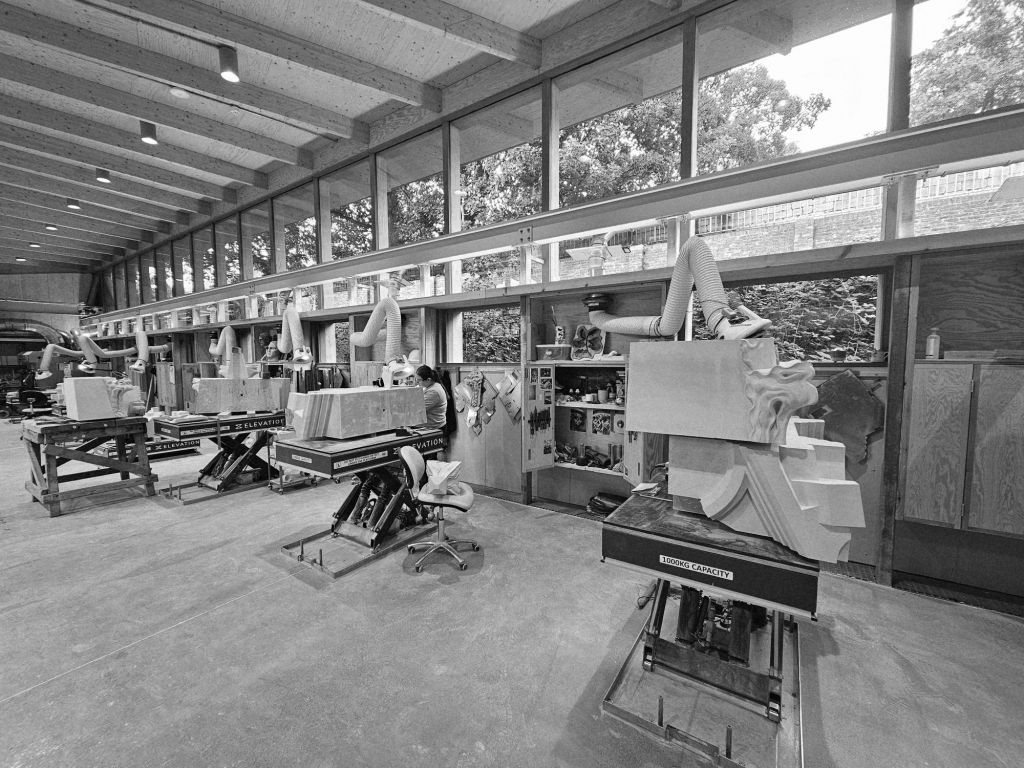
I visited York to see its new Centre of Excellence which consists of two new buildings, both designed by Tonkin Liu.
The first – the Technology Hub – is an adaptation of an existing yard close to the East End of the Cathedral.
More ambitious is the Heritage Quad, tucked into space in what was the Deanery’s garage under the City Walls.
It’s a clever building with space for visiting craftspeople to stay:-
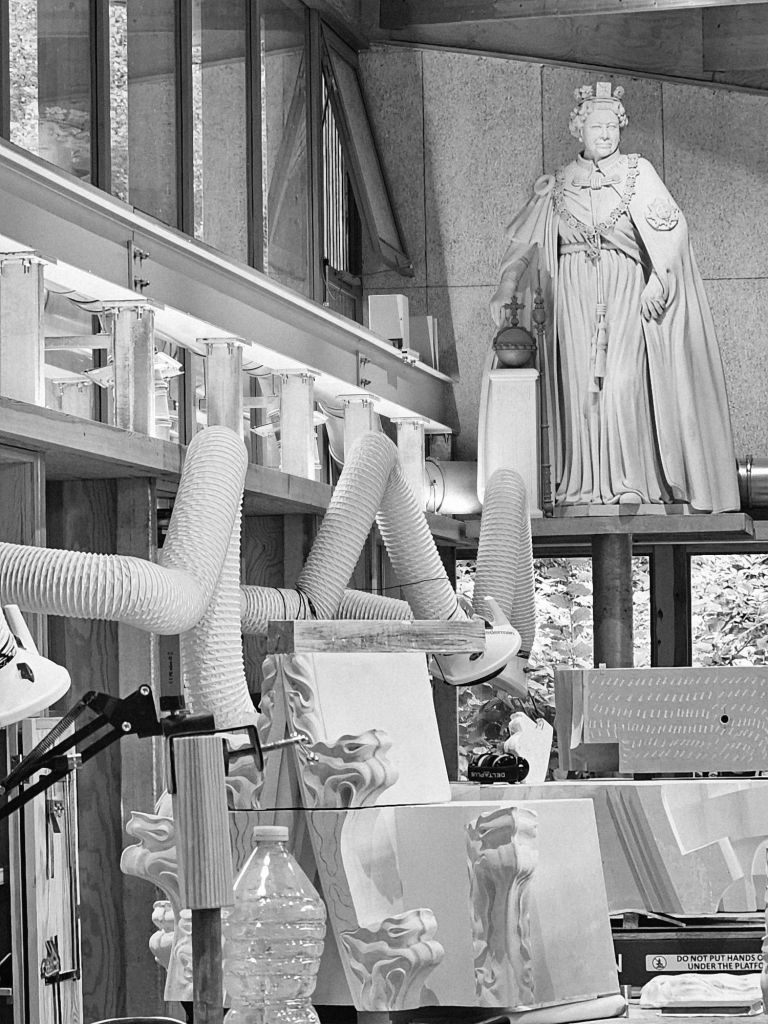
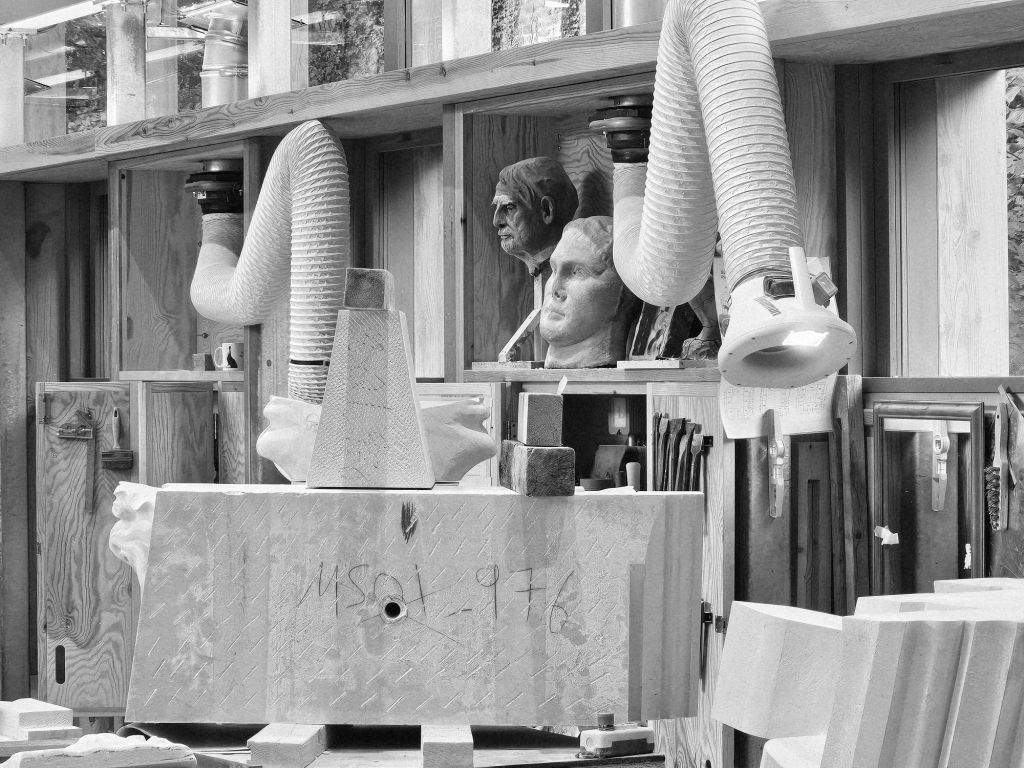
And a huge and well-equipped studio:-
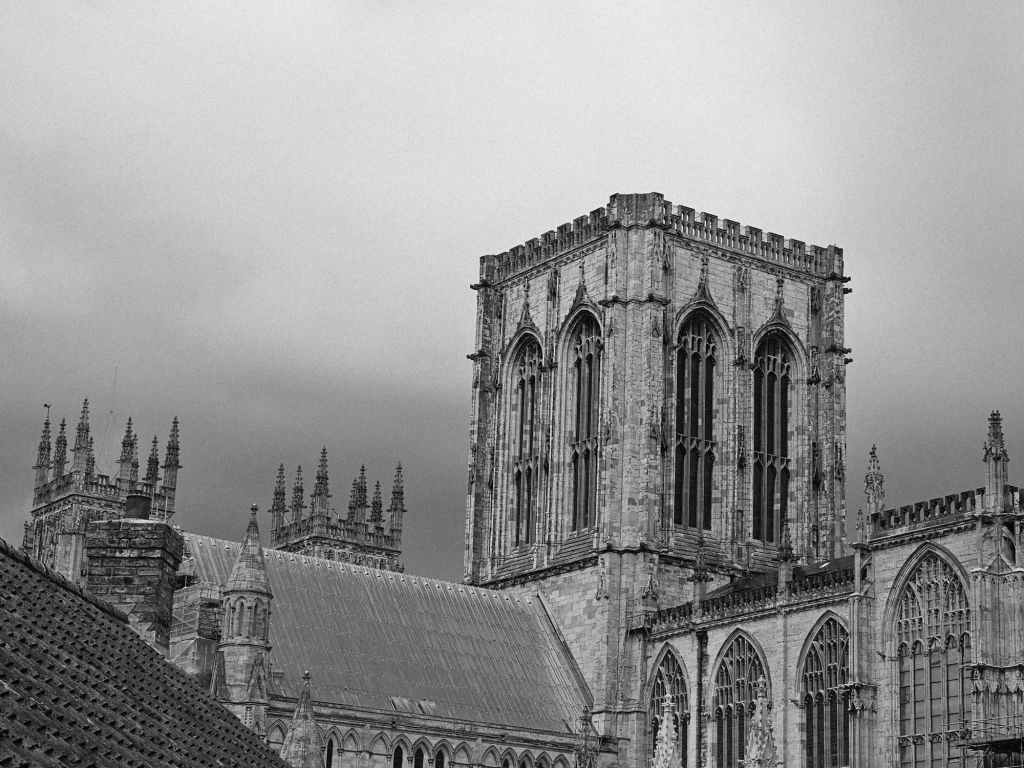
For some, probably childish, reason, I wanted to walk the York city walls to get a feel for the extent of the medieval city, presided over by the Minster:-


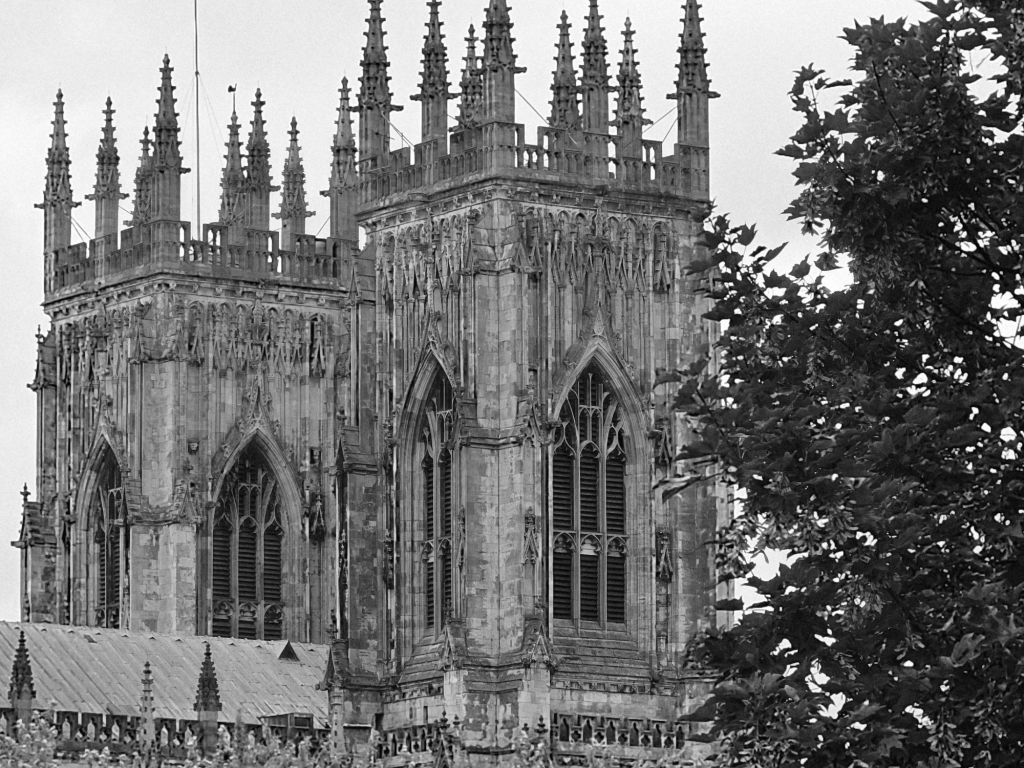
Inside the Minster:-
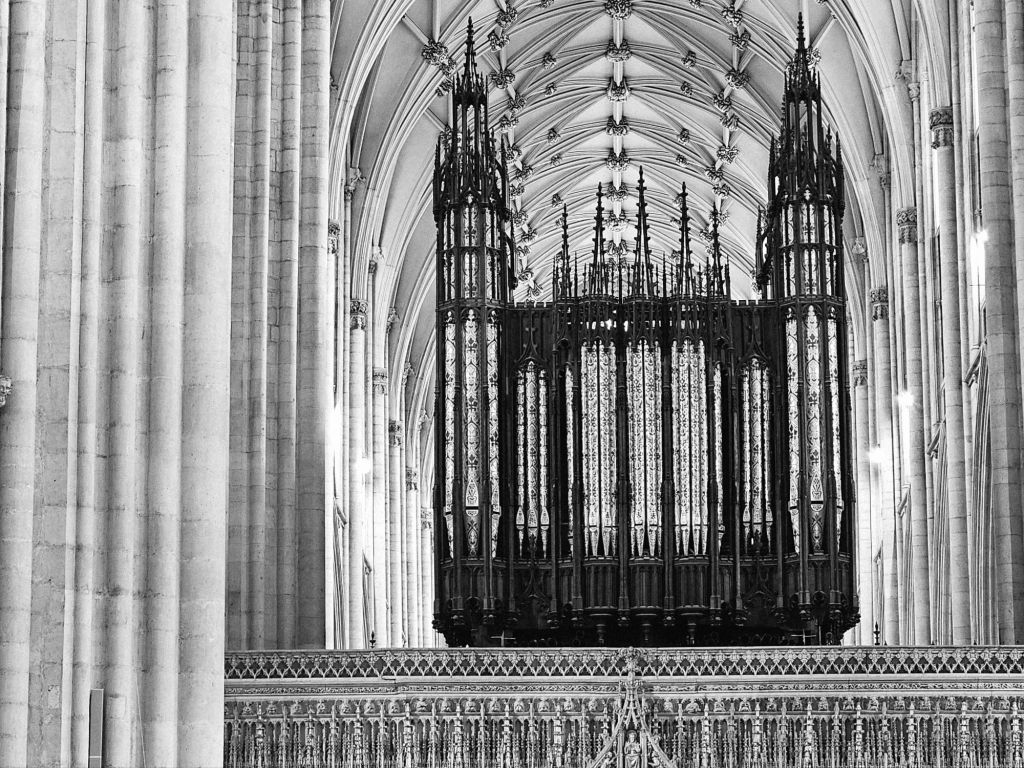

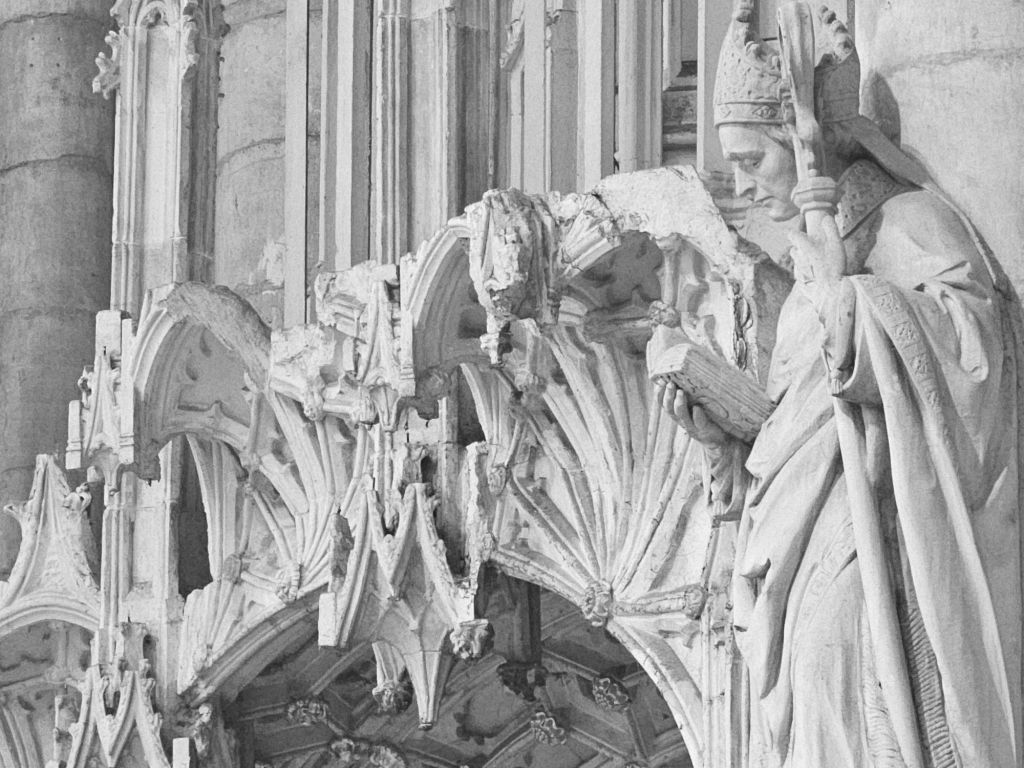
I looked mainly at the tombs.
Archbishop Sharp, died 1714, tomb by Francis Bird:-
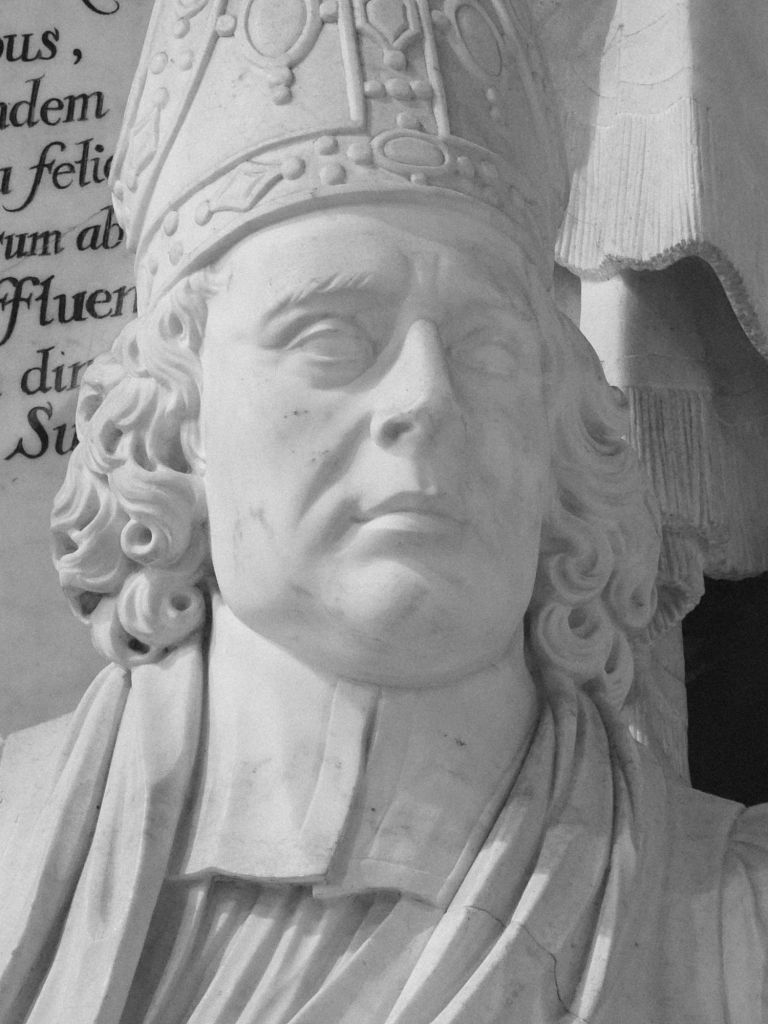
William Wentworth, Earl of Strafford. Tomb by Jan Van Nost:-


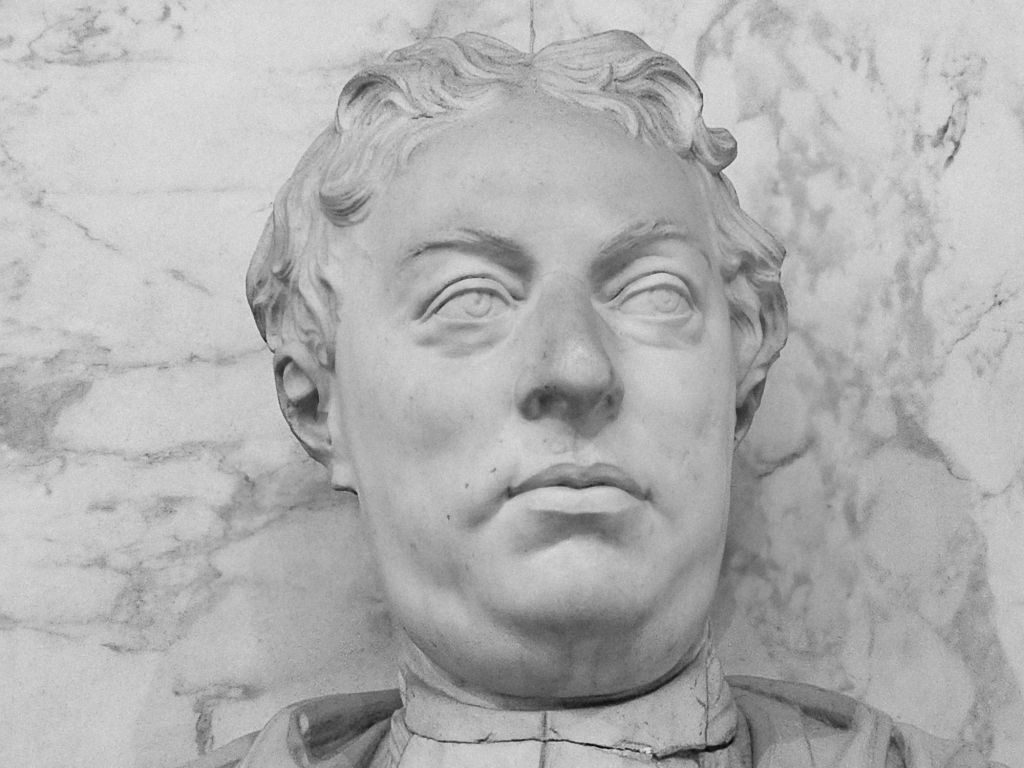
Henry Finch by Rysbrack:-
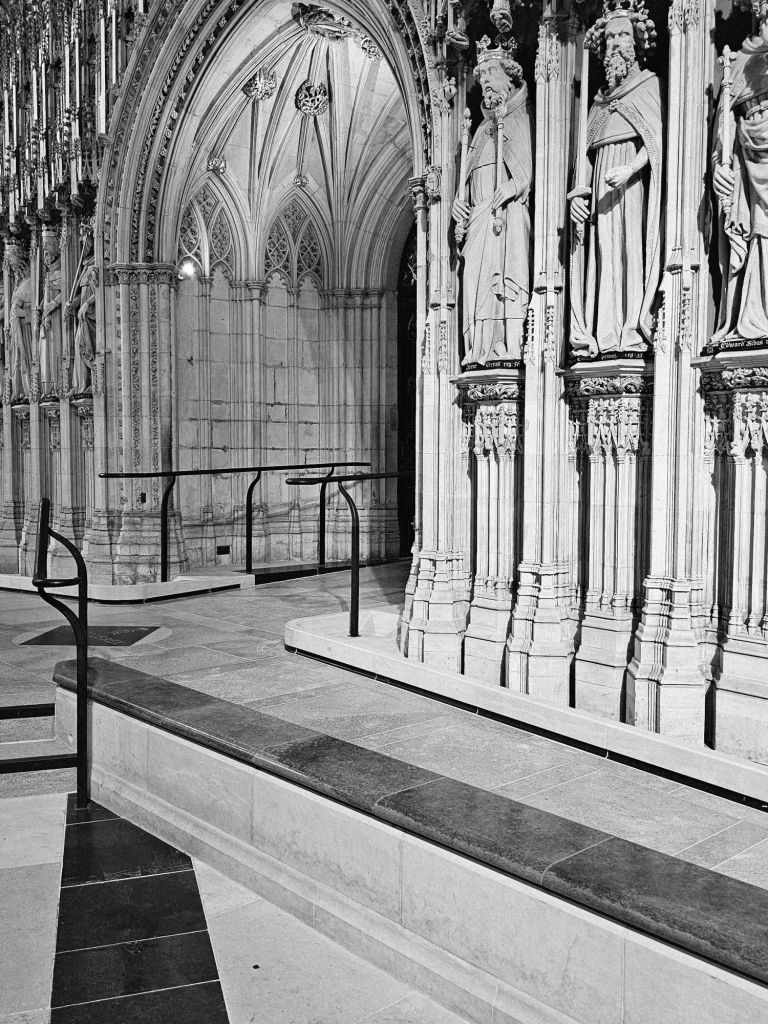
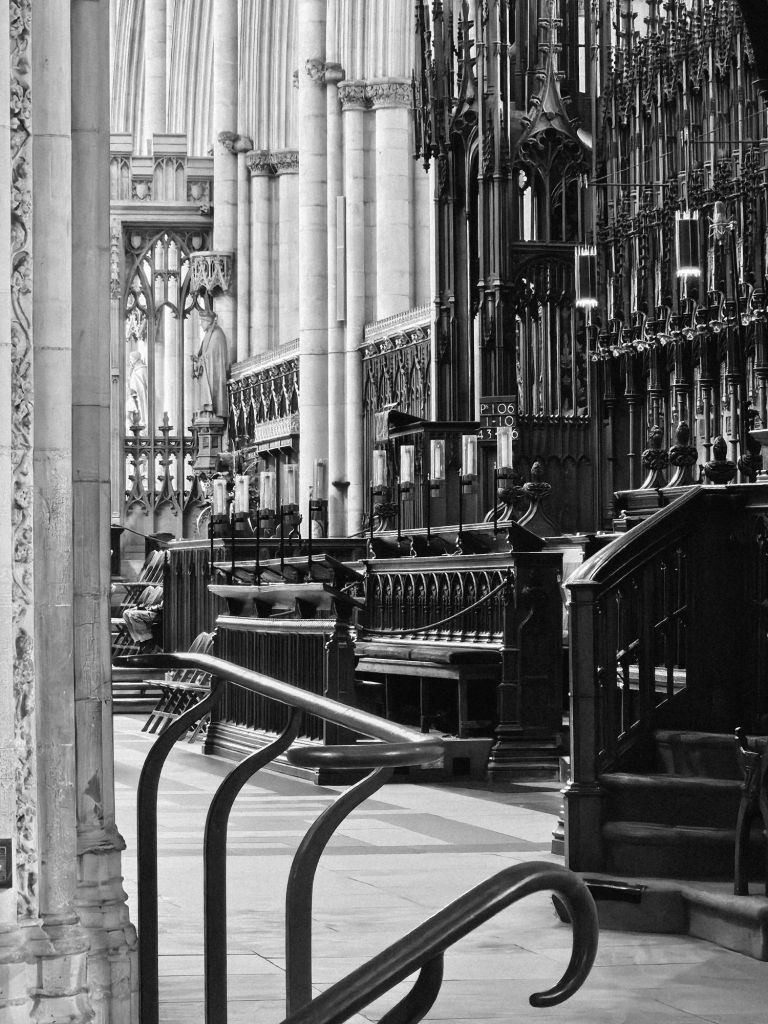
By the way, they have just installed the most intelligent and sophisticated disabled access into the chancel. It can be done:-
Back in January, I was browsing in the Triangle Bookshop at the Architectural Association when I spotted a volume of essays by Irénée Scalbert, A Real Living Contact with the Things Themselves, published by Park Books in Zurich. I had been thinking that, having writing a monthly column for The Critic for five years, it might be worth assembling the essays as a way of covering recent developments – and controversies – in British architecture.
Now, seven months later, the essays are scheduled for publication next April by Lund Humphries under the title Architecture, Criticism and History, the portmanteau term I used to categorise them. They cover a wide range of subjects and, since most are only 900 words, I hope are readable:-
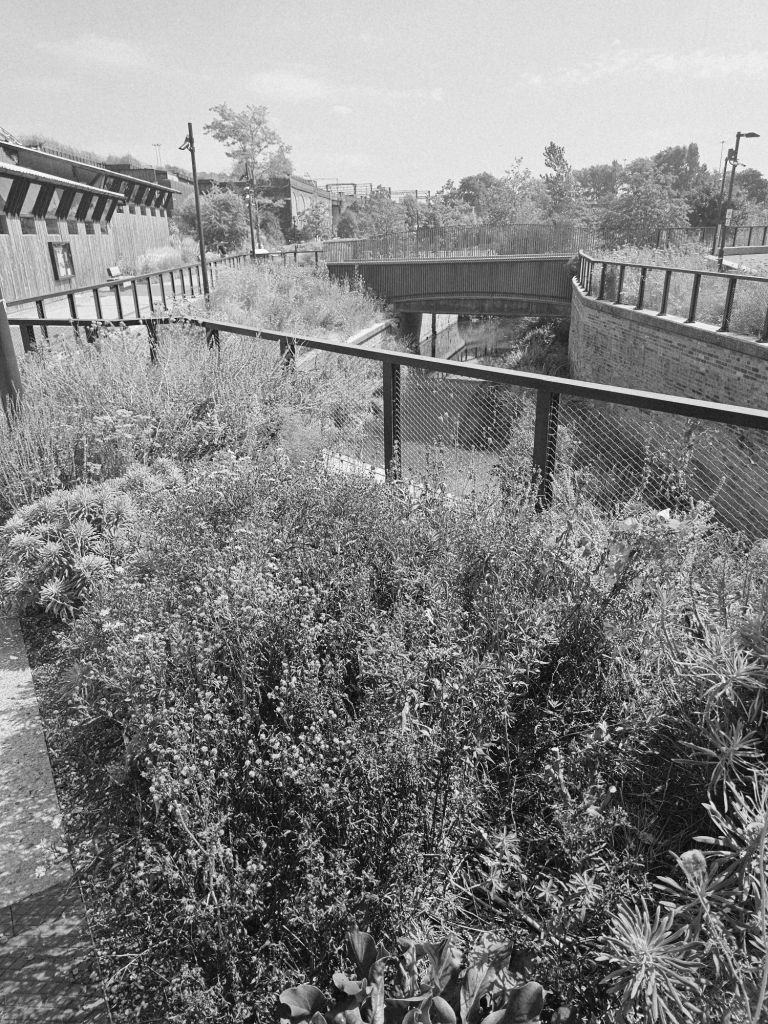
I spent a second day in Manchester, being shown the city centre by Rachel Haugh, a partner of Simpson Haugh who have been responsible for many of the new developments in Manchester, beginning with the Atlas Bar which opened in 1996 in the Atlas Auto repair yard in Knott Mill and including the four residential blocks in Deansgate Square on the other side of the River Medlock.
We started in Mayfield Park, an area of urban regeneration close to Piccadilly:-
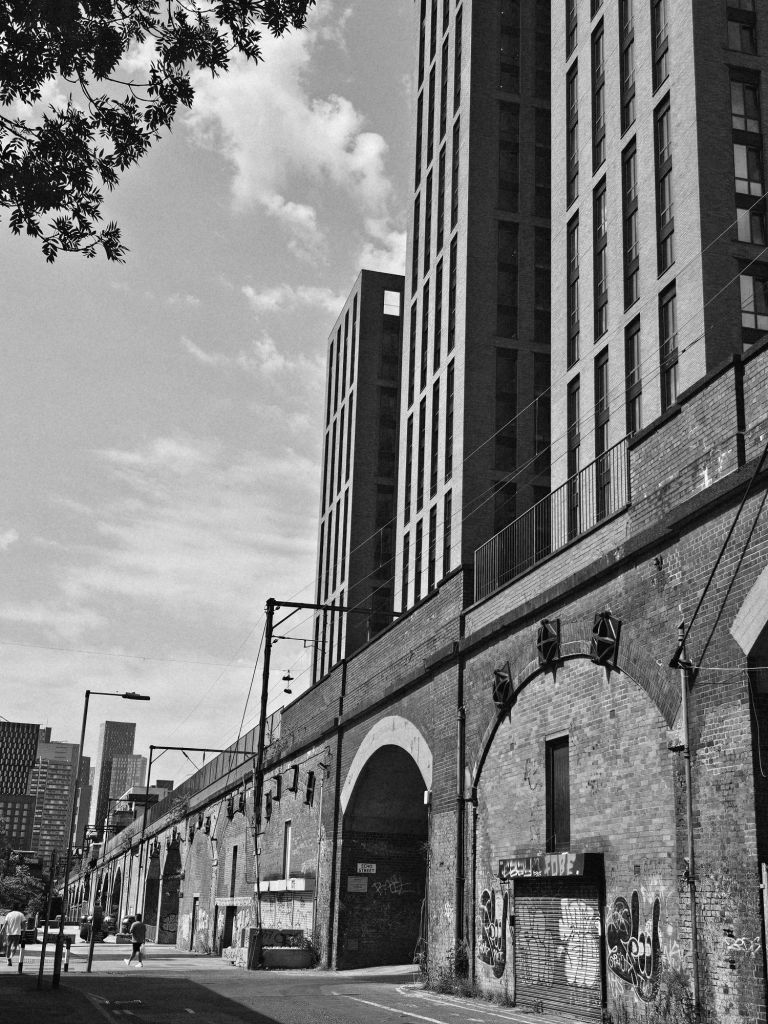
Then walked the streets.
I was impressed how much of the Victorian city has survived alongside the canals, even close to the centre:-
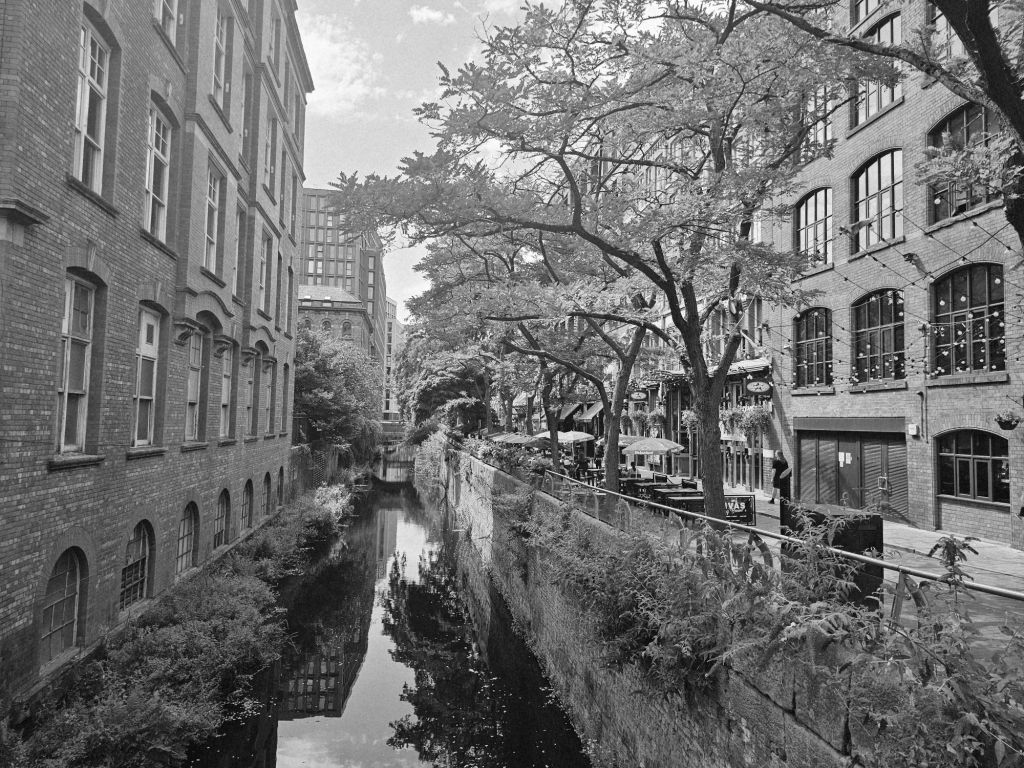

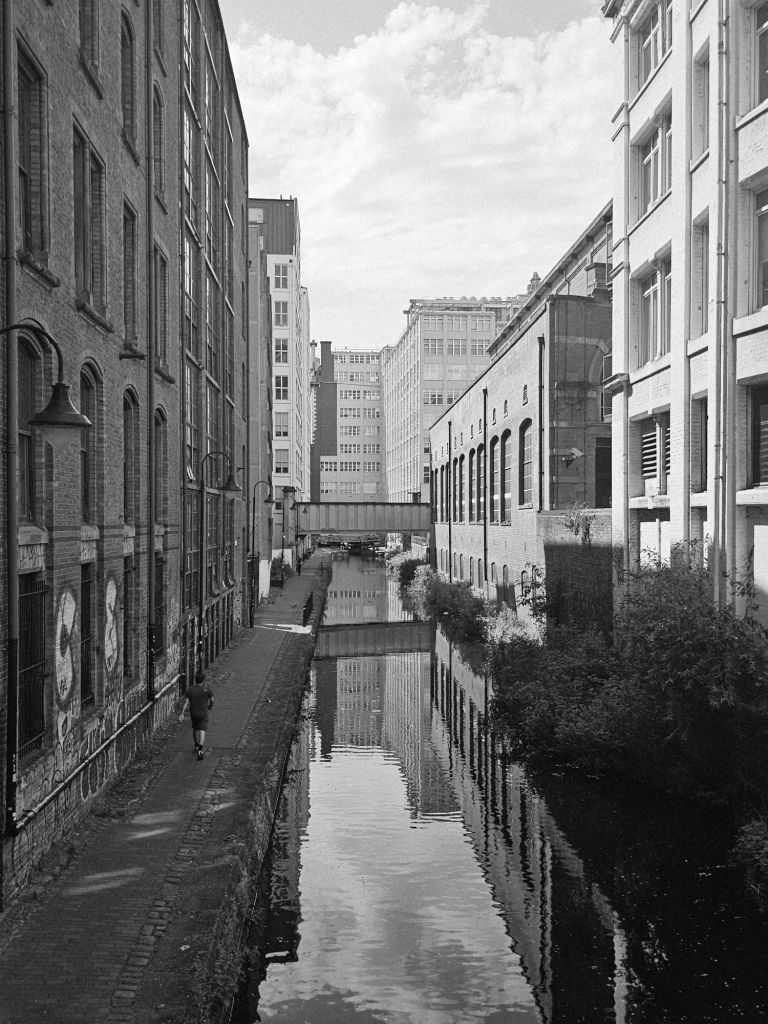
This is particularly true in Castlefields where the Bridgewater Canal takes off:-
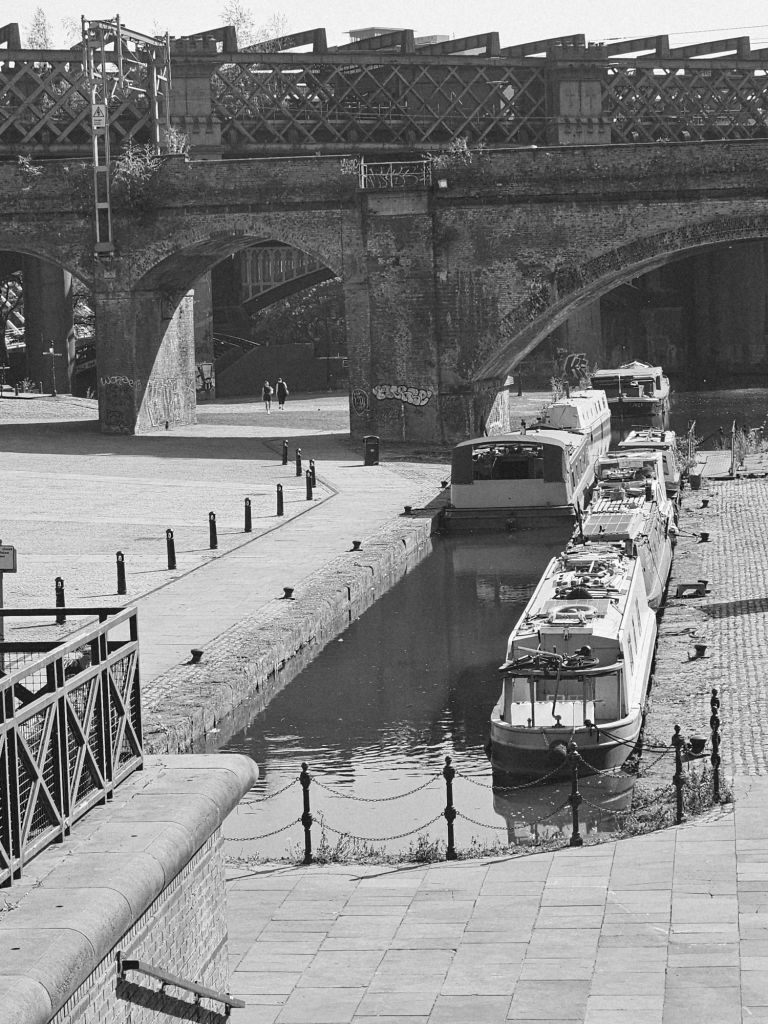
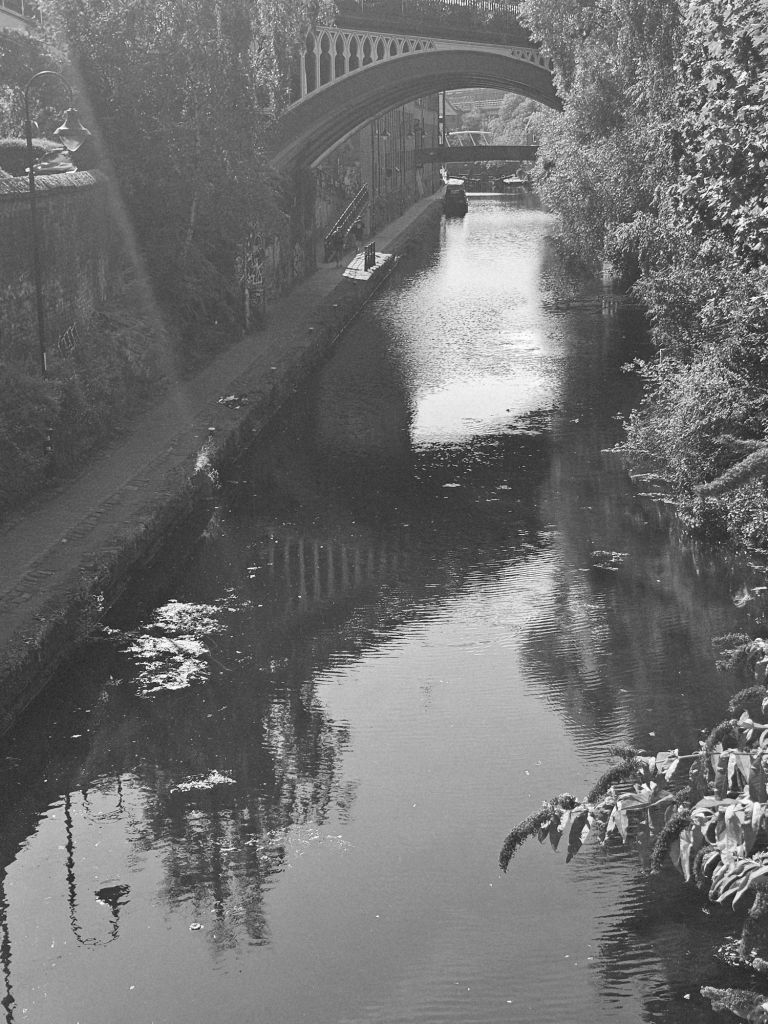
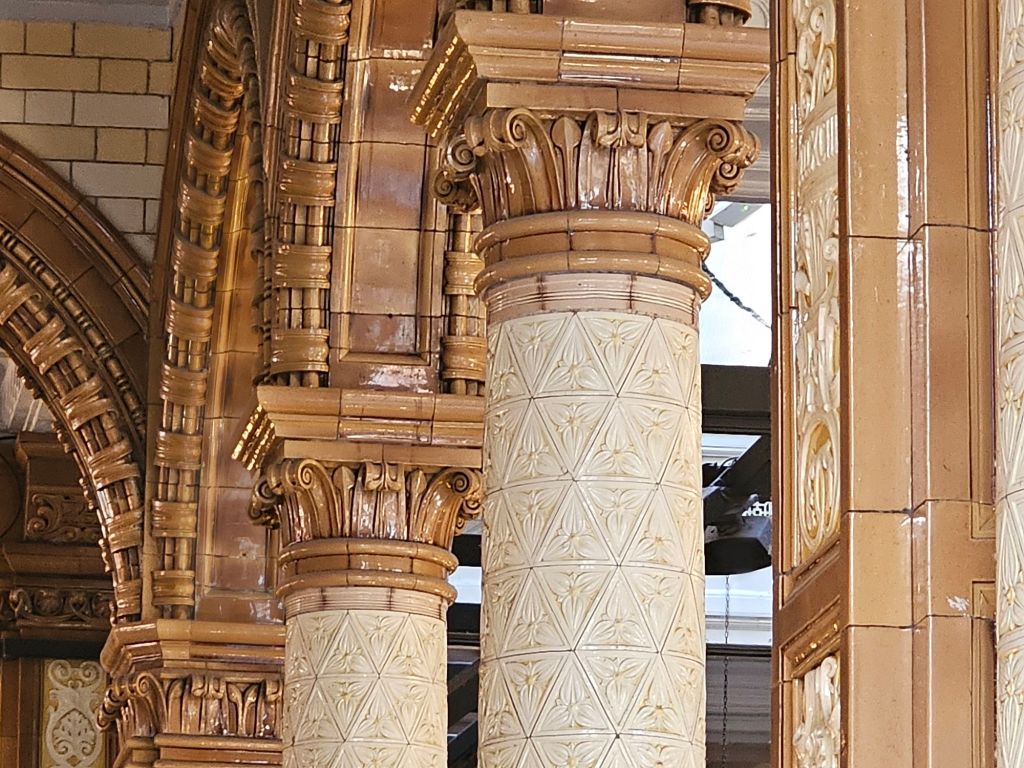
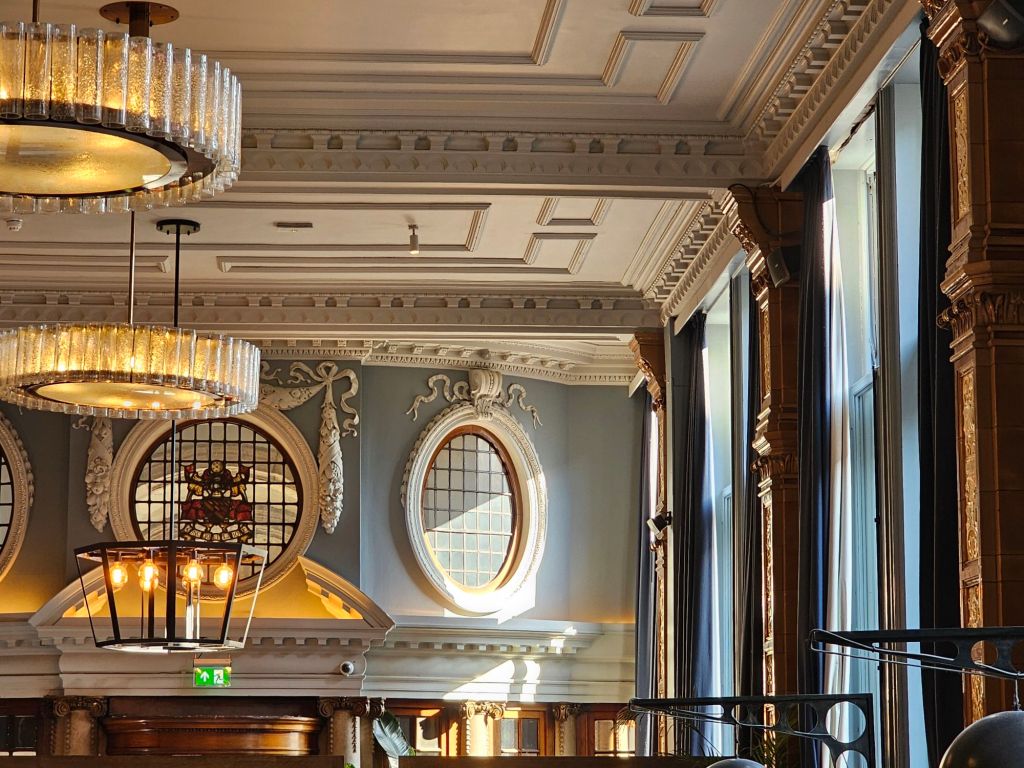
Last stop was the bar of the Kimpton Hotel, originally the Refuge Assurance Building, designed by Waterhouse:-
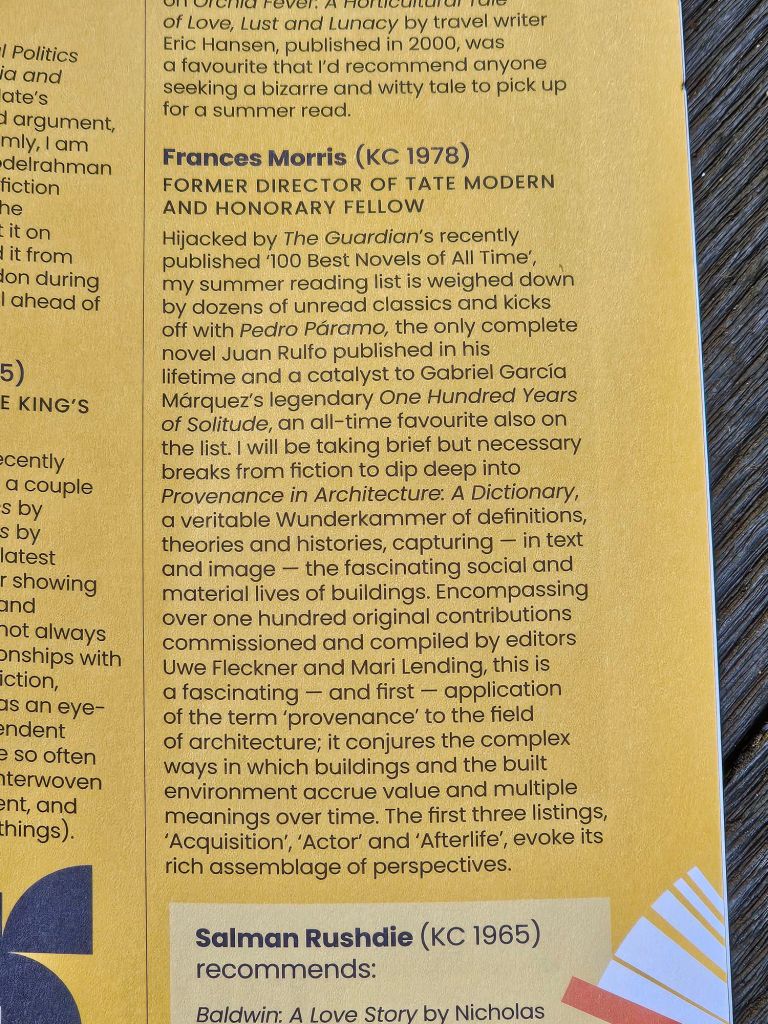
I opened my summer edition of King’s Parade, the magazine for people who attended King’s, to find an entirely unexpected recommendation of the excellent so-called Dictionary, really a volume of short essays, on Provenance in Architecture, to which I contributed an entry on ‘Craft’.
Summer reading…..
My nephew, George, was married in Fromond’s Chantry today: a most beautiful and unspoilt medieval holy place immediately to the south of Winchester College’s Chamber Court.
We approached from the south:-
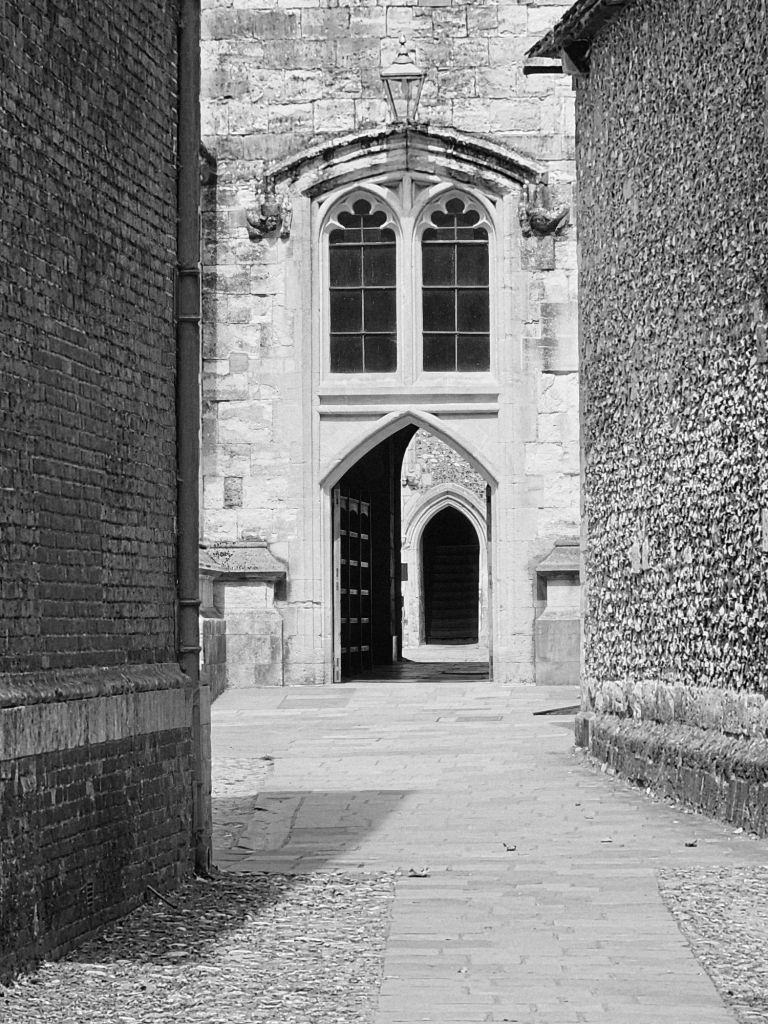
The cloister is beautifully well preserved:-
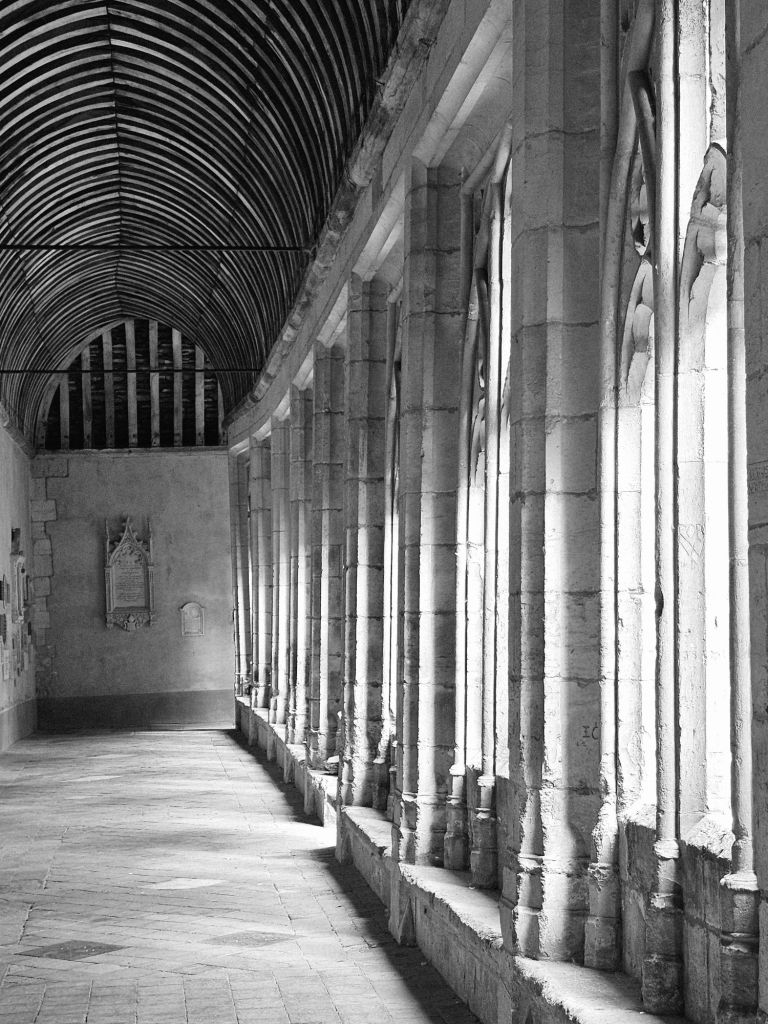
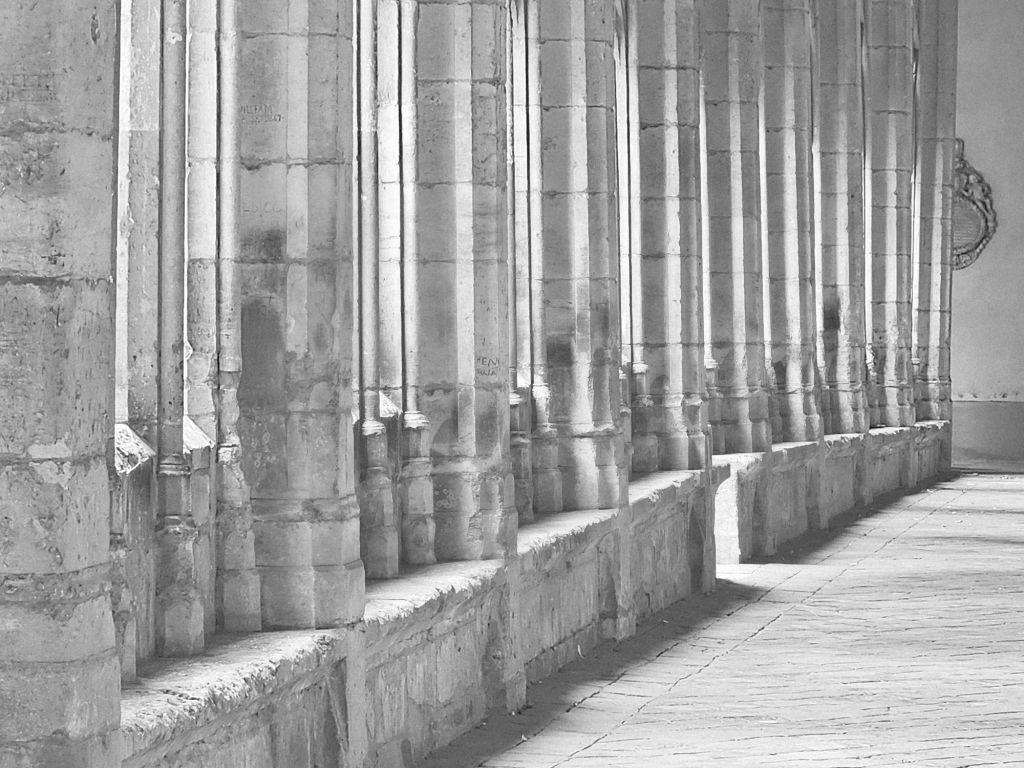
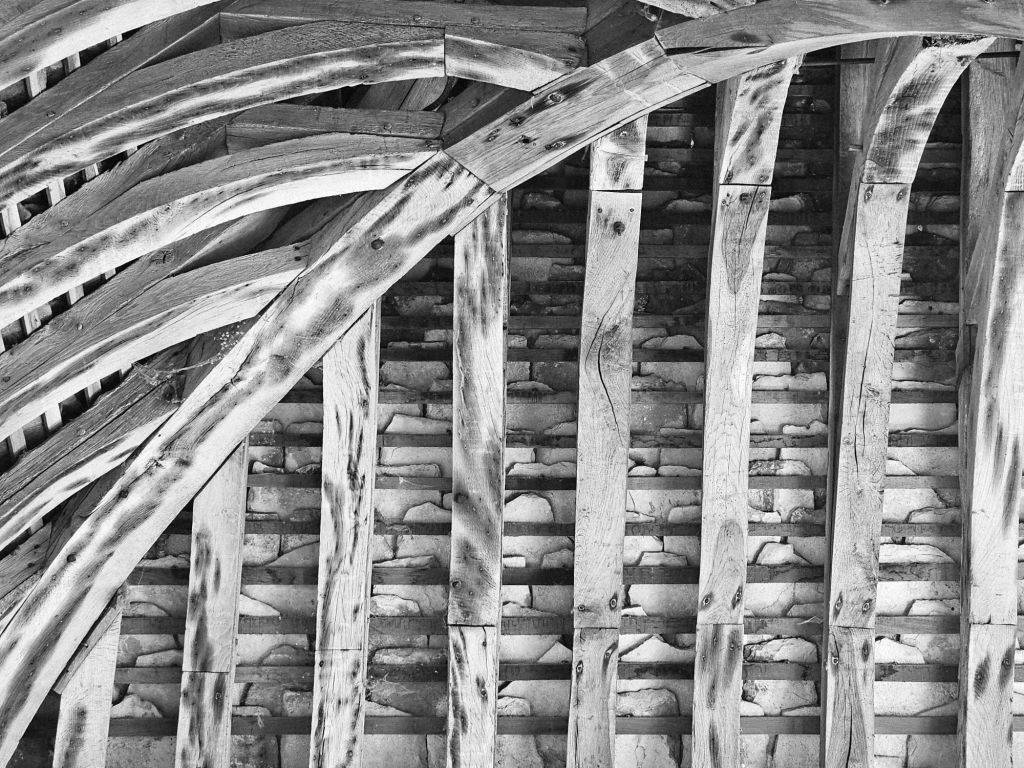
The roof is like an upturned boat:-
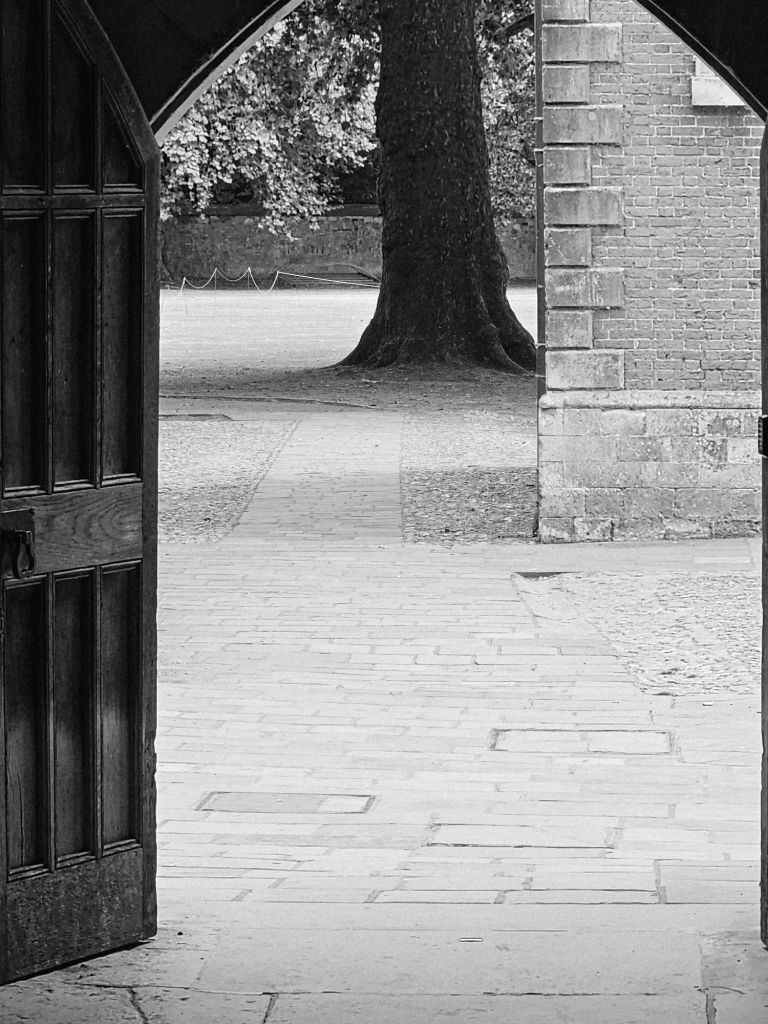
This is the view through to where we were parked, next door to School, which I should have known is attributed to Wren:-
I have been working on an obituary of Christopher Ondaatje, which has now appeared:-
https://www.theguardian.com/society/2026/aug/07/sir-christopher-ondaatje-obituary
Very sad news from the other side of the Atlantic of the death of Robin Middleton, a formidable figure in the world of architectural history and, indeed, architecture more widely. He taught me at Cambridge as part of an unlikely double act with David Watkin, introducing us to the world of neo-classicism through his deep knowledge of, and interest in, the theoretical literature of French neoclassicism, beginning with a compulsory first essay on Claude Perrault’s Ordonnance des cinq espèces de colonnes selon la méthode des anciens. He had done his PhD. thesis under Nikolaus Pevsner on ‘Viollet-le-Duc and French Nineteenth-Century Architectural Theory’ in three volumes.
At the time, he was a figure of slight mystery, at least to me. He would appear from London dressed in his snakeskin jacket. I later discovered that he was simultaneously running General Studies at the Architectural Association and was very active in organising lectures and conferences there – probably more active there than he was in Cambridge. Born in South Africa in 1931, he had studied architecture at the University of Witwatersrand where he made friends with Denise Scott Brown (née Lakofski) and her first husband Robert Scott Brown. I remember Denise saying that they had travelled round Europe in 1956 with lists of buildings to see prepared by Robin and one of the best aspects of his teaching was the wonderful printed map he had prepared of all the nineteenth-century buildings to see in Paris. It was my introduction to Paris. I wish I still had a copy.
I hope the RIBA won’t mind if I reproduce the slightly blurry picture of him taken in 1969 by Monica Pidgeon with whom he worked on Architectural Design.


You must be logged in to post a comment.