
Very sad news about Christo. I first heard him speak at the Carpeneter Center for the Visual Arts in early 1977 when he showed images of Valley Curtain, one of his early projects in the Rocky Mountains, and Running Fence, a big project creating a 40 kilometre fabric fence through the countryside of Marin and Sonoma Counties. They were both projects of great and elemental beauty and simplicity, supplemented by his characteristically elaborate conceptual drawing; and I have followed his career ever since as he went on to wrap the Reichstag and the Pont-Neuf and his umbrellas in California. He came and talked at the RA in 2014 and was impressively and authentically still full of projects and ideas.
Author Archives: Charles Saumarez Smith
Dominic Cummings (2)
In the aftermath of the Dominic Cummings affair, I have just read something so extraordinarily distasteful, I feel that I need to draw attention to it just in case it gets lost in the general noise.
I found it pretty distasteful that the Mail on Sunday had chosen to rake up some not very bad muck about the retired chemistry teacher who had reported the fact that Dominic Cummings had been on a day out in Barnard Castle – namely that he had gone to collect his daughter after lockdown rules had changed, as if this was somehow the equivalent of a senior person in government driving to a second home with Covid-19 when both were expressly forbidden. I also found it odd that Boris Johnson was quoted as being ‘miffed’ that the British public was so angry – an oddly Billy Bunter-ish expression for a Prime Minister in the face of a national disaster.
It turns out that the article in question was written by Carrie Symonds’s ex-boyfriend, Harry Cole. Which makes it sound as if the Prime Minister asked his girlfriend to make sure that the retired chemistry teacher’s life was made hell as an act of petty, spiteful revenge. Well, it would be in character, wouldn’t it ? I will lock my door tonight.
Spa Terminus
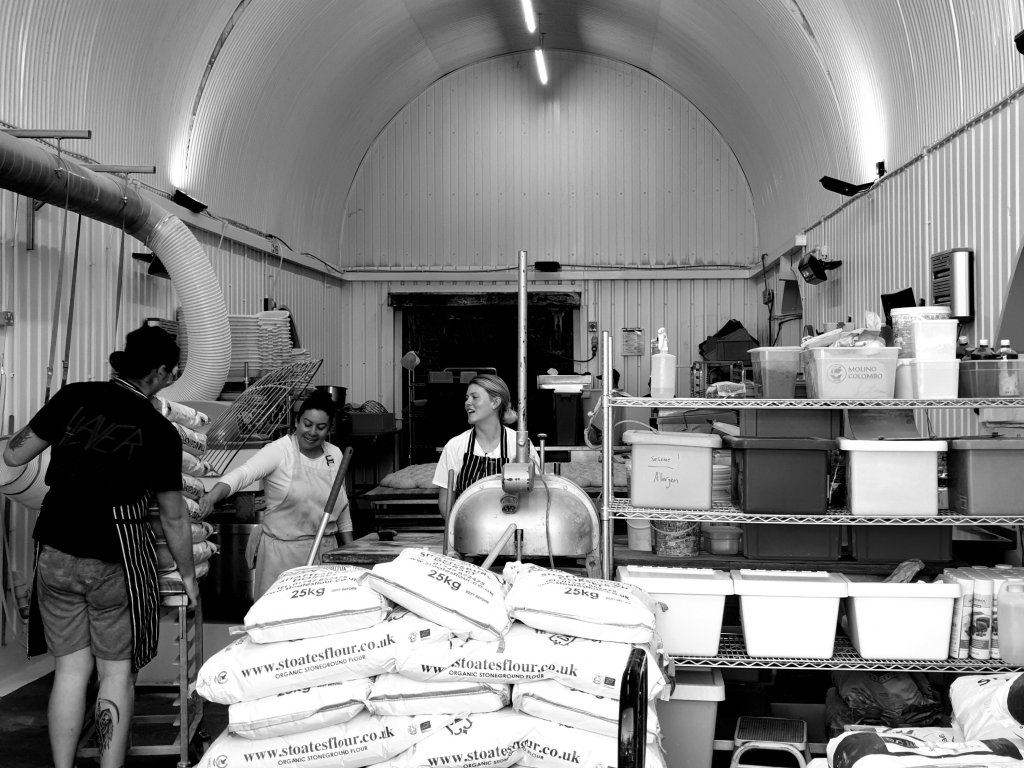
I had been tipped off the some of the specialist food shops in Spa Terminus are open on days other than Saturday, so called in on my way back from Greenwich for bread supplies, including croissants, chocolate brownies and, joy of joys, home-made Panforte from the Little Bread Pedlar:-
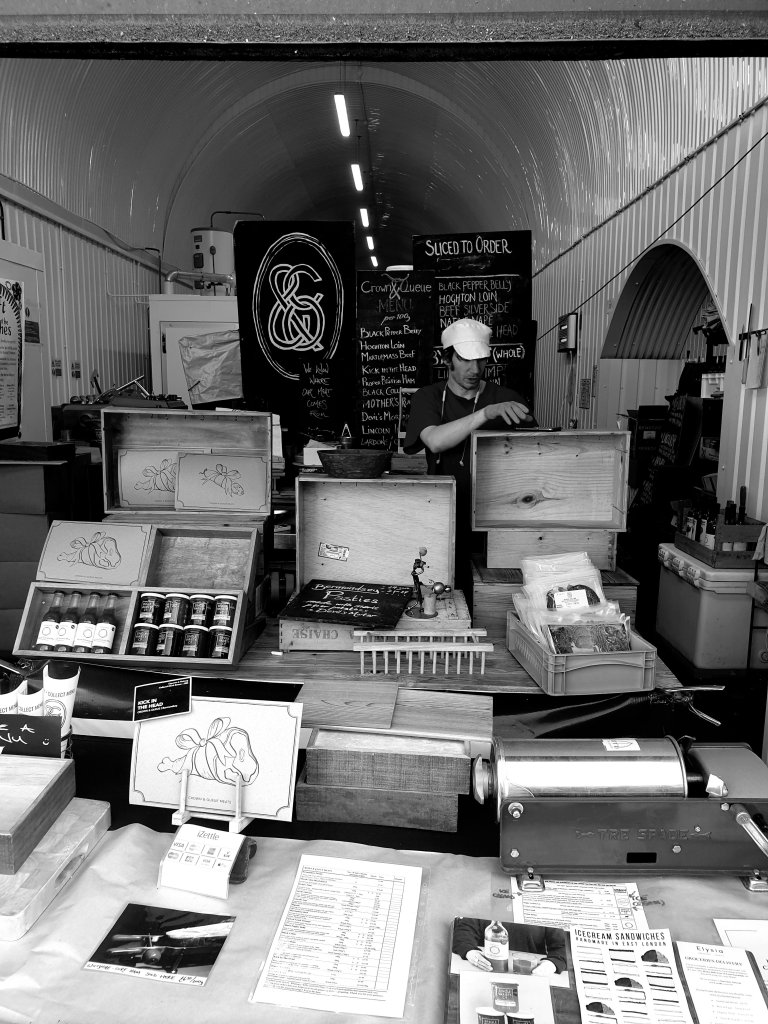
Next door is Crown & Queue cold meats. I was admiring of the long hours kept and general cheerfulness of these specialist food suppliers:-
The Queen’s House
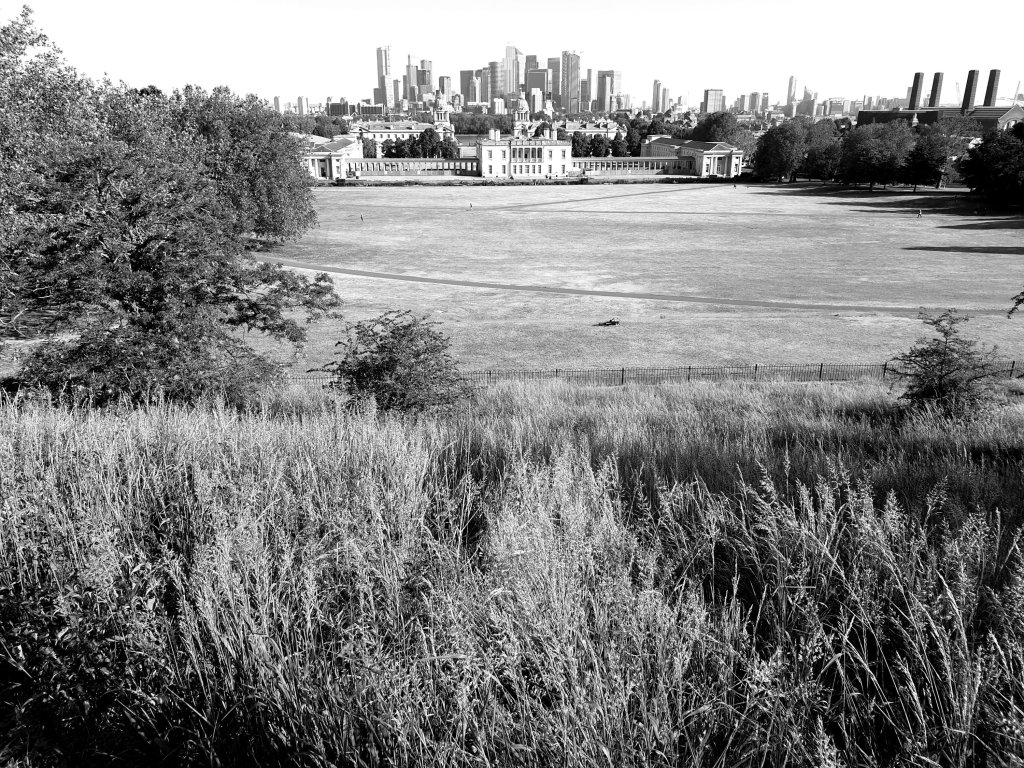
I have been singularly unadventurous in my bicycle riding – once round the Olympic Park and back – but this morning I decided to be more adventurous, with a yearning to see the Queen’s House, a piece of admirably calm and ordered Jacobean classicism, and, even more, the view from the Observatory across the park towards London:-
Women Architects (3)
I have been sent an article which appeared in Thursday’s New York Times about another internationally prominent female architect for consideration for the RIBA Gold Medal https://nyti.ms/2ZMVPOO and one not currently on the shortlist drawn up by W: that is Elizabeth Diller, who was responsible for the Broad Museum in Los Angeles, which I have included in my book, and the ICA in Boston which I haven’t, as well as the Centre for Music in London, which I hadn’t realised includes a Collection and Research Centre for the V&A as well. Maybe we can wait till that is finished and meanwhile not forget Eva Jiřičná and Denise Scott Brown until it is too late.
Women Architects (2)
One of the reasons I have got interested in the issue as to how the work of women architects is documented is while going through the copy-edited text of my book on post-war museums (due out next year).
One of the museums which is indisputably important – important in a totally different way to the Centre Pompidou – is the Musée d’Orsay: important as a conversion of a historic building, adopting a more historicist method of display. Yet, in finding out about the work of Gae Aulenti, both in Paris and internationally (she designed the Museum of Asian Art in San Francisco), her work seemed oddly disregarded, not much written about, even though she died quite recently in 2012. If you look at her work and that of Denise Scott Brown and Eldred Evans, there does seem to be a common thread of a tough and intelligent approach to the design of interiors as well as exteriors, which was not valued at the time and has led to them being marginalised in the secondary literature. Or maybe this is just gender stereotyping.
Women Architects (1)
Over the years, I have quite often been encouraged to take an interest in who is nominated for the RIBA gold medal. In particular, year after year, I was asked to support a nomination – interestingly, by younger, left field architects – for Robert Venturi and Denise Scott Brown, because it was known that I admire the Sainsbury Wing. Year after year, they failed to make the cut. Eventually I asked why and was told that an institution dominated by die-hard modernists would never ever select them as postmodernists. But it is surely incontestable that they have been deeply important and influential as writers and thinkers, leave aside the range of their buildings, and that it is increasingly obvious how much they were a double act, with Denise contributing at least as much in terms of the pop art ideas as Bob. So, I hope the RIBA might consider rectifying a historic injustice.
I also think Eva Jiřičná is incredibly obviously worthy for a lifetime of beautiful and intelligent projects, increasingly many now in Czechoslovakia as in the UK.
So, they are not short of great female candidates for this year. See below.
https://www.dezeen.com/2020/05/28/women-win-riba-royal-gold-medal-part-w/
The other version
I recommend listening again to Mary Wakefield’s appearance on the Today programme in the light of her husband’s appearance last night in the garden of 10, Downing Street, partly because, as of today, it can no longer be retrieved from the BBC and partly because it makes one feel that we are as a nation listening in on a family competition as to which of them can write the stranger fiction.
Let the Outside In
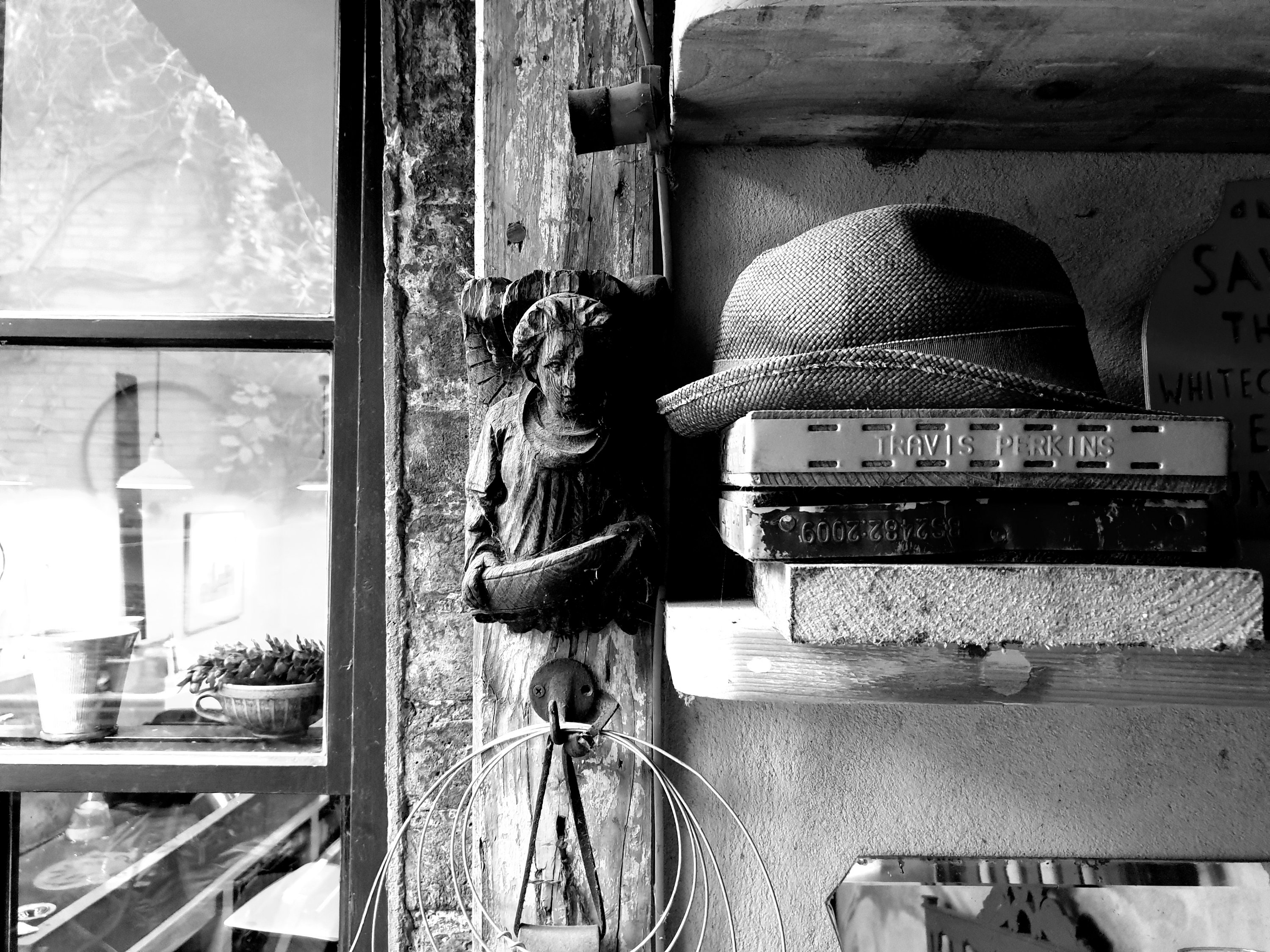
To my utmost pleasure and surprise, I have won a photographic competition. I received an email a few weeks ago about a competition organised by the Architecture Club in two categories – Looking Out, the World Outside and Let the Outside In. It happened that I had taken a few miscellaneous photographs in the house as a form of self-indulgence during lockdown and because spending so much more time at home has made me look at the house more intensively and in more detail, including this photograph taken at dusk one day, looking through the kitchen window with miscellanea piled up on the shelves outside:-
Dominic Cummings (1)
I haven’t wanted to write about Dominic Cummings and his actions in choosing to drive 250 miles up the A1 with a small child and the symptoms of Covid-19 even in spite of all advice from his government, which he had presumably been involved in drafting, to ‘Stay at Home’, repeated over and over again in government advertising and by government ministers, most especially, for obvious reasons, the Health Minister. But there is one aspect of it which I am finding increasingly disconcerting, which is that it is being tied into issues round Brexit, the argument being that those who supported Brexit will automatically and inevitably support the actions of Cummings in his obvious distaste and disdain for the rule of law, the presumption that he can do what he wants to do irrespective of the requirements of the police and the government, the Fuck You attitude which he exhibited in his dealings with the press yesterday. I would have thought that most people in government might see that, in the long run, this attitude is unsustainable: that you cannot have a country in which the Prime Minister very publicly supports someone who followed his instincts – the instincts of a father, however understandable and however sympathetic one may feel towards those instincts – against the advice and edict of the Prime Minister himself the day before. This is not about Brexit. It is about the rule of law.


You must be logged in to post a comment.