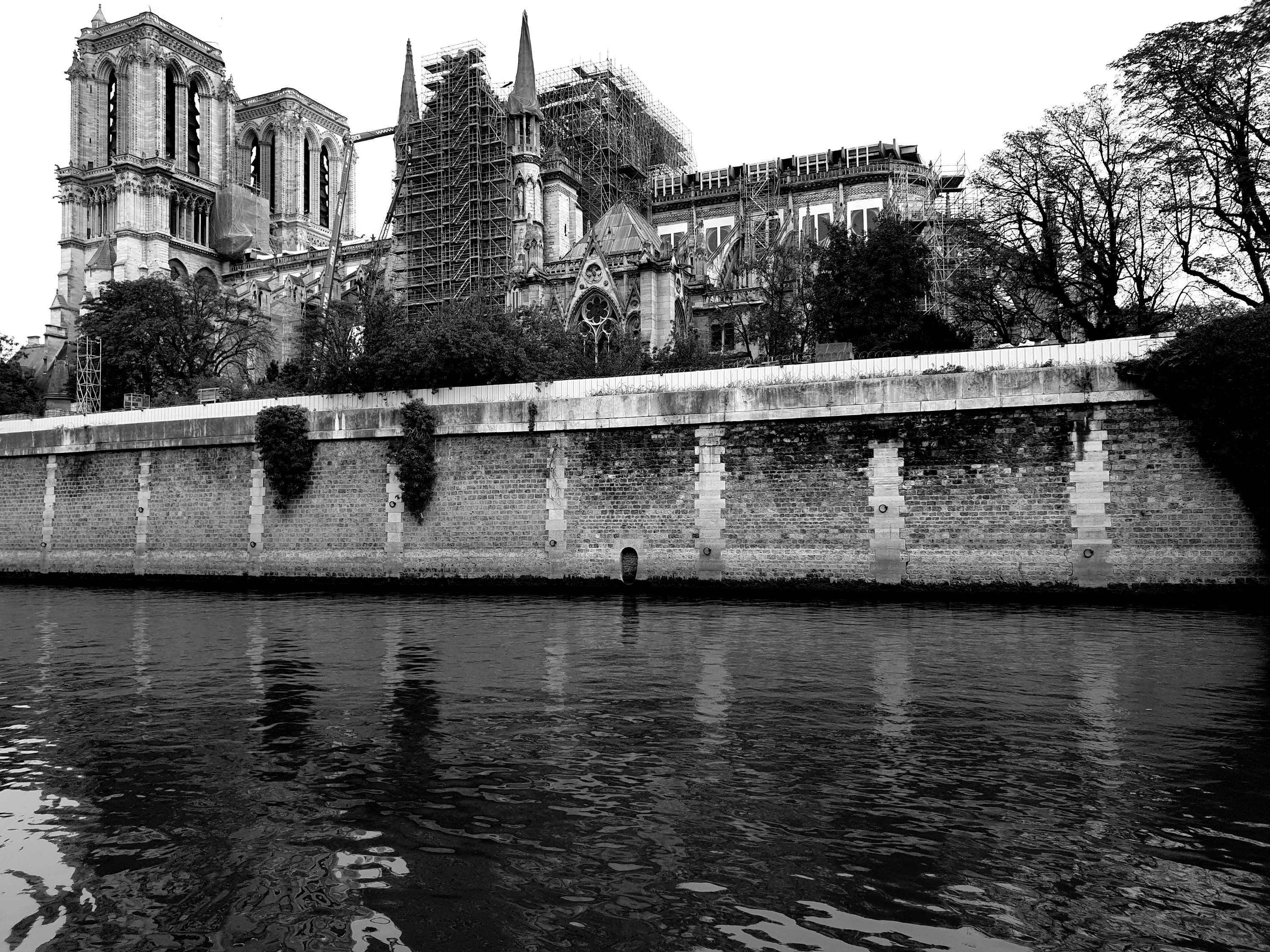
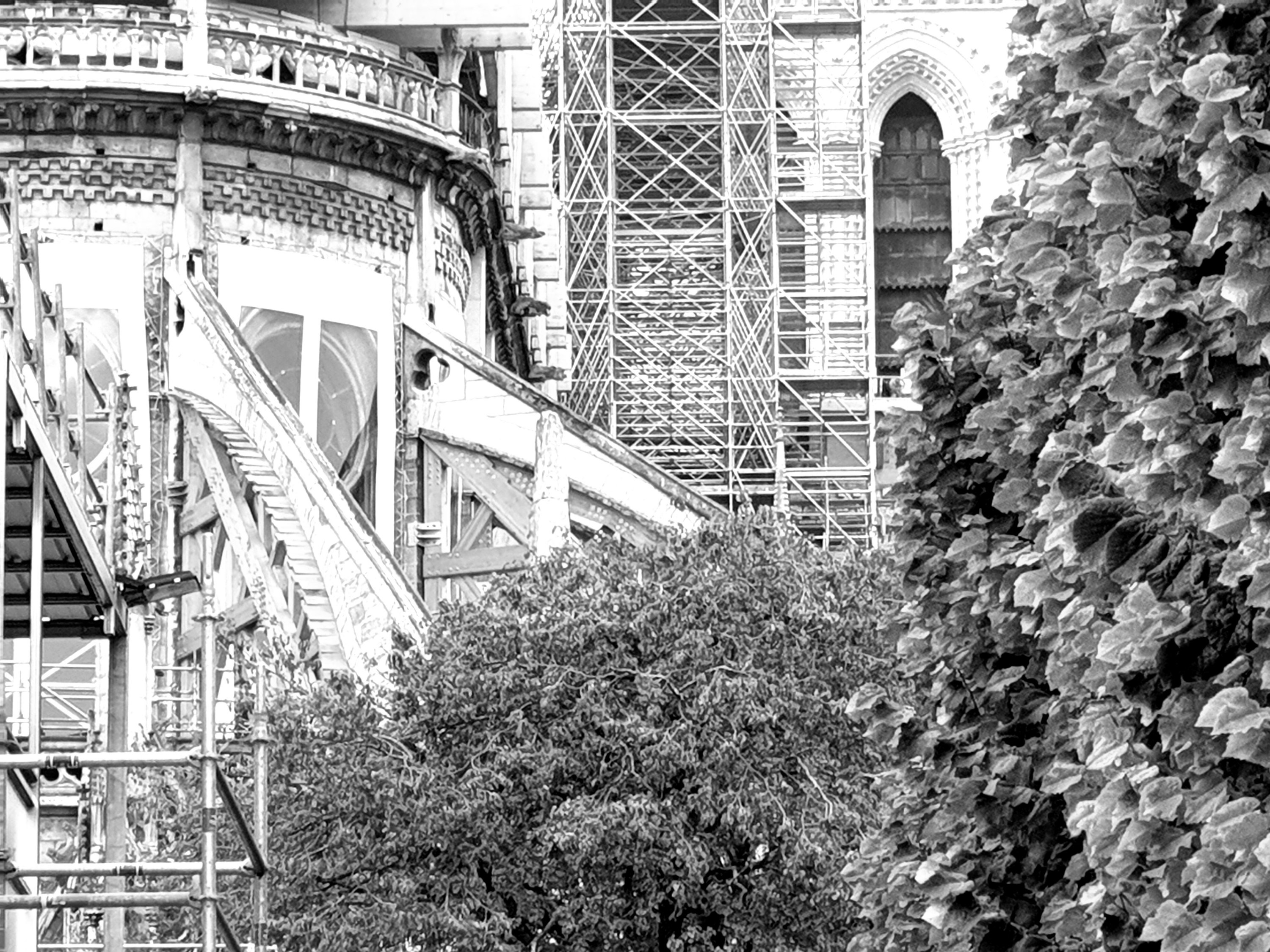
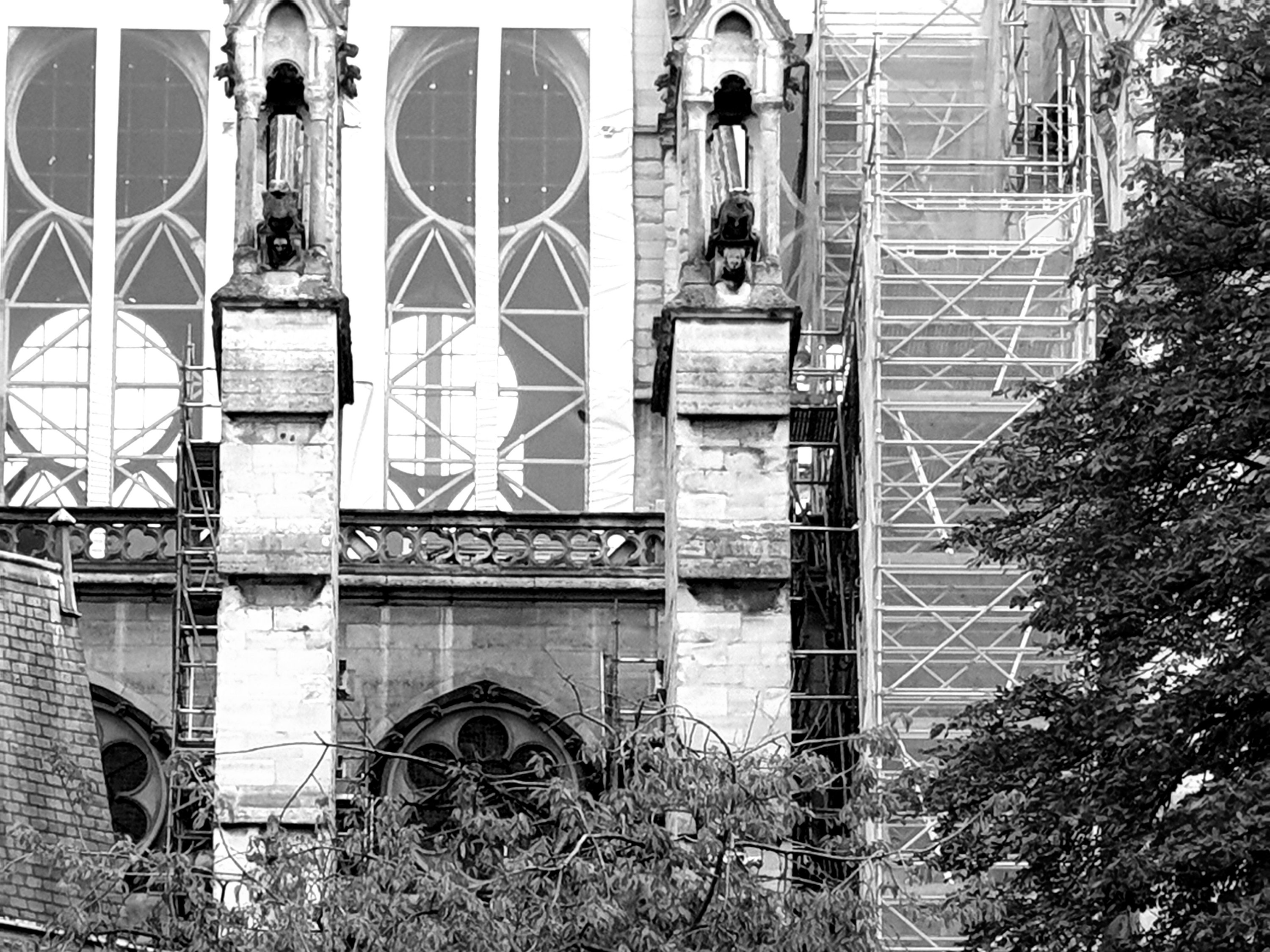
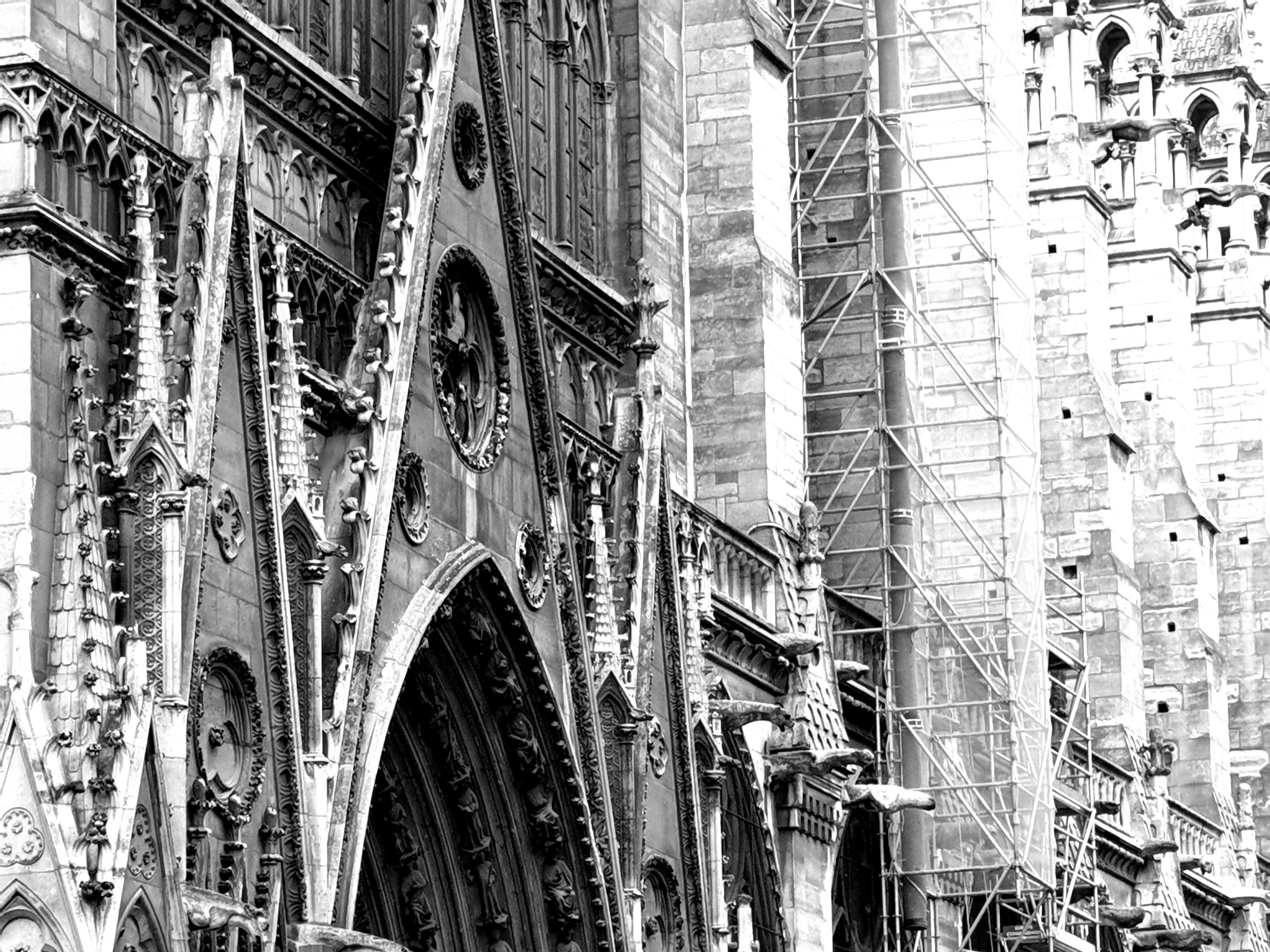
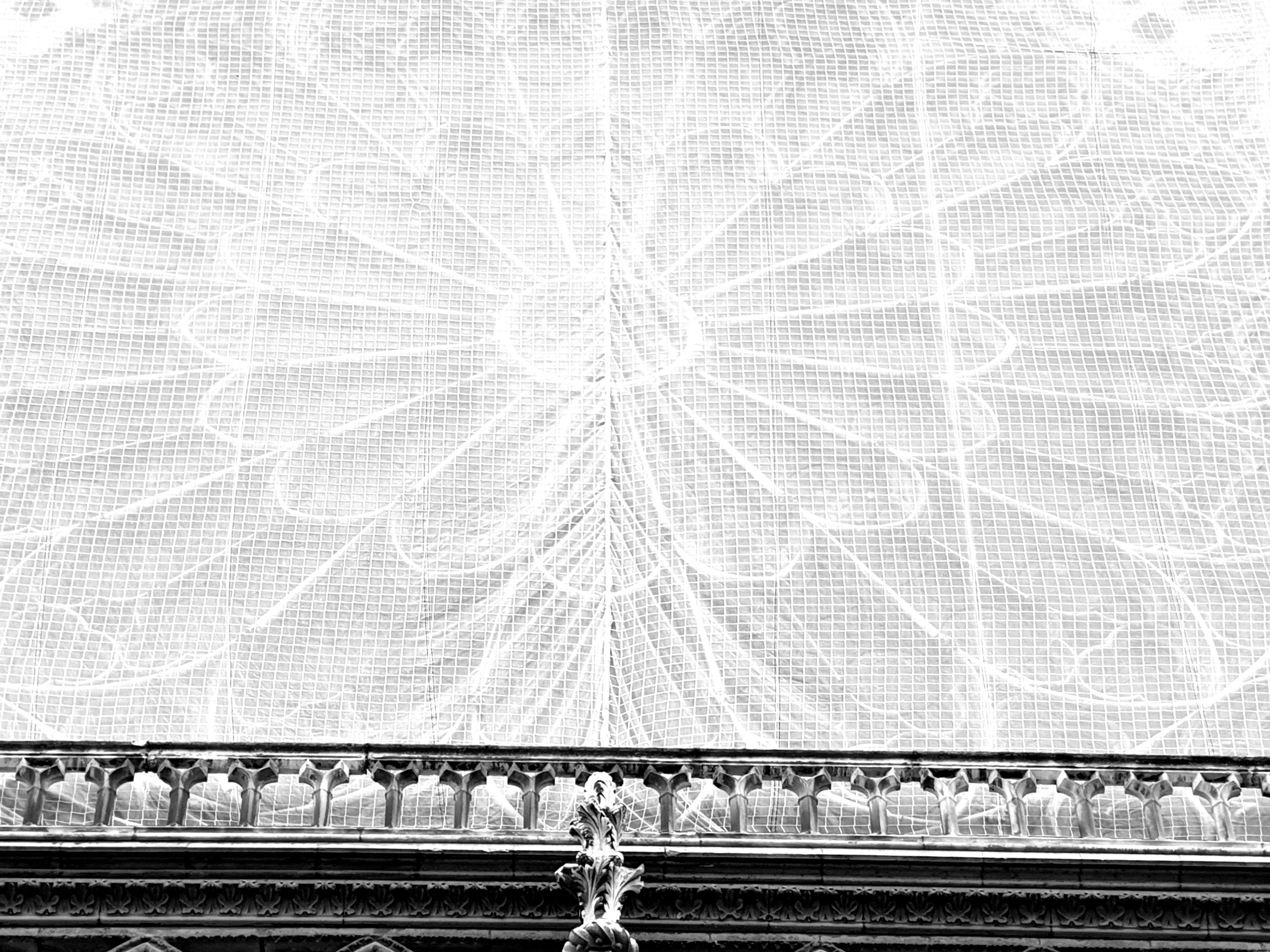
My first port-of-call was the battered hulk of Notre-Dame – its essential structure still finely intact, but its roof, clerestory windows and the glass of the rose window gone, its flying buttresses reinforced with what look like wood supports. It now seems slightly bonkers that contemporary architects were invited to put forward proposals for a new invention, when so much of it still survives, asking for sympathetic restoration:-
By chance, I stayed in the hotel, once called Hotel Rive Gauche, now da Vinci, where Vincenzo Peruggia, the man who stole the Mona Lisa, apparently stayed after he had removed it, wrapped up in his worker’s smock, on Monday 21st August 1911. He was in Room 603, on the roof, so that he could escape if need be, but instead he headed back to Italy to try and sell the painting, before being caught two years later in Florence offering it for sale. In an odd way, he, more than any art historian, is responsible for Leonardo’s fame.
I found the Louvre’s great Leonardo 500th. anniversary exhibition magnificent, on a gigantic scale, but hard to absorb, because it requires a great deal of time, close study of the drawings and calm reflection – and that is, of course, exactly what one doesn’t get at a vernissage, just hosts of people and an atmosphere which militates against concentration. Also, the lights went out half way through. Actually, it was quite exciting seeing it in the dark, lit up by mobile phones.
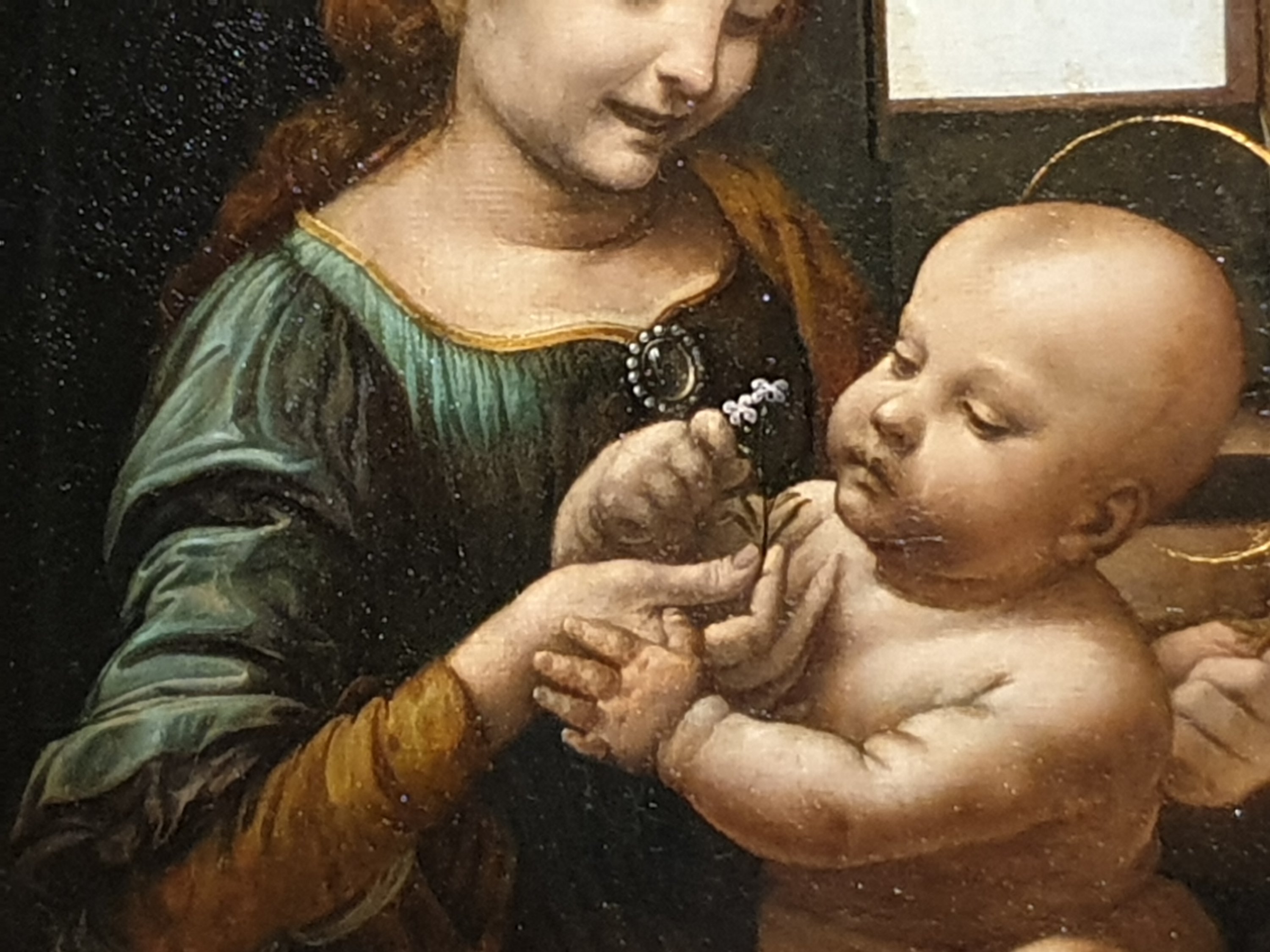
But, anyway, it was wonderful to see the Benois Madonna from St. Petersburg:-
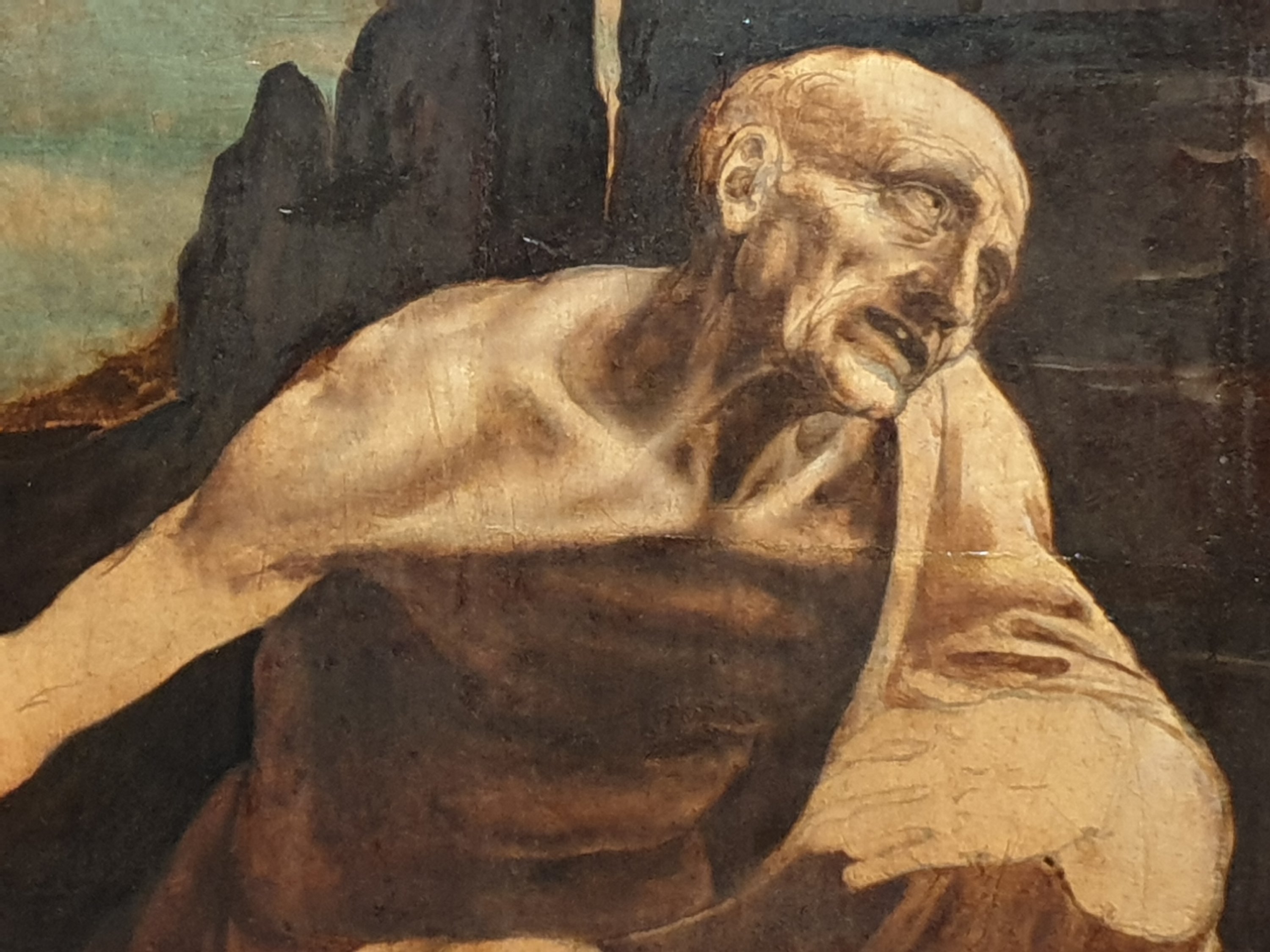
And St. Jerome from the Vatican:-
La Belle Ferronière:-
There’s a big room of sensational drawings, showing off Leonardo’s restlessness and constant investigation of all aspects of the natural world.
A sheet of studies from the Royal Collection:-
His interest in structure:-
Compasses from the Codex Atlanticus:-
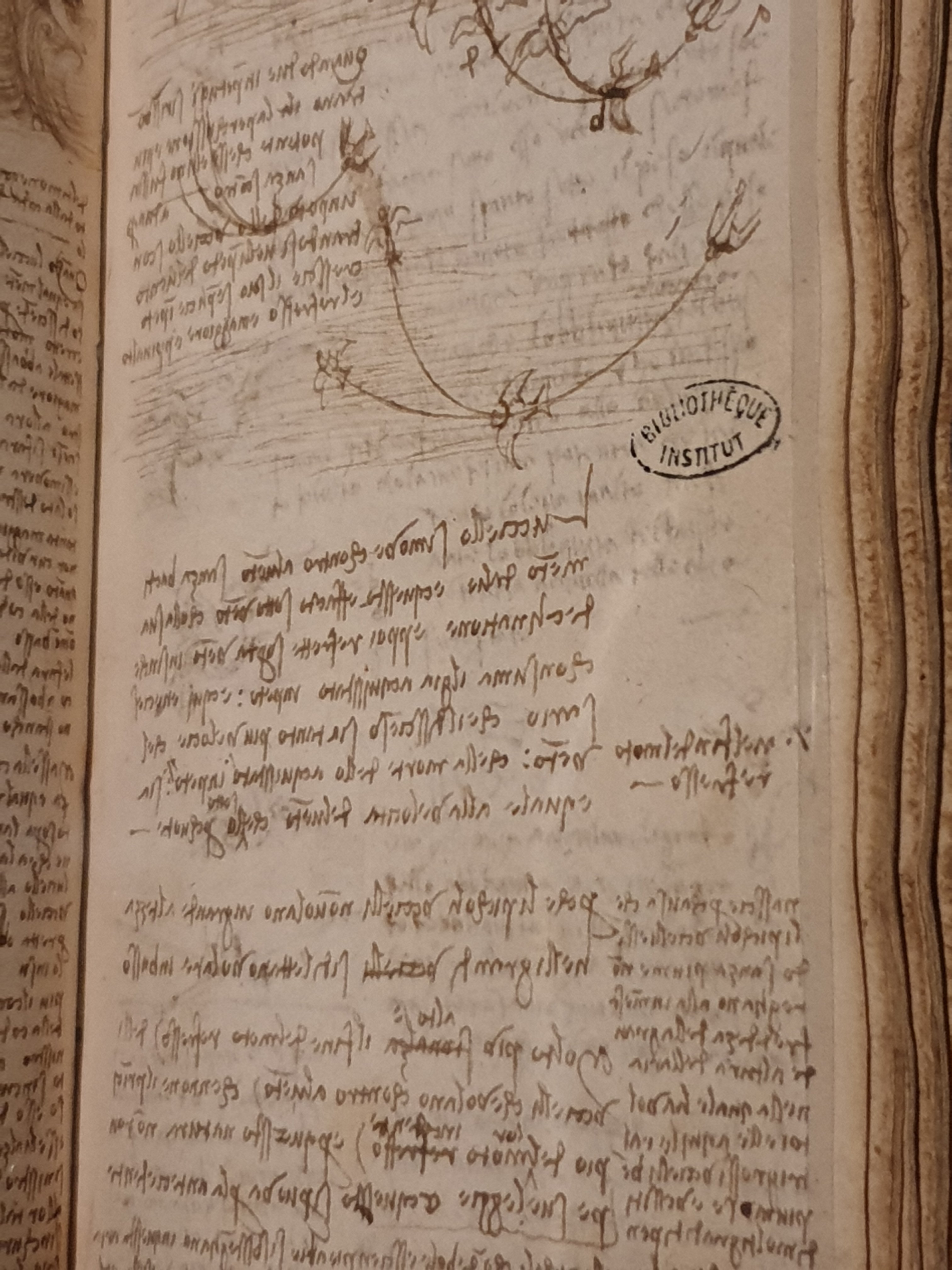
His notebooks (this from the Institut de France):-
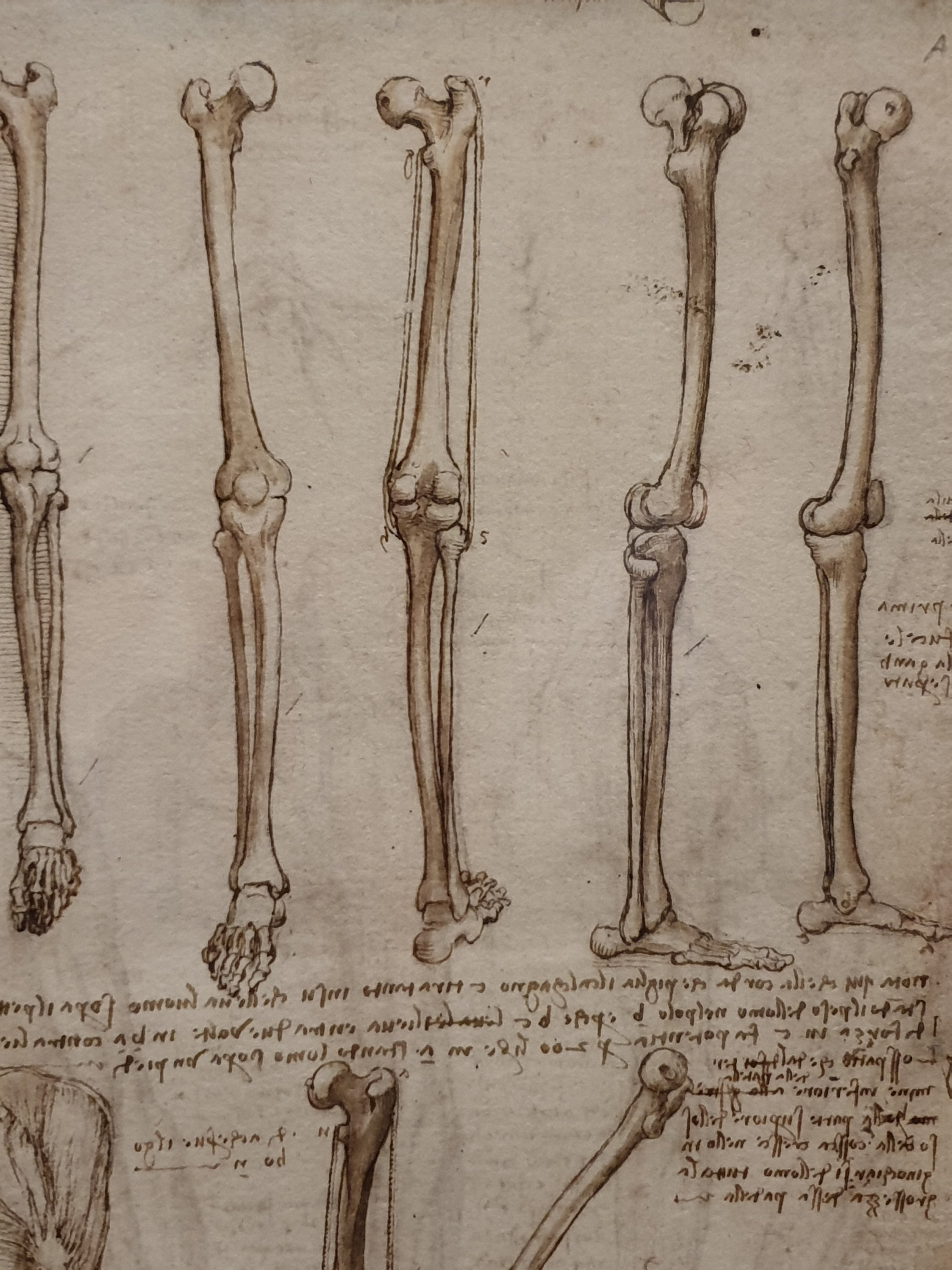
You start wondering if there is any aspect of the world, he wasn’t interested in – archaeology, waves, structures, mathematics, bones:-
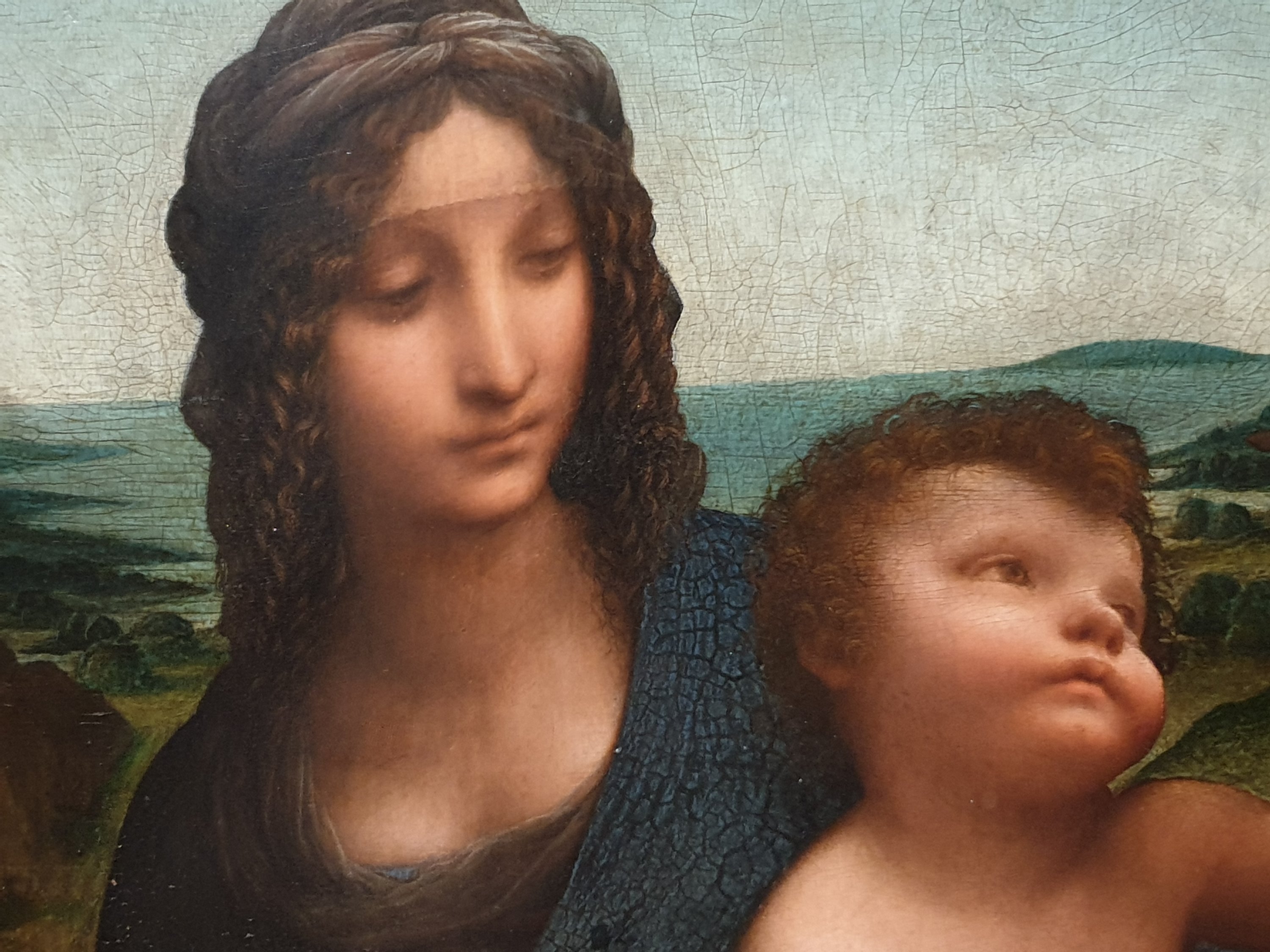
The Madonna and Child from Drumlanrig:-
And the Louvre’s own Virgin and Child with St. Anne:-
The El Greco exhibition at the Grand Palais was packed. It shows his origins as an icon painter in Crete, moving to Venice in 1567, where he painted in the style of Tintoretto:-
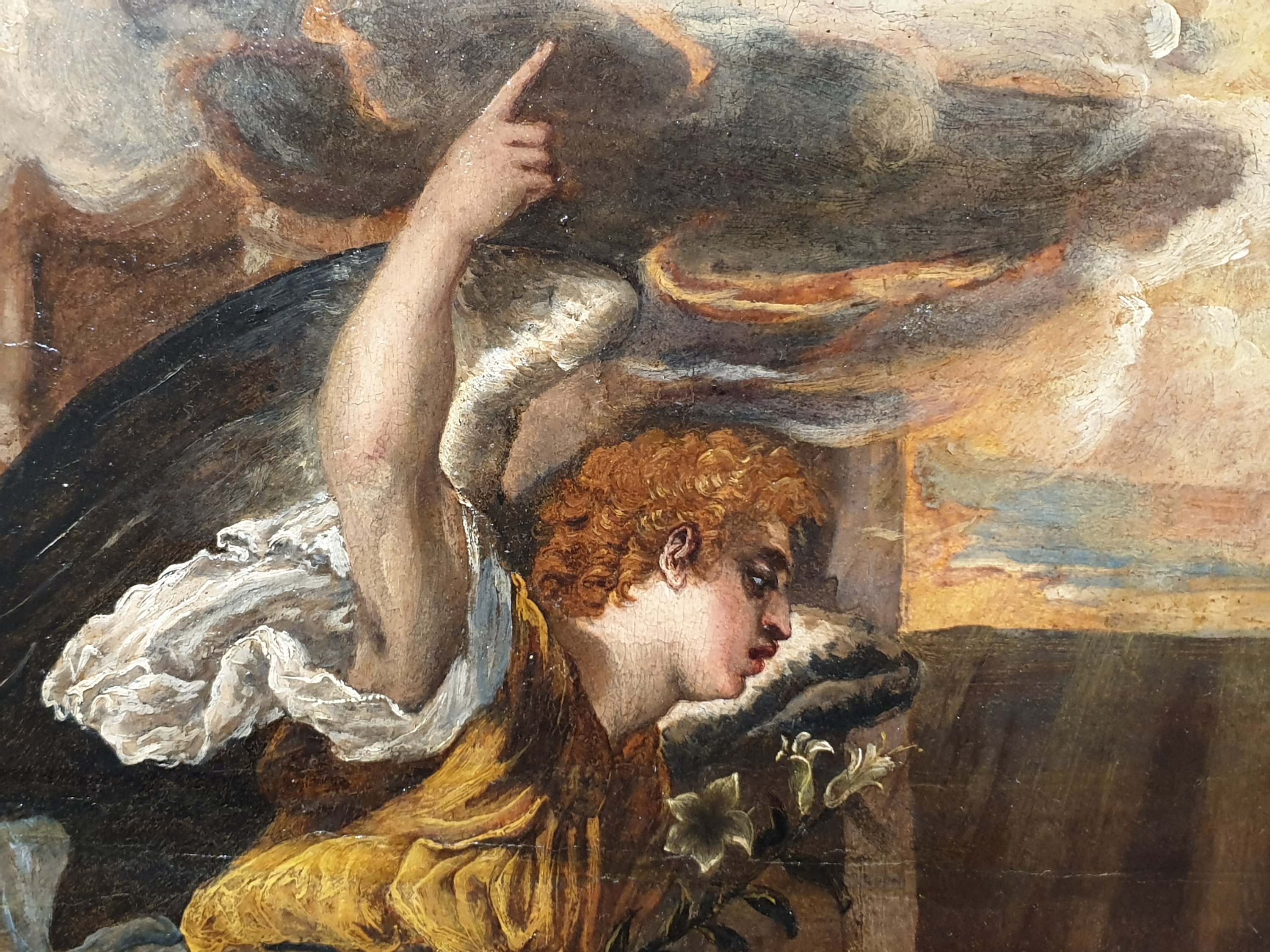
The Annunciation (1569):-
Then he went to Rome, where he specialised in small-scale paintings, like his Pietà from Philadelphia:-
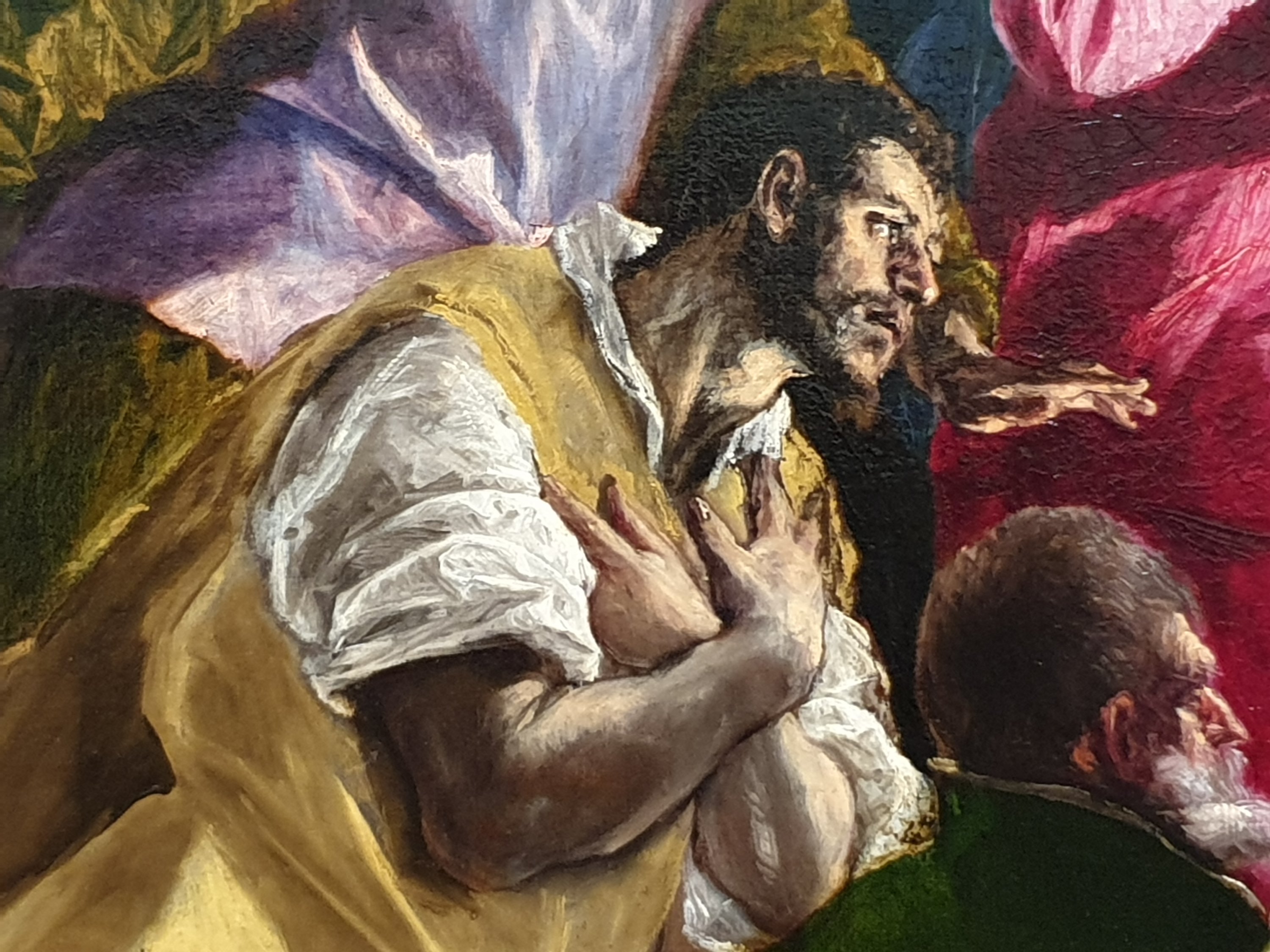
The Entombment from Newark:-
Then, lacking big commissions in Rome, he signs two contracts in 1577 to undertake work in Toledo.
The Adoration of the Shepherds:-
What the exhibition shows well is the evolution of his style, more orthodoxly mannerist.
The Assumption of the Virgin from Chicago who have collaborated on the exhibition:-
A beautiful Pietà (c.1580) from a private collection:-
The Holy Family with Mary Magdalene from Cleveland:-
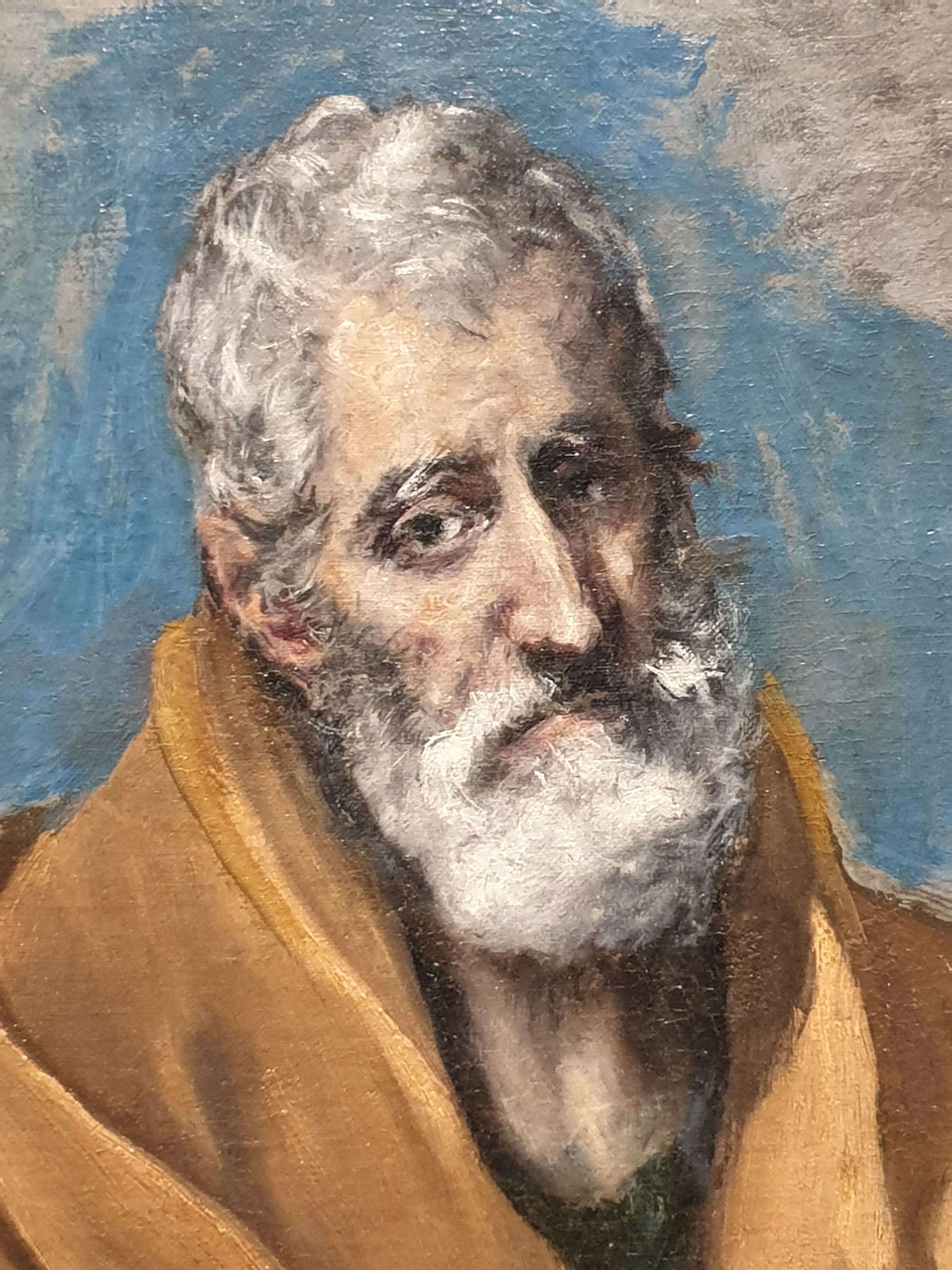
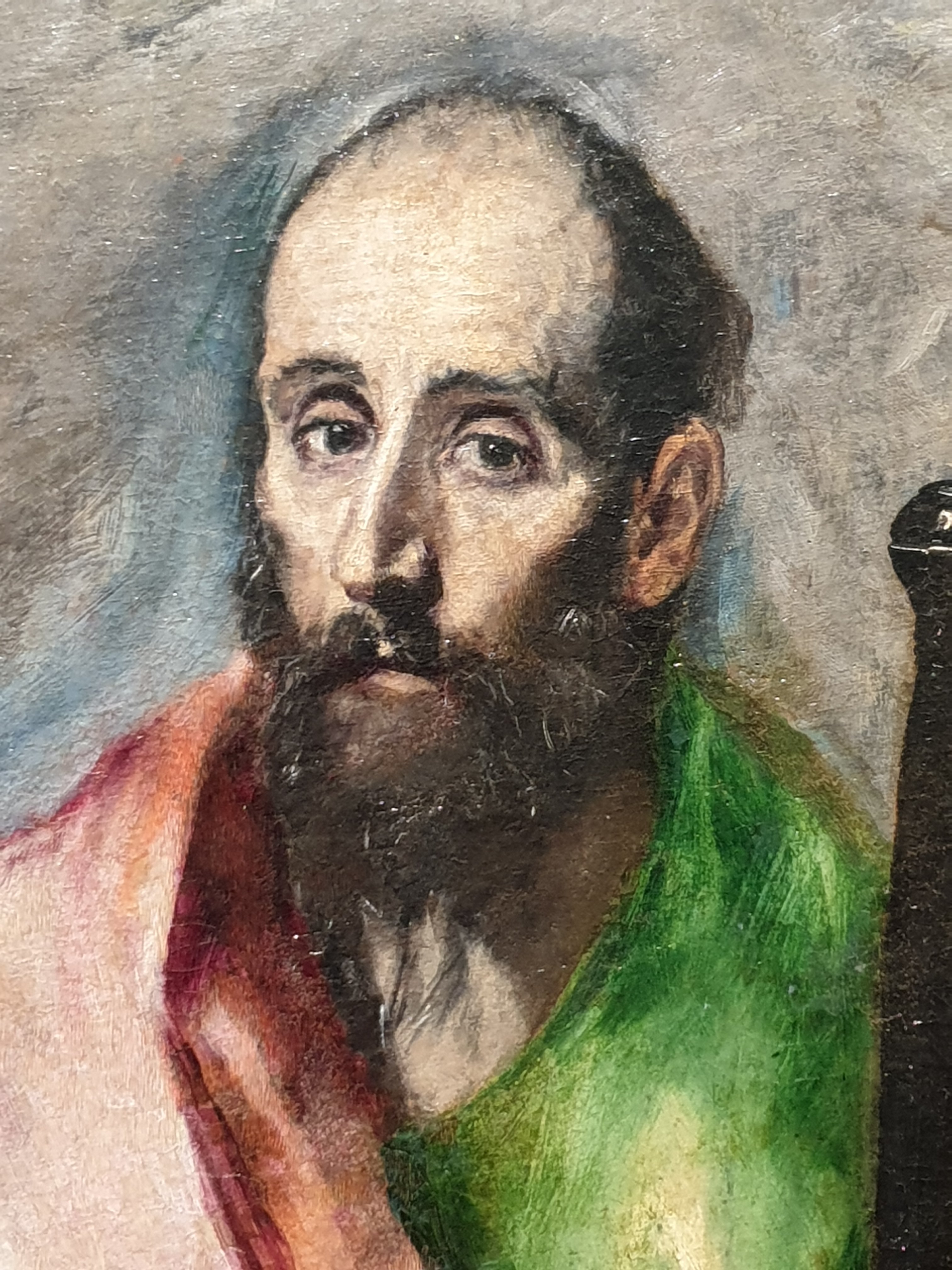
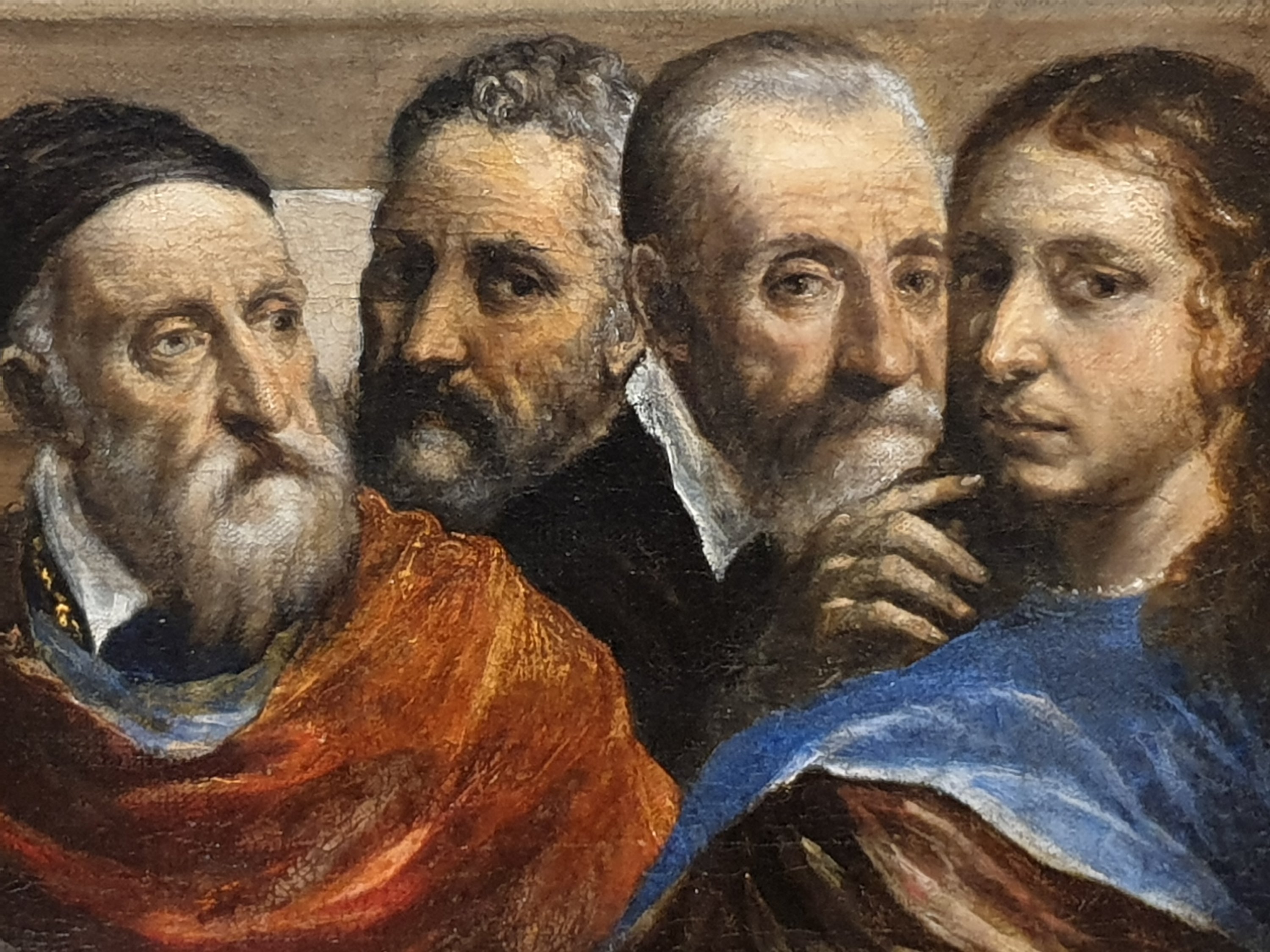
St. Peter and St. Paul from Barcelona:-
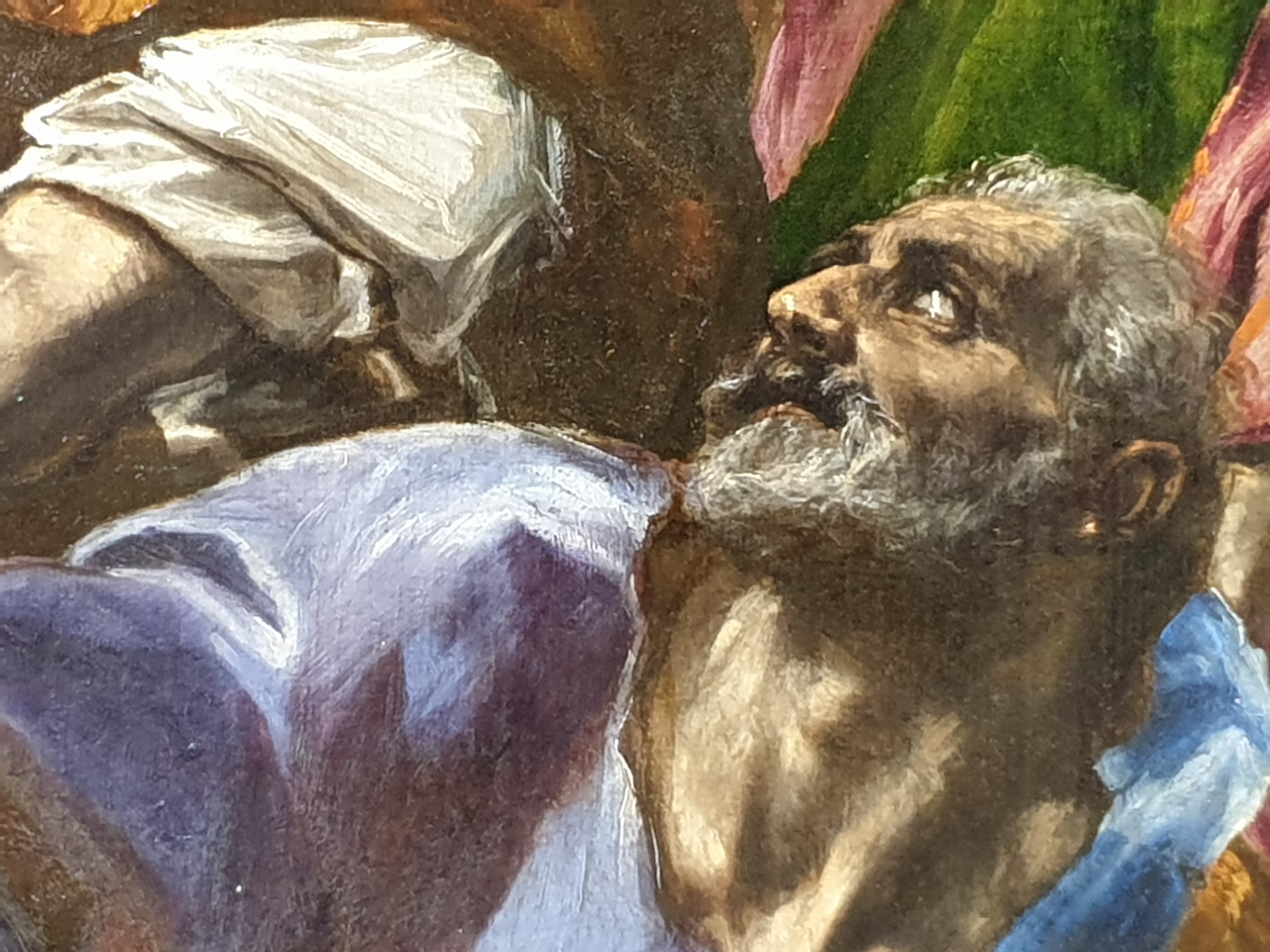
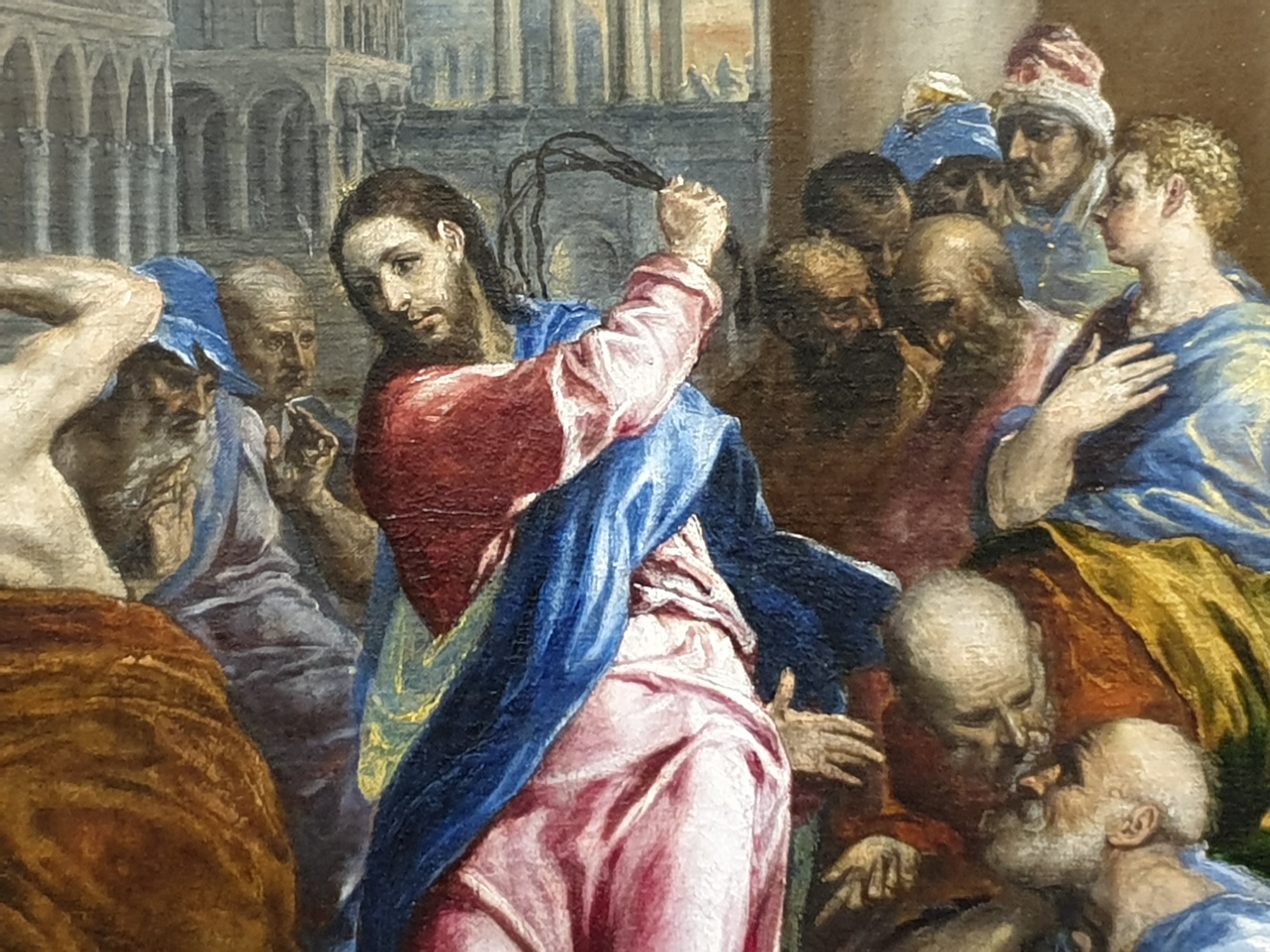
The exhibition ends with different versions of Christ driving the Moneychangers fromthe Temple, including a great one from Minneapolis (c.1575):-
By Sunday evening, I feel the need to describe what is happening in order to understand it, if only for myself.
We watched the debate in the House of Commons yesterday. To give him his due, Boris Johnson struck a slightly more conciliatory note, trying to unite the House and the country behind his new, but actually mostly old, Brexit deal. The problem is that his camp Churchillian manner doesn’t work. He has made too many enemies. There are enemies behind him, stabbing him in the back as well as massed enemies in front of him, not to forget the DUP. The front bench looks like a group of pantomime villains, retirees from a sitcom about the 1950s, behaving as if they have the support of the country, when it’s increasingly obvious they don’t, with 2 million people massed in Parliament Square outside.
So what happens now ? They put the bill back to the House and maybe it will pass with the help of Labour MPs who will ignore the forensic analysis of Keir Starmer as to the direction of political travel and the abrogation of workers’ rights. But how unsatisfactory that will be, hated by so many, no-one prepared to pretend that it is to the economic benefit of the country. An election, which the Conservatives might win with only 36% of the vote ? Another referendum ? Even I don’t believe that this will heal the divisions which have opened up, and deepened, in the country. But what else will do ?
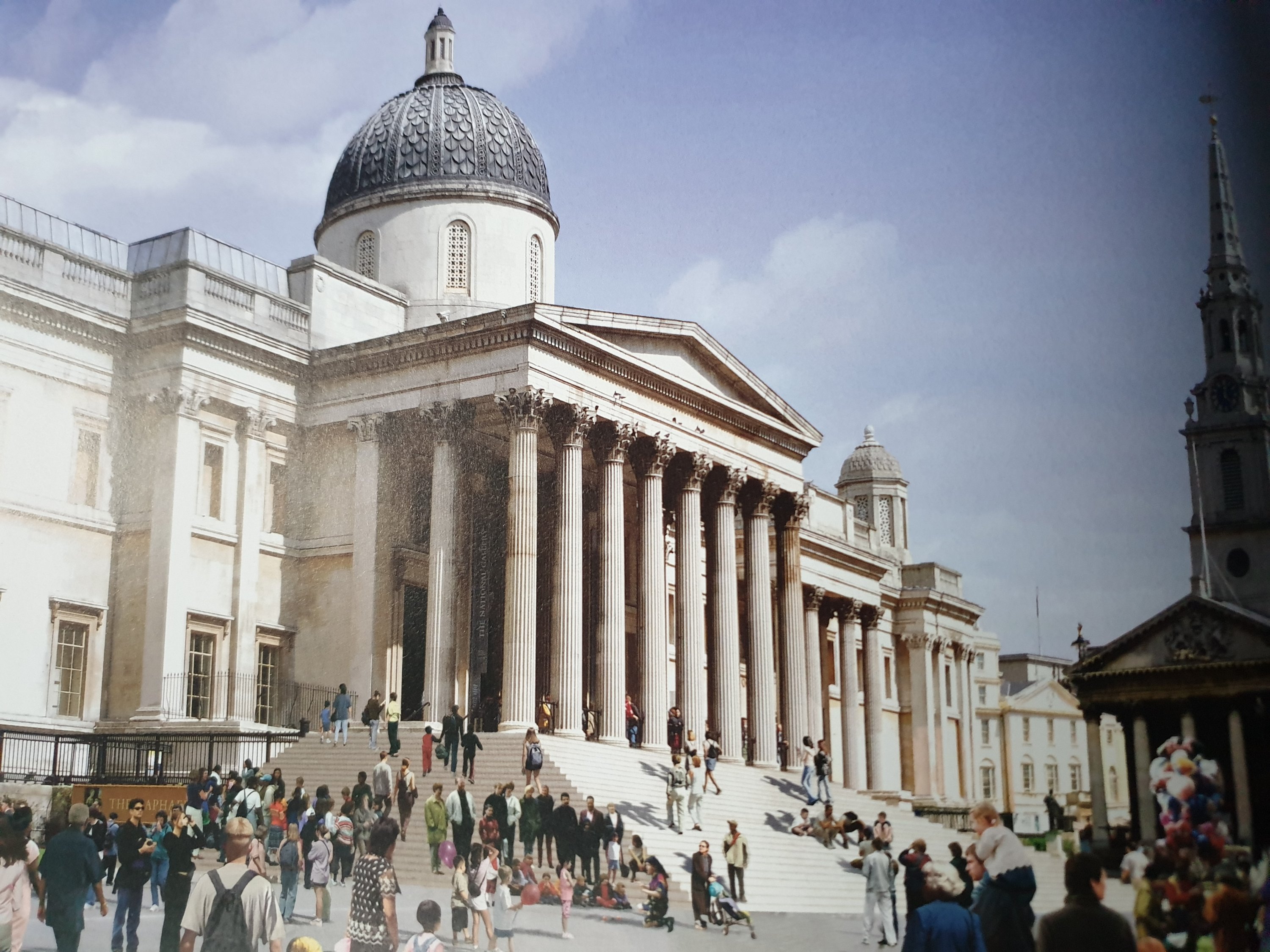
One of the many pleasures of the second volume of Jeremy Dixon and Edward Jones’s work is the opportunity it provides to study and examine uncompleted work, often presented as models alongside their own sketches and line drawings, including, which I had forgotten, an unexpectedly convincing visualisation of steps leading out from the portico of the National Gallery (you blink before you realise that this picture is not as is):-
Ed Jones did a project for a National Portrait Gallery in Ottawa:-
What one sees is the extent to which their architectural practice is rooted in intelligent visualisation, exploration of the ground plan and volume, and drawing, more consistently classical in form than I had expected.
I have spent the afternoon looking at, and admiring, the first available copy of the second volume of the work of Jeremy Dixon and Edward Jones, which has been a long time in gestation, but is at long last close to fruition (to be published in January and something to look forward to). I was asked to write an Introduction about the experience of working with them and trying to place them in a broader context, not an easy task, because their work is so deliberately various, stretching from early housing projects in Milton Keynes through to the recent, prize-winning Marlborough Primary School, just behind the Conran Shop in South Kensington, and work in Edinburgh, which I haven’t seen. My piece is titled ‘City Sensibilities’ – their title, not mine – but it does summarise the virtues of their deliberately low-key, urbanistic approach to the task of design.
Like many people, I have been full of admiration for the work of Led by Donkeys, a small guerrilla group who have commandeered advertising hoardings and used them to remind the public of previous statements by politicians, which they would presumably prefer forgotten, unless they are even more shameless than they appear to be, including Michael Gove’s hostility to No Deal, Farage’s previous advocacy of two referenda and Dominic Cummings’ statement that most Tory MPs don’t care about poor people. They recently commandeered a field in Wiltshire on which to plough the words BRITAIN NOW WANTS TO REMAIN, set to the music of Land of Hope and Glory. They have been far more effective – funny, caustic, slightly anarchic – than more mainstream organisations.
I have at last finished William Feaver’s extraordinarily long and strangely dispassionate biography of only the first half of Lucian Freud’s life, which tells one not just a huge amount about Freud’s psychology and appetite for both low life and high – gambling, women, poetry – but, also, about the different atmospheres of London in the 1950s, especially Paddington, but also Soho and, more intermittently, St. John’s Wood. It is a remarkable achievement to have documented and recorded so much about an artist who kept his private life private. Does it help to explain his art ? I am less sure, except that it explains his obsessive, energetic, sometimes animal drive, careless of women, who loved him for it.
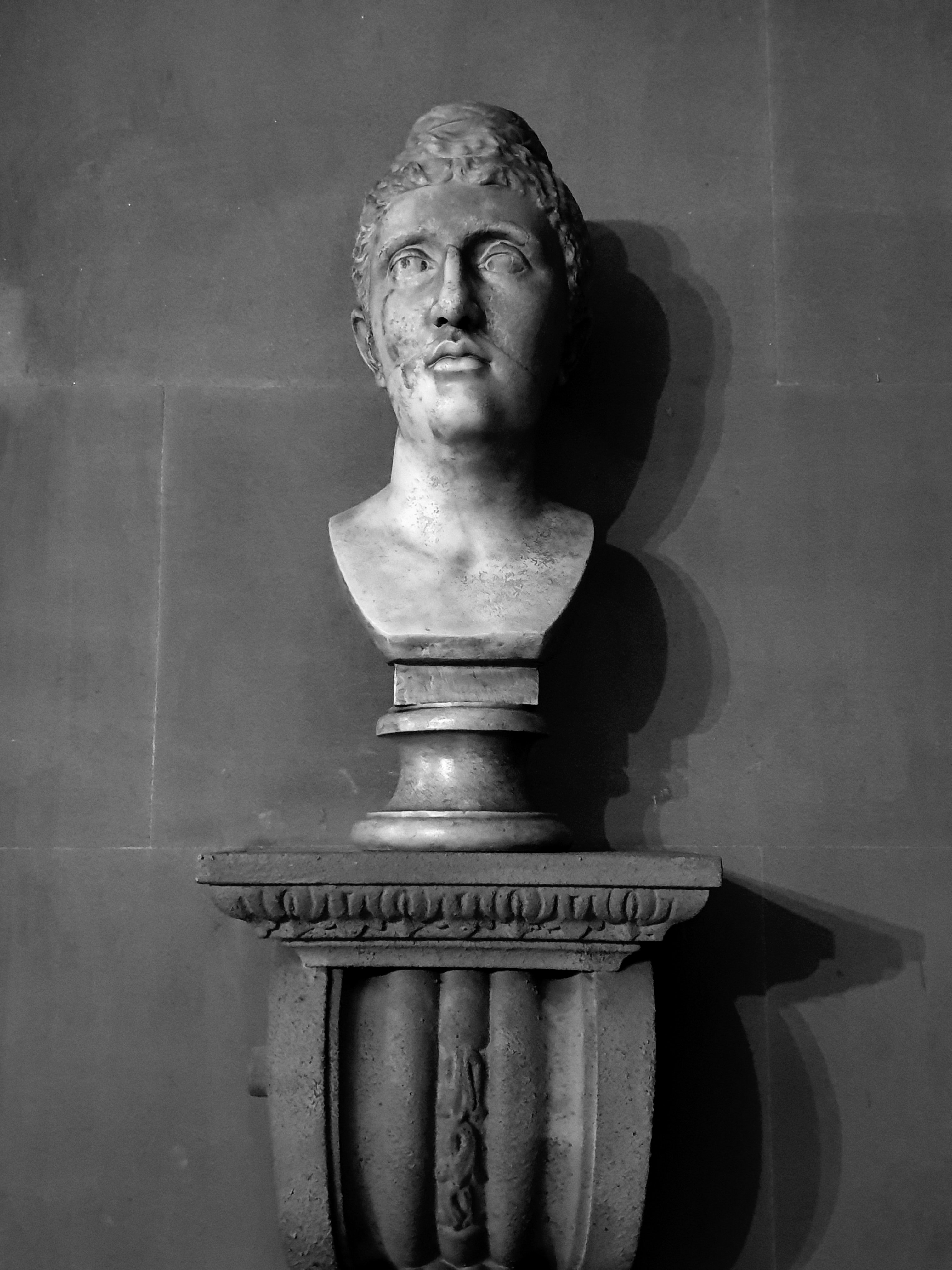
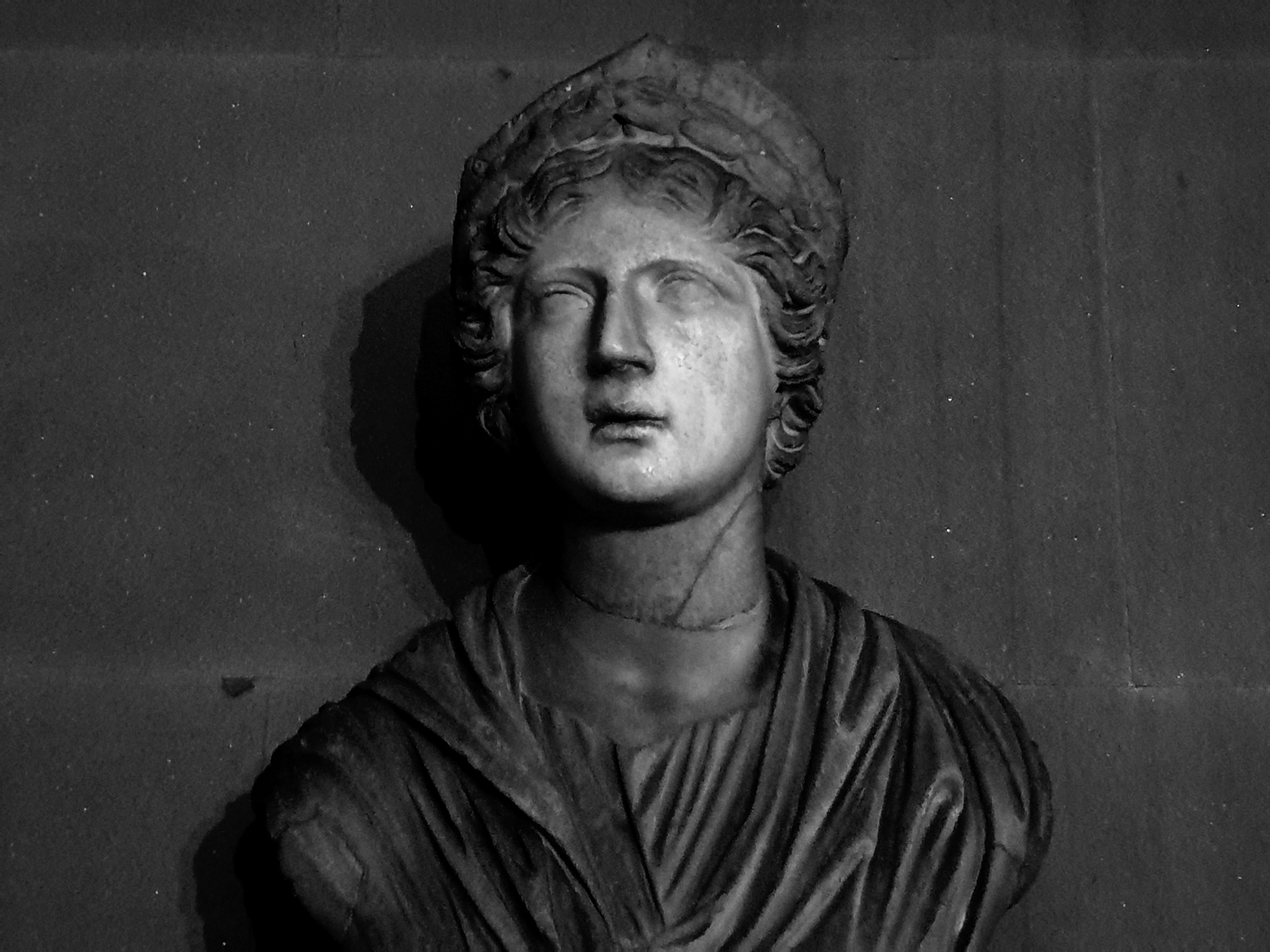
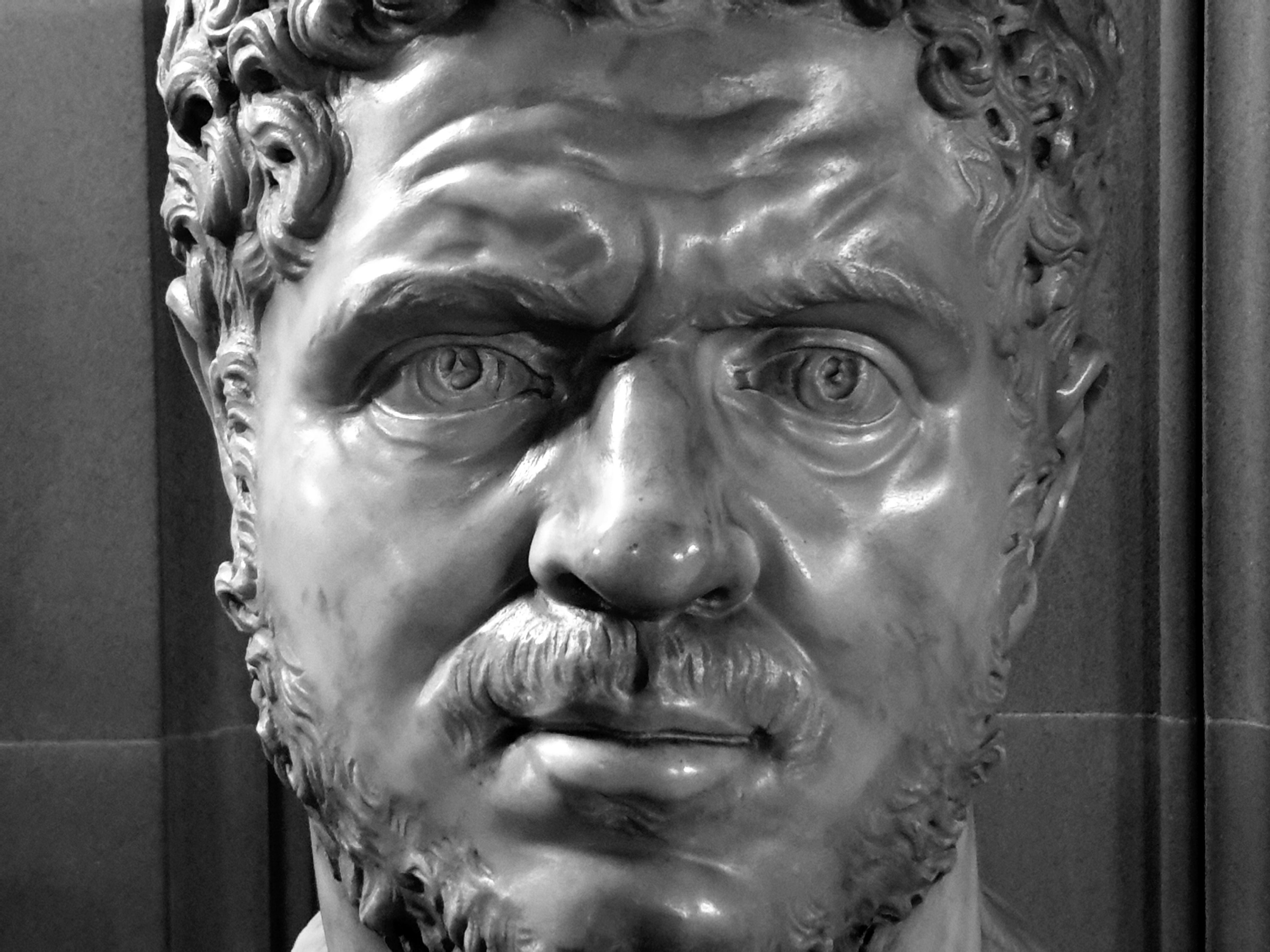
I have been waiting till the end of the week to do a small amount of investigation about the antique heads that line the corridors at Chatsworth and which caught my attention as I was waiting for the bus. I assume that they were collected by the sixth Duke, about whom the DNB is unexpectedly uninformative, in spite of his being the subject of a full biography, The Bachelor Duke by James Lees-Milne, and a passionate and knowledgeable collector of both antiquities and, more especially, modern sculpture (in his Handbook to Chatsworth, he described how ‘it was in vain to hope for time or opportunities of collecting really fine ancient marbles’). He was in Rome in 1819, where his step-mother lived, and recorded what he bought and saw, including his commission from Canova of Endymion.
These were the busts that attracted my attention:-













You must be logged in to post a comment.