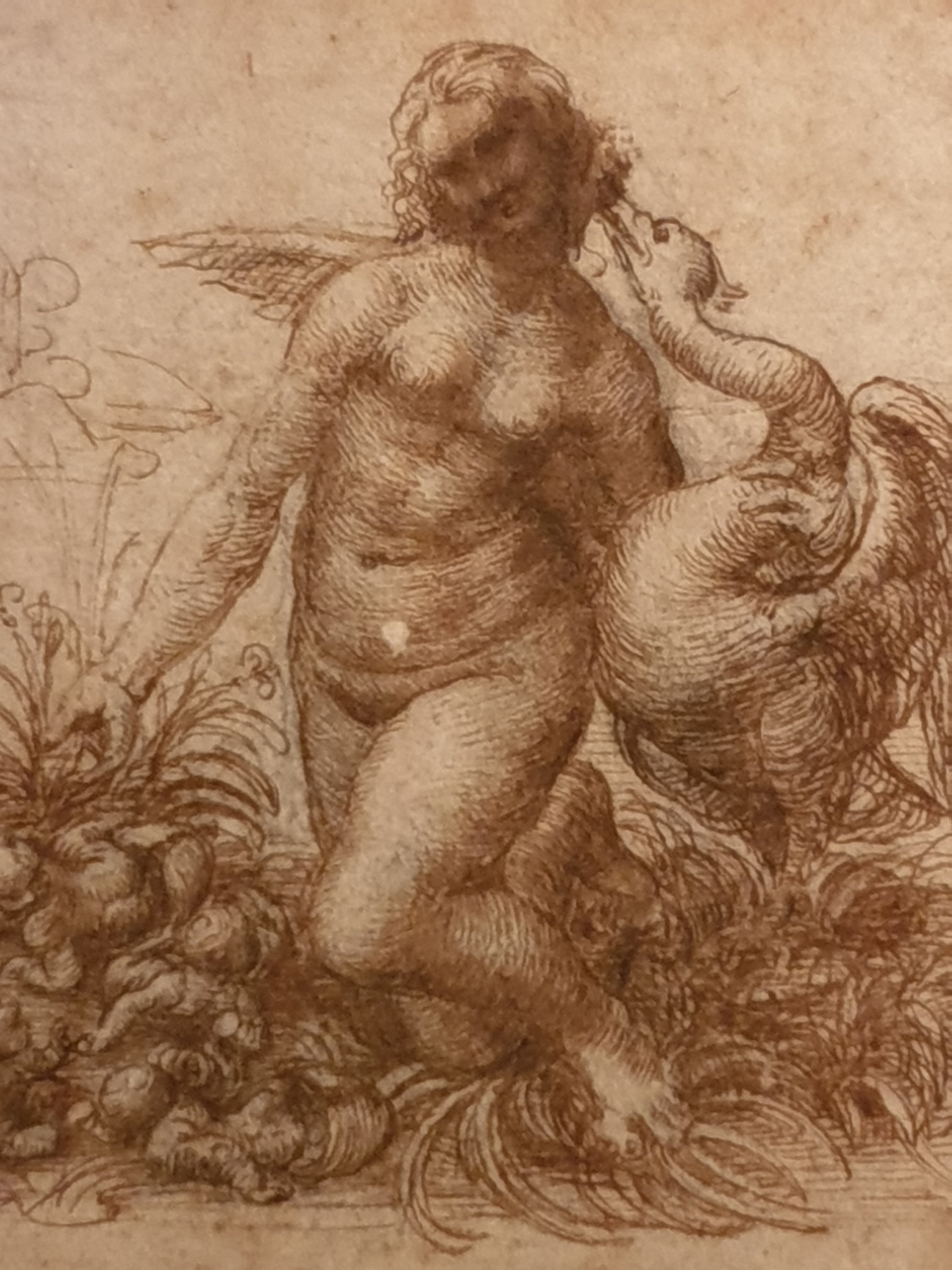
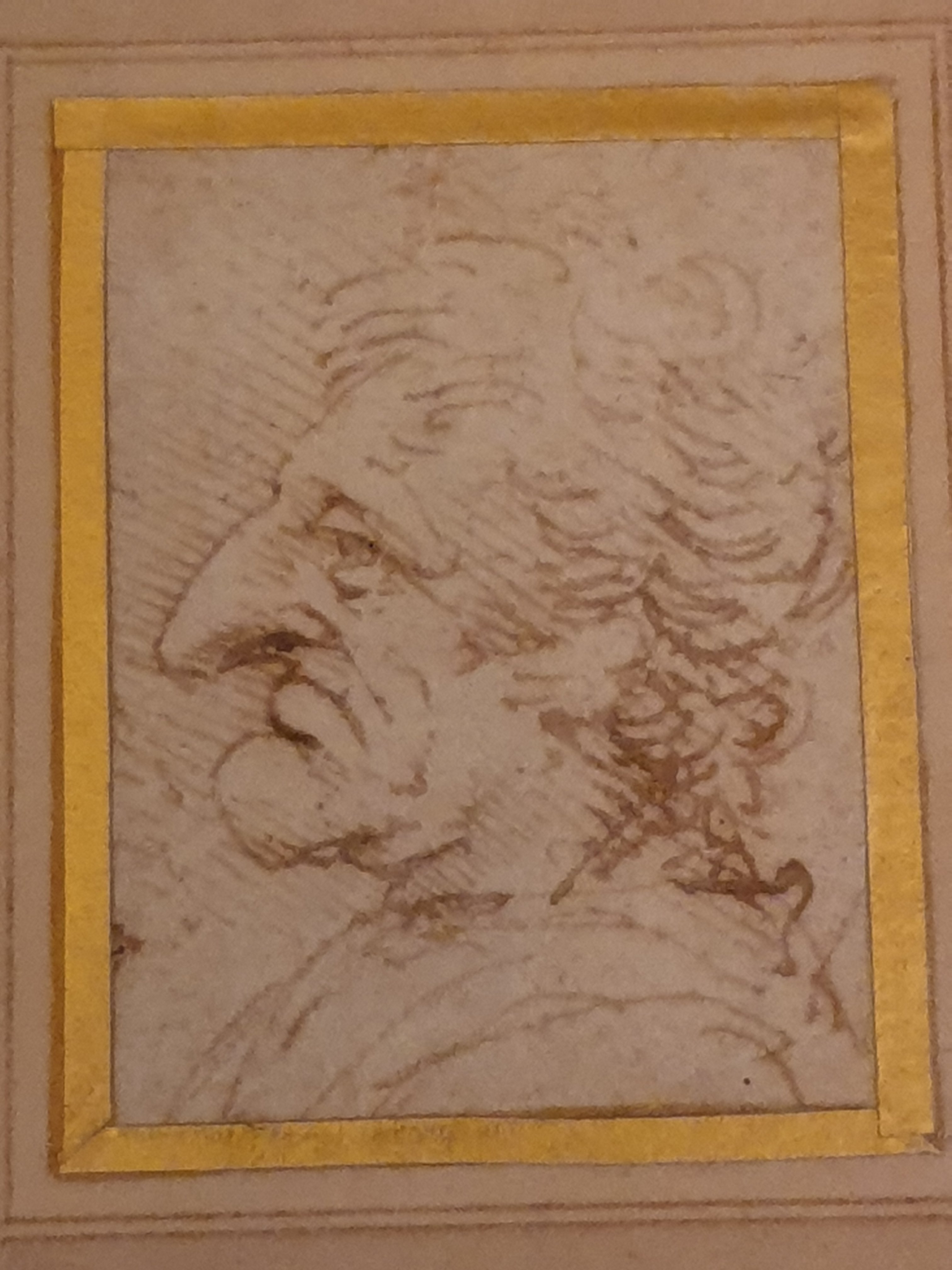
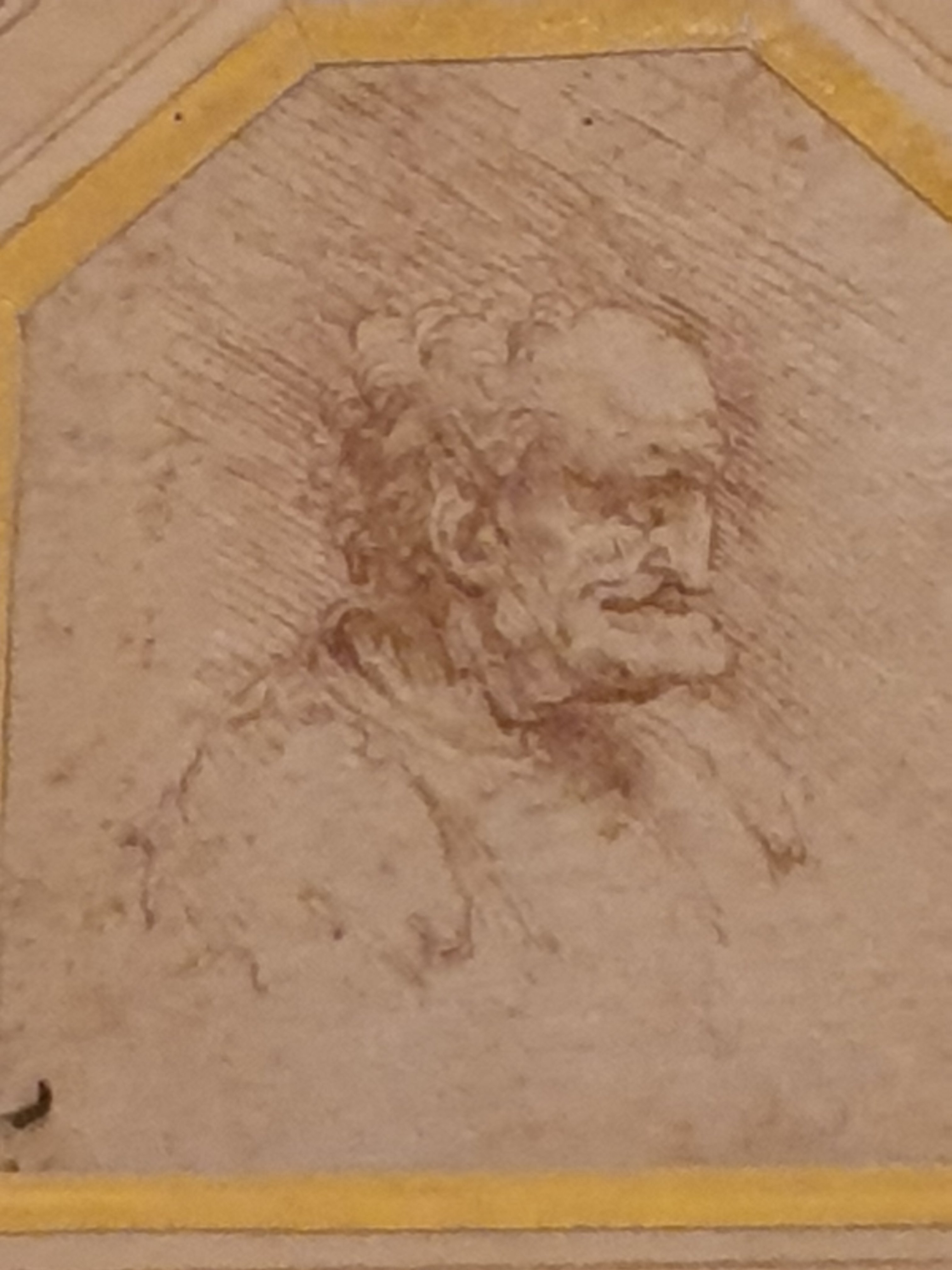
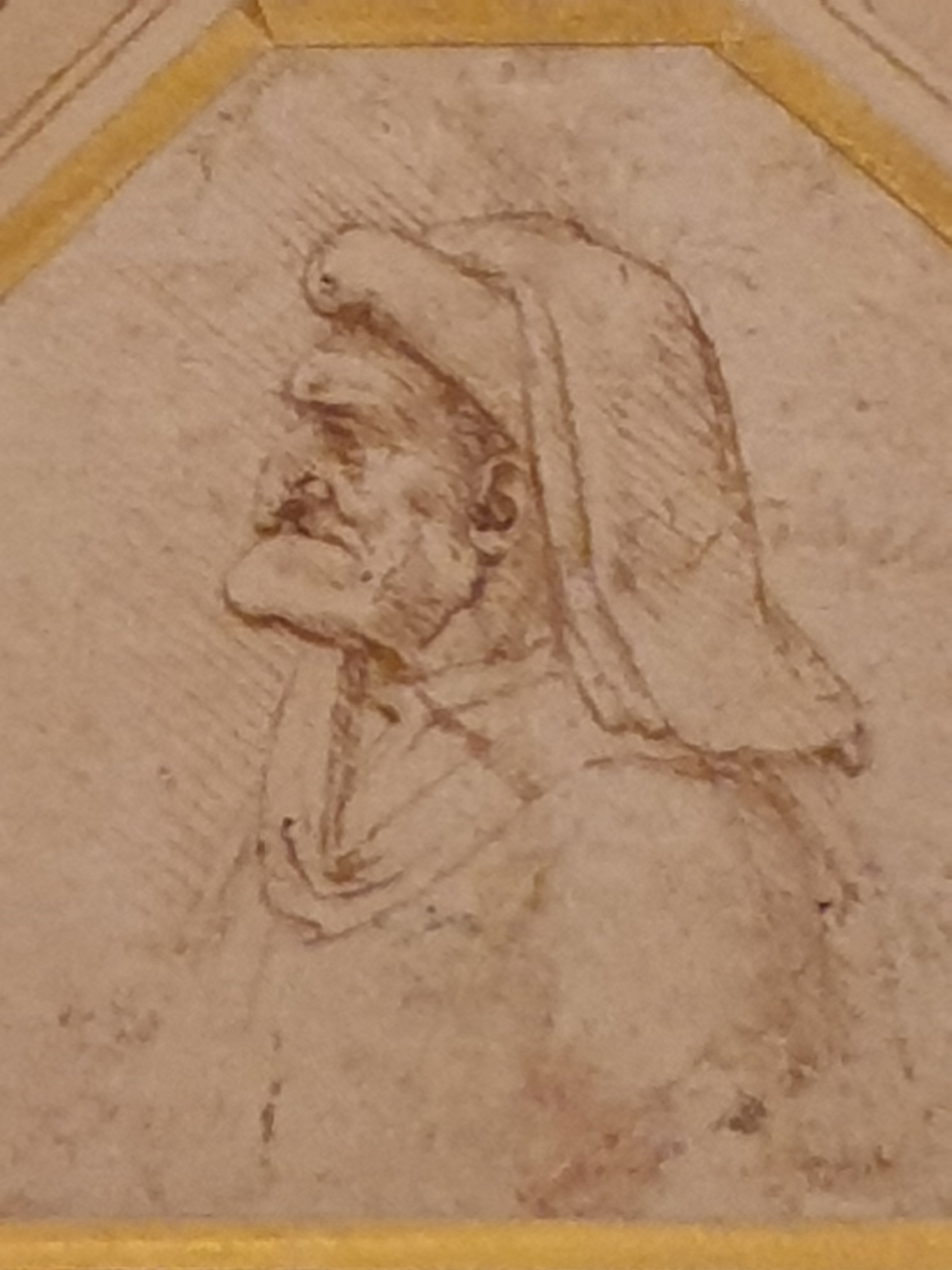
Not only did we see the Chatsworth Freuds, but we were also shown their Leonardo drawings, shown recently in New York and about to return to cold storage. The greatest is Leda and the Swan (c.1505), a powerful study of female, animal and plant form for a lost painting:-
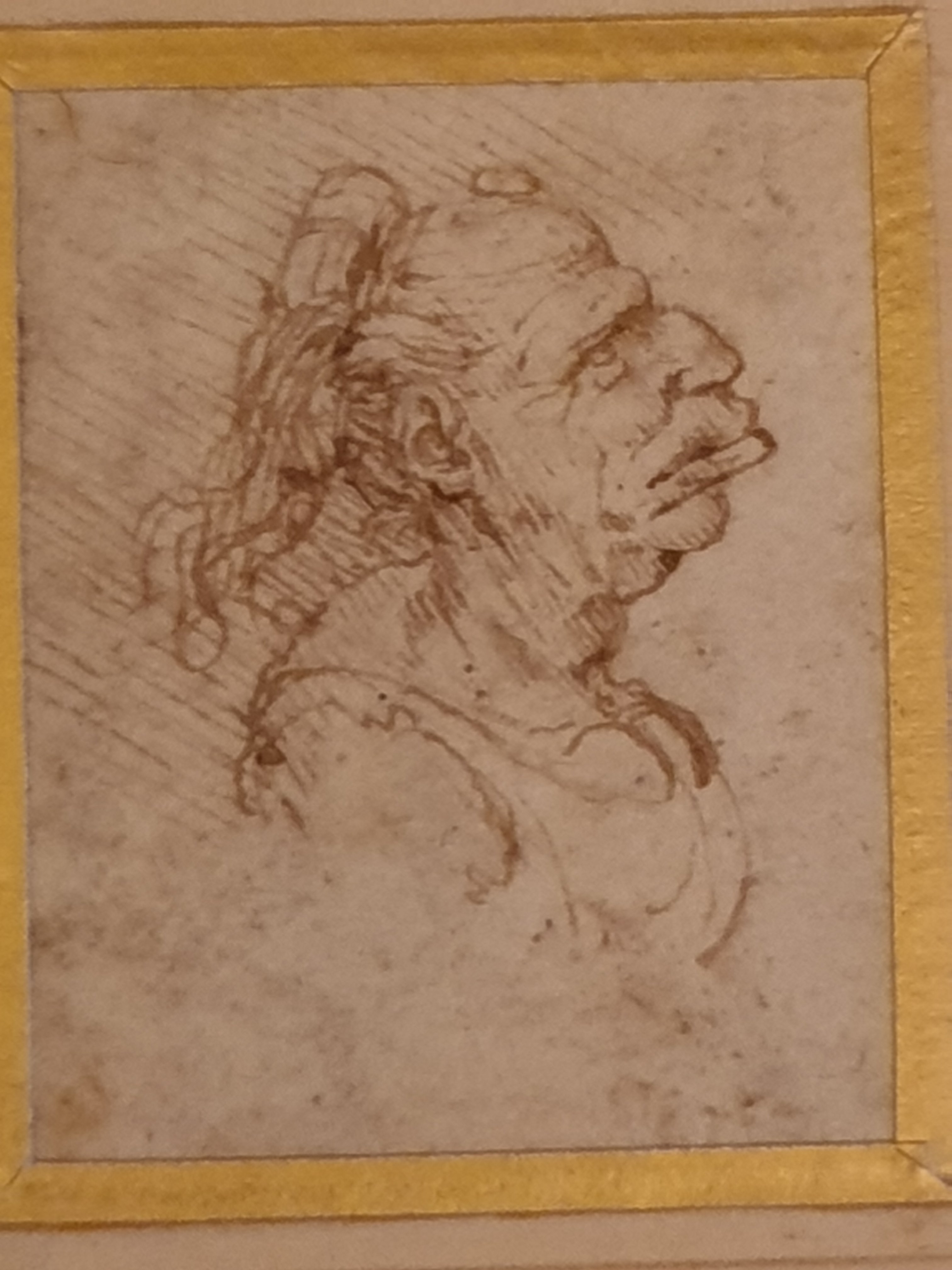
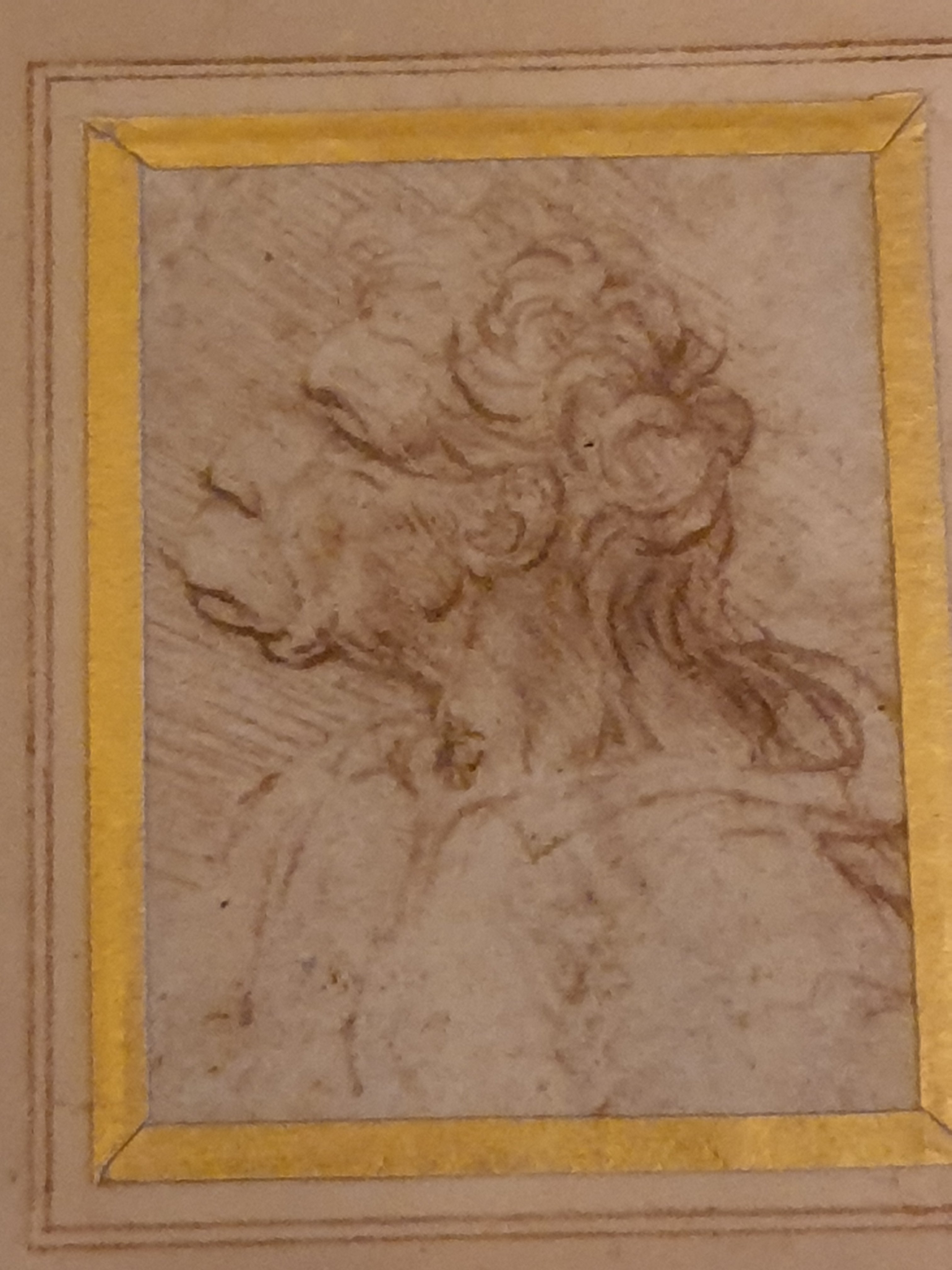
They also have a remarkable group of grotesque heads, one of Leonardo’s perennial obsessions and a symptom of his interest in the pseudo-science of physiognomy:-
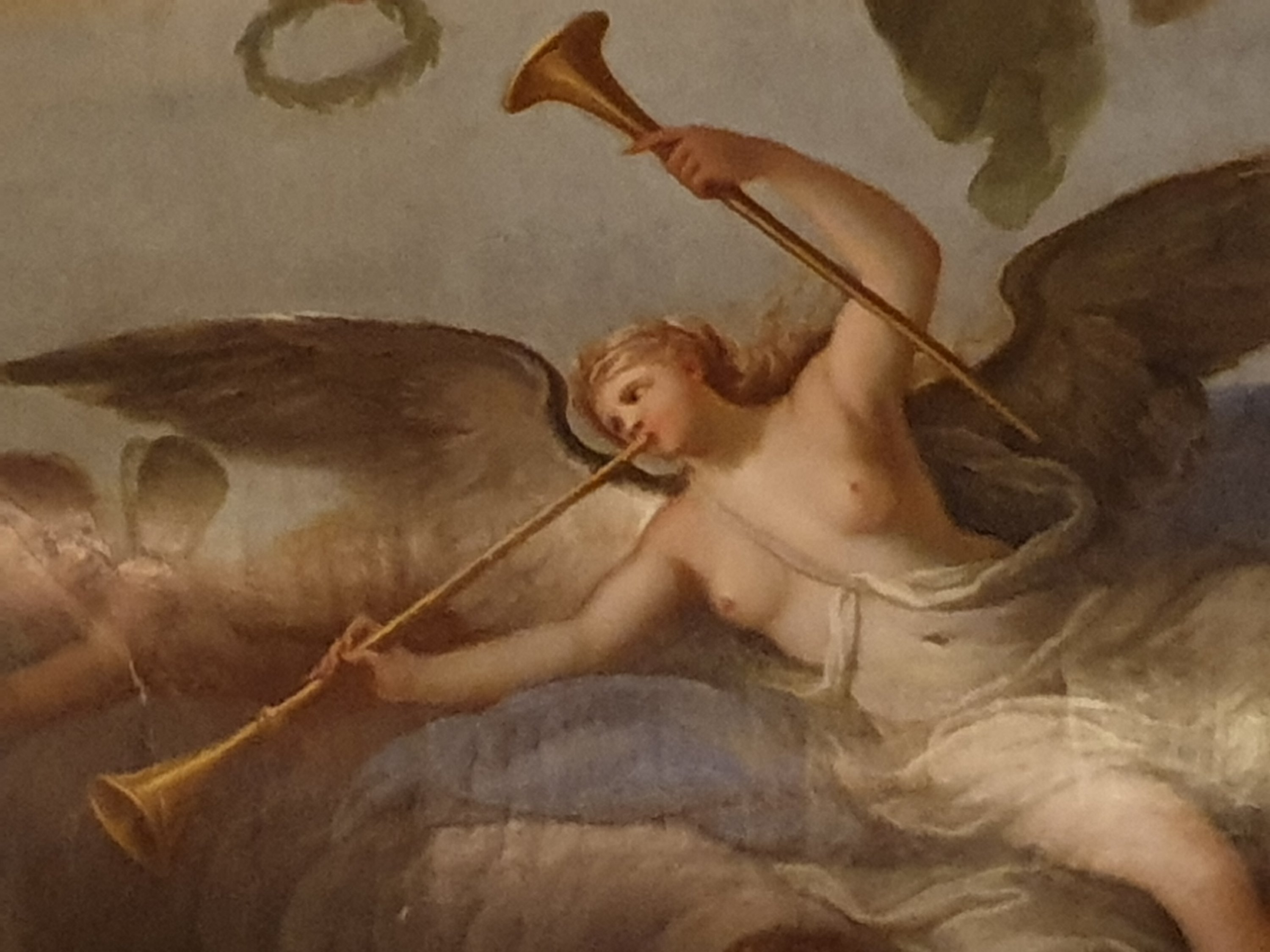
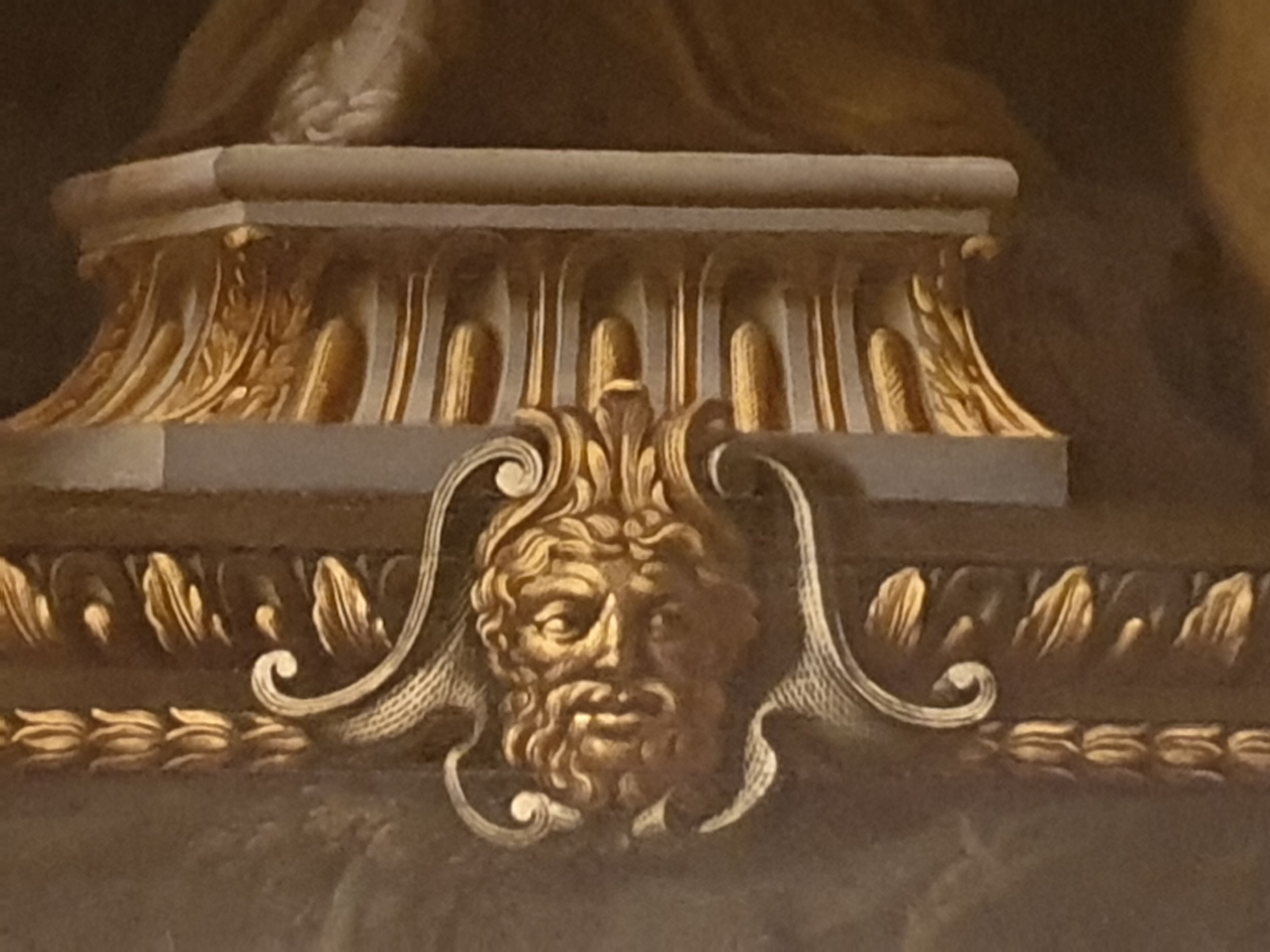
The Duchess didn’t like the Sabine Room, hence her invitation to Freud to cheer up the bathroom. But it’s quite a magnificent piece of baroque painting by Thornhill, before he embarked on the decoration of the Painted Hall at Greenwich:-
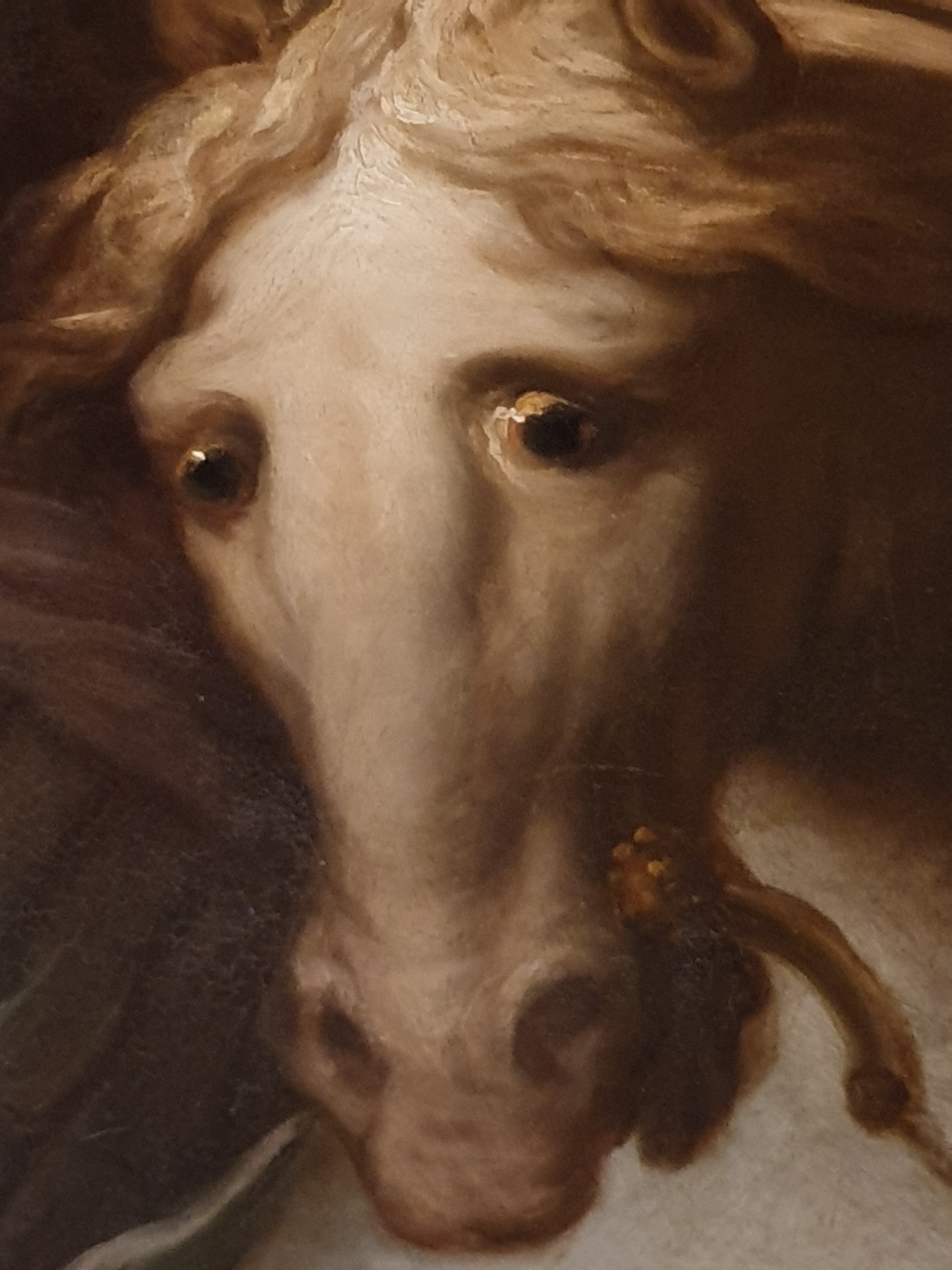
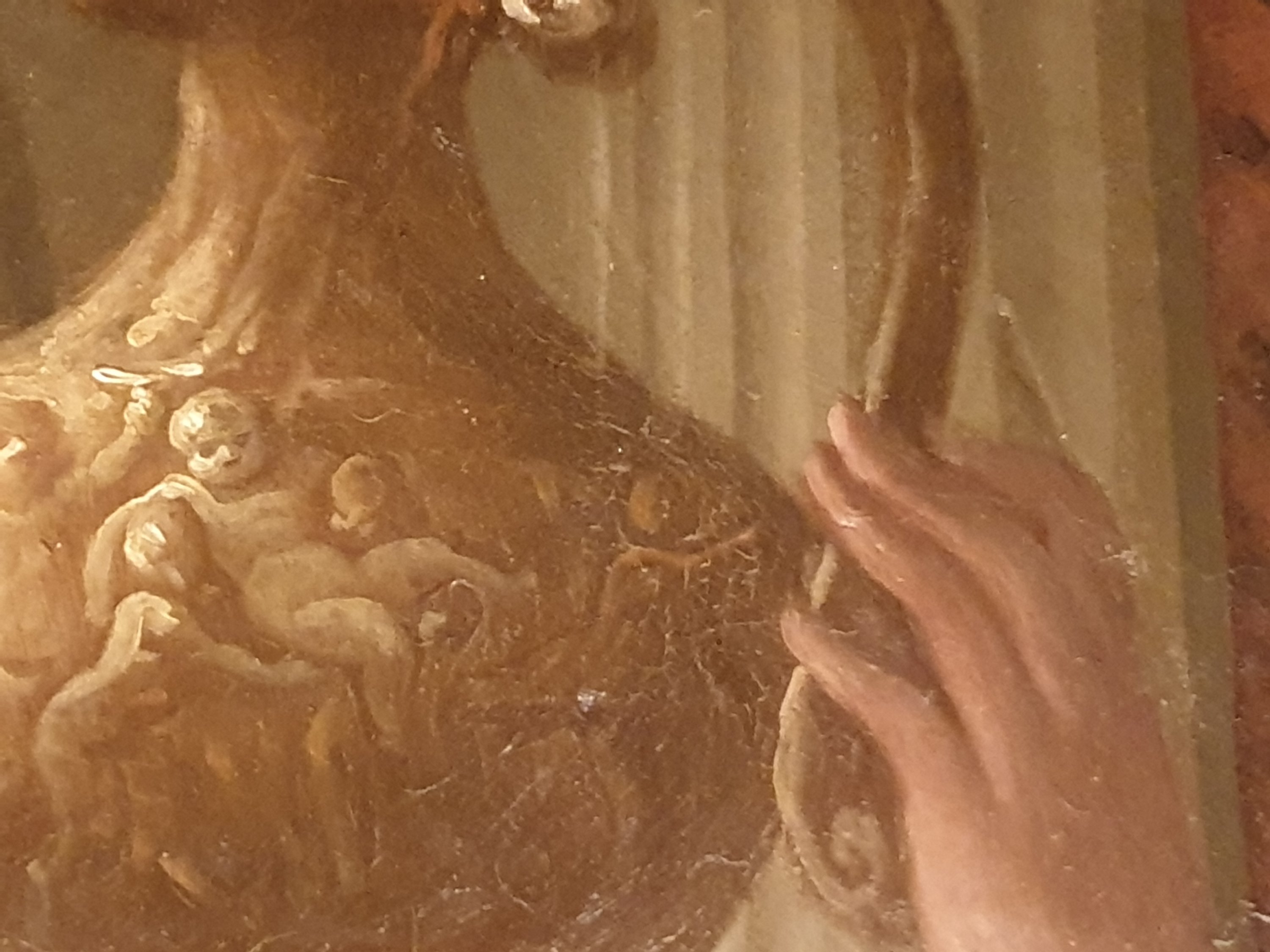
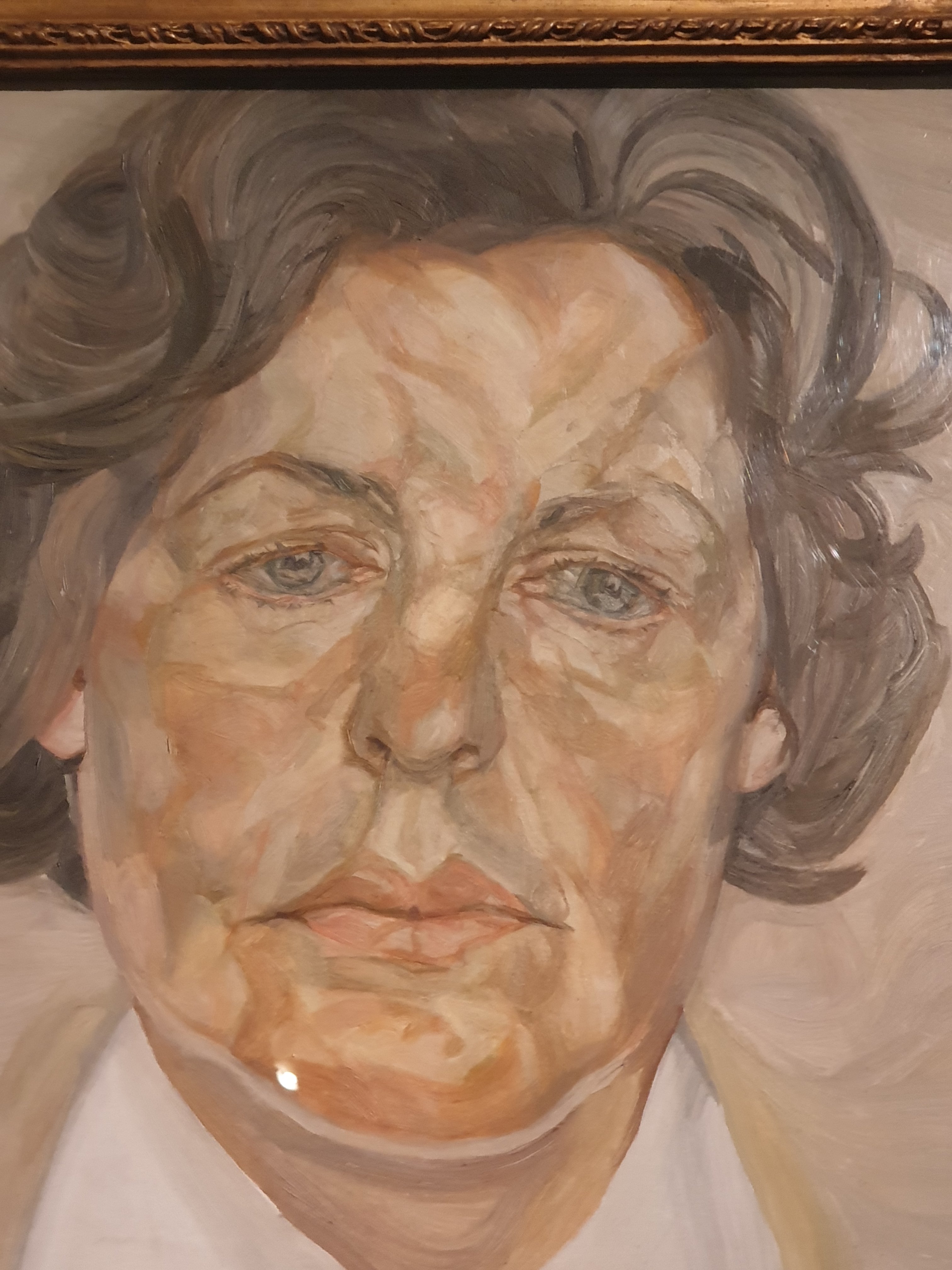
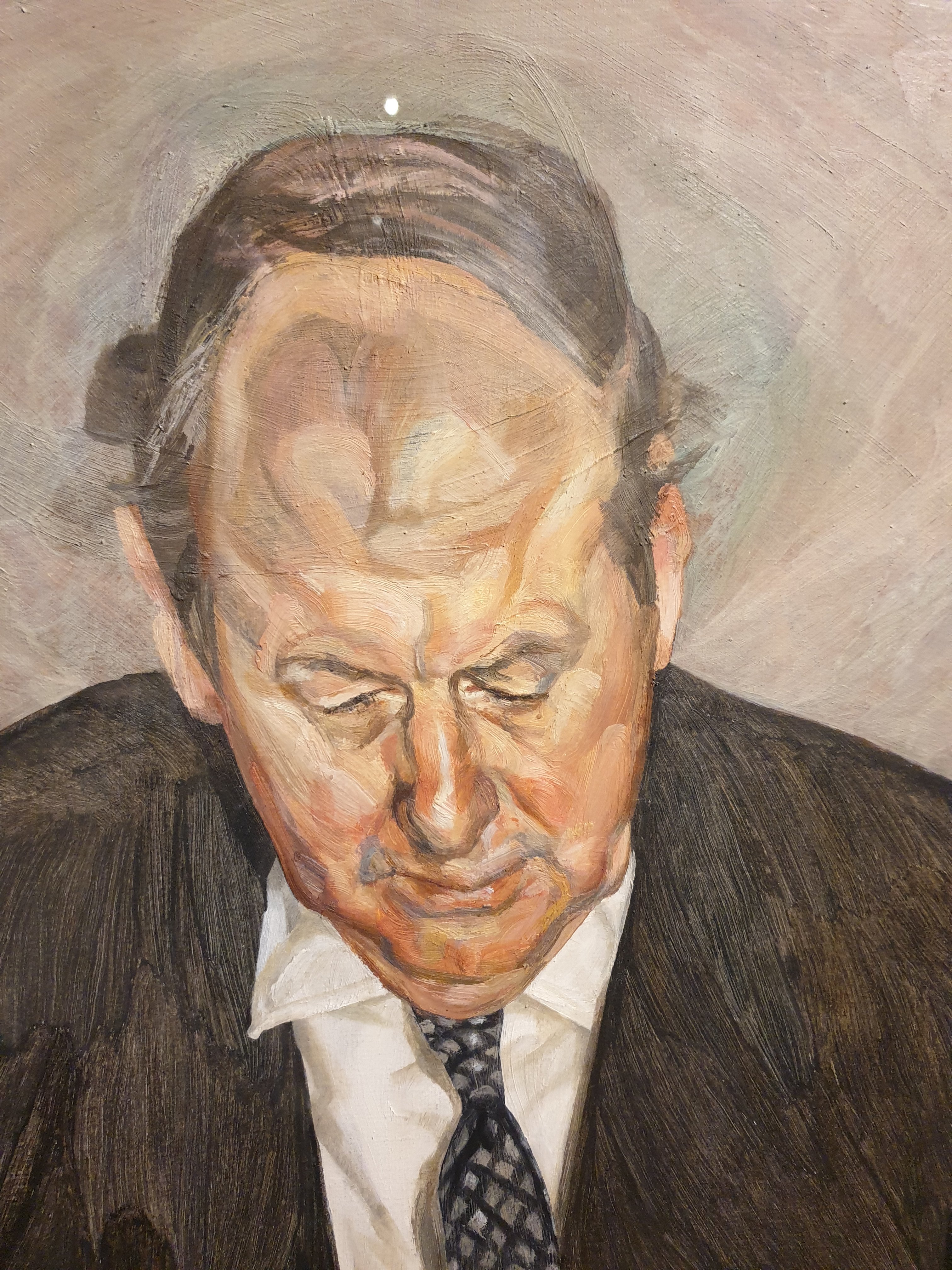
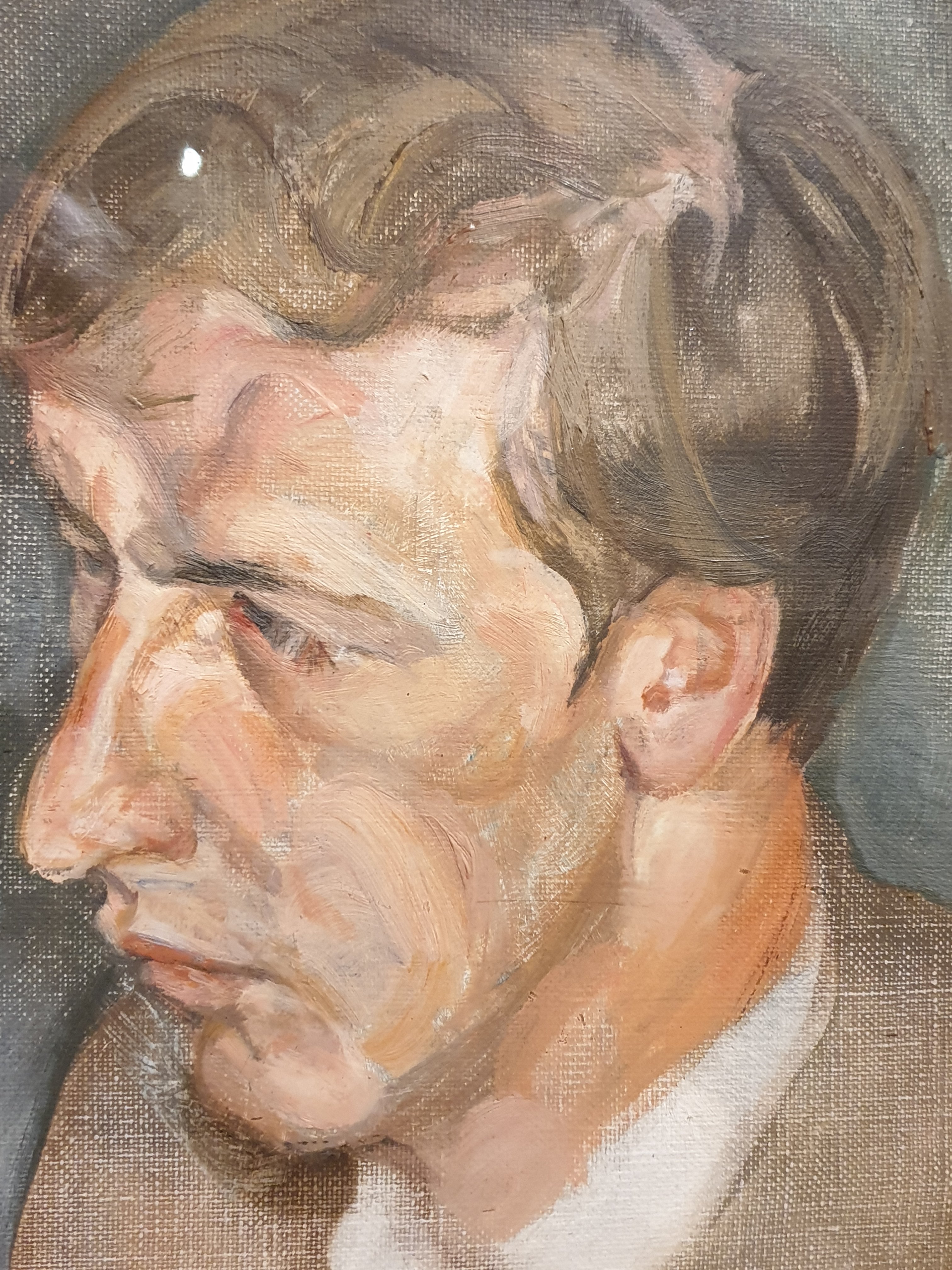
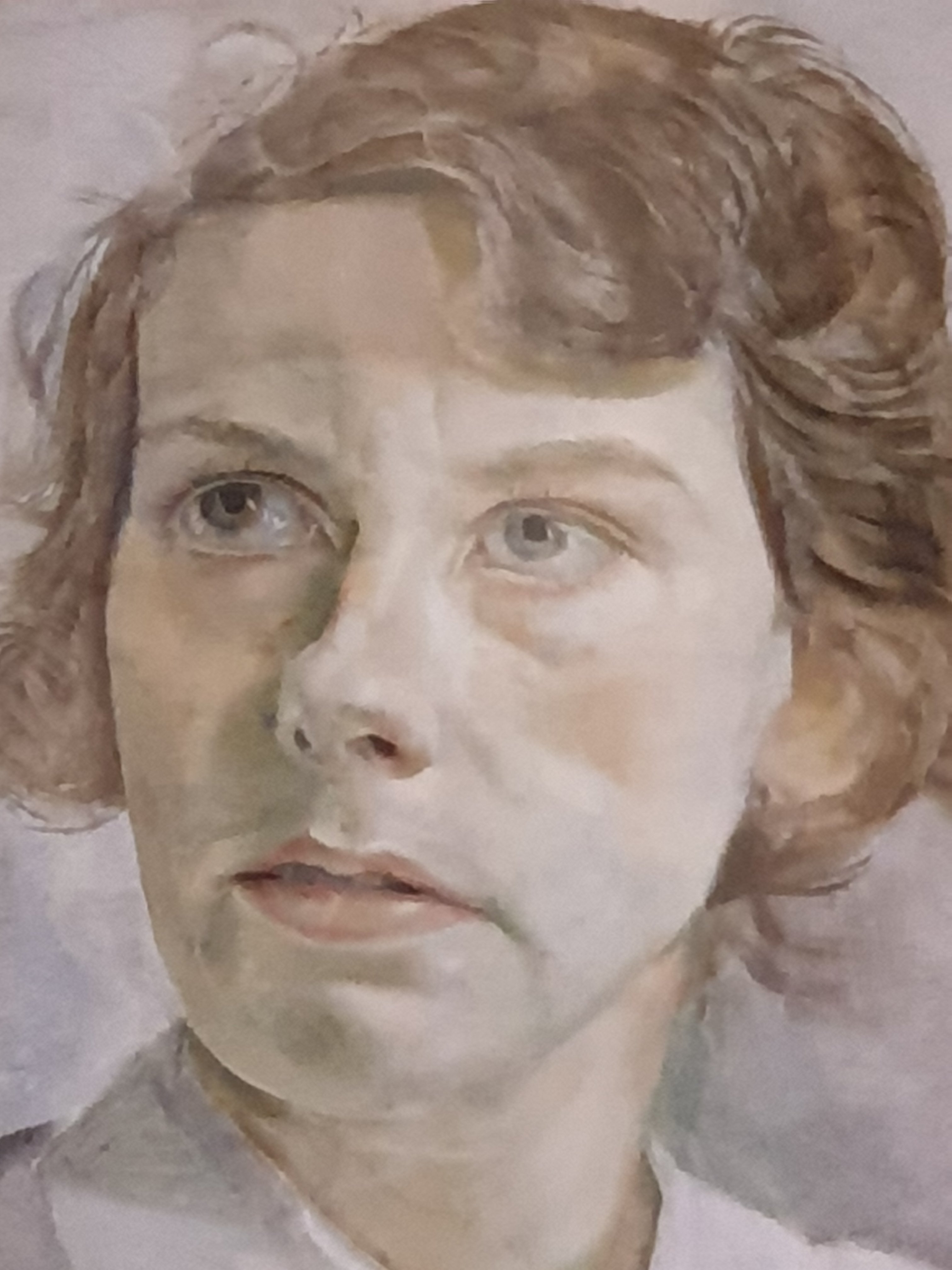
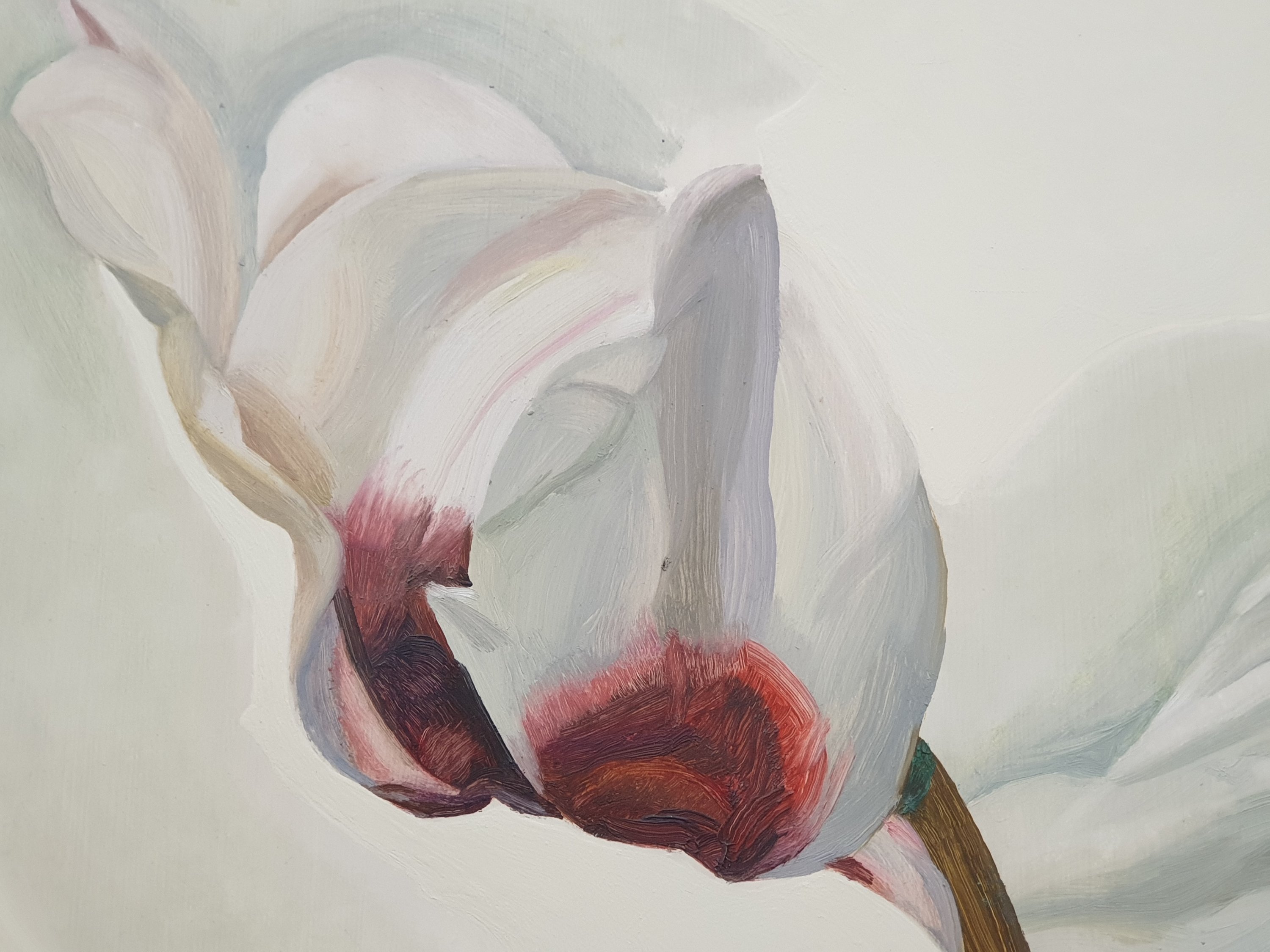
A trip to Chatsworth to celebrate the publication of David Dawson’s very handsome volume Lucian Freud: A Life gave an opportunity to see and study the remarkable collection of Freud’s portraits, which derive from Freud meeting the Duchess of Devonshire in the Gargoyle Club in 1957 and making friends. Freud was apparently the first person to sign the visitor’s book at Chatsworth when the Devonshires moved back to the house from Edensor in 1959 (Please note that these images are all copyright to The Lucian Freud Archive/Bridgeman Images).
I’m very upset to hear of Charles Jencks’s death, not a surprise because he had been suffering from cancer for a long while, bearing it with enthusiastic fortitude and an energetic zest for new ideas and conversation which he had throughout his life – interested in ideas as much as architecture, in prehistory as much as postmodernism. I first met him properly on a weekend in Wiltshire when we went on a Sunday morning quest for the mounds round Marlborough, climbing Merlin’s mound behind the college hall in spite of the fact that it was out of bounds, and then going on to Silbury and Avebury. He was fascinated by the symbolism of architectural form which made him the original proponent of postmodernism, a student of Reyner Banham at the Bartlett after studying architecture at Harvard, writing his dissertation on Modern Movements in Architecure on which he became a global expert and taxonomist. Charles, you will be missed!
I have been asked by a friend across the Atlantic for the latest news on Brexit and the short answer is that it is increasingly hard to tell. The noise from 10, Downing Street, having been relentlessly negative towards everybody and everything – the law, judges, parliament – is suddenly oddly and not totally convincingly upbeat, as if a deal could be struck, which will be an adaptation of Theresa May’s deal, with the only major change being a customs border in the Irish Sea, but with the advantage that it is being put forward with what has been described as Disraelian panache (ie shameless hucksterism) by a Prime Minister who has sided with the Brexiteers for his own personal advantage, so that they may give it their support, along with many MPs who want to see a deal, whatever the cost, to avoid a No Deal, which would be so obviously much worse. We will see. I have some sympathy with those who are sick of the debate and want to see it ended, however unsatisfactorily.
Visiting what little is left of Georgian Colchester encouraged me to read Gillian Darley’s book Excellent Essex, which is an attempt to describe the character of the county in all its unexpected diversity, from Epping Forest to Jaywick Sands, through wide-ranging and well-informed thematic chapters, beginning, as it happens, in Roman Colchester and including information about the race of the stage coaches between London and Colchester and its annual oyster feasts. How much of its character is due to its geography – flat marshland, north of the Thames with many small inlets and islands and 350 miles, apparently, of coastline ? And how much to its history – Roman, yeoman, settled after the war by old east enders, always belligerently independent minded, and, latterly, both libertarian and Thatcherite ? Darley, writing with a view across the fields at Ongar, is a deeply knowledgeable guide.
We looked in on the Colchester Museum which is in the keep of the Castle and has a very strong, particularly Roman collection, owing to Colchester’s importance as Camulodunum.
We admired the Colchester Vase, which initially I thought looked fake as it’s so amazingly well preserved, discovered in a Roman grave in 1848, the figures so playful, like cartoons and in such high relief:-
The Gosbecks Mercury, found by a farmer while ploughing in 1945:-
And a child’s lead coffin, beautifully patterned and sadly squashed:-
We went to see the exhibition of the work of Peter Coker yesterday at the Minories Gallery in Colchester, thinking that it is probably the only time that it will be possible to see a good representative collection of his work. But we went away not much the wiser about his strengths as an artist, partly because the exhibition is split on two floors, with a loan exhibition on the ground floor and a selling one upstairs, and partly because he seems to have painted in a number of different styles, depending on his subject matter, with works from his extensive travels in France and more local studies, which looked stronger and less derivative.
This is the Persian Bowl and Red Tablecloth (1976):-
And the etching of his son, Nick, to whom he was so devoted and which hangs in our bathroom:-
I have been thinking more about the film about the life of Merce Cunningham. One is the extent of his self-belief. He didn’t mind if audiences didn’t like or appreciate what he was doing or how he was dancing, which they didn’t. He just carried on, criss-crossing America in a Volkswagen bus with his troupe for the pure pleasure of the performance until, in London, he first received international recognition. The second is the extent to which his generation of artists – he was an artist in dance – came not from the east coast, but from the mid-west and west coast. He was born in Washington State and was educated in Seattle. They were self-consciously free of, and opposed to, received tradition. The film brilliantly encourages an understanding of him and his achievement in an utterly unconventional way, not by interpreting him, but by just showing who he was and the way he danced.
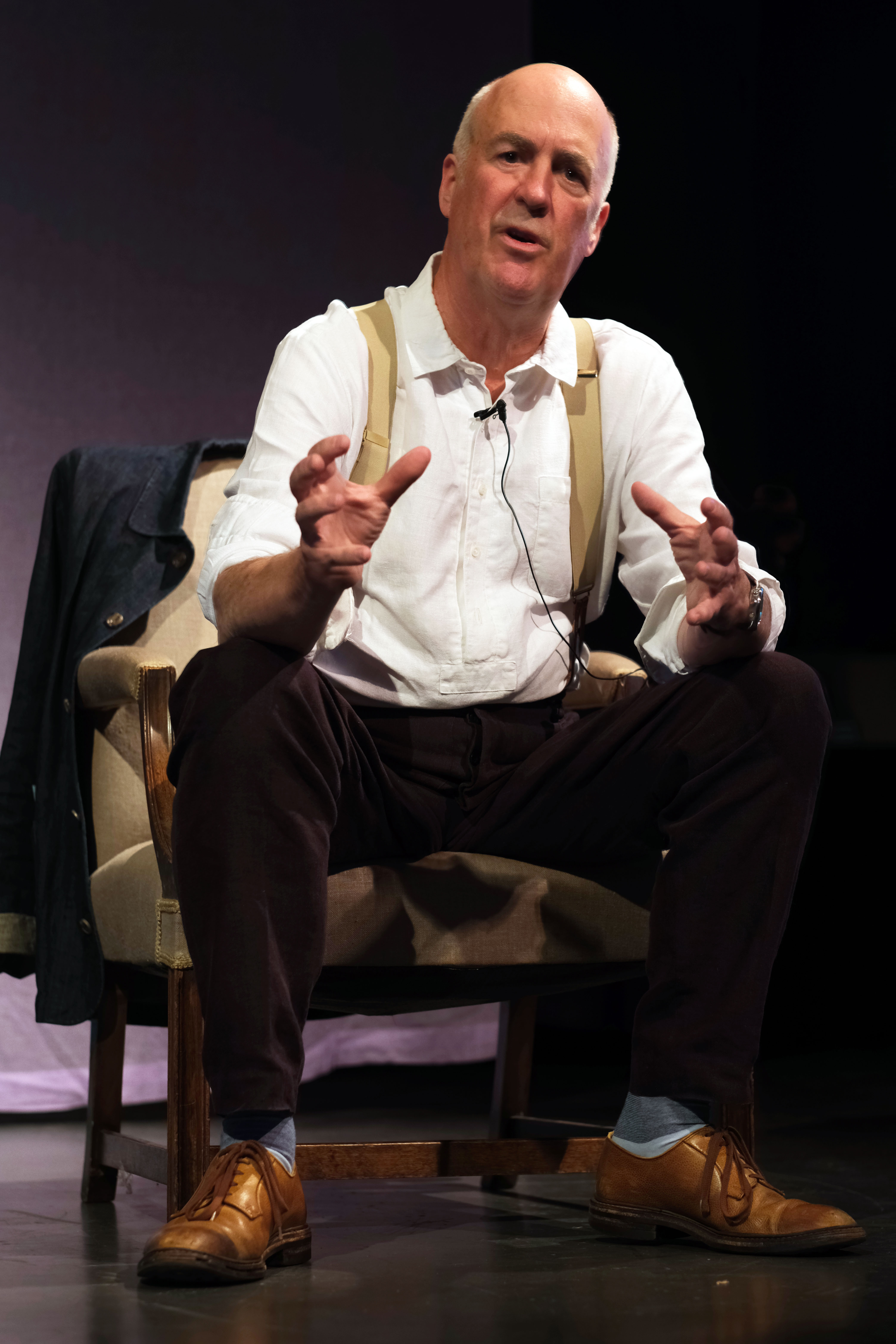
If you are going to be in Cambridge next Wednesday, do please come to my talk at Wolfson College as part of the Cambridge Festival of Ideas, assuming that it’s still possible to get tickets (although I won’t cover all the topics I planned to):-




You must be logged in to post a comment.