Wells Cathedral

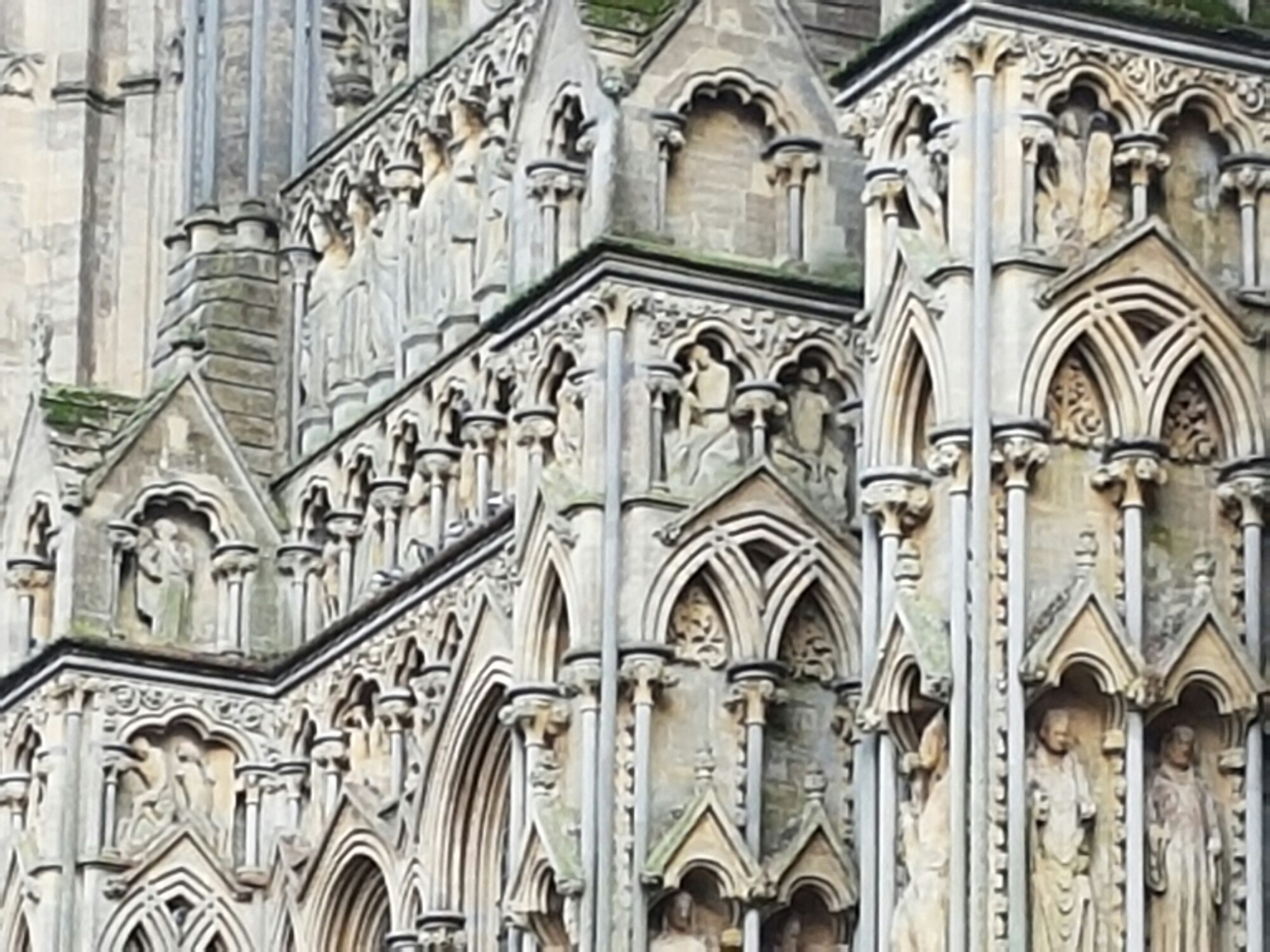
We had a return visit to Wells Cathedral for a tour with Emily Guerry who knows it inside out.   Begun in 1175, it’s an astonishingly ornate example of Early English Gothic with an excessively sculptural façade, with quatrefoils copying Rheims Cathedral, maybe by French masons who came on from Canterbury (Canterbury Cathedral had burnt down in 1174):-

Continue reading

Standard

E.K. Waterhouse

The reference to E.K. Waterhouse in the Comments section has reminded me that I have been meaning to find out more about his time at the Barber Institute.   He was a Marlburian, a contemporary of John Betjeman and a year above Anthony Blunt.   I don’t think there was much love lost between them.   When I was at school, I was asked to look up a poem by John Betjeman in the school magazine which was said to have the acrostic EKWATERHOUSEISASHIT, but it didn’t exist (at least the additional ISASHIT was a false memory).   After New College, Oxford, he went on a Harkness Fellowship to Princeton, where he studied El Greco, which was fairly pioneering for the time, and then returned to work, but rather briefly, for the National Gallery, which he apparently regarded as hopelessly amateurish (it was before the days of the Courtauld Institute).   After the war, he was – all rather briefly – Editor of the Burlington Magazine, a Reader in Manchester and Director of the National Galleries of Scotland, before settling as Director of the Barber Institute in 1952.   The quality of his acquisitions must have derived from an ample acquisitions fund, a detailed knowledge of the art market and independence of taste, partly derived from his time as Librarian of the British School of Rome in the 1930s, writing his book on Baroque Painting in Rome (1937).   He also, which I didn’t know, worked on the British Art section for the Royal Academy’s big survey exhibition of seventeenth-century art, held in 1938, which led to his scholarly study of British painting.

Standard

Louise Bourgeois (1)

Hauser and Wirth has a beautiful exhibition of late work by Louise Bourgeois – very free, fluid and organic etchings, done at the end of her life, which look wonderful in the empty space of the galleries.   We particularly liked a bronze half statuette combined with vegetal top:-

Standard

Stourhead

We came to see the gardens at Stourhead, which I have only ever seen in the summer and autumn, never in the pale light of winter.   We dashed round, past the grotto and Pantheon and up to the Temple of Apollo.

The nymph of the grot:-

A river god:-

Continue reading

Standard

Durslade Farmhouse (1)

We have escaped pre-Christmas to stay in Durslade Farmhouse, the eighteenth-century house which Iwan and Manuela Wirth bought five years ago and have restored as a masterpiece of shabby chic:-

In the morning, I walked briskly across the nearby fields, up a hill, to Redlynch, which has an unexpected mid-eighteenth-century church, designed by Nathaniel Ireson and advertising a carol service on Thursday:-

Continue reading

Standard

Trinity Almshouses

The door to the Trinity Almshouses unusually was open, so I was able to have a closer look, ahead of the day when a tower block looms over it above Whitechapel Station (I realised there is already a postwar block of flats visible directly behind the seventeenth-century chapel).   The land was donated by Captain Henry Mudd of Ratcliffe and the almshouses built for retired sailors (‘decay’d Masters & Commanders of Ships’), designed by a man called William Ogbourne, a master carpenter who was knighted in 1727.   They were charged 12 shillings a month:-

Continue reading

Standard

Limehouse Cut

I walked for a change up the Limehouse Cut, the stretch of water which was cut between the Thames and the River Lea, following an Act of Parliament in June 1767.   Much of it is nondescript, semi-industrial wasteland, now being developed for new housing (it is hard to believe that we have a housing crisis when you see the scale and extent of new housing development in Bromley-by-Bow).

This is where the Cut begins:-

Past The Mission:-
Continue reading

Standard

Stepney Streets

The streets of Stepney were looking ghostly in the pale winter light as I walked from the drycleaner to the farm.

The new London Hospital looks a bit sinister, sheathed in aluminium:-

Continue reading

Standard

Harry Pearce

I was asked to see the exhibition of work by Harry Pearce at Foyle’s Gallery on the fifth floor of their handsome new shop (designed by Lifschutz Davidson) on the Charing Cross Road.   Harry as a partner of Pentagram has been responsible (brilliantly) for the corporate identity of the Royal Academy for the last five years – always clear, unobtrusive and attentive to the qualities and characteristics of type forms – and last year published a book of his photographs under the title, Eating with the Eyes (the title is a Japanese proverb), which have now been made very effectively into large-scale photographic prints, some by an artisan Neapolitan printer, showing details of street scenes and the materiality of surfaces and things from around the world.   The display cases are by Daniel Weil.

After doing the book, he offered to design the book of my blog and has done so – I think – wonderfully, capturing the movement of the eye across the page and the sense of visual exploration, as well as an intelligent relationship of image to text.

Standard

The Silence of the Blog

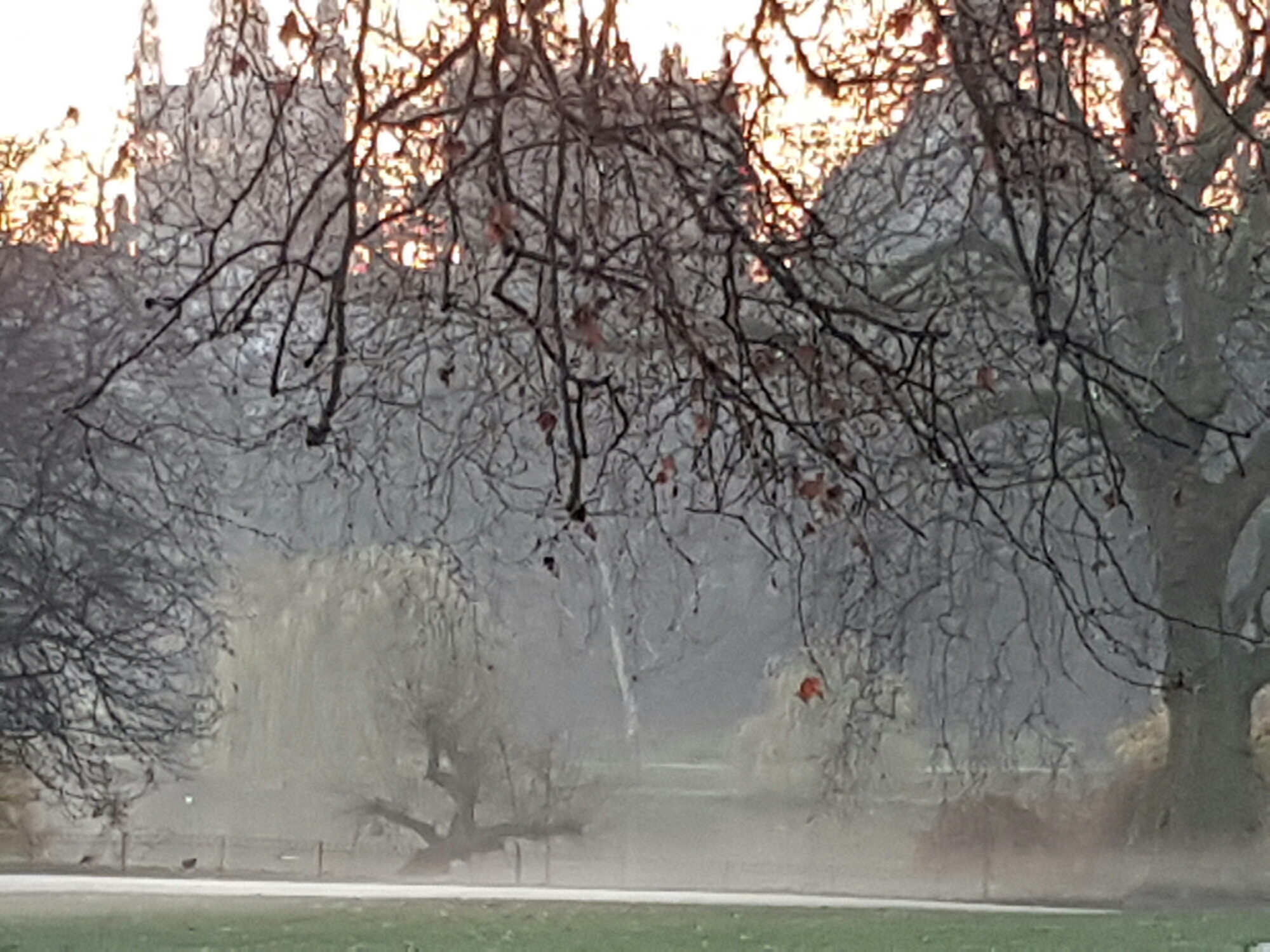
The silence of the blog is not owing to an attack of the widespread influenza, just an overload of Christmas events which leaves little space for anything other than mince pies:  the Royal Academy’s Annual Carol Service which I always enjoy and instils a very briefly holy mood;  our annual party held jointly with the Evening Standard, for which see tonight’s Londoner’s Diary;  and tonight, our annual staff party for which I always feel woefully underdressed, not having spent the last few days devising some fantastical costume, demonstrating the extreme artistic ingenuity and creativity of the RA’s staff.   So, the only photographs I have to post are of the mist across St. James’s Park:-

Continue reading

Standard