We have been following with the utmost alarm what has been happening in California – houses burnt down, forest fires close to San Francisco, photographs of fires near the national park at Point Reyes, friends on stand-by to vacate their houses: it’s beginning to look like the end of the world. No doubt climate change deniers will claim as in Australia that it’s just a normal occurrence and the way that nature renews itself, but it doesn’t look that way:-
Self-isolation (3)
It is, by my calculation, my third day of Self-isolation, since it is the third day since I discovered that I had had lunch with someone who subsequently developed Covid, but I have just received an encouraging note from a Robot telling me that I have only nine days to go. It reminded me of an item on the news yesterday that people in Care Homes are encouraged to talk to Robots, who they find friendly and helpful. Mine has given me advice as to how to lead my life, when to get up in the morning and go to bed (as normal) and that I should organise social activities with others in the house, which is particularly tricky, as I am doing everything in my power to avoid all contact with them, only making a cup of tea in the morning wearing rubber gloves.
Anyway, my life of leisure talking to robots enabled me to listen to Prime Minister’s Question Time. The Prime Minister was theatrically appalled that Keir Starmer might be in any way critical of the glories of Track and Trace, which requires a small child to travel to Inverness to get a test. Of course, he omitted to mention that the Track and Trace programme is run not by the NHS, but, without competitive tender, by Serco who have so far been paid £108M for organising drive-in tests in Inverness and other places. Its chief executive turns out to be Rupert Soames, Winston Churchill’s grandson. Nice work if you can get it.
Higher Education
I am re-posting the attached article in this morning’s Guardian because it is the most worrying thing that I have read in a while – so ostensibly matter-of-fact in its tone, but so much the more effective and brutal as a result, just a statement of what it feels like to be a university academic in an environment where internationalism is contracting and there is a loss of understanding of the real value of education, not just as a passport to a career:-
Self-isolation (2)
It’s my second day of Self-isolation, now compulsory, as I have been officially notified that I must by someone who asked if she could speak about it to my father. I explained that he had died in April 1994, so that was not going to be possible. She then proceeded to explain everything that I must do to avoid infecting anyone, which I was pleased to explain that I was already doing. She has half restored my faith that there is now a system for track and trace, although I still look back fondly to reading about Barry Rees, the corporate director of Ceredigion, who was trained as a scientist and who when he first heard of Covid-19, implemented a very straightforward system of track-and-trace which involved finding out who might have been infected and stopping them infecting others. This seems like a much better system than paying friends of Dominic Cummings billions of pounds to develop fancy computer systems and has meant that Ceredigion has had by far the lowest rate of infection in Wales.
Whitechapel Bell Foundry (41)
I am immeasurably grateful to one of my blog followers who has supplied me with the relevant information about the television film made in 1977 about the Whitechapel Bell Foundry:-
In the Making: Bells
first tx: 8 June 1977, 23 mins
part of a series of 13 films made for Jubilee Year
the film editor was the great Allan Tyrer (who edited Civilisation)
film cameraman Derek Banks
producer Anne James
series producer John Read
There was apparently another significant programme made by the BBC at the foundry in 1951.
The Festival Bell
first tx: 4 April 1951
This was a 45-minute live outside broadcast from the foundry to watch the Festival Bell being cast; only 1 minute of related footage apparently exists. It was shot on 35mm film, presumably alongside the live outside broadcast.
The foundry has also been featured in at least five radio features:
John Snagge’s London, 24 October 1976, Radio London
It’s Just Like Playing with Sand, 26 December 1980, Radio 4
The Peterborough Bells, 14 December 1986, Radio 4
Between the Ears, 14 November 2004, Radio 3
The Bell Boys, 3 November 2009, Radio 4
All of this information is absolutely invaluable, not just because it makes it potentially relatively straightforward to reconstruct the look and feel of the Bell Foundry as it was, but also because it demonstrates how important the Bell Foundry has been in national life: part of the Festival of Britain; celebrated during the Silver Jubilee; the subject of repeated study and celebration on the radio and television.
Historic England has taken the view that it is just another workshop which can be turned into another boutique hotel (do we really need another boutique hotel ?), not of sufficiently obvious architectural significance to be worth preserving. But it is the workshop which made the bells of Big Ben. It is the workshop which rang in the Festival of Britain. It is a set of workshops which John Summerson described as ‘the most remarkable group of its kind in London’.
Are we really going to allow it to be destroyed ?
Self-isolation (1)
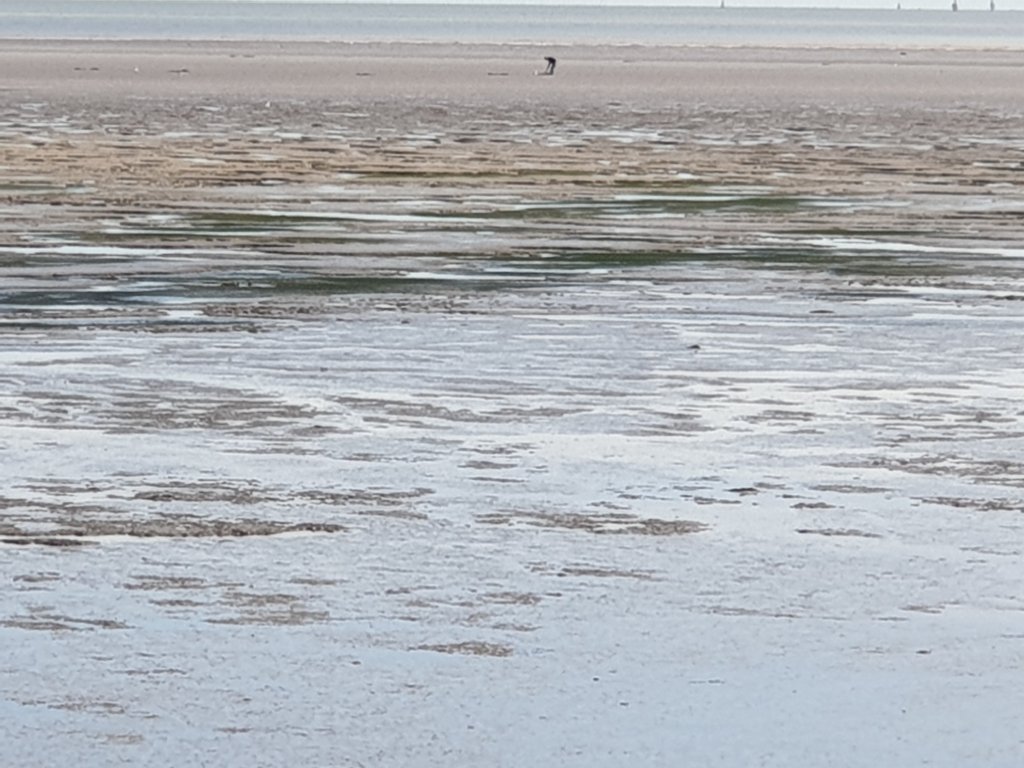
Having had lunch with someone on Friday who has since developed Covid-19, I have put myself into voluntary self-isolation because I am obviously at some level at risk of developing it myself. No-one can know what the level of risk it is. It’s an odd sensation: the disease which had developed a degree of unreality as a result of living with its presence (or absence) for six months suddenly becomes a much more real threat again; and the life I have been leading of reading and writing becomes much more lonely by being imposed, if only self-imposed. I feel a bit like the man who was out on the mud flats yesterday in the far distance:-
Whitechapel Bell Foundry (40)
I have just been alerted to the fact that there was a television documentary which went out on BBC2 on 8 June 1977 about the Whitechapel Bell Foundry described as ‘In the Making – A Visit to the Whitechapel Bell Foundry where some of the most famous bells in the world have been made’. I have no experience of retrieving documentary footage, apart from knowing that much of the archival material relating to the Bell Foundry is held by the London Metropolitan Archives, which, by chance, re-opens tomorrow. So, I am hoping that one of my readers might know how to locate the original film and ideally whether it can be put on to YouTube, since one of the things that I have noticed about the Bell Foundry is that it was essential to have visited it to understand its appeal; although there are wonderful and atmospheric photographs of it, they do not convey the noise and activity of a working foundry, the people. A film would help remind us of what is in danger of being lost
The Isle of Grain
We went on an expedition to the Isle of Grain, the nondescript, but unexpectedly atmospheric peninsula which juts out into the Thames Estuary north of Rochester, full of flat farmland until one comes to a massive Electricity generating station and oil refinery before a village street which leads on past the parish church to a view across the Thames to Southend-on-Sea:-
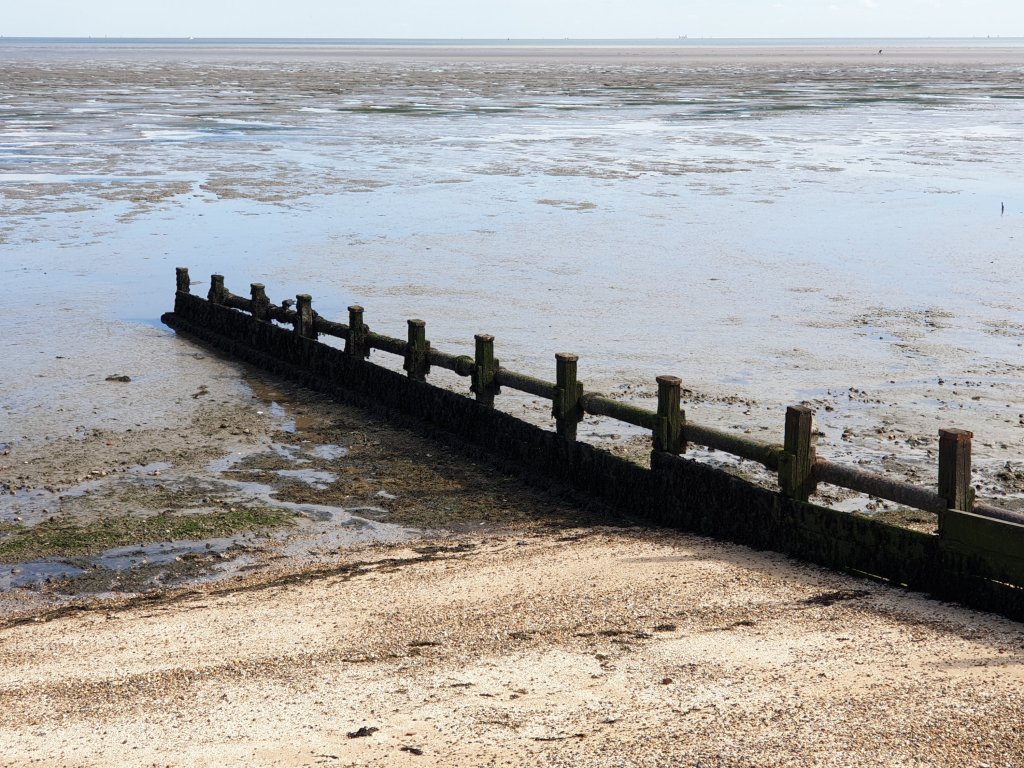
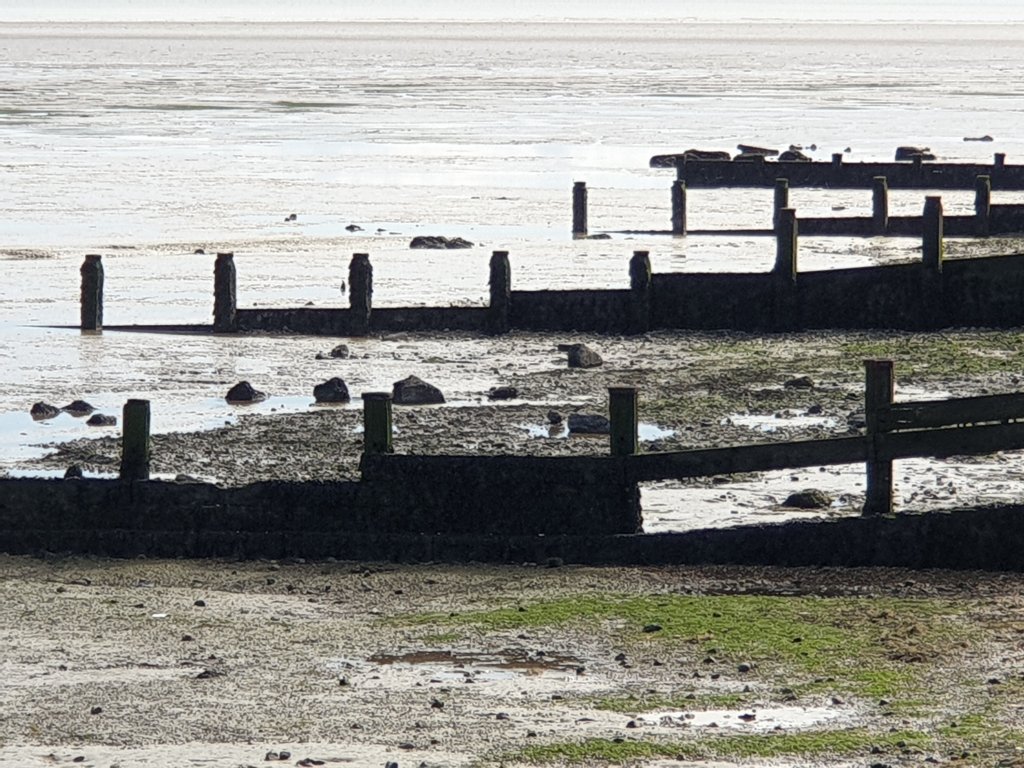
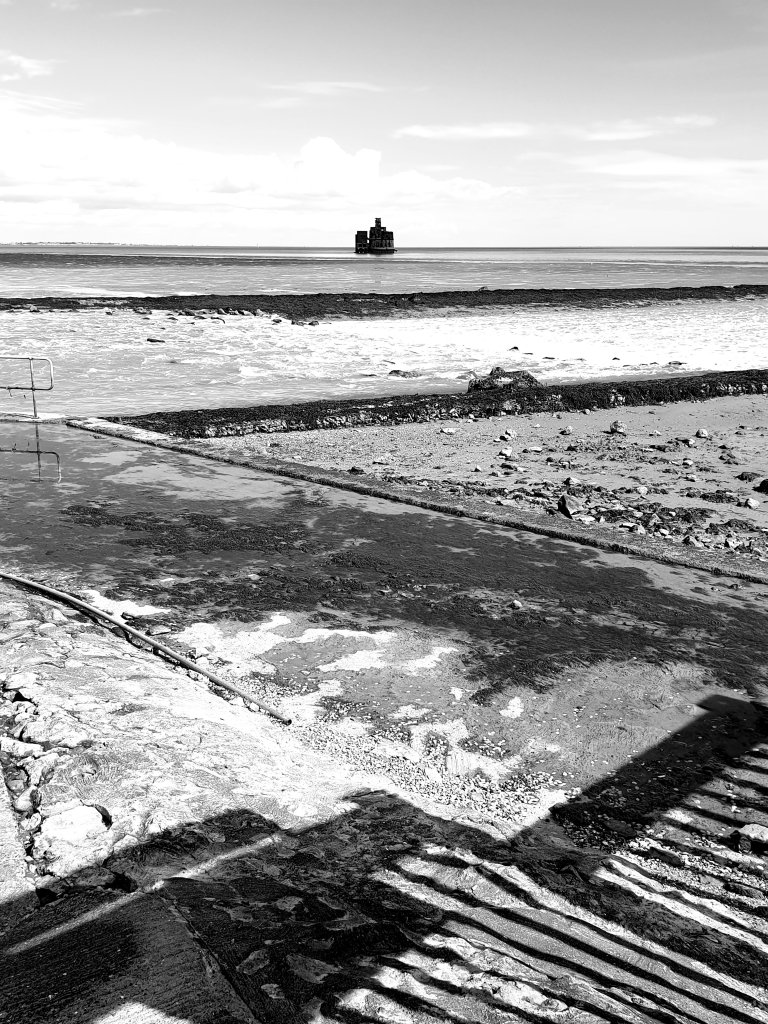
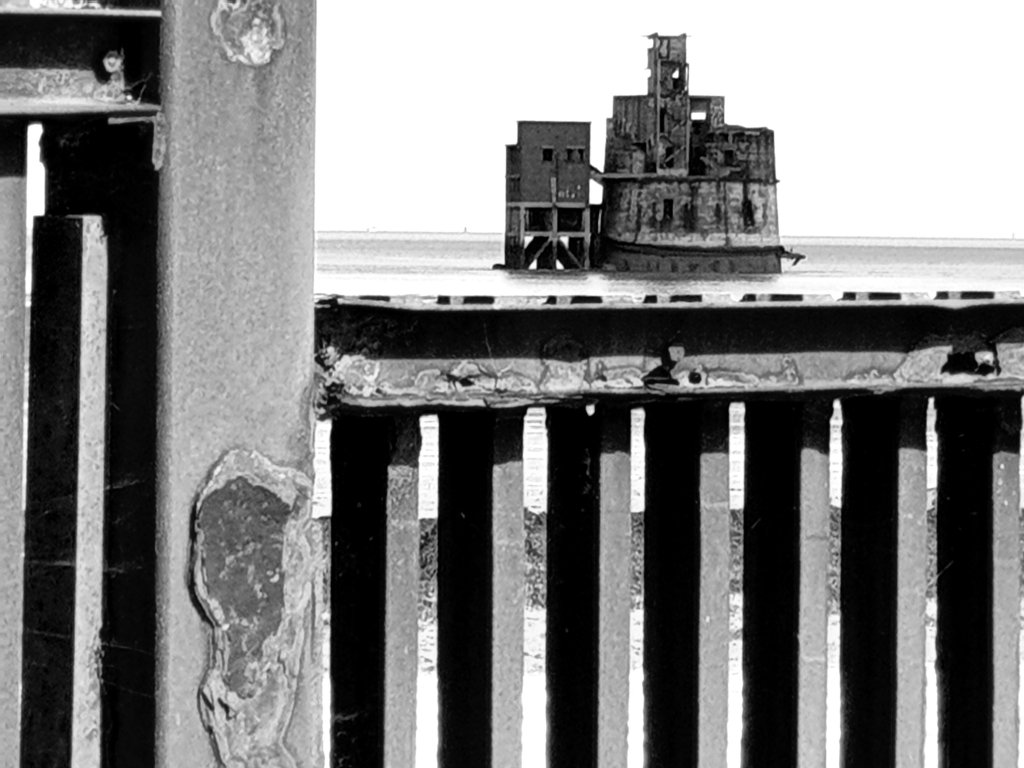
In the middle of the mouth of the River Medway is Grain Tower, a fortification built by Palmerston to protect the dock yards of Chatham and Sheerness:-
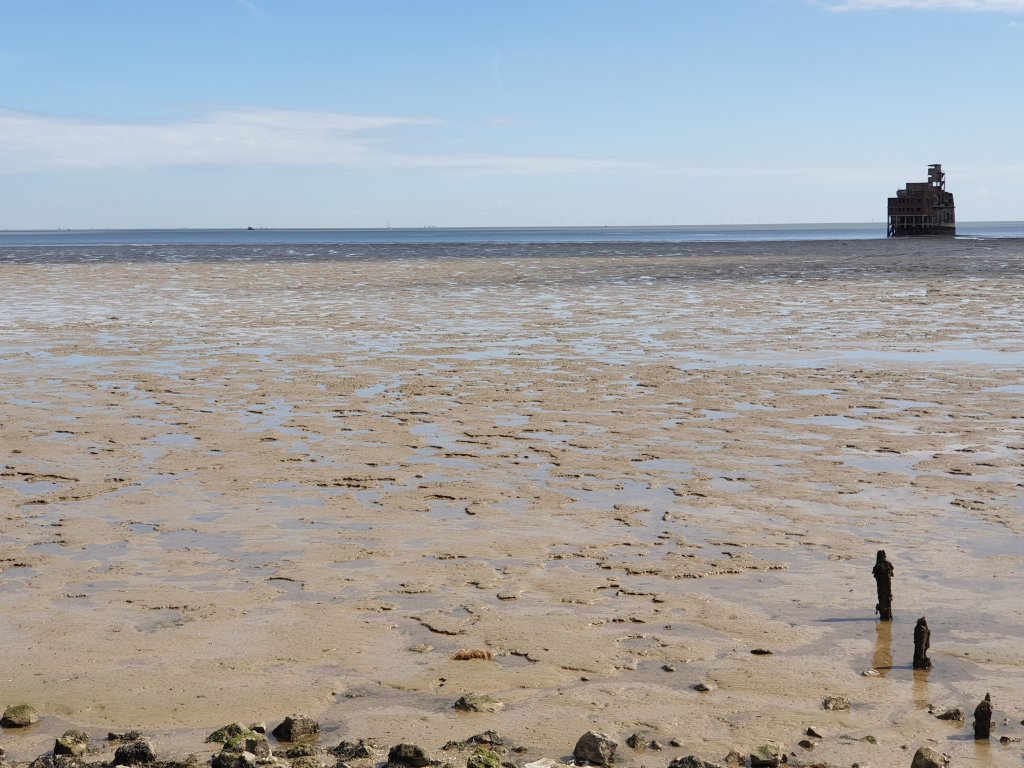
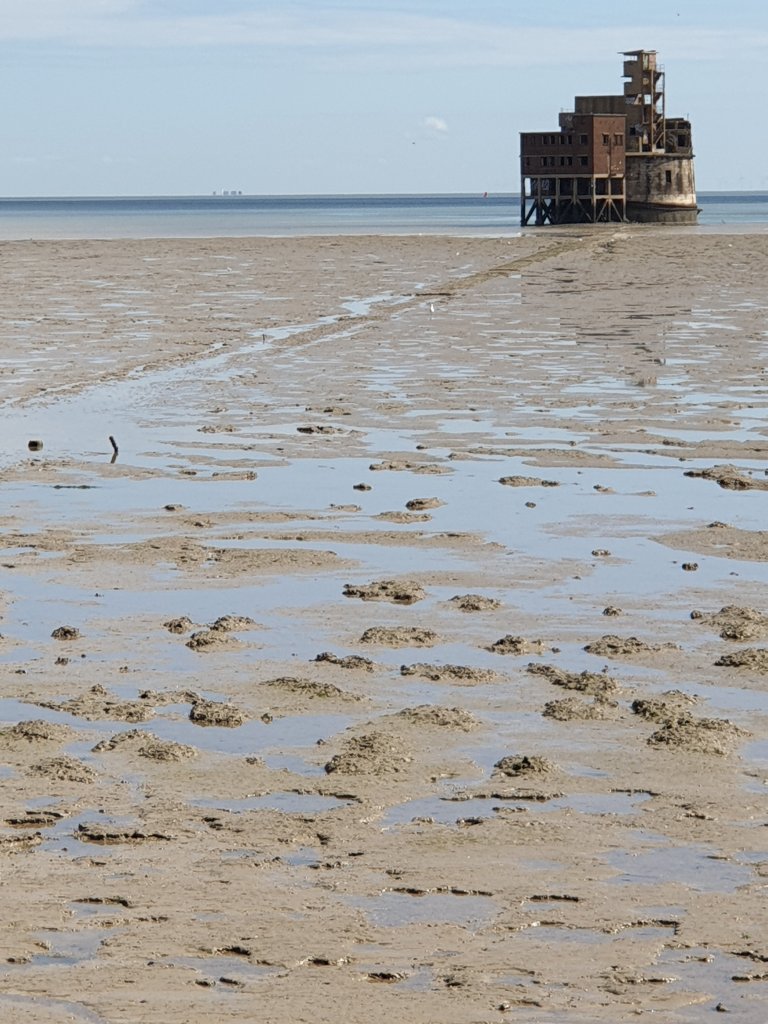
It was a strange and romantic industrial landscape:-

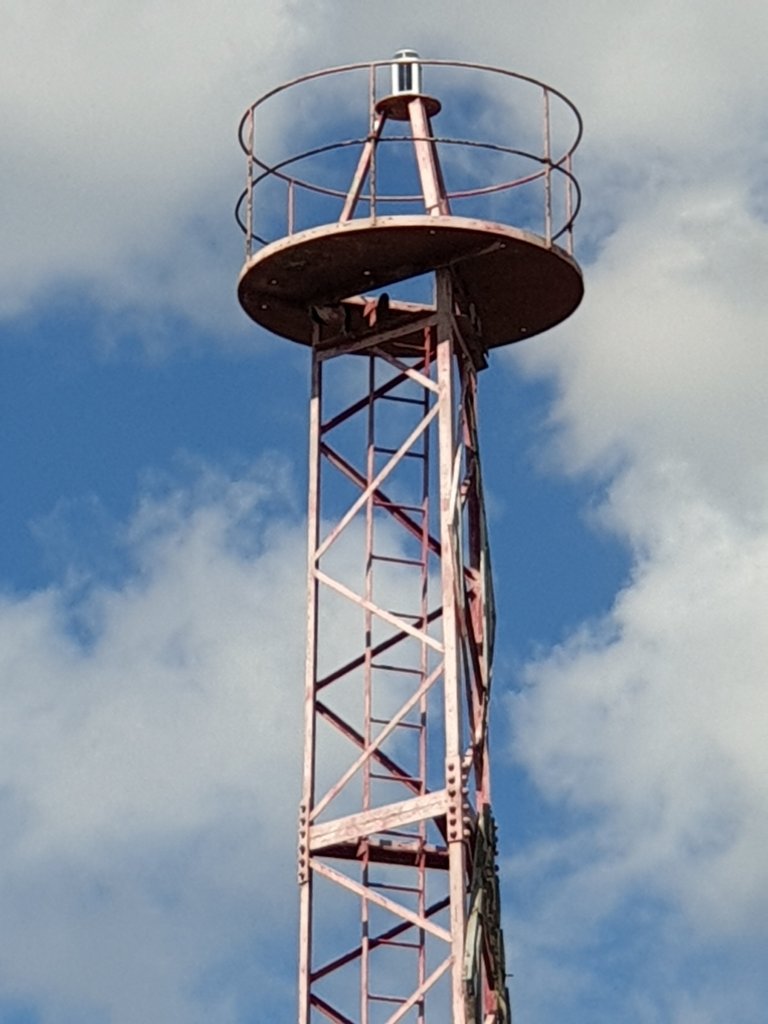
JOY
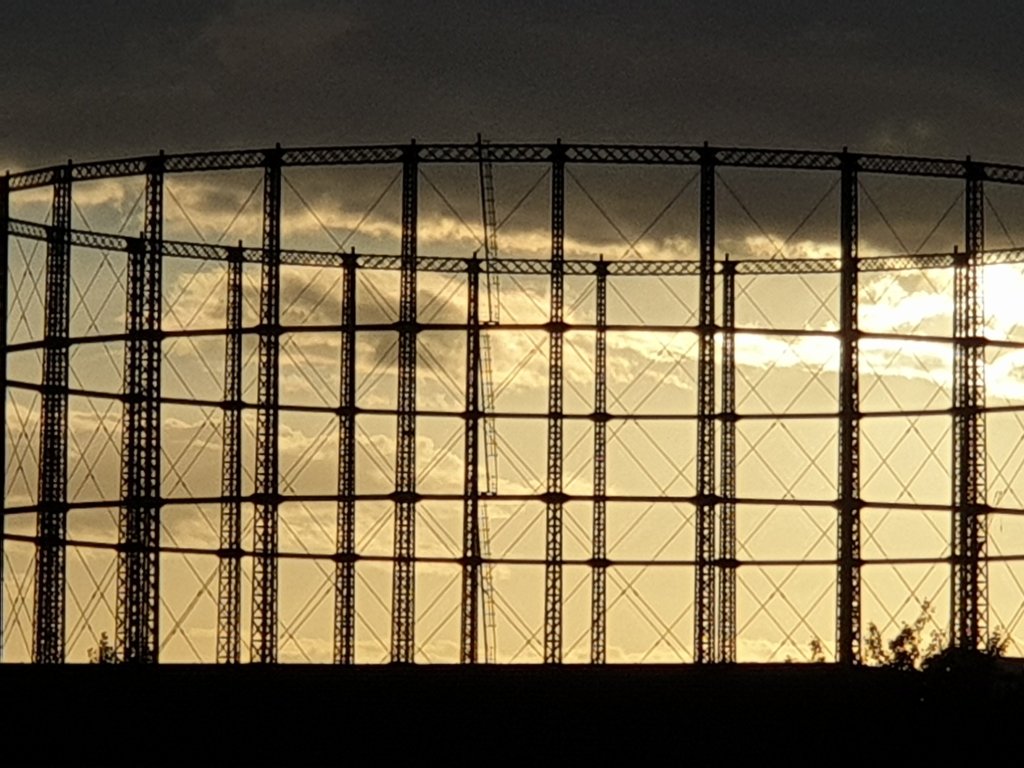
We had our first night out, eating in the open air in a pop-up restaurant called – appropriately – JOY just by the canal at the top of Ladbroke Grove where Dock Kitchen used to be. In fact, it’s been set up by Stevie Parle, who originally established Dock Kitchen, and who has returned to serve the freshest of fresh food in the courtyard outside. Luckily it was a beautiful evening as the sun set behind the gasometers beyond the cemetery:-
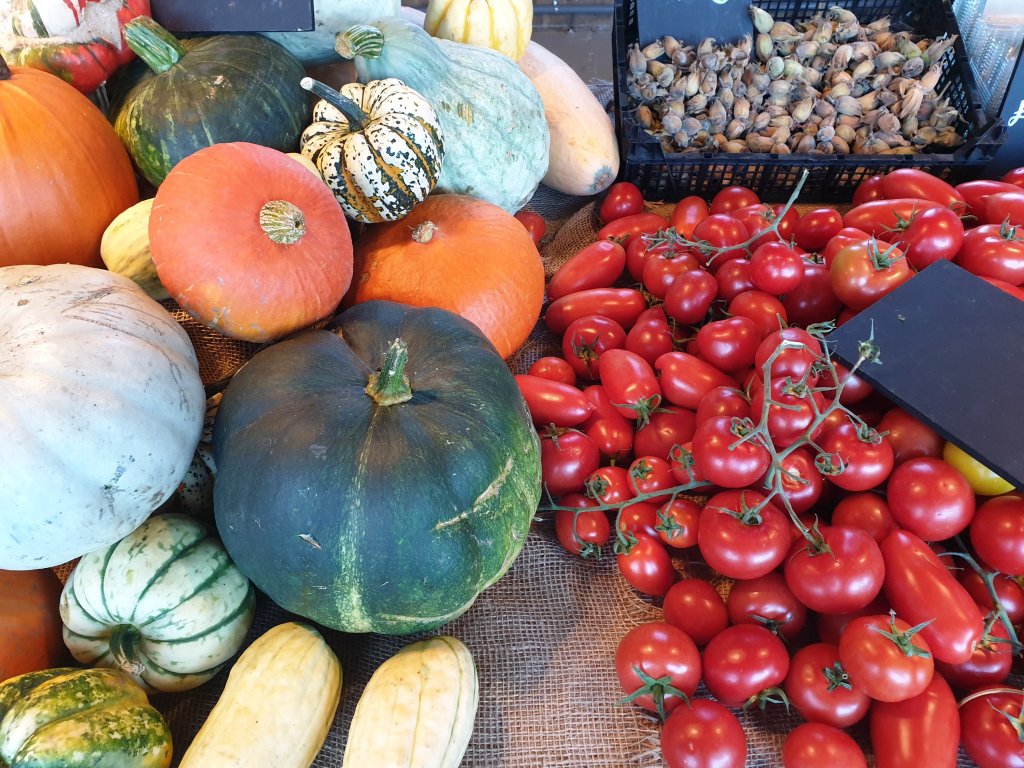
We were greeted by piles of fresh food where we bought apples and plums:-
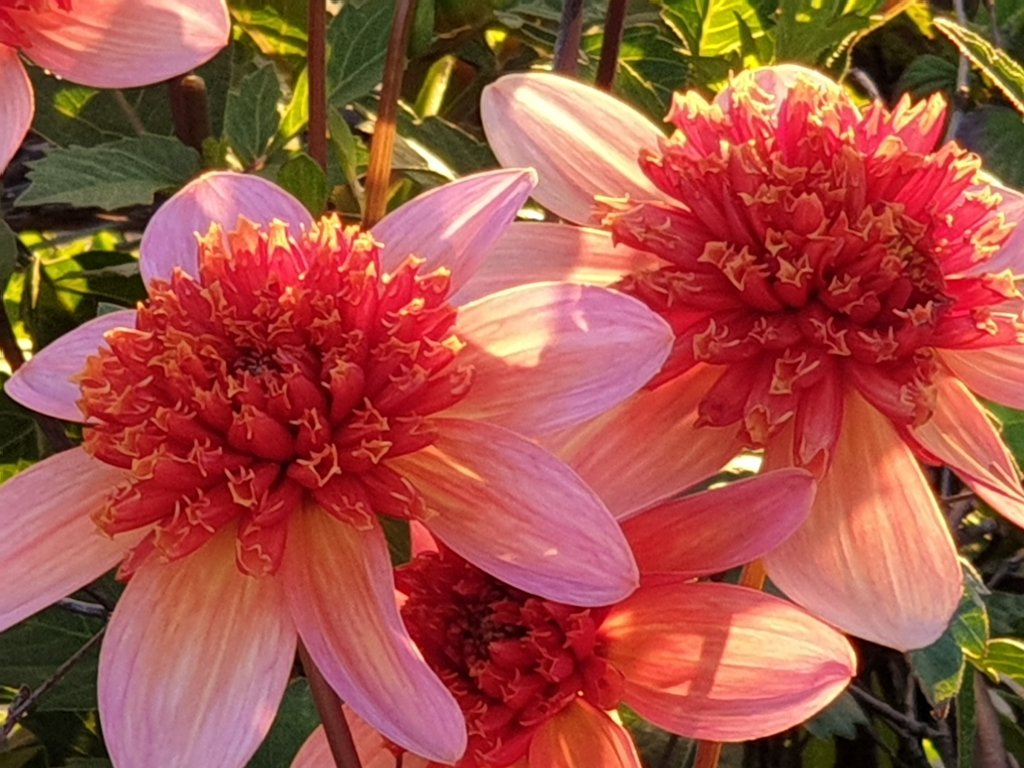
And fresh flowers everywhere:-
The food was delicious. It felt quite like old times, every table taken as the sun went down and we ate strawberries and beef.
Eileen Hogan
We listened to Eileen Hogan discuss the work she showed in her exhibition at the Yale Center for British Art in a discussion with Elizabeth Fairman, its curator. It was particularly rewarding to see recent work, including multiple portraits of Alan Rusbridger which are part of an official commission from Lady Margaret Hall, but which are being done as a set of multiple sketches, originally done in Oxford, but more recently, during lockdown, have had to be done on Zoom, as his hair got longer and wilder. It’s a pity that the exhibition was shown only in New Haven and in a cut-down version at Browse and Darby and hasn’t been seen as much as it deserves to be this side of the Atlantic – not least, her royal portraits, now regarded as the kiss of death for an artist, her portraits of Ian Hamilton Finlay, and, which I particularly like, the meditative portraits of her wardrobe, which demonstrate the conflicts between realism and abstraction, which she described as dating back to the debates when she was a student at Camberwell. I am reproducing the Self-Portrait from the exhibition in the hope that I am not breaching the copyright:-

 | Charles | Saumarez | Smith |
You must be logged in to post a comment.