What to do in a crisis

I have already posted one or two comments by museum directors as they have to shut up shop for the unforeseeable future, something I fortunately never had to do and is completely outside one’s normal experience. Few manage to strike such a clear note of humanity and generosity of spirit, most of all towards her staff, as Kaywin Feldman, the Director of the National Gallery of Art in Washington:-

https://www.apollo-magazine.com/kaywin-feldman-cultural-leadership-during-coronavirus-crisis/

Standard

North Wales (2)

Dear reader of my blog, You have seen versions of these photographs many times before.

The walk down the path to the river:-

The view across the fields towards the distant peak of Snowdon, still covered in snow:-

The cottage submerged by the undergrowth:-

The stone walls marking the old field boundaries:-

But they feel the more precious, as well as more unreal, in present circumstances.

Standard

North Wales (1)

I cannot disguise that we are in North Wales. Each day in Tower Hamlets, the risks of infection grew greater. It was hard to self-isolate completely. I know that a Welsh GP has complained about the pressure on services in North Wales, but it is obvious that one of the hospitals which will be under maximum pressure is the Royal London. At the end of the lane on Anglesey is necessarily isolated, out of contact with other human beings, alone with the fields and the lambs and the clean air.

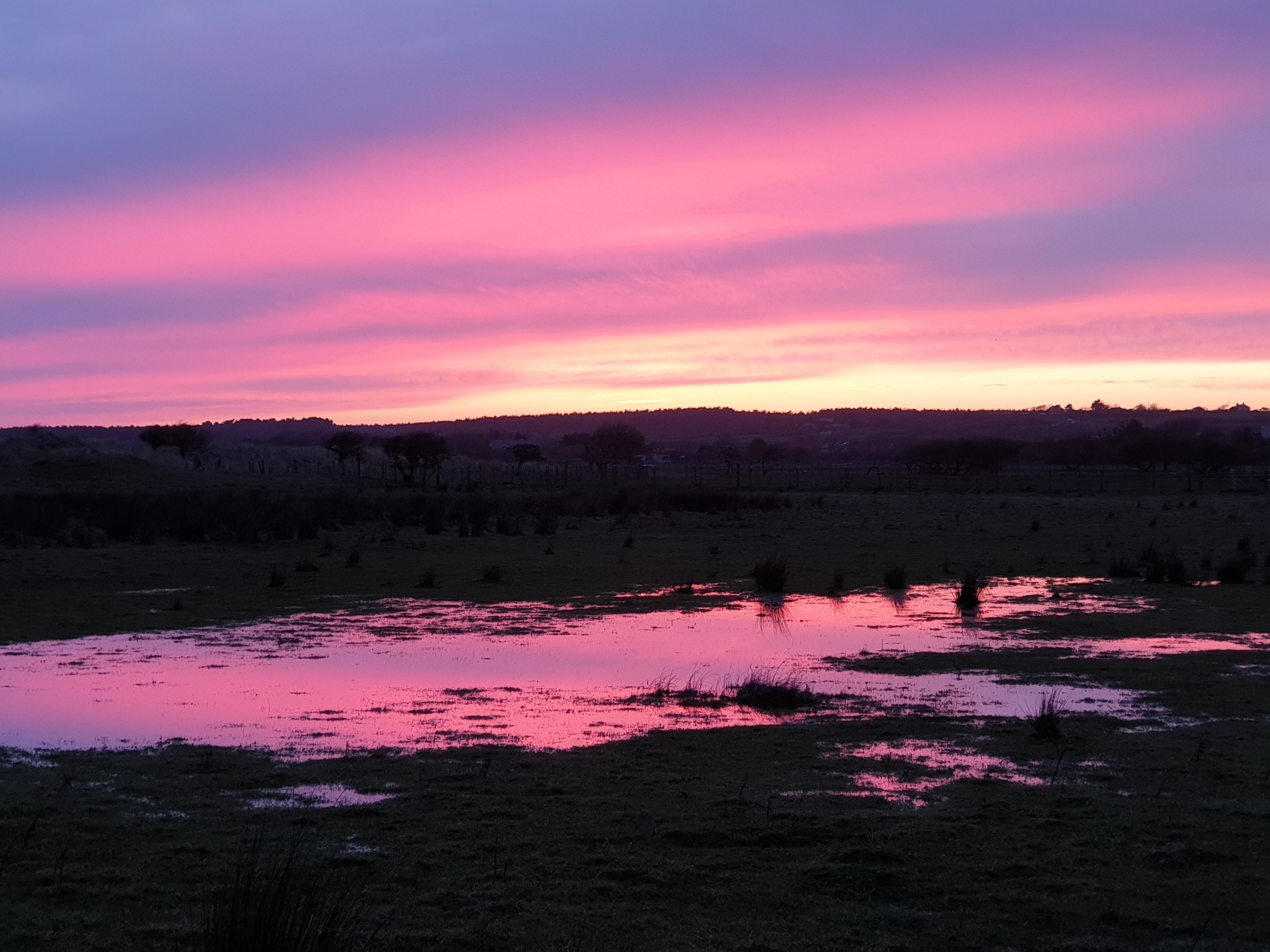
Last night the sky was fiery:-

Today is a new dawn:-

Standard

Art UK

Another good news story from the art world: Art UK, which is the most amazing resource for the study of art in this country will provide a facility in early May for home-grown online exhibitions – a very simple, but still potentially very rewarding and creative way of looking at UK art collections:-

https://www.theguardian.com/artanddesign/2020/mar/19/diy-curators-let-loose-on-huge-online-collection-of-british-art?CMP=Share_AndroidApp_WordPress

Standard

Words from the Palazzo Strozzi

Of everything that I have read in the last twenty four hours about the necessity and consequences of museum closure, I find the words of Arturo Galansino, the director of the Palazzo Strozzi, the most moving: partly because he has already had to live with the consequences of closure for a fortnight or so; and partly because he seems to me to strike exactly the right note of meditative Stoicism – that things are bad, but that art will live on beyond this period of closure; and that it should cause us all to think about the meaning of art, and its importance, beyond the ephemerality of the everyday.

https://news.artnet.com/opinion/letter-from-florence-1807782?utm_content=from_artnetnews&utm_source=Sailthru&utm_medium=email&utm_campaign=EU%20Mar%2019%20AM&utm_term=New%20Euro%20%2B%20Newsletter%20List

Standard

The identity of Thames & Hudson

Harry Pearce has pointed out to me that not only is he busy designing the page layout of my book, but that he has been a tiny bit distracted by the launch of the new Thames & Hudson visual identity, which he has done with characteristic precision and discretion, just tightening it up, but retaining a strong sense of its history. It has the same characteristic as the work he did for the RA, being so thoughtful, so obviously correct, that the untutored eye might not notice it, which is surely the ultimate compliment.

https://thamesandhudson.com/news/thames-hudson-our-new-visual-identity/

Standard

The Museum Book

I’ve been asked by Mark Fisher how I’m getting on with the museum book. The truth is, it’s pretty well finished, due to be delivered to Thames & Hudson at the end of the month. It’s title has changed, thanks to Harry Pearce, the wonderful designer at Pentagram, who picked one of my discarded titles, THE ART MUSEUM IN MODERN TIMES, maybe because it looks so well typographically and has a modernist ring to it, which is appropriate since the book starts off with Alfred Barr, the Museum of Modern Art and its legacy. It has – shamefully – taken me at least as long to do the footnotes as it did to write the book, an arduous process because I did not keep references as I went along and it has taken me far longer than anticipated to track down the source of quotations, even with the help of Google Books, which I have now understood how to work. A defect of the book is that some of the sentences are too long, as you might have guessed, but my editor has been cutting them down with a good chainsaw. Actually, it has been the utmost pleasure, the last three months of close work on the text, editing, correcting, fact-checking, re-reading, mostly in the British Library, now no longer possible. Out in a year’s time, if all goes well.
Standard

Closure

So, they all seem to have closed yesterday, one-by-one, our major cultural institutions, each one conveying a slightly different message, according to their character. Tate went first with a message which put the welfare of its staff, visitors and community first (they seem to have added the community after the first press releae) and said that it will open again on May 1st. Is that likely ? Hartwig Fischer sent a personal message, saying that it would only be temporary. ‘We have taken this decision with a heavy heart’. Then, I got an email from the Royal Academy ‘The RA is closing for a while’ – admirably unspecific. Then the Design Museum: ‘We will be continuing to develop ideas and plan for the future’, which manages to convey a positive note in a mood of otherwise unmitigated gloom. So, the doors are shut, as they were not during the war. Our cultural life goes online.

Standard

Four Directors

I was sent a copy yesterday of the photograph taken of four directors of the National Portrait Gallery, taken at the annual Portrait Dinner last week (it seems like another era). It’s quite a funny foursome, referring back to Cecil Beaton’s 1967 photograph (NPG x12533) of Roy Strong, when he was still the young, scholarly Director, appointed to the post when he was only 31:-

© Noah Goodrich

Standard