
We have just had one of our fortnightly meetings fund-raising to fight the planning appeal. In some ways, it feels a bit surreal in current circumstances, but in others, all the more important that we maintain the continuity of historic institutions, particularly one which has been continuously in operation since before the Great Plague and made the church bells which rang in the Restoration. Equally, if and when this epidemic is over, it feels slightly surreal and actually faintly immoral that the Bell Foundry might still be turned into a luxury boutique hotel, gutting its interior, ripping out its history, and turning it into a bar and café instead of somewhere to maintain and develop craft skills.
The beach (2)
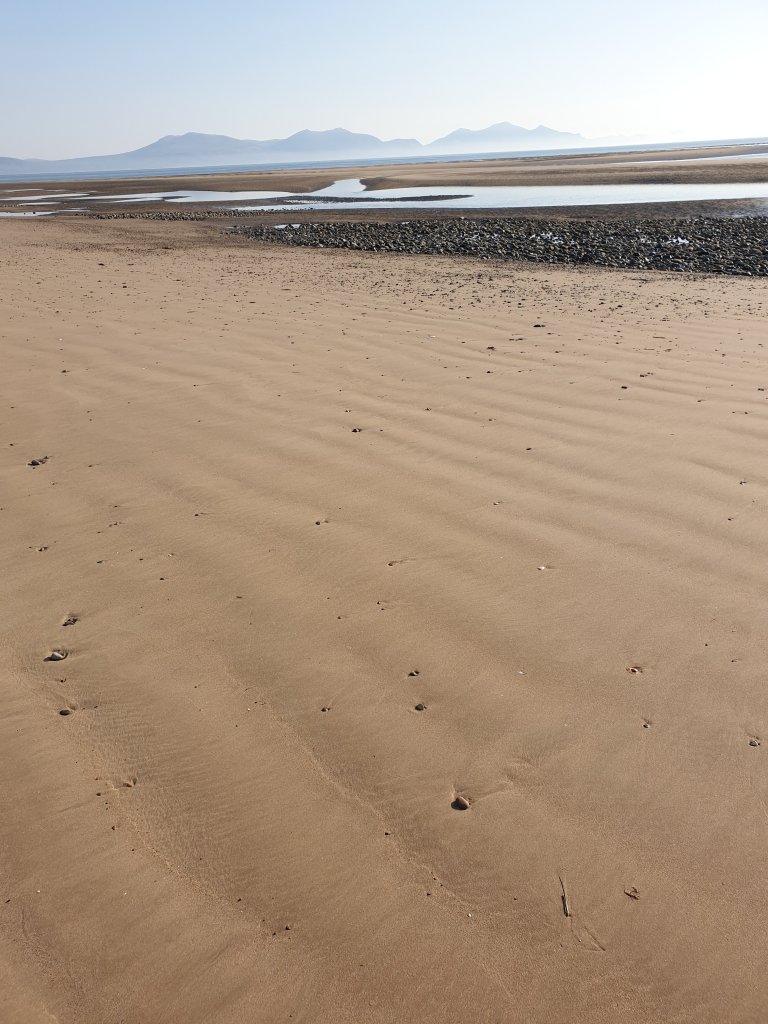
I went for a constitutional on the beach. I think this is allowed under the current rules, although I was the only person in the world who thought so, which makes me feel guilty posting a picture of the sand without any footsteps and the distant mountains:-
Monanisms (3)
I’ve realised that I can give a much better idea of David Walsh and his collection by revisiting it virtually.
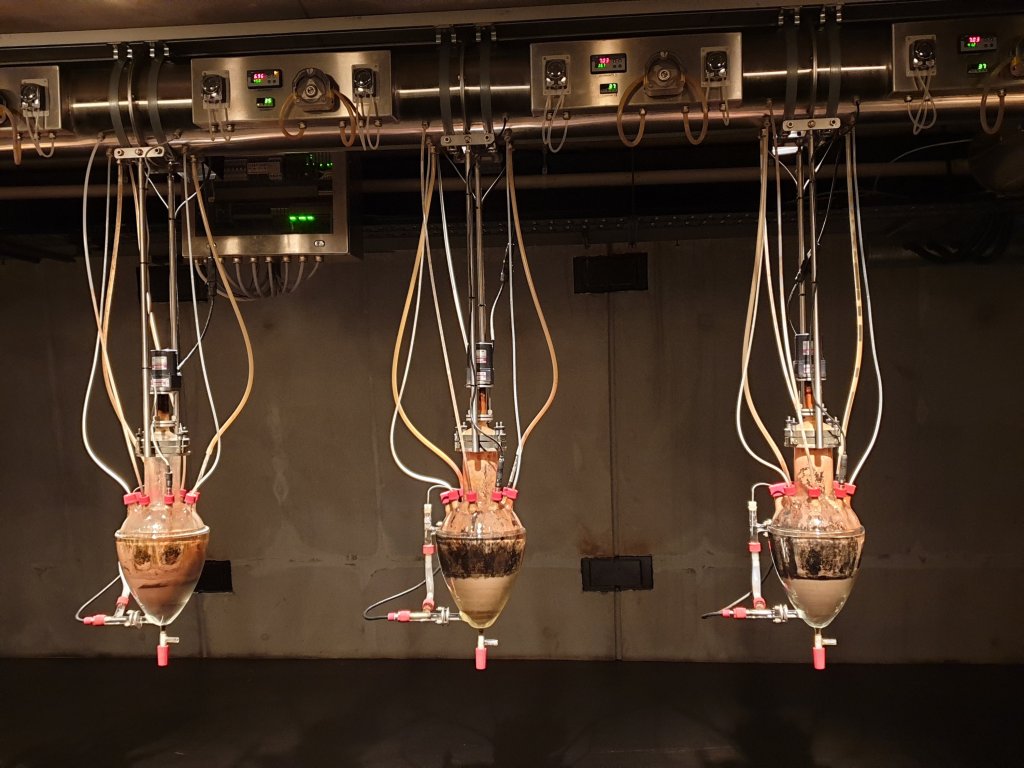
The work which greets the arriving visitor is Julius Popp’s Bit:Fall, which is in many ways representative of the collection as a whole: making use of new technology, as much about science as art, by an artist fascinated by machines:-

The most popular work in the collection is Wim Delvoye’s Cloaca Professional (2010), because it involves a strong element of performance, the public assembling at 3 o’clock to watch a public excretion:-
And not to forget that it is a collection of antiquities as well, here is a picture of a late Minoan chest:-

CAFA Art Museum
I found in my inbox this morning a message of goodwill from the director of the CAFA Art Museum, the gallery attached to the Central Academy of Fine Arts in Beijing, which celebrated its 50th. anniversary in November 2018. Under normal circumstances, I might not have paid much attention to this, but the circumstances are far from normal and I found it unexpectedly touching, the sense of the international community of museums reaching out to friends across the world and the belief in collaboration, now temporarily in abeyance, but we can only hope will be renewed.
Monanisms (2)
I’ve been asked by Mark Fisher to provide a bit more information on MONA and its collections to supplement my post yesterday about the book about them.
Without posting the whole of my long entry on MONA from my book (well, I suppose I could do that, but my publisher might not be so pleased), David Walsh was born in a suburb of Hobart and was a passionate collector from birth, beginning with coins and stamps and moving on to antiquities. His first museum was of antiquities, but then he got addicted to the more extreme forms of contemporary art – some of it macabre, some scatological, quite a lot of YBAs, like Jenny Saville. What I particularly liked and admired about the museum is that it’s very obviously personal, not just the standard works of the contemporary avant garde . I can tell you more when I’ve read the book.
Monanisms (1)
Today is like yesterday, except everything feels completely different. Yesterday, we were effectively in lockdown, living in the purest self-isolation, but today it’s compulsory, with the prospect of being never-ending.
Anyway, I was surprised and pleased when a postman drove up and delivered an enormous box, which turns out to contain Monanisms, a book which is unobtainable in the British Library (even if the British Library were open) and documents very beautifully and luxuriously David Walsh’s collection which forms the basis of his museum, MONA in Hobart. An unexpected pleasure from the other end of the world.
Sunrise
Each day starts with a sunrise of unbearable vividness, the fury of imminent damnation.
Friday:-

Saturday:-

Sunday:-

Monday:-

The beach (1)
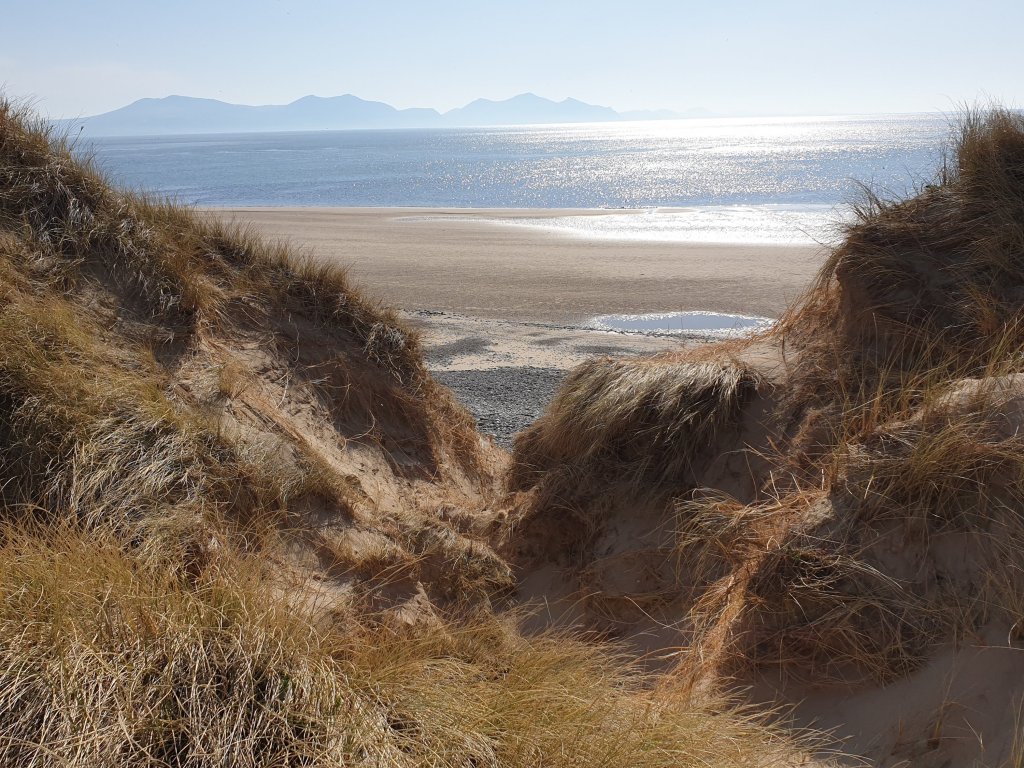
It felt almost like summer out on the beach, alone apart from a few stray walkers with their dogs, acres and acres of empty sand stretching out to the lighthouse, no waves, only the lightest breeze, the sound of the gulls, and otherwise the uttermost, infinite silence and emptiness:-
Mother’s Day
It being Mother’s Day, I have been thinking of mine, her great and passionate knowledge of every aspect of nature – every bird and wild flower – which she had learned from her father and, at the same time, of my nearly complete failure to learn this imparted knowledge from her while she was still alive, in spite of accompanying her on her daily walks in the fields and countryside, most especially in the west coast of Ireland, on Three Castle’s Head.
I should maybe add, whilst opportunity arises, that this obituary I wrote is a bit inaccurate, based on my memory of what I thought I knew of her. She wasn’t there to check the facts. I think she went to Girton when she was in her early twenties and the idea that she read Arabic was a fiction. She thought of changing to Chinese. But even now my knowledge of this part of her life is a bit hazy. It was only much later in her life that I discovered that she was one of the generation who wasn’t allowed to take a degree.
I guess that, like all children, I wish I had asked more questions about her life while she was still alive, not least about her time in Germany in the early 1930s.
Rus
We walked down to the Straits:-


There was a mass of wild garlic:-

Primroses:-


White violets:-

Is this campion ?

And fine woolly sheep:-

 | Charles | Saumarez | Smith |
You must be logged in to post a comment.