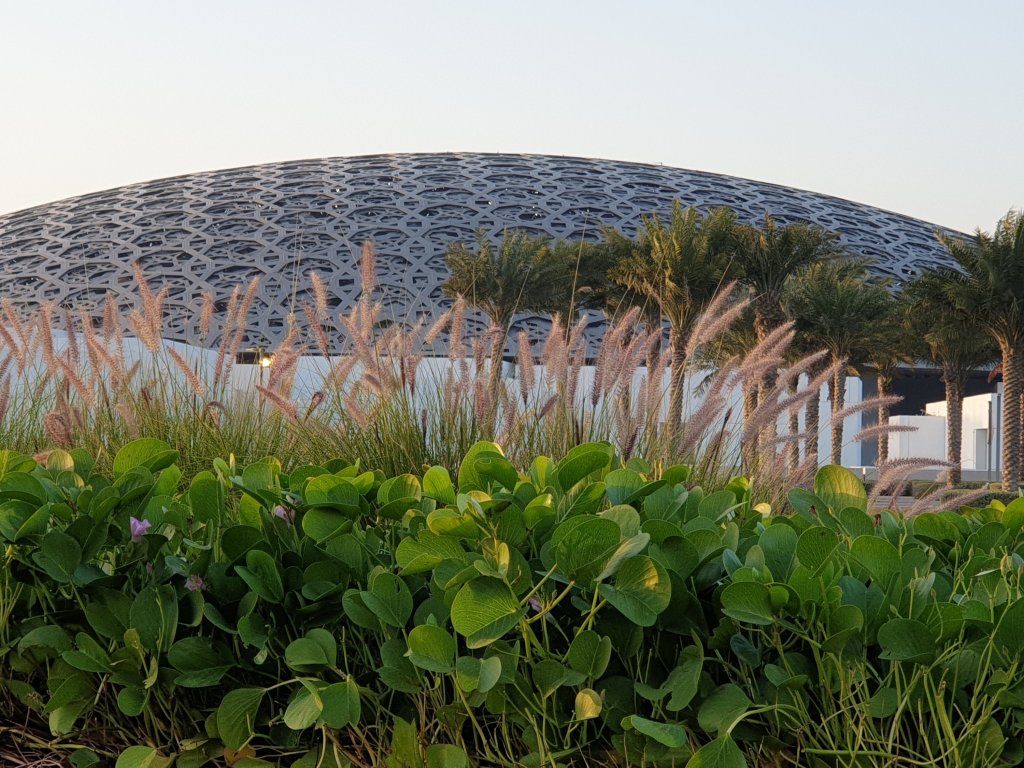
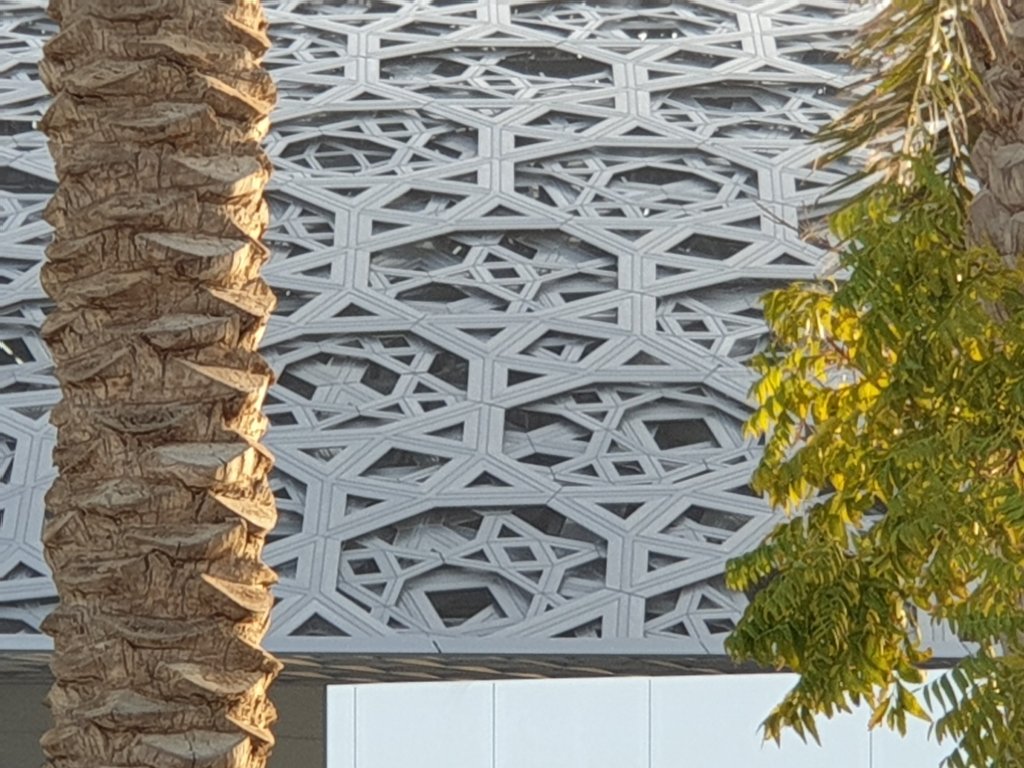
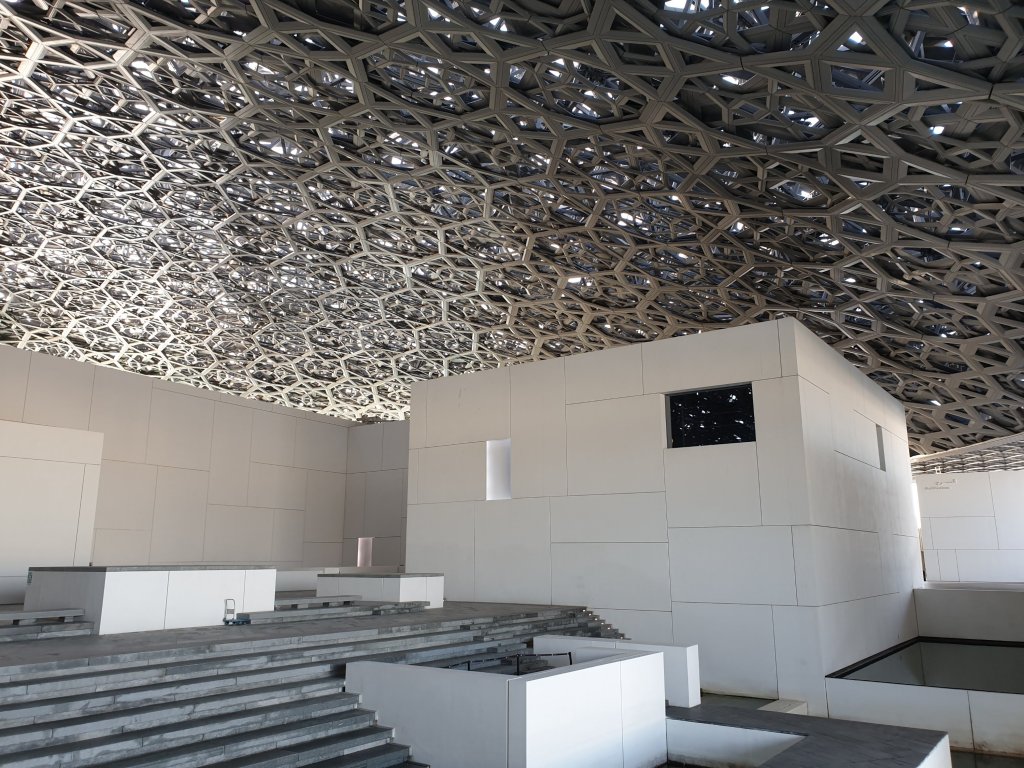
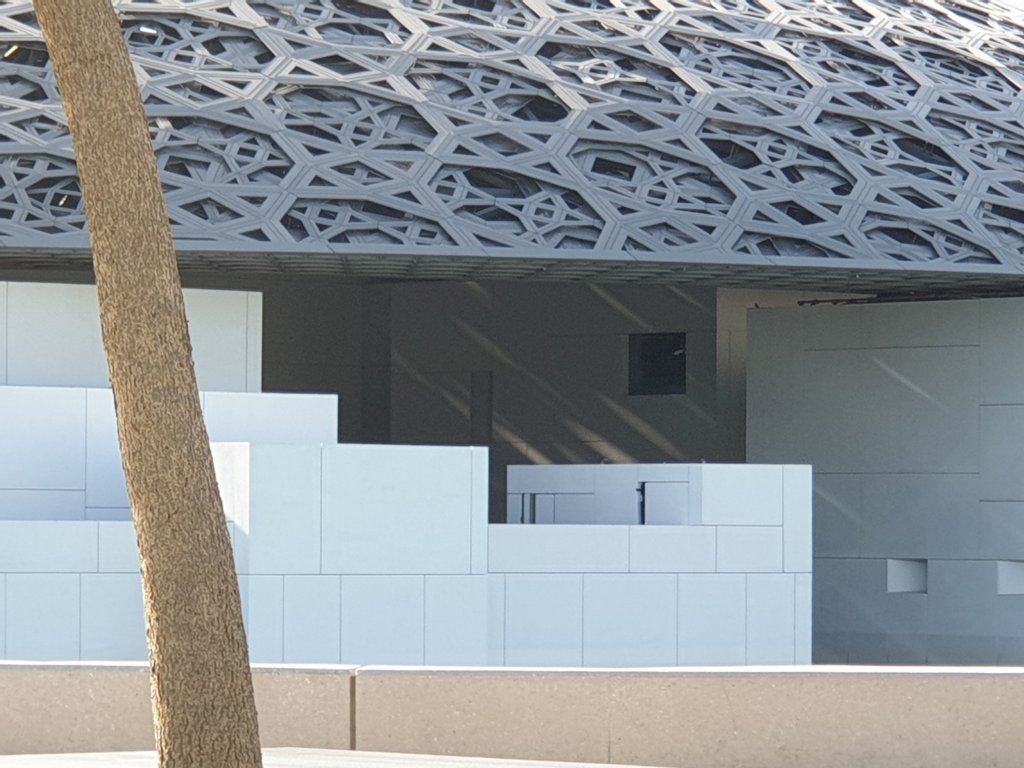
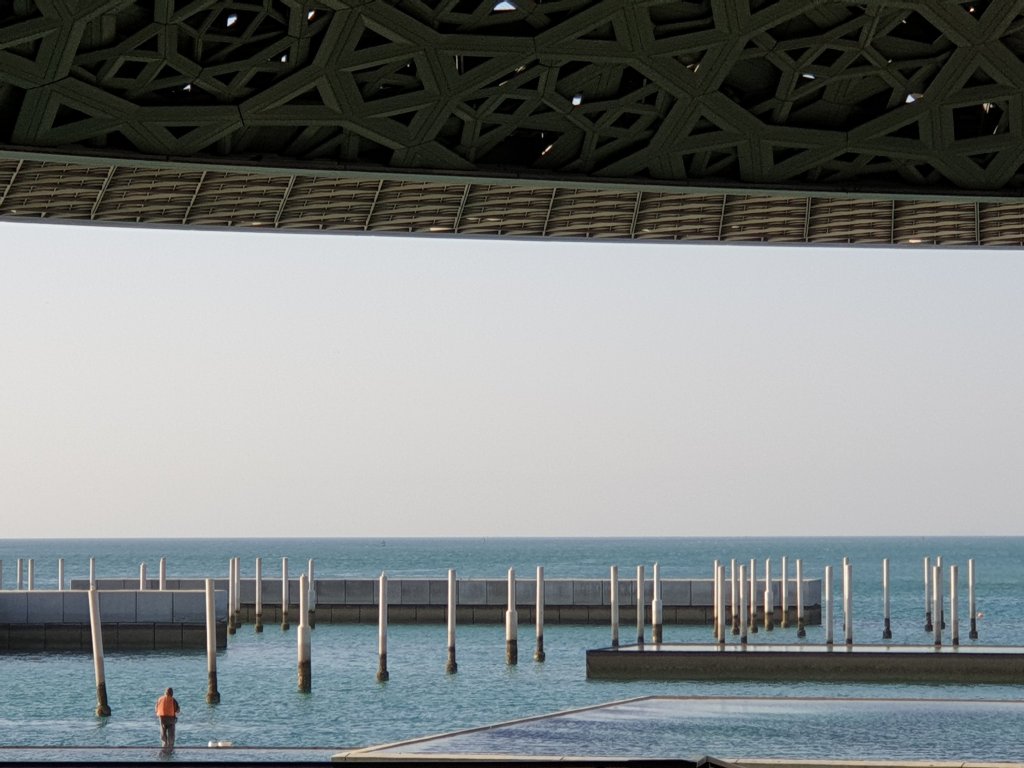
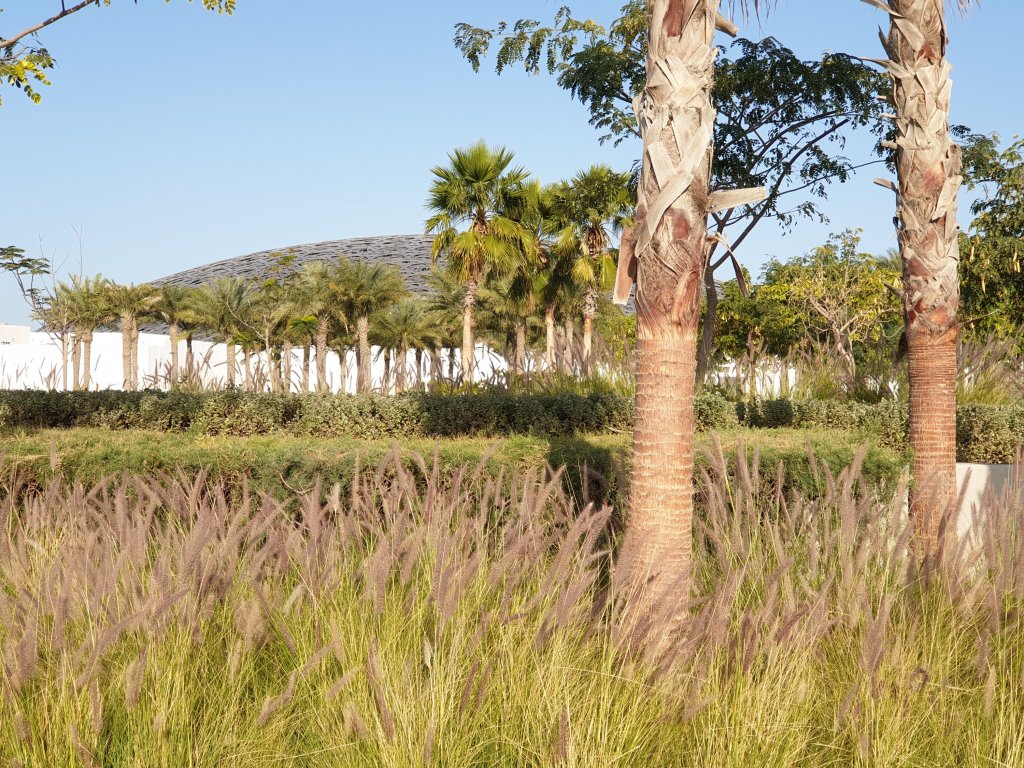
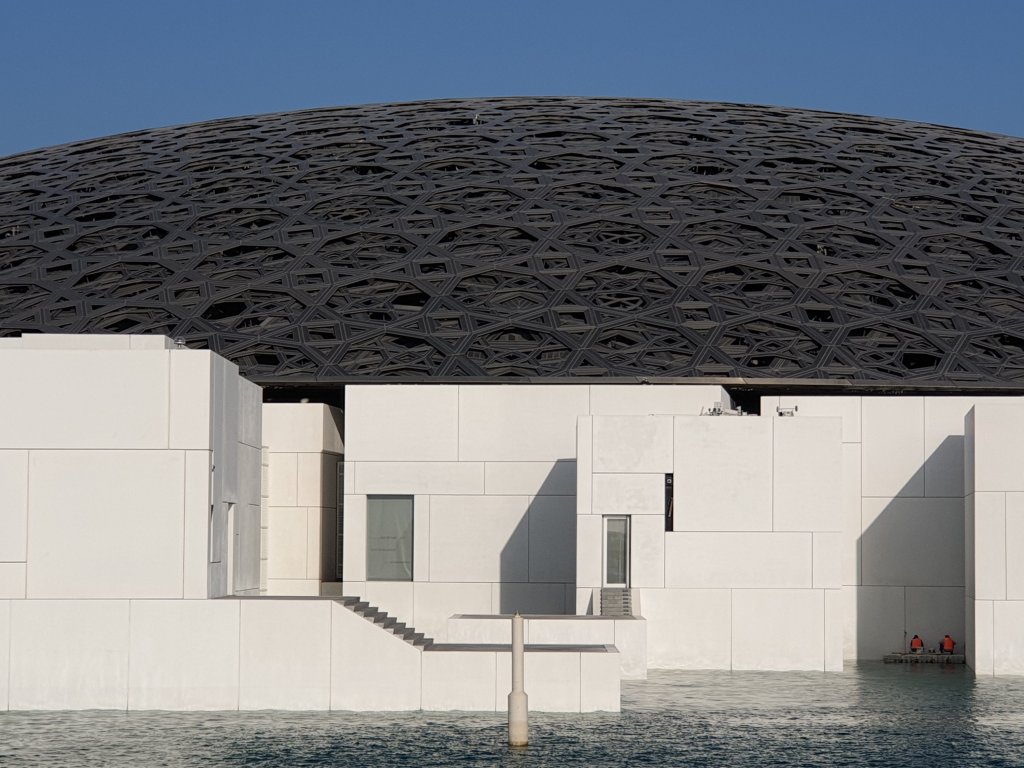
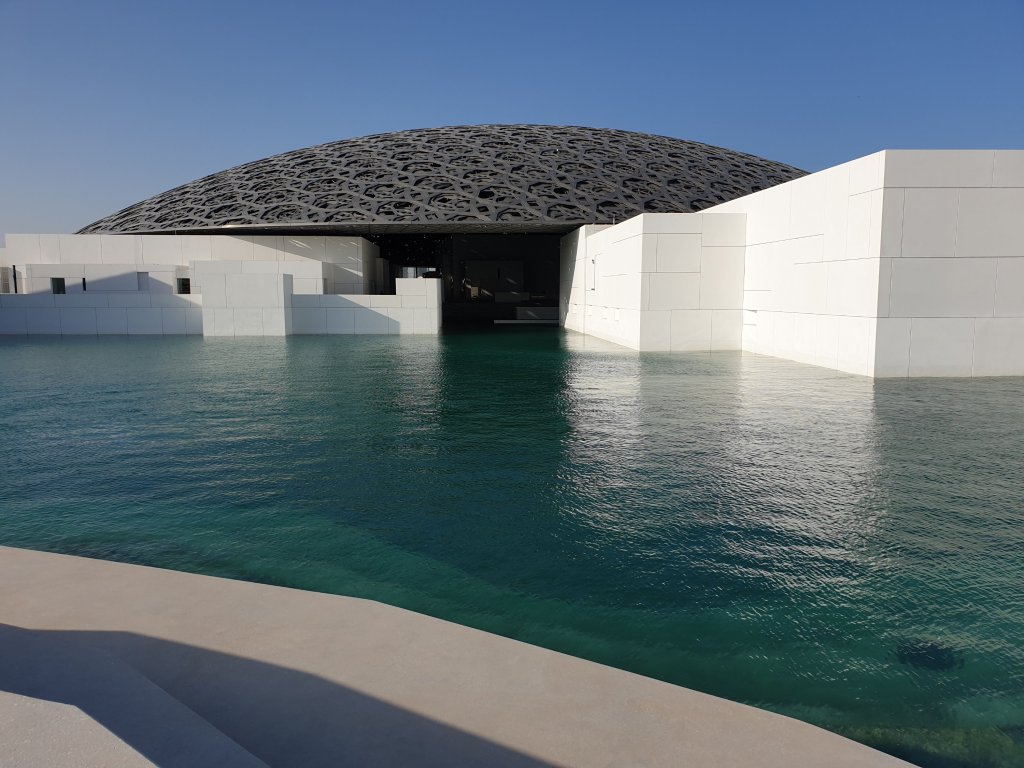
To begin with, I wasn’t convinced by the imagery of the multiple watch springs combined with a flat dome, making the Louvre look a tiny bit like an alien spacecraft, landed with treasures from around the world, but it has the virtues of intellectual coherence and confidence, which I’m sure was what was intended, and is more impressive than any other recent museum that I can think of: most like the Getty in its construction of a universe:-
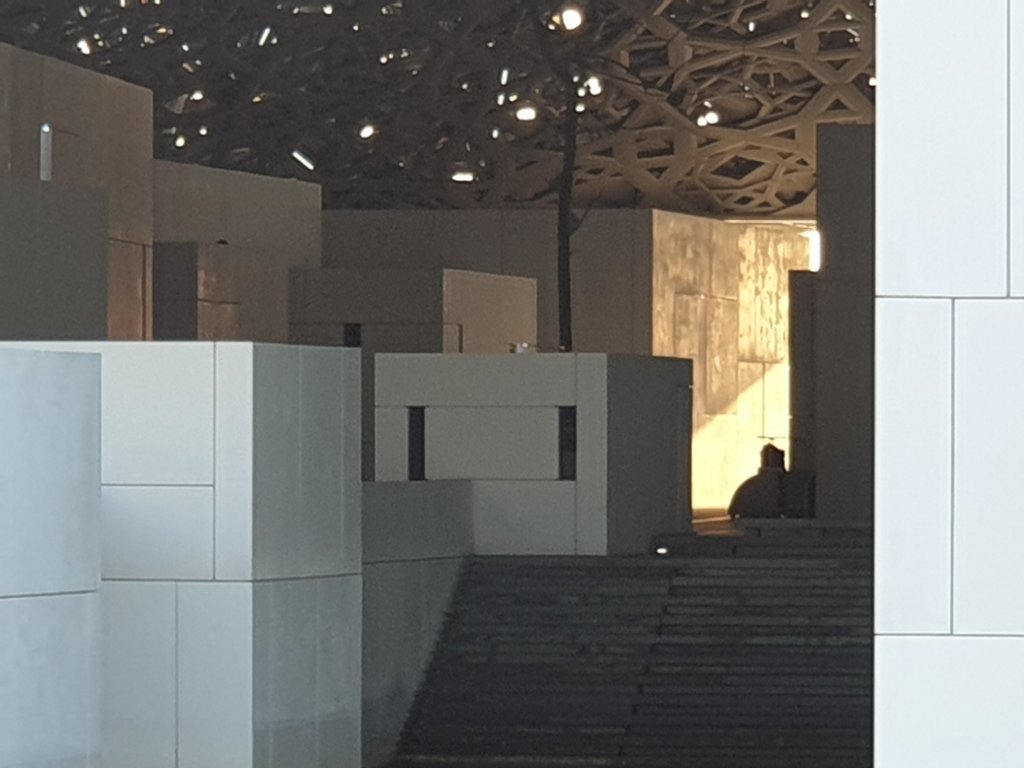
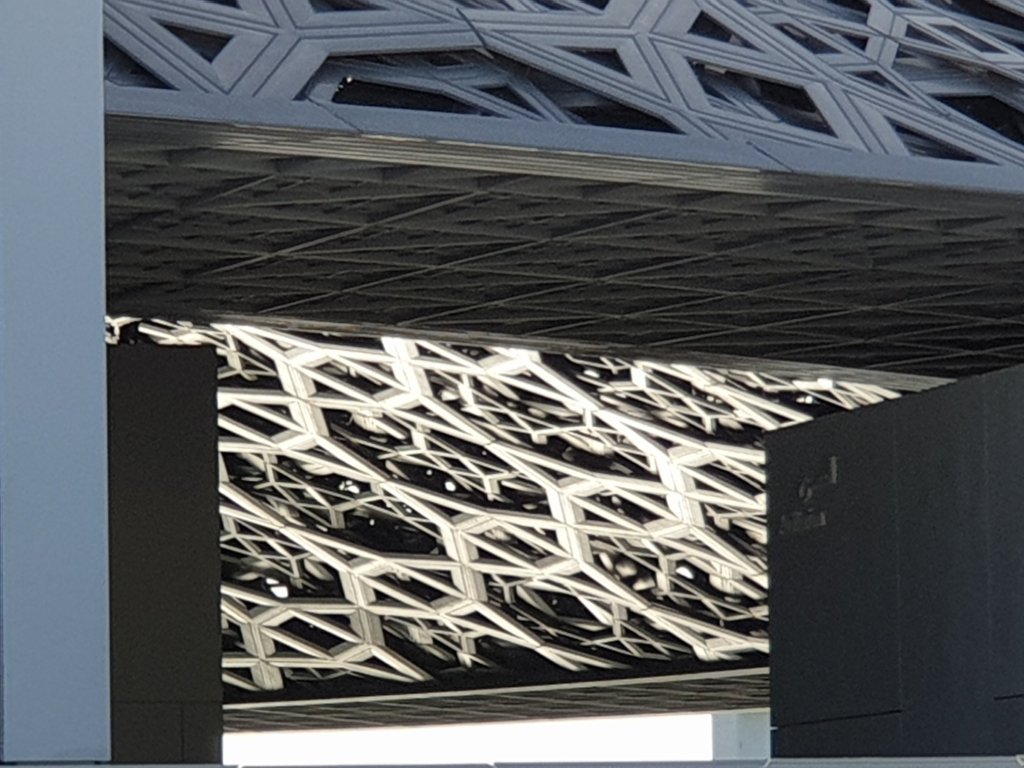
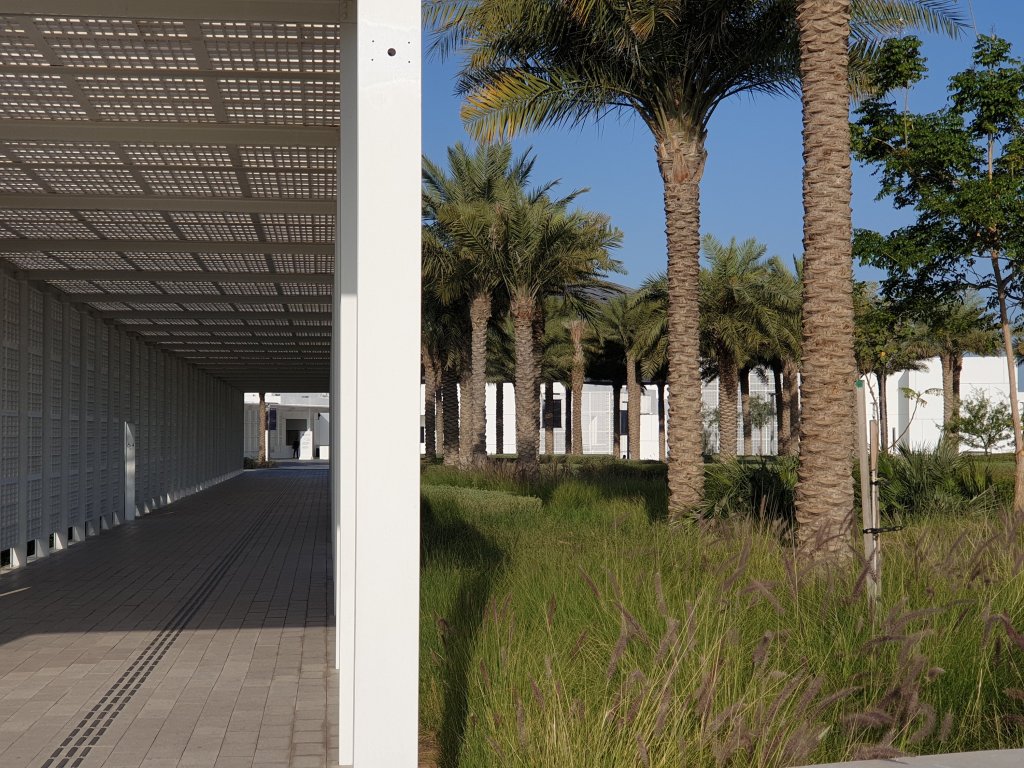
I have just had the briefest, but most exhilarating introduction to the treasures of the Louvre Abu Dhabi, first of all to Jean Nouvel’s astonishing interiors – more interesting inside than outside because you get a sense of the depth of the shallow dome and the way in which light plays through it:-
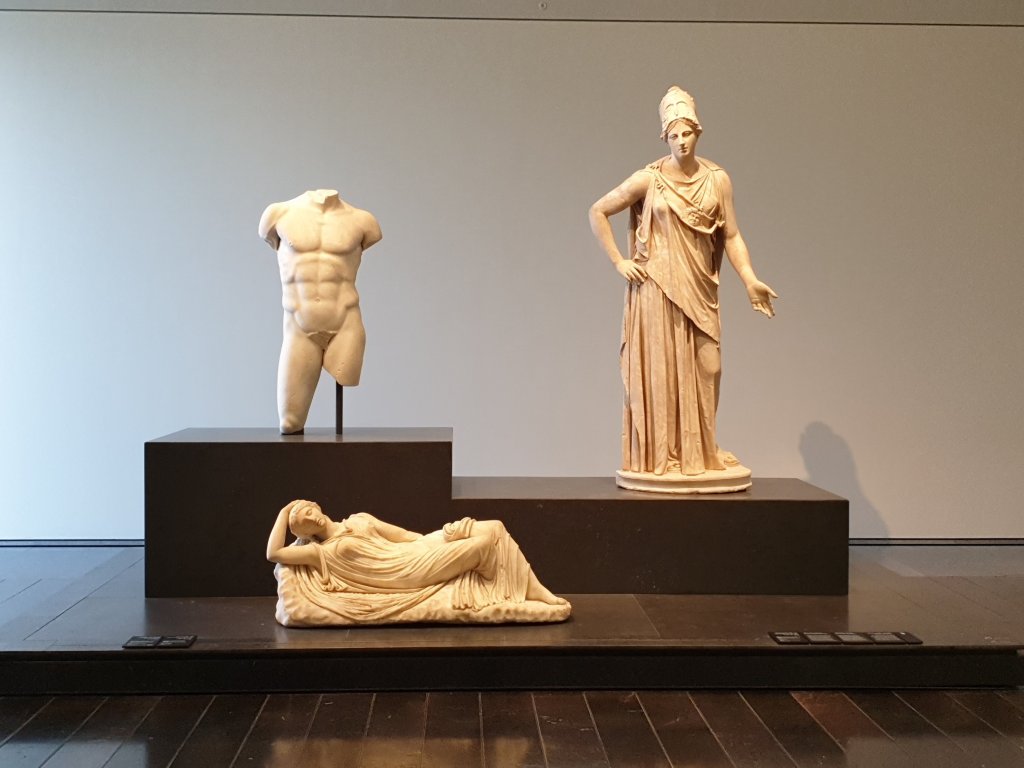
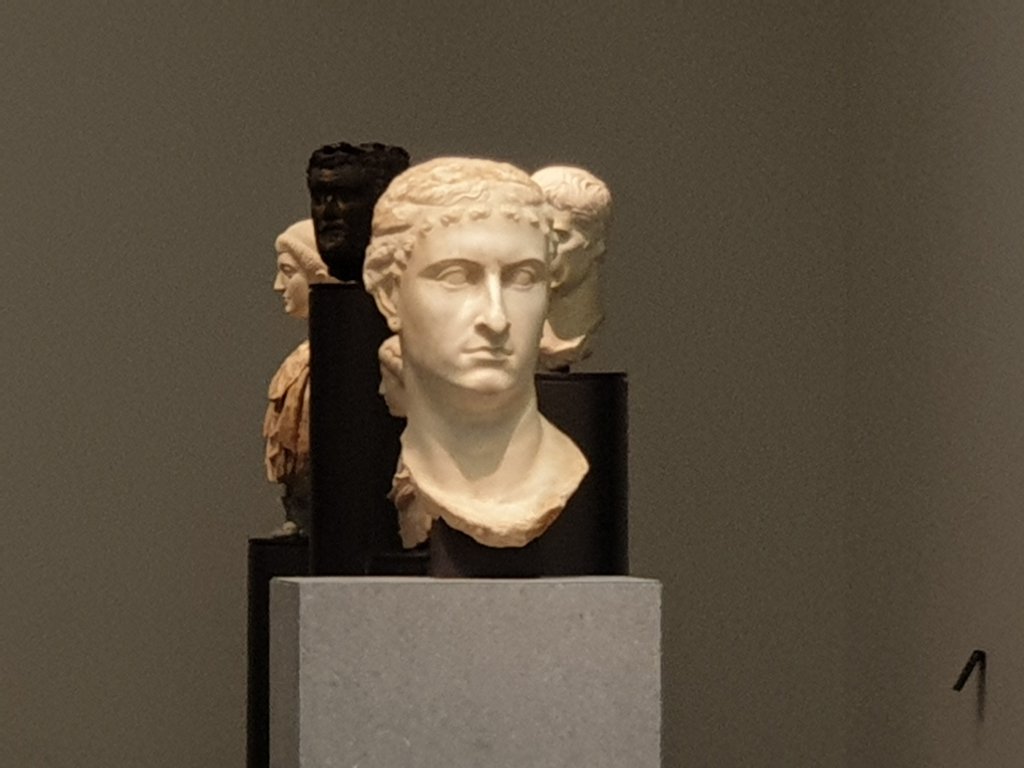
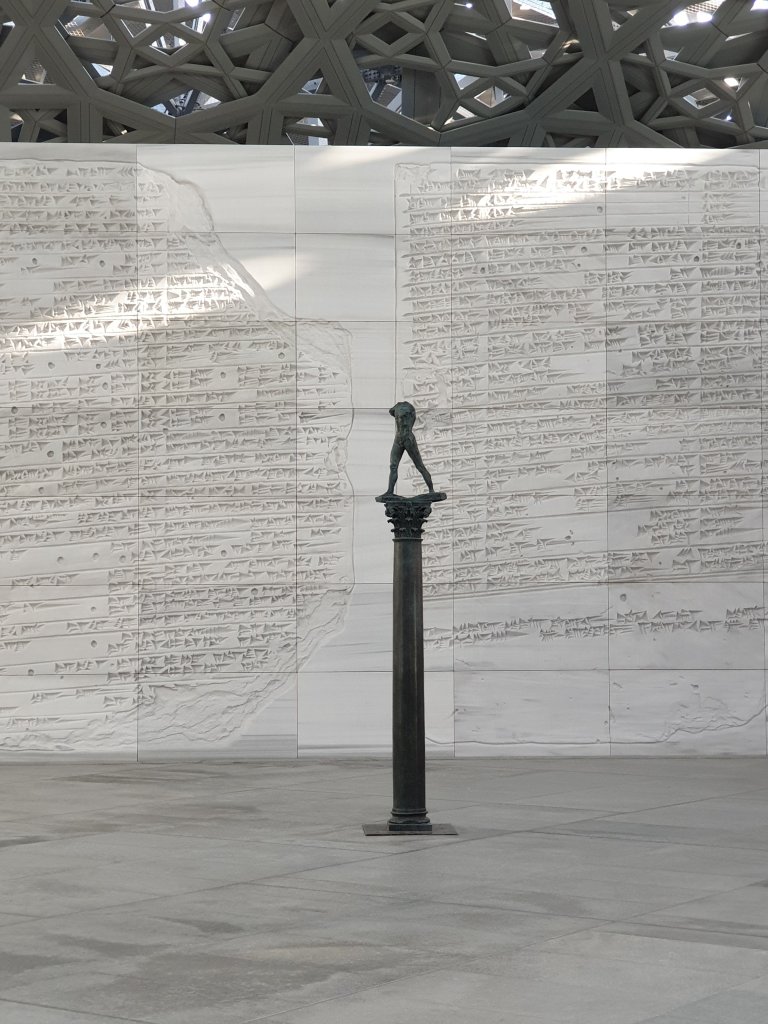
And then the briefest of walking tour introductions to the thinking behind the displays: the dream of the Universal Survey Museum, extended to cover all cultures and all religions through time, starting with antiquity:-
All religions – Christian, Muslim, Judaism, Buddhism – and, in the nineteenth century, primitive masks alongside the Impressionists. I didn’t have time to digest it, but it is certainly done with the utmost intellectual confidence and displayed beautifully and authoritatively in display cases designed by Nouvel as well, which gives it a strong sense of systematic integration.
Then, I had to leave for Sydney (the museum is closed on Mondays).
I have already done a post about the restoration of Wickham’s, the local East End department store which was built to rival Selfridge’s and has now been impressively repaired and repointed in all its 1920s, neoclassical glory. It looks like Valhalla:-
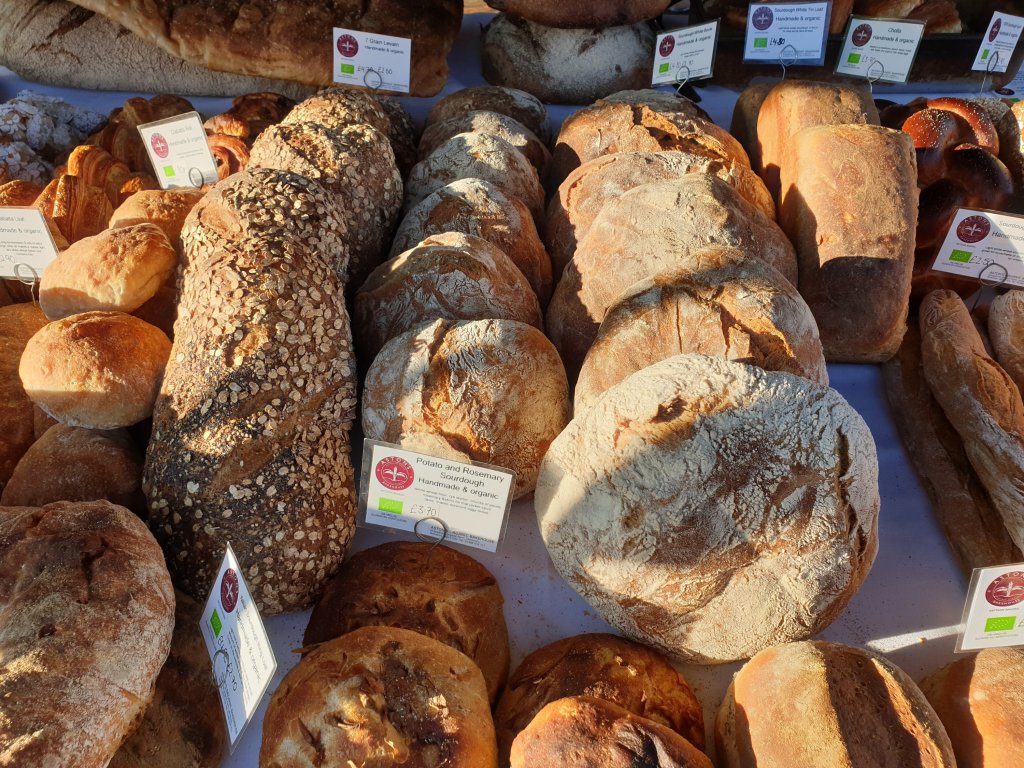
I fell into conversation this morning with the man who sells bread at Stepney Farmer’s Market. I had always assumed that he baked it himself as he is often late setting up his stall, as if he he has only just managed to extract himself from the oven. But, no, it comes from an industrial estate in Inkpen on the Berkshire Downs, made by Syd Aston of Aston’s bakehouse and supplied to farmer’s markets all over London. I’m not complaining: it’s very good:-
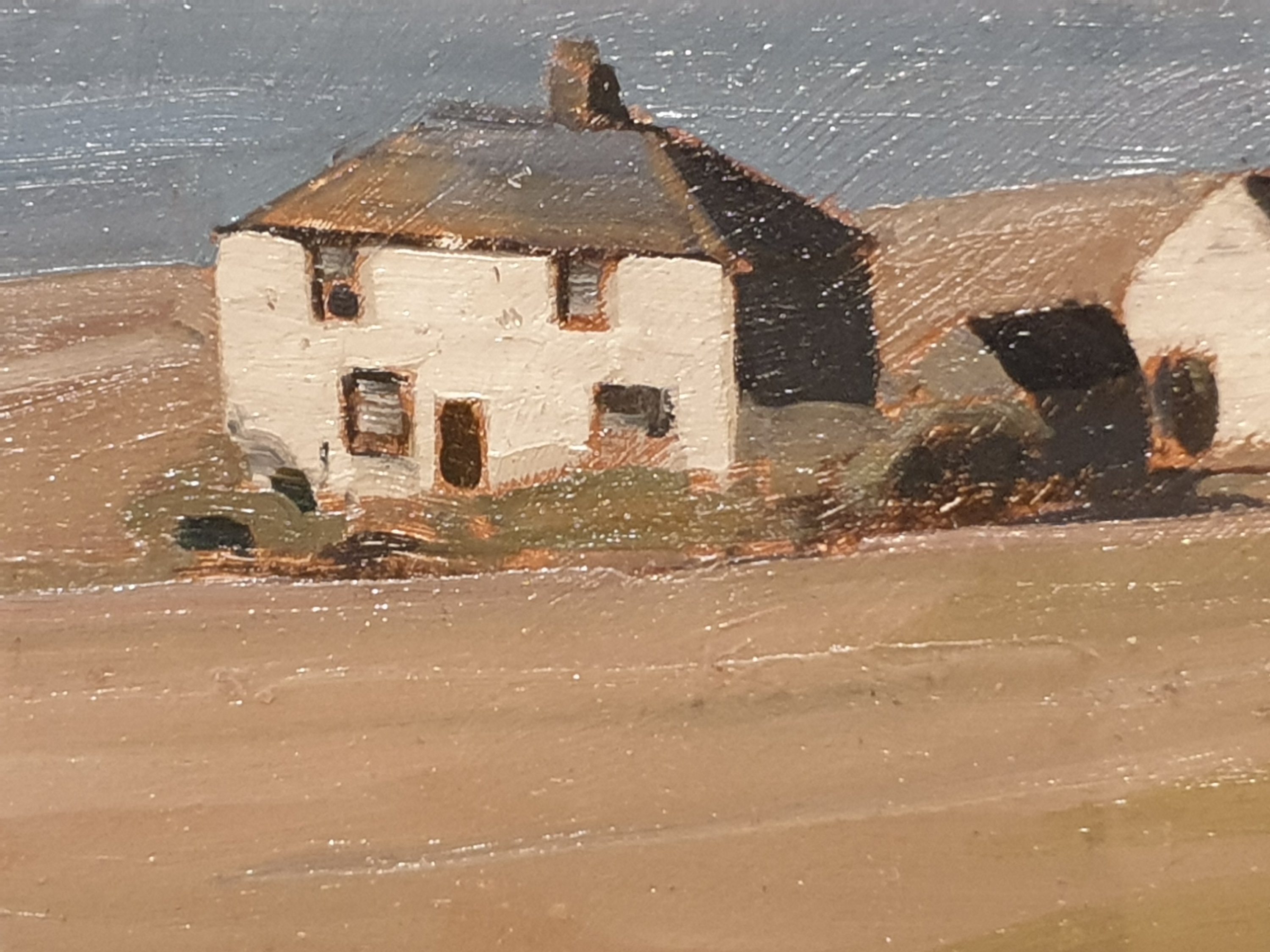
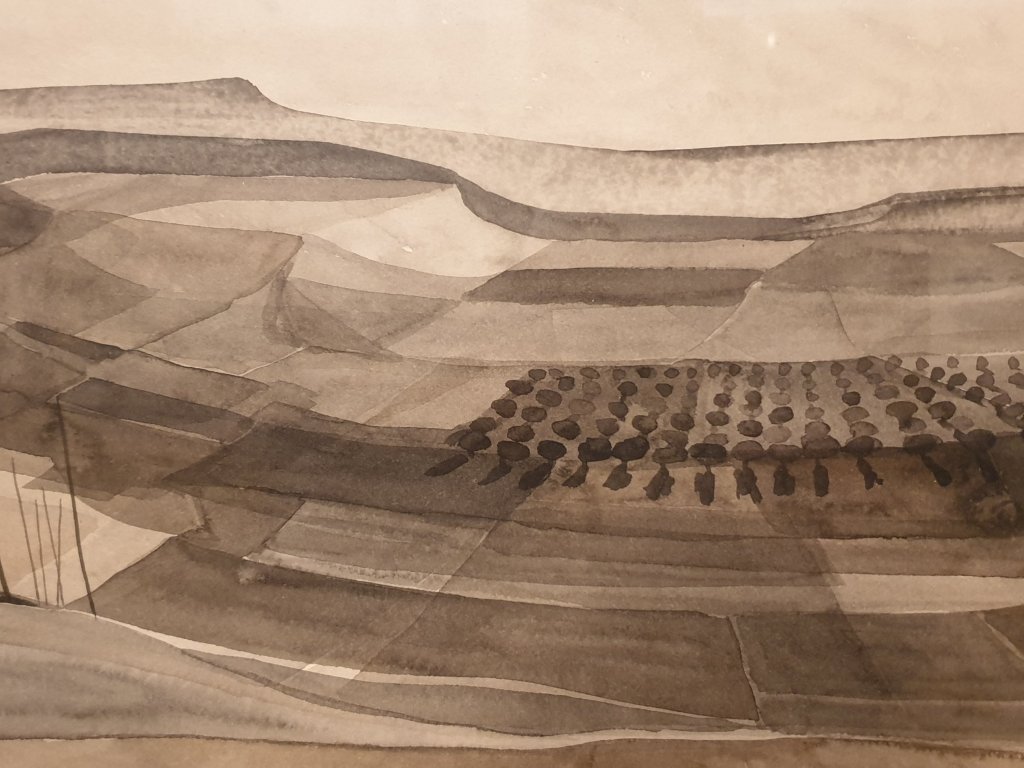
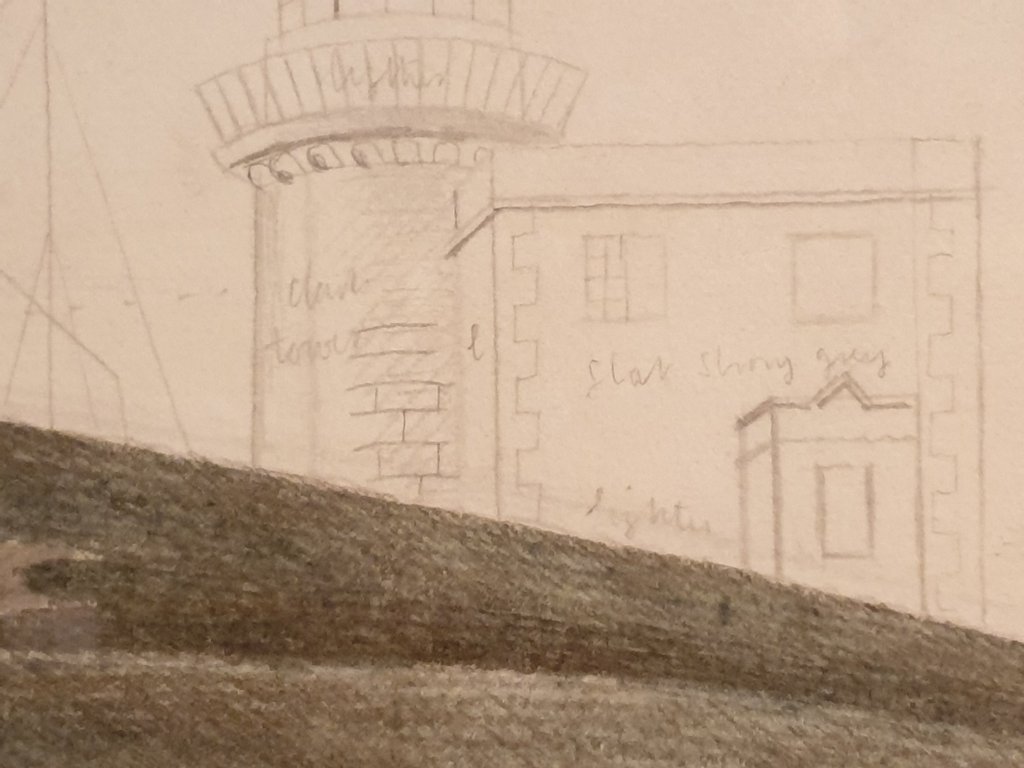
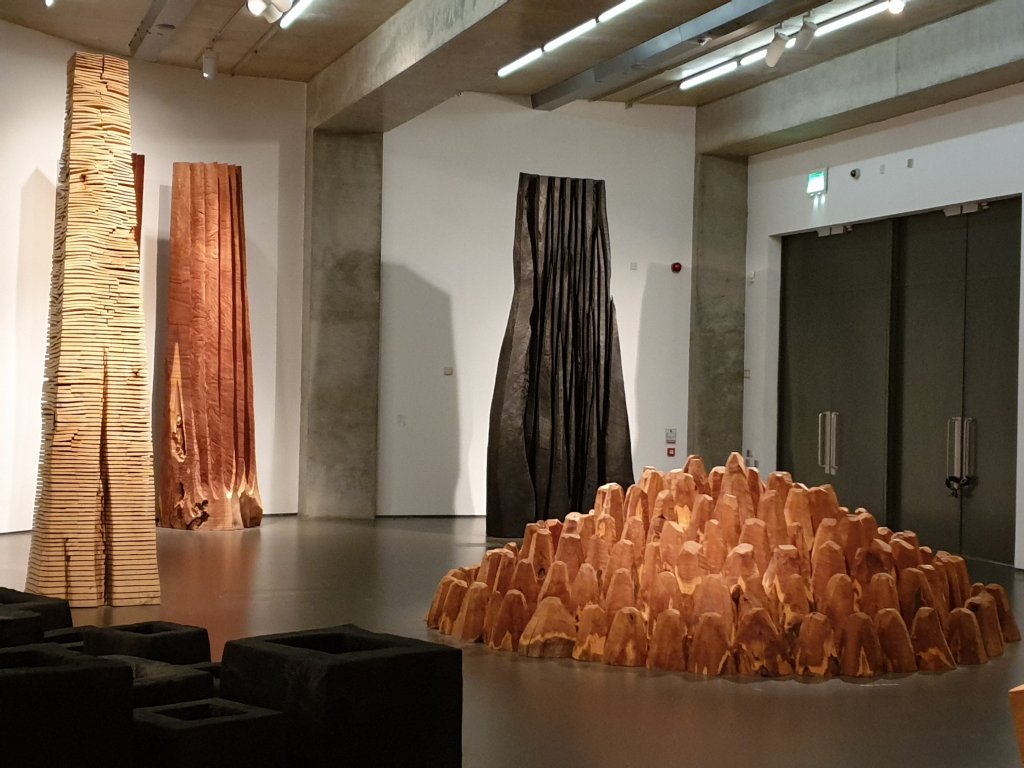
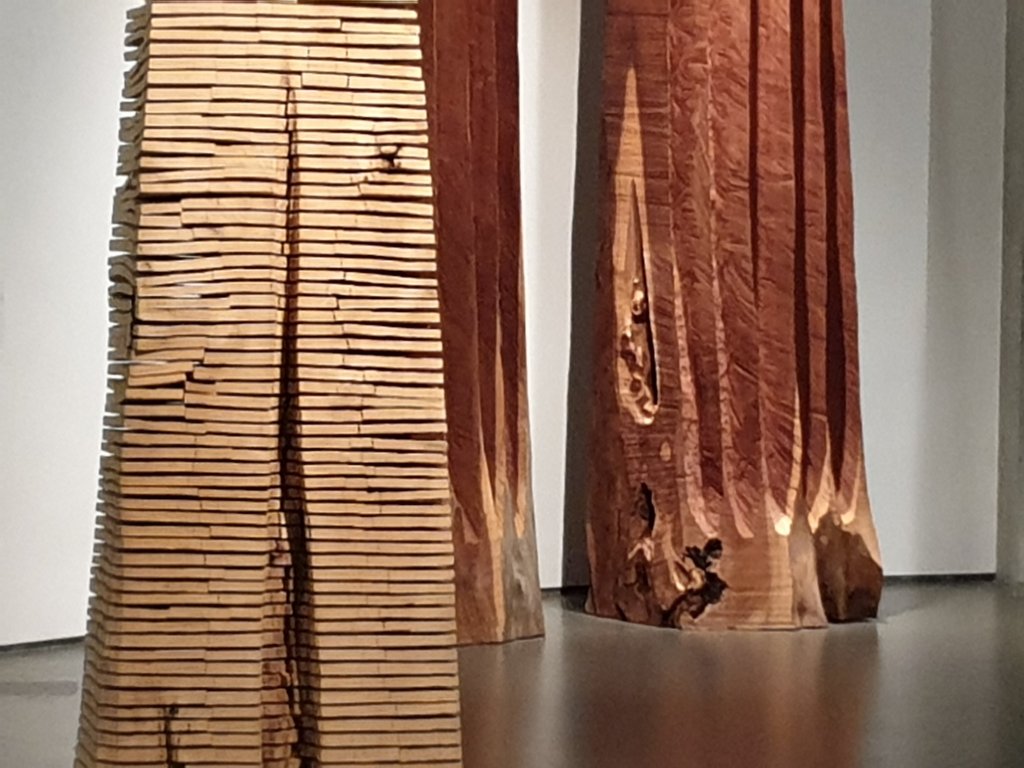
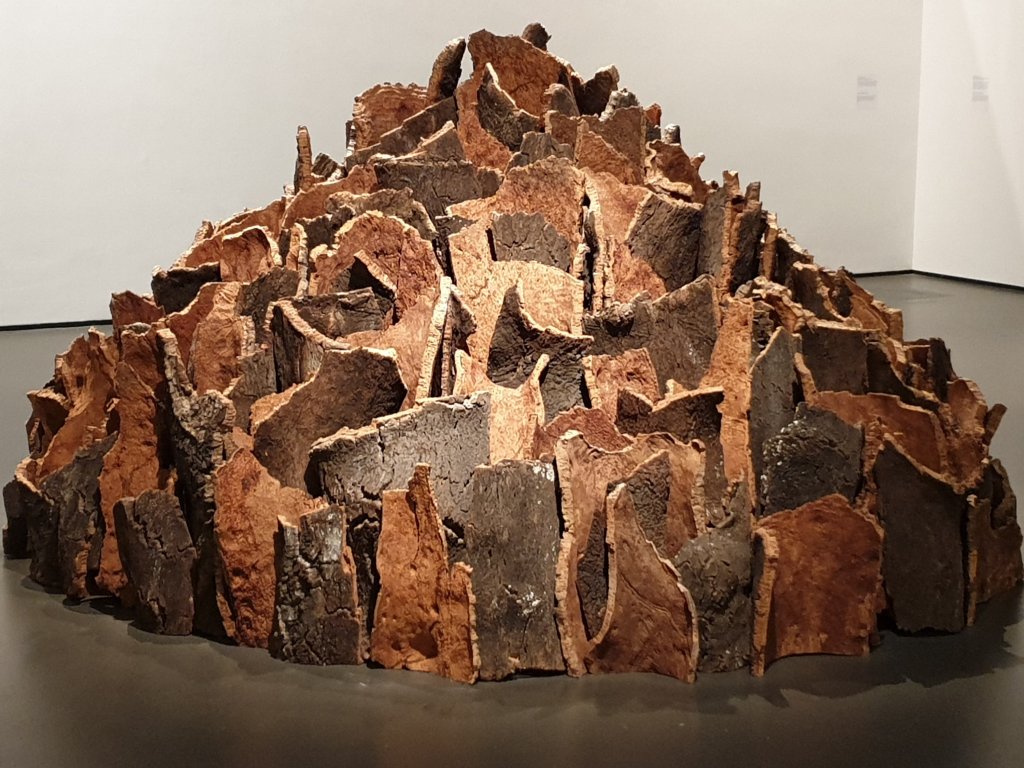
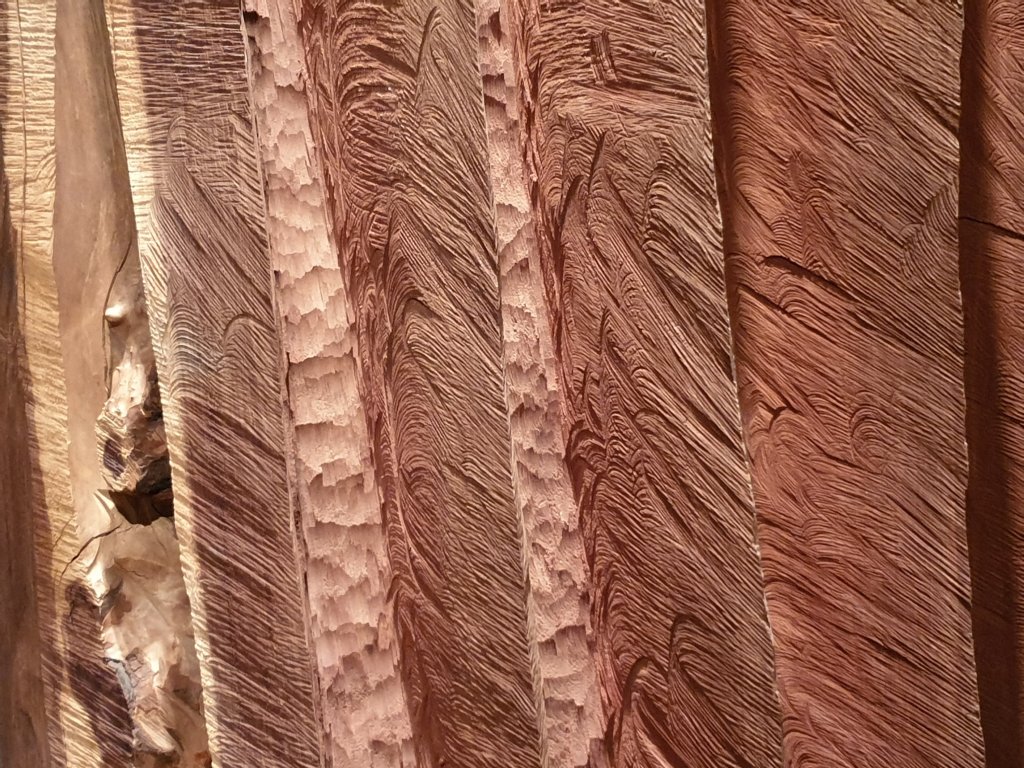
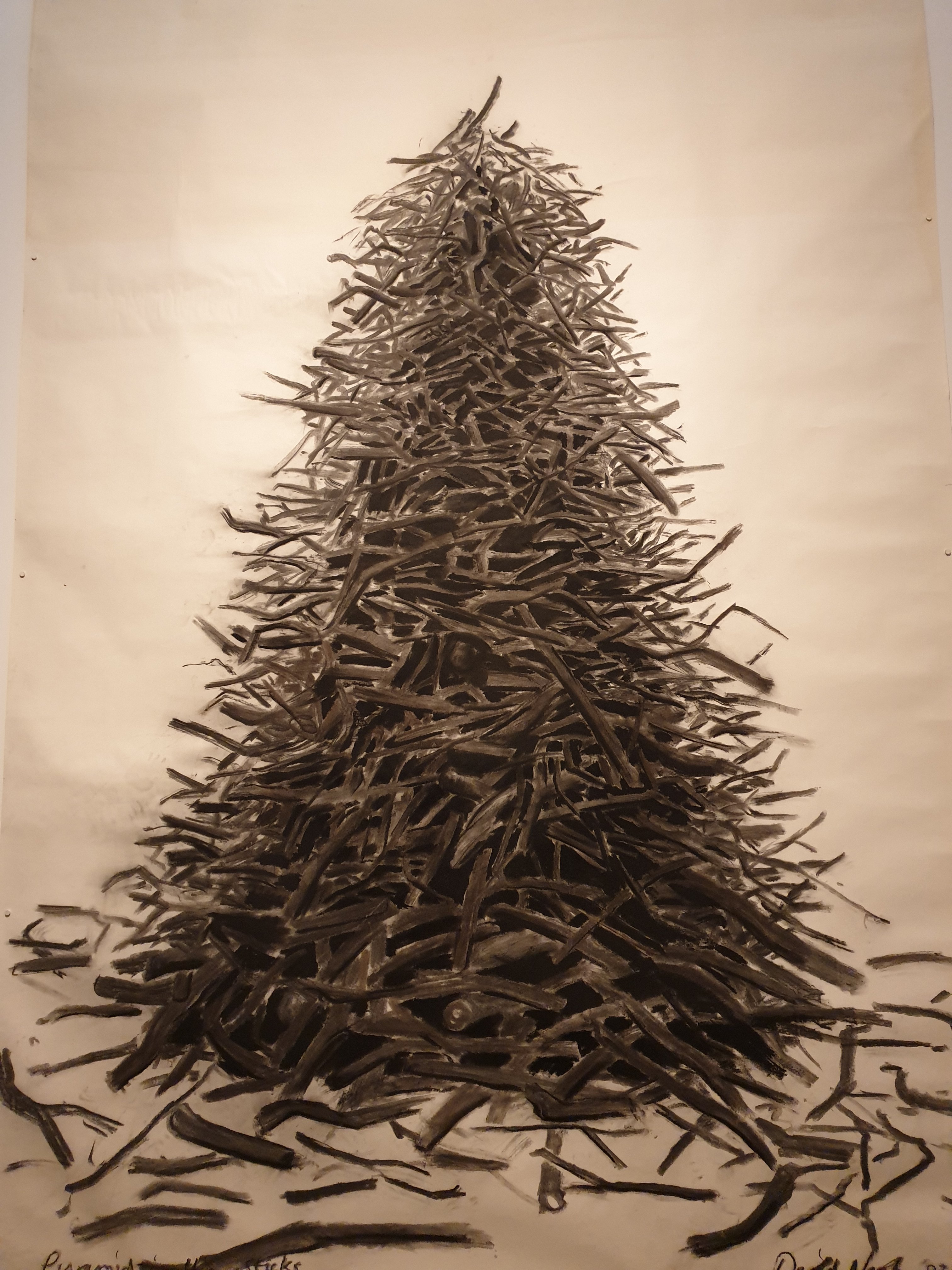
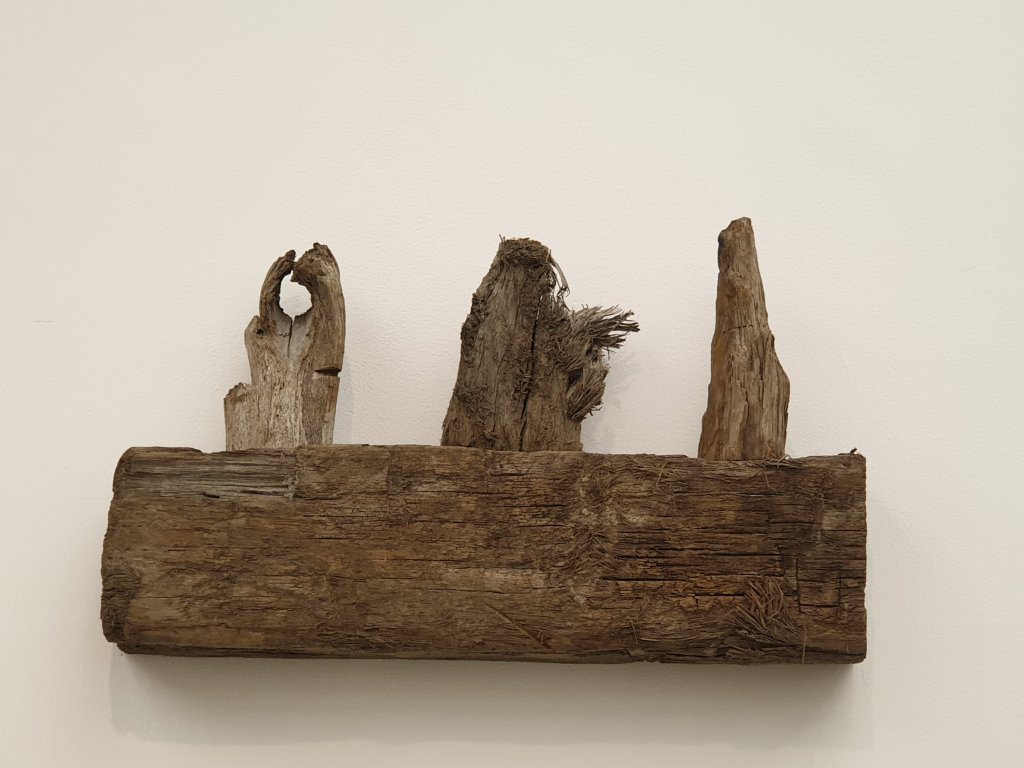
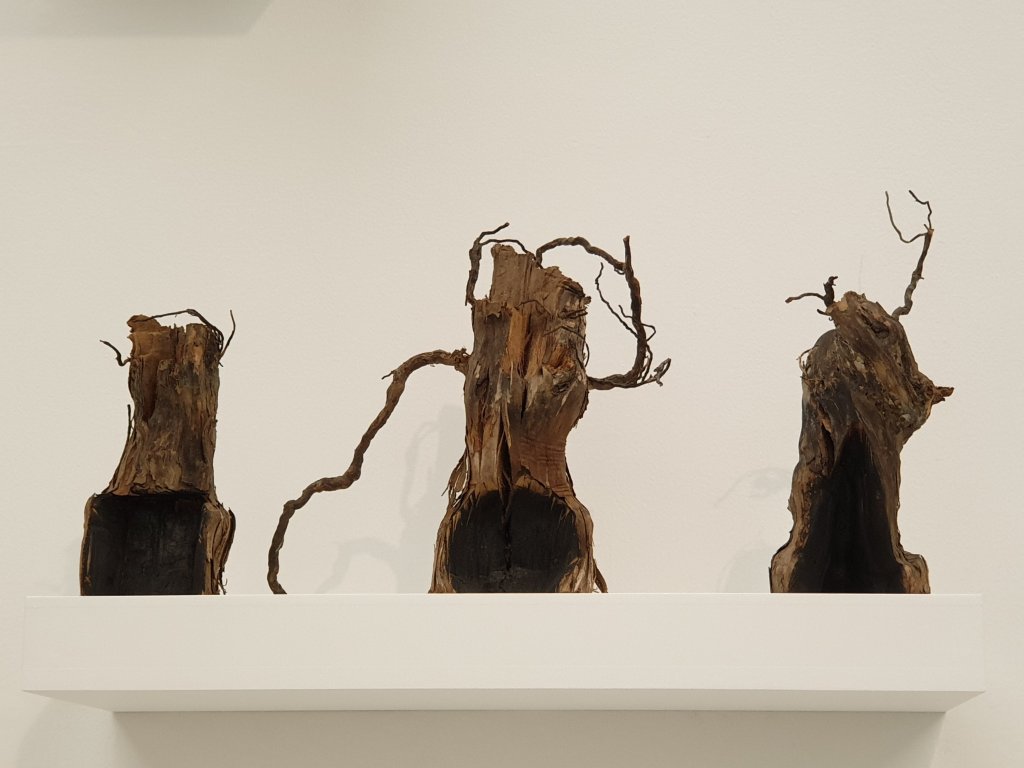
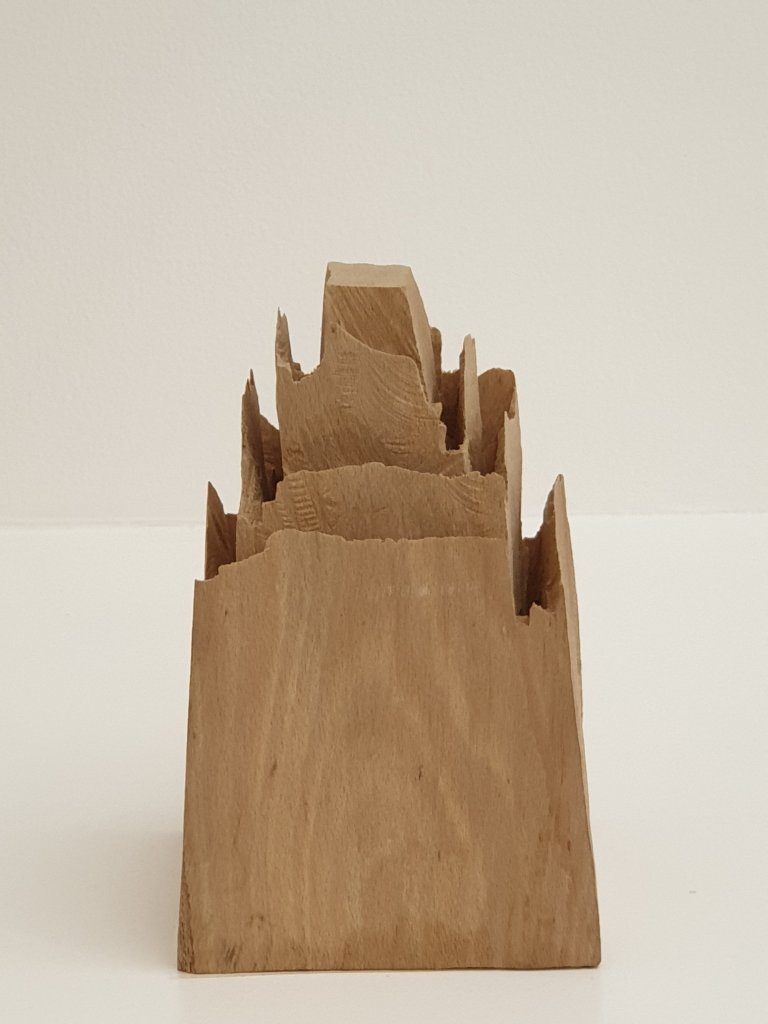
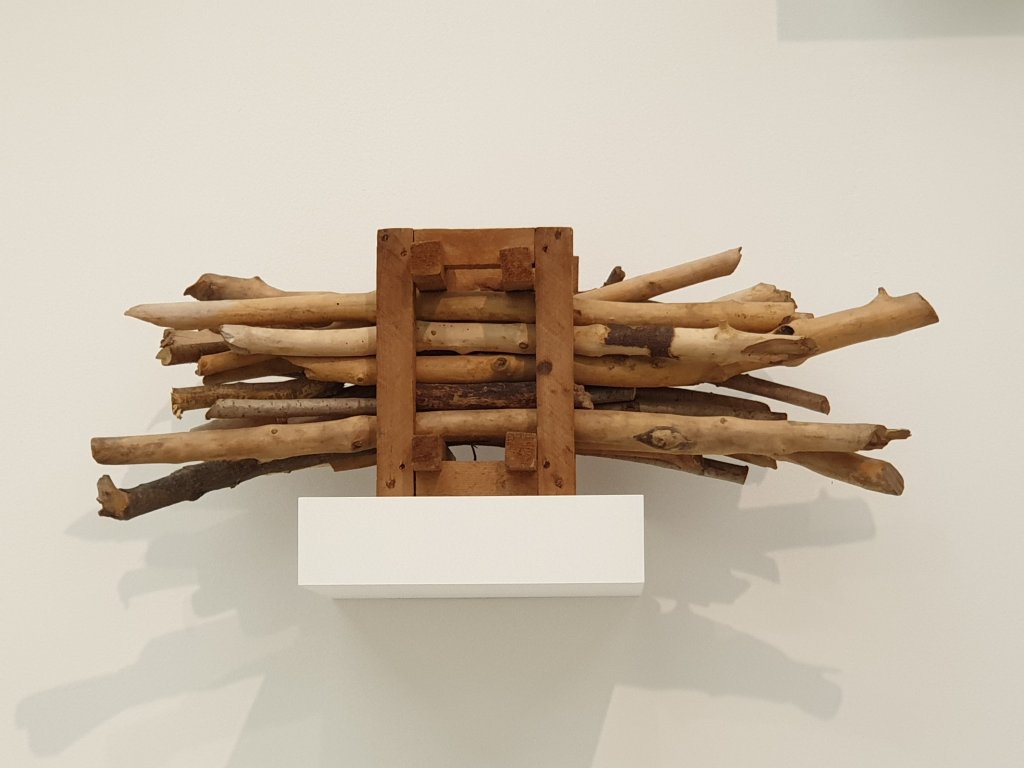
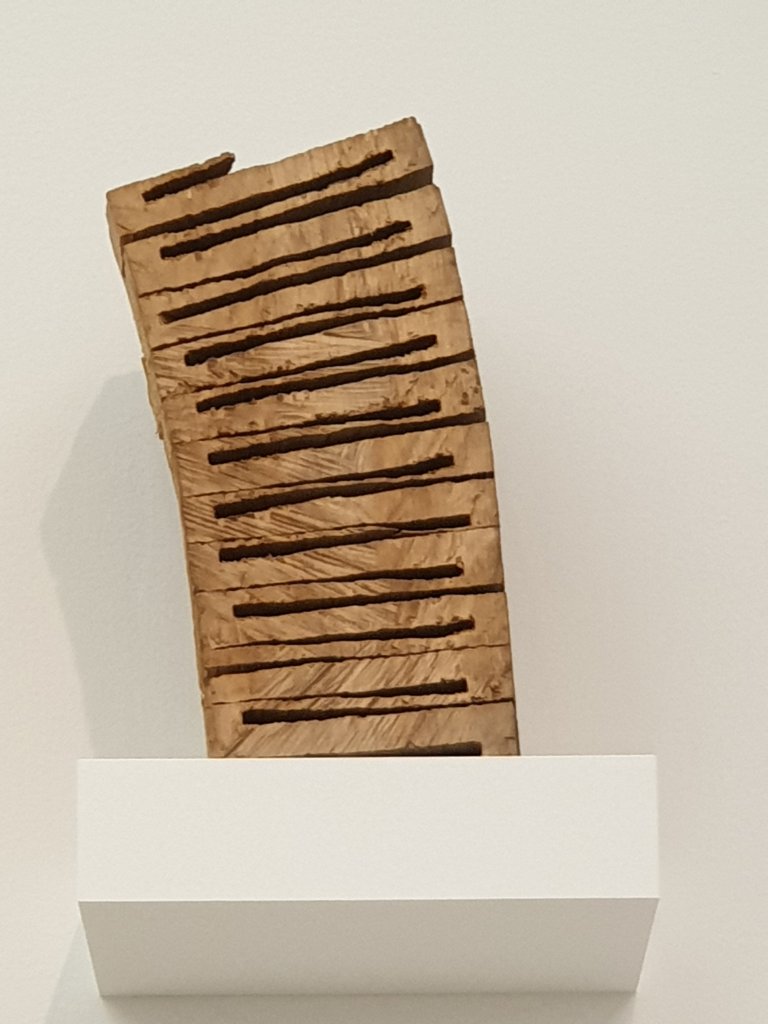
We were also able to see and admire the collection of works assembled by Caroline Lucas MP to show the qualities of the local landscape and, by implication, how far it is at risk from the catastrophe of radical climate change. It has been done deliberately in parallel with the David Nash exhibition, exploring some of the same themes of art and its relationship to the natural world. Not least, the exhibition reveals some of the great and often unseen wealth of the Towner’s collection.
Since the election, I have taken a break from reading political commentary, since one of the benefits of the result was that it was definitive, at least for the next five years.
But I found the attached piece of long-form journalism in the New York Review of Books fascinating because it suggests that one of the reasons for the result was a widespread revulsion not against neoliberalism or London, but what the writer describes as ‘The Center’: the capture of the middle ground by self-interested managerialism. I’m not sure whether I agree with it, but the way it is written makes it unexpectedly plausible.
I went to Lionel Barber’s leaving party at Tate Britain.
I am incredibly full of admiration for the way that he has kept the FT as a paper of proper public record, not subject to the same level of propaganda as his sister papers, still employing a large number of intelligent, independent-minded journalists, whose views are not predictable before you have read them, with a weekend section on the Arts which is unlike any of the other newspapers in terms, best of all, of its internationalism. I don’t know how he has done it, other than being impressively wide-ranging, independent-minded and internationalist himself, as well as a champion bicyclist.
 | Charles | Saumarez | Smith |
You must be logged in to post a comment.