Visitor Numbers

I am still habituated to studying the Art Newspaper’s annual publication of visitor numbers worldwide.

Some observations:-

Nearly as many people saw a sampling of Tate Britain’s collection in Shanghai as visit it in London.

The Guggenheim in Bilbao always does amazingly well in terms of its exhibitions (eg Joana Vasconcelos), better than any exhibition in London.

The British Museum has traditionally been at least a million above Tate Britain and the National Gallery. No more.

I’m pleased that the numbers at the Royal Academy were so good. A record for the Summer Exhibition and 1.6 million in toto, significantly more, I think, than ever before.

Check out @TheArtNewspaper’s Tweet: https://twitter.com/TheArtNewspaper/status/1109715540426326016?s=09

Standard

The March (3)

I’ve been thinking about the March.

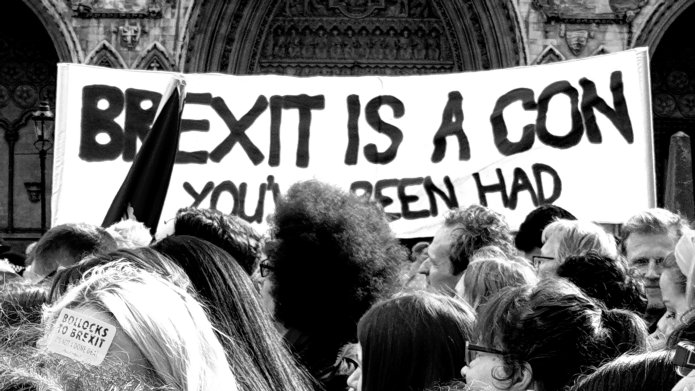
Of course, many people were middle class, but this is not unrepresentative of the population as a whole. They were young and old. They came from all over. And they stretched all the way from Parliament Square to Hyde Park Corner. The Prime Minster talks as if she has a hot line to ‘the people’. But it may just consist of pillow talk with her husband, bunkered as she so obviously is in Downing Street.

The other thing was the diversity of the speakers at the rally which might have been manufactured, as was the faintly absurd faux nationalist video at the beginning, but felt natural – cross party, cross generational, including politicians of different stripes, putting national interests first. Isn’t this preferable to the brutal and aggressive sectarianism which has been recently unleashed ?

Standard

The March (2)

I should maybe have said, which was obvious from the speeches from the podium, that there is now a substantial, if not dominant middle ground, in which Anna Soubry is able to share a podium with David Lammy and Dominic Grieve can speak after Tom Watson; but that this middle ground is weirdly absent currently from the mainstream of British politics because of the rival extremism of the two main parties, and, most especially, of their leaders. So, if I come away with any sense of optimism – and there is not much to be optimistic about – it is that this middle ground can come together and exert itself effectively through the debates in the House of Commons and the voting process in the week ahead.

Standard

The March (1)

I have just been on my first march – down St. James’s Street, down Pall Mall, we peeled off at Trafalgar Square to get a place in Parliament Square: all very peaceful and good humoured, apart from a strong sense of anger and grievance that one referendum is regarded as totally legitimate in spite of the ignorance, three years ago, of Brexit’s consequences, the lies that were told, the illegalities and the use of Russian money; but the idea of a second referendum, now that we know what the consequences of Brexit are going to be, is somehow regarded as a betrayal of democracy.

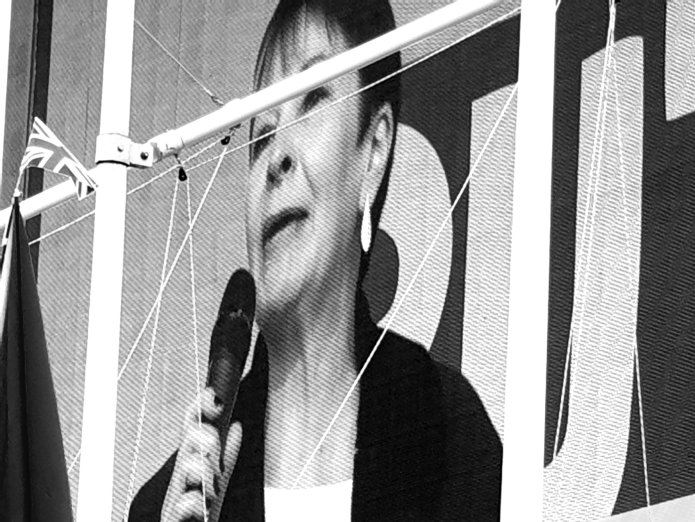
Sandi Toksvig was very impressive, as were Caroline Lucas and David Lammy. The biggest boos were reserved not so much for Theresa May as for Jeremy Corbyn, so conspicuous by his absence from the People’s March:-

Standard

Lille

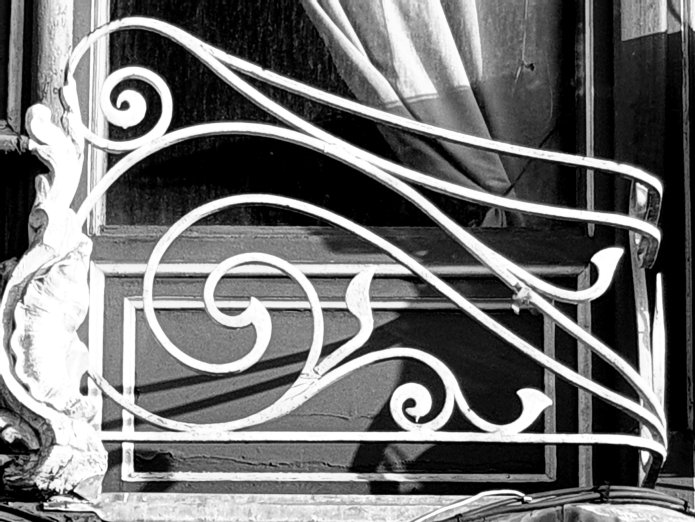
I sadly didn’t have time to explore Old Lille, only to walk back to the station by way of the Grand Place, where I was impressed not so much by the decorative strapwork of the Vieille Bourse, designed and decorated by Julien Destrée in 1653, as the decorative language of a house in a street immediately to the north:-

I also liked the detail on the original shop front of A la Cloche d’Or, including the ancient advertising for Omega watches:-


Standard

Mat Collishaw

I visited Roubaix, or more properly, Tourcoing, to see Mat Collishaw’s Thresholds, which I missed when it was first shown in Somerset House in 2017. It reconstructs in VR Fox Talbot’s first exhibition, put on by the British Association for the Advancement of Science at King Edward’s School in Birmingham. I haven’t always been persuaded of the virtues of VR, but on this occasion it has the surreal and convincing ability to make one able to see the original display cases as they were in 1839, a remarkable effect of simulation.

Standard

La Piscine

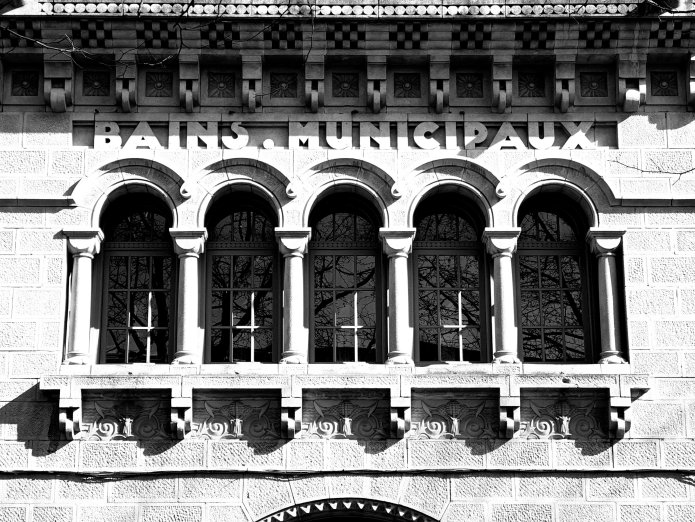
I have been to the Musée d’Art at d’Industrie de la Ville de Roubaix at least once before, housed in the old municipal swimming pool, opened by Jean-Baptiste LeBas, the socialist mayor:-

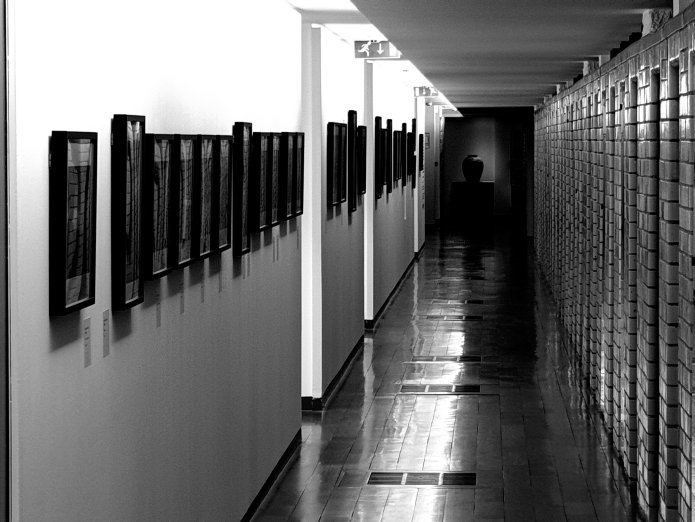
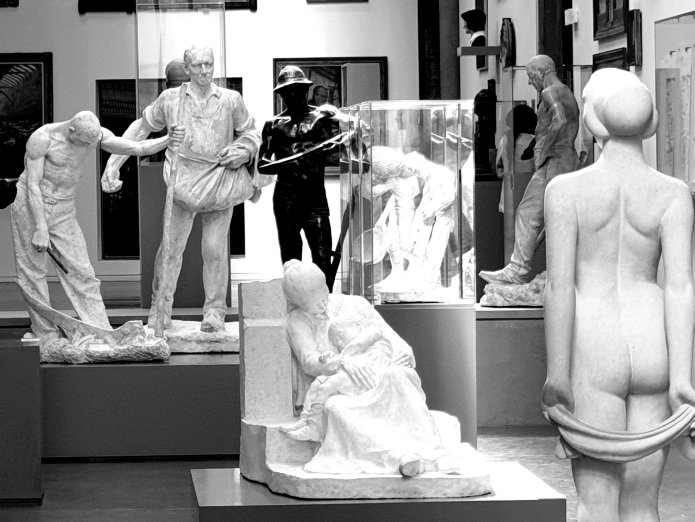
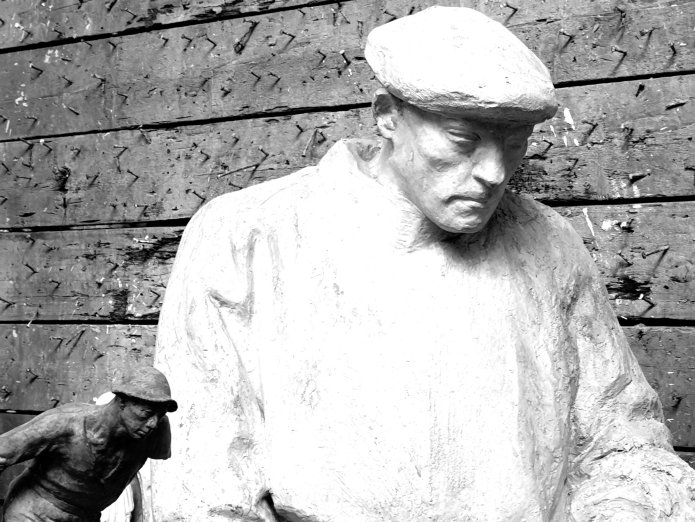
The pool closed in 1985 and re-opened in 2000 as a museum, redesigned by Jean-Paul Philippon, who was one of the architects who worked on the Gare d’Orsay. It has a very nicely casual feel to it, born of the fact that the collection was originally planned as a source of inspiration to the local textile workers, housed in the local National High School, and that the building was not purpose-built, but is the conversion of a local civic amenity, full of good nineteenth-century sculpture, textile sample books and daylight:-

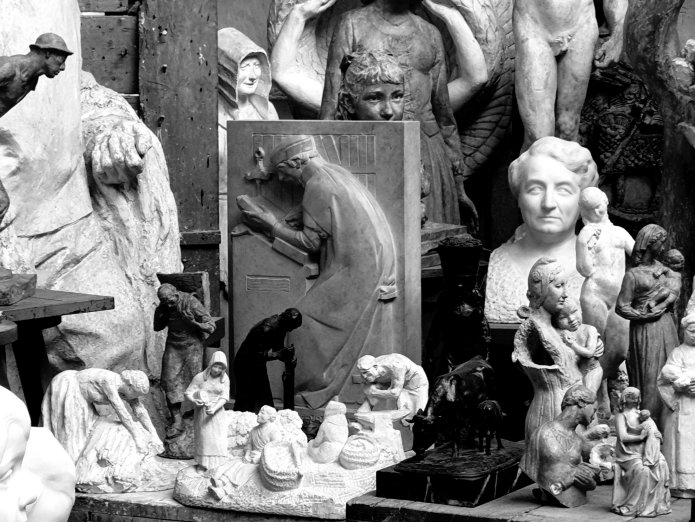
This is the reconstruction of the Atelier of Henri Bouchard, a beaux arts sculptor who was discredited by accepting an invitation from Goebbels to visit Germany:-

Standard

Musée des Beaux Arts, Lille

The Musée des Beaux Arts in Lille has, not surprisingly, a very strong French collection.

A wonderful Chardin:-

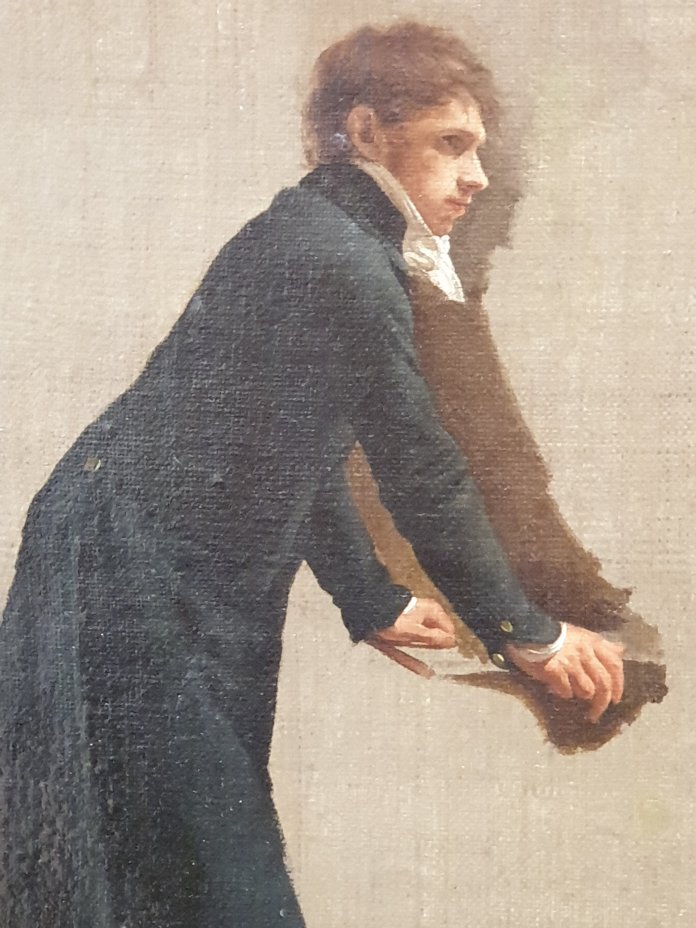
A set of very beautiful portraits by Louis-Léopold Boilly, including a study for his portrait of his close friend Jean-Antoine Houdon:-

Others are unnamed:-

Here he is doing a more finished portrait of M d’Aucourt de Saint-Just:-

Standard

The Unwritten Constitution

I have found it helpful to discuss the nature of the current constitutional crisis with my friend, Ivan Gaskell, in the Comments section of the blog.

The big problem is obviously that the Prime Minister has chosen to treat the result of the 2016 referendum as constitutionally binding whatever its consequences and without the need either to seek a further mandate for her more detailed proposals, nor to have discussed them in any great depth or secured support for them from either her party or parliament, assuming that what she now proposes is what the people wanted in 2016. So, there is a constitutional impasse. Of course, she may now secure a vote in parliament with the threat – actually, it’s blackmail – that the alternative is No Deal.

But does her deal have a democratic mandate in representing the natural and inevitable outcome of the referendum? I doubt it. People were not asked what sort of out they wanted, irrespective of the consequences. So, to secure a proper and effective mandate for what is now proposed should require a second referendum, on May 2, alongside the local elections, as happened (we may have forgotten) in 2011.

Standard

The Painted Hall

Although I have already seen the success of the conservation of Thornhill’s great Painted Hall at the Royal Naval College (vide my previous blog on the subject), I was still pleased to have been invited to celebrate its completion in advance of the public opening and admire the sophistication with which James Thornhill, who had been trained in the artisan tradition of late seventeenth-century painting, apprenticed to the Painters-Stainers’ Company in 1689, undertook such a gigantic and monumental task.

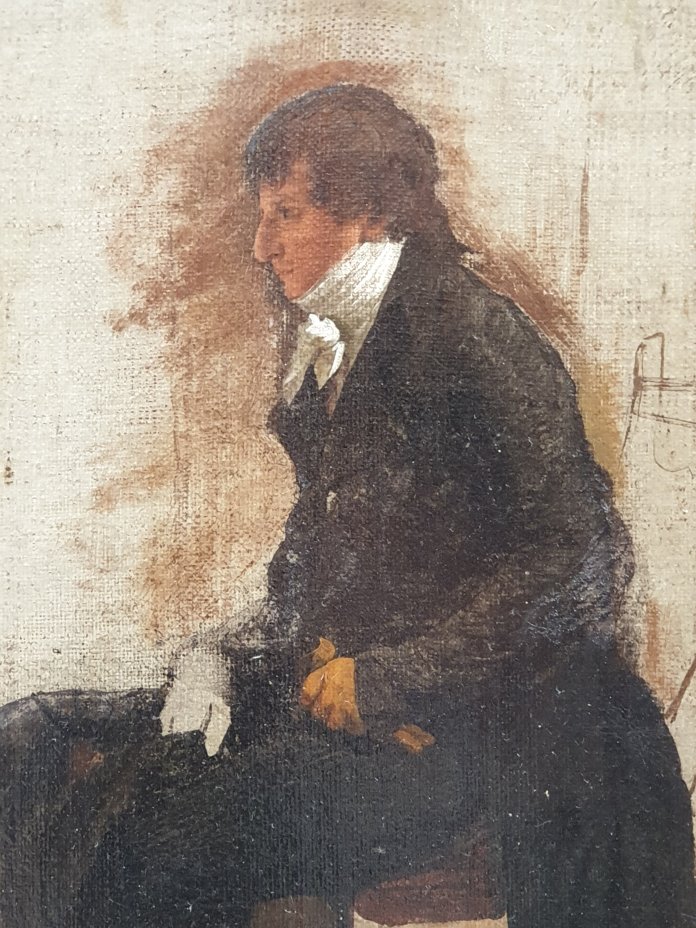
Here he is admiring his handiwork in the corner of the west wall, complete with the tools of his trade, maybe painted by Dietrich Andre, one of his assistants:-

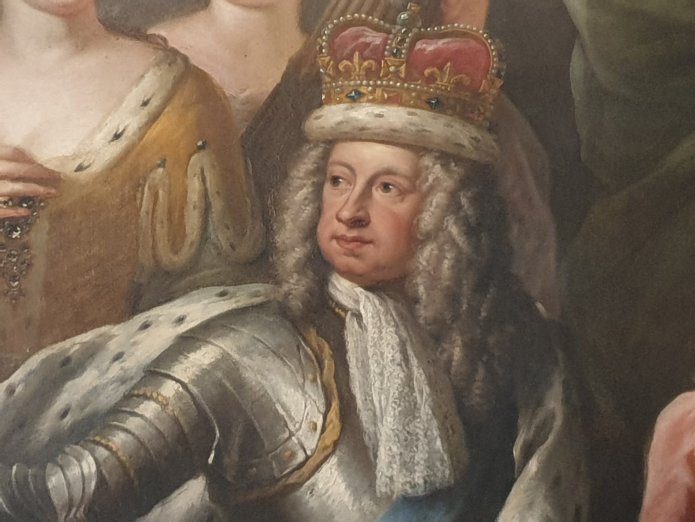
George I, surrounded by his children and grandchildren – ‘a new race of men from Heaven’ (ie Hanover):-

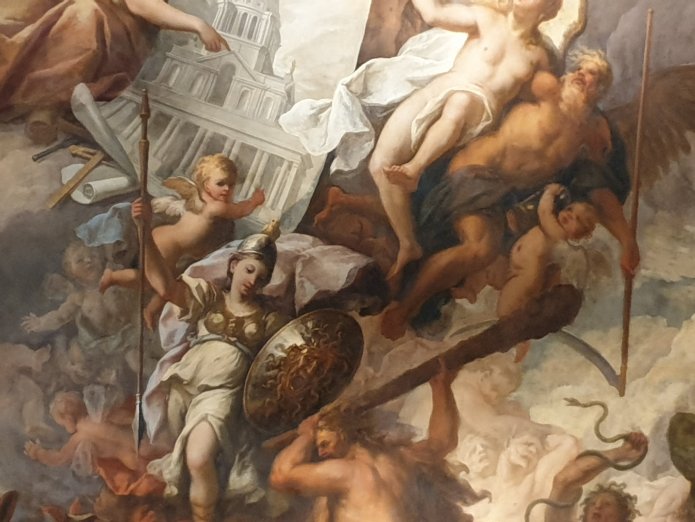
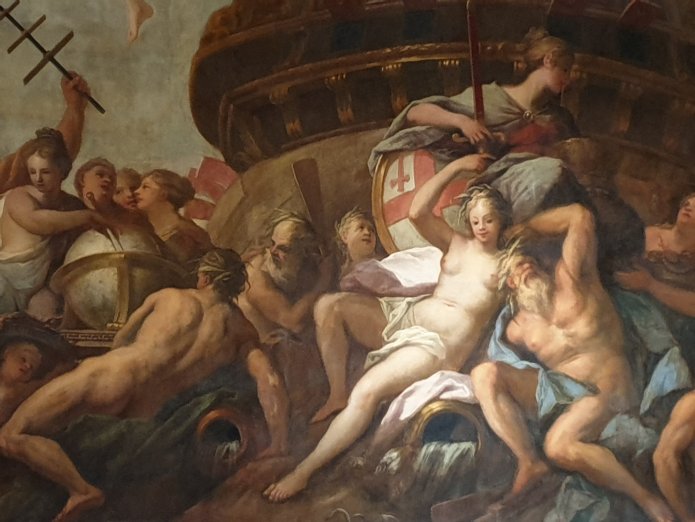
And scenes from the great painted ceiling which show ‘The Triumph of Peace and Liberty over Tyranny’ (in these uncertain times, it is worth remembering that parliament has at least twice, if not three times, been responsible for kicking out a brutal autocrat in the interests of liberty, prosperity and democracy and against mob rule, which is alien to our constitution):-

Standard