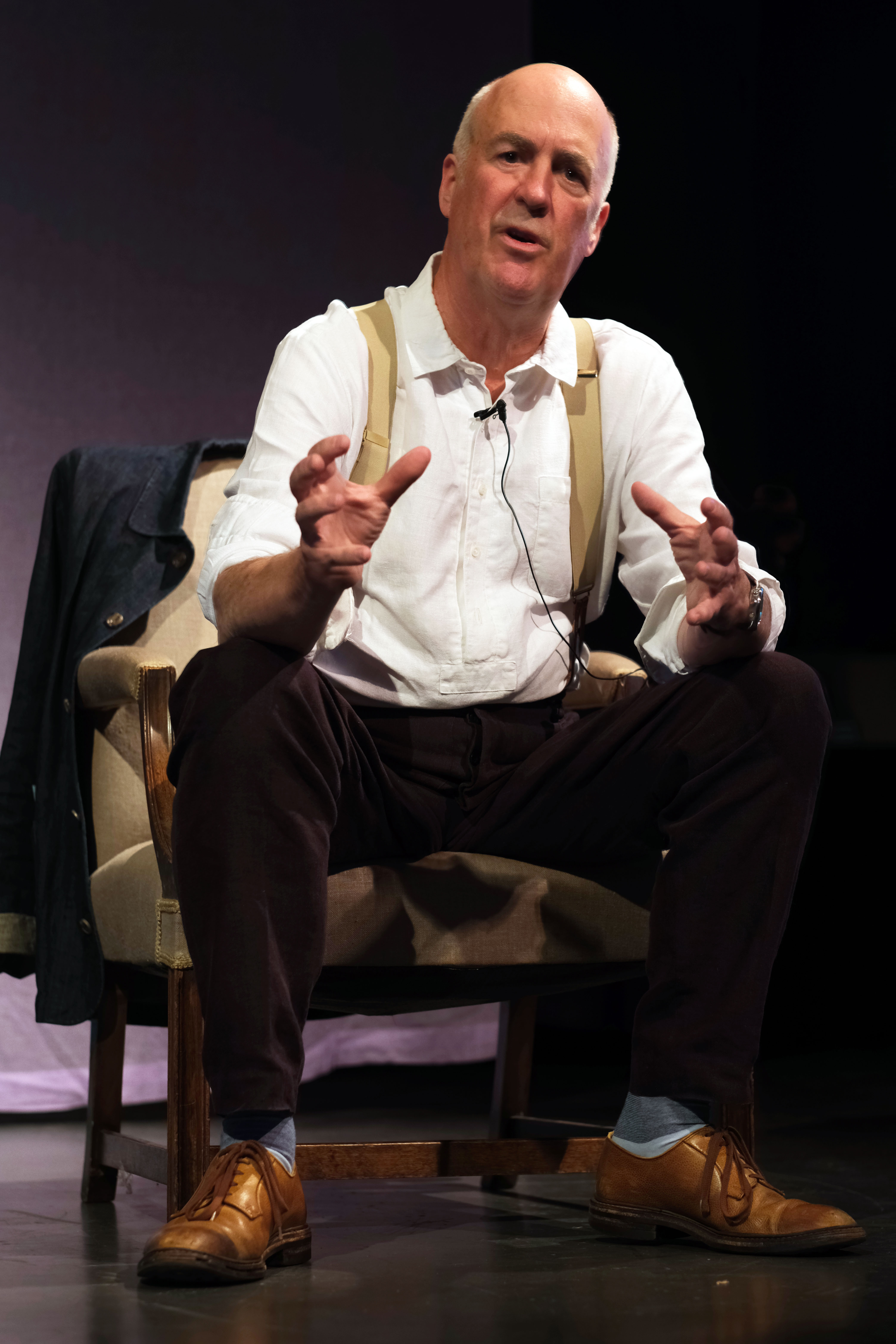
Amongst the many interesting facts I learned yesterday about Charles I’s collection, the subject of a big exhibition we are doing next year in celebration of our 250th. birthday, was that Abraham van der Doort, the first Surveyor of the King’s Pictures, a position subsequently occupied by Anthony Blunt, had committed suicide in 1640, distraught because he thought that he had mislaid one of the King’s miniatures. Such dedication ! Before his suicide, he had been occupied in drawing up a very detailed catalogue of the King’s collection, which was preserved by Elias Ashmole and survives in the Bodleian.
Buckingham Palace
I went to Buckingham Palace yesterday morning for a press conference to announce our joint Charles I exhibition next year in the unusually grand surroundings of the South Drawing Room, allowing me to walk through the arch of the Aston Webb façade, which is how Buckingham Palace is familiarly known, through to the inner courtyard and what is its real façade, designed by John Nash in the grandest and most expensive French neo-classical manner, together with elaborate porte-cochère, and an iron and glass veranda which is apparently Edwardian (no photography allowed)
This is Aston Webb:-

Stepney/Bow
I remembered to listen to the programme I helped make on Stepney and Bow, which was broadcast last week on Resonance FM (you can find it by googling Saumarez Smith/Resonance/East London). It’s much slower, less focussed and more ruminative than the programme about Spitalfields, partly because it was the first programme in the series to be made, so I didn’t have a sense of the format, and partly because Stepney and Bow are so much less coherent as historical neighbourhoods than Spitalfields. You still get a strong sense of how important artists and the practice of art have been to the development of the area, with the establishment of the Chisenhale Gallery, Matt’s Gallery and Maureen Paley in the 1970s; the advantages of mixed neighbourhoods and the virtues of post-war social housing; and of the way the city develops not through planning, but negotiation and happenstance.
Charleston Festival
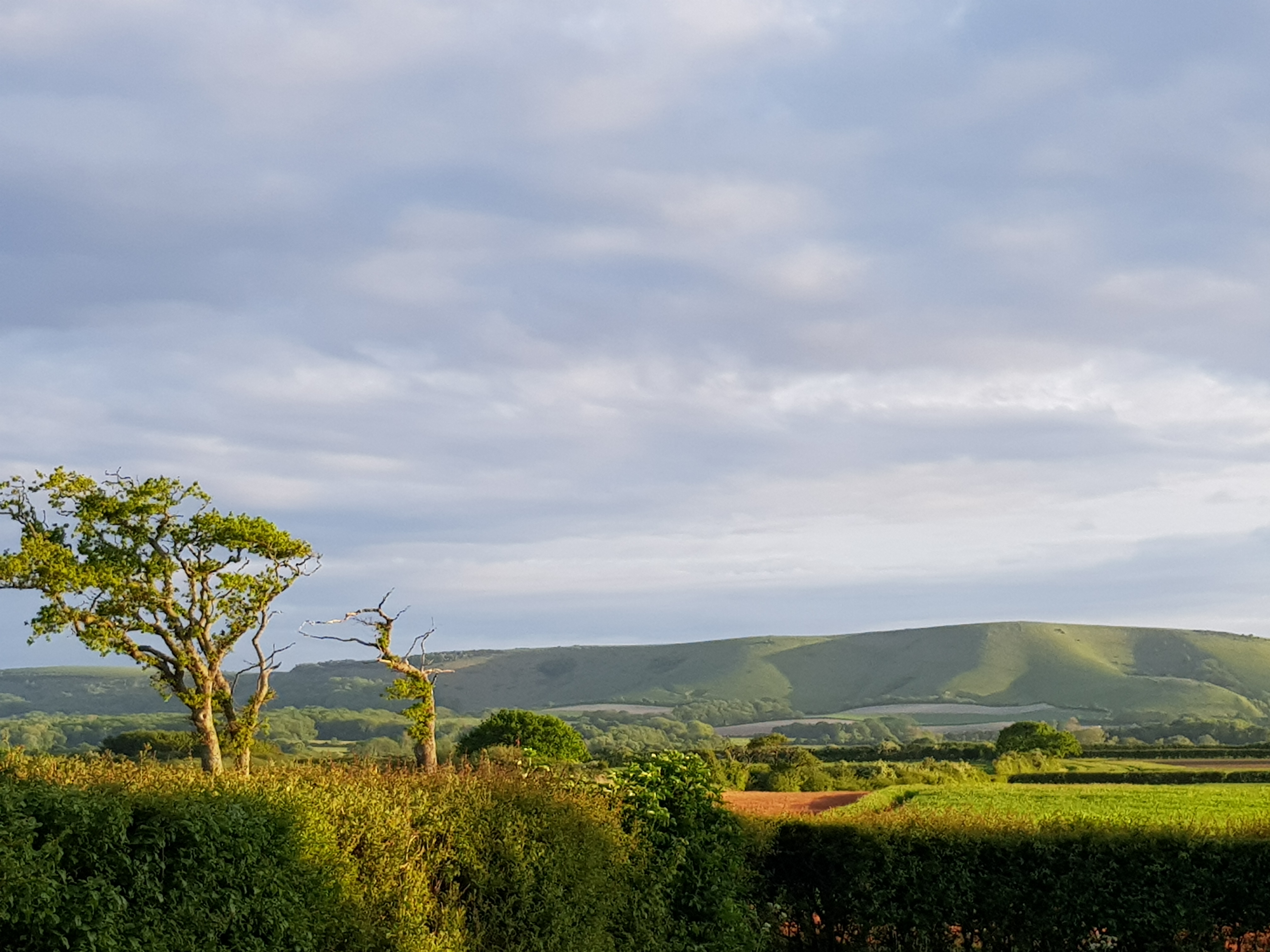
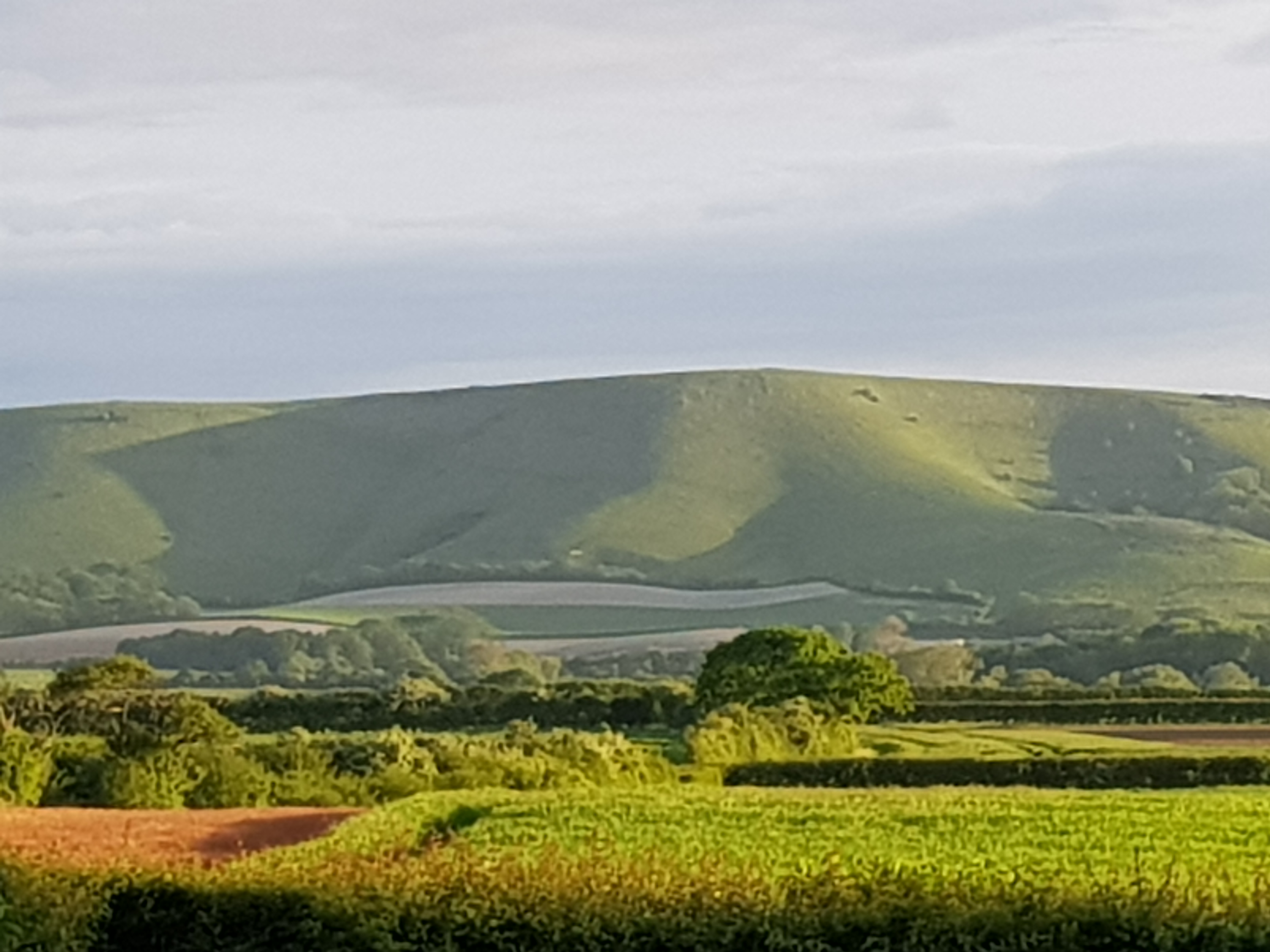
We had our annual visit to the Charleston Festival. We heard Anne Sebba talk about the experience of French women in Paris during the war, Artemis Cooper on Elizabeth Jane Howard and a debate on the relative merits of Turner and Monet which was unexpectedly won easily by Turner (a vote for a British painter, perhaps). But most impressive was the view of Firle Beacon and the line of the South Downs as we drove back from a private performance of Weber Invitation to the Dance and Ravel Miroirs:-
Early morning in Paddington
An early morning haircut meant that I was wandering the streets of Paddington, admiring the Regency ripple of Gloucester Terrace (actually, post-Regency because it was laid out in 1843 and not completed till 1852):-

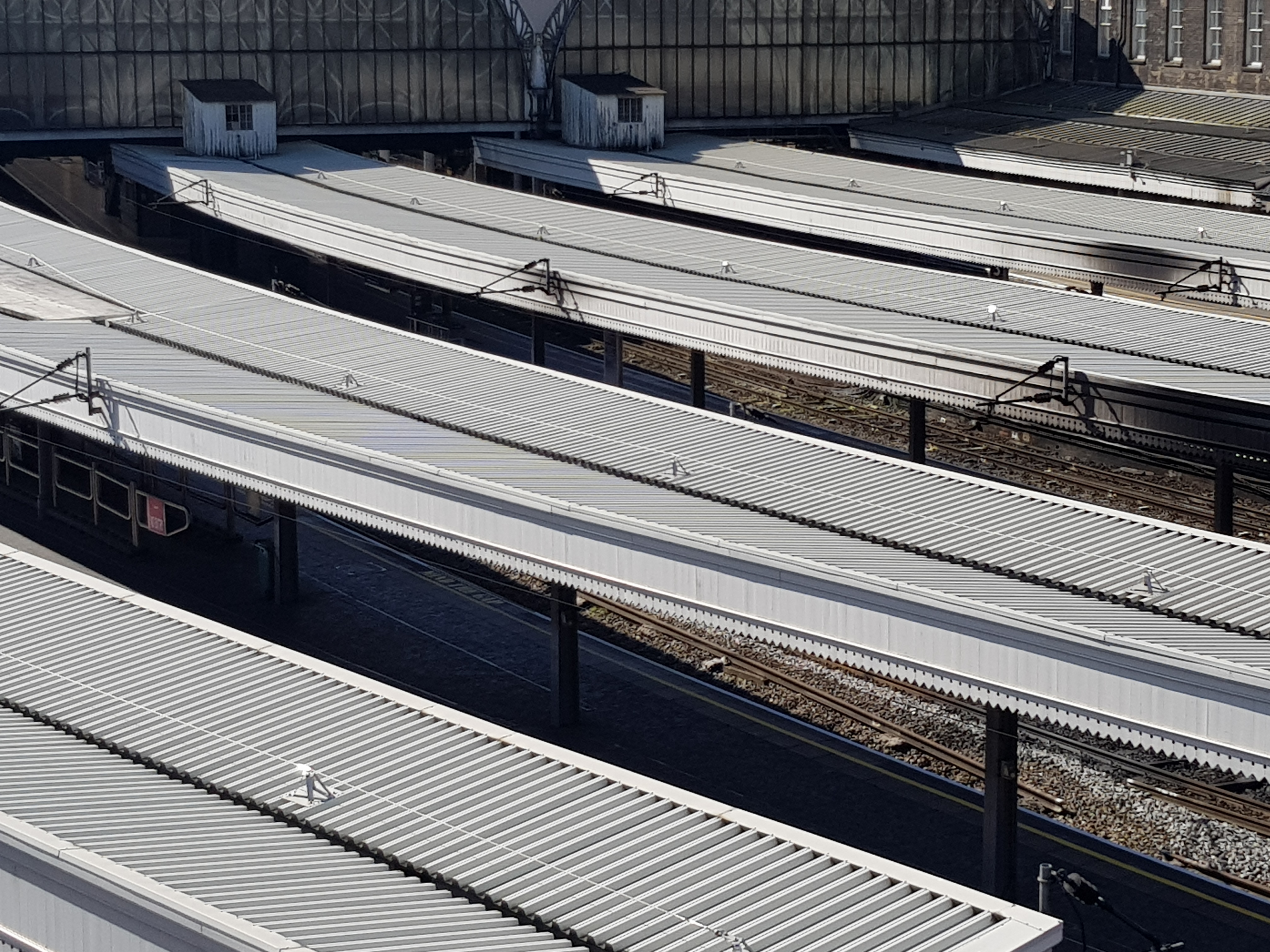
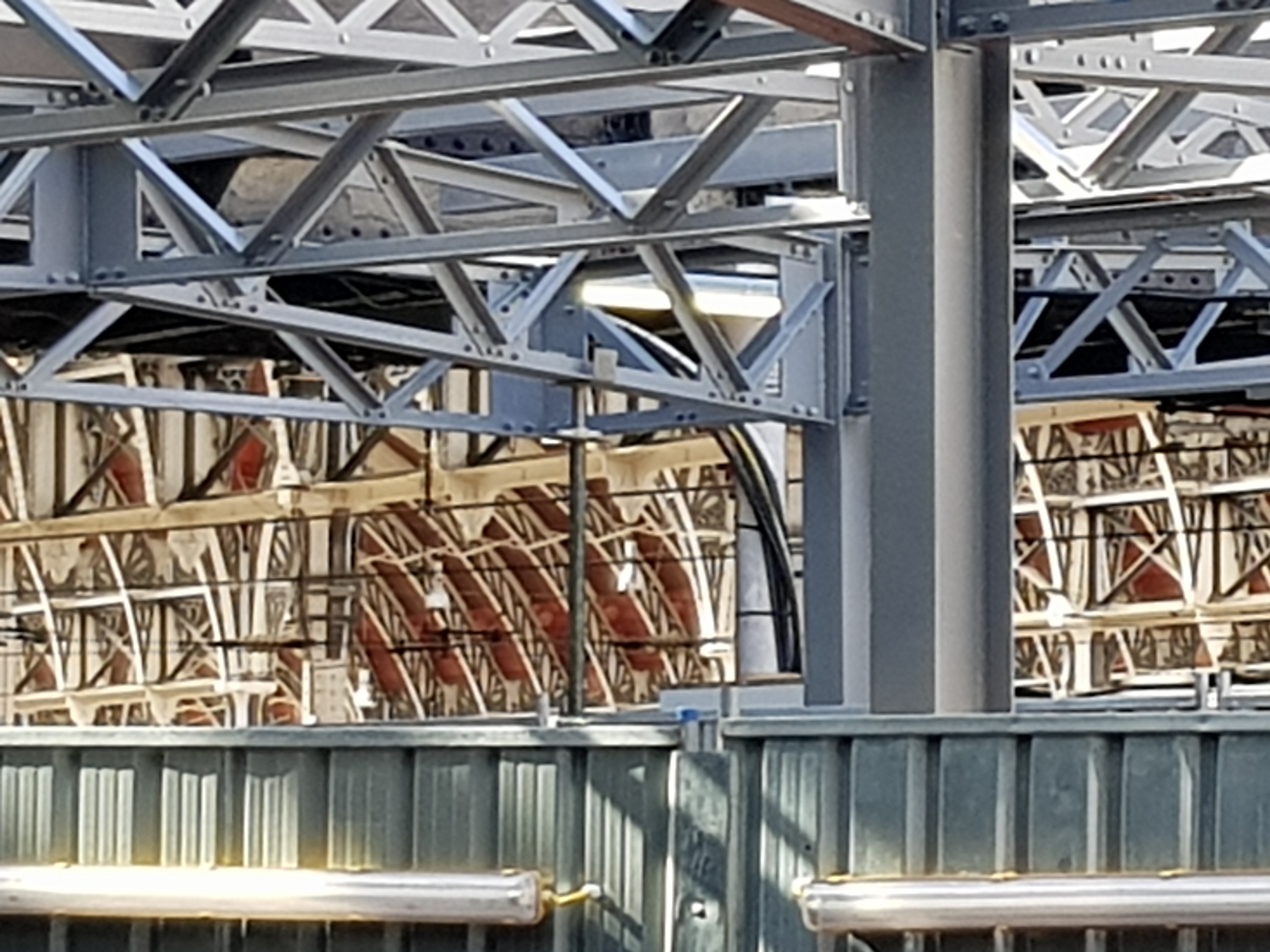
And Paddington Station itself, 1853 by Brunel:-

St. Paul’s Cathedral (3)
After a few days in Venice, I found myself walking across Norman Foster’s Millennium Bridge and admiring, as I often do, Wren’s great dome to St. Paul’s and wondering how he acquired his knowledge of the emotional force of seventeenth-century classicism, when by temperament he was such a cool and unemotional and technologically minded mathematician, whose knowledge of European architecture was limited to a single short visit to Paris in 1663 and study of the precepts of Italian architecture through books and engravings:-

Venice Biennale (2)
I had been through the Arsenale before and was pleased to go through more slowly, appreciating, for example, Franz Erhard Walther’s Wall Formation ‘Yellow Modeling’:-

I was pleased to see the New Zealand pavilion by Lisa Reihana; and again admired what I realised was the Italian pavilion, including Giorgio Andreotta Calò’s Senza titolo (La fine del mondo), which I had missed out before:-

Venice (4)
Following the good advice of comments on my blog, I set off to the Arsenale by way of the Chiesa della Madonna dell’Orto. This is not logical, I know, but I was intrigued by the idea of seeing works in their original setting. I passed S. Giovanni Crisostomo, by Mauro Coducci. Early morning mass was about to begin:-
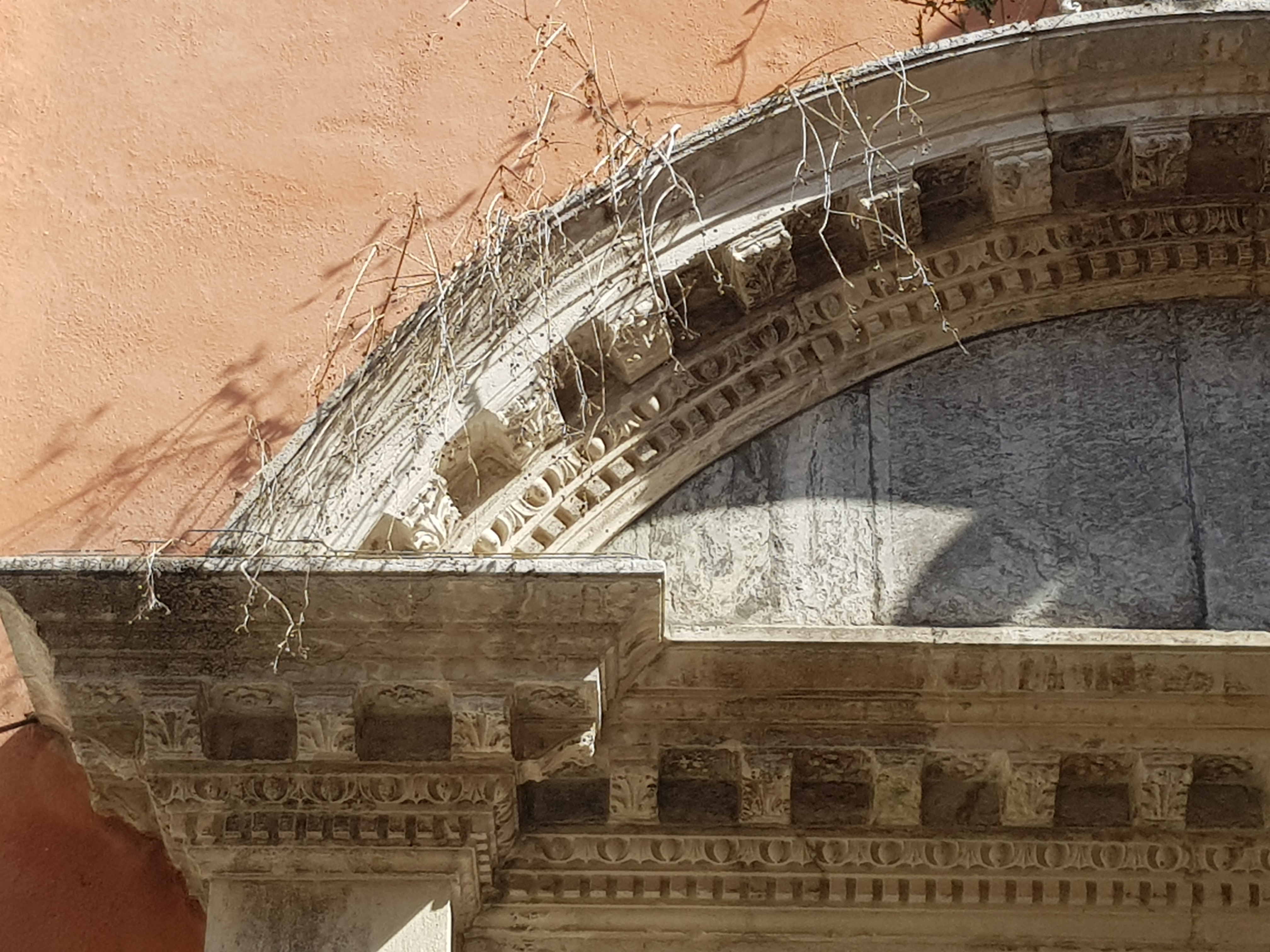
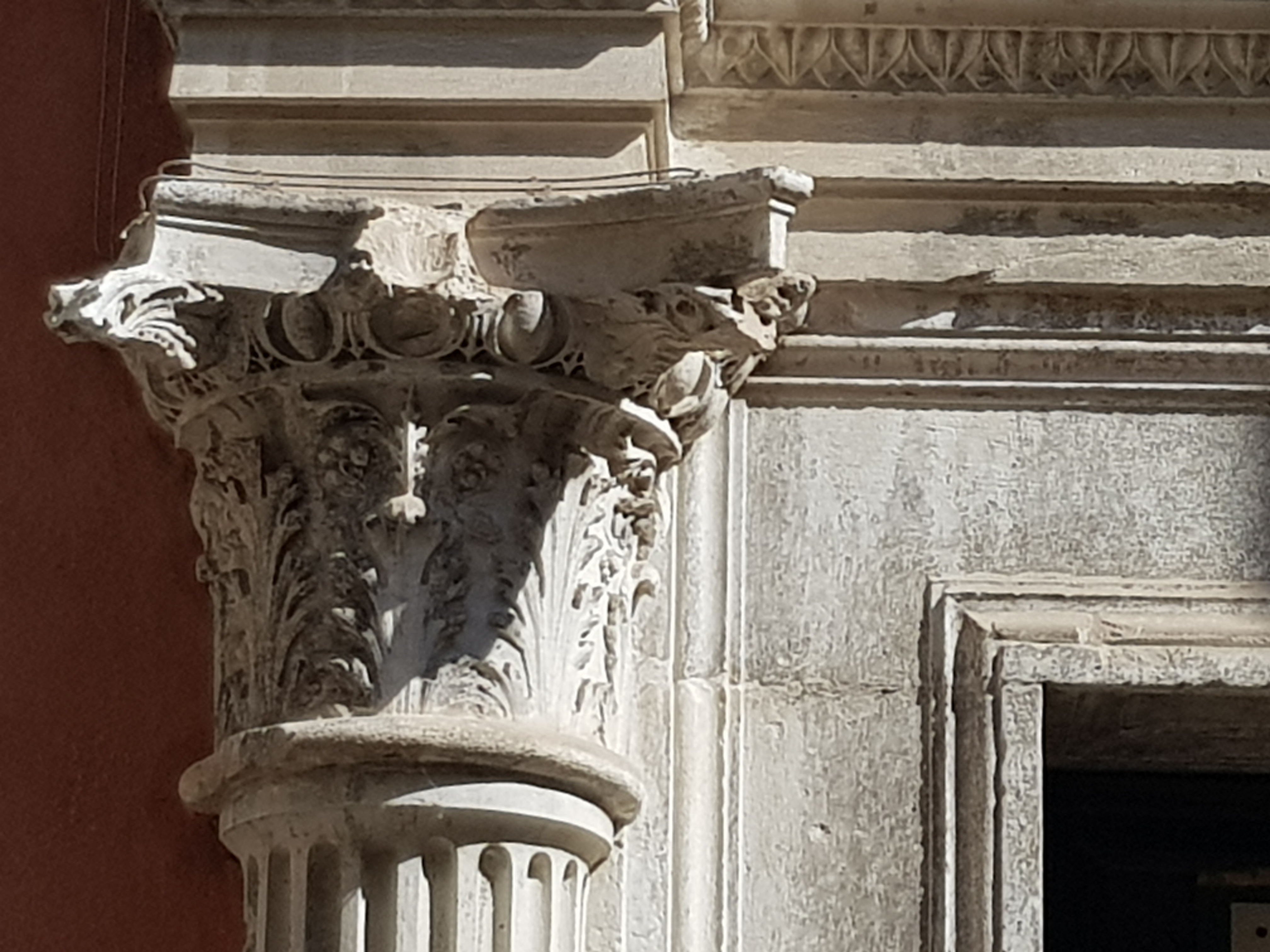
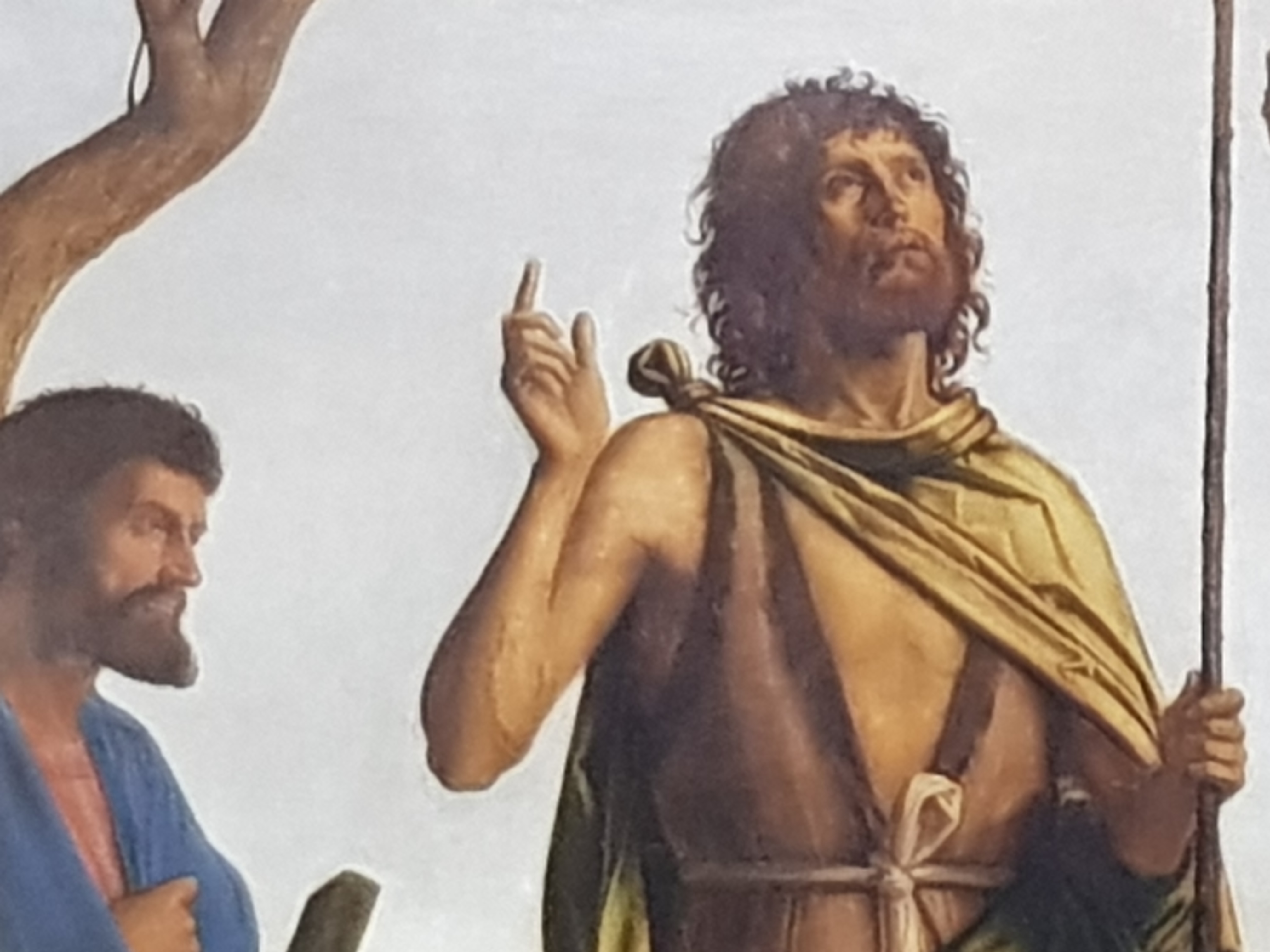
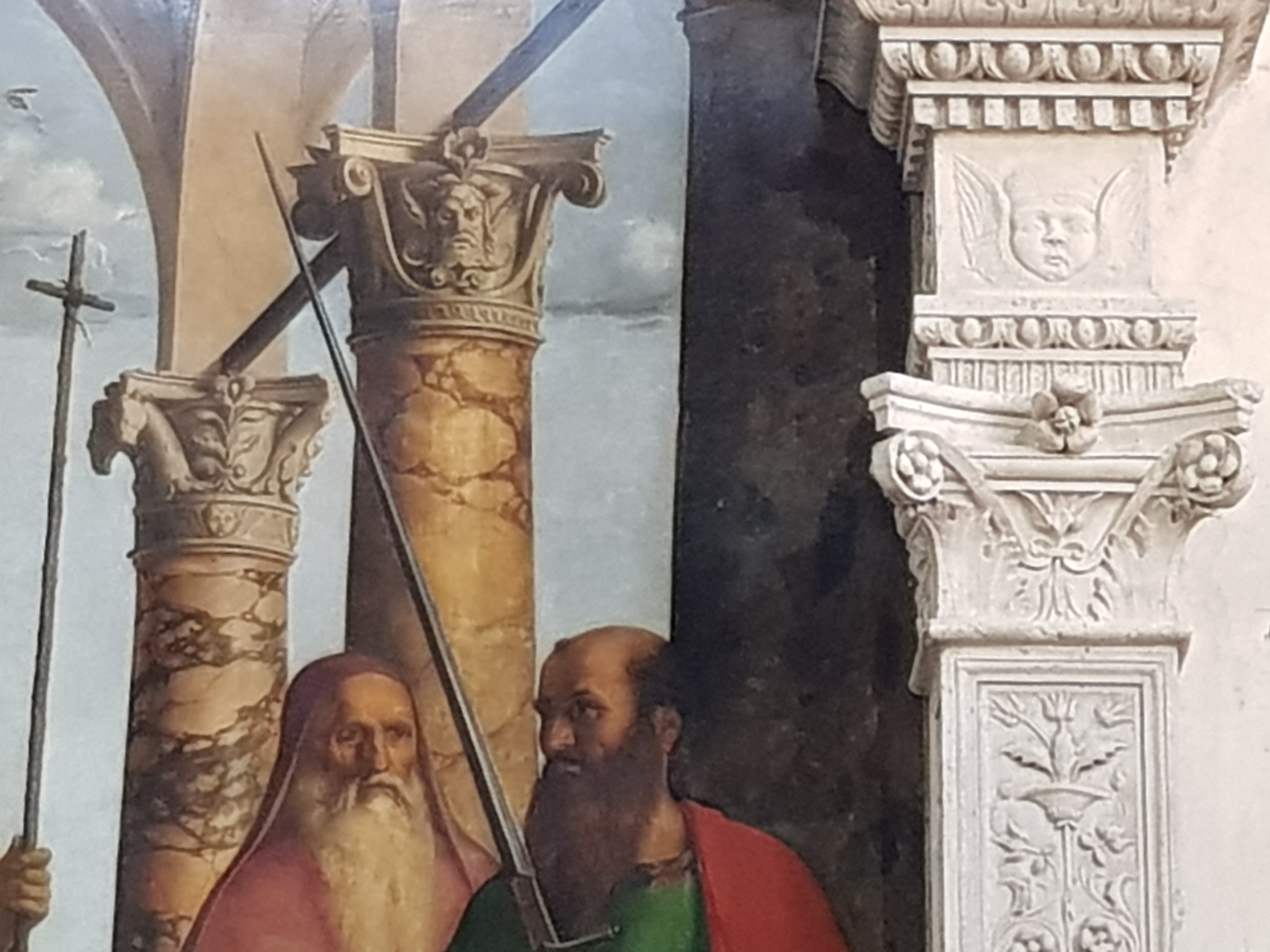
Then, through Cannareggio to the church of Madonna dell’Orto, rather remote, a Gothic barn, with grand Tintorettos in the apse and, on the right, a very beautiful altarpiece of Saint John the Baptist and other saints (c.1495), still in its original (stone) frame:-
I hopped on a vaporetto to the Arsenale, the end of the tour.
Intuition
Of all the things I have seen in Venice, particularly in connection with the Biennale, by far the most powerful has been the installation by Axel Vervoordt in the Palazzo Fortuny on the theme of Intuition. Ten years ago, the Palazzo Pesaro, which was left to the city of Venice by the childless Mariano Fortuny on his death in 1949, was in a state of disrepair. Vervoordt kept its state of picturesque decay intact and this year has done a beautiful, powerful set of atmospheric installations, combining ethnographic material with contemporary art. I have seldom seen this form of highly aestheticised, abstract display done so well, except maybe in Peter Zumthor’s Kolumba Museum in Cologne.
The displays began with a group of prehistoric monuments in a darkened room, some at least borrowed from the Soulages Museum in Rodez:-


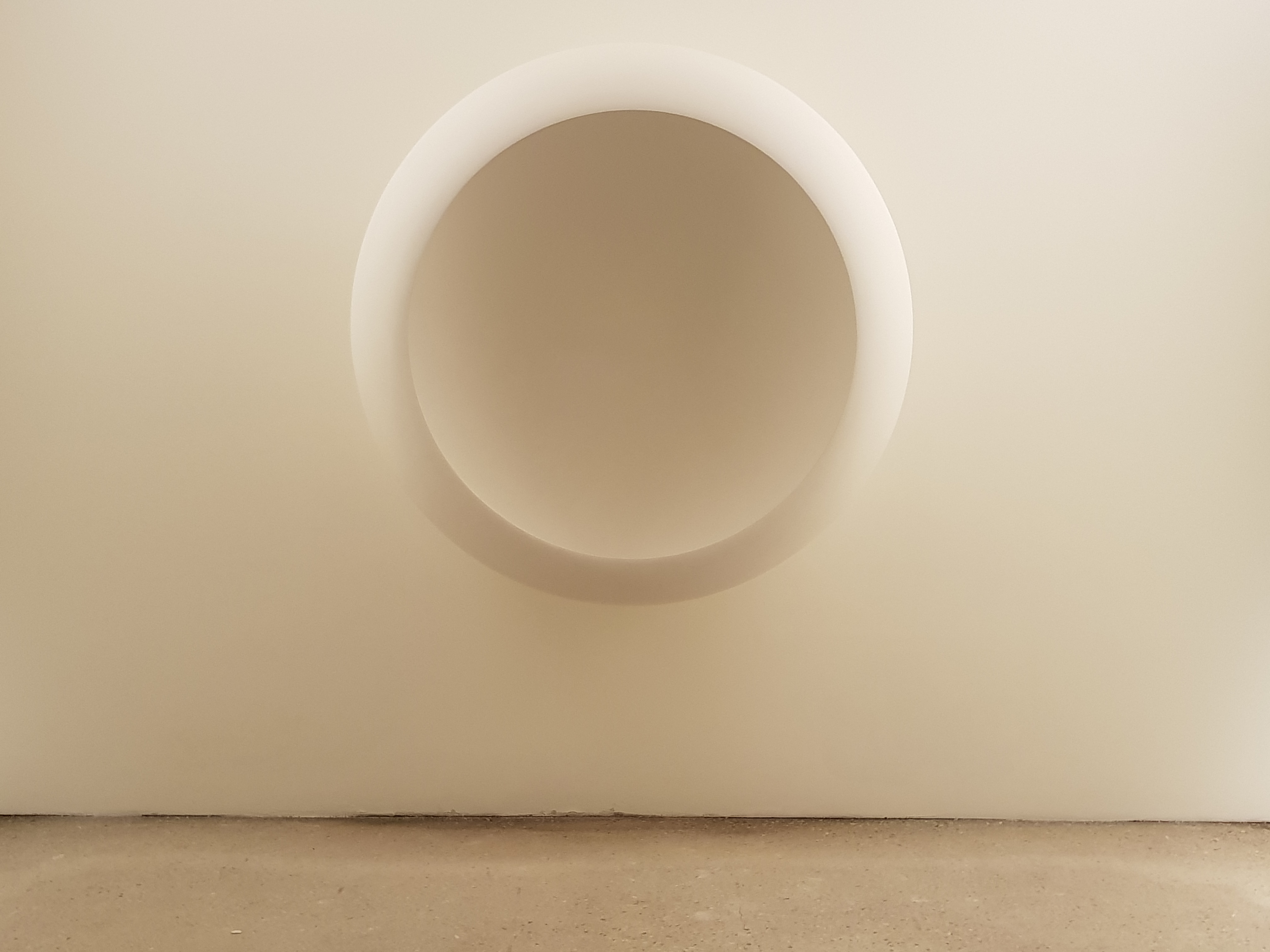
Round a corner, there’s a recent Antony Gormley (2013) and a work by Anish Kapoor:-
Upstairs, one comes into the grand first floor salone, with views out over the roofs of Venice and a vast and atmospheric black-and-gold work by El Anatsui:-

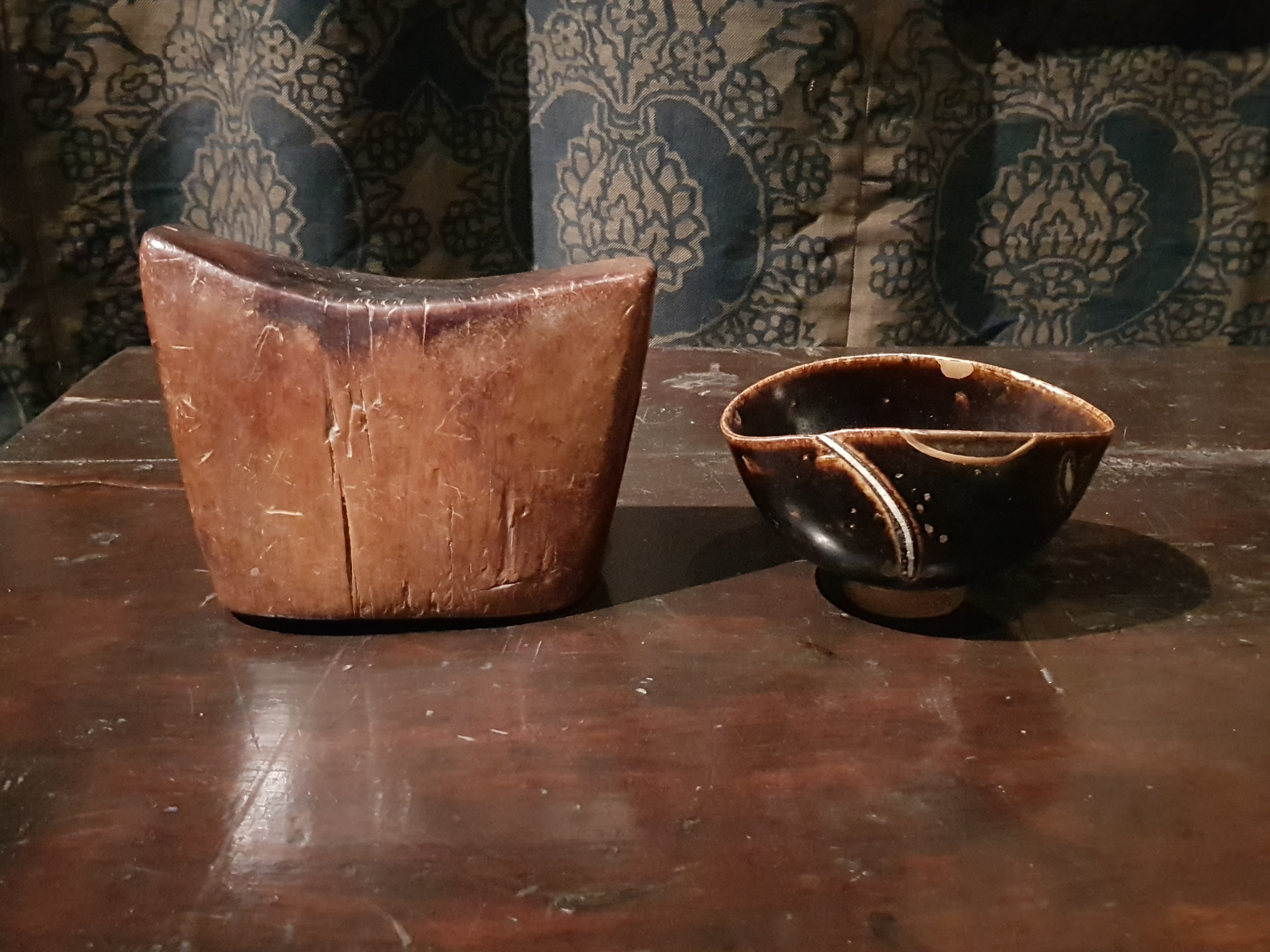
Elsewhere in the room, there are mixed display cases, with works displayed against patterned silk:-


Venice (3)
I again strayed further off the beaten track than I was planning to, wandering round the Dorsoduro en route to Stephen Chambers’s exhibition in the Ca’ Dandolo.
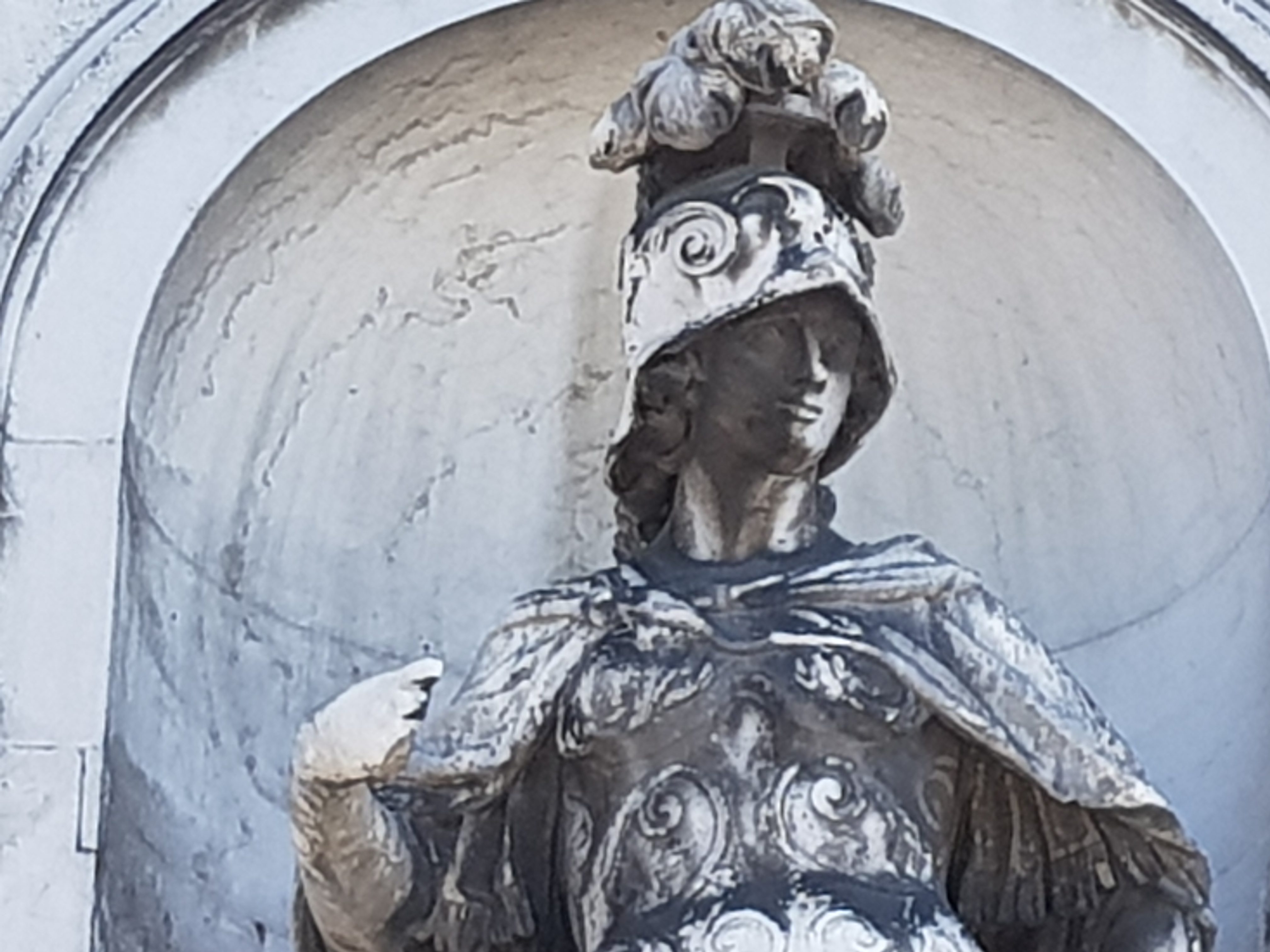
Starting in the Gesuati, where an entry by Keith Christiansen of the Met. on 18th. century Venice, encouraged me to pay closer attention to the paintings and statuary than I might have done:-
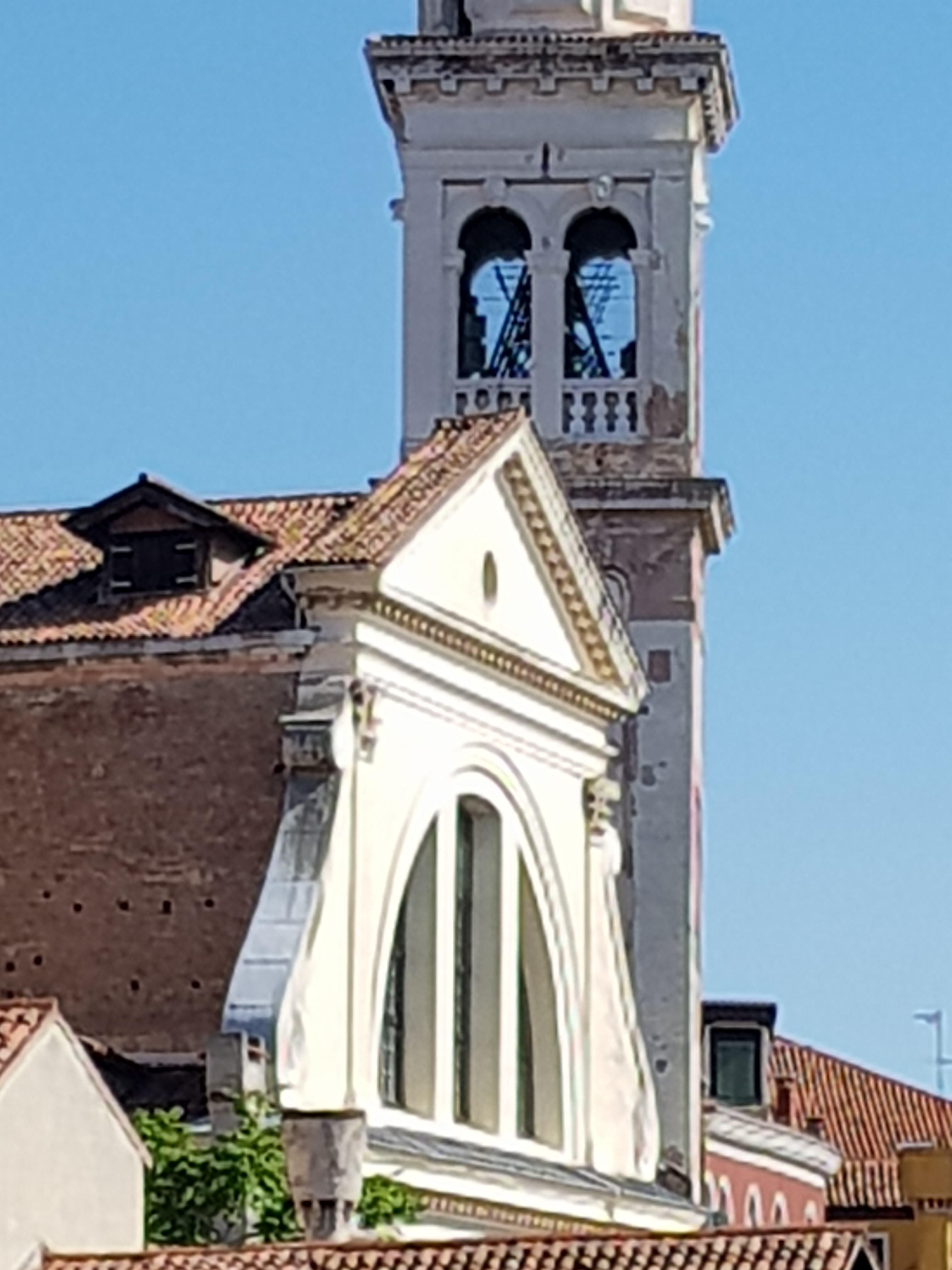
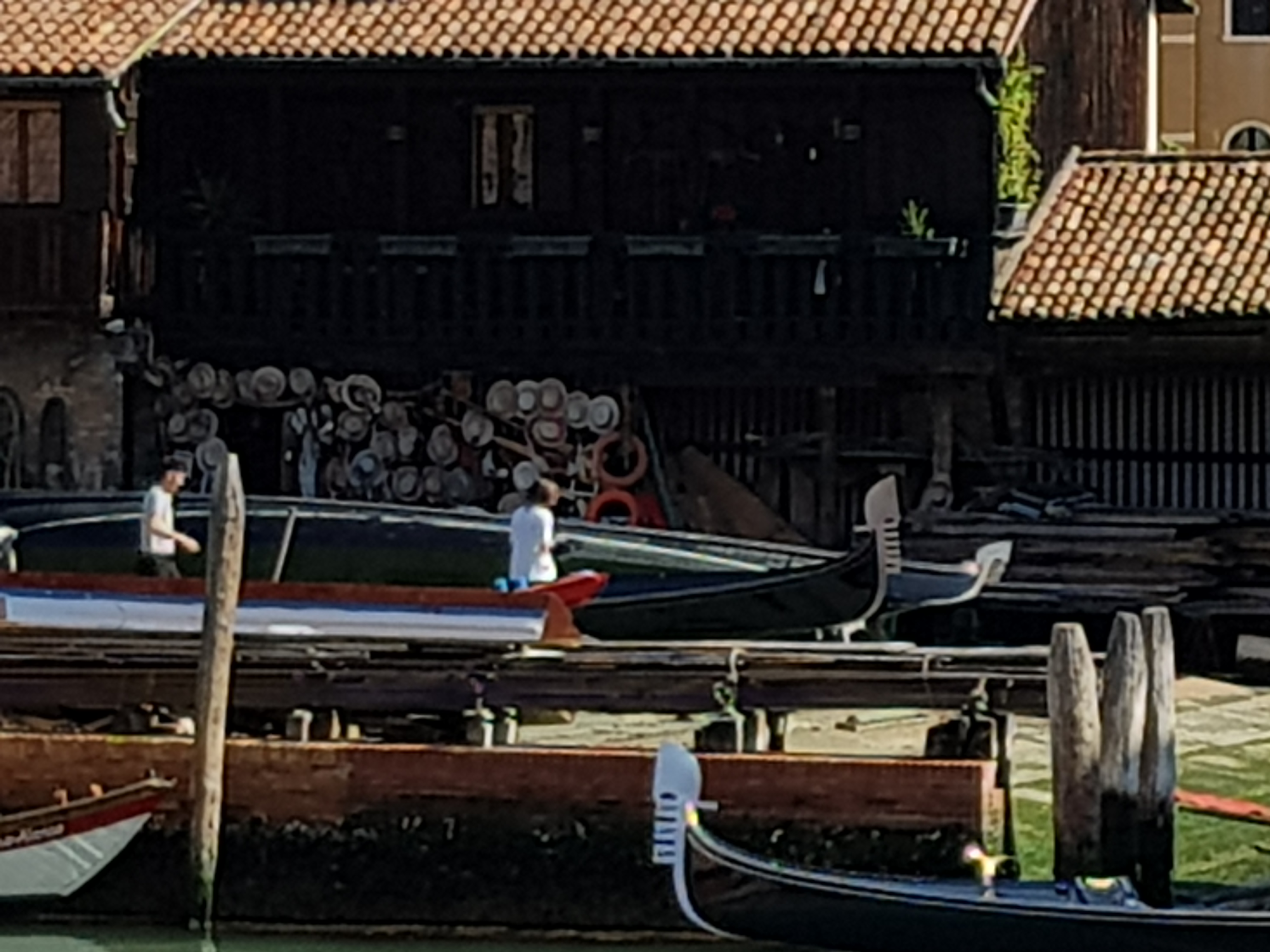
Then, S. Trovaso and its adjacent boatyard:-
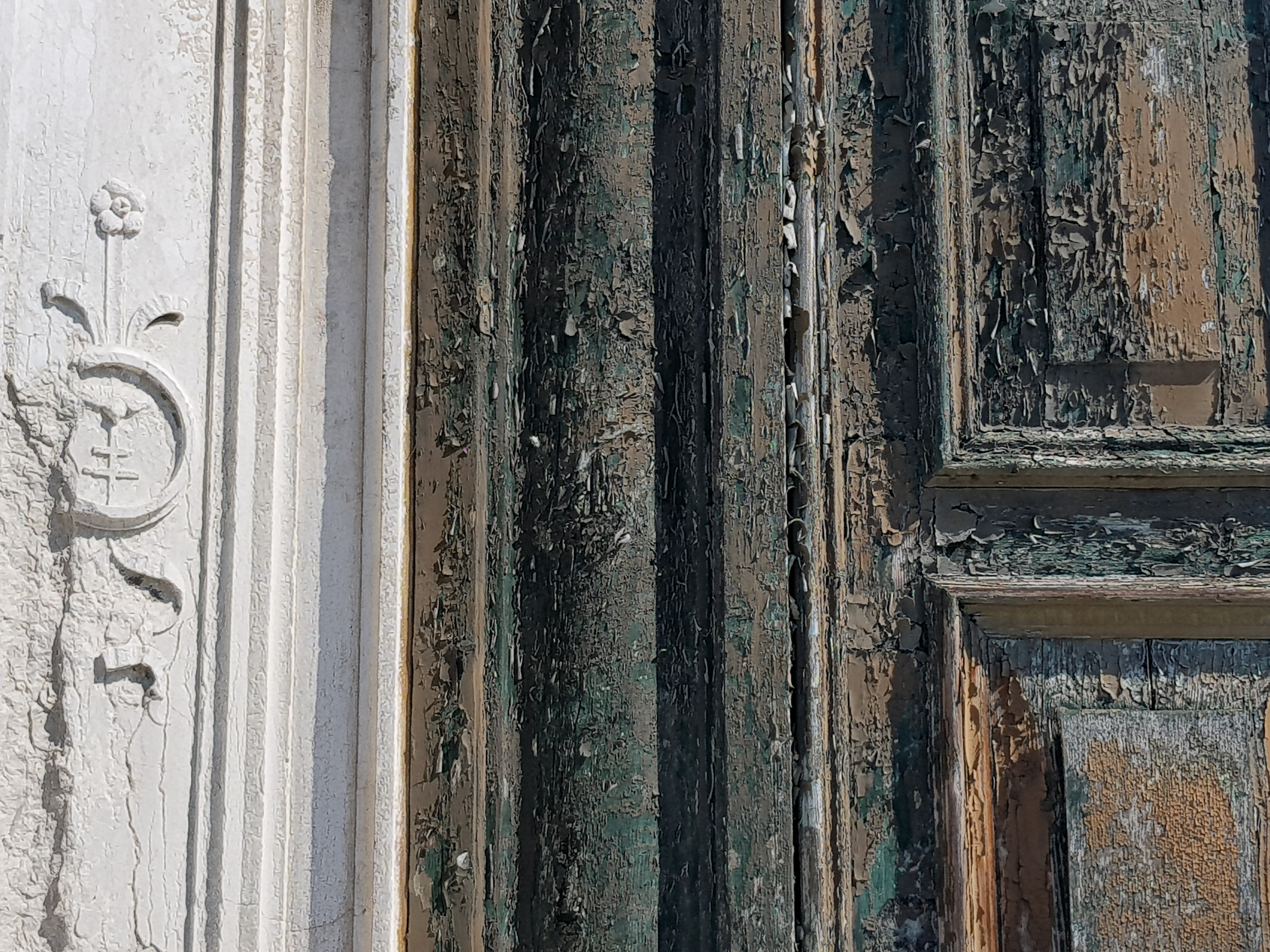
This is the door of Spirito Santo, an Augustinian convent on the fondamenta Zattere, long closed:-
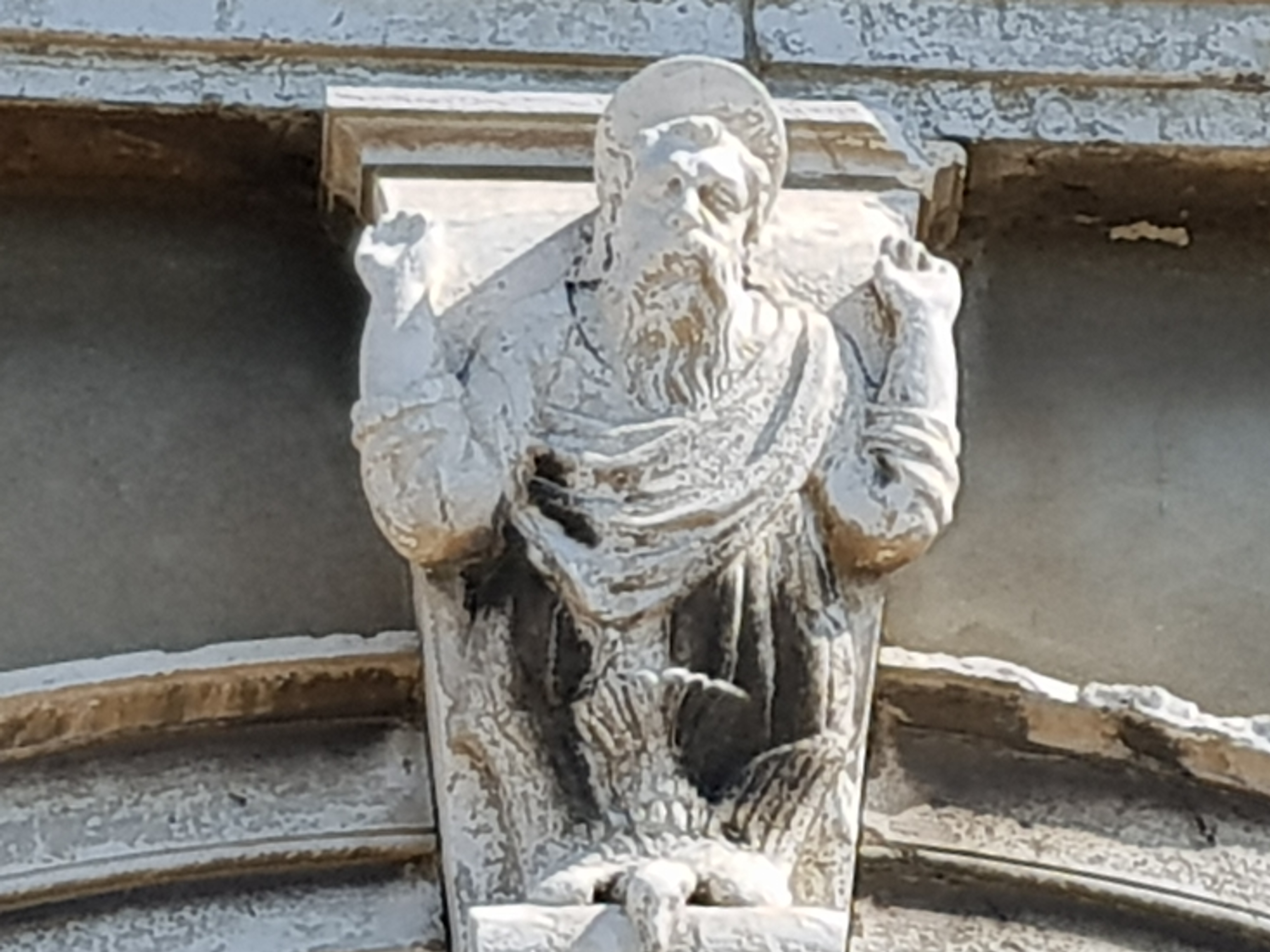
And the scuola next door:-
Then I went to the Ca’ Rezzonico:-
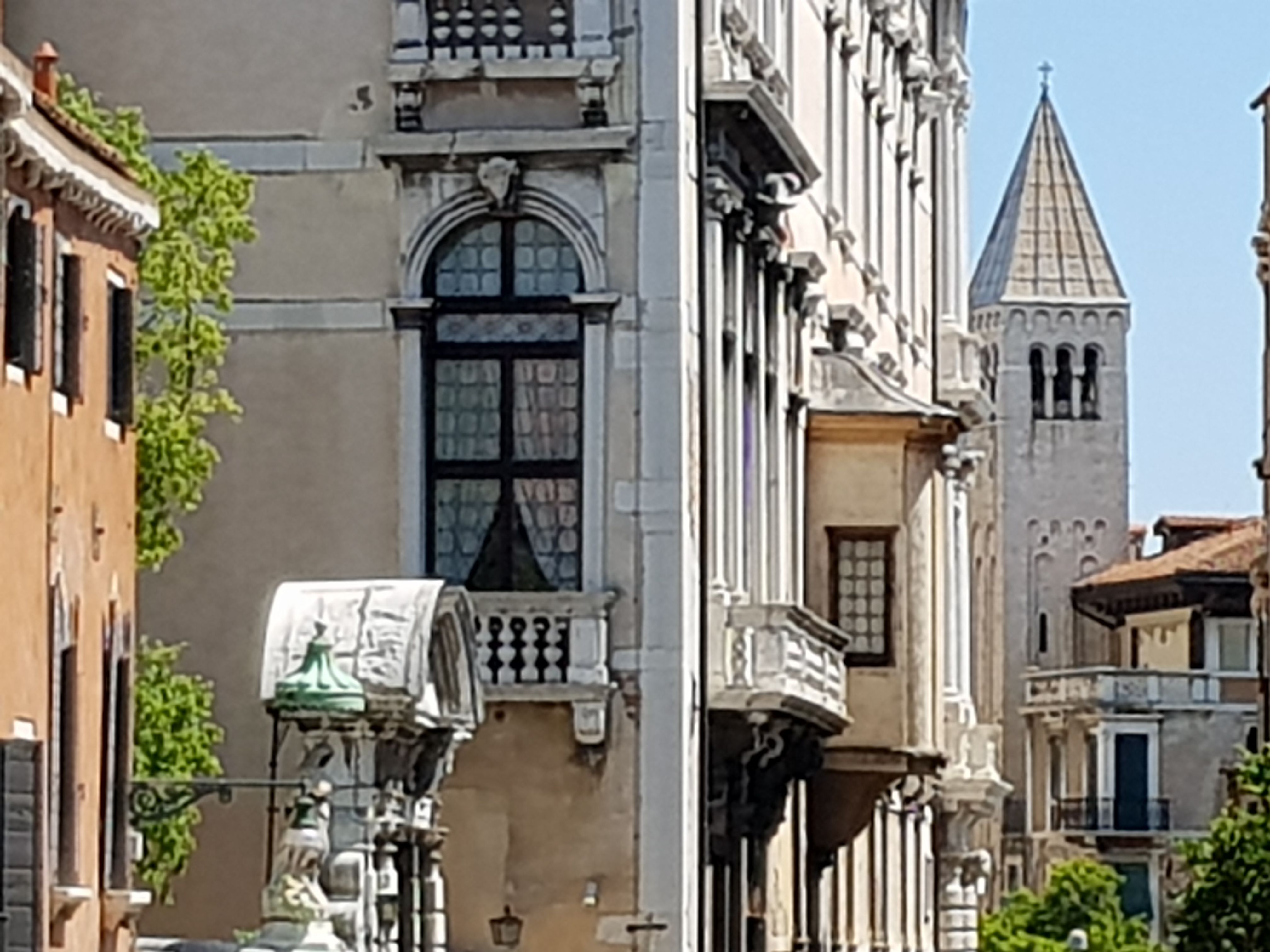
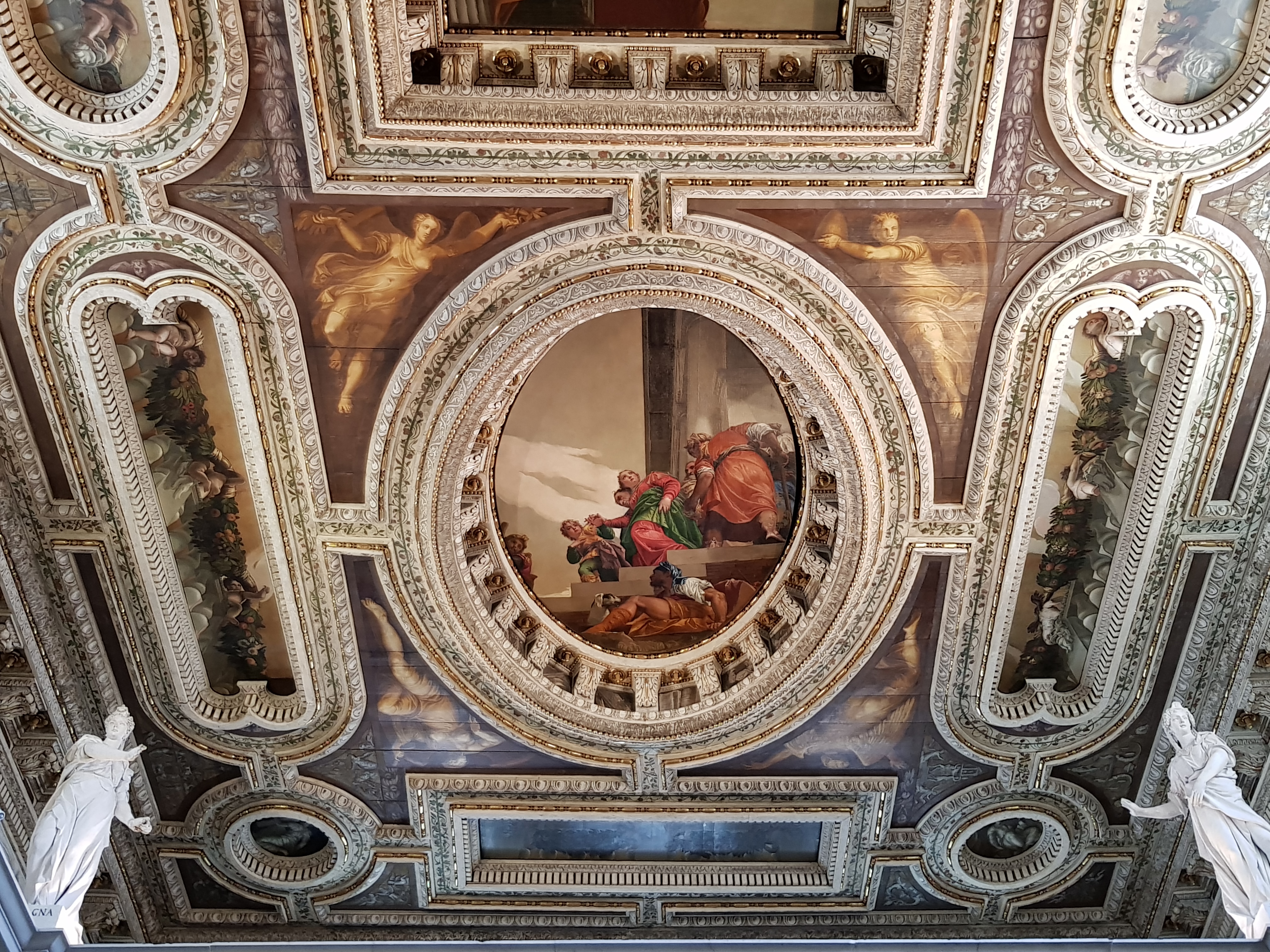
And San Sebastiano, the last church on my church crawl, with its great Veroneses:-


 | Charles | Saumarez | Smith |
You must be logged in to post a comment.