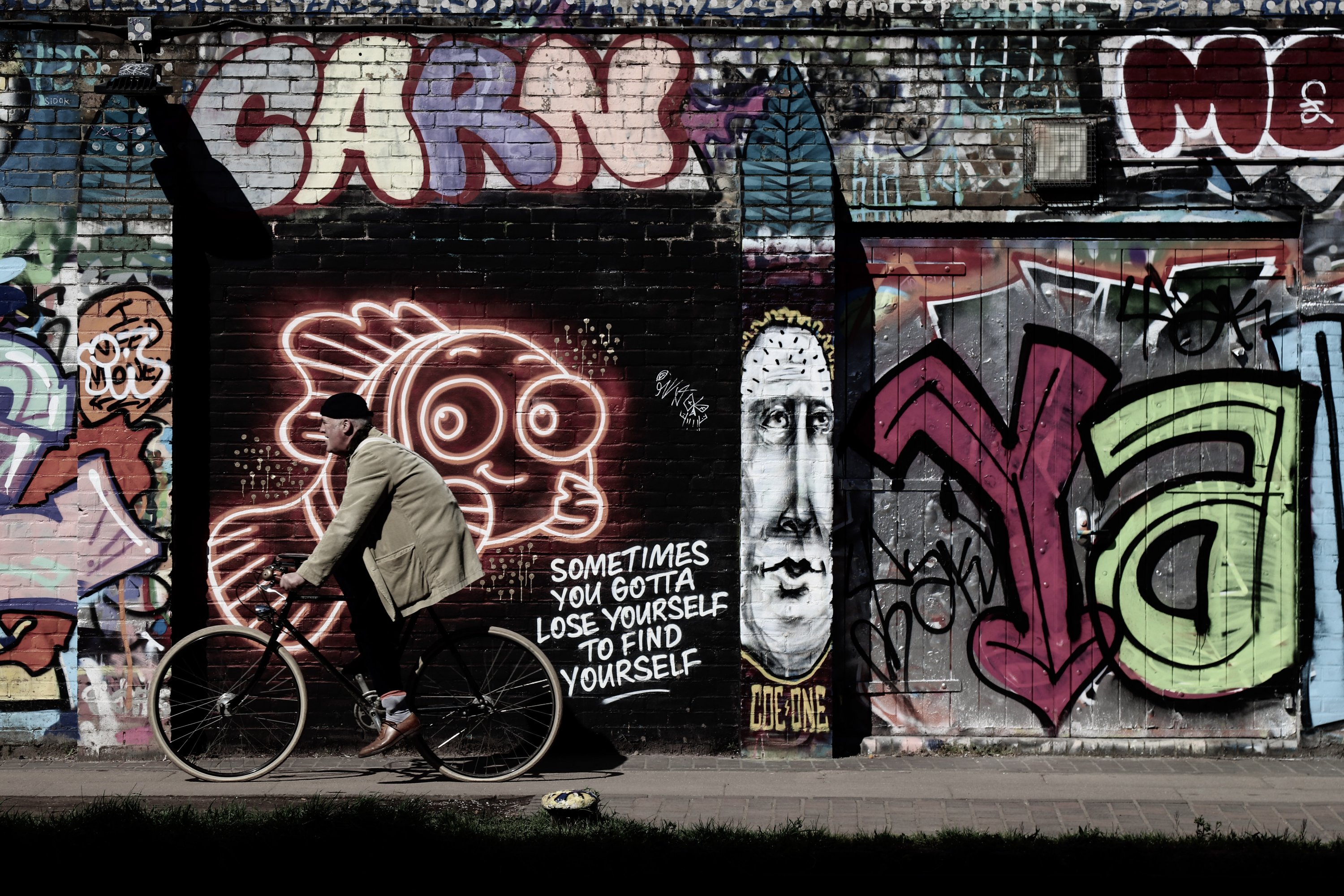
I have only been to Orford once before and half remembered the drive south east from Snape past the piggeries and Sudbourne where Kenneth Clark was brought up. I like its sense of remoteness, with a surprisingly large medieval church:-
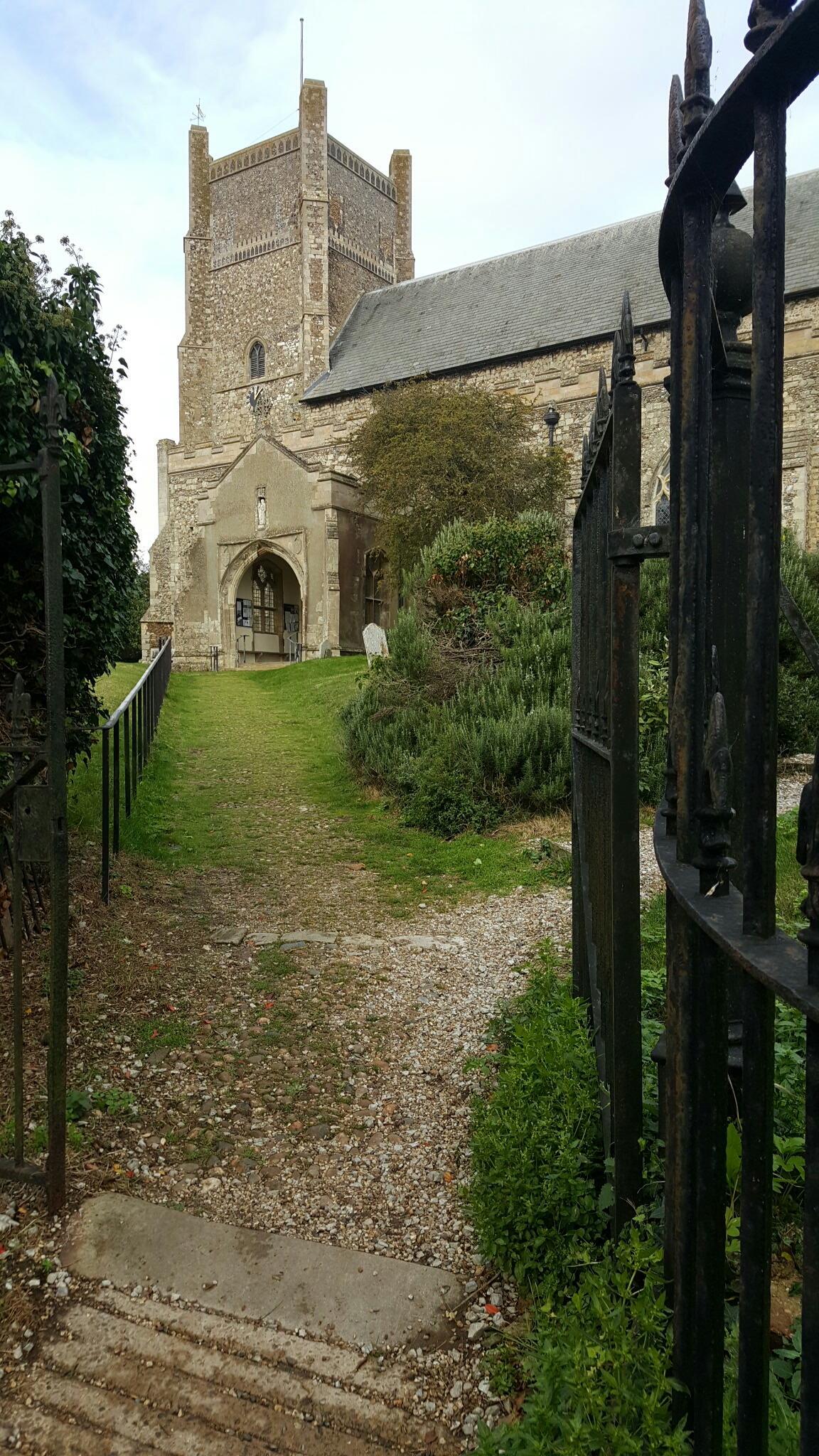
I have only been to Orford once before and half remembered the drive south east from Snape past the piggeries and Sudbourne where Kenneth Clark was brought up. I like its sense of remoteness, with a surprisingly large medieval church:-
I have been trying to remember more about what it was like doing Art History A Level. We did a General Paper, of which I only recollect one question in the mock exam, which was what art should be hung in hospitals, a question which I have puzzled over ever sense. The meat of the exam was a special subject paper on Art in Italy 140o-150o. We were introduced week by week to all the major fifteenth-century artists beginning with Masaccio and ending with Leonardo, encouraged to read Freud. The subject was treated as an aspect of cultural history without a great deal of analysis of the art, but this was a symptom of the interests of our teacher, who I’m not absolutely convinced had been to Italy (he was passionate about medieval Spain). At the time, art history was a new and adventurous subject, expanding in the universities, and we were able to attend extramural classes in the local library by a lecturer from Bristol. It definitely expanded my intellectual and cultural horizons and I remain grateful to have been able to do it at that stage, rather than having to wait to do it as an undergraduate.
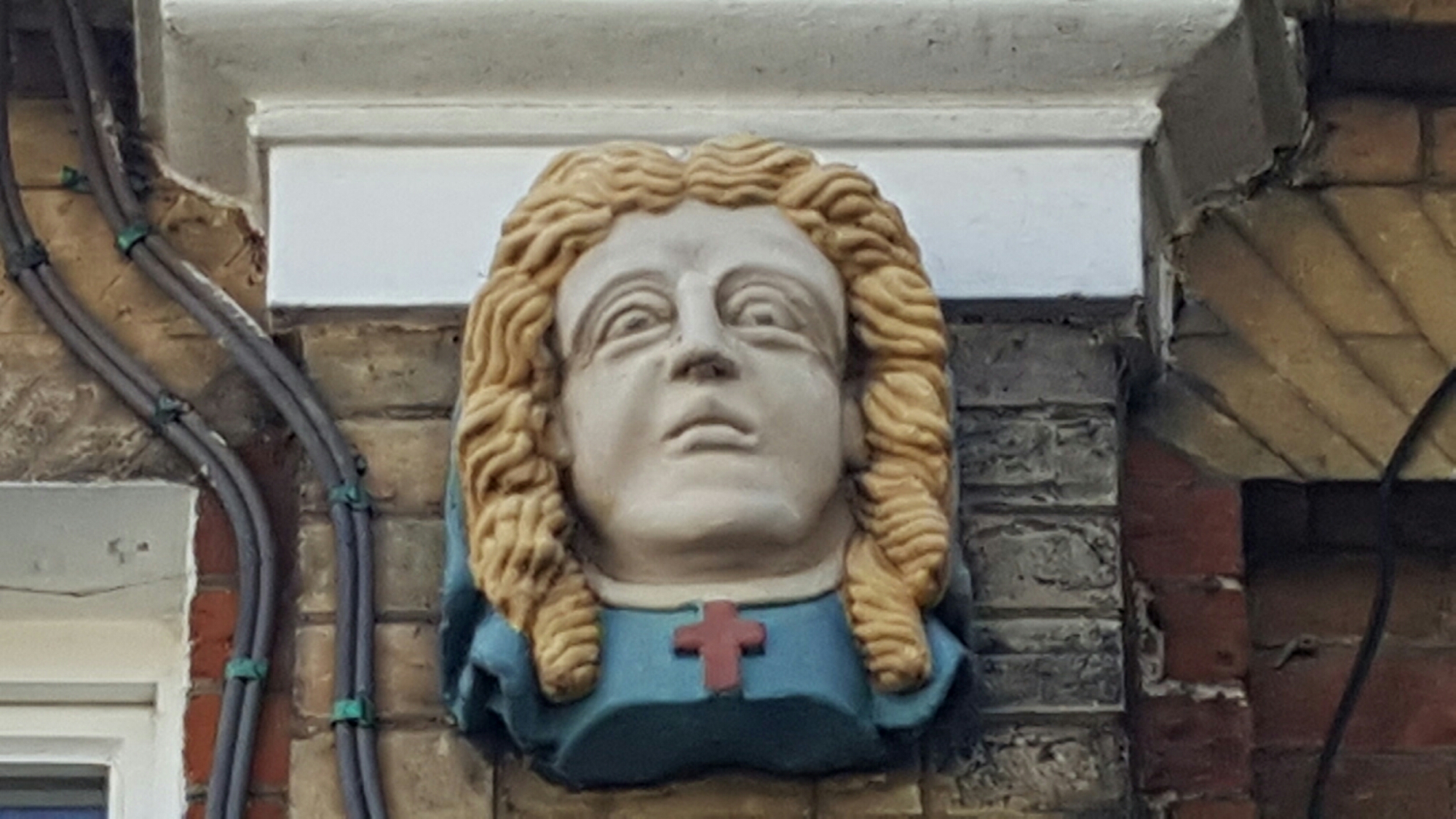
It was brilliantly sunny this morning in Southwold, so we walked from the Museum down to the sea front, past a run of cottages with painted heads in the eaves, past the Adnam’s brewery with its overpowering smell of yeast, past the Sole Bay Inn, built by a bricklayer called William Tink, and the adjacent lighthouse, to the long run of multi-coloured beach huts:-
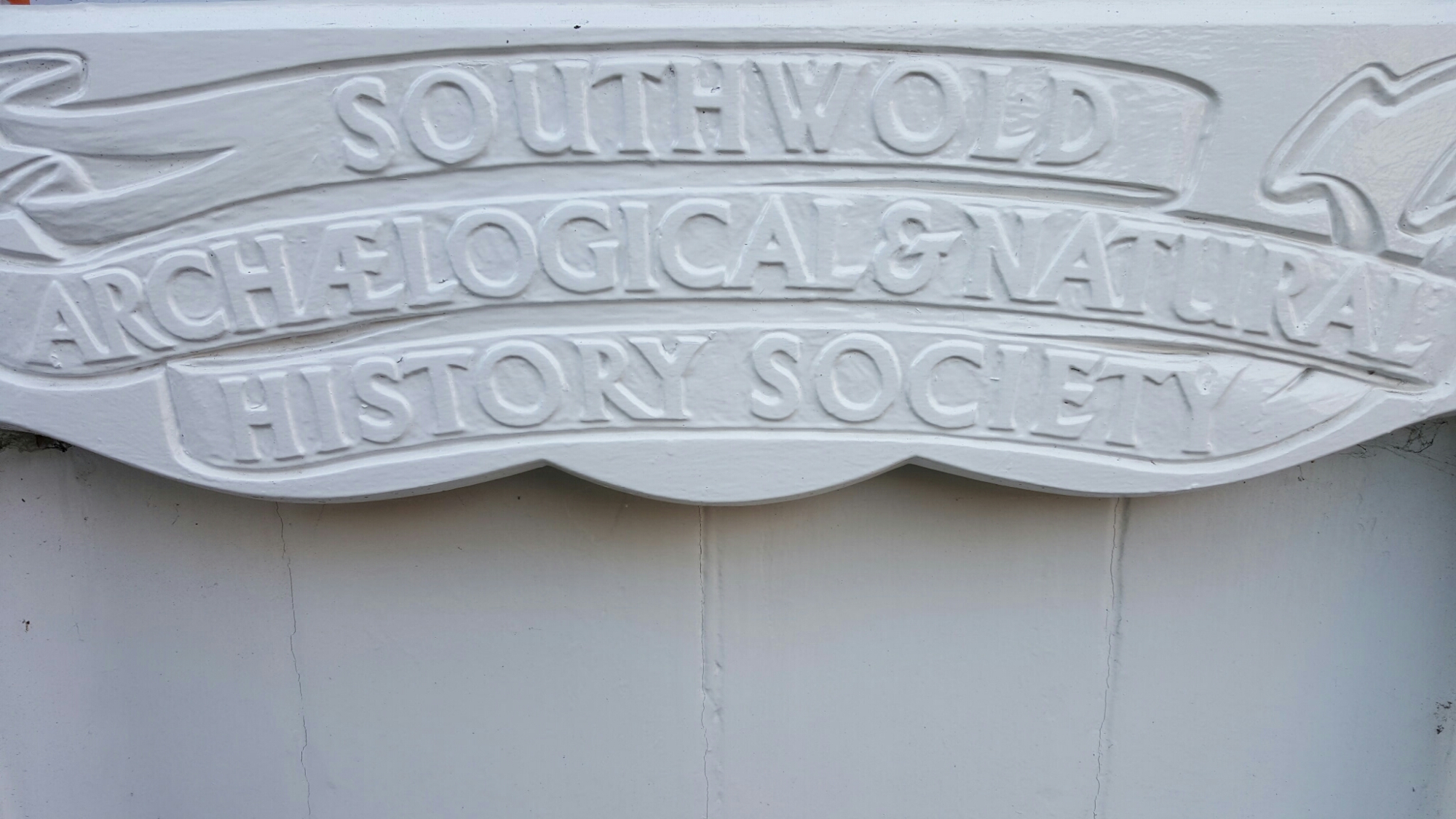
We went off to see the Southwold Museum, opposite the parish church, which holds a wealth of stuffed birds, information about local history, two Viking rudders, a fifteenth-century carved angel, fossils, pots, a Victorian doll’s house and garments from the dress collection: a classic small town museum, displayed with love, knowledge and antiquarian flair:-
I have been catching up on the discussion surrounding the decision to axe A level art history from 2018. I am a product of A level art history and really appreciated the opportunity to learn in depth the canon of quattrocento art and sculpture, which made a deep impression on me at the time (it was very well taught) and led me to study the subject at university. People were sniffy about it as a subject even then, part of the British belief that people could perfectly well know about the subject without having to study it. But this wasn’t true. Most people didn’t know much about art and didn’t have the language, critical apparatus or familiarity to be able to study it effectively. So, it has been a huge public benefit that there has been a much wider knowledge and appreciation, particularly of contemporary art, of which A level art history is certainly not the sole cause, but a symptom of a more widely diffused understanding of, and interest in, the study of visual histories.
We went to Melvyn Tan’s 60th. birthday concert at the Wigmore Hall in which he played Beethoven, Czerny and Liszt’s Piano Sonata in B minor, all examples of what the programme described as pianism (ie requiring playing of great technical virtuosity). He performed with appropriate and sometimes theatrical vim, enjoying his birthday with style.
I was asked to a memorial event at the Courtauld Institute to commemorate Anita Brookner. It may have been assumed that I knew her, but I didn’t, although I read her art historical books as a student, including her study of Greuze: the rise and fall of an 18th. century phenomenon, which had been the subject of her PhD. published in 1972. Her grandfather was a Pole who established a cigarette factory which supplied cigarettes to Edward VII. She studied at the Ecole du Louvre, at the Courtauld under Blunt, who she admired for his integrity, and where she lived on marmite, cigarettes and slimming biscuits. Her life fell so clearly into two parts: the first half as an art historian, teaching at the Courtauld, writing reviews for Benedict Nicolson at the Burlington, the first female Slade Professor at Cambridge, an inspiring, if psychologically reserved teacher; then the moment when she wrote her first novel over the summer holidays and created an alternative, and fictional, identity.
I’ve just been to the launch of a volume of essays called London’s global neighbourhood – the future of the west end by the Centre for London. The key issue discussed was how to retain the character and prosperity of the West End. As I walked back down Newburgh Street, Broadwick Street and across Golden Square, I thought that the answers are fairly obvious: pay close attention to the character of the original eighteenth-century streetscape and the fact that the majority of houses in Soho and offices are still small scale; encourage an environment in which small and independent shops continue to flourish (ie don’t just wack up the rates); acknowledge the generally benign effect of the big estates like Grosvenor, Pollen and Howard de Walden; reduce the traffic flow; prevent homogenisation. This may seem obvious, but it is exactly the opposite to what has happened in the City where ever bigger corporate blocks have killed off the character of a localised environment, except in Faringdon:-
St. Paul’s Cathedral was packed for the Memorial Service for Zaha Hadid, an impressively international occasion, with a reading in Arabic, a Gospel Choir and a particularly memorable address by Peter Palumbo, remembering her upbringing in the shifting sands of the Iraqi desert, her time as an undergraduate reading maths at the American University of Beirut and at the AA under Alvin Boyarsky, where she was influenced not just by Malevich, but by Arp and Lino Bo Bardi. Odd to think that under current plans someone like her might not be given a visa to study in London, let alone stay here to work.
It’s rare for me to be anywhere near the City at the weekend, but, since I was, I thought I would explore its northern section round Guildhall, which is much less familiar to me.
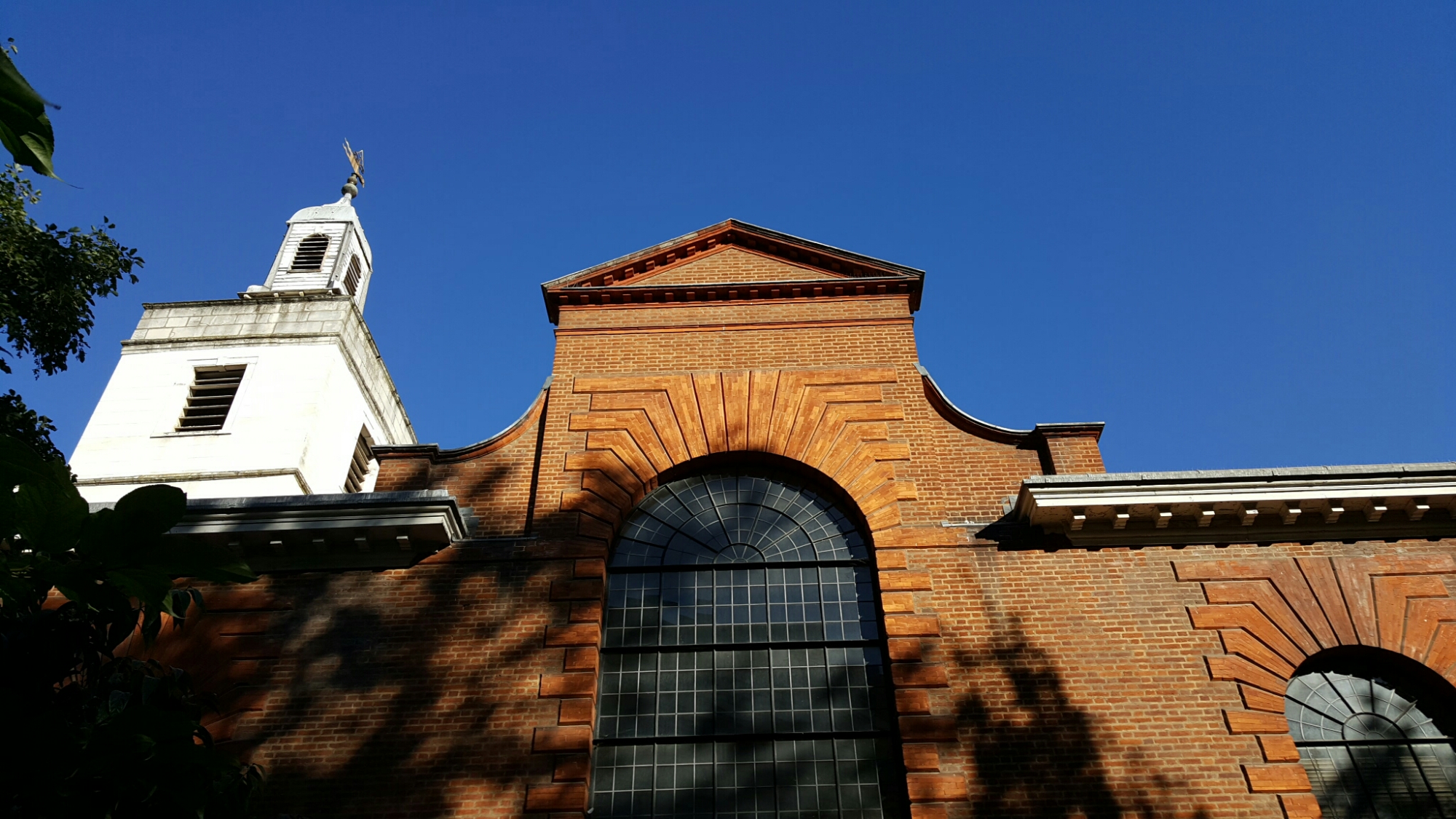
I started with St. Anne and St. Agnes, what’s left of a small Wren church designed in 1680, maybe with help from Robert Hooke, designed on the model of Greek Cross and damaged by bombing in December 1940:-
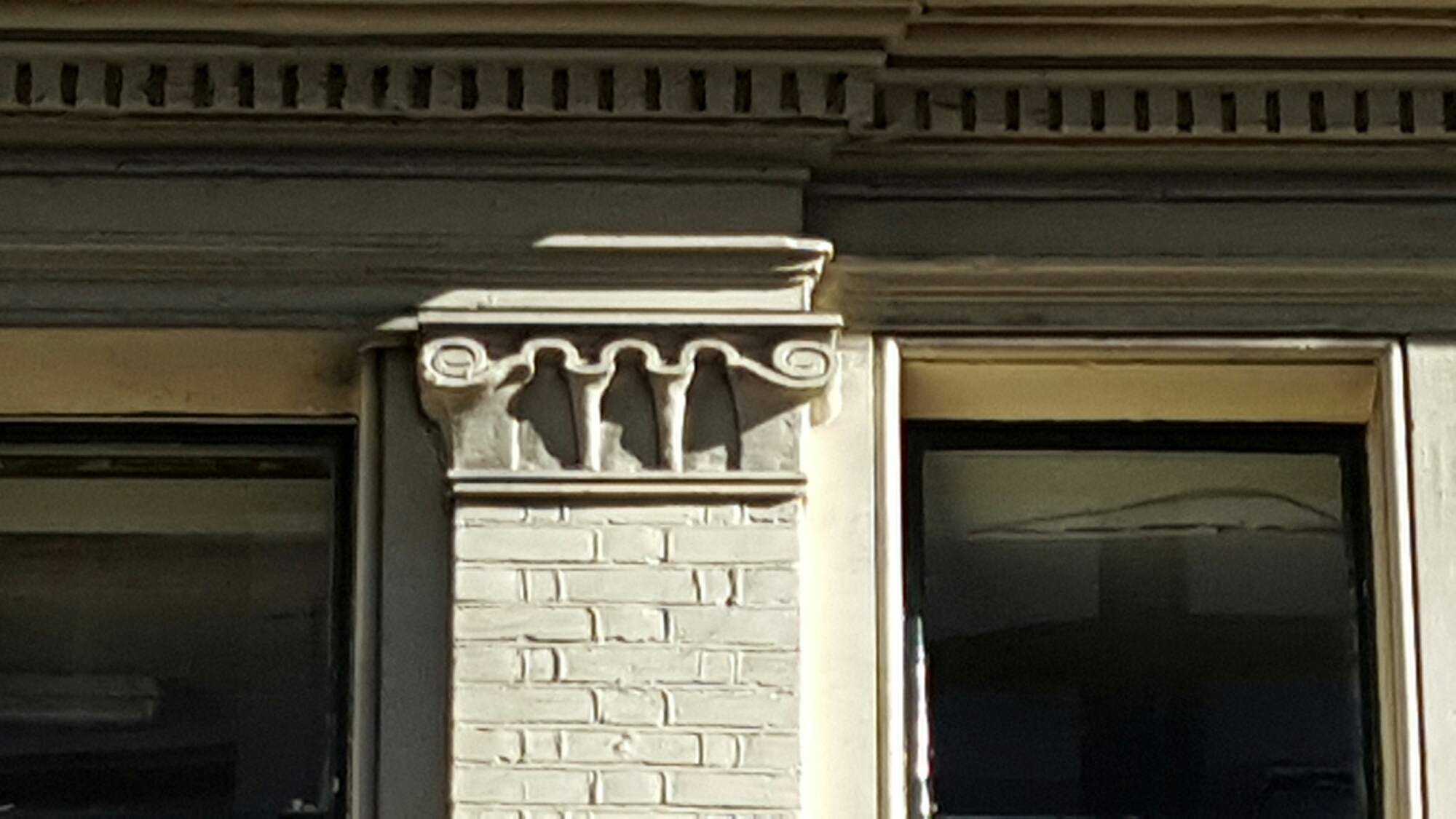
An odd capital on a café next door:-
 | Charles | Saumarez | Smith |
You must be logged in to post a comment.