Limehouse Town Hall

I often pass Limehouse Town Hall, a slightly sorry remnant of nineteenth-century civic pomp, backing onto the churchyard of St. Anne’s.   Built in 1879 to ‘do honour to the parish of Limehouse’, it was lavishly equipped and licenced for dancing.   The site of a major speech by Lloyd George in defence of his 1909 ‘People’s Budget’ and of Attlee’s election victories, it was occupied by the National Museum of Labour History in the 1980s before it decamped to Manchester.   It’s now used for bicycle maintenance and is on the Buildings at Risk register:-

image

image

Standard

31 Fournier Street

I arranged last weekend to visit 31 Fournier Street as I was tipped off that it had a wonderful exhibition of textile designs.   What I wasn’t told is that the house itself is an amazing survival of old Spitalfields with original panelling throughout discovered under old plasterboard by Rodney Archer when he bought the house in 1980 off an Indian taxi firm.

This is the overdoor and window surround on the street:-

image

image Continue reading

Standard

Madama Butterfly

We went to the first night of Madama Butterfly at Covent Garden last night.   I had forgotten that it is the purest tear jerker from beginning to end, one long lament for the rottenness and treachery of men, particularly an American lieutenant, and the passionate fidelity of a woman, pre feminist of course, but still one gets the message in aria after aria of tragic magnificence, helped at the end by the appearance of their son.   A wonderful untricksy production.

Standard

Caroline Lucas MP

We went this evening to the launch of Caroline Lucas’s new book about the need to reform the way that parliament works, Honourable Friends ?  Parliament and the Fight for Change.   She spoke with force and conviction about how she has found the House of Commons impossibly dysfunctional owing to the arcane system whereby MPs are whipped through voting without knowing what they are voting about (she may be too polite to describe it thus in the book).   Lots of Greens were there.   I’m looking forward to reading her recommendations as to how it all might be reformed.

Standard

Western Morning News

Two people have talked to me in the last week about the plan by the Daily Mail Trust to tear down Nick Grimshaw’s beautiful, spiky, nautical building which he designed for the Western Morning News in Plymouth in 1994.   It obviously has problems in terms of current planning policy because the Lloyds Building in the City is the only recent building to have been Grade 1 listed.   But it seems a pity if a building of such obvious quality should be demolished.   Perhaps the Sunday Mail could launch a campaign to persuade Ed Vaizey to list it.

Standard

Ruskin’s Daguerrotypes

Some time ago, I spent a memorable day in deepest rural Essex out beyond Great Bardfield viewing a collection of daguerrotypes which had been taken by Ruskin, or, more likely, his butler, whilst walking round Venice.   They were discovered packed carefully away in an old mahogany box at a country auction, having probably been sold from Brantwood in the 1930s.   I remember peering at Venice as if through an eyeglass by Ruskin himself:  old, dilapidated, unrestored, but full of picturesque incident which led to his drawings and the writing of The Stones of Venice.   The daguerrotypes have now been comprehensively researched and published by Ken and Jenny Jacobson who made the discovery.

Standard

Ministry of Justice

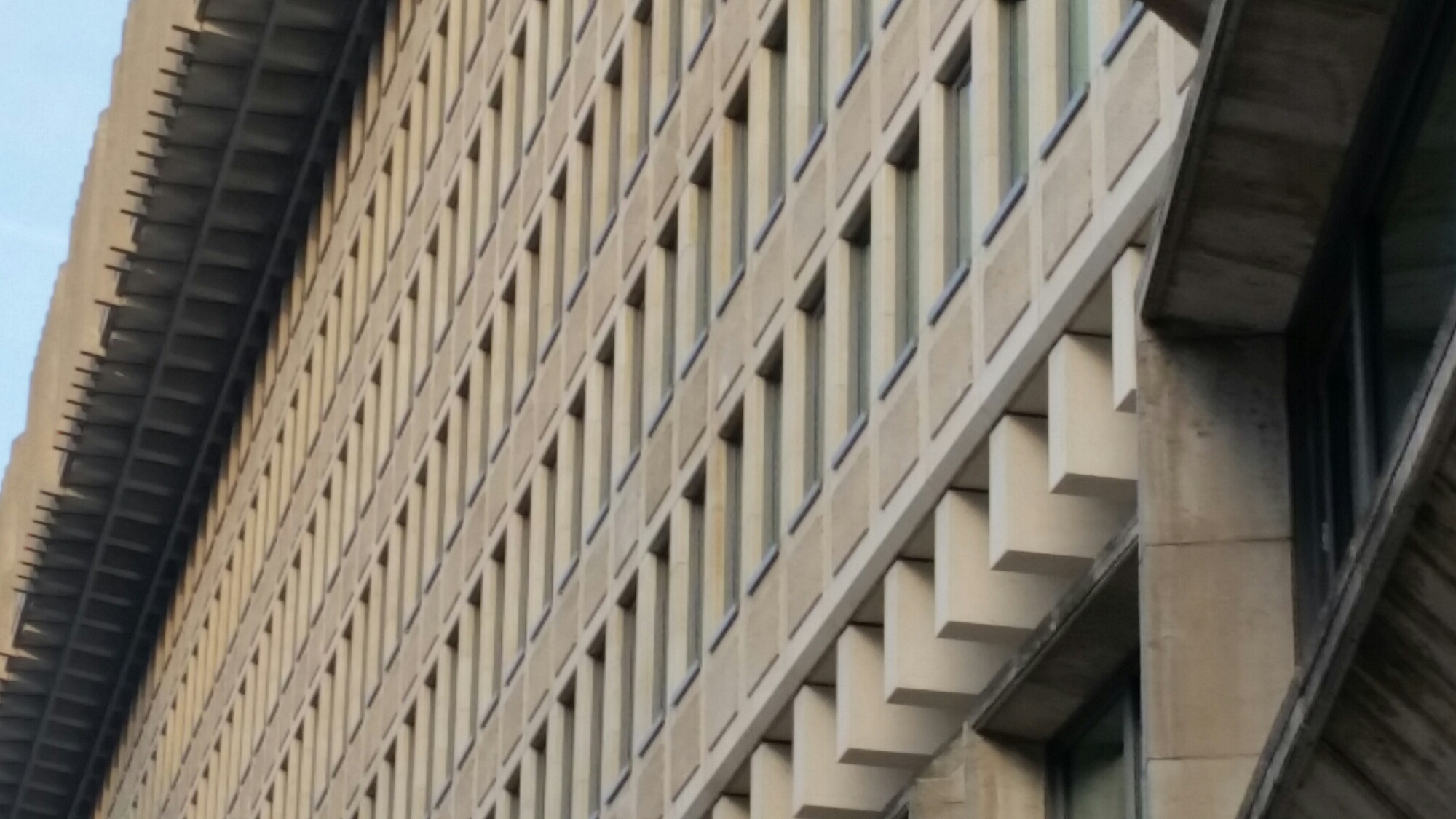
The early morning sun made me pause to examine and possibly admire the great hulk of Basil Spence’s Ministry of Justice building which greets me every morning opposite St. James’s Park tube.   It is not exactly beautiful, but does have a certain Thunderbirds magnificence.   It was opened in 1978 as the Home Office and is known by its occupants, not inappropriately, as ‘the Lubyanka’.   I quite like the protruding windows with their fins:-

image

image Continue reading

Standard

Adrien Gardère

© David Chipperfield Architects

© David Chipperfield Architects

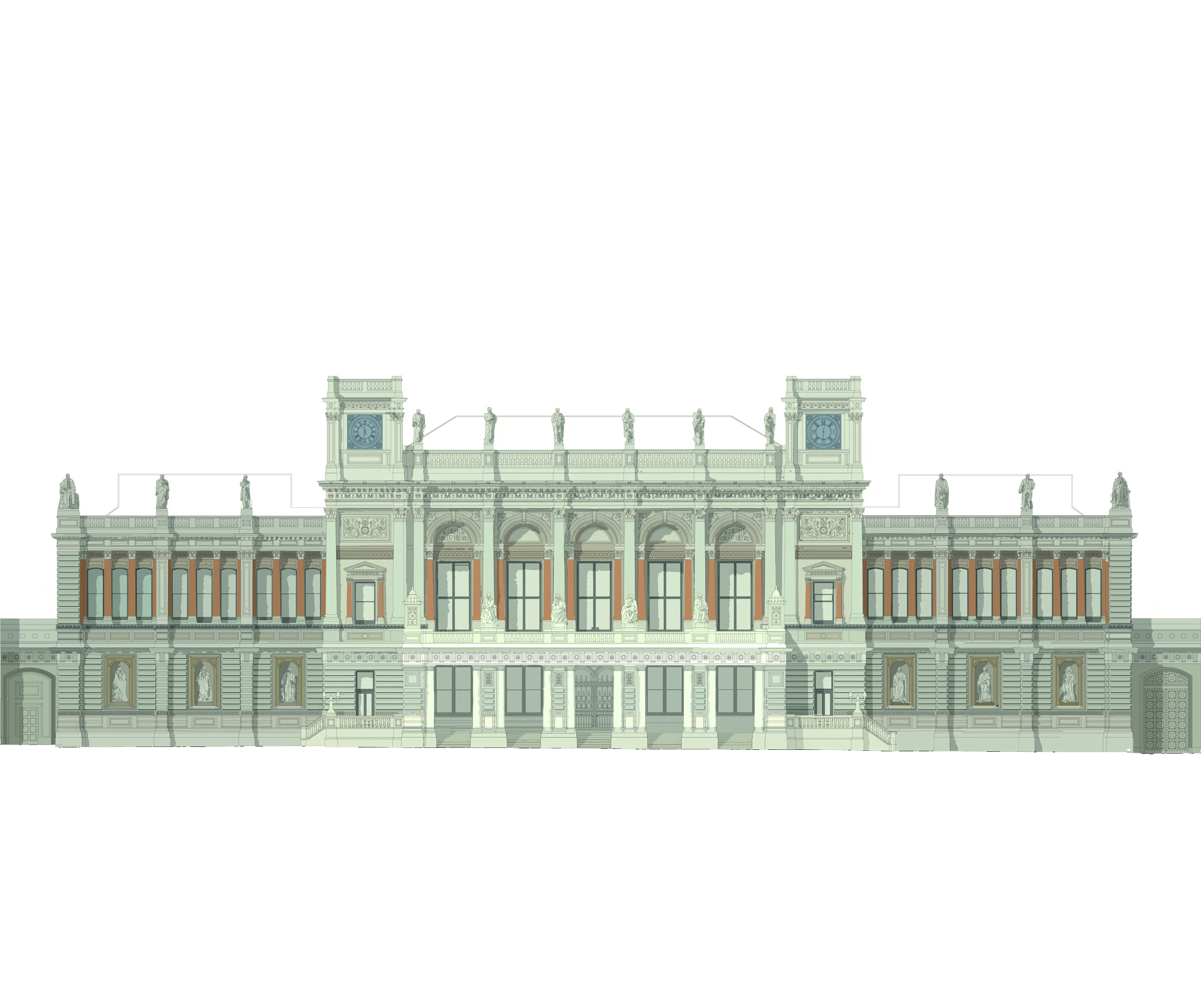
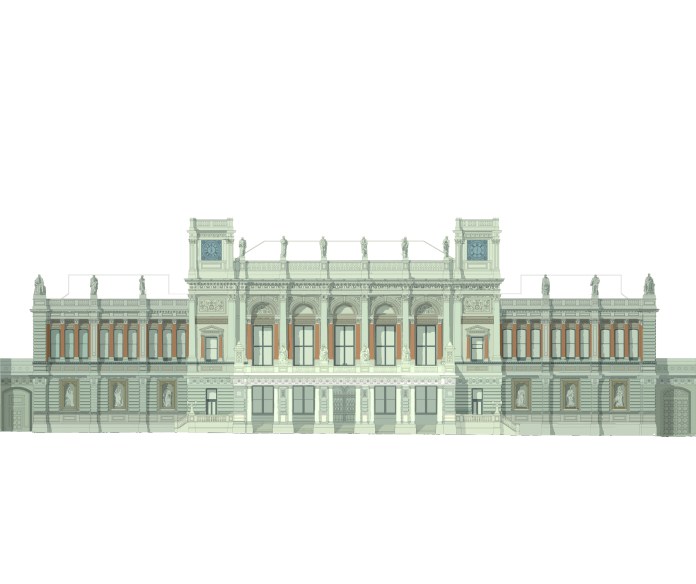
I have just been to a lecture in the Kenneth Clark Lecture Theatre at the Courtauld Institute in which Adrien Gardère, the French museum designer (or museographer) explained his approach to display.   Trained as a product designer, he started off designing lamps for Artemide.   He then somehow won the contract to redisplay the whole of the great Museum of Islamic Art in Cairo, a project which was completed just before the revolution, with grey paint specified by the Minister of Culture, and was recently catastrophically blown up by a car bomb outside.   He did the displays for the new Louvre in Lens, a cool, cerebral project by SANAA with aluminium walls in which the antiquities, objects and works of art are placed on a conceptual time line.   He entered the competition for the Museum of Roman Antiquities in Narbonne jointly with Norman Foster, where together they are creating a display in which objects remain movable by a fork lift truck.   Most recently, he has worked on the design of the Aga Khan Museum in Toronto.   He did not mention that he has been working on a radical redisplay of the collection across the site at the RA. In all his projects, his approach drives at intellectual and visual lucidity with a minimum of superfluous interpretation.

Standard

HLF

I went this morning to an event held in the Senate Room in Burlington Gardens to launch the findings of a research project ’20 Years in 20 Places’.   The idea of the project was to discover through interviews and questionnares people’s attitude towards their local heritage.   Interestingly, and surprisingly, people are more engaged with the heritage and better pleased with money being spent on it, if they buy lottery tickets than if they don’t.   Not surprisingly, the research also discovered that younger people, BAMEs and DEs are less involved, but are interested in investment in parks, libraries and archives (i.e local community heritage).   Much of the discussion was whether the appeal of heritage is emotional or transactional, beauty or use.   To what extent is it, as Richard Layard asked, a contribution not to wealth, but to the pleasures of subjective well-being ?

Standard

The Flat White Economy

On Friday afternoon I was walking with Adam Dant up Holywell Row, a fairly nondescript diagonal street just south of Great Eastern Street on the northern fringes of the city.   He casually observed that we were walking through the heartland of the new digital economy, which is based classically round the so-called Silicon Roundabout at the junction to City Road.   I ordered the new book by Douglas McWilliams to learn more about this phenomenon.   Nearly 25% of all UK sales are now online.   32,000 new businesses were registered in EC1V between March 2012 and March 2014.   3.2 million cups of coffee are sold in London every day.   It is worth registering that the growth in the digital economy is driven by young, highly educated, migrant, bicycling Europeans, many of whom live in Haringey.

Standard