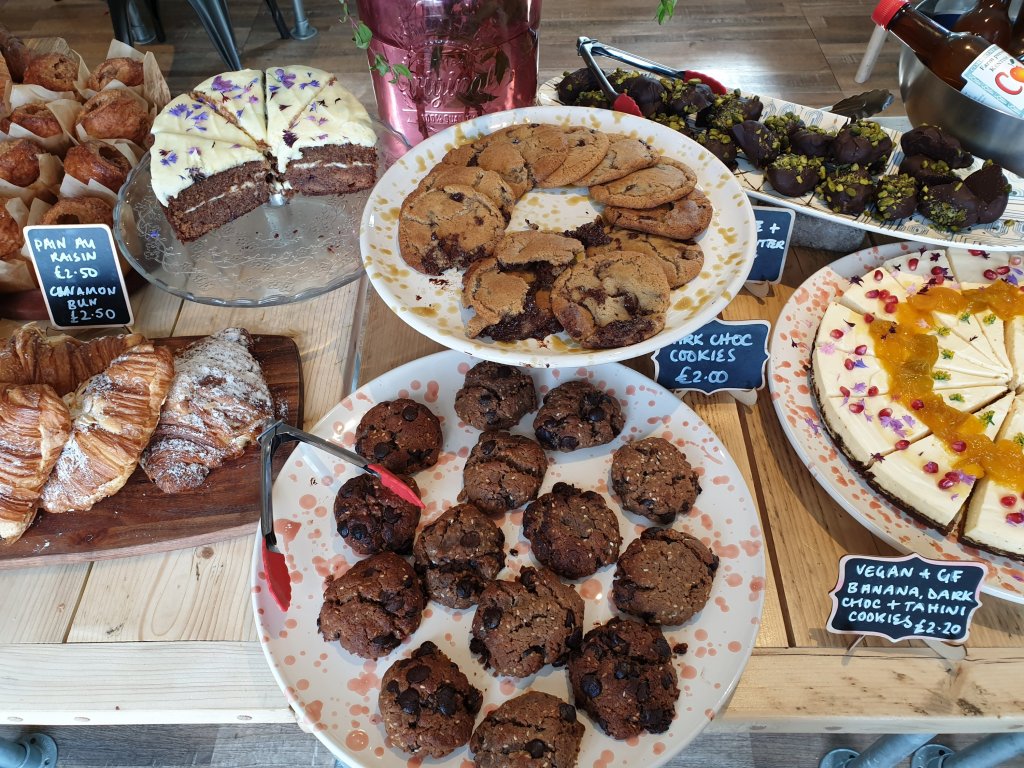
I am hesitant about recommending The Allotment Kitchen, the new café at Stepney Farm, only because it is already so busy on Saturday mornings that it is hard to join the queue for their biscuits, cakes and buns. But having spent an infinitely leisurely hour eating breakfast out of a cardboard box, I cannot think of anywhere nicer:-
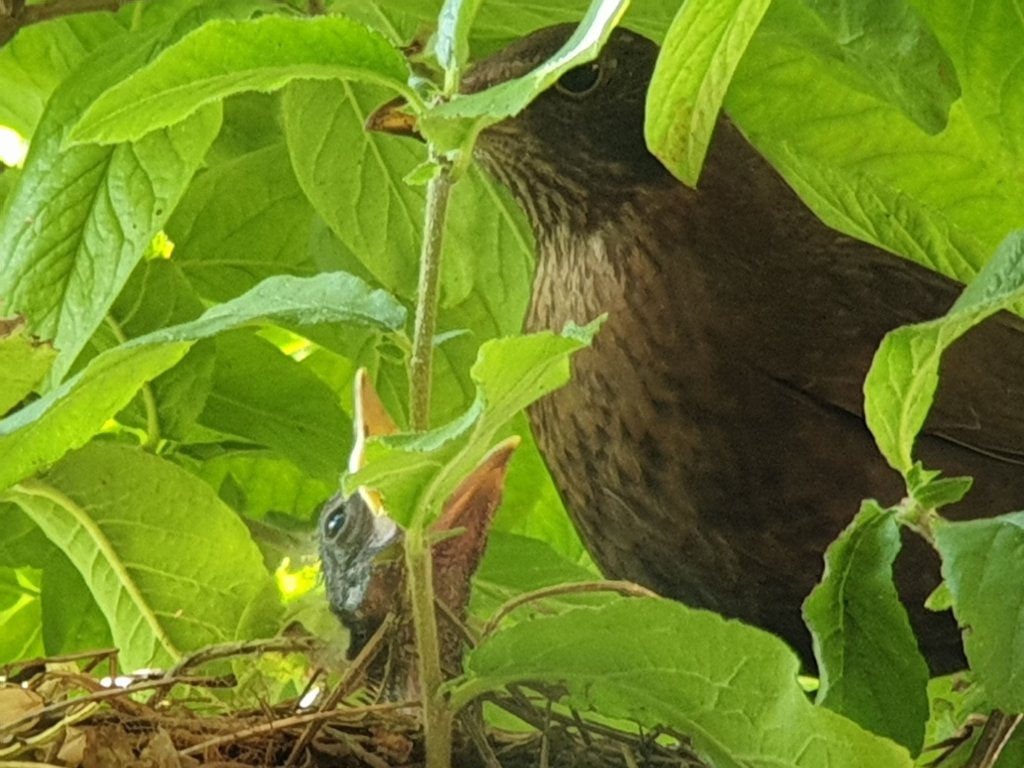
We have been following the progress of the blackbird who has built her nest in the medlar tree right outside our dining room window. The night before last, her babies had been born and she was plumping herself up to protect them:-
This morning, there was one of the baby blackbirds waiting to be fed:-
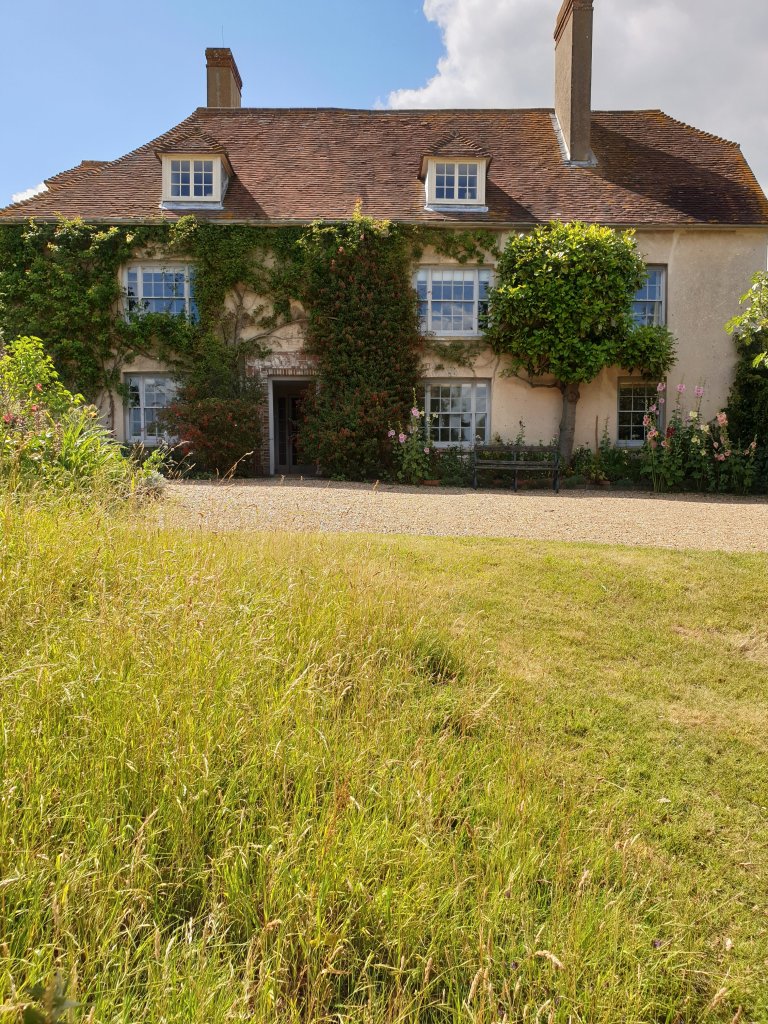
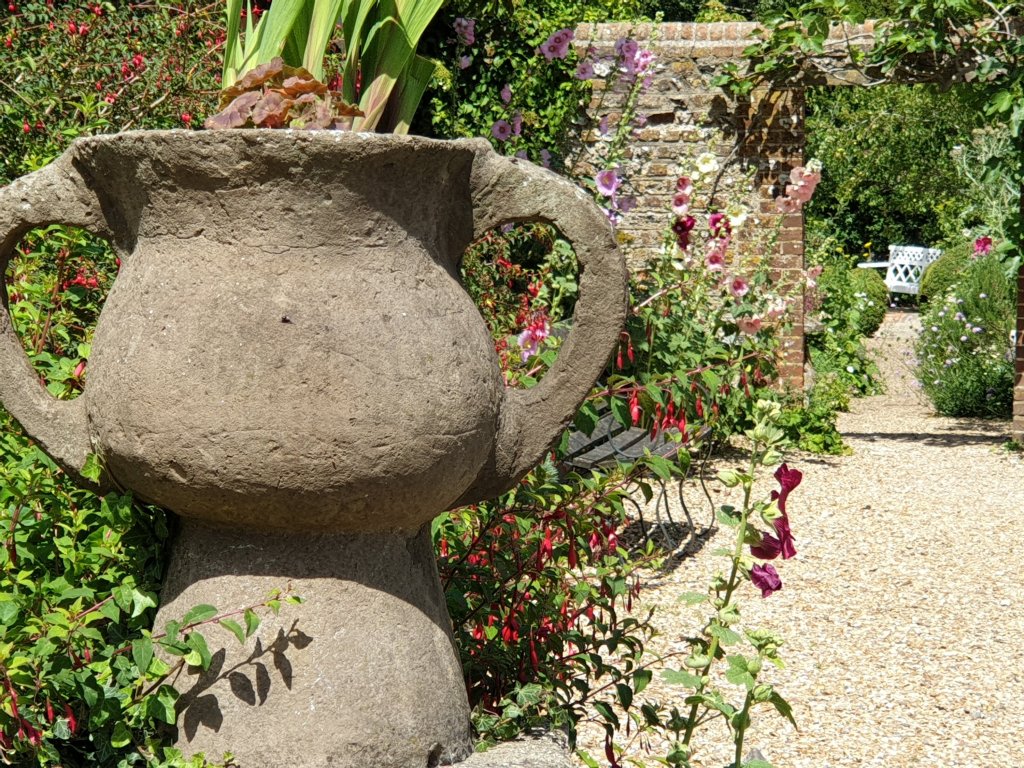
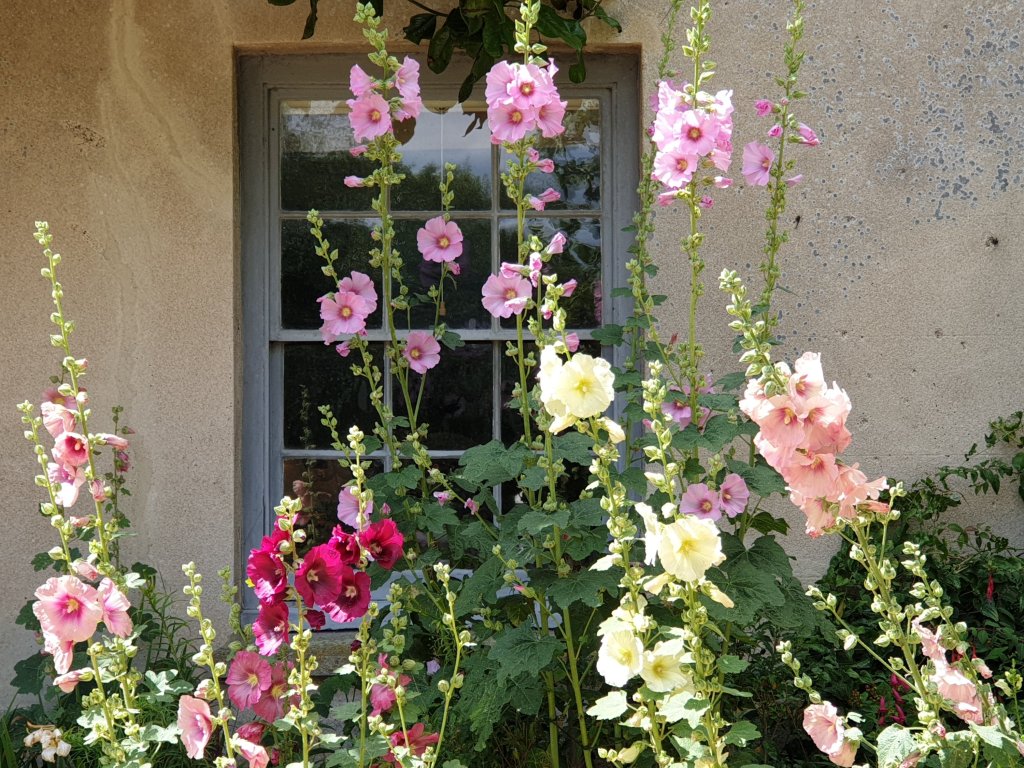
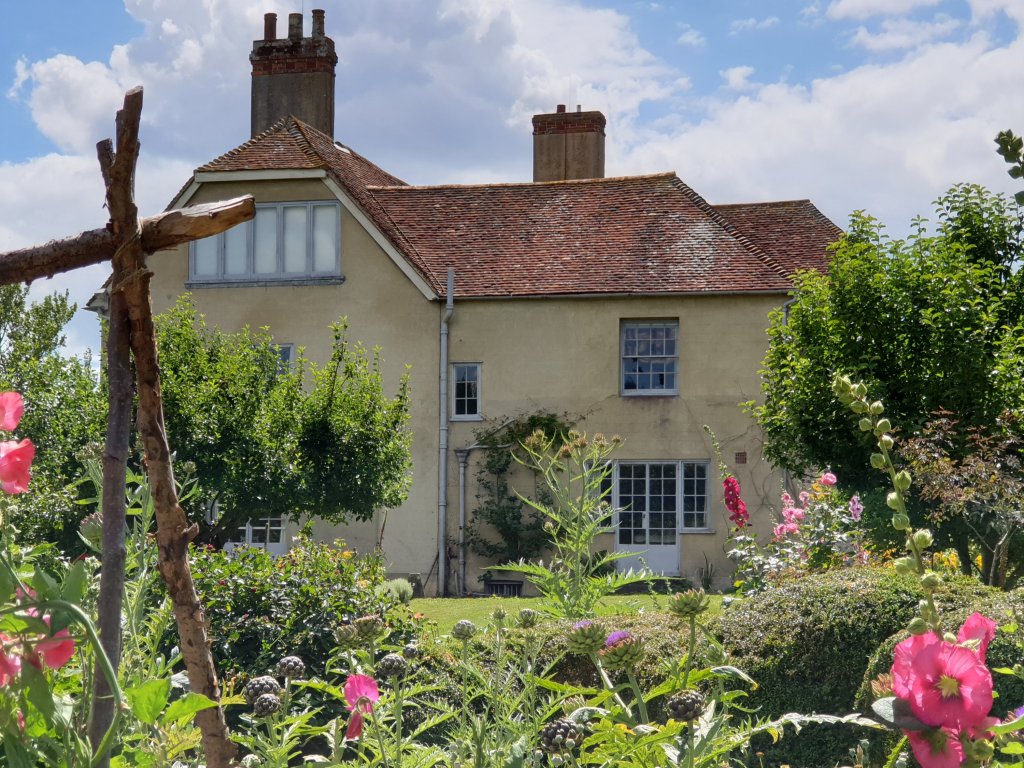
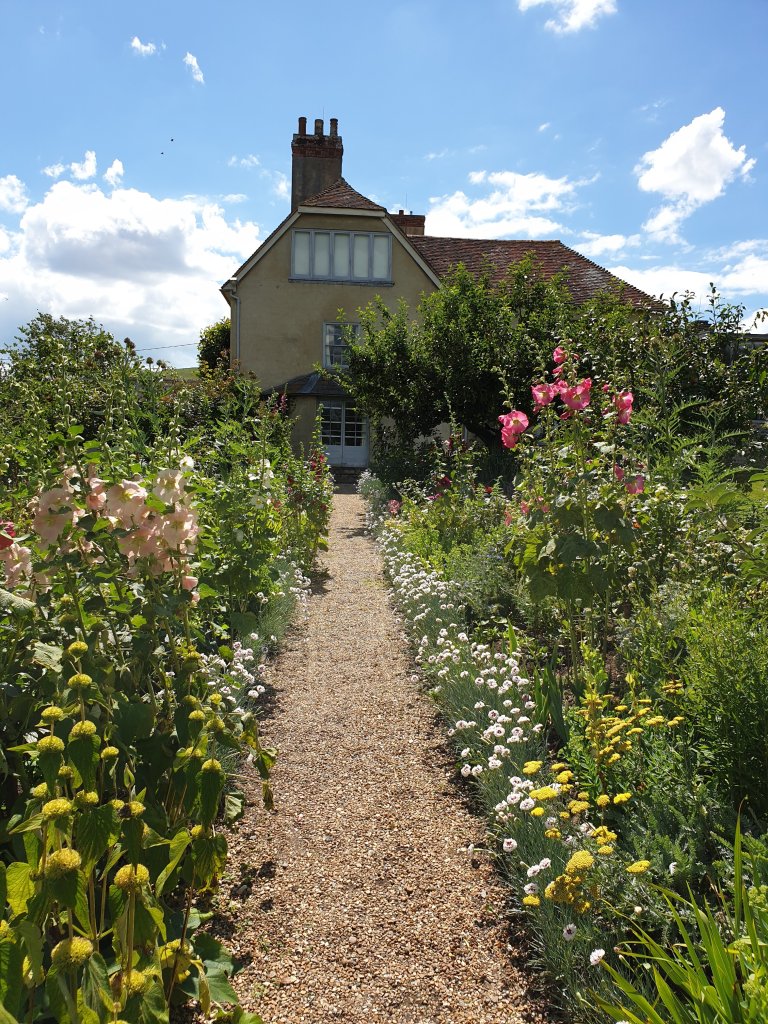
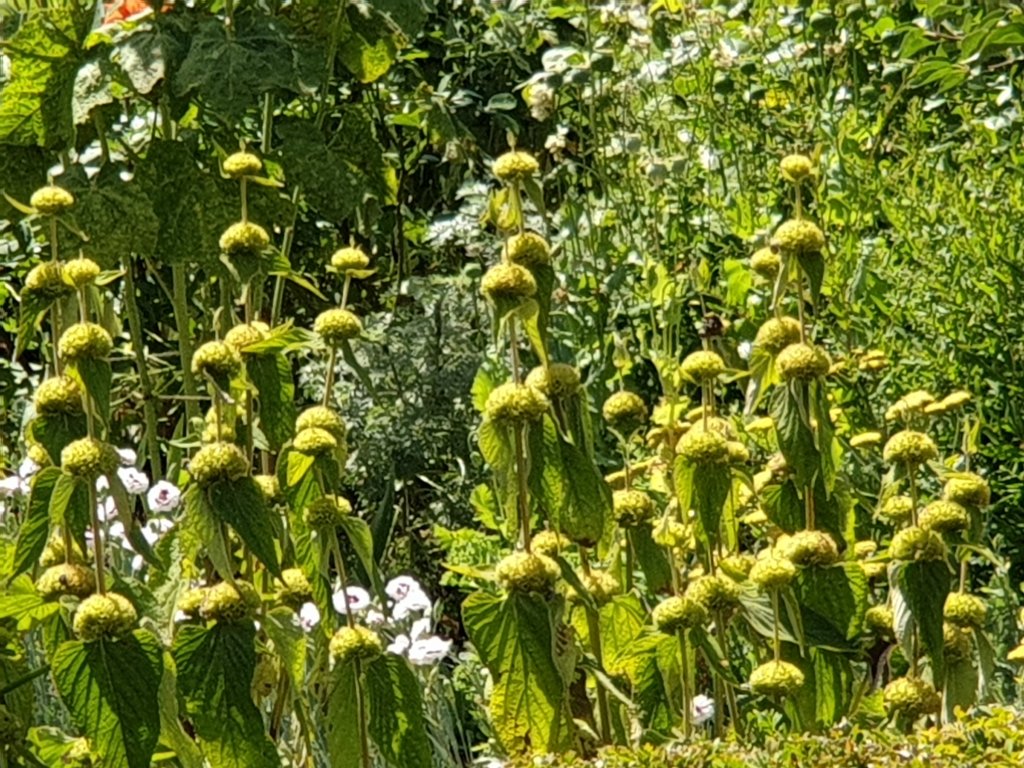
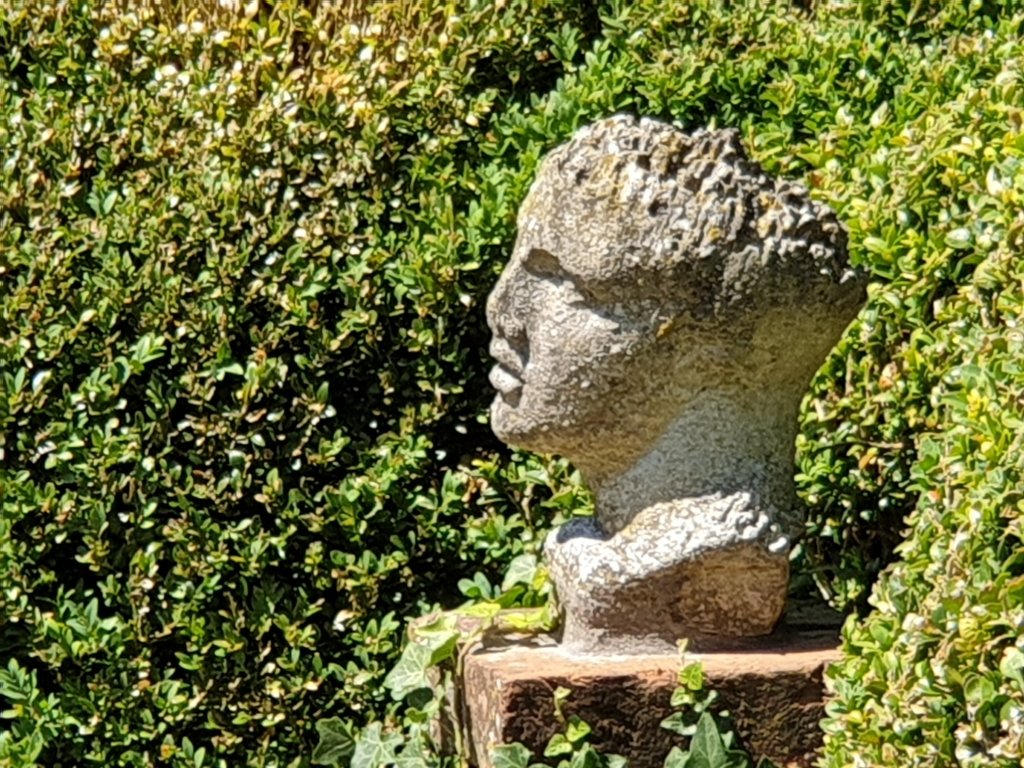
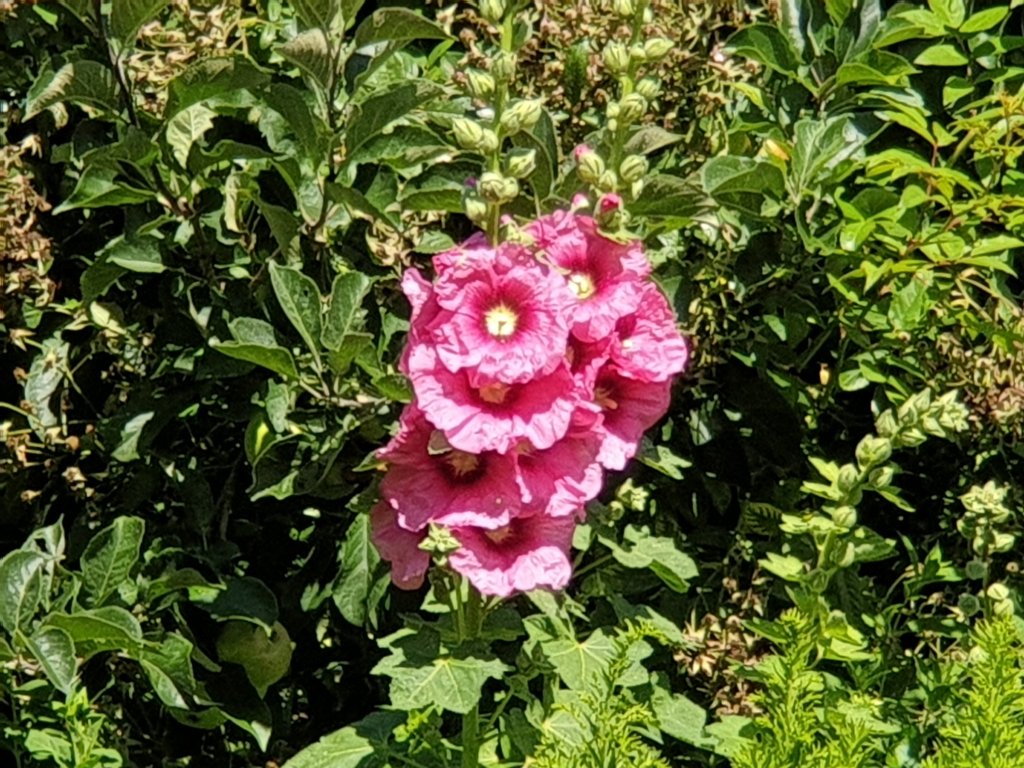
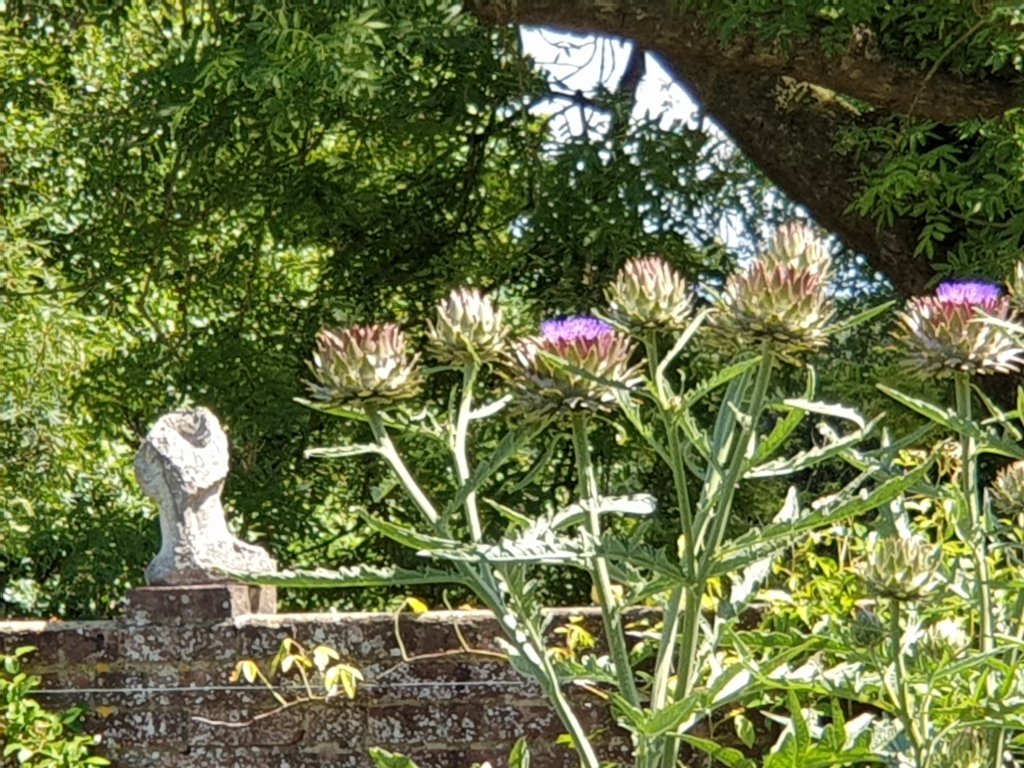
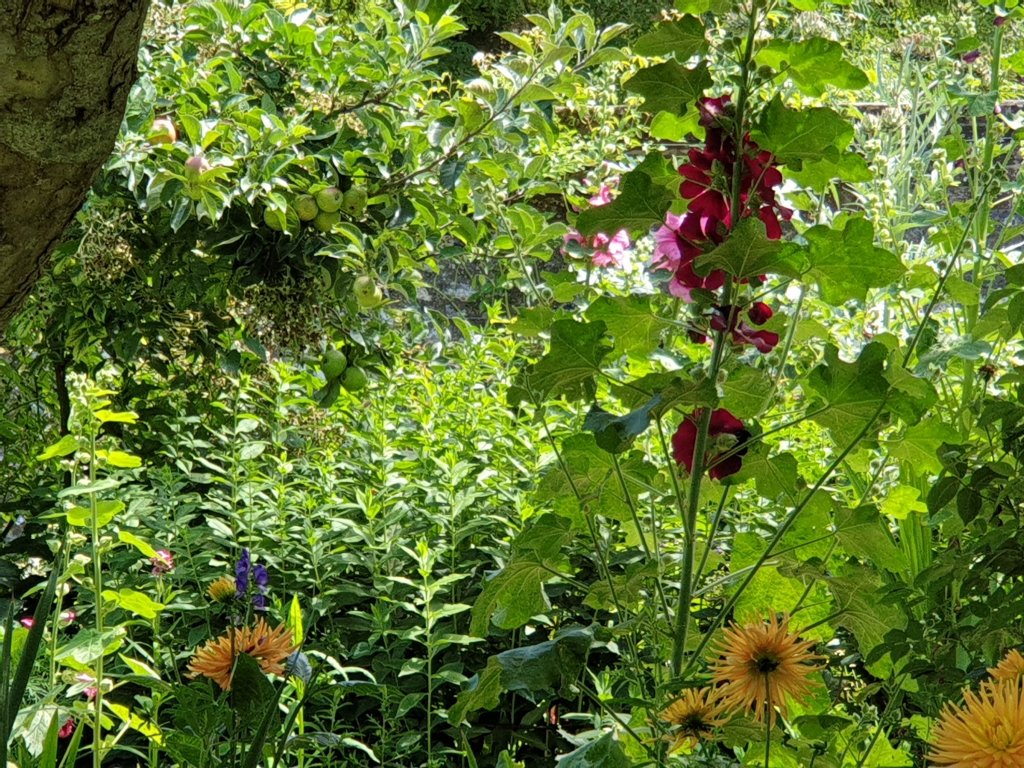
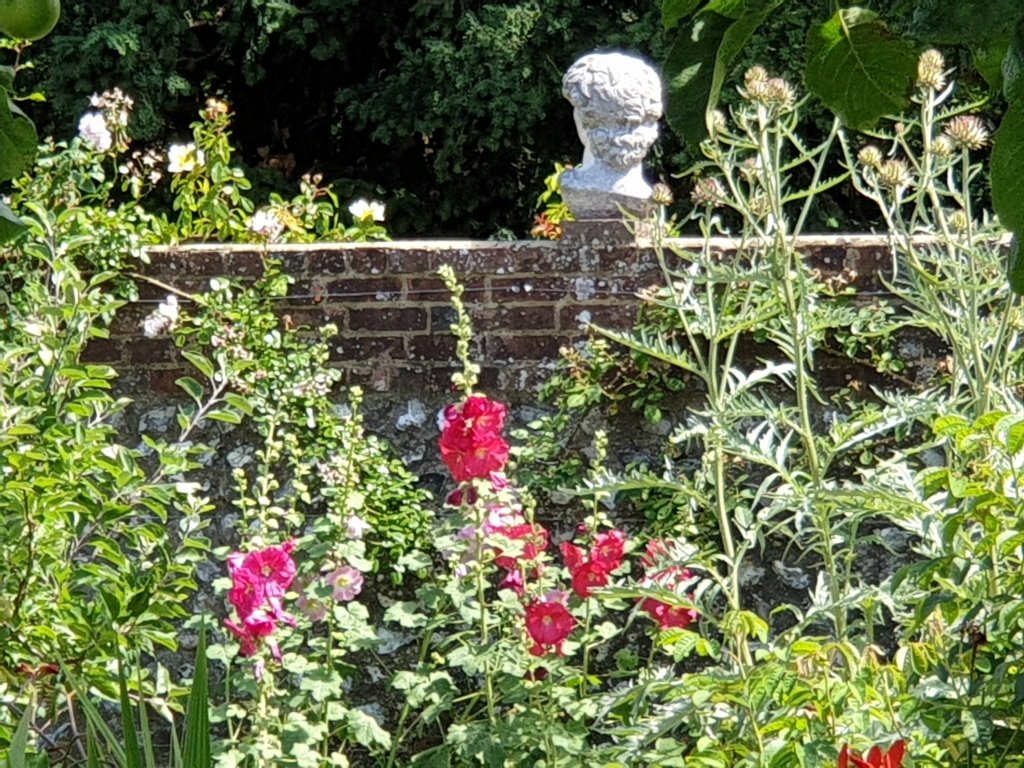
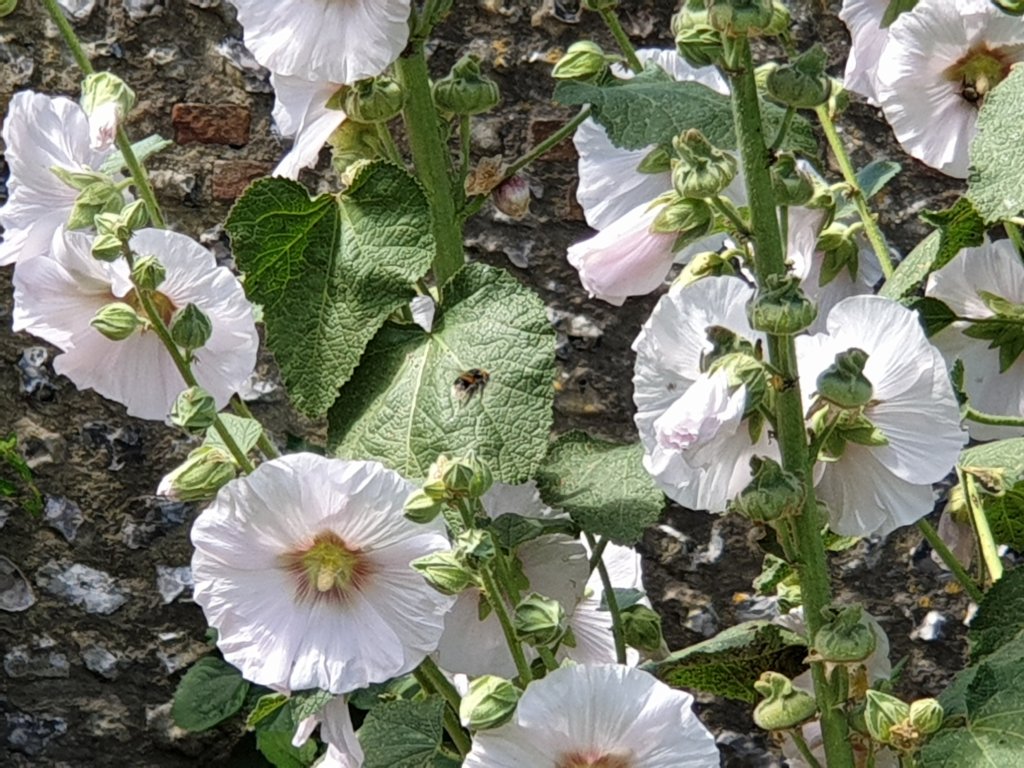
We had a picnic lunch at Charleston. It’s not open and will not be for the rest of the year owing to the very small number of visitors who would be able to go round the house according to the rules of social distancing. So it is all shut, reverting to the status of a nearly private house. We were able to see the garden which was more lush than I have ever seen it, much more colourful than it is in mid-May when the Festival is normally, and no-one about, only the memory of those photographs of members of the Bloomsbury group lined up – Keynes in the intervals of writing The Economic Consequences of Peace, Roger Fry who apparently designed the garden, and Vanessa Bell who wrote of painting ‘apples, hollyhocks, plums, zinnias, dahlias’. There are still the lushest hollyhocks:-
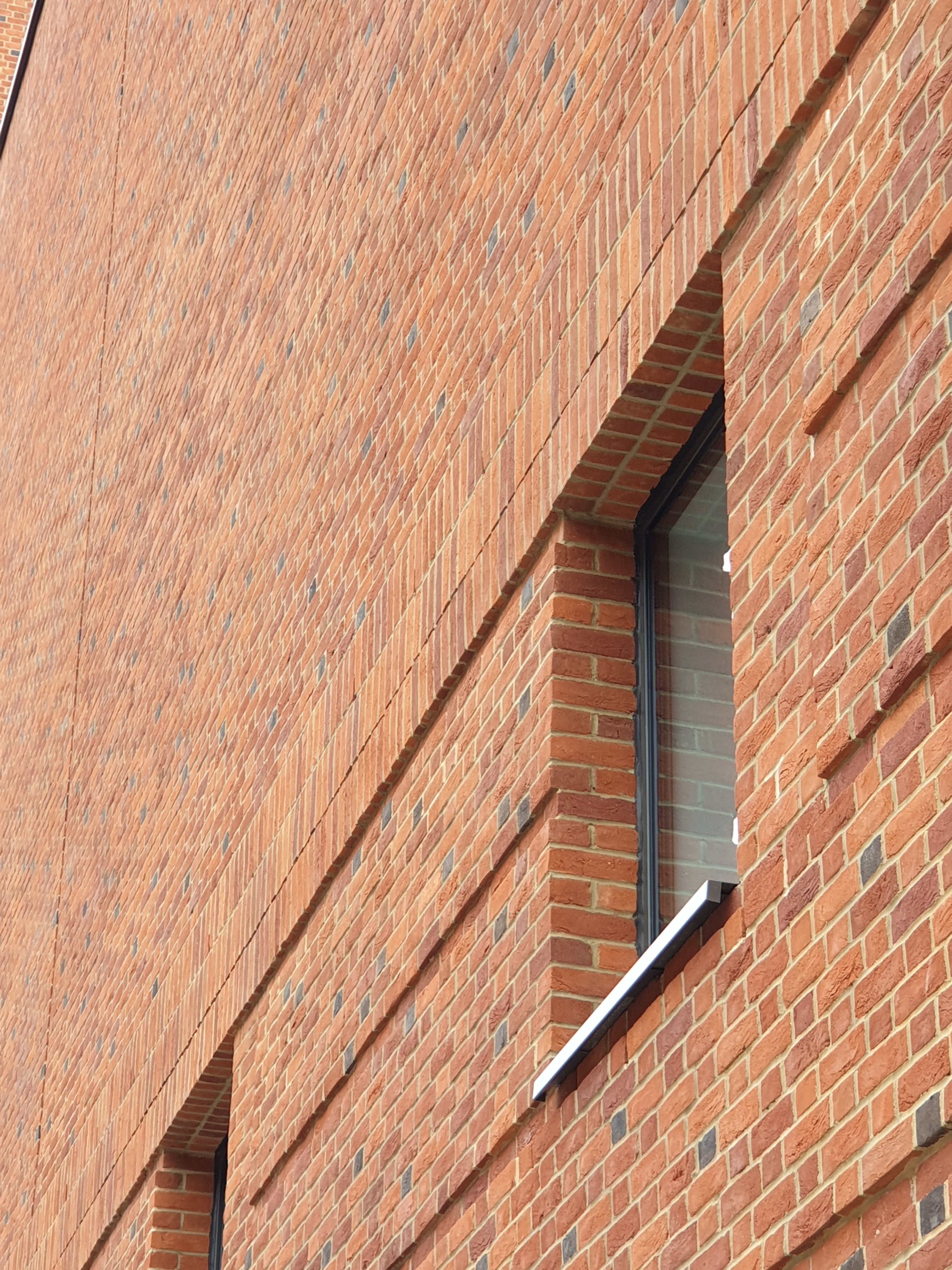
The third item on the agenda today was a trip to see the new Lambeth Palace Library which won’t actually open till sometime next year, but is already impressively nearly finished – such a good idea to allow plenty of time for fitting out and not have to rush the finishing. I had heard Clare Wright of Wright & Wright talk about the project as part of the London Festival of Architecture. Everything about it is carefully considered, although it is hard to assess now from the street, because so much of its character and quality is the way it engages with the Lambeth Palace Garden, again with planting by Dan Pearson. I am not to post any photographs, but hope that I can of the magnificent exterior brickwork, which is already in the public domain:-
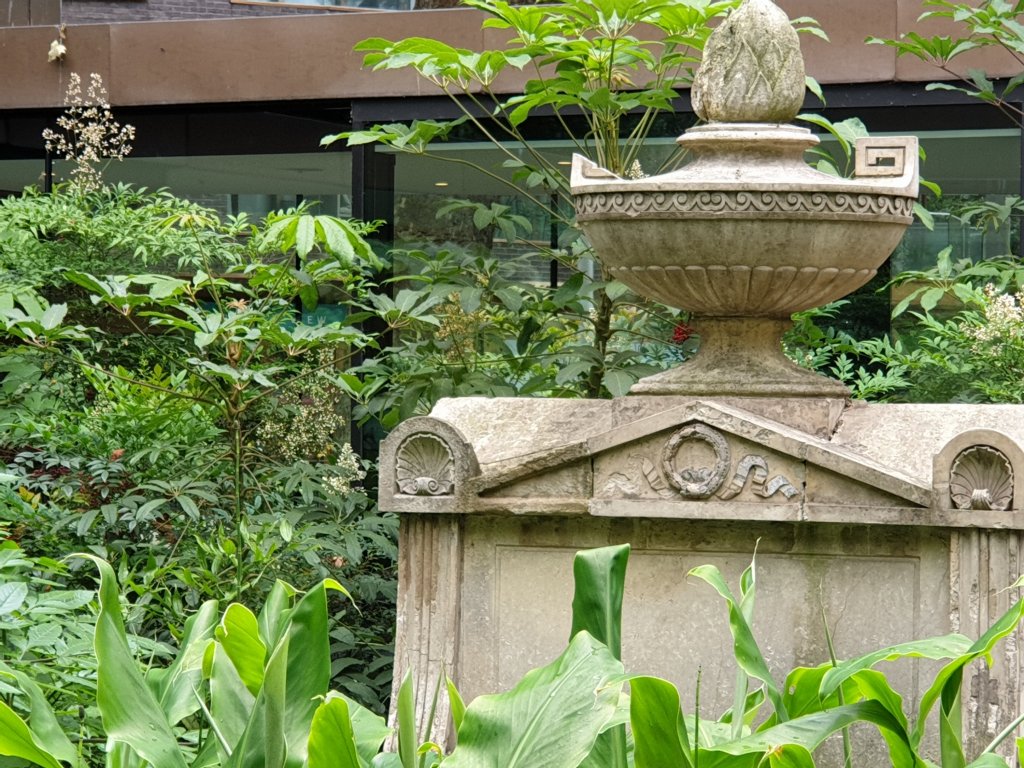
You can have a picnic lunch at the Garden Museum, sandwiches made up by the café and consumed either outside or in the courtyard with its garden designed by Dan Pearson. What could be more therapeutic ?
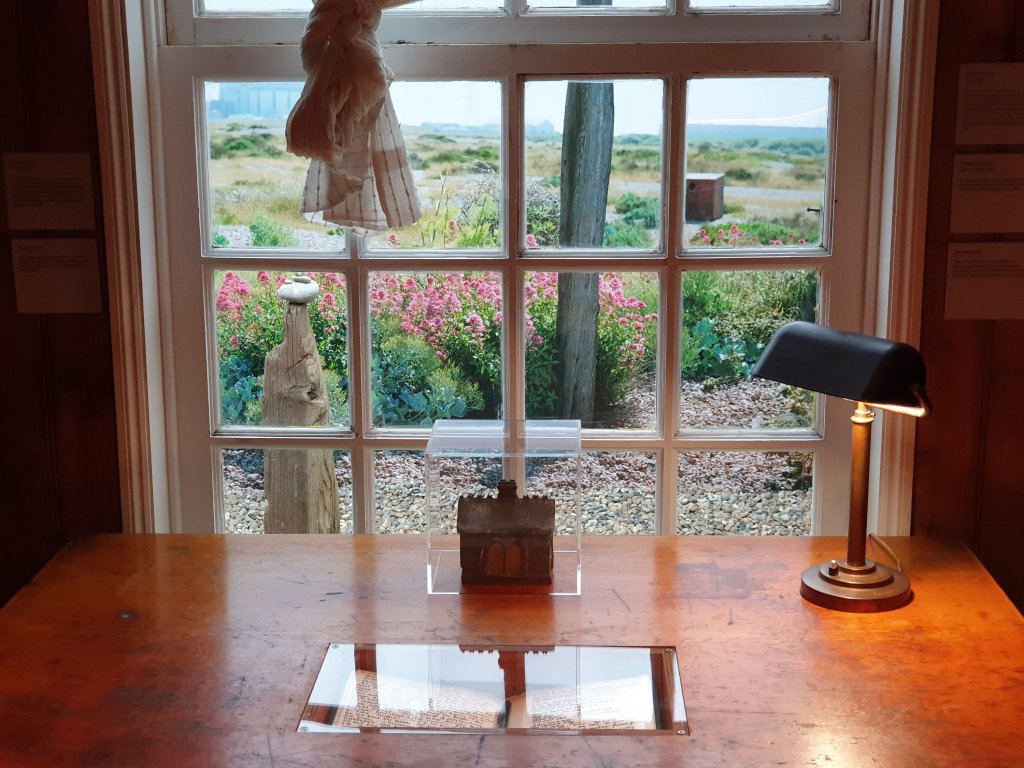
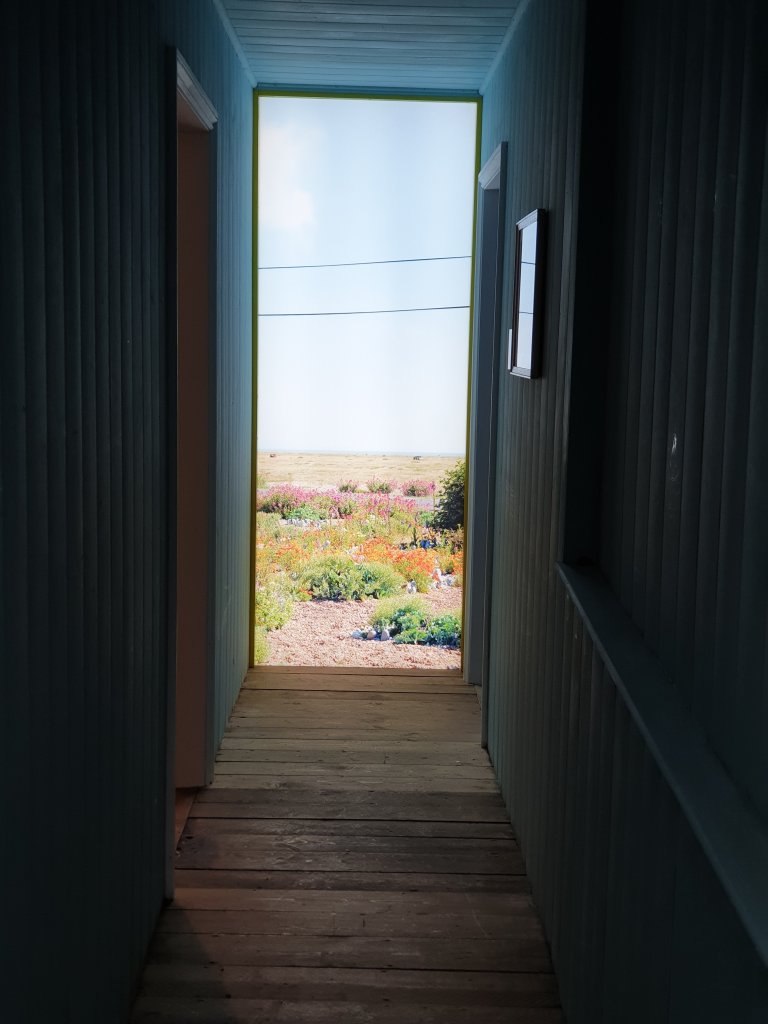
We went to see the Derek Jarman exhibition today, which has been open since Saturday. It’s an amazing achievement to have got it designed and built during lockdown, open on the first day it could, and slightly spooky to be able to walk across the shingle into a replica of Prospect Cottage. It’s been designed by Jeremy Herbert – beautifully:-
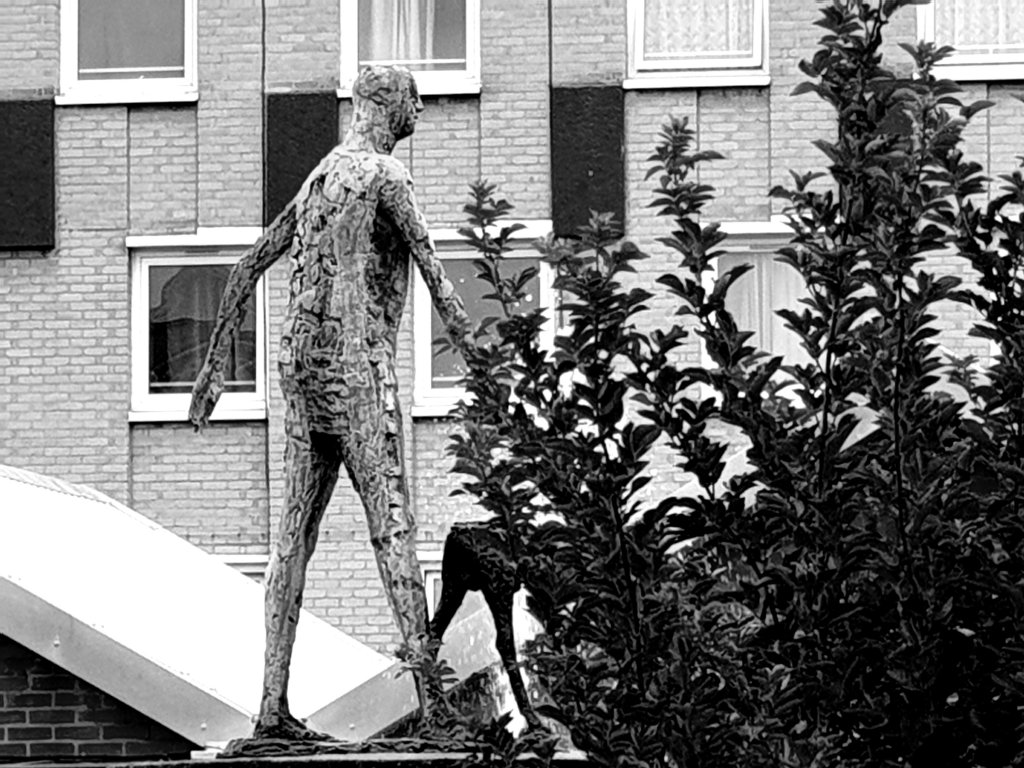
On the way back we stopped to admire The Blind Beggar and his Dog, which we looked at recently, but hadn’t realised is an early Frink, commissioned by Bethnal Green Borough Council in 1957, originally placed on the Roman Road, and moved to its current location in 1964, which makes it hard to see, but has probably led to it surviving intact without vandalism:-
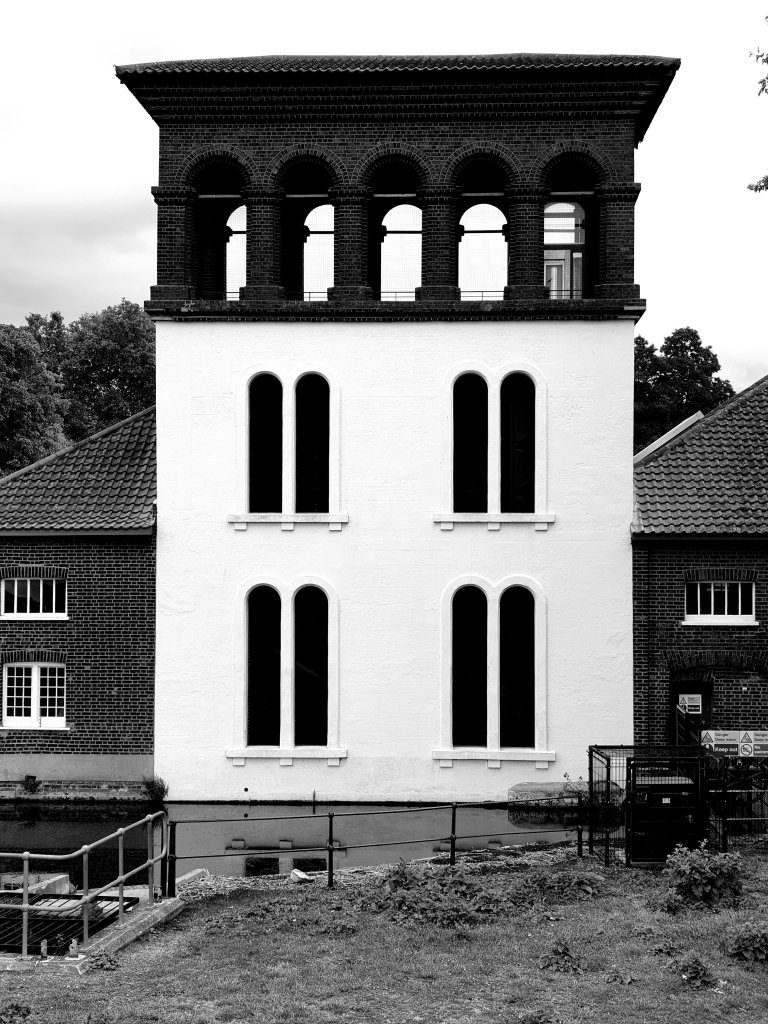
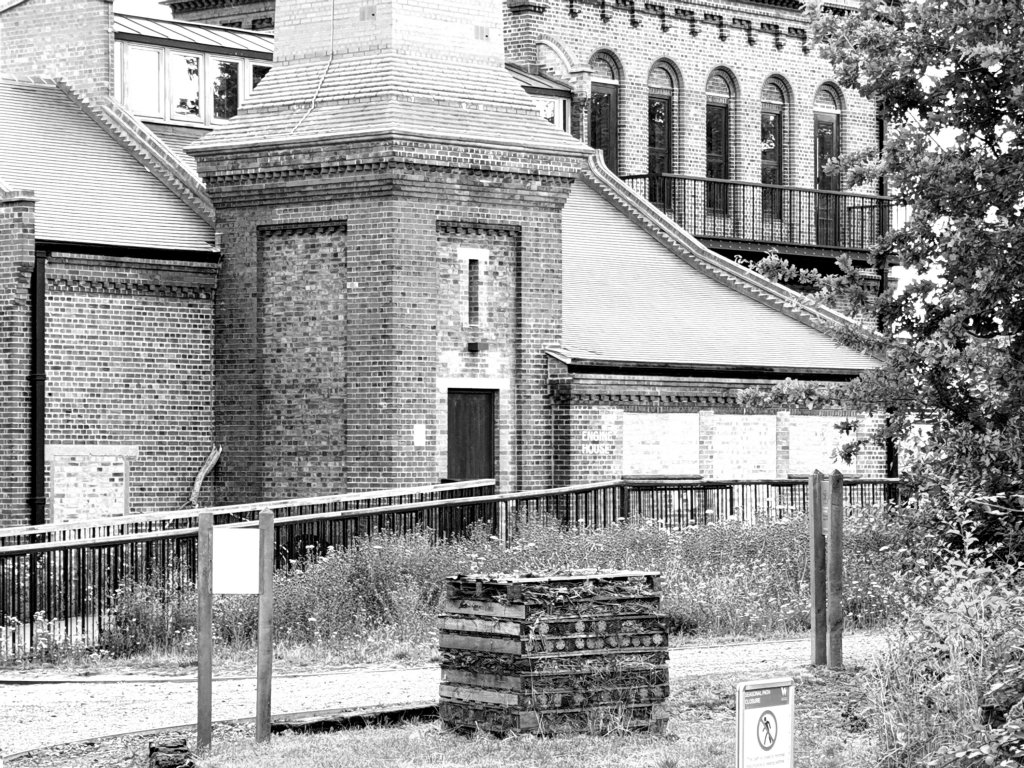
I was taken on a trip to see Walthamstow Town Hall, that fine example of 1930s Scandinavian classicism; but it turned out to be in restauro. More interesting was seeing the expanse of the local reservoir, with swifts diving:-
And its two bits of Victorian industrial architecture: the Coppermill which was turned into a pumping station in 1859 with the addition of its Italianate tower in 1864:-
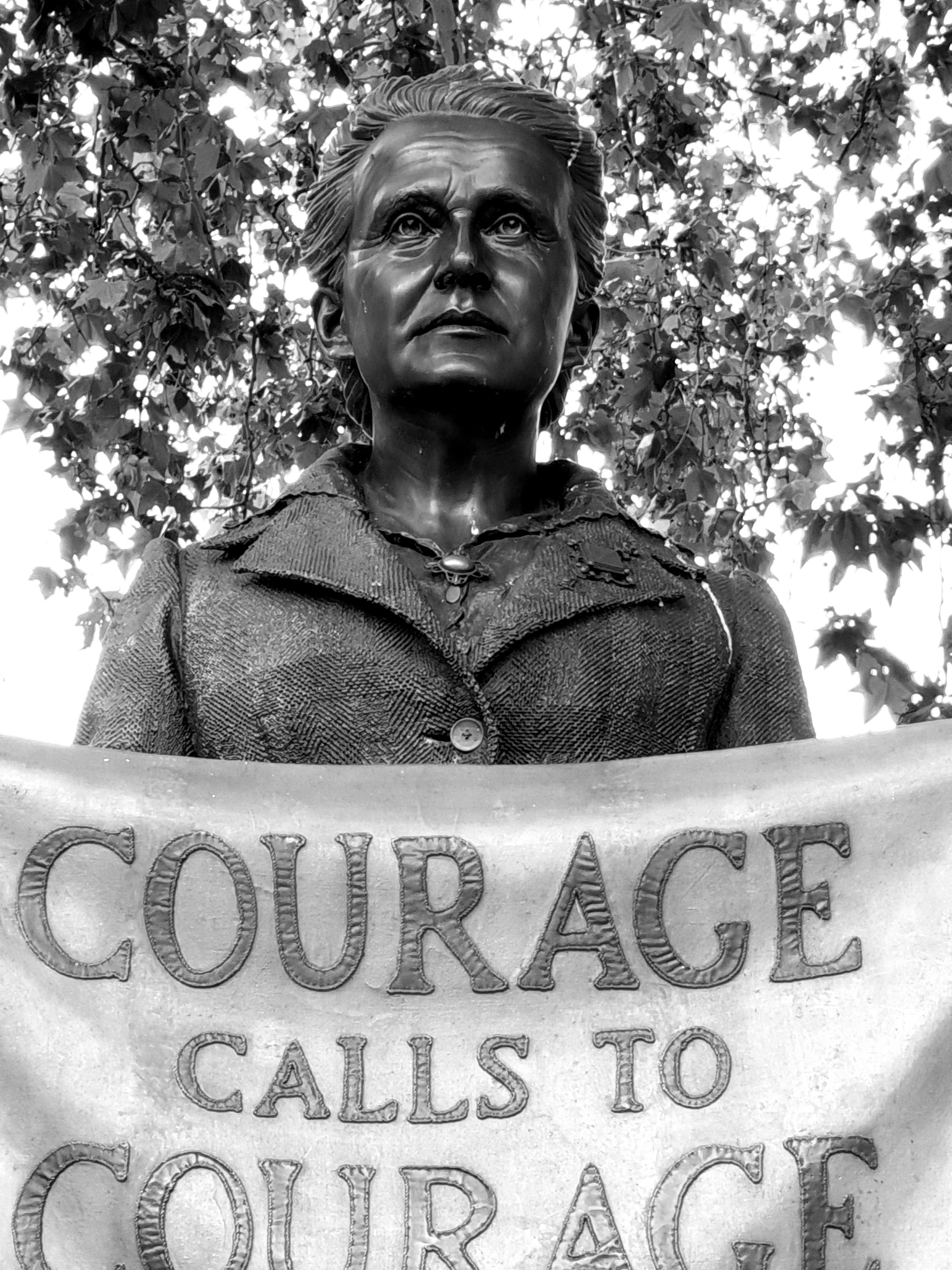
I have been asked by Martin Jennings, himself a sculptor, for my response to Emma Lavender’s long and thoughtful critique of what I had thought of the statue of Millicent Fawcett in Parliament Square. Two things had impressed me about the statue: the first was how much the mood of the square was changed by the presence of a single woman; the second was an element of surprise that a statue produced, as I guessed, by the latest 3D reproductive technologies based on original photographs was so convincing. I still feel, even now that I have read more about how it was produced, that it is better and much more convincing than some of the weaker recent public statues, because the traditions of carving and modelling are no longer much taught.
I am happy to receive more information on where they are still taught and the best examples of contemporary figurative sculpture, as the issue as to how new figurative sculpture is commissioned and who is commissioned will become issues of public concern, if they are not already.
Meanwhile, I am reproducing my photograph of the statue again only so that readers don’t have to scroll back:-
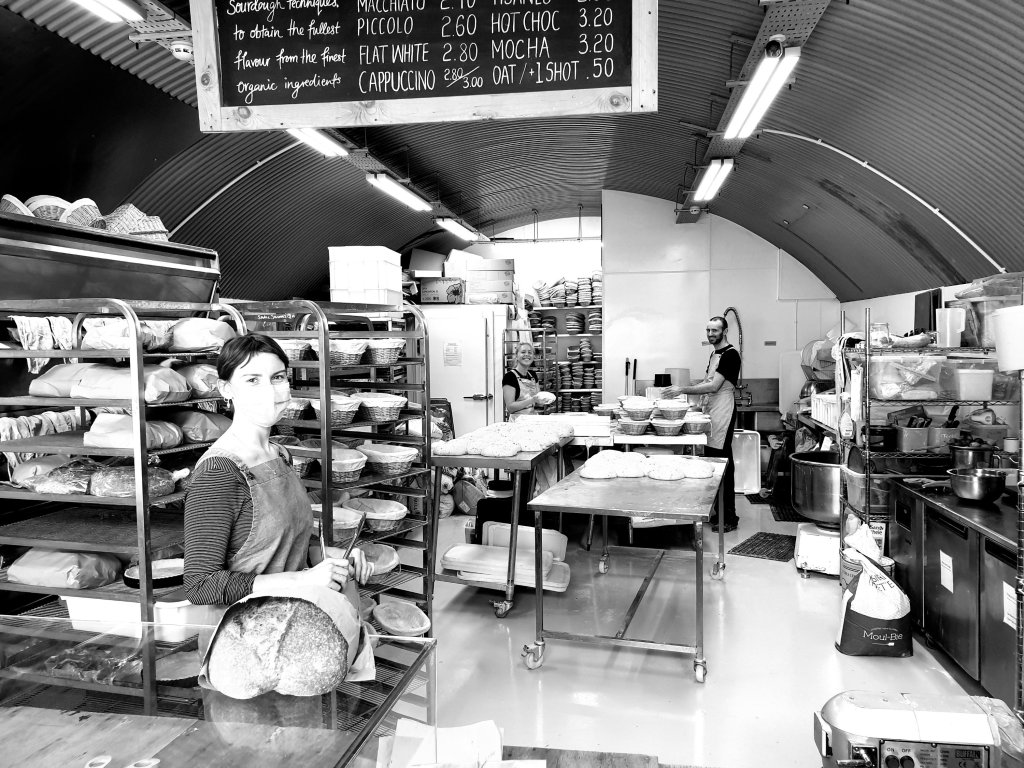
Having said how grateful I was to the London Library during lockdown, I feel that I should add the services of our local bread shop Breid, which at a crucial moment when we were not going out at all, generously said that they would deliver bread to our front gate, if necessary by throwing the bread over it, only providing I paid them retrospectively which I now have. How to make friends and a long lasting sense of gratitude for another form of essential sustenance:-












You must be logged in to post a comment.