Election Day (1)

I have never previously been so apprehensive about the outcome of an election as I am this morning.

I realise that I was brought up to think that the British regard extremism with distaste, never likely to succumb to it, more inclined to compromise, seeing the virtue of the other side, and, above all, with some level of belief in the truth. But now, suddenly, in a short space of time, we have been faced by a government and a ruling party which have bombarded us with lies, not just small lies, but gigantic and incorrigible lies, incessantly, and completely shameless about them when they have been unmasked, as when it was suggested that the poor boy in the hospital corridor in Leeds was a fraud. Journalists, instead of probing the lies, revealing them, have played a prominent role in recycling them, even including the BBC.

What have we come to ? Well, under normal circumstances, there would be a well-constituted opposition. I would like to respect Jeremy Corbyn, but have found it hard to, because he is so curiously lacking in any obvious political passion, although there have been faint glimpses of a mordaunt sense of humour in his online appearances, nowhere evident elsewhere. Boris Johnson’s almost only real achievement in the election campaign has been to make Jeremy Corbyn seem relatively honest and, by contrast to the torrent of untruth, just acceptable.

I hate to think that a majority of the electorate may vote in Johnson.

Standard

Blain|Southern (1)

Since it is now in the public domain that I have left Blain|Southern, although I have been generously allowed to stay in my office, I should perhaps say how much I have enjoyed my brief sojourn in the commercial art world, how grateful I was to Harry Blain for hiring me, and how much I have appreciated the friendship of my colleagues there, as I disappear into pastures new.

https://www.theartnewspaper.com/news/charles-saumarez-smith-steps-down-as-senior-director-at-blain-southern

Standard

Whitechapel Bell Foundry (15)

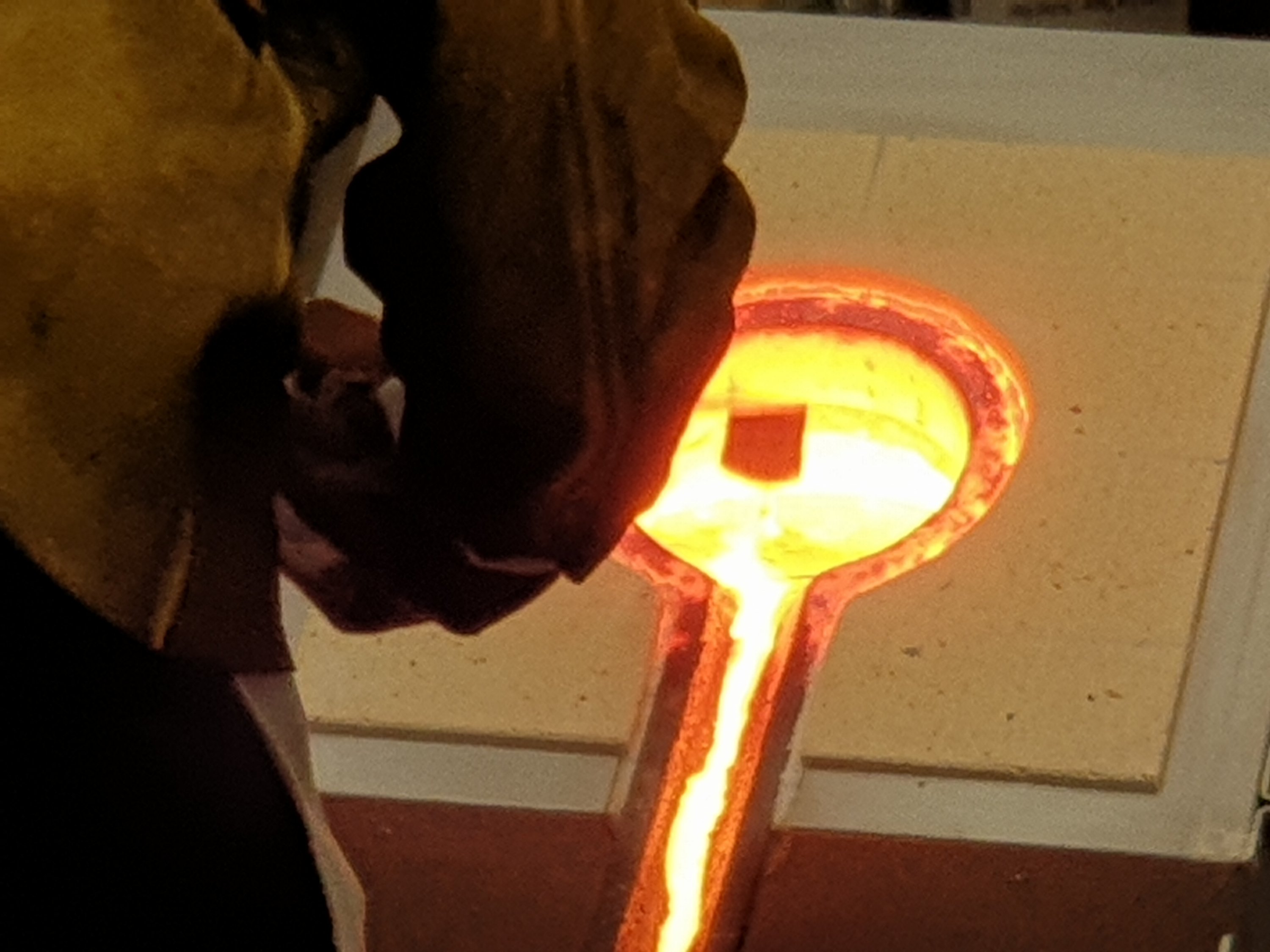
We went to an event tonight at Here East, an amazing set of new industrial spaces out in the Olympic Park near Hackney Wick, to see the way that new technology can be applied to the traditional techniques of Bell casting, in order to demonstrate that, if United Kingdom Historic Building Preservation Trust are allowed to take the Whitechapel Bell Foundry over, they can introduce new, clean, environmentally friendly processes of casting, as well as invaluable systems of apprenticeship and training (there is apparently a big skills shortage in this area).  

Current technology uses a ceramic shell, based on aerospace, which allows for more detail in the surface.   In the past, it would have been done with loam through sand-casting. Prehistory meets hi-tech:-

Standard

British Library (2)

Those of you who, like me, have never upgraded from the old round Reading Room will be reassured to know that the new British Library retains many of the same characteristics, except, of course, that there are many more readers now that you don’t have to demonstrate your academic credentials and the public areas, which are strangely even more packed than the reading rooms – I assume because they provide somewhere warm and dry for students to sit at their laptops. Most of the books I ordered have to come from Boston Spa, but not all. What I particularly noticed is a different level of concentration if everyone is reading: a collective concentration, uninterrupted by chitchat and the mobile phone. I need to re-learn it.

Standard

British Library (1)

I went to renew my reader’s ticket at the British Library today and realised that I have never actually used the new British Library, but am a veteran of the old Round Reading Room where I sat, but not every day, at S6 or thereabouts, until I discovered that the atmosphere was quieter and more rarefied in the North Library, where one had access to rare books. Luckily, my name was still logged on the system, except my birth date was recorded as 12th. December 1900. I understood why the lady at the desk looked at me a touch sceptically. It’s quite nice to be back in the special quiet of a library reading room, undisturbed by anything except the sound of distant coughs.

Standard

Whitechapel Bell Foundry (14)

There was a good, but perhaps too brief, discussion of the issues surrounding the development of the Whitechapel Bell Foundry on Front Row tonight, beginning with the sounds of some of the most famous bells cast in Whitechapel, including St. Mary-le-Bow, St. Clement Dane, Westminster Abbey and Big Ben.

Gillian Darley and Stephen Clarke made the case for keeping it as a working foundry instead of turning it into (another) luxury hotel, based on the model of the transformation and successful renovation of Middleport Pottery, which has been such a success: keeping it as a business, introducing new technology, keeping changes to the building to a minimum, opening up new markets in China, and encouraging school and public visits.

As Gillian said, it’s an issue for cultural heritage, not just built heritage, and Historic England can’t say it’s not their mandate because it’s what they did so successfully in Middleport.

https://www.bbc.co.uk/sounds/play/m000c4xg

Standard

Boris Johnson

When I read Boris Johnson’s dog-whistle appeal to anti-immigrant feeling this morning – presumably closely in line with the Tory’s election strategy to appeal to northern, working class Brexiteers – I couldn’t help remembering that Johnson is himself the grandson of a Turk, Osman Kemal, and great grandson of a German, Hubert Freiherr von Pfeffel.

Isn’t it a tiny bit distasteful that he should be appealing to aggressive British nativism at this juncture ? Doesn’t his appeal to anti-foreigner feeling carry a few risks with it ?

https://www.thetimes.co.uk/edition/news/election-2019-johnson-vows-end-to-migrants-treating-britain-as-their-own-nczv7r97n?utm_medium=Social&utm_source=Twitter#Echobox=1575855443

Standard

Emma Dent Coad

I am re-posting this interview between Owen Hatherley and Emma Dent Coad, because it is such an incredible relief at this stage of the election, when there has been so pitifully little discussion of real policies, particularly about public housing, one of the key issues facing all three parties, to read the views of a historically well-informed and well-qualified candidate, who is in danger of being squeezed out:-

https://tribunemag.co.uk/2019/12/defend-emma-dent-coad

Standard

Whitechapel Bell Foundry (13)

Last time I discussed the saving of the Whitechapel Bell Foundry in the late 1970s, someone suggested I read Alec Forshaw’s book on 1970s London: Discovering the Capital, an engaging and extremely informative book about the character of London in the 1970s in the heyday of demolition, Council redevelopment and a general lack of interest in its historic character, written by Alec Forshaw, who worked in Islington’s planning department and became its head of conservation. I have now done this. The book makes clear how attitudes began to change in the late 1970s, not least thanks to the 1978 Inner Urban Areas Act, which provided public funding to protect and preserve inner city industrial buildings. I assume that this was what it made it possible for either the GLC or Tower Hamlets to provide funding for the preservation, repair and extension of the Whitechapel Bell Foundry in 1979. I now realise that this was before English Heritage was established (it was established in 1983), so James Strike may have been employed by Tower Hamlets or the GLC or even by the Hughes themselves with grant aid.

Whatever the exact circumstances – and I hope one of my readers will know more – it is sad that such a determined effort to protect traditional manufacturing in the inner city, including, presumably, substantial public investment, is at risk of being wiped out forty years later. It is also at least possible that conditions were set on what would happen in the event of the eventual sale or closure of the Bell Foundry. Once again, I hope someone in Tower Hamlets or the GLA has checked this out.

Standard

Whitechapel Bell Foundry (12)

I have been asked by a reader who prefers to remain anonymous to remind readers that there does already exist a fully funded alternative scheme for retaining all the craft skills of the Whitechapel Bell Foundry, which Historic England has inexplicably (or negligently) chosen to ignore.

It has been drawn up by the United Kingdom Historic Building Preservation Trust, jointly with Factum Foundation who have experience of running a foundry in Madrid and the great advantage of being very well connected with artists, so not being dependent solely on the sale of church bells for the viability of their business plan.

United Kingdom Historic Building Preservation Trust are uniquely well placed to take on the bell foundry, because they have recent experience of running a similar industrial site, Middleport Pottery, in Stoke-on-Trent, which won every prize going for the sensitivity and interest of the project, which was overseen by Ros Kerslake, now the Chief Executive of the Heritage Lottery Fund. If there are doubts about the viability of their proposals, which I know there have been, it’s worth noting that their Founding Patron is H.R.H. The Prince of Wales who has a long track record of involving himself in projects involving the development of craft skills. So, it’s hardly a fly-by-night organisation.

Factum Foundation is the charitable arm of Factum Arte, a brilliant and inventive operation based in the suburbs of Madrid which has a great deal of experience in retaining and developing historic craft skills, with the aid of new technology. I know that there are people, including the Hughes family, who think that the new technology is alien to the traditions of the Bell Foundry, but it is essential to the commercial viability of their proposals. And I should declare an interest, but not a commercial one, in that my son works for Factum Foundation and it was I who got them involved, knowing that they have the relevant skills.

So, Historic England have been, and still are, faced by a choice between, on the one hand, well-established, not-for-profit charities with the best possible experience of developing an industrial site in a creative way and, on the other hand, a rapacious New York speculator who has offered the Hughes family a small shrine to bell making, while demolishing half the site and building a hotel next door.

Which scheme has Historic England chosen to endorse ? The one from the property developer.

Standard