
In looking up information about Robin Hood Gardens, I was interested to discover that, after studying at the King’s College School of Architecture in Newcastle on Tyne, Peter Smithson spent two years at the Royal Academy as a student of Albert Richardson, one of Britain’s most conservative and greatest classical architects, a fact which seems to be left out of some sources, maybe because it is at odds with Smithson’s image as the young Brutus. In fact, he and Alison, who he married in 1949, were not quite as rampantly brutalist as Robin Hood Gardens might make them appear, writing a lament to the loss of Euston Arch in 1968 and Walks within Walls: a Study of Bath in 1971.
Category Archives: Uncategorized
All Saints, Poplar
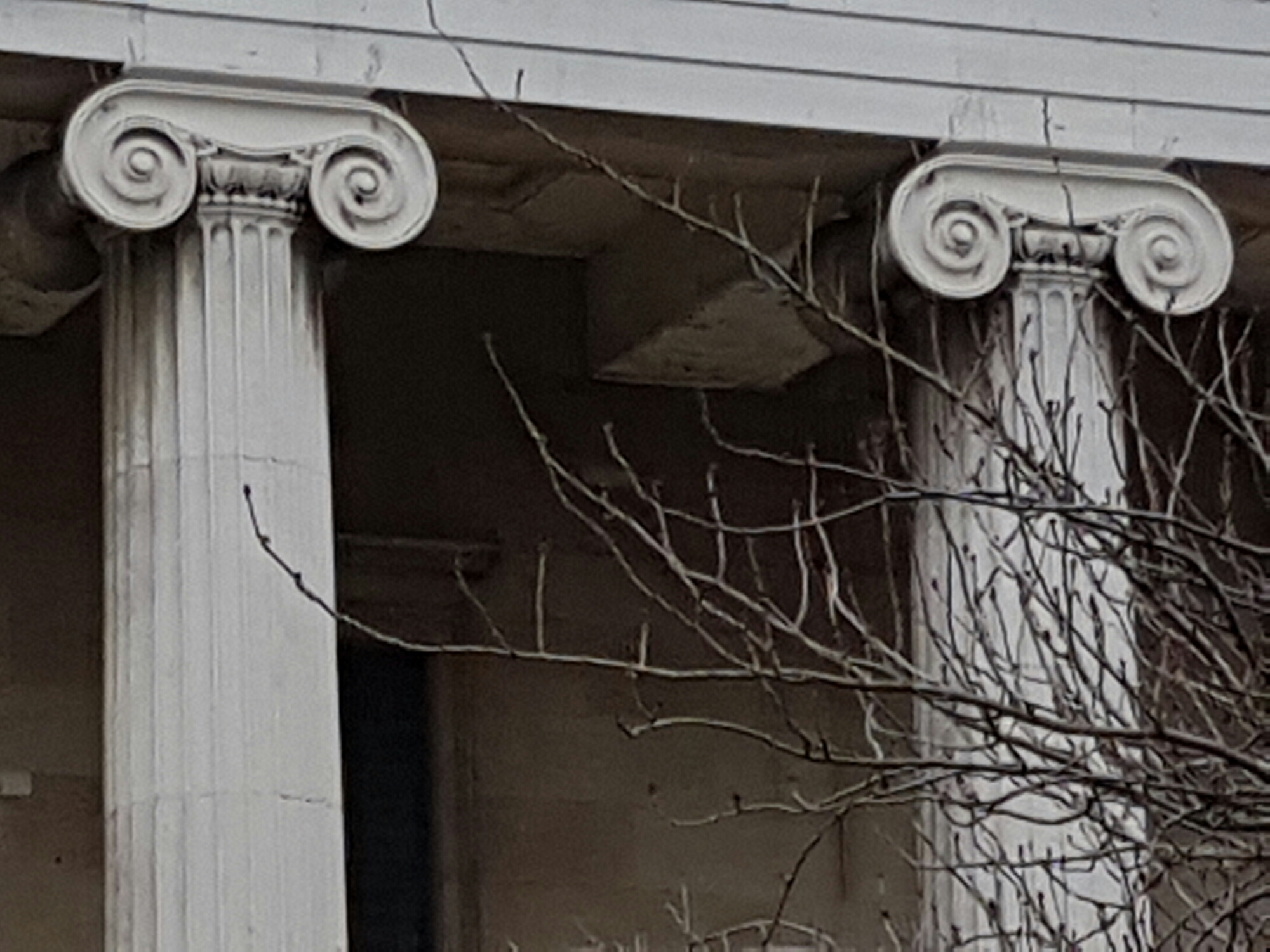
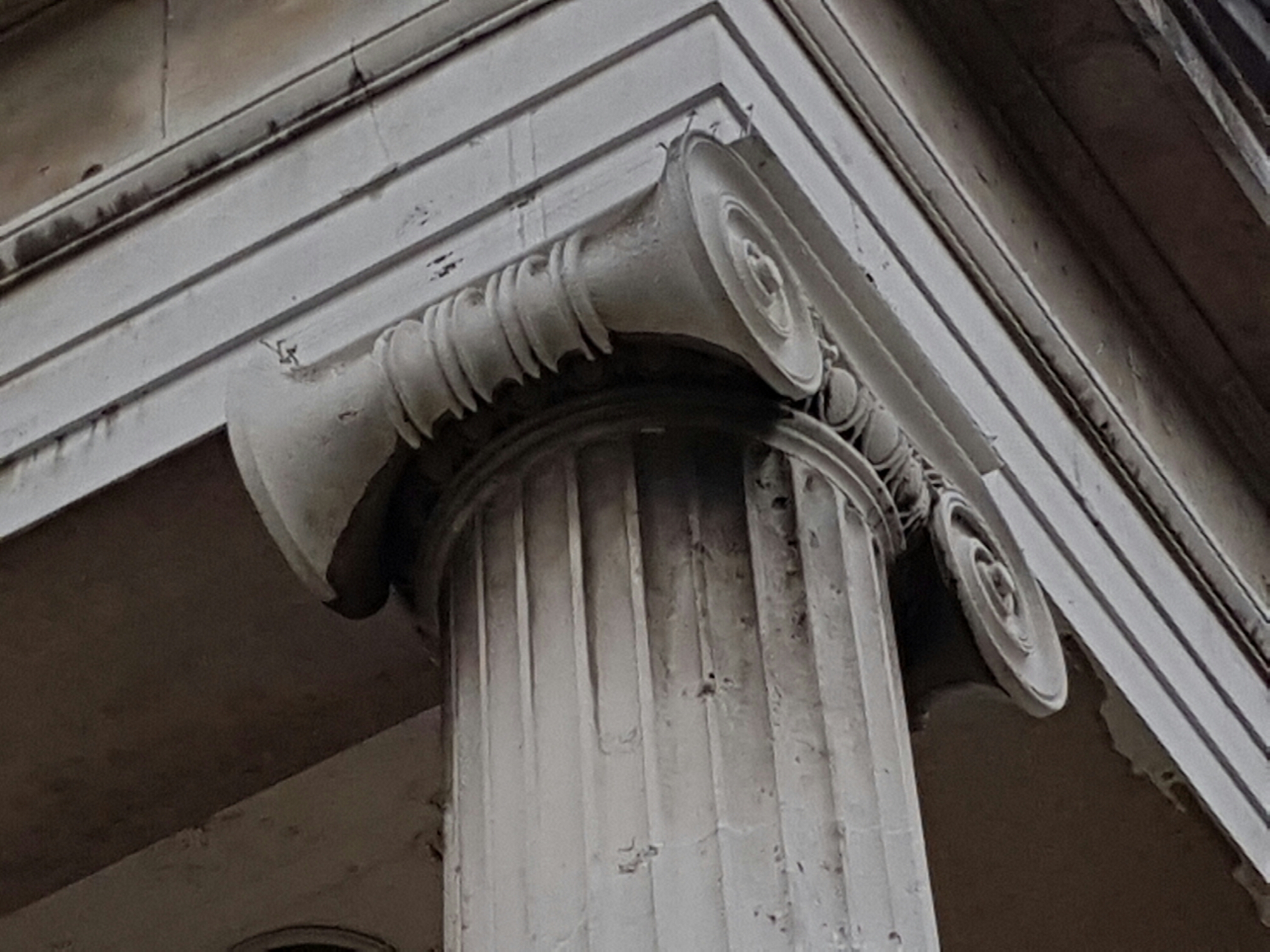
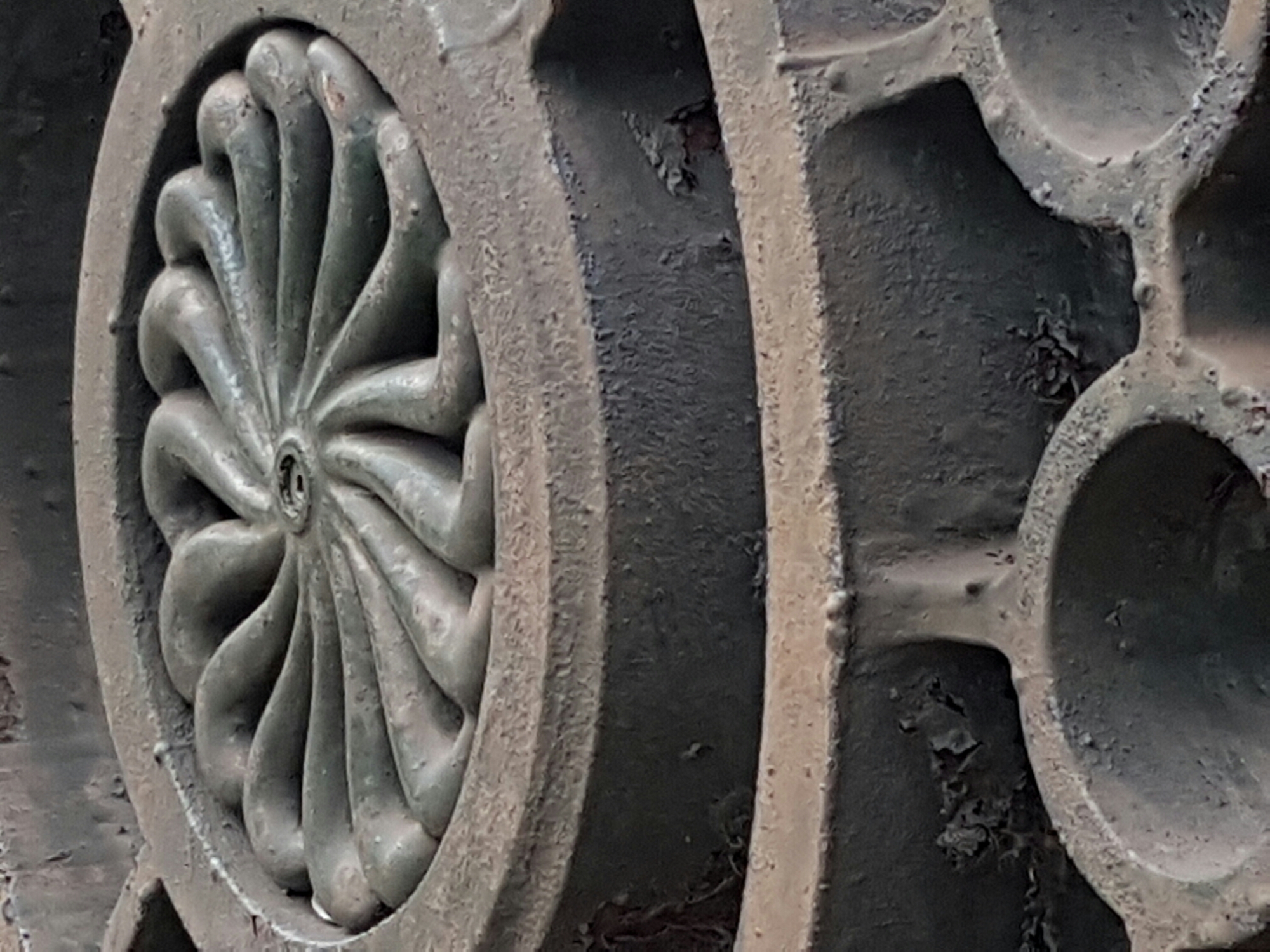
I missed the church of All Saints out of the description of my tour of Poplar. It’s a grand Greek Revival building, with crisp Ionic capitals and handsome cast iron railings, designed by Charles Hollis, who was clerk to one of the parishioners and entered the competition for its design under the pseudonym Felix. It opened in 1823, six years after Poplar became a separate parish:-

The railings:-

The rectory, also by Hollis:-

Balfron Tower
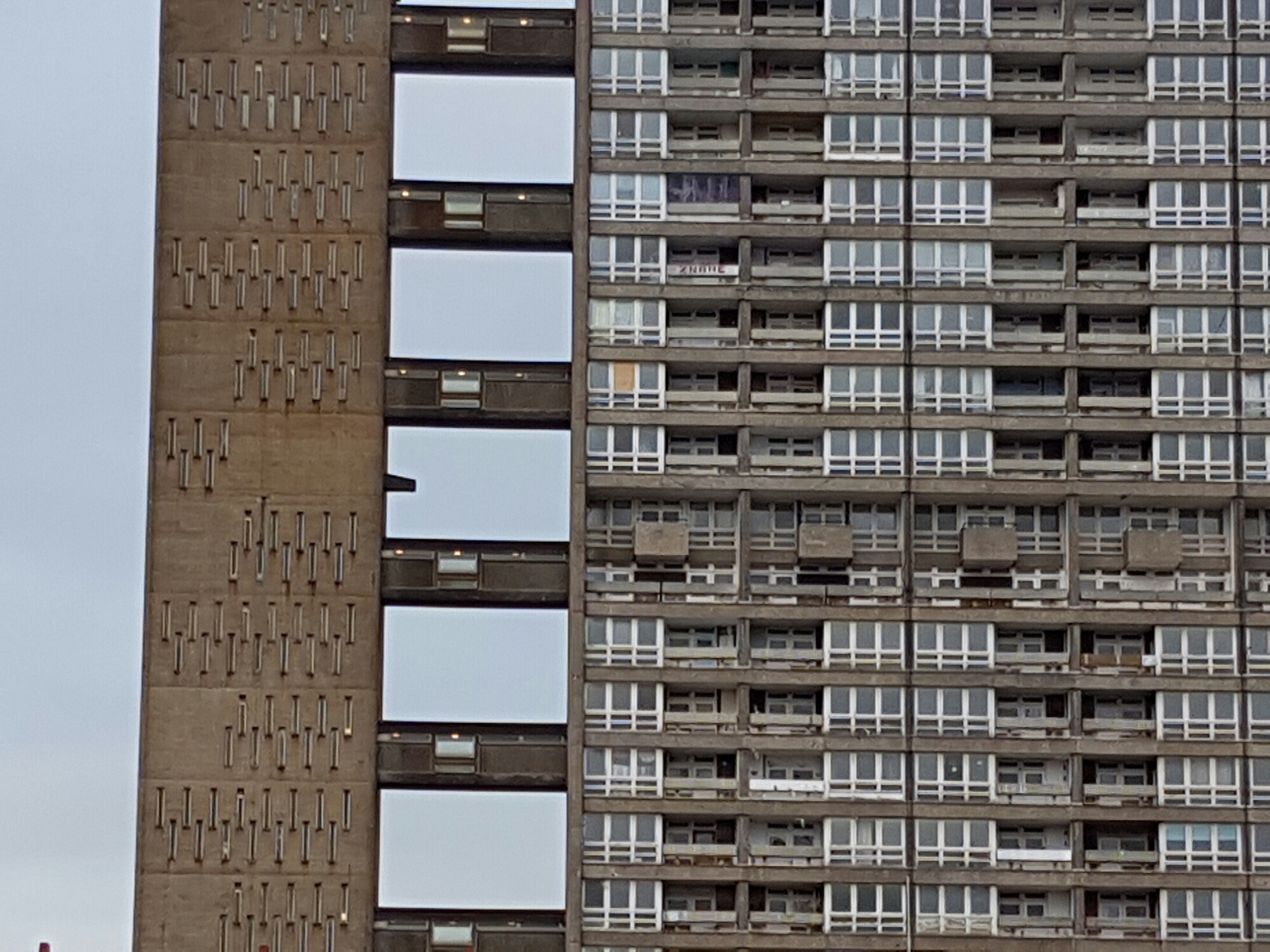
We wandered through the streets of Poplar, past the Municipal Baths (it was Lady’s only), through the ghost of Crisp Street market, to the great hulk of the Balfron Tower looming in the distance:-

It gets a much better write-up from Pevsner than Robin Hood Gardens: ‘The twenty-six-storey block is immediately arresting’:-
Robin Hood Gardens (2)
We went back to Robin Hood Gardens again this afternoon, to ponder its fate. It seems to have been caught in the gap between the failure of the grand schemes of municipal socialism in the 1990s and the glitzy revival and change in land values of Greenwich Peninsula only a decade or so later, left to rot by the Council, rather than sold and revived like the nearby Balfron Tower, which is just as bleak, but with an equally strong architectural character. Future generations have to ponder why a major work by the Smithsons was left to decay, while a work by Ernö Goldfinger similar in style and date (it’s 1965) is being preserved as an architectural monument:-

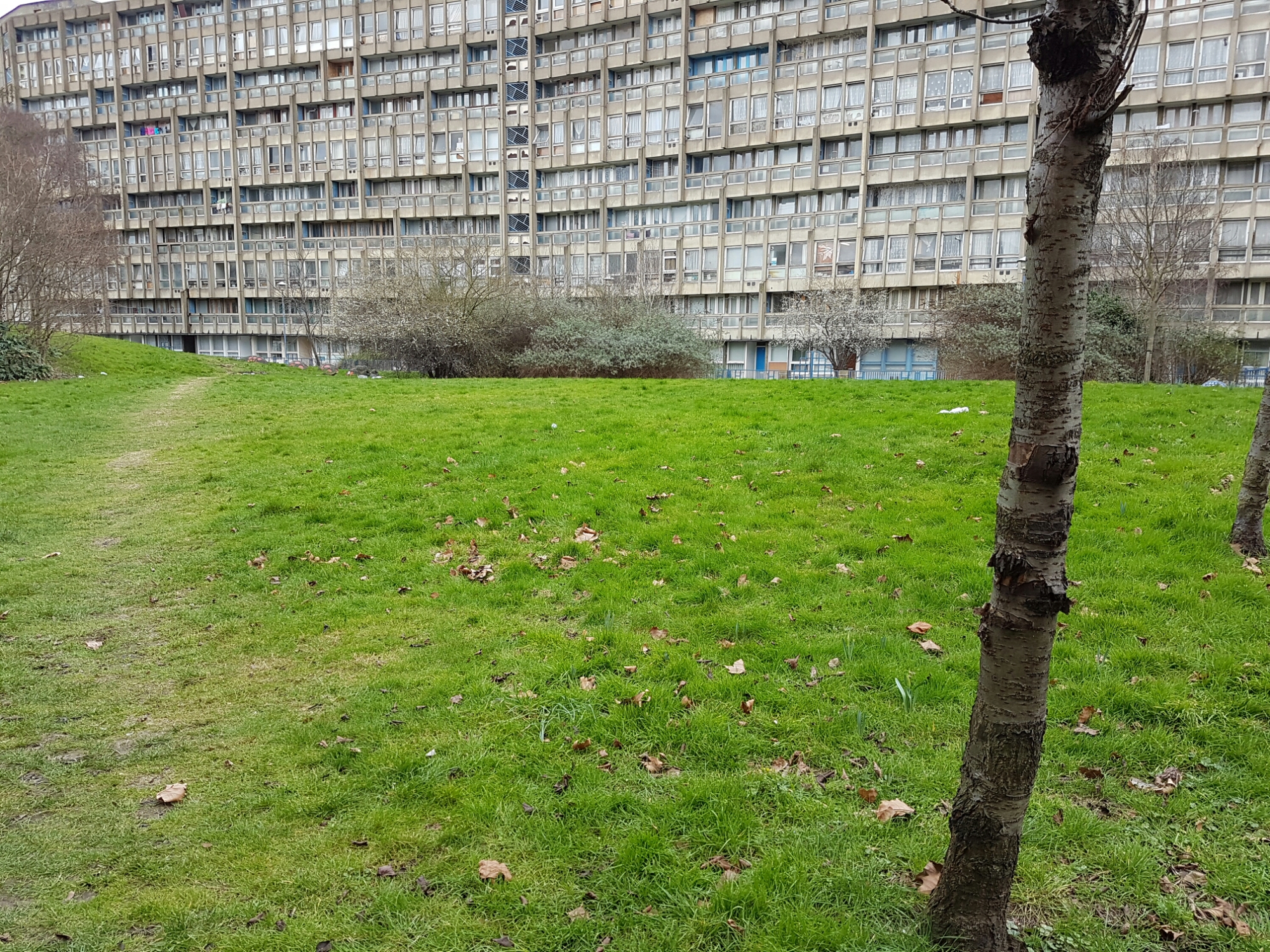
Robin Hood Gardens (1)
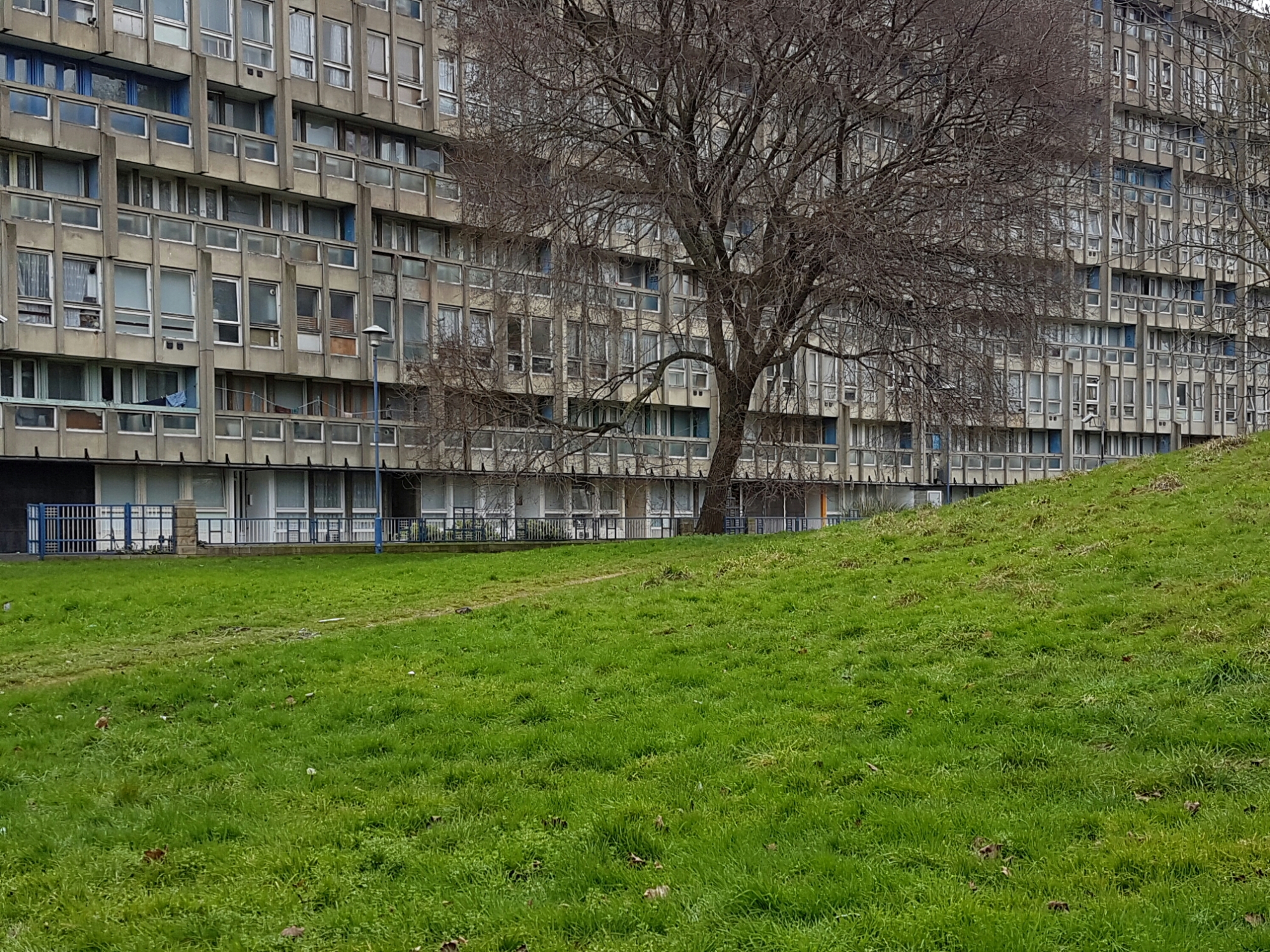
Realising that the west block of Robin Hood Gardens is soon to be demolished and prompted by negative comments on my blog last week, I thought I should go and see why it is both revered and reviled. It’s easy to see why it’s reviled: long concrete blocks, poorly maintained, in a bleak area of Blackwall. Revered ? It’s presumably partly the sheer arrogant bloody-mindedness of it, the ruthless imposition of post-war socialist ideals on the resident population, so that, more than anywhere else, it has become emblematic of an era and its erroneous utopianism, so that, like the Euston Arch, it will be remembered as a great loss, wantonly destroyed by Margaret Hodge when Minister:-

Roland House
The other person who is commemorated on Stepney Green, not in a memorial, but in the name of a house, is The Honourable Captain Roland Erasmus Phillips, one of the early pioneers of scouting, an aristocratic Wykehamist, second son of Lord St. David, who, after reading law at New College, Oxford, went to work for the Pacific Steam Navigation Company in Liverpool where he met a group of boy scouts and volunteered to help. In 1912, he transferred to the Union Castle Steamship Company, lived first in Bethnal Green, then Stepney, and was appointed Assistant District Commissioner for the Scouts in East London. In 1912, he and Stanley Ince instituted the Hackney Lectures on Scout Law, which were massively popular, and in 1914, he published Letters to a Patrol Leader, before enlisting in August 1914 in the Royal Fusiliers He died on the front on 6th. July 1915 and left his house 29, Stepney Green, now called Roland House, to the scouts of East London:-
Stanley Bean Atkinson
Stanley Bean Atkinson is commemorated not just by a bust in the local library, but by the clock tower at the bottom of Stepney Green, which was originally in the middle of Burdett Road, until moved by steam wagon in 1934. What had he done to deserve this amount of civic commemoration ? The answer is that he was a local councillor, who was planning to stand at the County Council elections as a Progressive, a doctor who had trained at Barts and wrote about tuberculosis, and a barrister and JP, who lived on the Mile End Road. He died of a heart attack in 1910 aged only 36:-


Bancroft Road Library
I called in on the Bancroft Road Library. It’s the local library and archive, full of the documentation of east London history – books, documents and trade directories – and open to readers every other Saturday. It was originally the local Vestry Hall for the Hamlet of Mile End Old Town, part of the much larger parish of Stepney, headquarters of the Board of Guardians who looked after the workhouse next door (now the Mile End Hospital). Local government was reorganised in 1901 in favour of larger Metropolitan Boroughs and the Vestry Hall was turned into a library the following year. It included a gramophone record library after the war.
At the top of the staircase is a portrait bust of Stanley Bean Atkinson, an energetic lawyer and local councillor, who lived in a house called Stebonheath on the Mile End Road:-

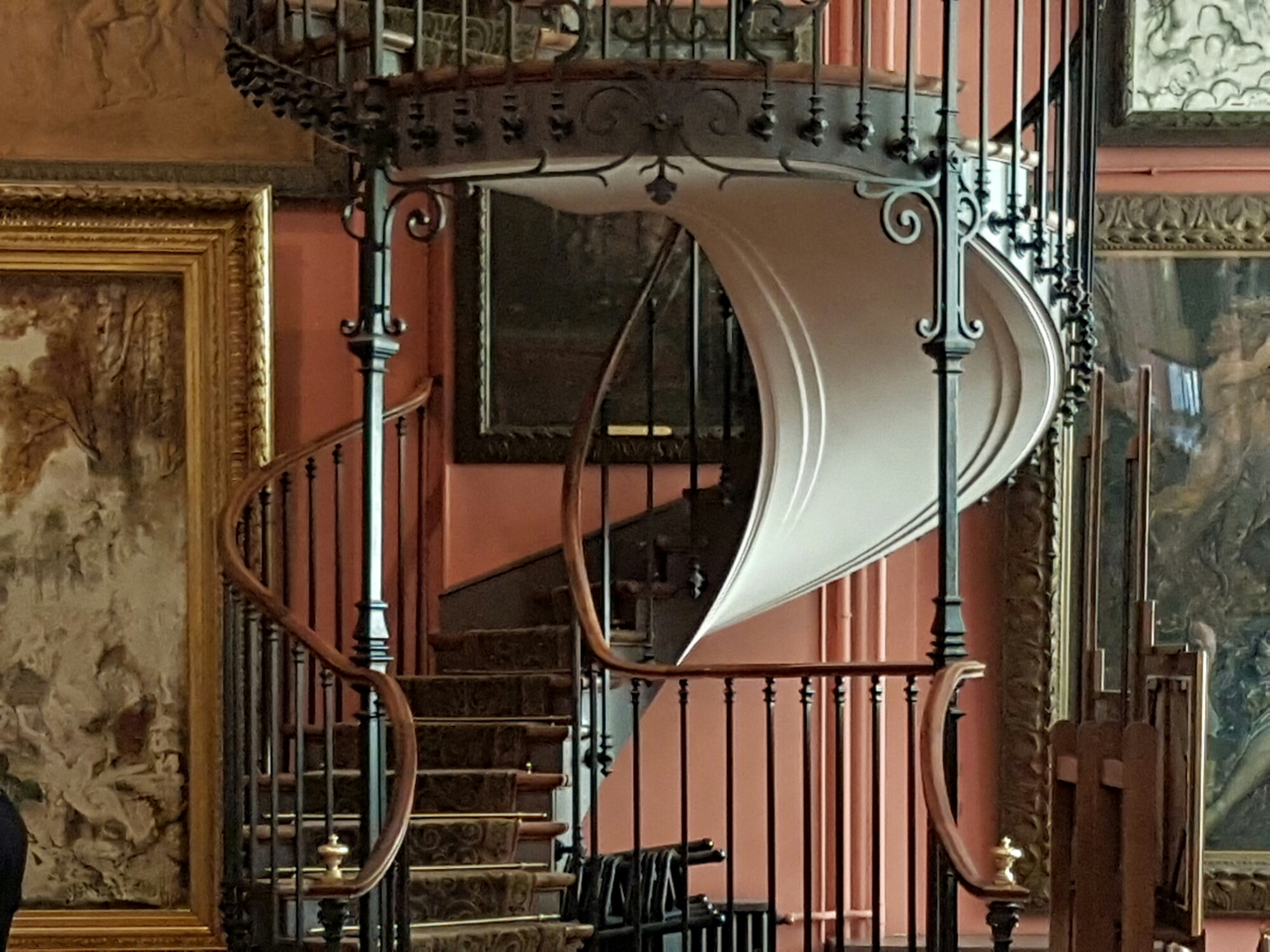
Musée Gustave Moreau
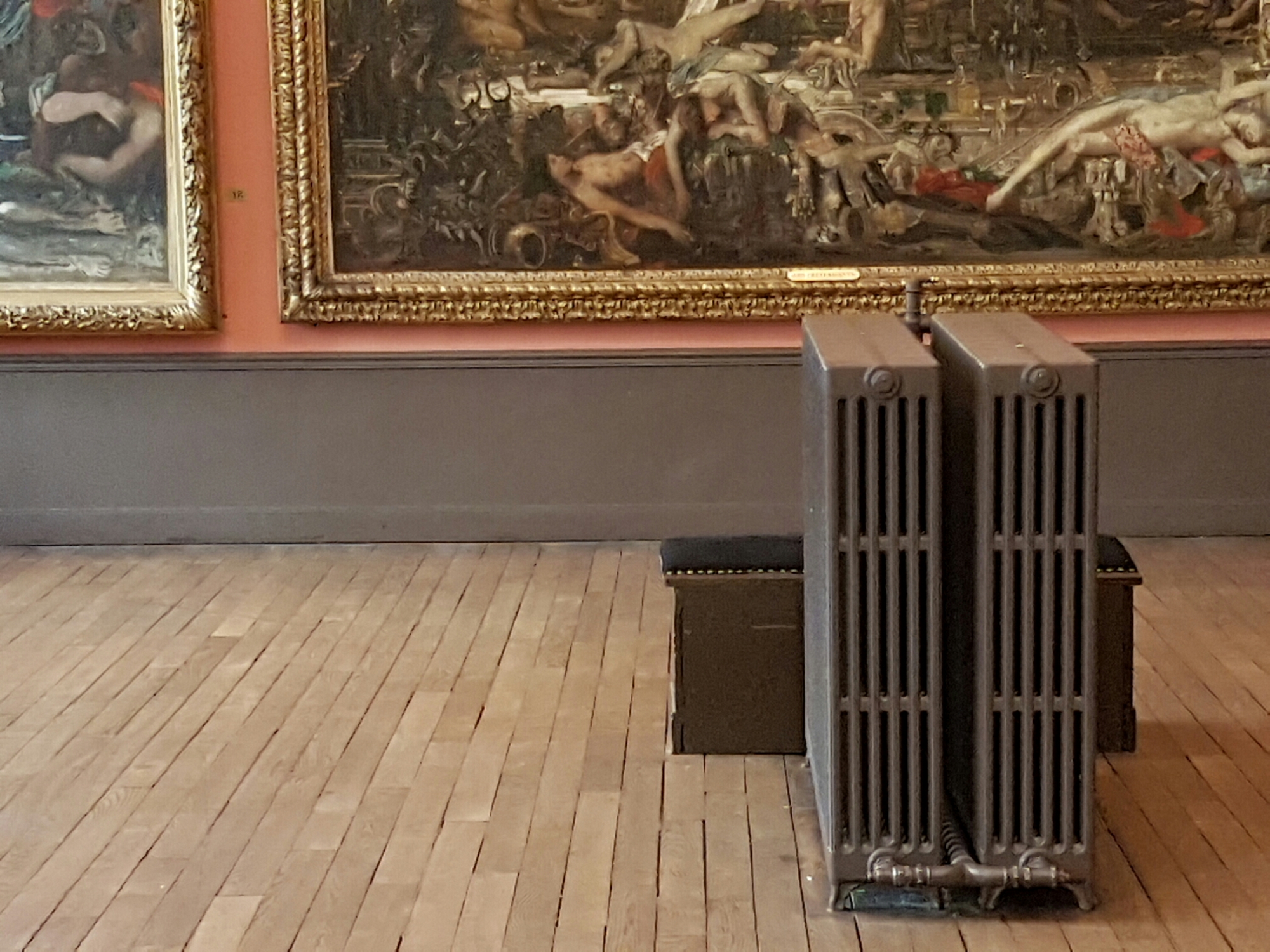
I could not resist the opportunity to call in on the Musée Gustave Moreau, one of the most atmospheric of artist’s houses, piled from floor to ceiling with his works, which are the apotheosis of the late nineteenth-century romantic imagination: floor after floor, three floors in all, with two floors of studio above the minuscule living apartments:-
La Nouvelle Athènes
I walked back to the Gare du Nord by way of La Nouvelle Athènes, the area on the slopes up to Montmartre, which was developed in the early nineteenth century and occupied by artists and intellectuals, including Ary Scheffer, whose house down a tree-lined alleyway is now the Musée de la Vie Romantique:-


You must be logged in to post a comment.