
I was asked by a friend where he could best see, and possibly buy, Old Master drawings. I thought the best place would be Colnaghi’s, one of the oldest established dealers. I hadn’t realised that it goes back to 1760, when Giovanni Battista Torre opened a shop in Paris which sold books and prints alongside barometers and fireworks. His son Anthony opened a print shop in London in 1767, just before the Royal Academy was founded. It was acquired by Paul Colnaghi in 1788. Originally based at 132, Pall Mall (in the eighteenth century the art trade was based round Waterloo Place and only moved north of Piccadilly when the RA opened in 1868), Colnaghi moved to Cockspur Street in 1799, where he held three o’clock levées for the world of fashion. In 1911, the firm moved to 144/6 New Bond Street when Otto Gutekunst was making a fortune, working with Berenson in supplying paintings to the great American collectors. They are still in Bond Street, but now upstairs.
Category Archives: Uncategorized
Election Day
I walked to the polling station without any clear sense of what the outcome of the day might be. If my guess in the sweepstake of 282 votes for Cameron is remotely correct, then it looks as if it will be hard, if not impossible, for him to form a government. But, equally, government by a party which doesn’t get a majority of the vote and relies on a coalition with the Scottish Nationalists looks and feels impractical in the long term. I voted for the party which believes in, and will campaign for, staying in Europe; the party which will be crucial to making any coalition government work; and the party which still has vestiges of nineteenth-century liberalism at its core.
London Craft Week
I’ve just been to the launch of London Craft Week, an initiative on the part of Guy Salter to raise consciousness of the crafts (or is it Craft ?), alongside COLLECT held annually at the Saatchi Gallery. It’s about London Craft, not British Crafts, and the aim is to acknowledge the relationship between traditional craft practice, based on specialist skills in making, and the increasingly competitive world of luxury goods, in which high prices are justified by the use of the highest quality materials and expensive manual skills: as much about cordwaining and perfumery as weaving and pottery. But there is an obvious paradox at its heart, which is that traditionally the crafts have been anti-materialistic (back to William Morris) whereas luxury goods are necessarily and deeply materialistic.
Garrick Club
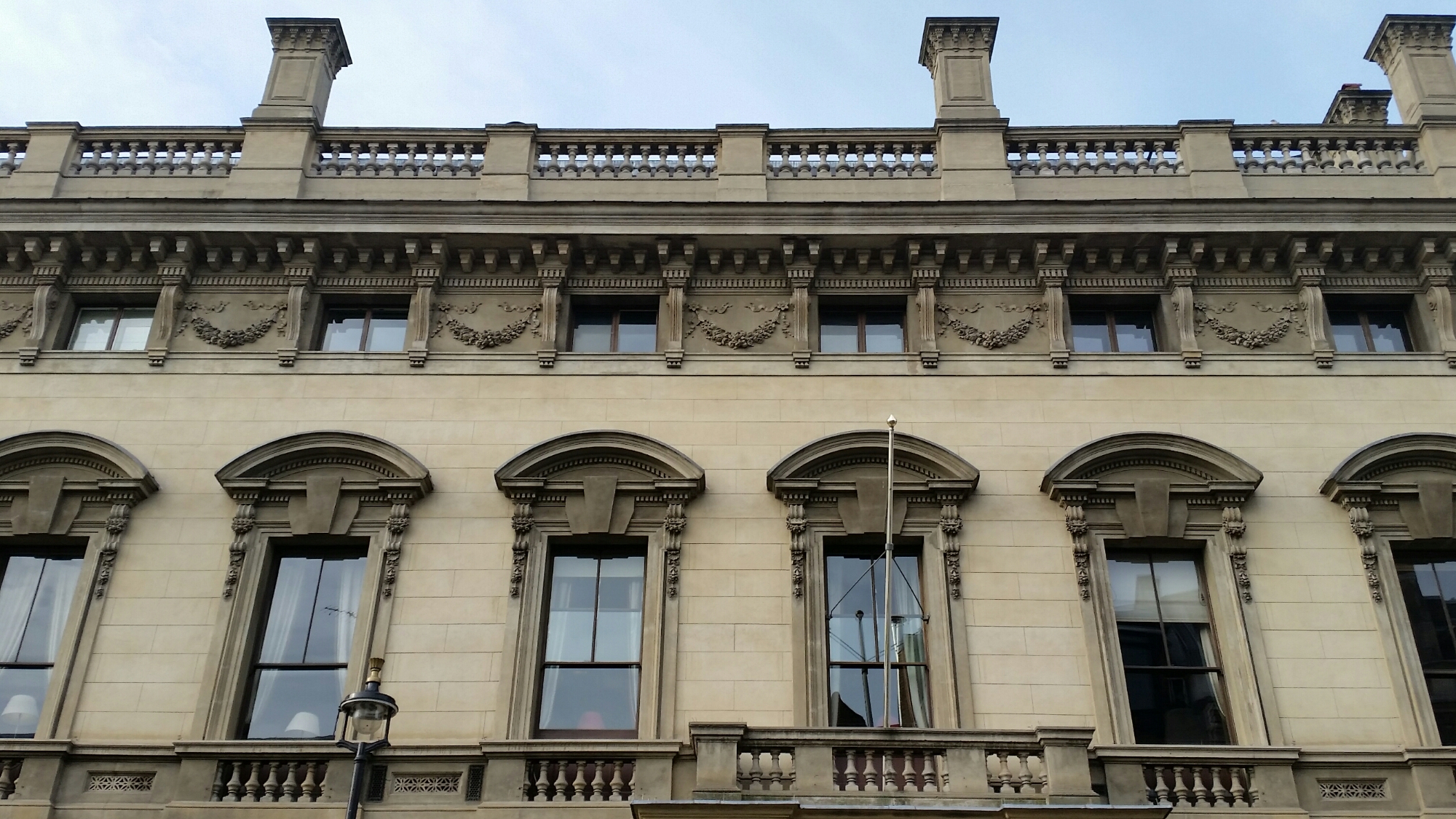
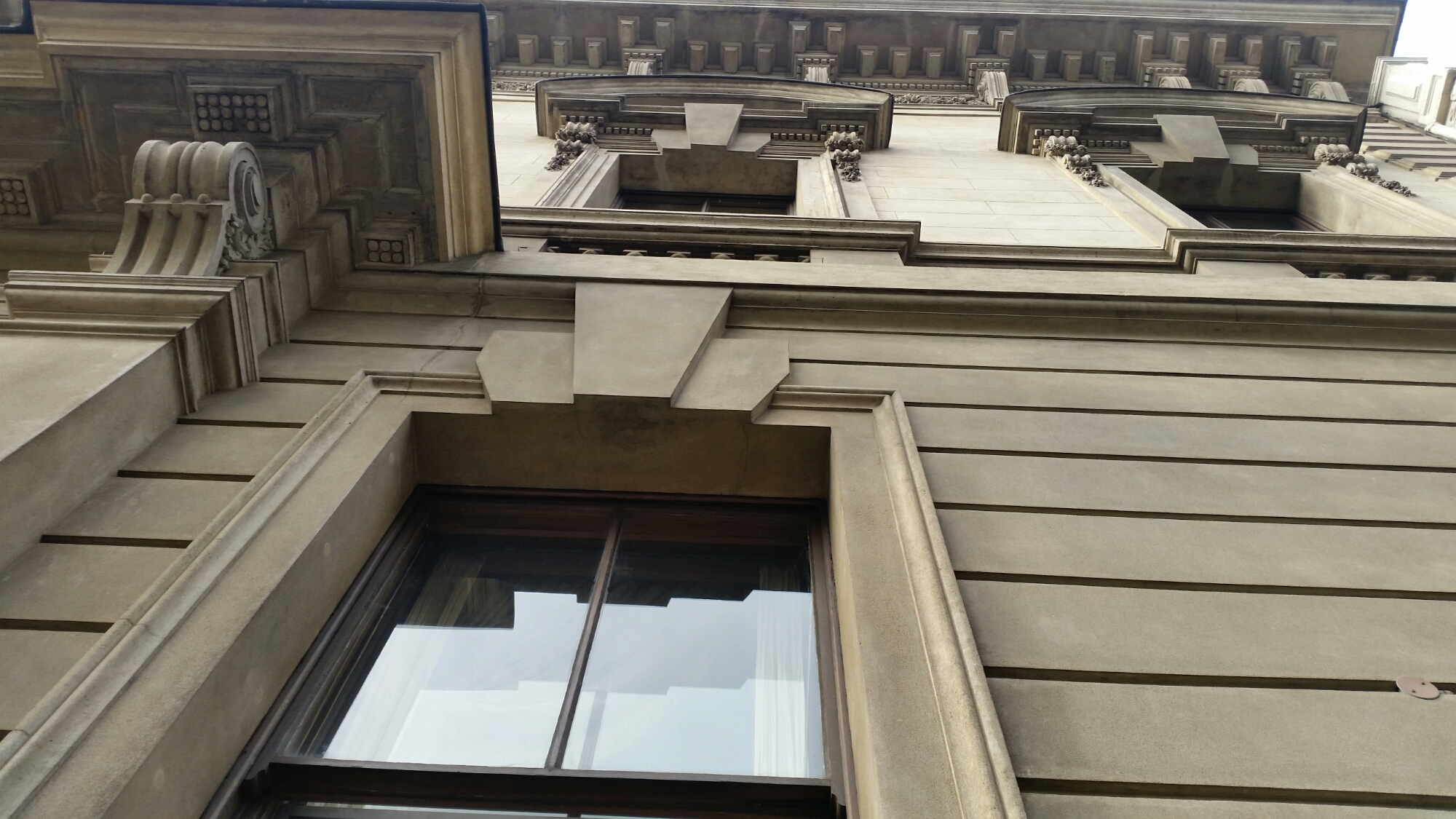
I was walking past the Garrick Club last week and stopped to admire the grandeur of its façade, now that it is no longer covered in soot and grime. It was no wonder that I could not identify its architect, a man named Frederick Marrable, a pupil of Blore. He was architect of the Metropolitan Board of Works, responsible for settling claims, laying out Burdett Road and the design of Holborn Viaduct. The Garrick is a more than halfway decent piece of Clubland classicism, with its high entrance, its dining room remote from the street and surprisingly good stone detailing:-
La Ribaute
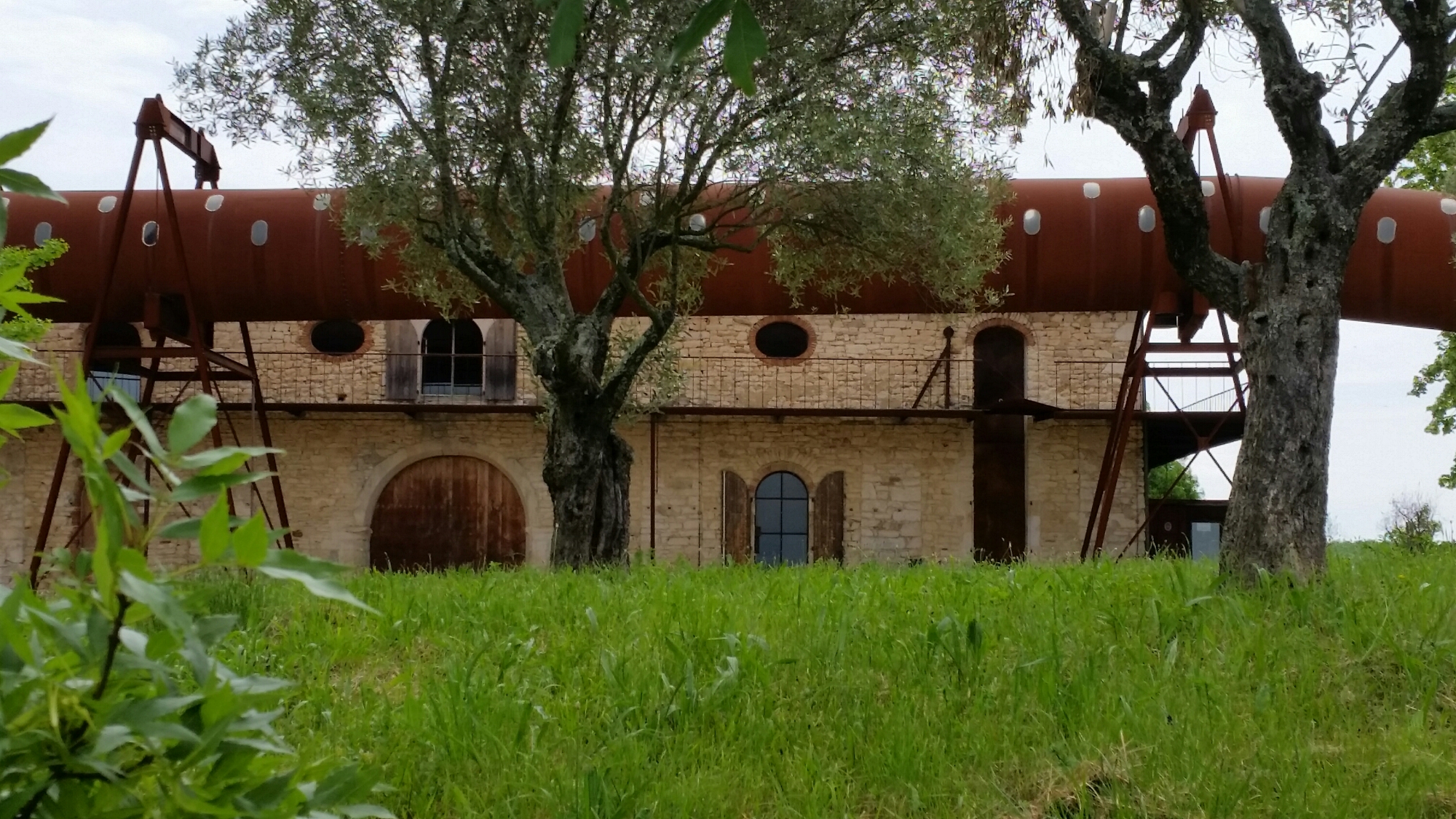
It was spectacularly hot and sultry as we walked round the grounds of La Ribaute, the silk mill where Anselm Kiefer lived and worked for a period of fifteen years before moving to the warehouse of La Samaritaine in the outskirts of Paris. I had forgotten the intensity of its classicism, the names of gods defining the experience of the ruins. We walked further and saw more than on our previous visit last summer, conducted through the fields and installations by the silent gardien as it got hotter and hotter. I had not registered the intensity of the experience of the natural environment, the ants invading the lead, the orchids and herons, the artificial lakes, the birdsong. It is reminiscent of an eighteenth-century landscape park, like Stourhead or Stowe, the natural environment elaborated to balance the artworks placed in a circuit to be experienced in sequence.
There is talk of La Ribaute being taken over by the French and German government jointly. I don’t know anywhere so expressive of late twentieth-century historical sensibility, much more so than most museums.
This is the converted silk mill:-
Pont du Gard
I had low expectations of the Pont du Gard, being a bit sceptical of 3 star sites in the Michelin guide. But it’s hard not to be impressed by the scale of its engineering, making it possible to bring water from the Eure to Nîmes forty miles to the south, across the valley of the Gardon and making the feats of Telford in the nineteenth century look purile:-


Uzès
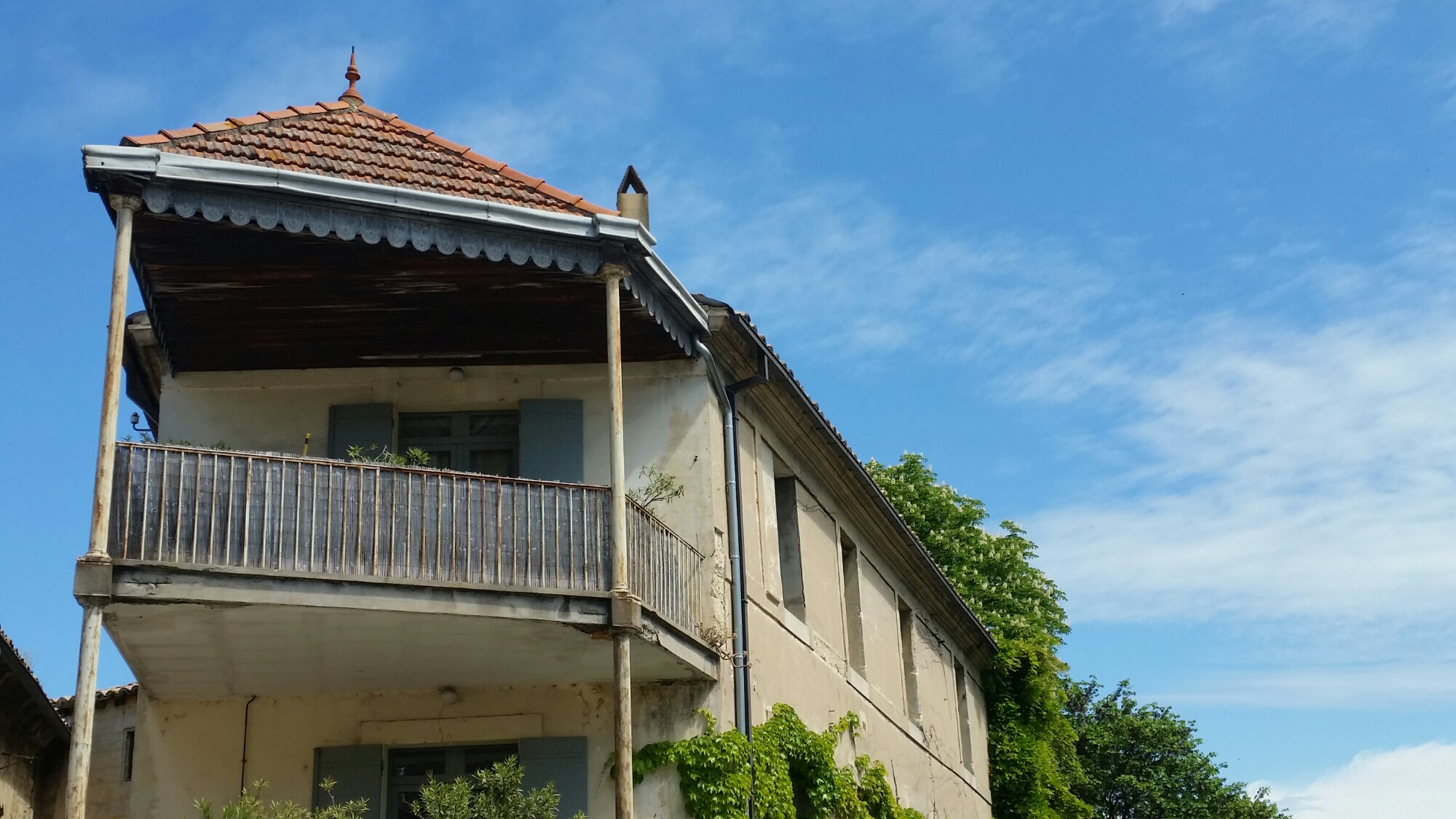
We stopped to buy a picnic lunch in Uzès, a centre of Huguenot, and later Catholic, silk production in the barren countryside north of Nîmes. This proved nearly impossible. Was it because it was Monday ? Or a bank holiday ? Or just lunch-time ? We only caught glimpses of the inner town, with its medieval bell tower attached to a more modern cathedral, the dusty streets, the adjacent bishop’s palace and ducal castle:-

Lussan
We drove through the empty countryside south of Barjac through the lush fields and green landscapes of the northern Pays du Gard, stopping only to investigate the small fortified village of Lusson, with its churches and late medieval castle:-
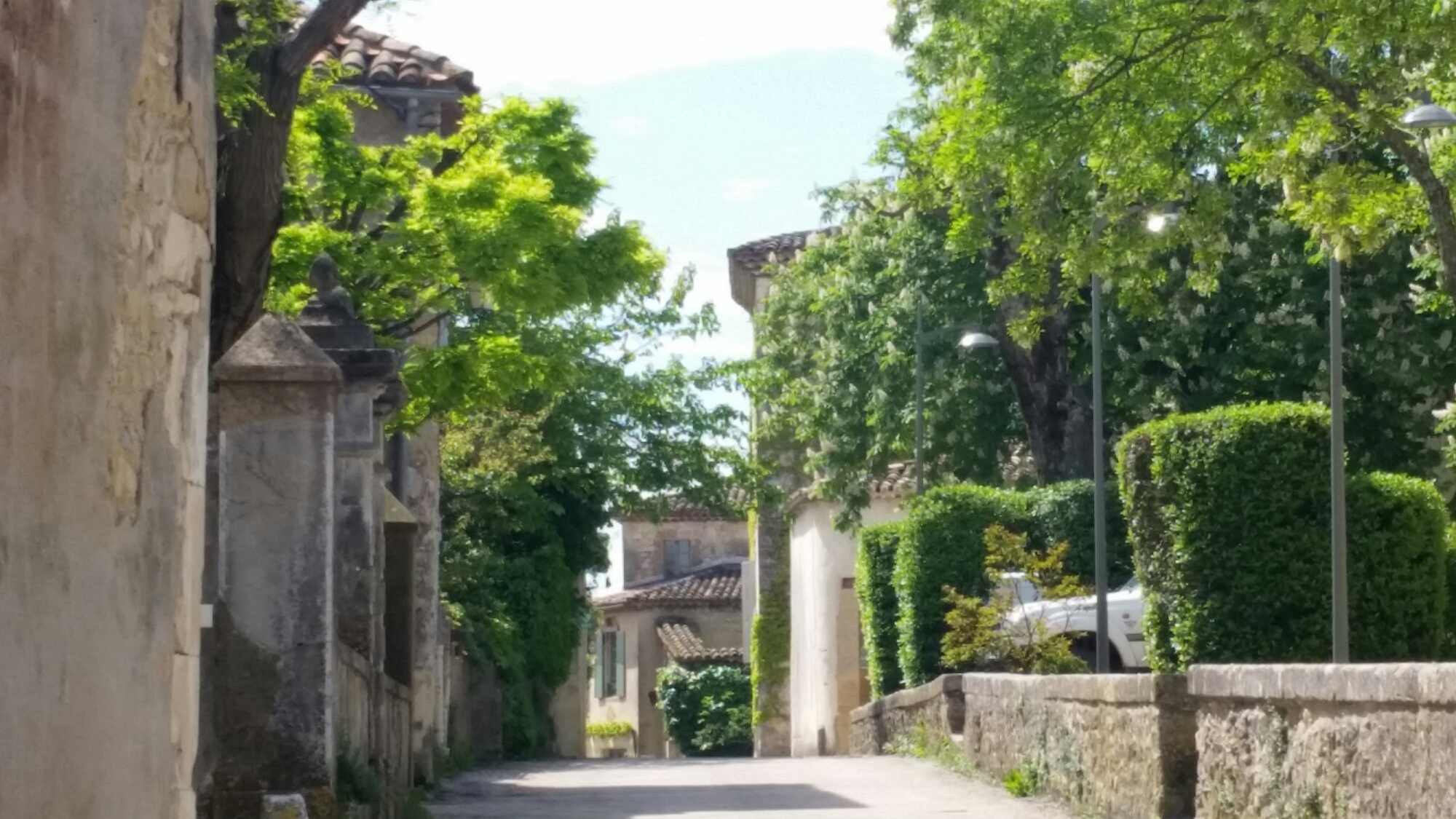
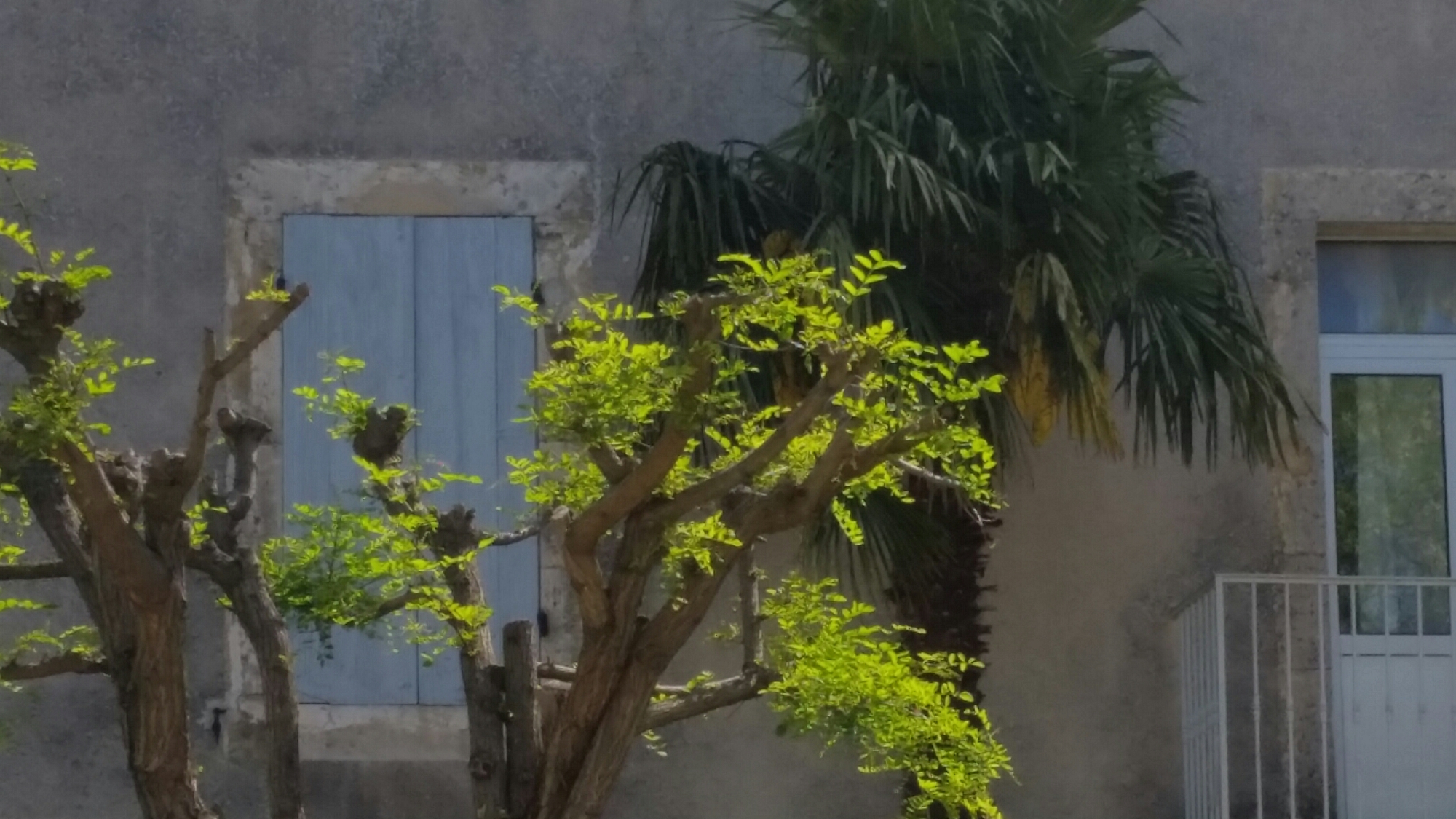
Pays du Gard
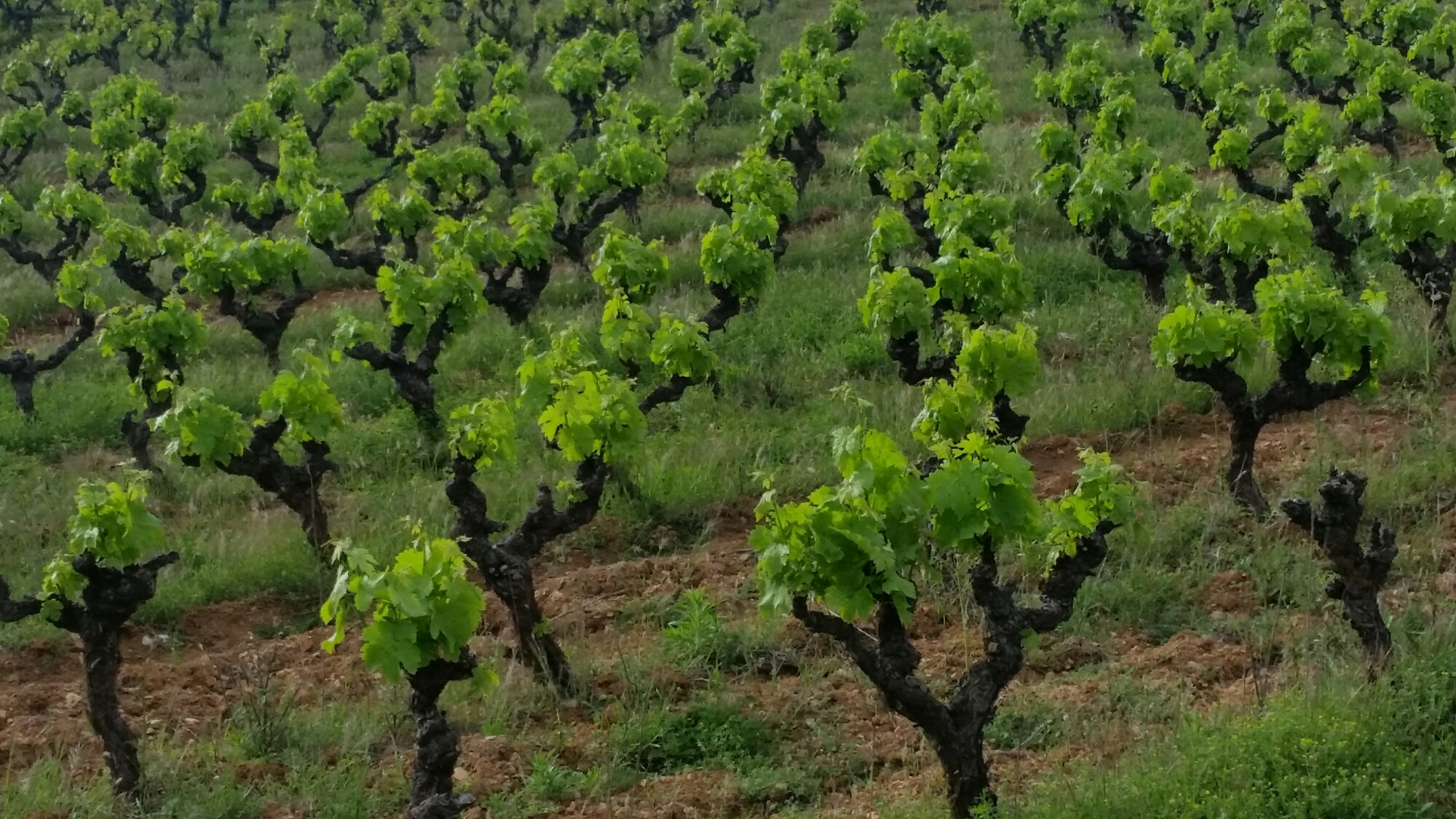
We left the valley of the Rhône at Pont St. Esprit and climbed into the hills and vineyards of the Pays du Gard just south of the Ardèche until arriving near Barjac:-
Lincoln’s Inn
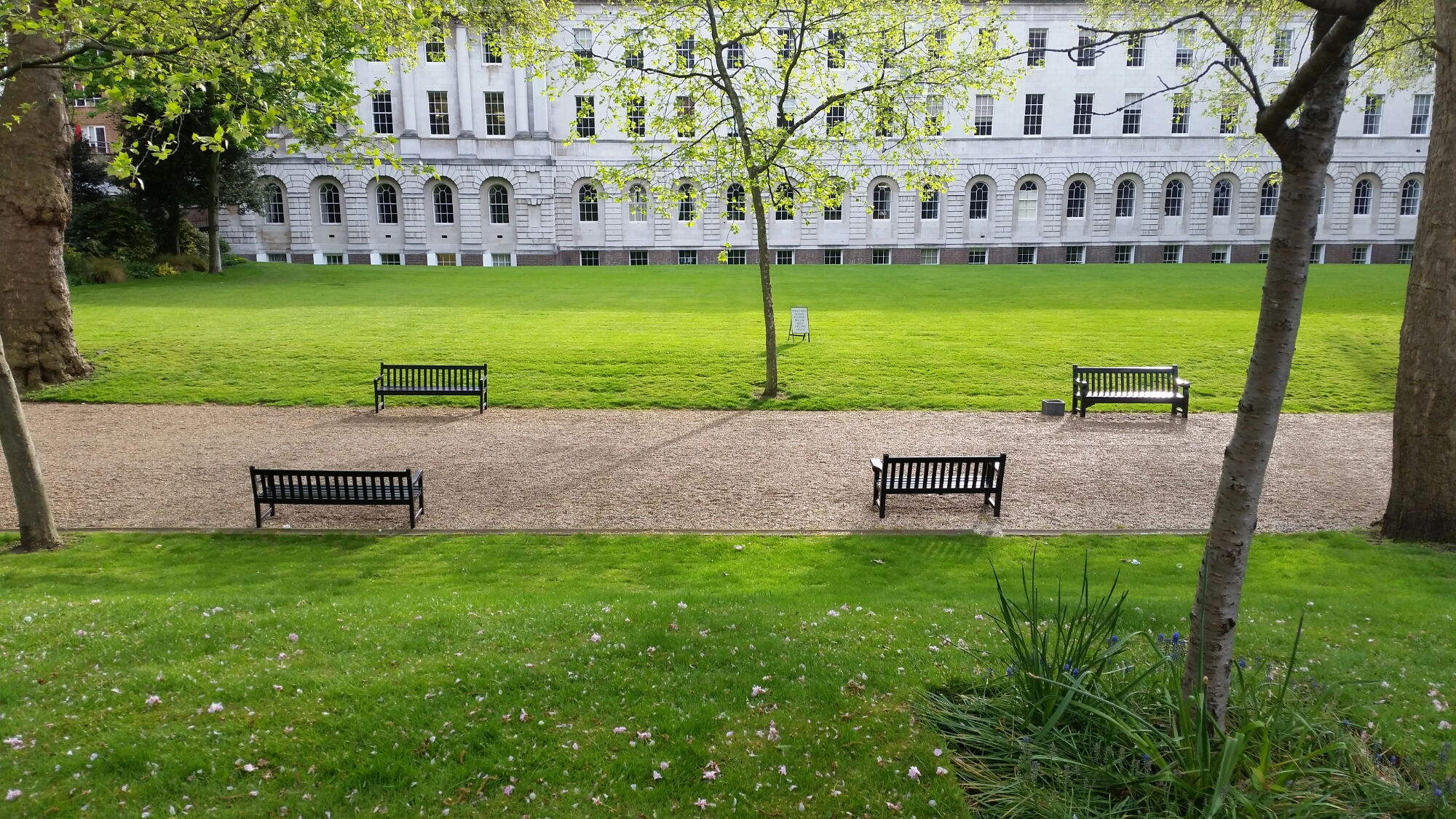
I had dinner last night in the Lincoln’s Inn Great Hall with the upper echelons of the legal profession in white tie and decorations. I have sometimes walked through Lincoln’s Inn with its mowed lawns and atmosphere of academic seclusion, but had never penetrated the Great Hall, which makes Oxbridge dining halls look small-scale and has a huge and not wholly successful fresco by G.F. Watts depicting A Hemicycle of Lawgivers, including Moses, Confucius and King Alfred, as well as Tennyson impersonating Minos.
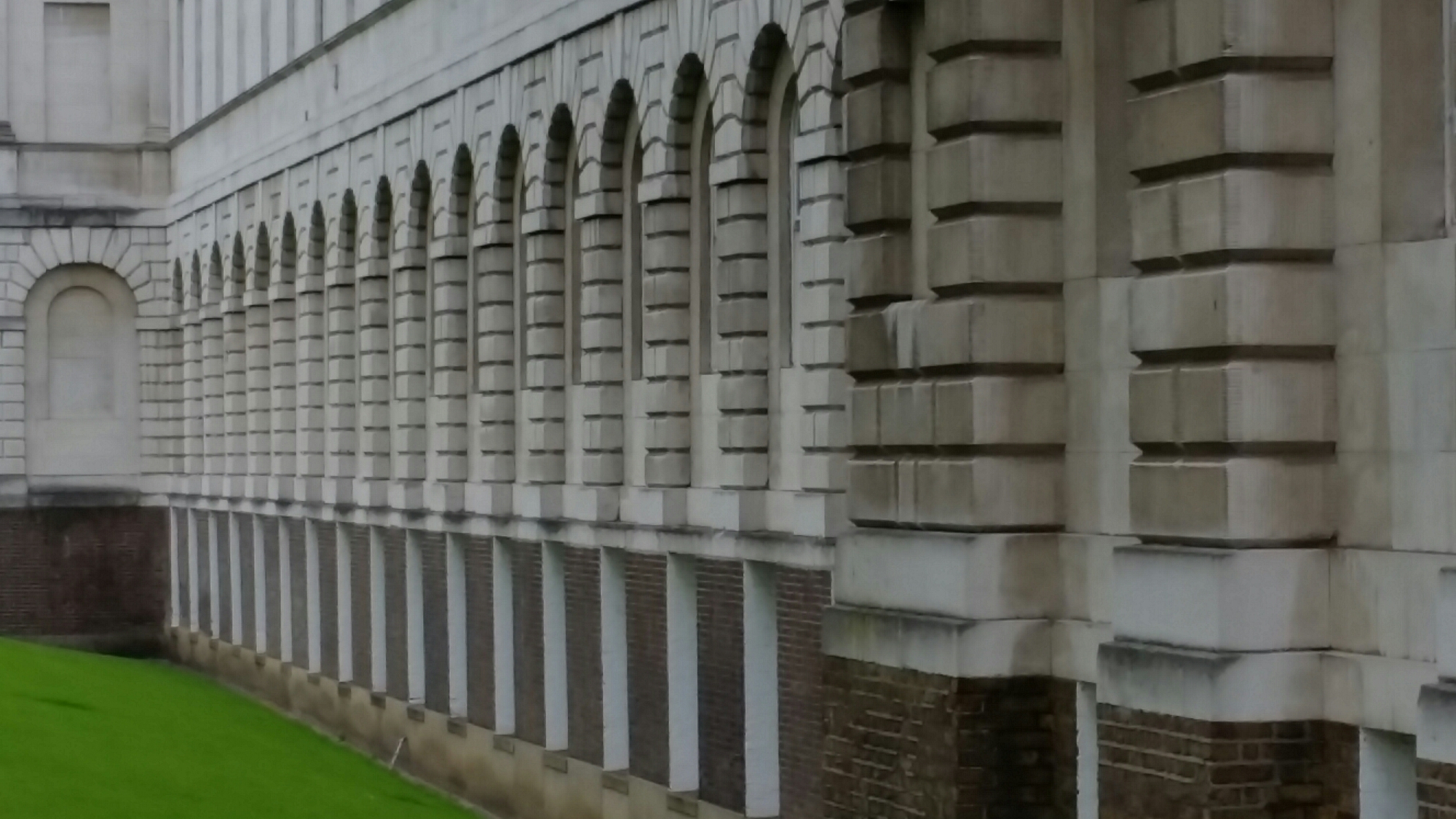
This morning I went to check out the architecture of the Stone Buildings with their grand neoclassical façade, designed by Sir Robert Taylor:-


You must be logged in to post a comment.