
I’ve just been to a party to celebrate the completion of the printed edition of the Public Catalogue Foundation. It was an amazing occasion including Fred Hohler, the original impresario who made it all happen, Andy Ellis, who has driven the machine behind Fred which has created the digital version, Tessa Jowell, who gave the speech when it was first launched at the National Gallery, David Mills and Robert Hiscox, who were amongst the first Trustees, and assorted friends, allies and especially loyal donors. Many people, including sometimes me, were sceptical that it would ever be finished. Now it has been done, all 96 published volumes, which have been the engine behind a systematic national inventory of oil paintings. Hurrah for Fred !
Tag Archives: London
Catherine Goodman (7)
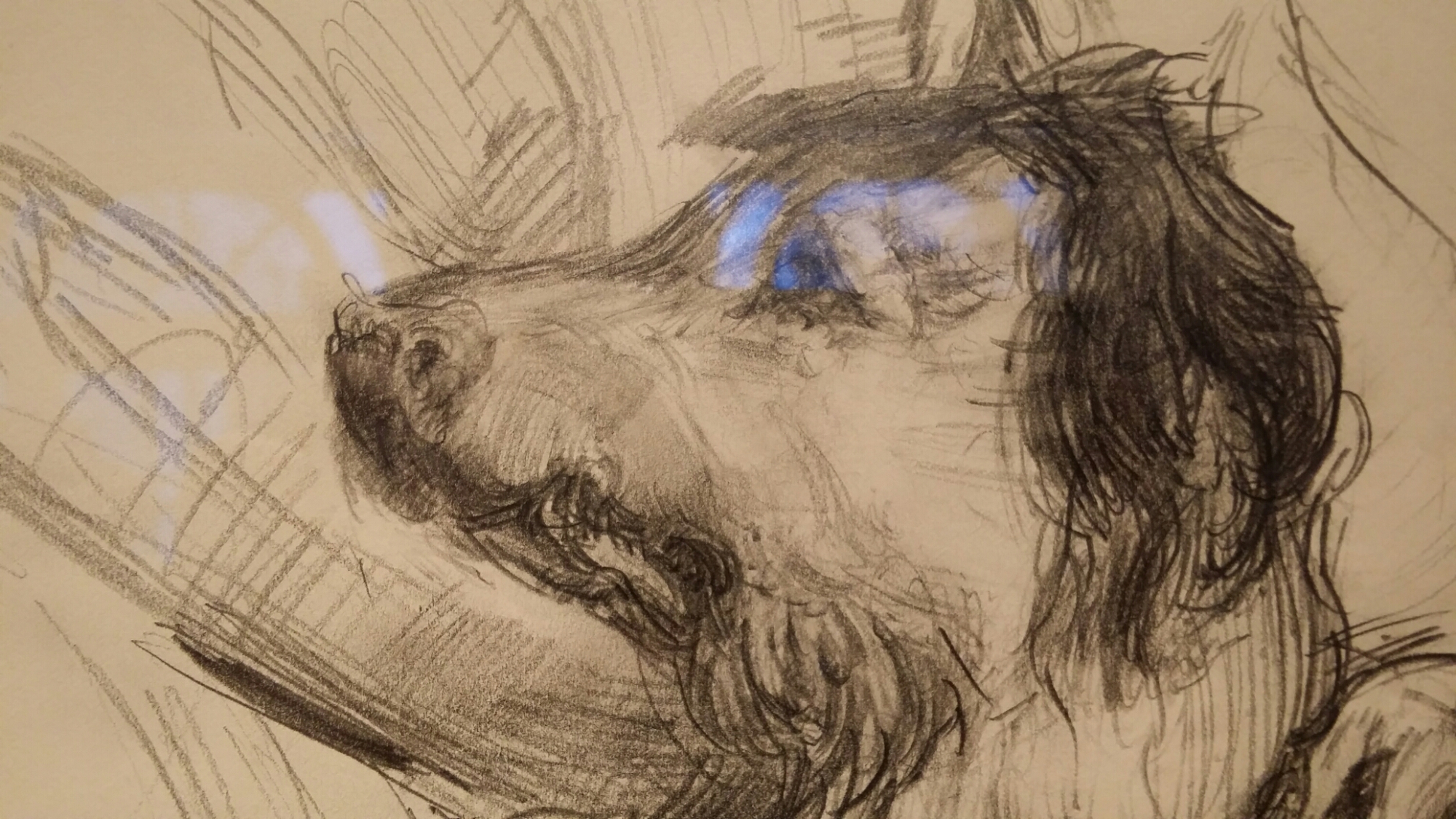
Readers of my blog will be relieved that this post is not about another sitting in which I am unable to document any progress on my portrait (sittings have lapsed over the last fortnight while I have been on holiday), but instead about Catherine’s exhibition Drawings from Veronese which is being held a long way upstairs at Colnaghi’s in Bond Street. When she is not doing portraits for her exhibition and directing the programme of the Prince’s Drawing School, she haunts the National Gallery and other public collections. Drawings from Veronese is not just timely because of the National Gallery’s exhibition, but the result of several years of close observation and visual record of Veronese’s paintings. It’s also a test of one’s knowledge of the paintings. Spot the dog:
Christopher Le Brun
One of the pleasures of the weekend has been seeing an extensive collection of work by the PRA, acquired either direct from him or on the secondary market (please forgive the unprofessional photographs).
There are big paintings from his early De Chirico phase, not long after he had left the Slade and before I knew him:
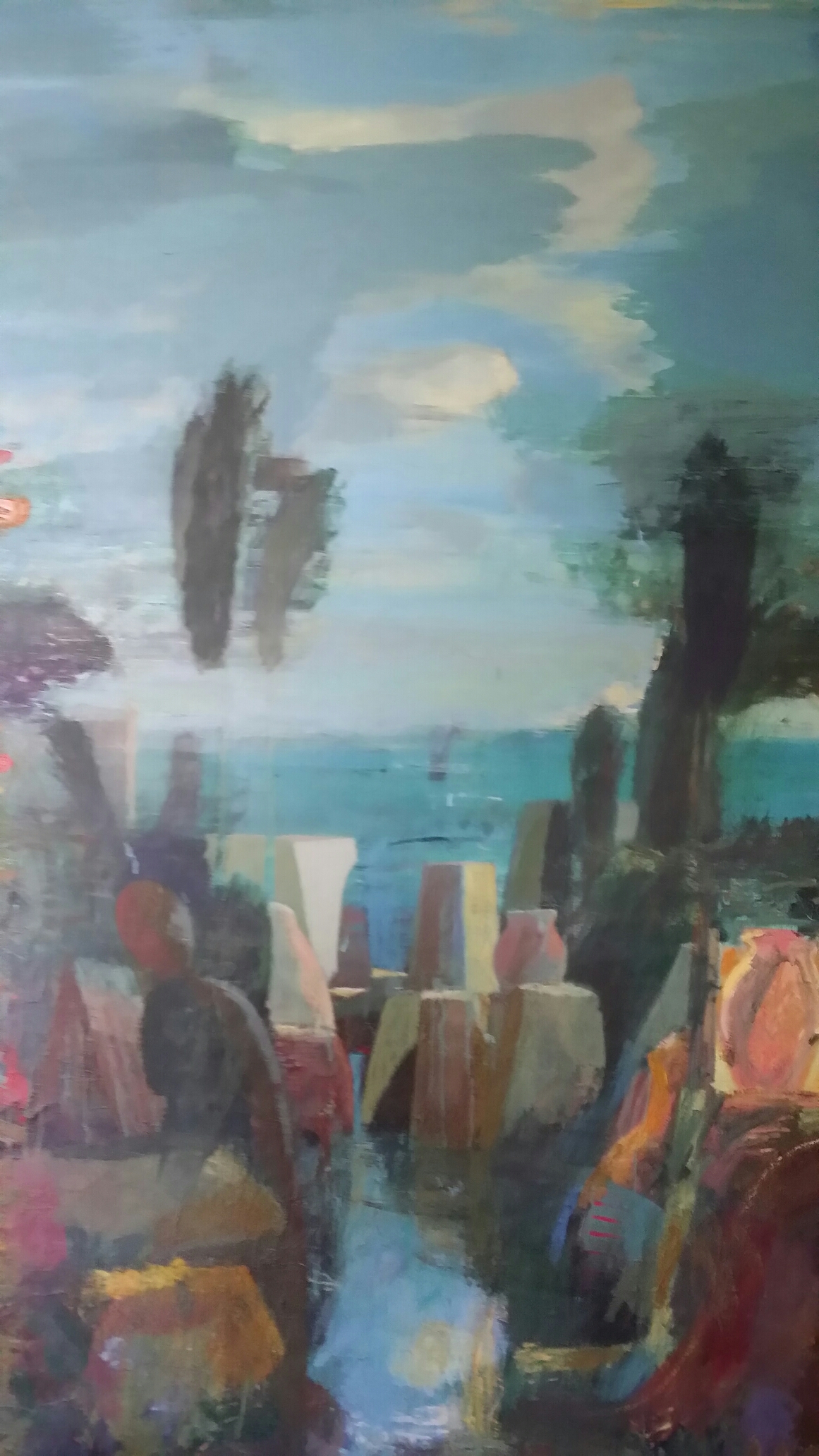
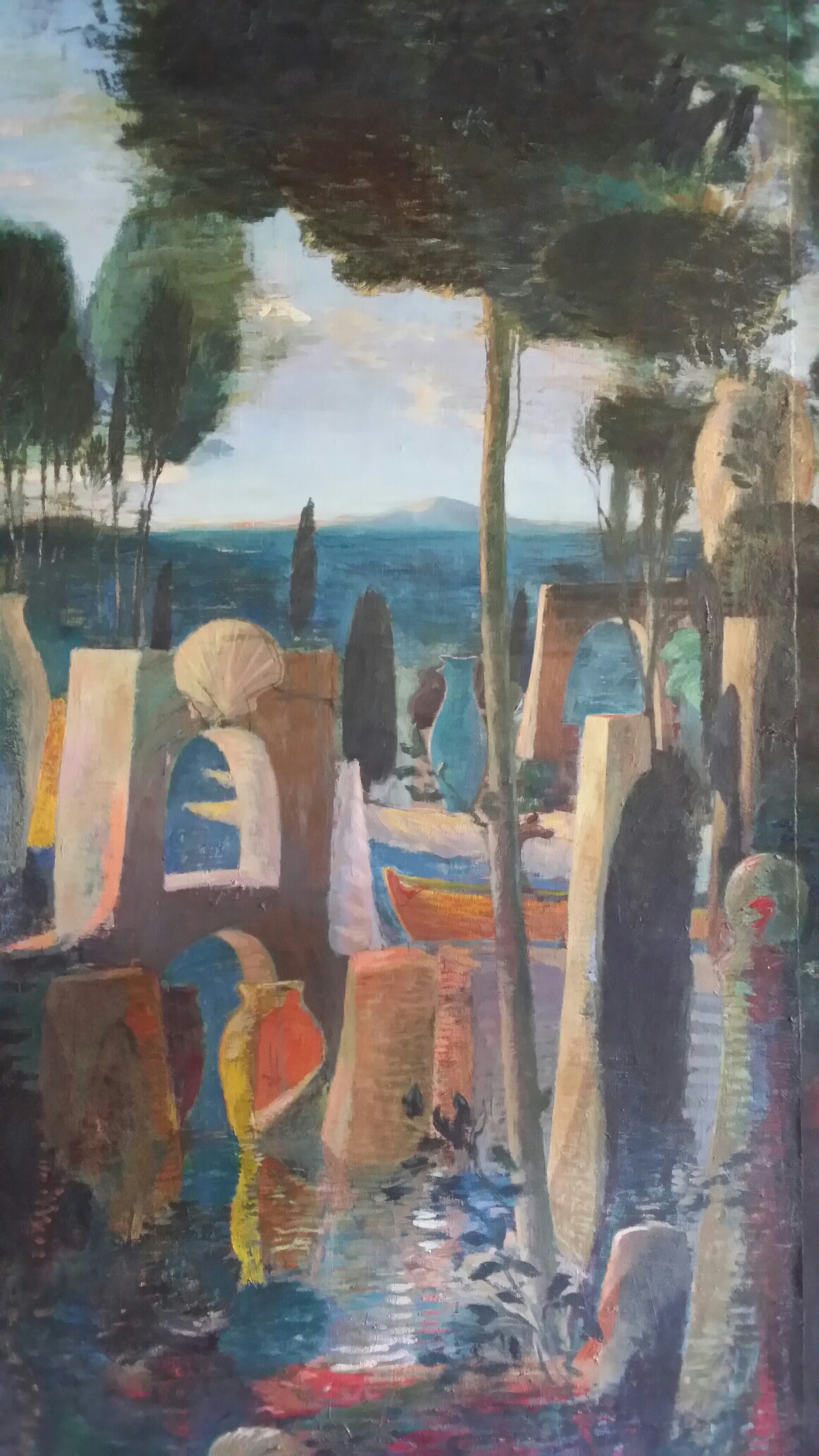
Shield, a grand painterly painting from the period of the exhibition New Spirit in Painting (it’s dated 1982-1984):
Continue reading
The Establishment
I discovered recently (as it happens, in a footnote to a letter that Hugh Trevor-Roper wrote to Wallace Notestein in March 1960 denouncing Sir Oliver Franks as a candidate for the Chancellorship of Oxford University and proposing Harold Macmillan as an anti-establishment candidate instead) that the term ‘The Establishment’ was not first used, as I had always understood, by the journalist Henry Fairlie in an article in The Spectator in 1955, but by the historian Hugh Thomas as he drove past the Royal Academy in a taxi in August 1954. Maybe it was legitimate in 1954 when a visit to the Summer Exhibition was the start of the season and the annual dinner included Winston Churchill, although the term described the network of social influence which protected Guy Burgess and Donald Maclean from detection and I find it hard to view Alfred Munnings as part of this tendency. Nowadays, I like to quote Michael Craig-Martin who said ‘I thought I was joining the establishment and discovered that I had joined the anti-establishment’.
Humphrey Brooke
My second choice of painting from the RA’s own collection is going to be the picture of Humphrey Brooke, one of my predecessors as Secretary. He died in 1988, but his widow, Nathalie, is still very much alive and comes to events. He came from a grand Yorkshire family, was a so-called Monuments Man during the second world war, worked in Austria after the war where he met Nathalie Benckendorff, was deputy director of the Tate, and became Secretary of the RA in 1952. He suffered from manic depression and believed it could only be cured by sex and smoking. His portrait by Olwyn Bowey shows the latter, a man of the establishment, comfortably enjoying a fag.

Humphrey Brooke (1914–1988)
by Olwyn Bowey. (c) The Royal Academy of Arts
The American Ambassador
The American Ambassador came and spoke at the Royal Academy tonight. I suppose there comes a time when it is not just the policemen, but the Ambassadors who are younger than one. Suffice it to say that Matthew Barzun is extremely nice, intelligent and highly articulate, the son of Jacques Barzun who pioneered cultural history in the US and was an expert on baseball as well as the history of ideas. Matthew conducted a very simple and effective exercise which was to ask each of us to draw what we least liked about the US. Several of us, including me, tried to think of an easy way of drawing its immigration policies, those cold, inhospitable halls by which one is required to enter the US. As many people drew guns which is easier. I hadn’t realised that there are as many guns as there are American citizens, whereas in the UK only 6% of the population owns guns. The non-resident Americans all tried to draw the IRS. The other thing expressed was a view that Americans are arrogant which I thought was a touch discourteous to someone who was so courtly and unarrogant.
Learning to Draw
I have been asked to select my ten favourite paintings from the collections of the Royal Academy as a way of advertising the benefits of online browsing of the collection on the BBC website Your Paintings (http://www.bbc.co.uk/arts/yourpaintings/). I initially thought that I would just choose the ten most famous paintings, partly inspired by seeing so many of them displayed in the exhibition, Genius and Ambition, in the grand Victorian galleries at Bendigo in Australia. But you don’t necessarily need the website to find out about Constable’s Leaping Horse. What I like about the website is that it is easier to find out about paintings that even I did not know existed because they are kept in store (once we have our new building open in Burlington Gardens I very much hope that more of them will be shown).
I thought that I would start with a painting which I found myself looking at during a long meeting earlier this week. It’s attributed to Zoffany, but not entirely convincingly (1781 was the year he exhibited his great group portrait of the The Sharp Family) and shows The Antique Room of the Royal Academy at New Somerset House (03/846).

The Antique Room of the Royal Academy at New Somerset House, 1780 – 1783. (c) Royal Academy of Arts
It shows a group of students drawing from the already extensive collection of classical casts – the so-called Plaster Academy – not long after the Royal Academy’s new building was opened in Somerset House. The now ageing Keeper, George Michael Moser, is said to be overseeing the class, but it doesn’t resemble the caricature of him by Rowlandson. The picture has an earnestness to it which gives a sense of the appeal of the Academy in its early days, the opportunity to learn to draw by candlelight under the supervision of established artists and with their guidance, and their passionate interest in copying from the antique.
Strike Day
Today I’ve got an all-day meeting in King’s Cross. The journey was not half so easy. I decided to walk through the early morning mist along the canal. The rest of London had decided to do the journey by bicycle. It was like being in the middle of a bicycle marathon, children on bicycles, dispatch riders, racing bicyclists, Boris bicyclists, all ringing their bells as they rushed past en route to Canary Wharf. Suddenly the sun shone.

The District Line
There are benefits in living on the District Line when it comes to strike days. I remember reading in John Lanchester’s admirable short book book about it that the older drivers graduate to the District Line in order to enjoy the long journeys above ground between Bromley-by-Bow and the green fields of Upminster at one end and out to Wimbledon at the other instead of having to endure the deep bore tunnels of the Northern Line. This means that, when everyone else has to endure long traffic jams and queues for the buses, the citizens of Stepney can travel as normal from Stepney Green undergound station, purling through Cannon Street and Embankment to Charles Holden’s stately headquarters at St. James’s Park.
Crazy Coqs
Last night we were invited to the end-of-the-run show for Miss. Hope Springs, the resident drag queen, who has presided at Crazy Coqs, the cabaret bar which has been preserved beneath what used to be the Atlantic Hotel and is now Whole Foods. As the last show in what has been a two-year run, it was a nicely over-the-top combination of songs which were coarse, boisterous and sometimes sentimental.


You must be logged in to post a comment.