Venice (4)

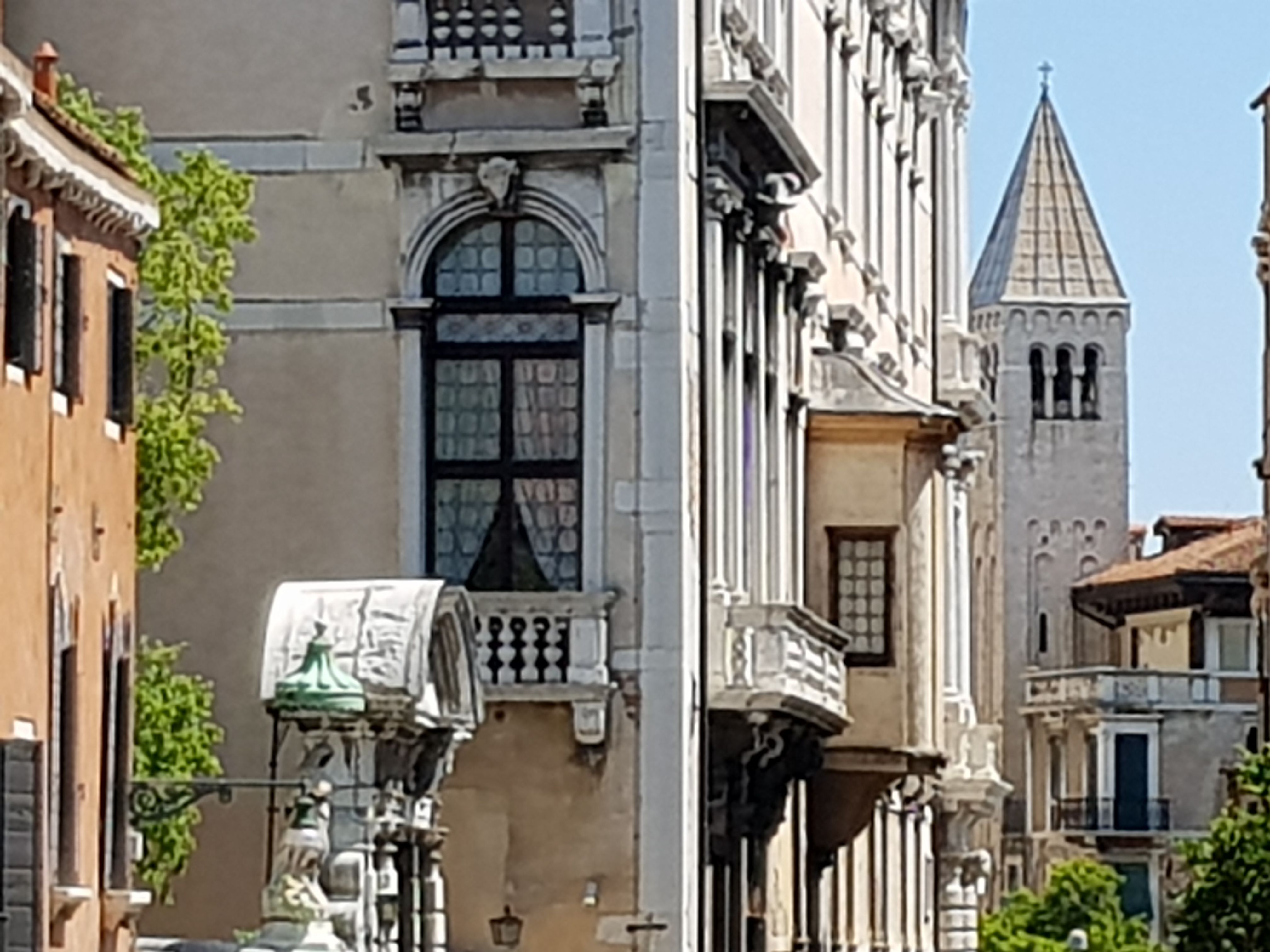
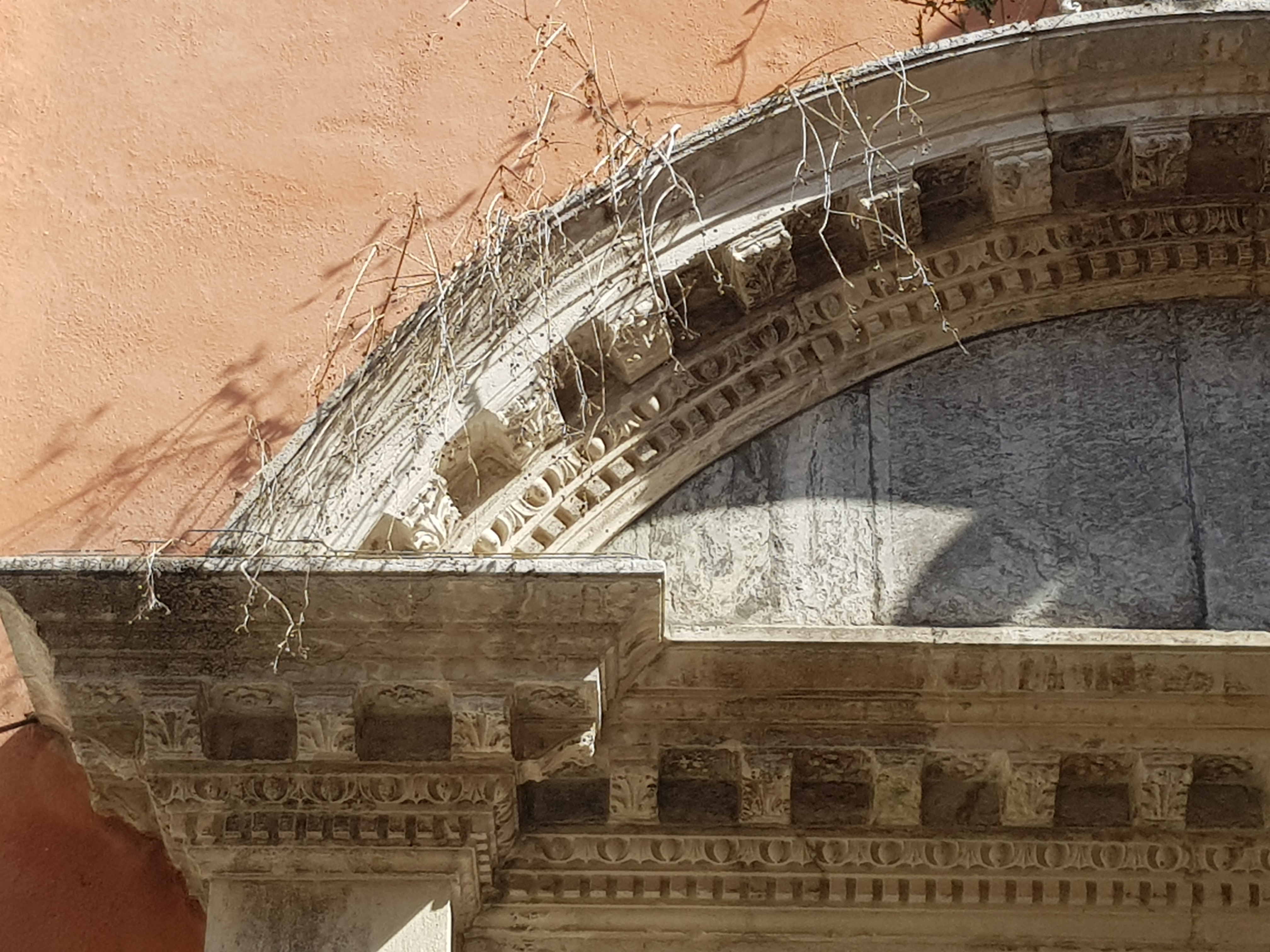
Following the good advice of comments on my blog, I set off to the Arsenale by way of the Chiesa della Madonna dell’Orto.   This is not logical, I know, but I was intrigued by the idea of seeing works in their original setting.   I passed S. Giovanni Crisostomo, by Mauro Coducci.   Early morning mass was about to begin:-
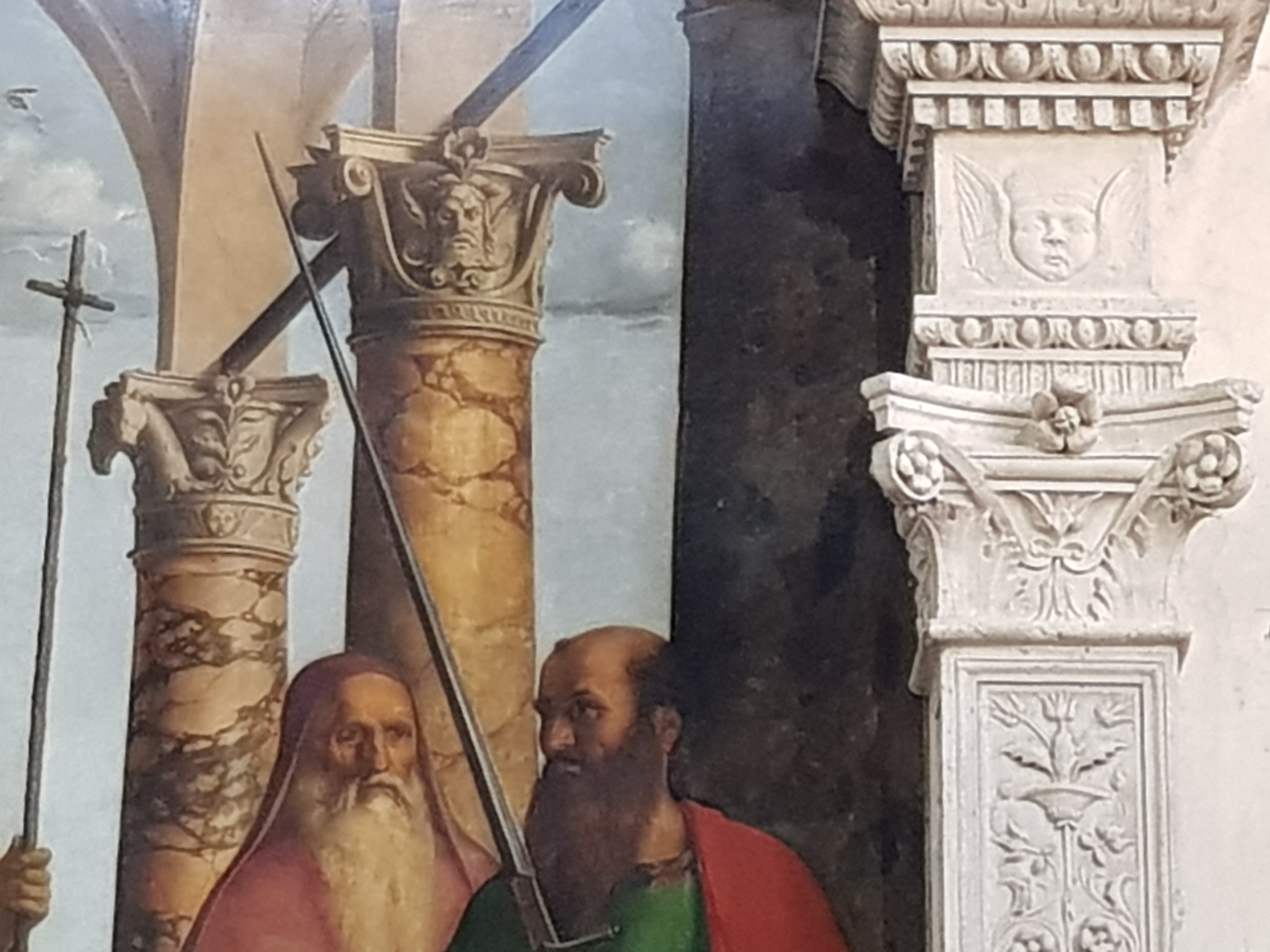
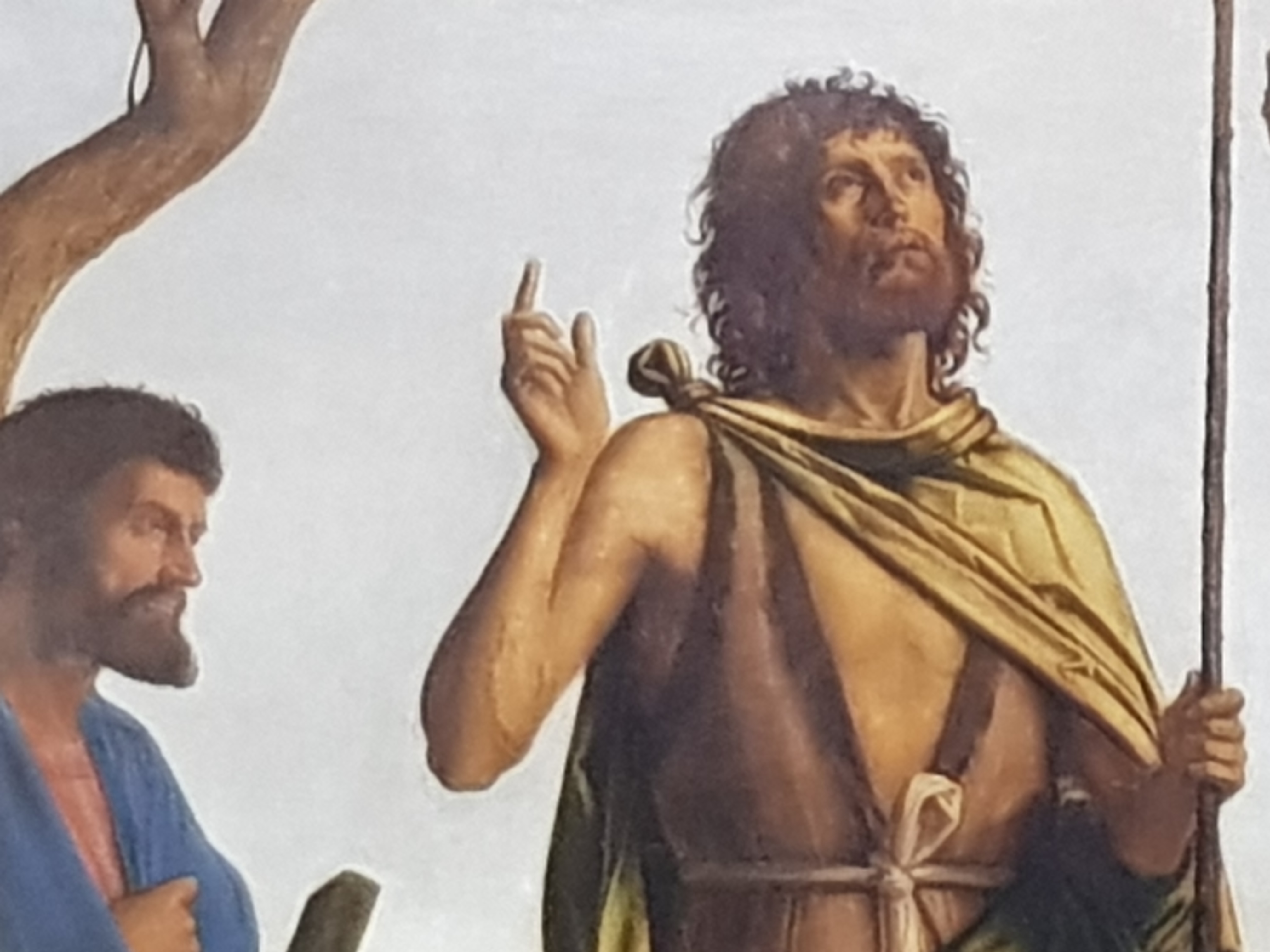
Then, through Cannareggio to the church of Madonna dell’Orto, rather remote, a Gothic barn, with grand Tintorettos in the apse and, on the right, a very beautiful altarpiece of Saint John the Baptist and other saints (c.1495), still in its original (stone) frame:-
I hopped on a vaporetto to the Arsenale, the end of the tour.

Standard

Intuition 

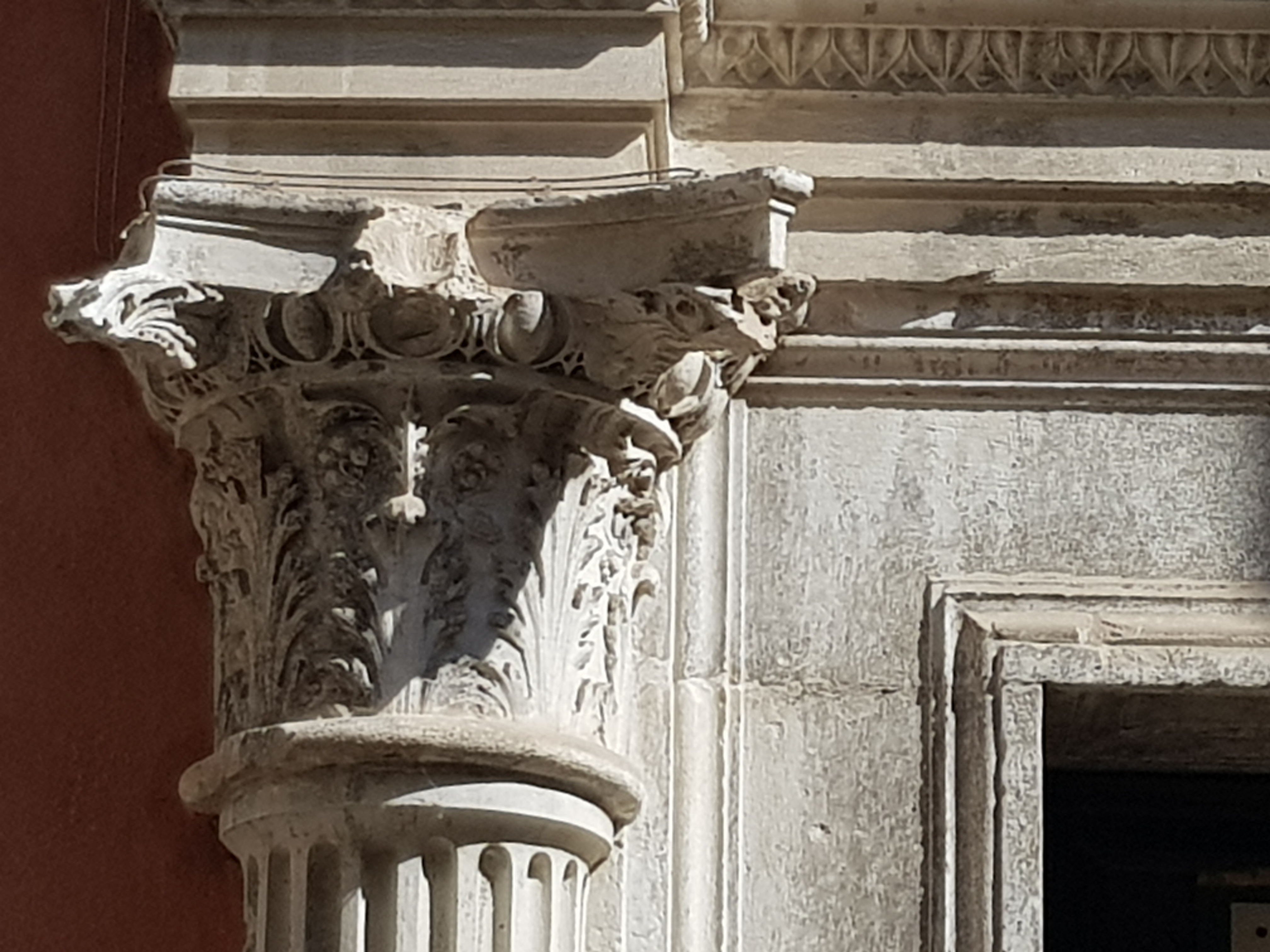
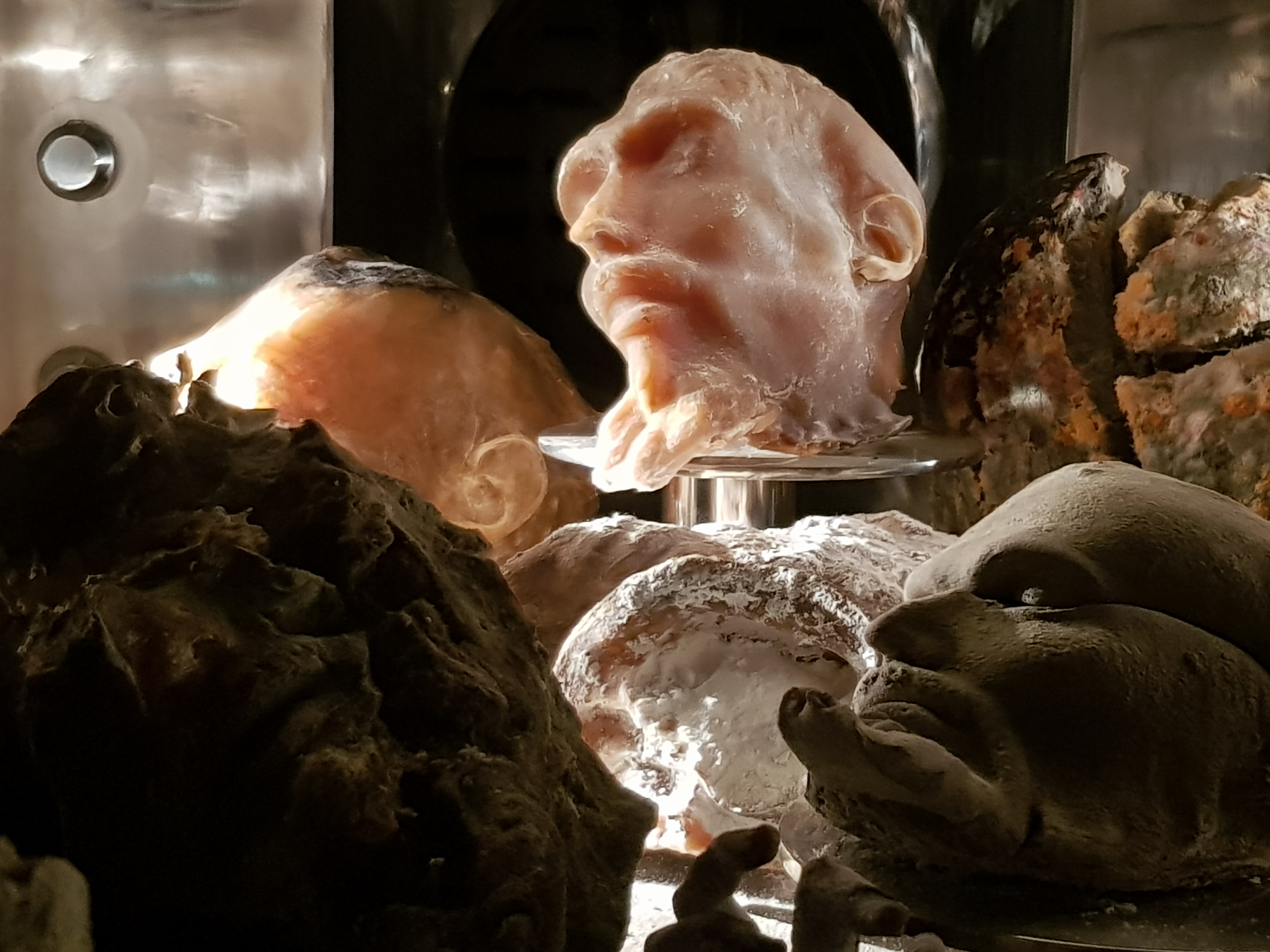
Of all the things I have seen in Venice, particularly in connection with the Biennale, by far the most powerful has been the installation by Axel Vervoordt in the Palazzo Fortuny on the theme of Intuition.   Ten years ago, the Palazzo Pesaro, which was left to the city of Venice by the childless Mariano Fortuny on his death in 1949, was in a state of disrepair.   Vervoordt kept its state of picturesque decay intact and this year has done a beautiful, powerful set of atmospheric installations, combining ethnographic material with contemporary art.   I have seldom seen this form of highly aestheticised, abstract display done so well, except maybe in Peter Zumthor’s Kolumba Museum in Cologne.
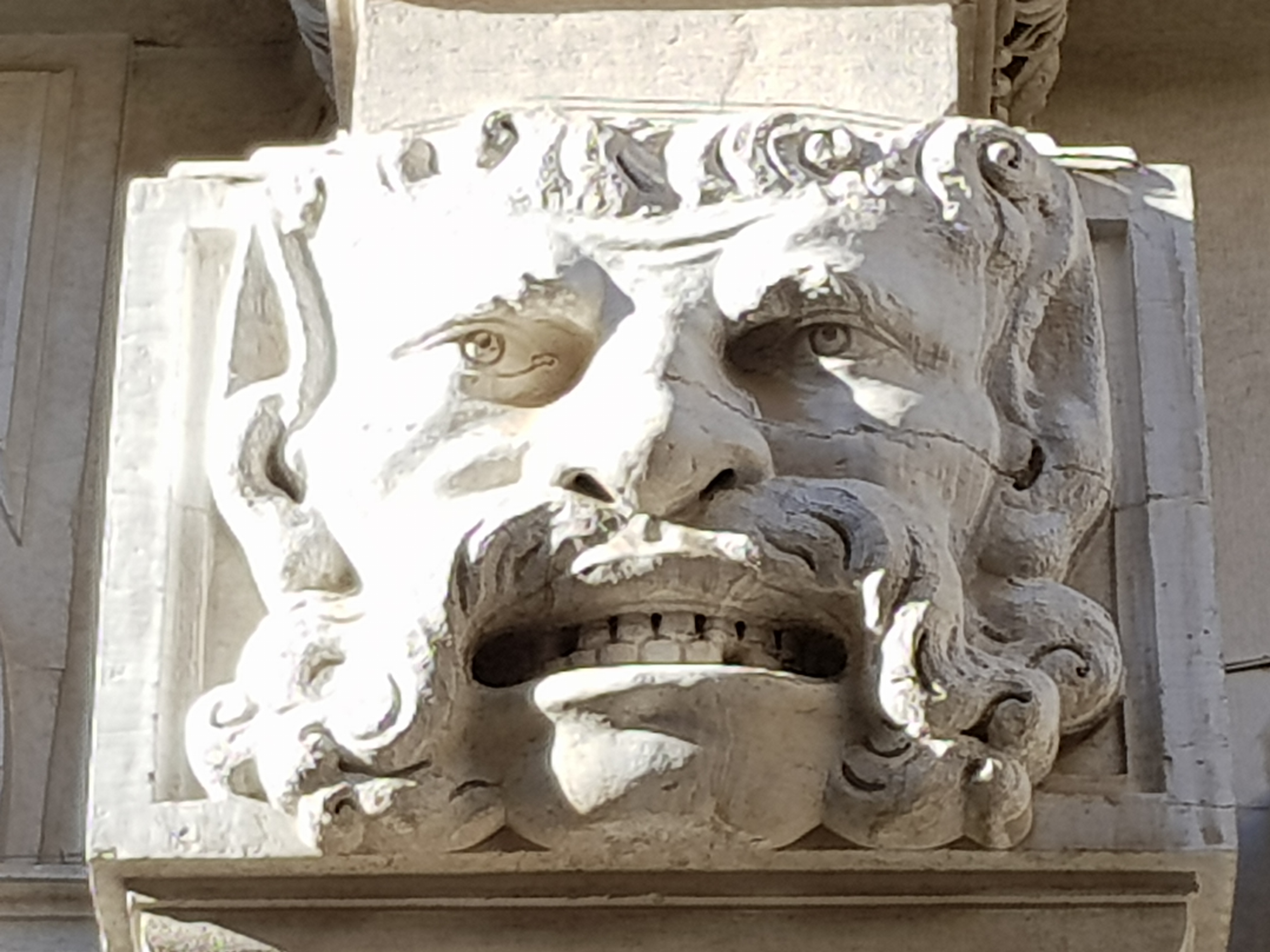
The displays began with a group of prehistoric monuments in a darkened room, some at least borrowed from the Soulages Museum in Rodez:-

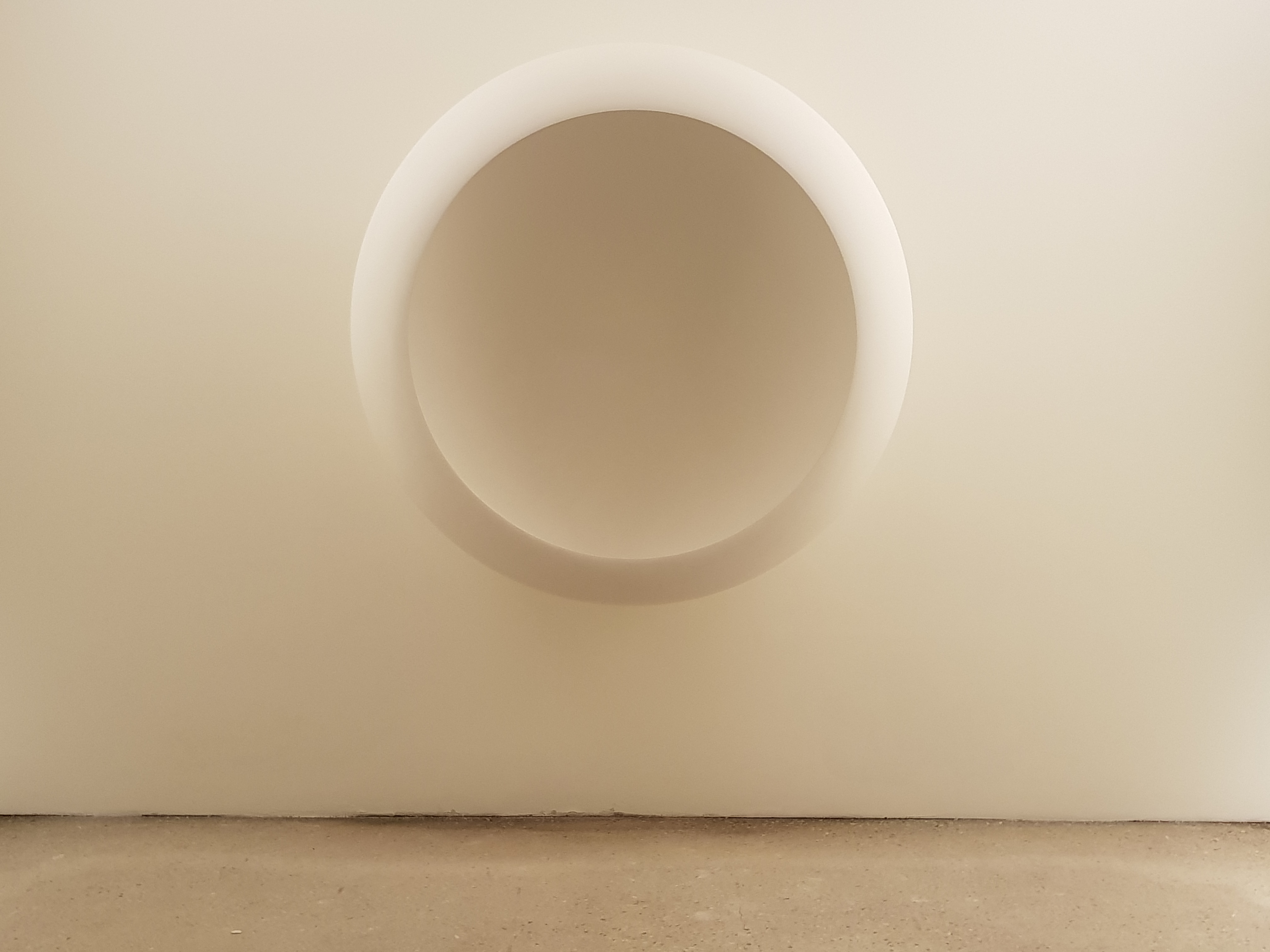
Round a corner, there’s a recent Antony Gormley (2013) and a work by Anish Kapoor:-

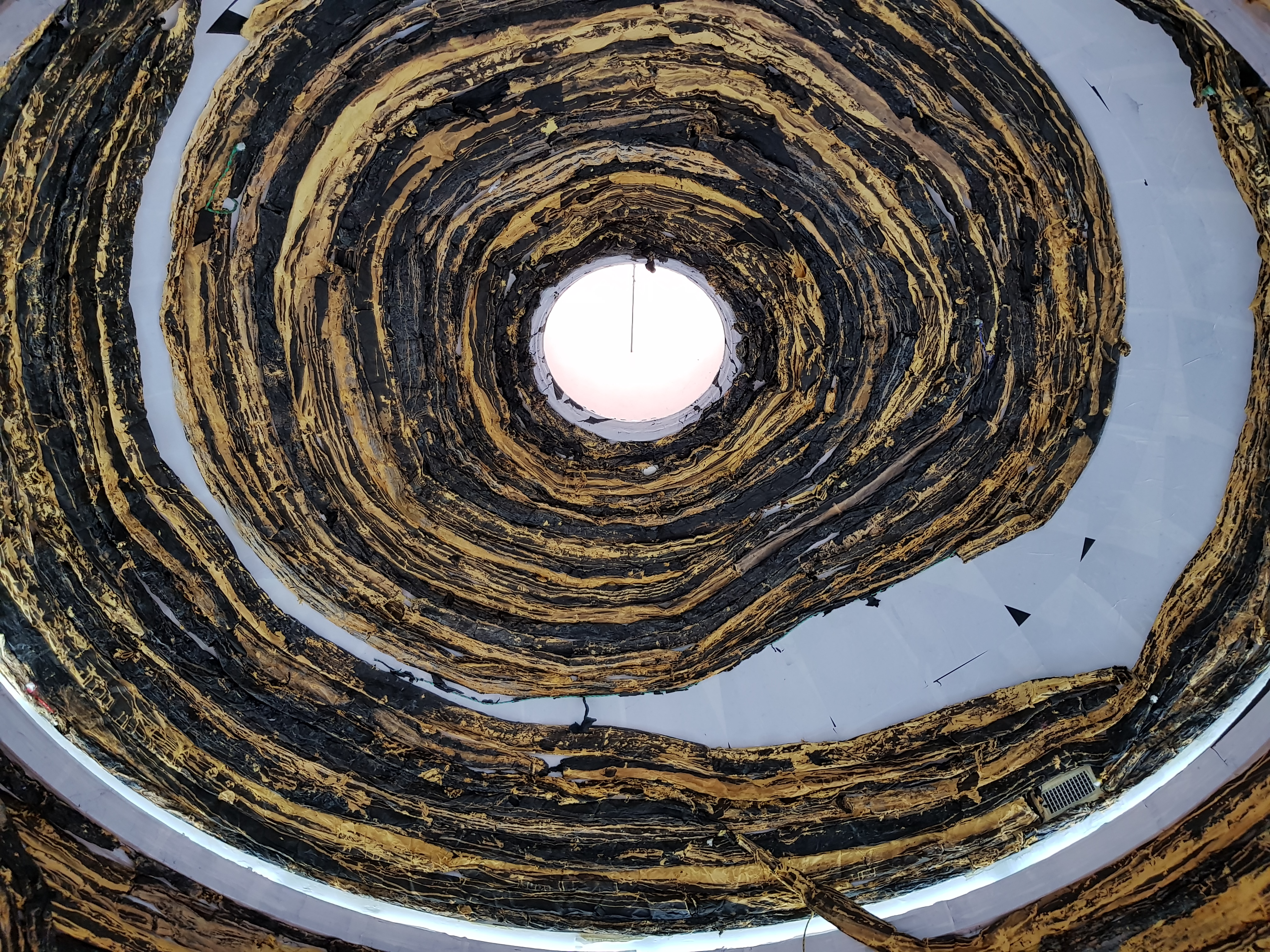
Upstairs, one comes into the grand first floor salone, with views out over the roofs of Venice and a vast and atmospheric black-and-gold work by El Anatsui:-

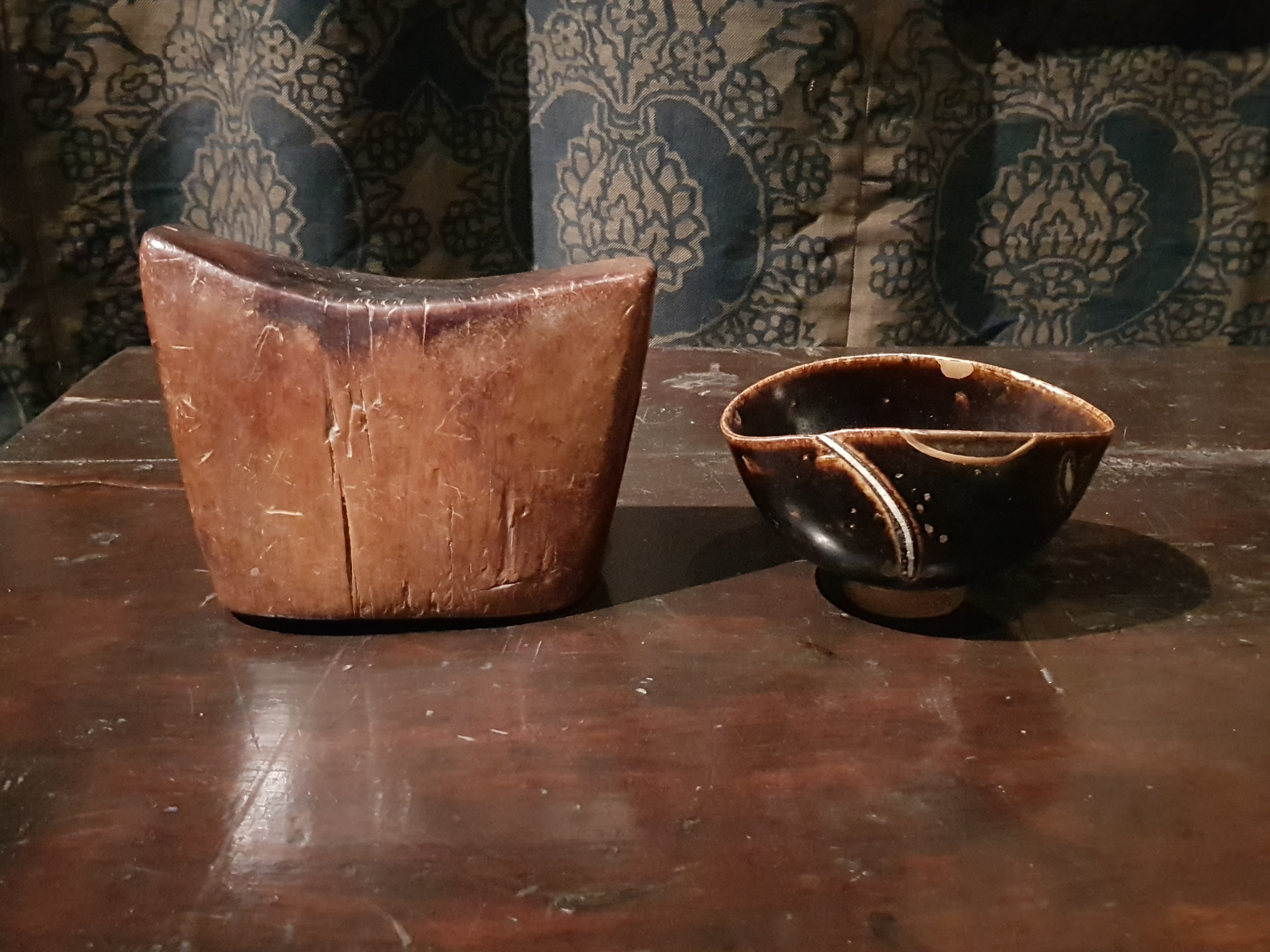
Elsewhere in the room, there are mixed display cases, with works displayed against patterned silk:-

Standard

Venice (3)

I again strayed further off the beaten track than I was planning to, wandering round the Dorsoduro en route to Stephen Chambers’s exhibition in the Ca’ Dandolo.

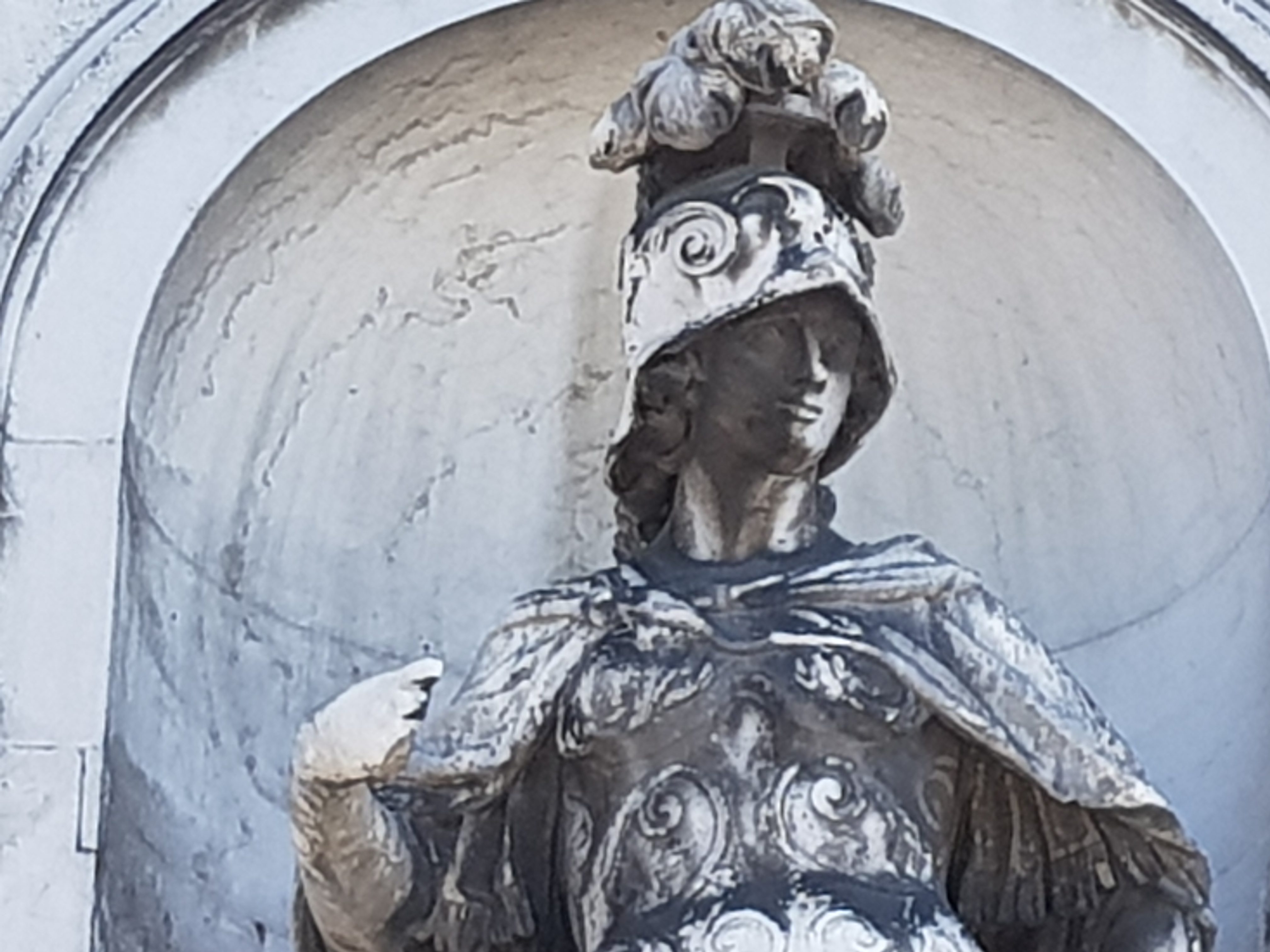
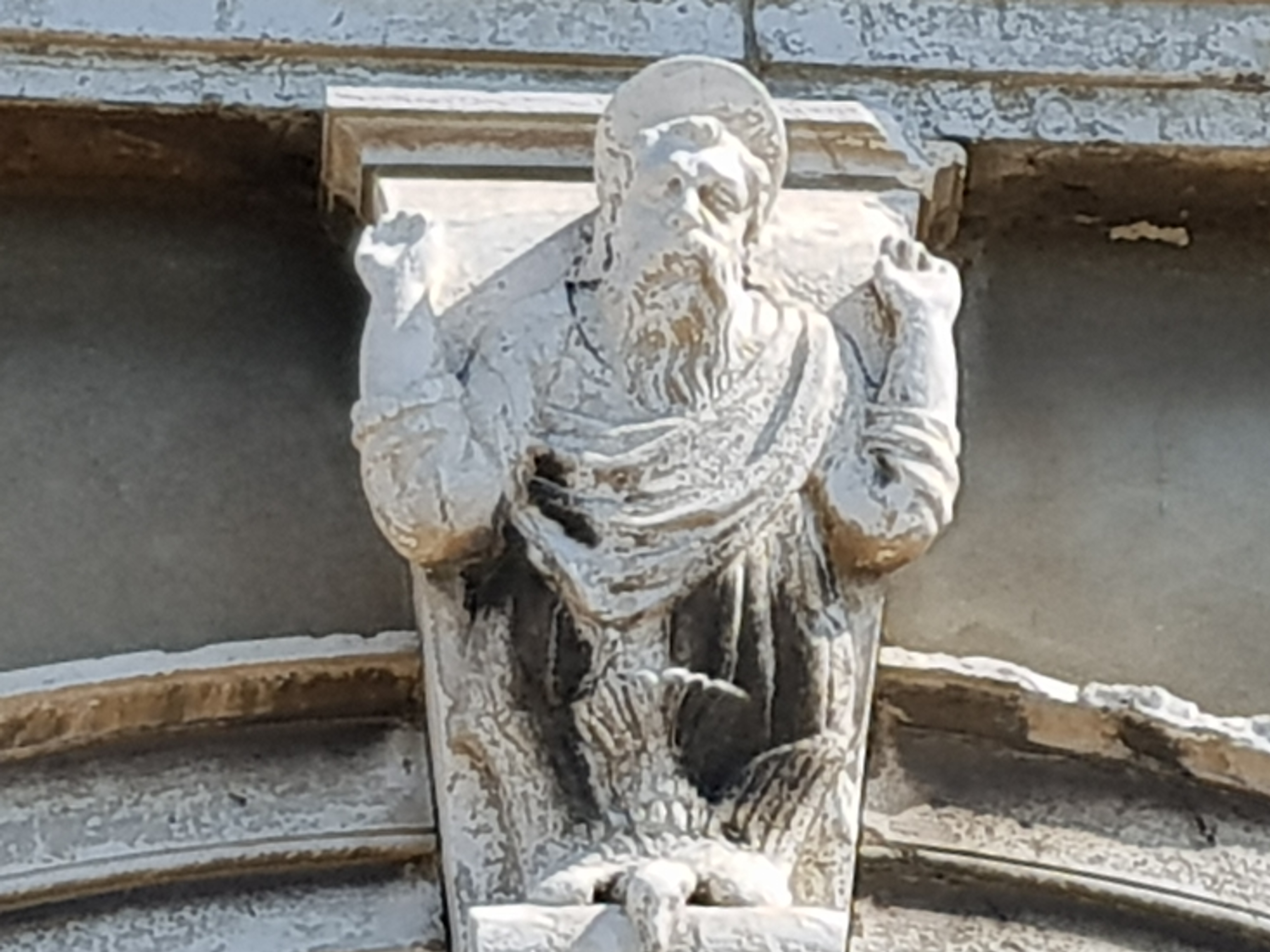
Starting in the Gesuati, where an entry by Keith Christiansen of the Met. on 18th. century Venice, encouraged me to pay closer attention to the paintings and statuary than I might have done:-

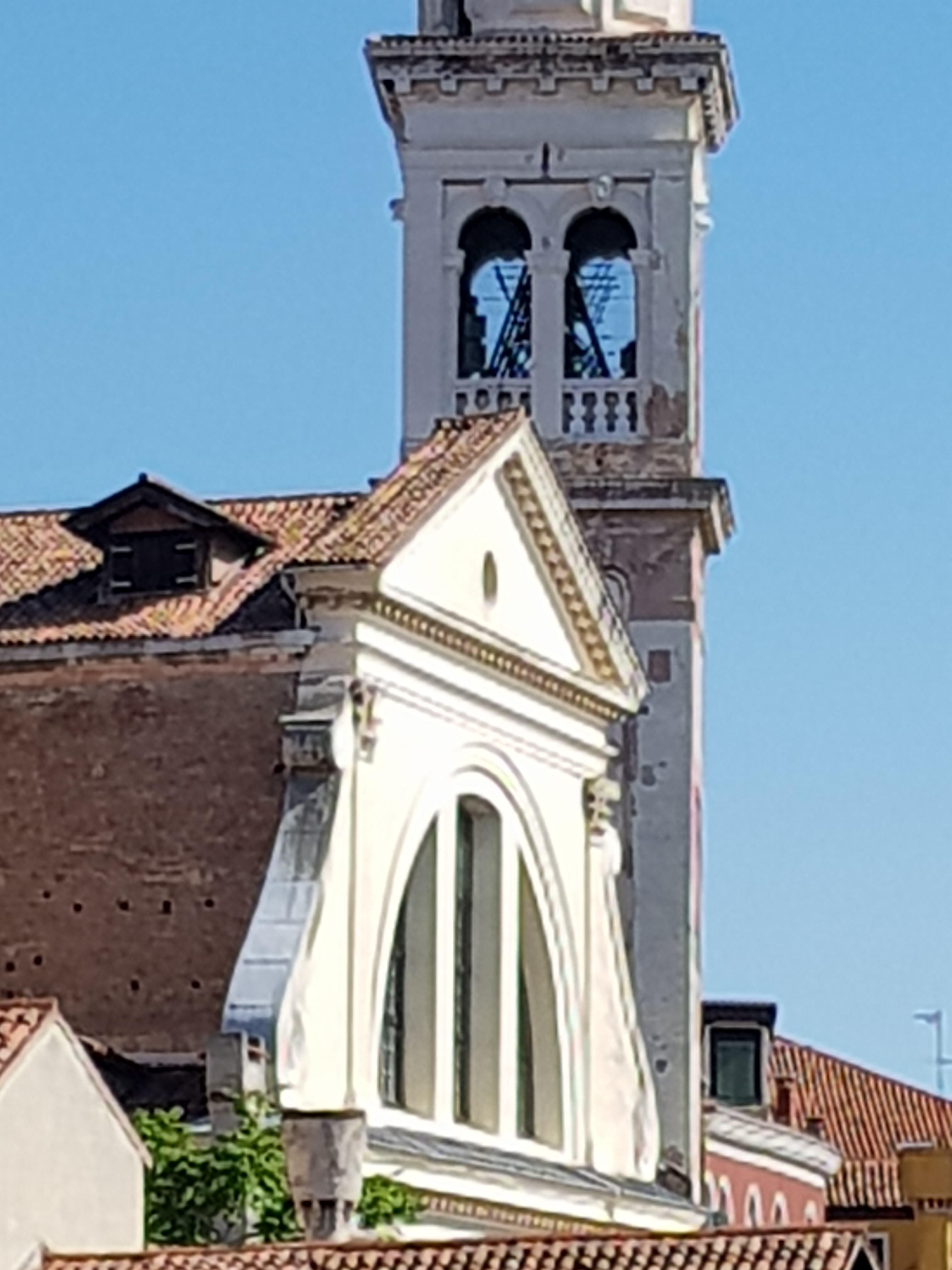
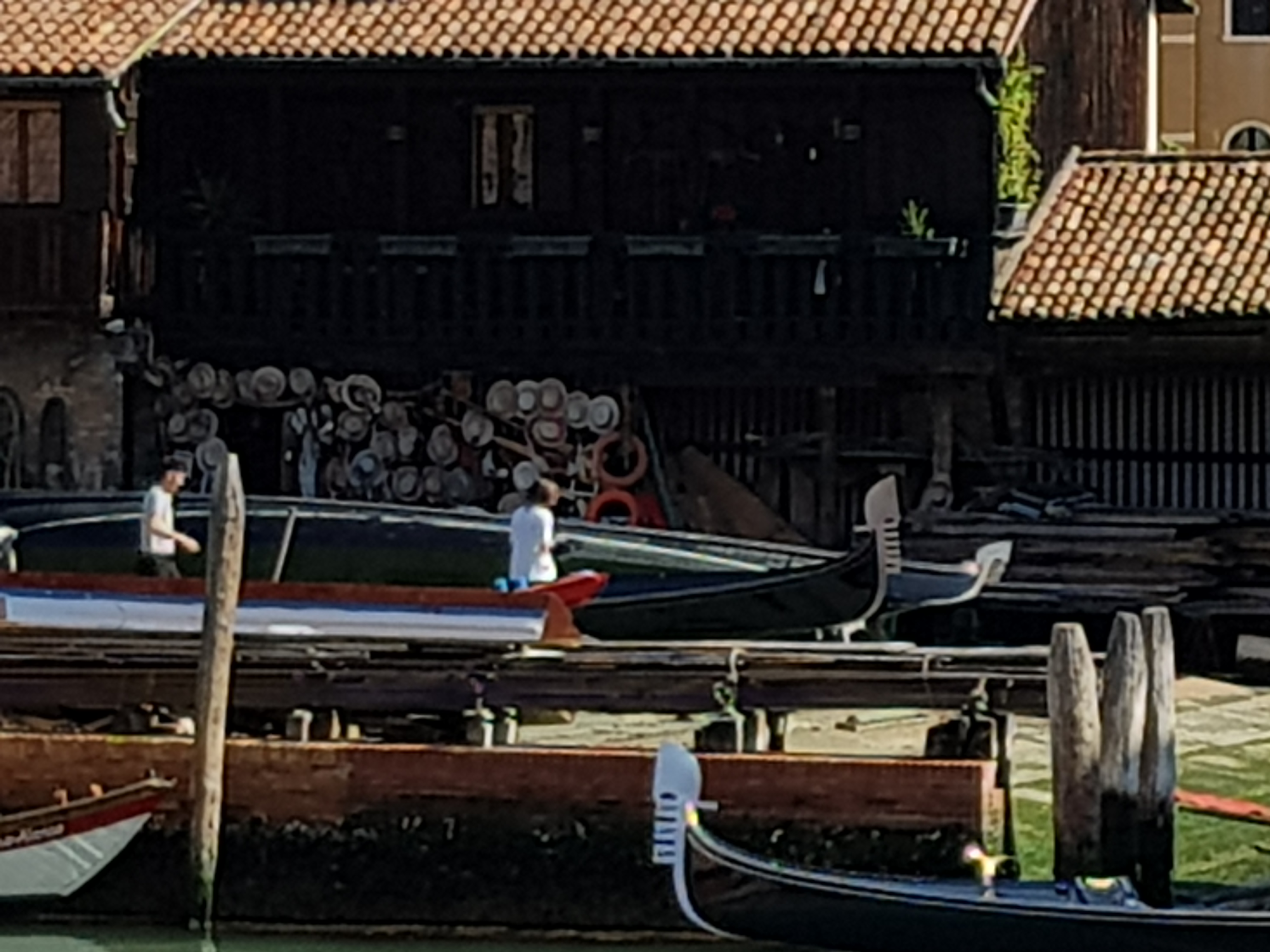
Then, S. Trovaso and its adjacent boatyard:-

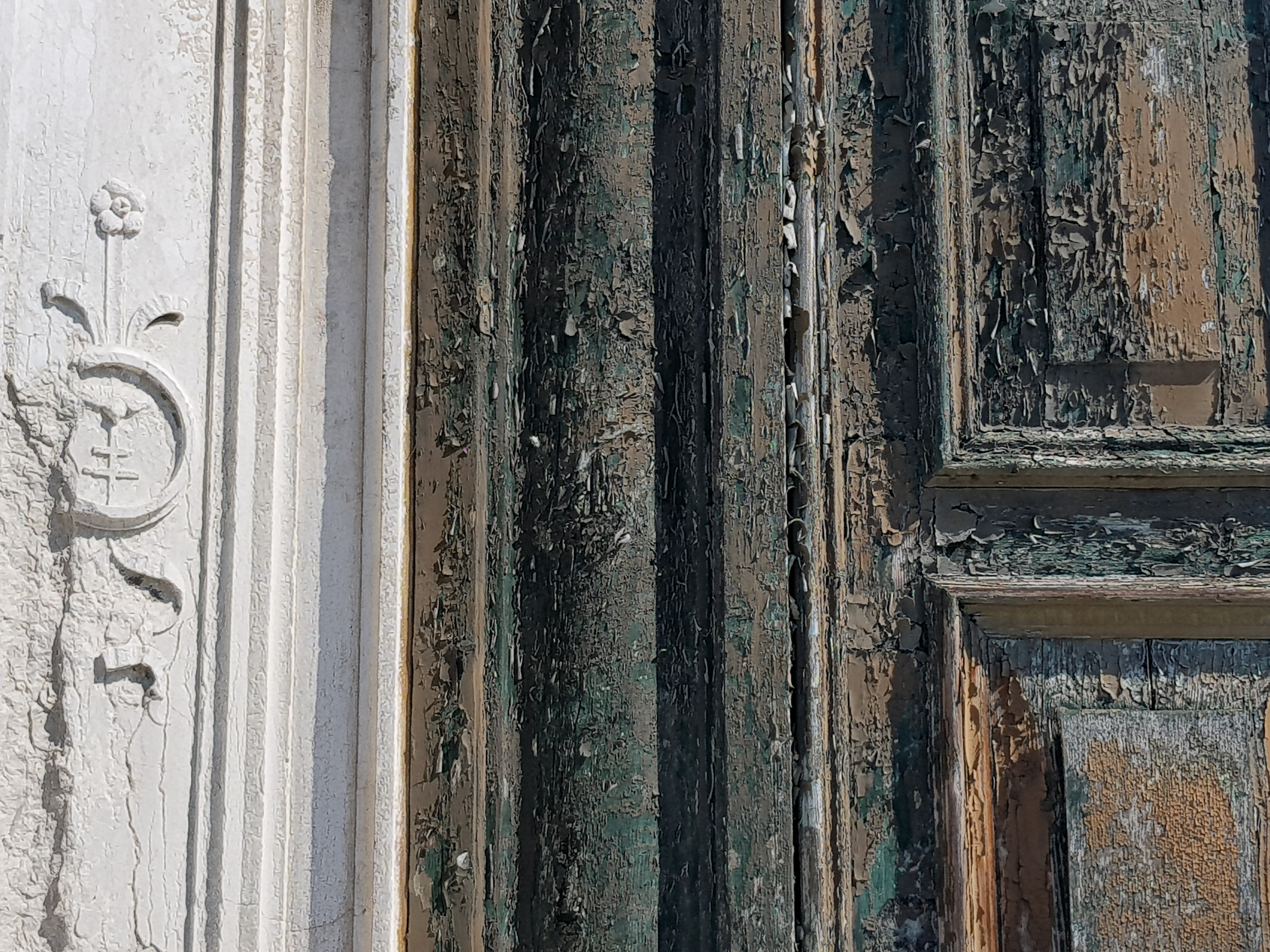
This is the door of Spirito Santo, an Augustinian convent on the fondamenta Zattere, long closed:-

And the scuola next door:-

Then I went to the Ca’ Rezzonico:-

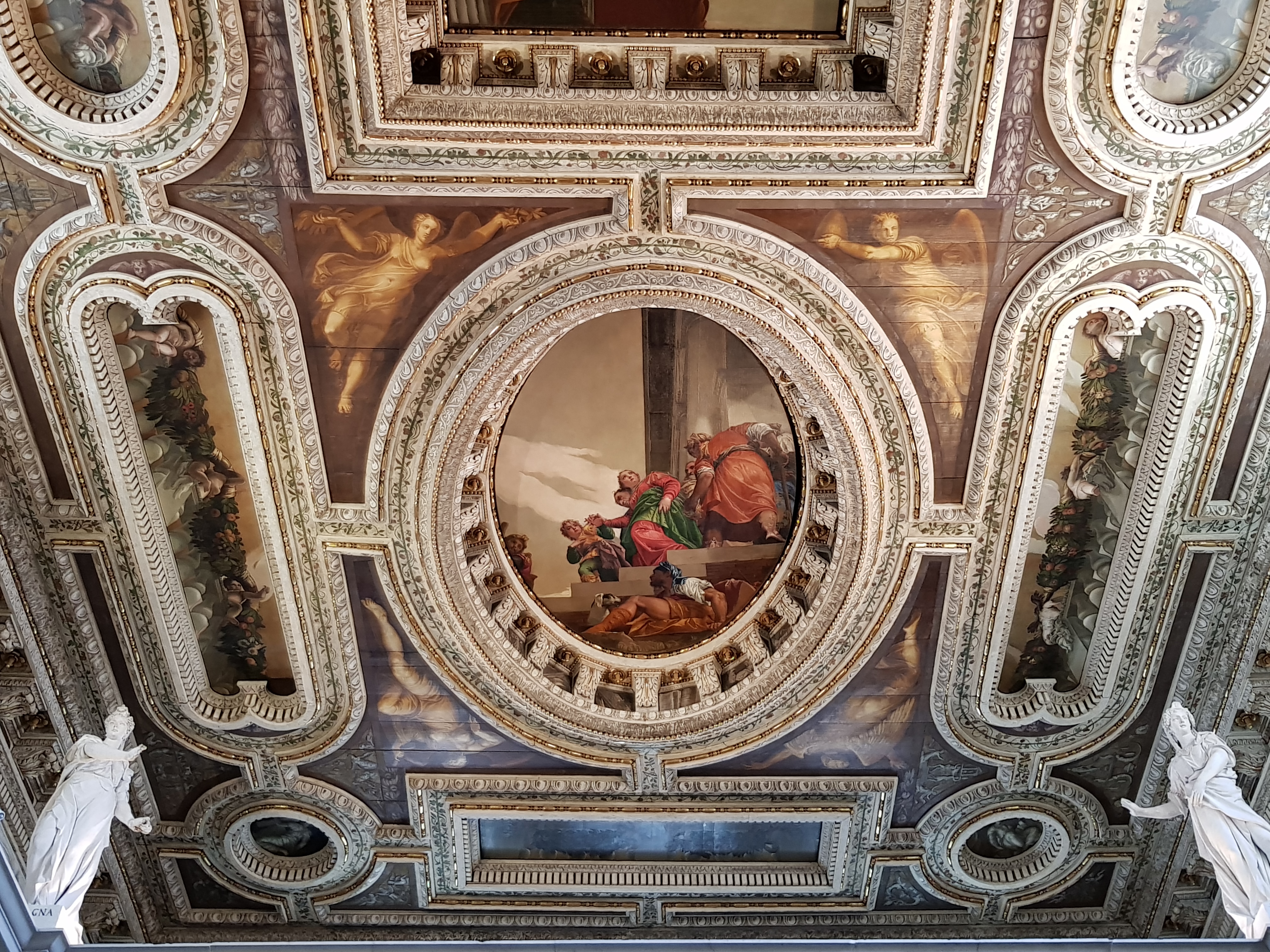
And San Sebastiano, the last church on my church crawl, with its great Veroneses:-

Standard

Giambattista Tiepolo

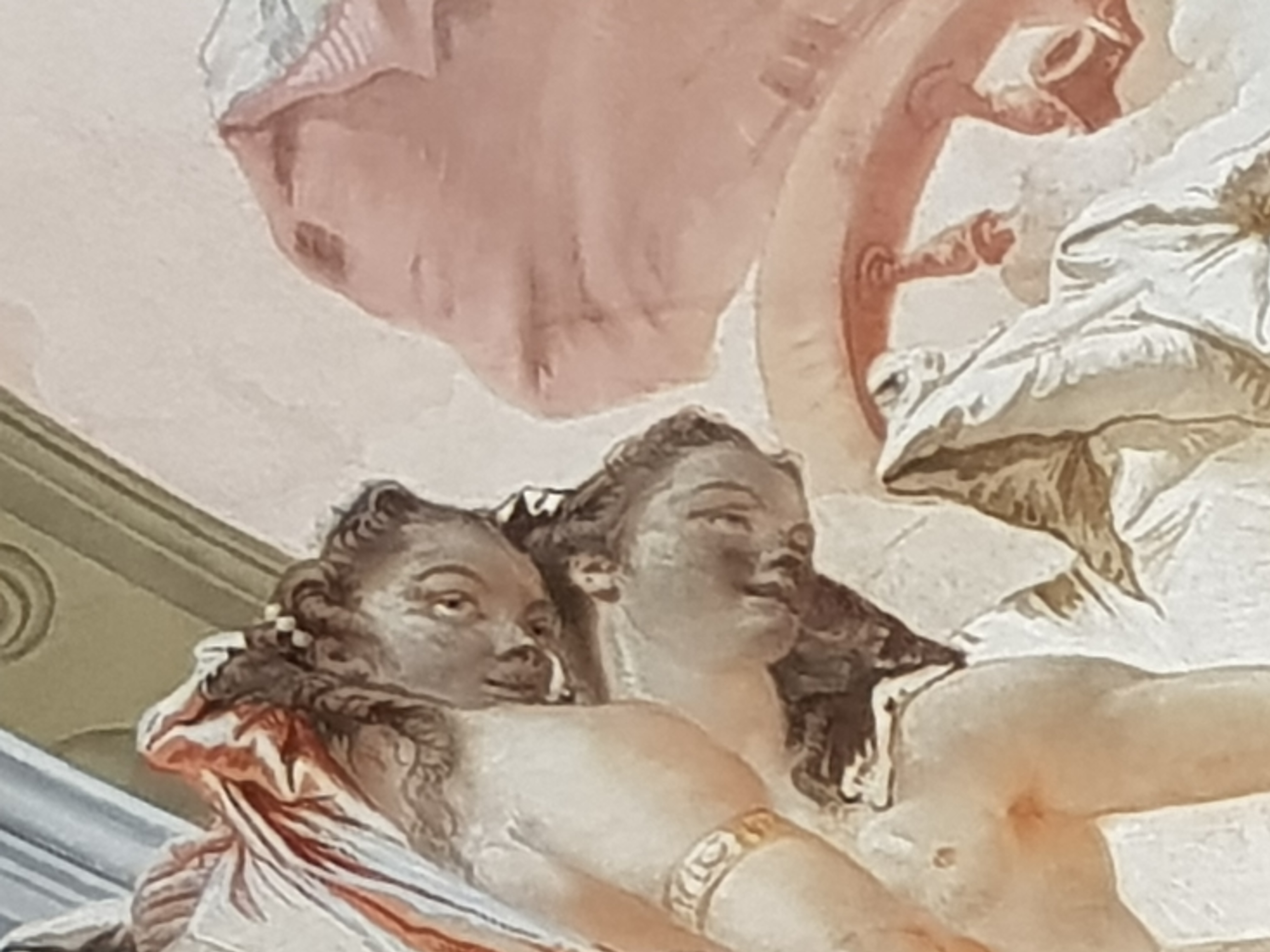
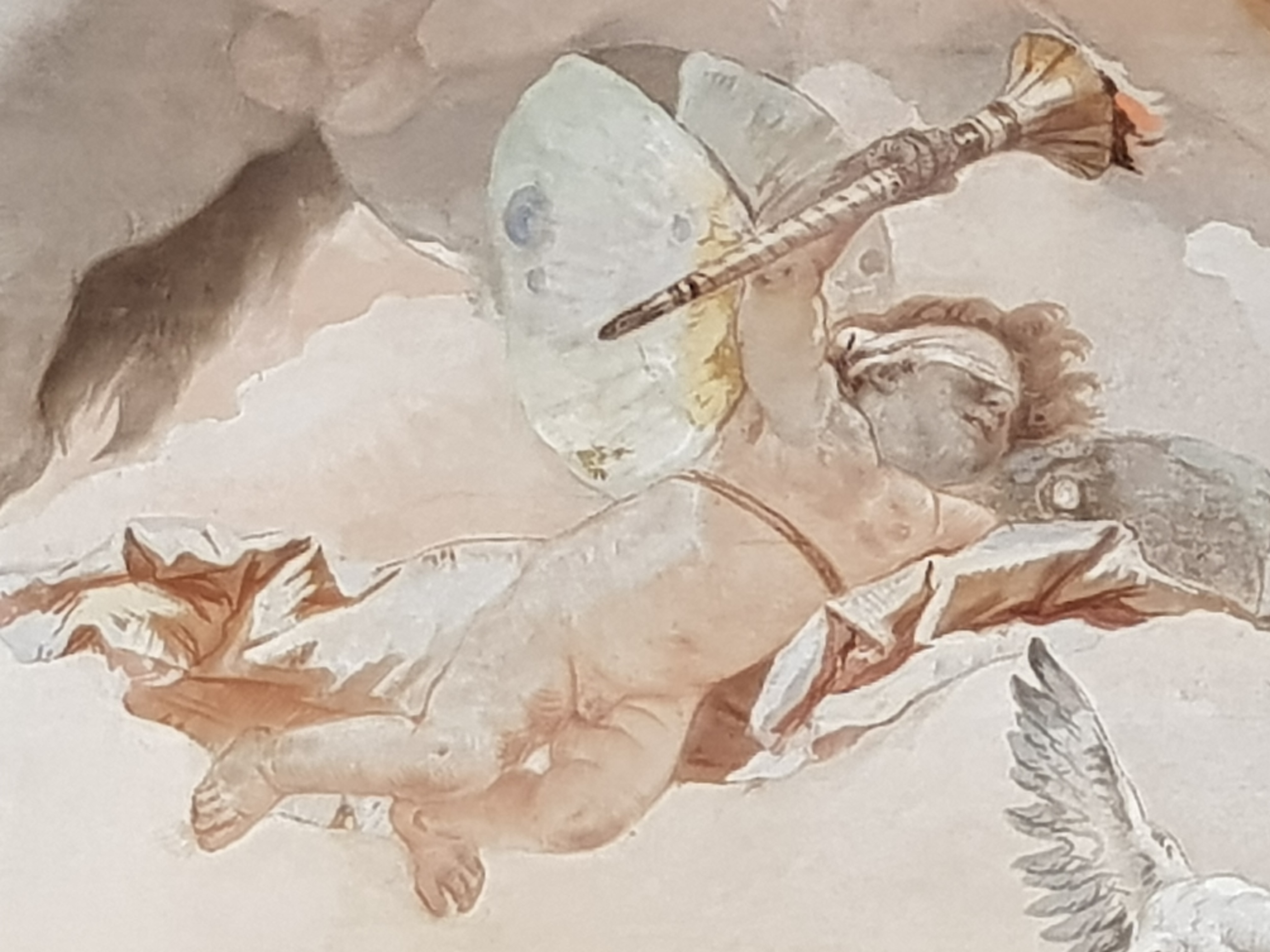
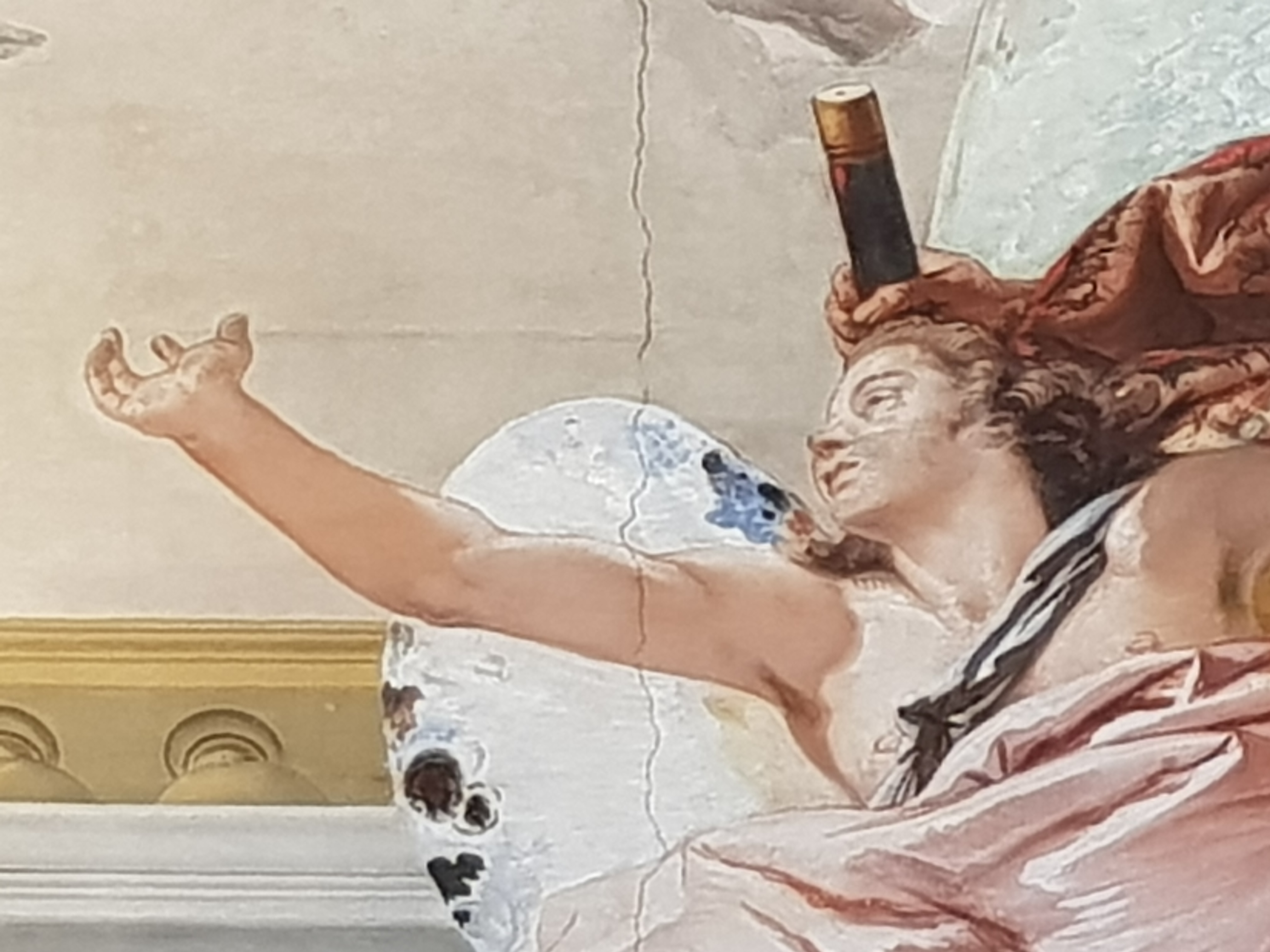
I wasn’t planning to see so much work by Tiepolo, but, by focussing on the eighteenth-century parts of Venice, his work is wonderfully dominant, most of all in the Ca’ Rezzonico, where, in 1758, he painted a ceiling in ten days to celebrate the wedding of Ludovico Rezzonico, showing the bride and groom travelling in Apollo’s chariot:-


Earlier in the morning I had admired his ceiling painting in the Gesuati:-

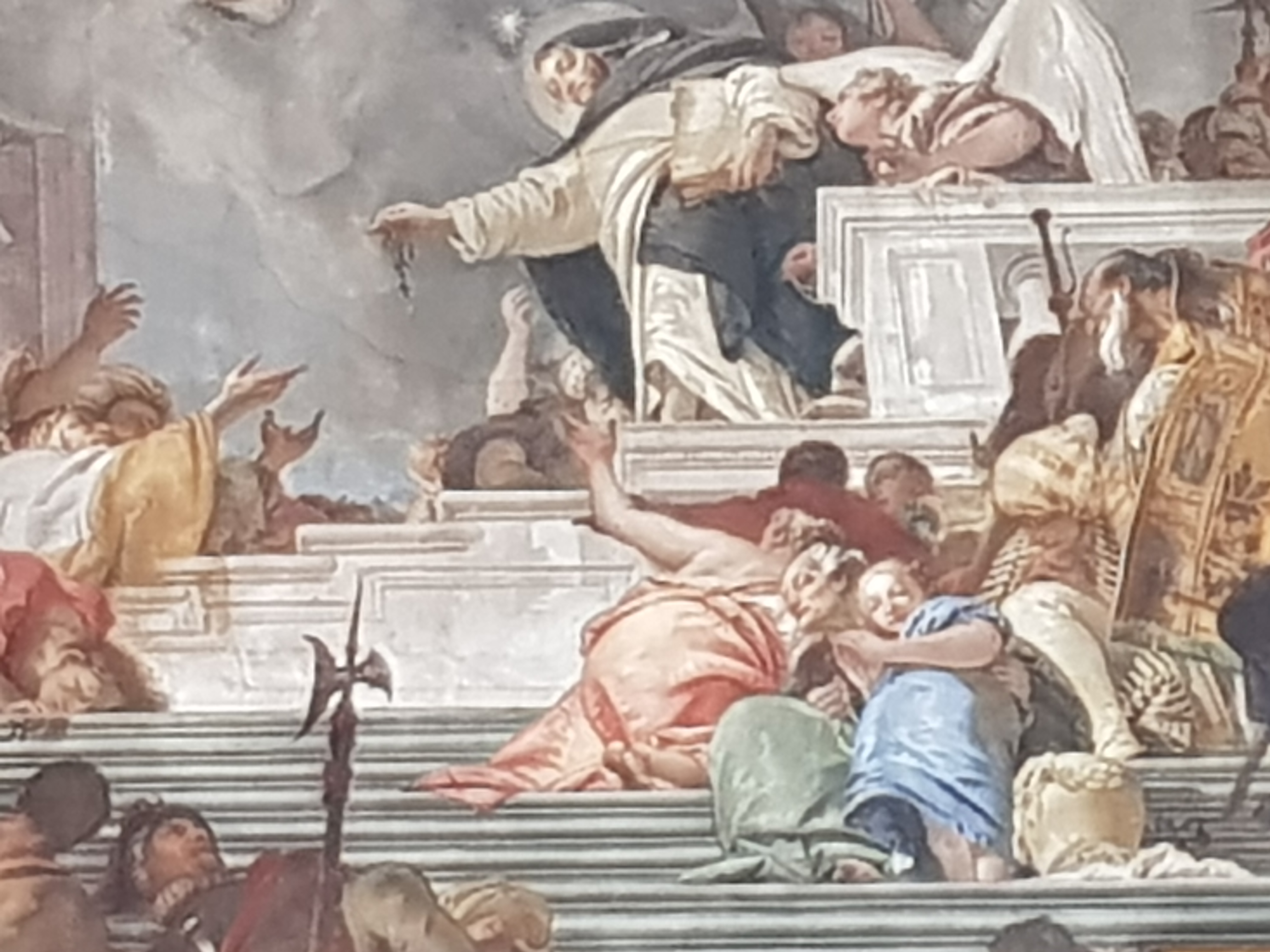
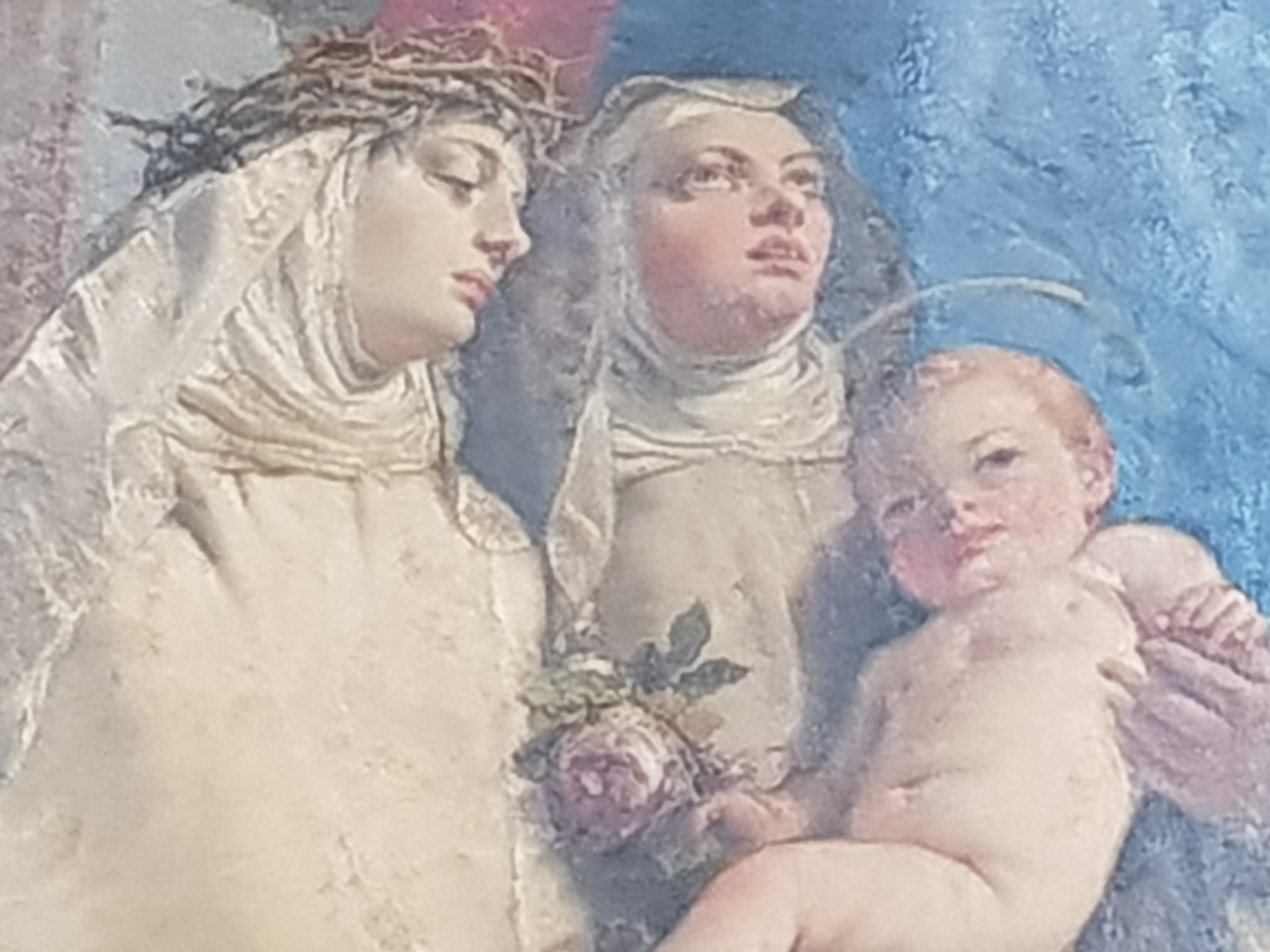
And his Madonna and Child with Saints (1748) in the aisle:-

Standard

Accademia

The Accademia at 8.15 is beautifully empty.   It means I could spend half an hour at least with the Bellinis.

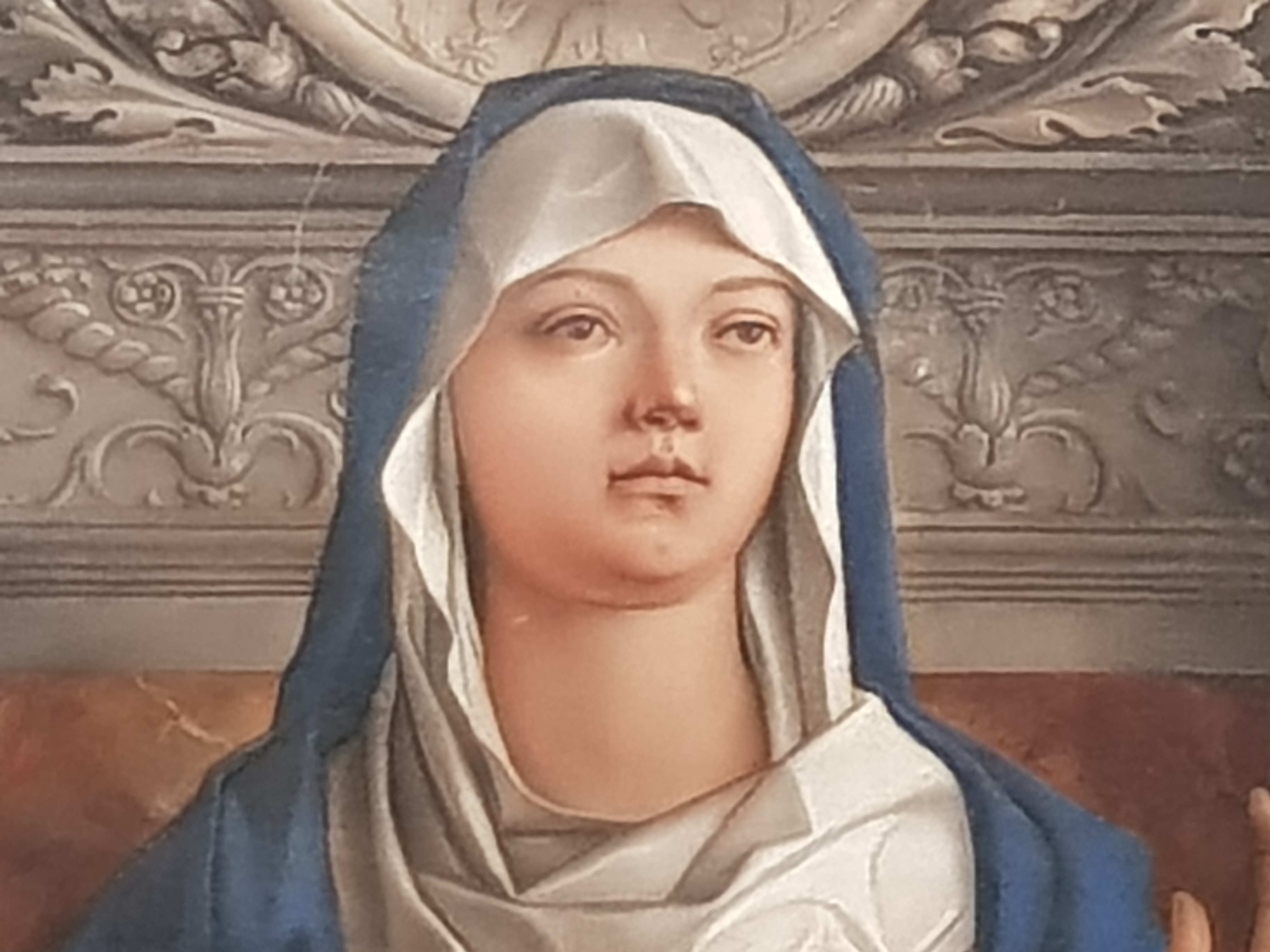
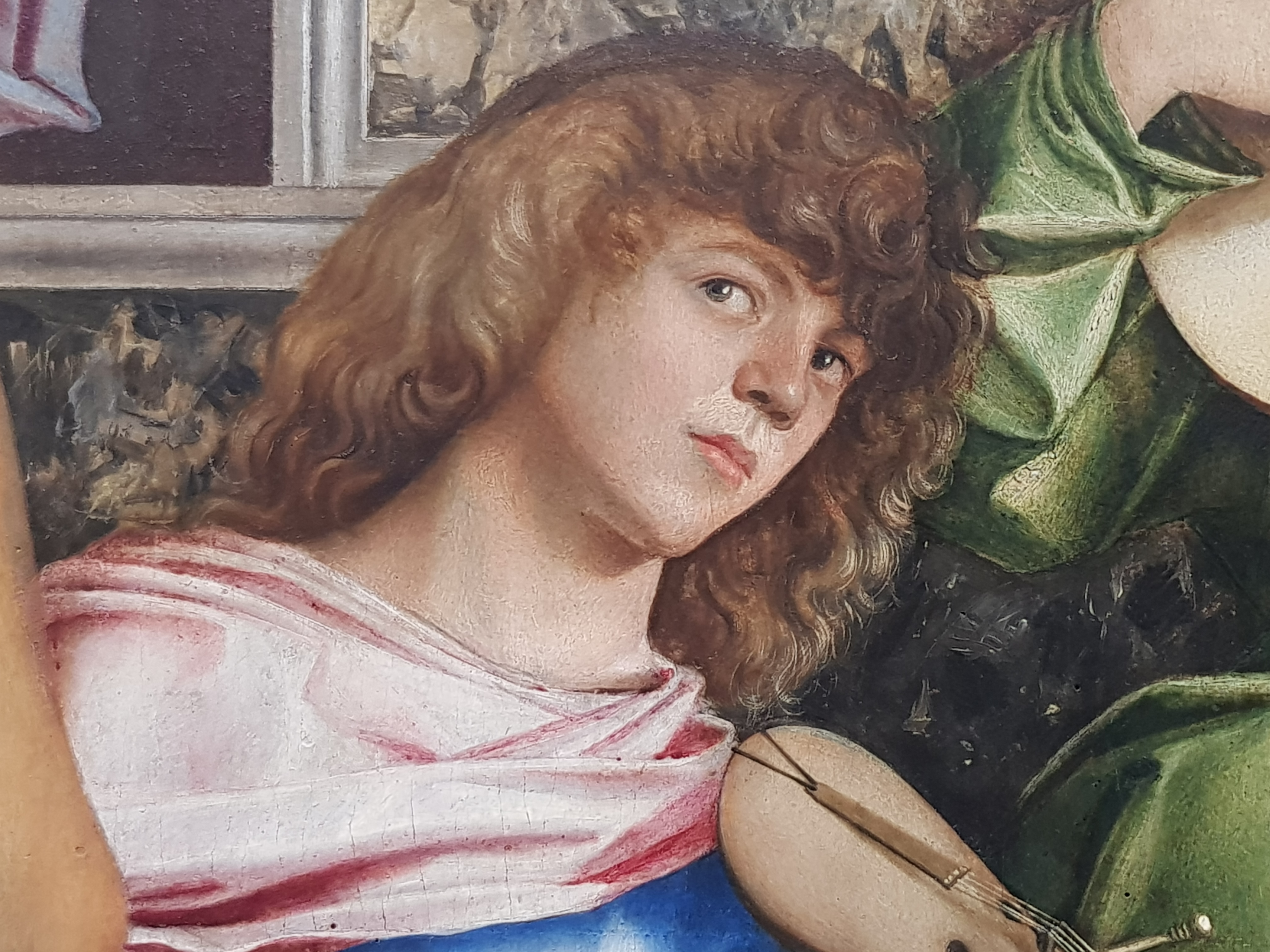
The Madonna and Saints from S. Giobbe (c.1478):-

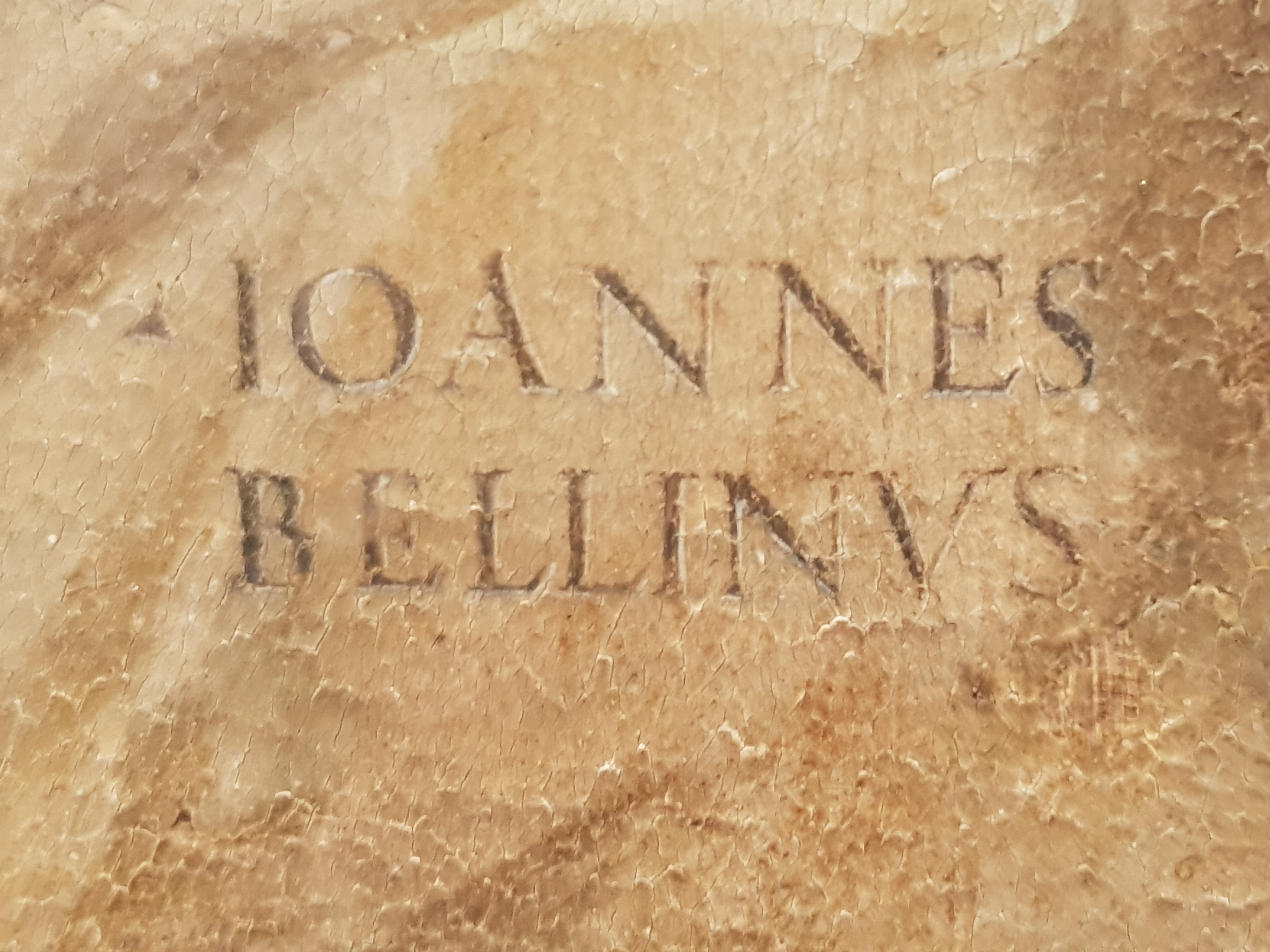
The inscription on his Pietà (c.1500):-

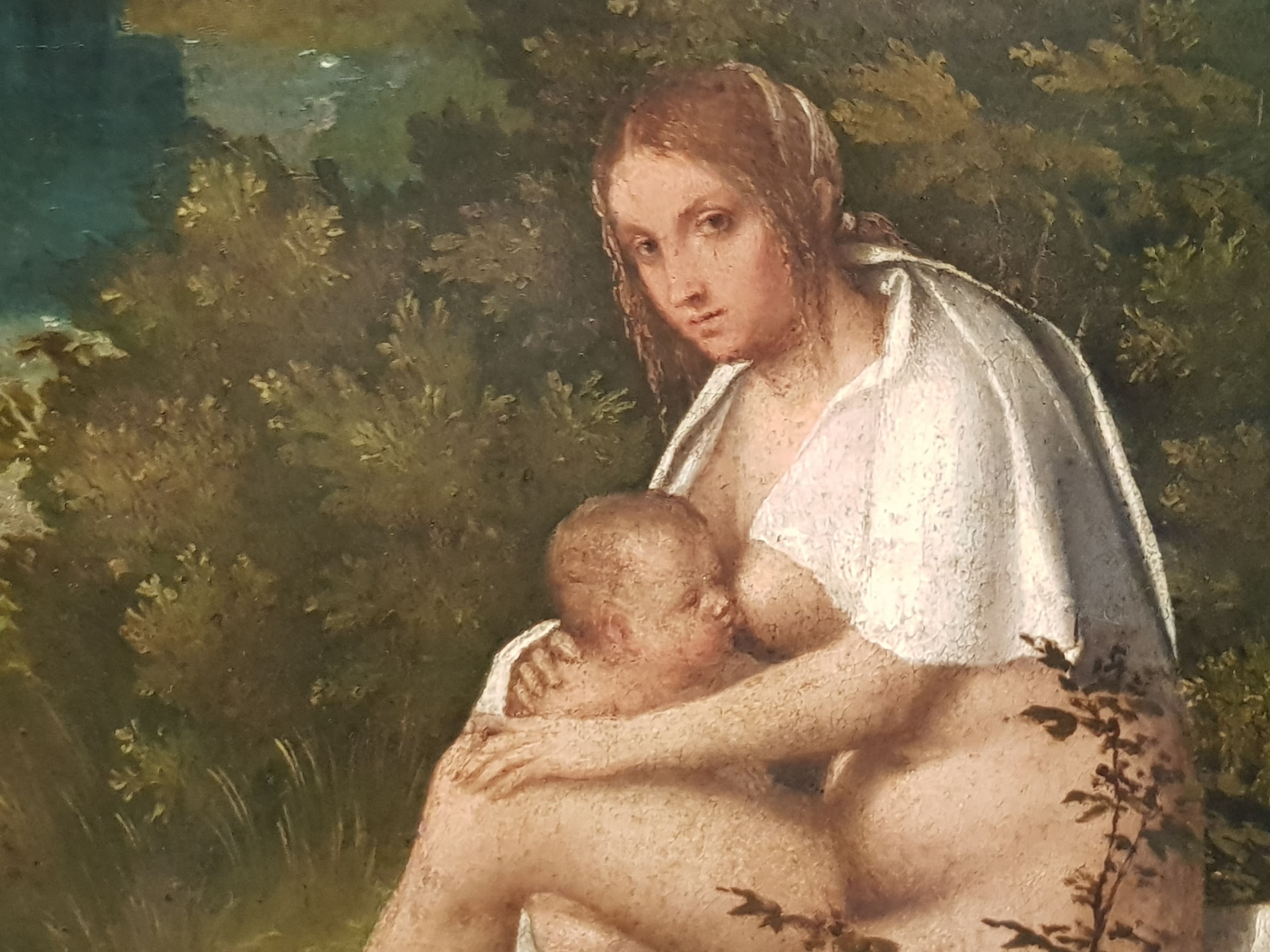
And Giorgione’s Tempesta which didn’t make it to our Giorgione exhibition:-

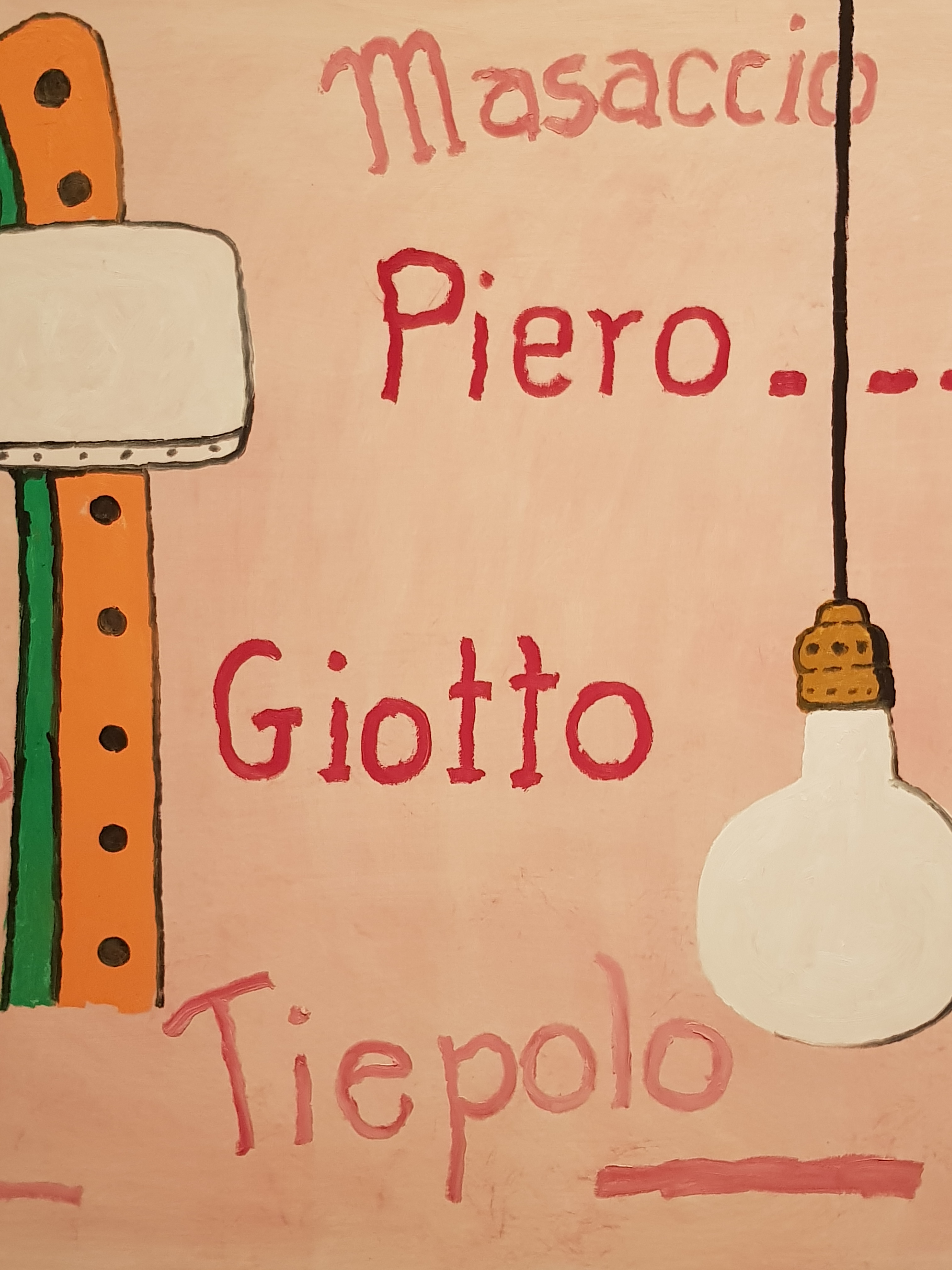
Then to the exhibition Philip Guston and the Poets, which is at least as much about his response to Renaissance art, including Masaccio and Piero, as a winner of the Prix de Rome in 1948.   I like the story of him meeting the great masters in heaven and one of them patting him on the back and saying, Not bad, sonny.   Pas mal’.

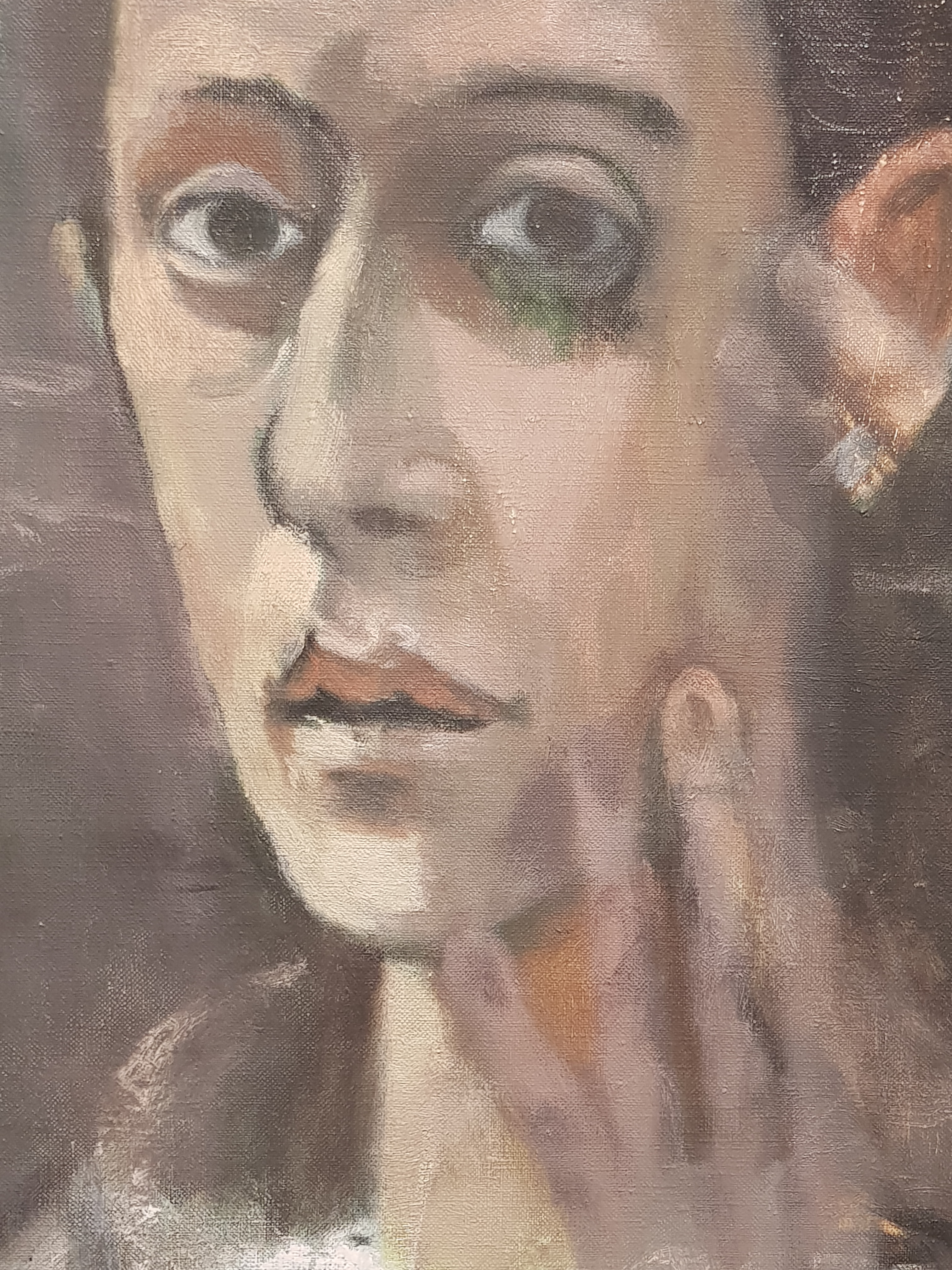
This is his Self-portrait (1944):-

And his Pantheon (1973):-

Standard

Venice Biennale (1)

I missed the opening week – actually, I’ve never been – and have instead come with the RA Patrons.

What follows are random observations.

The first pavilion which really caught my attention in the Arsenale was the Italian one, consisting of three artists – Giorgio Andreotta Càlo, Roberto Cuoghi and Adelita Husni- Bey exploring the world of Ernestode Martino’s Il mondo magico, partly because there’s a sense of history, as well as installation:-

I liked the Welsh pavilion by James Richards, partly because it is separate from everything else and I found it by accident exploring the back streets of Castello:-

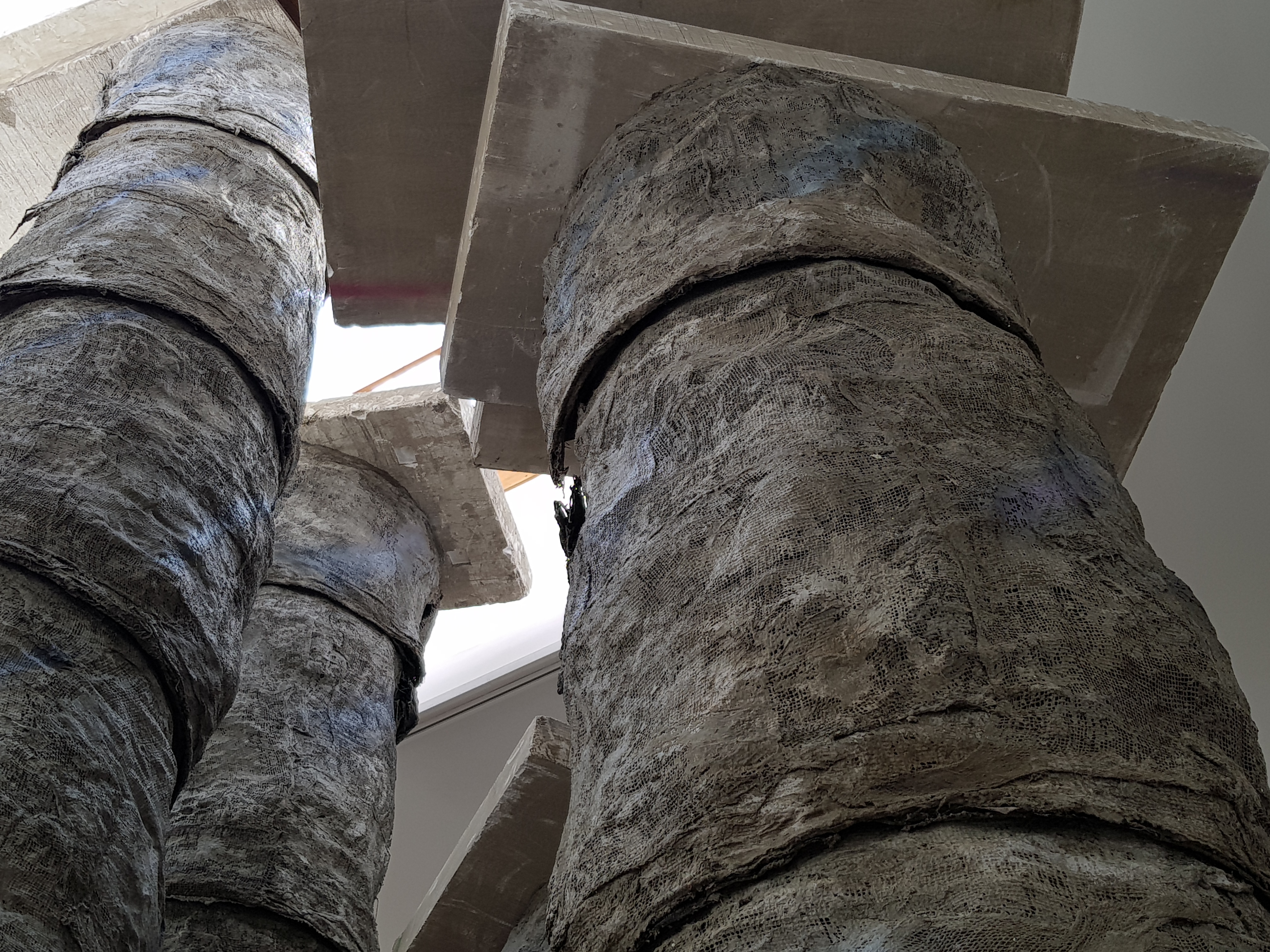
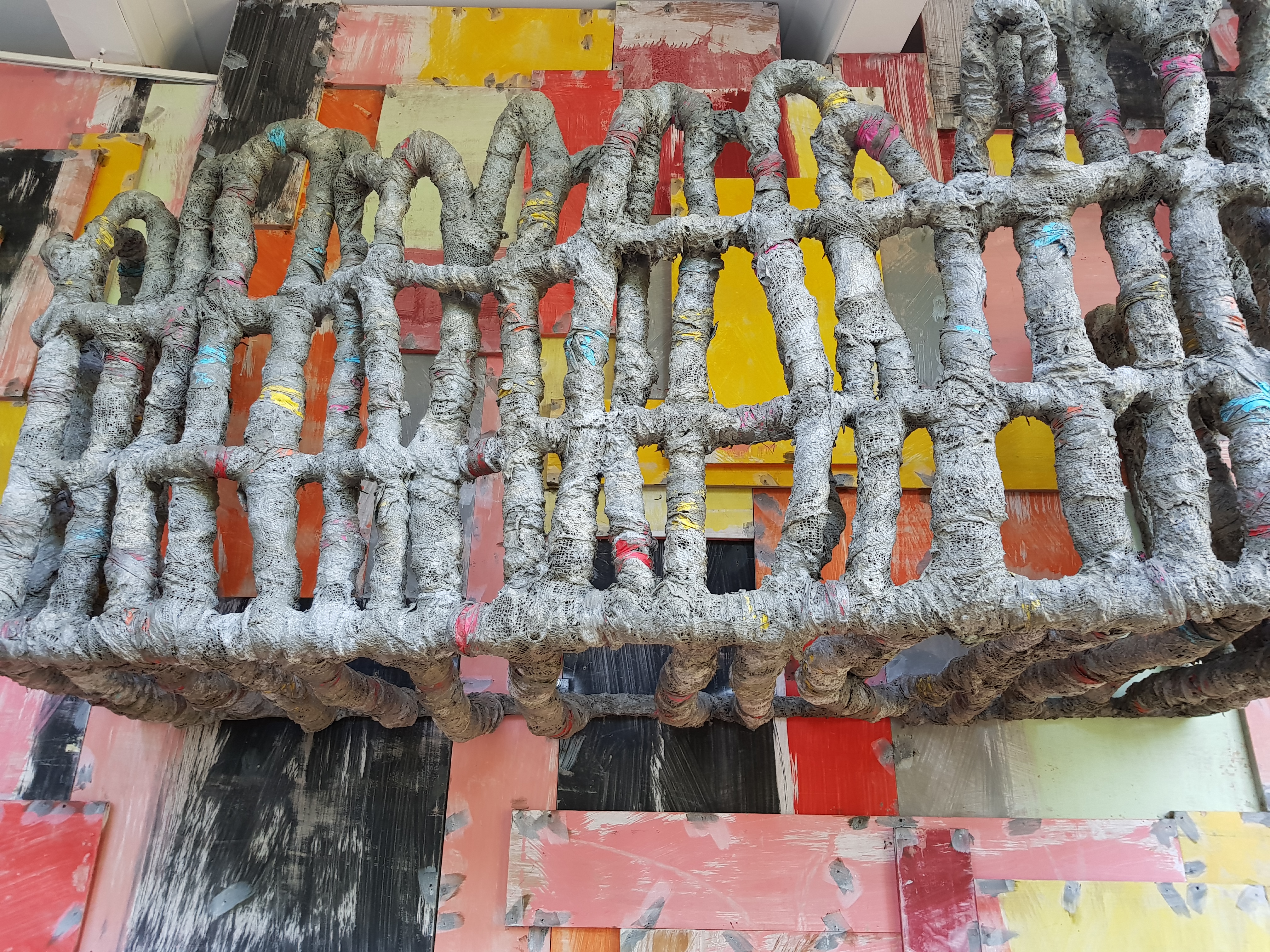
I expected to like Phyllida Barlow’s installation in the British pavilion, and did:  grand, large-scale, confident, arbitrary, celebratory mess:-

I thought the American work by Mark Bradford was strong.   Maybe it’s because I’m more attuned to the aesthetic.   And the spaces are coherent:-

Overall, there is a strange ambiguity between the idea of national pavilions, constructed with a pre-second world war idea of separate national identities, competing in an art olympics, and, on the other hand, the global themes of film, dystopia, music and migration which are mostly on display.

Standard

Venice (2)

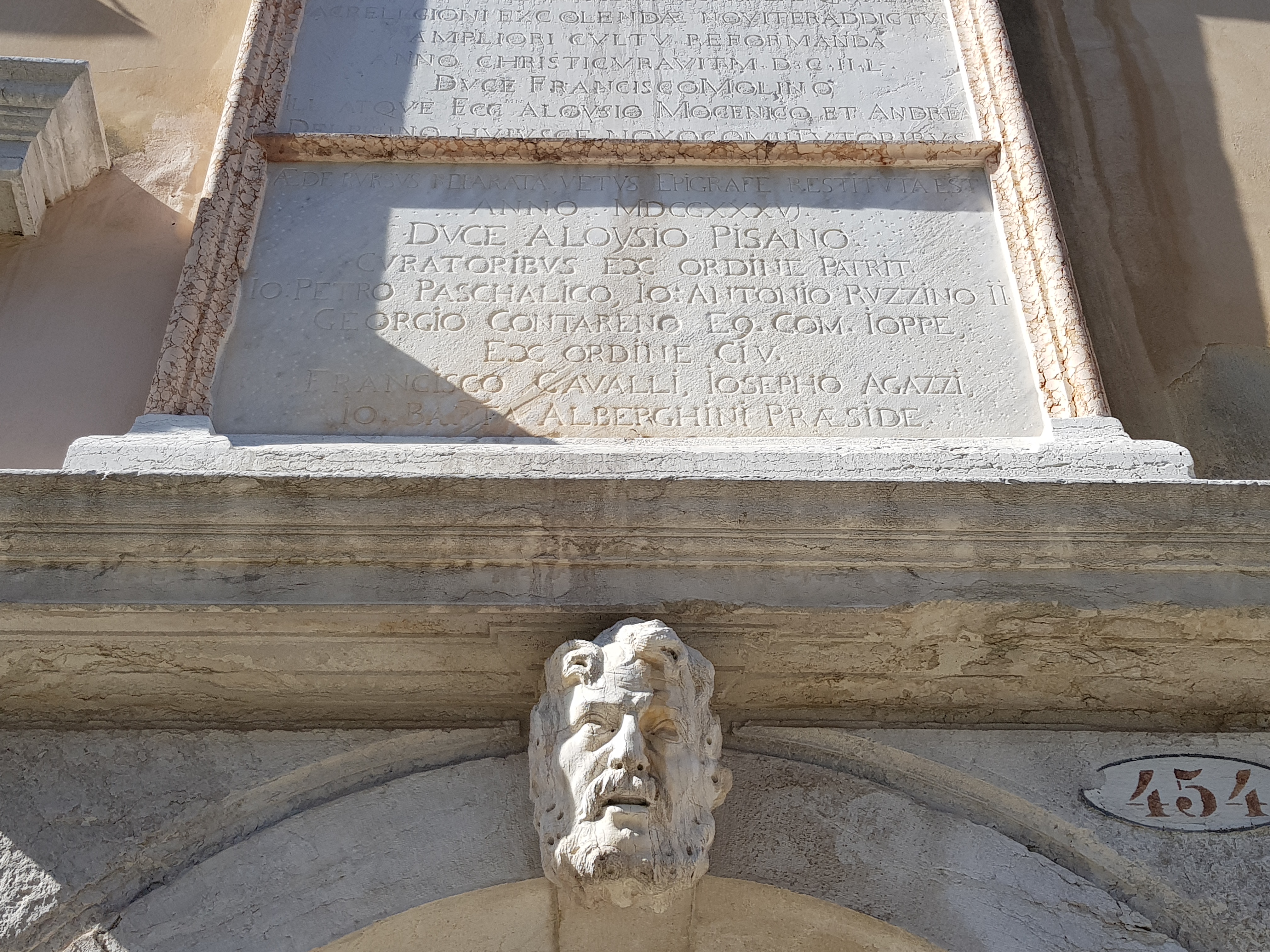
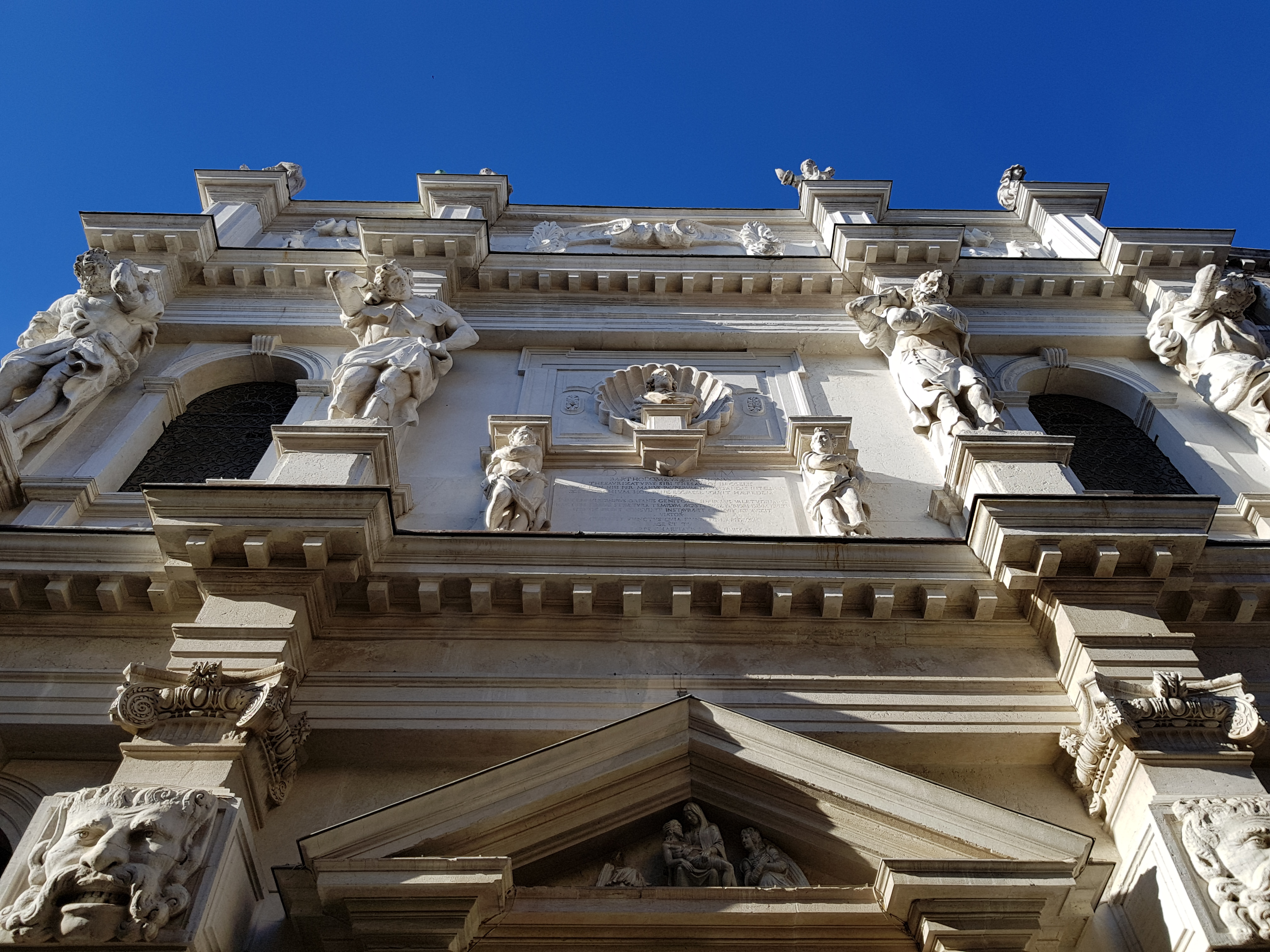
I left out of my Venice tour, S. Maria dei Derelitti, next door to S. Giovanni e Paolo, because I couldn’t immediately identify it.  I notice the guidebooks are a bit short on eighteenth-century Venice, maybe an inheritance of Ruskinian prejudice that medieval Venice was so fine, but later Venetian architecture no good.   It was the church of the Ospedaletto, with a façade designed by Baldassare Longhena:-

Next door to S. Giovanni e Paolo is the Scuola Grande di San Marco.   More lions:-

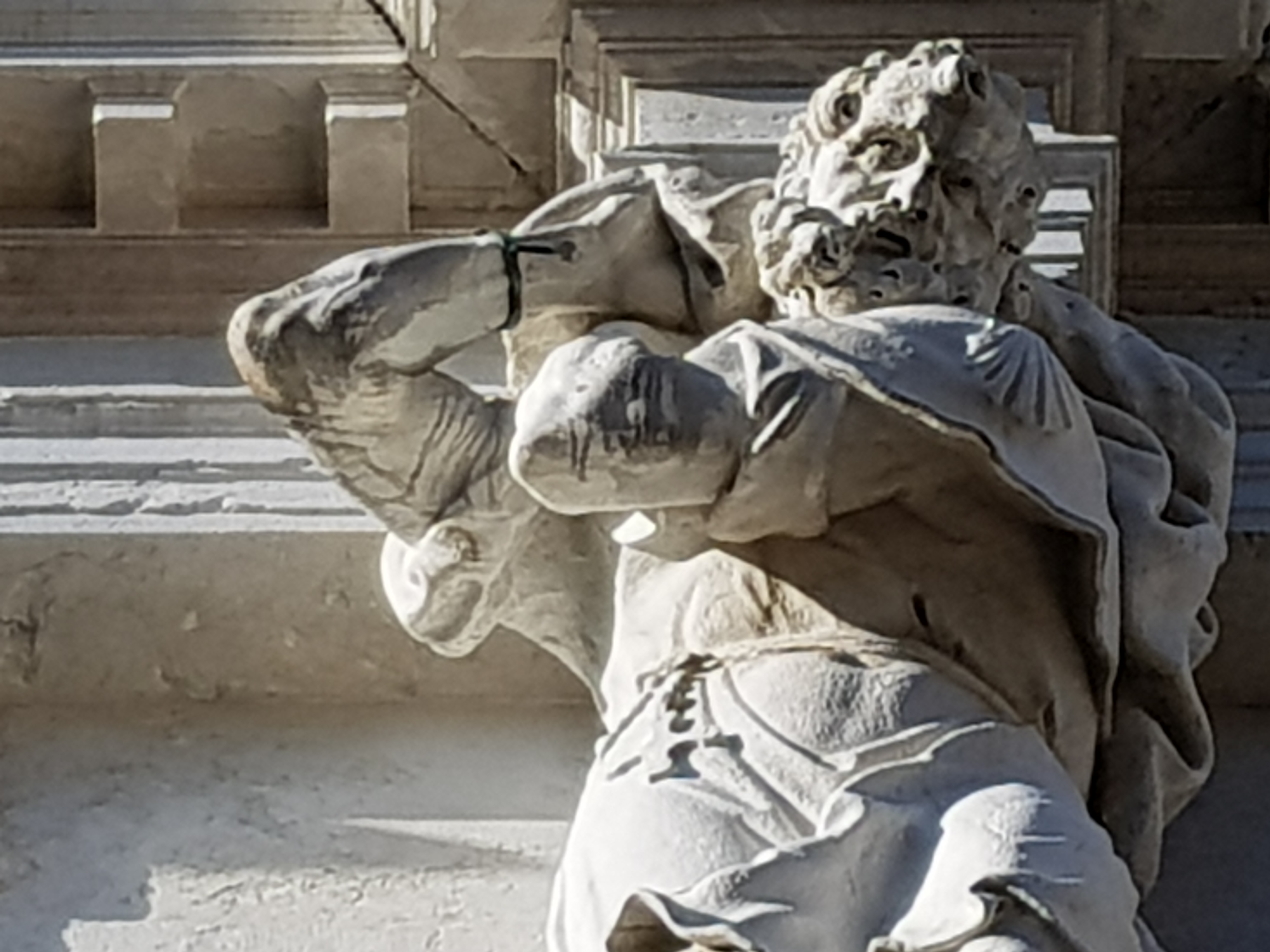
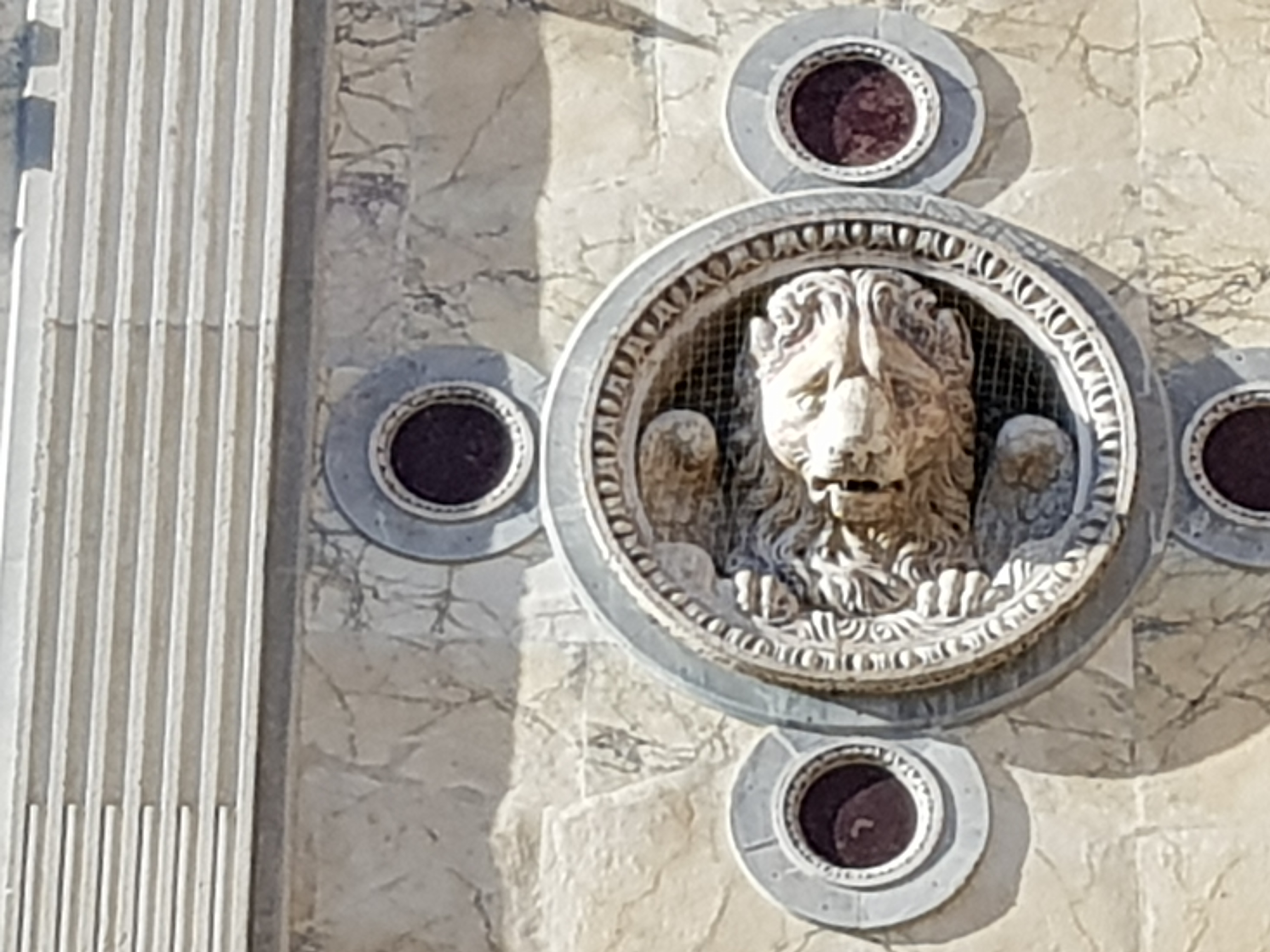
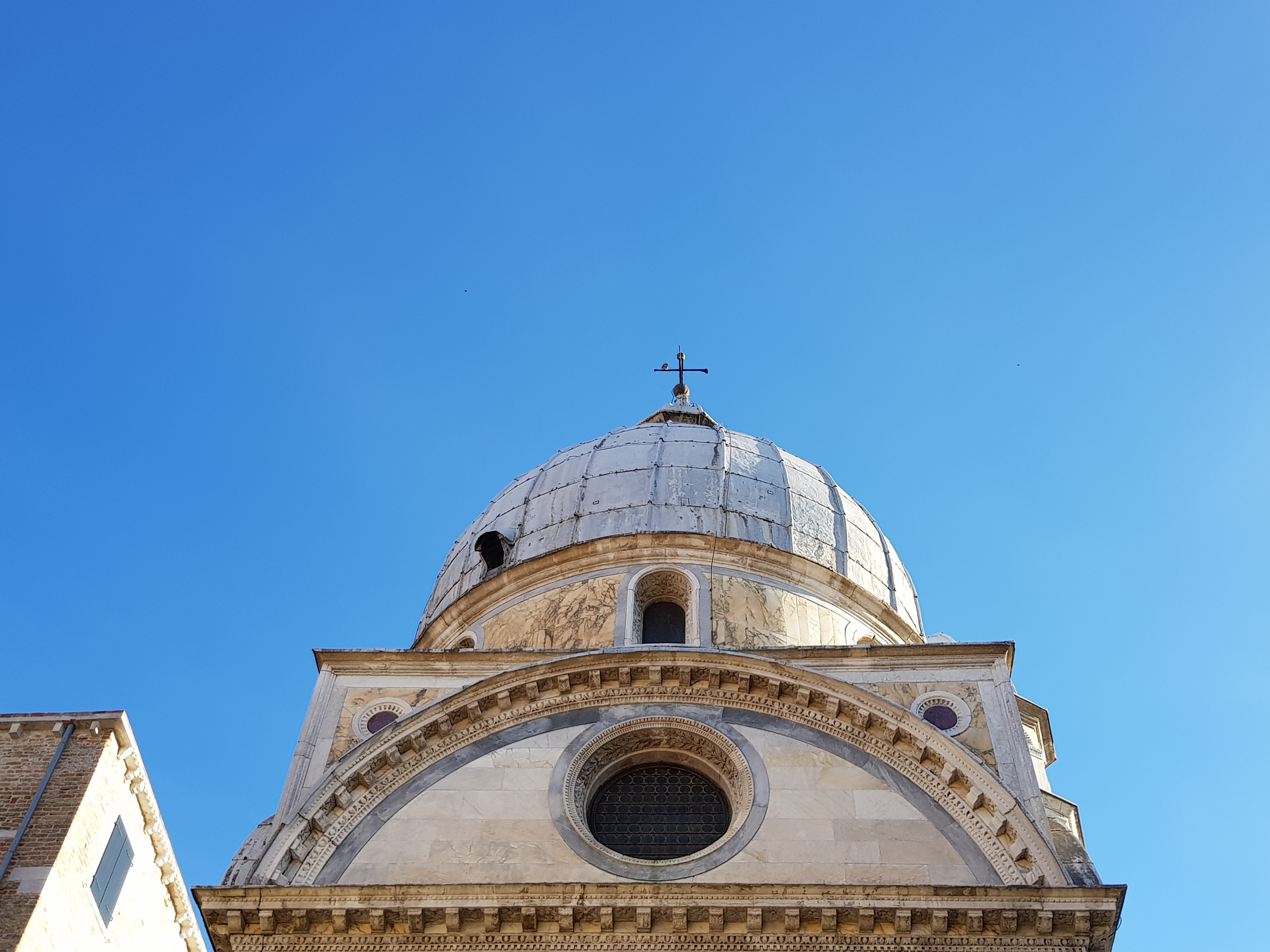
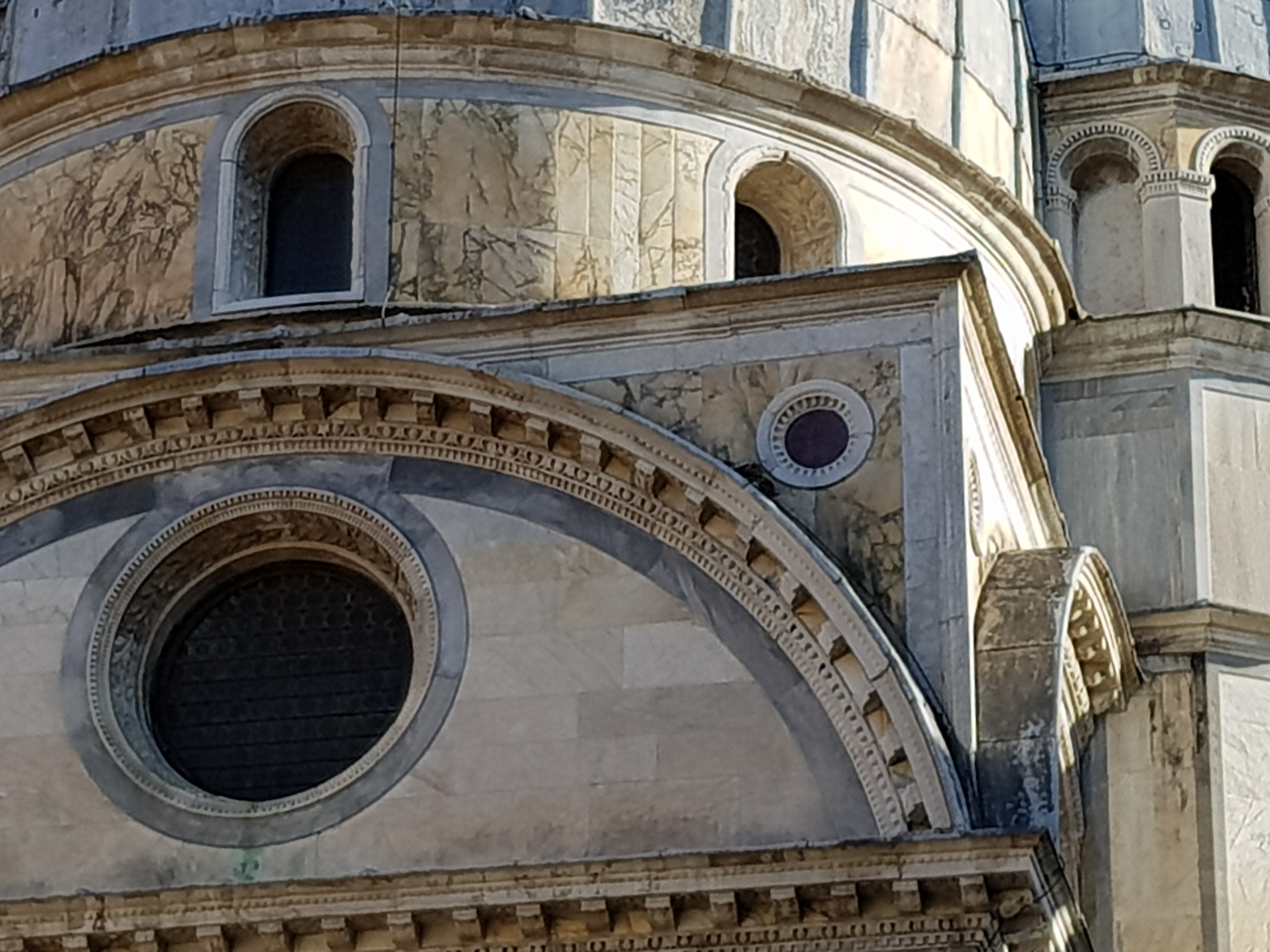
I ended up at S. Maria dei Miracoli, a beautiful, nearly perfect, fifteenth-century church from the time of Bellini:-

Standard

Venice (1)

As so often happens in Venice, I walked much further than I had planned to, drawn by the character of the nondescript streets between the Arsenale and the Giardini, which are a long way in character from the Piazza San Marco.

I went to see the Chiesa di San Pietro di Castello, which annoyingly closed the precise moment I arrived:-

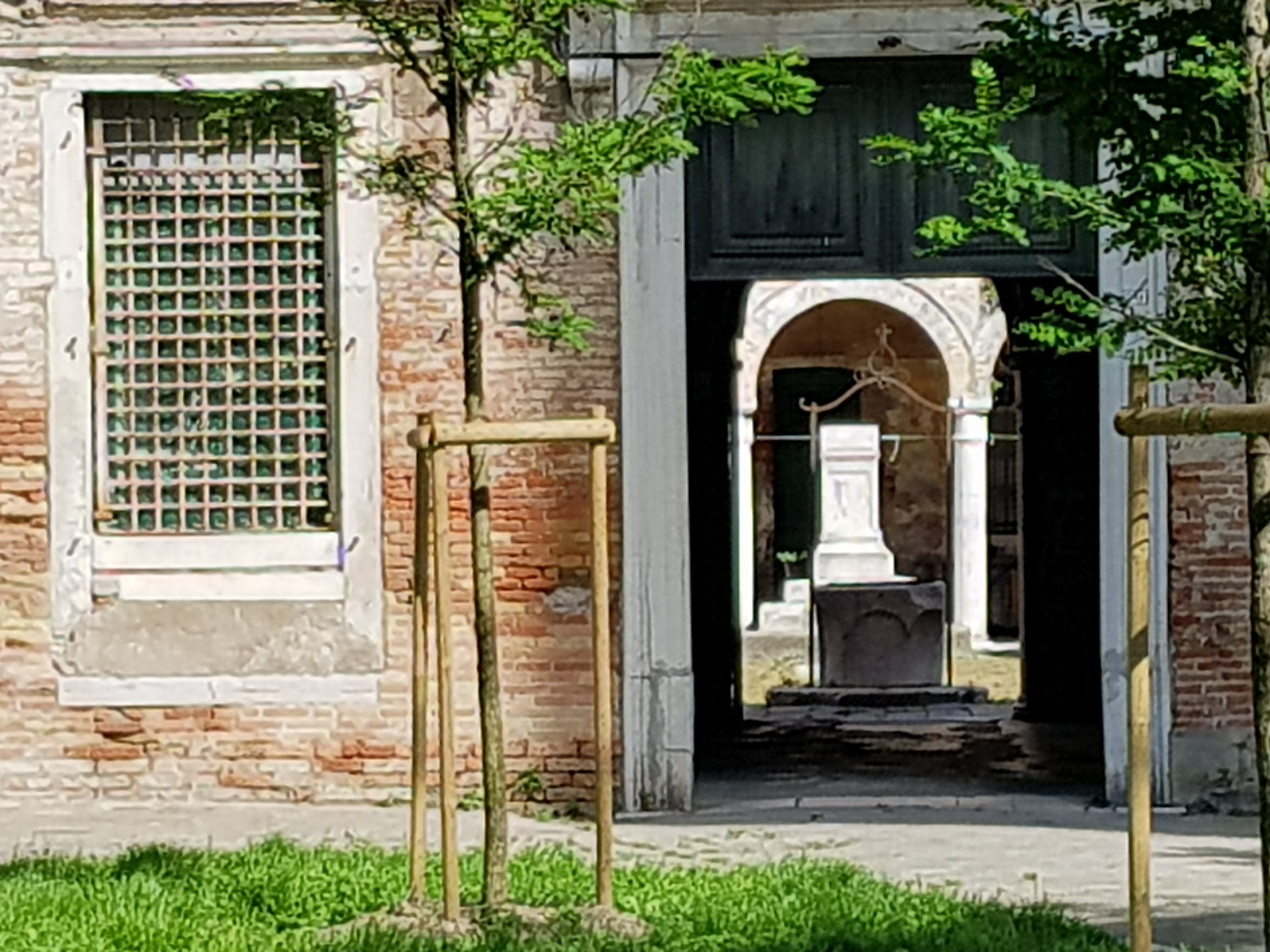
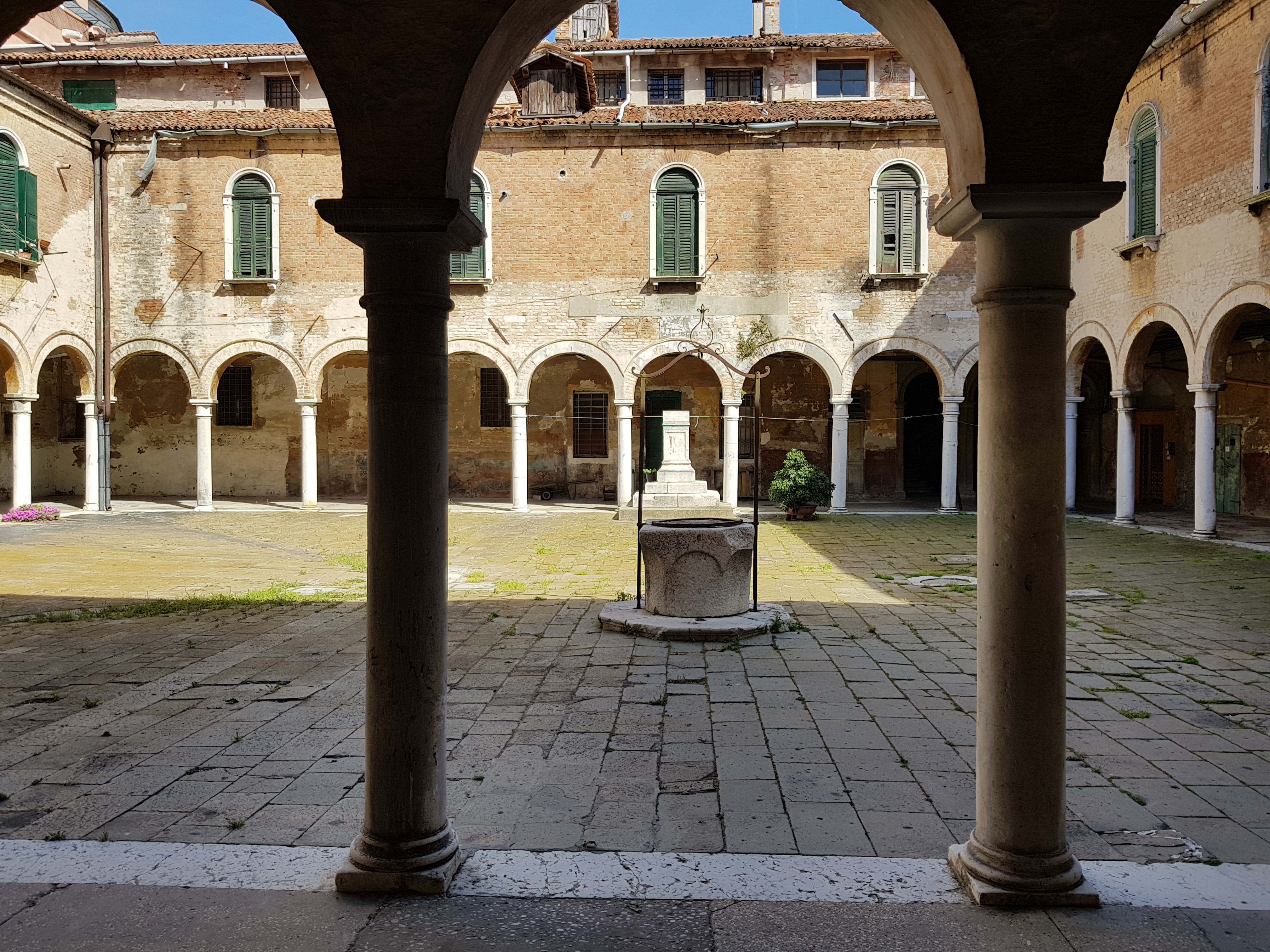
But I enjoyed its cloister:-

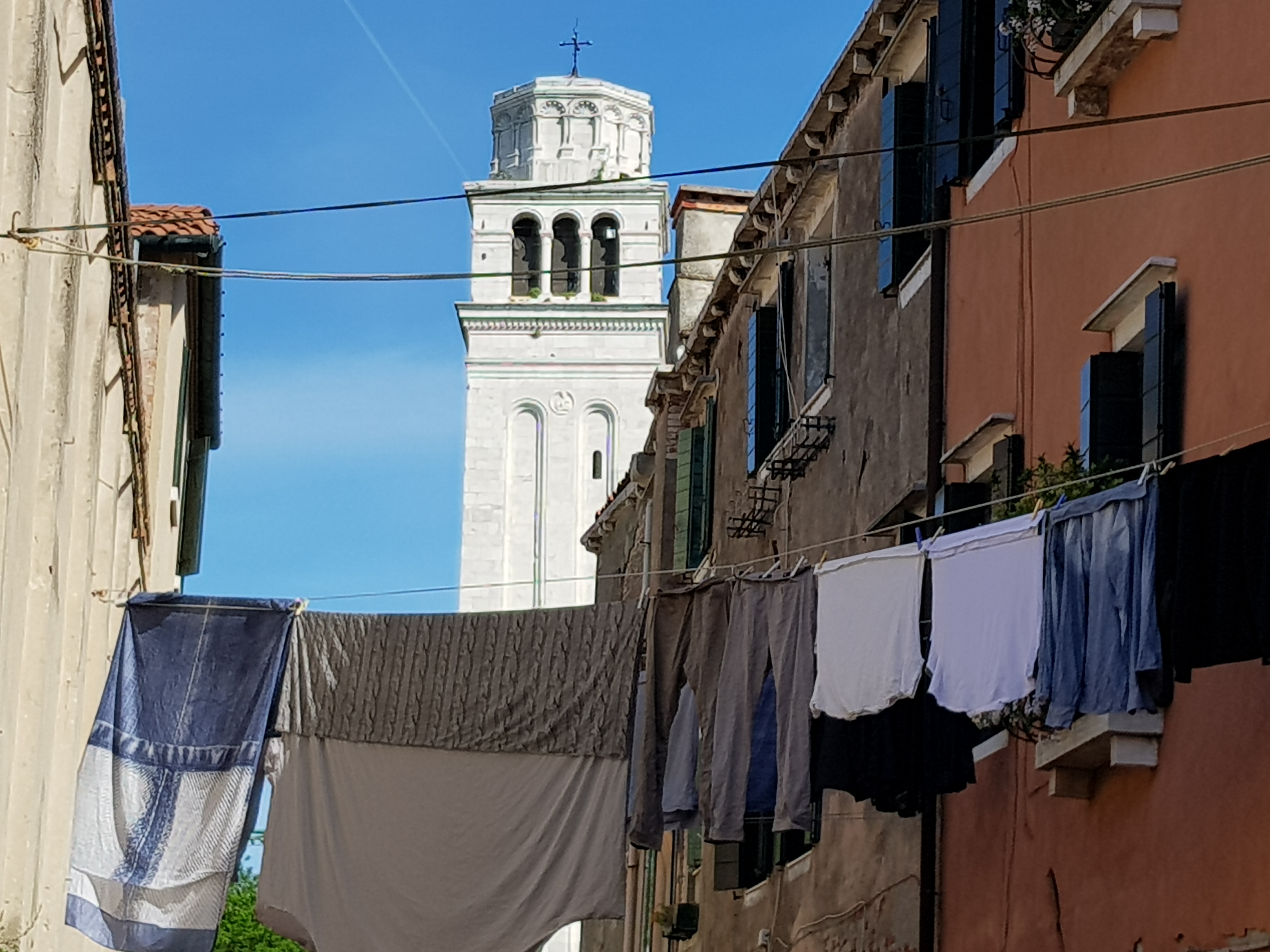
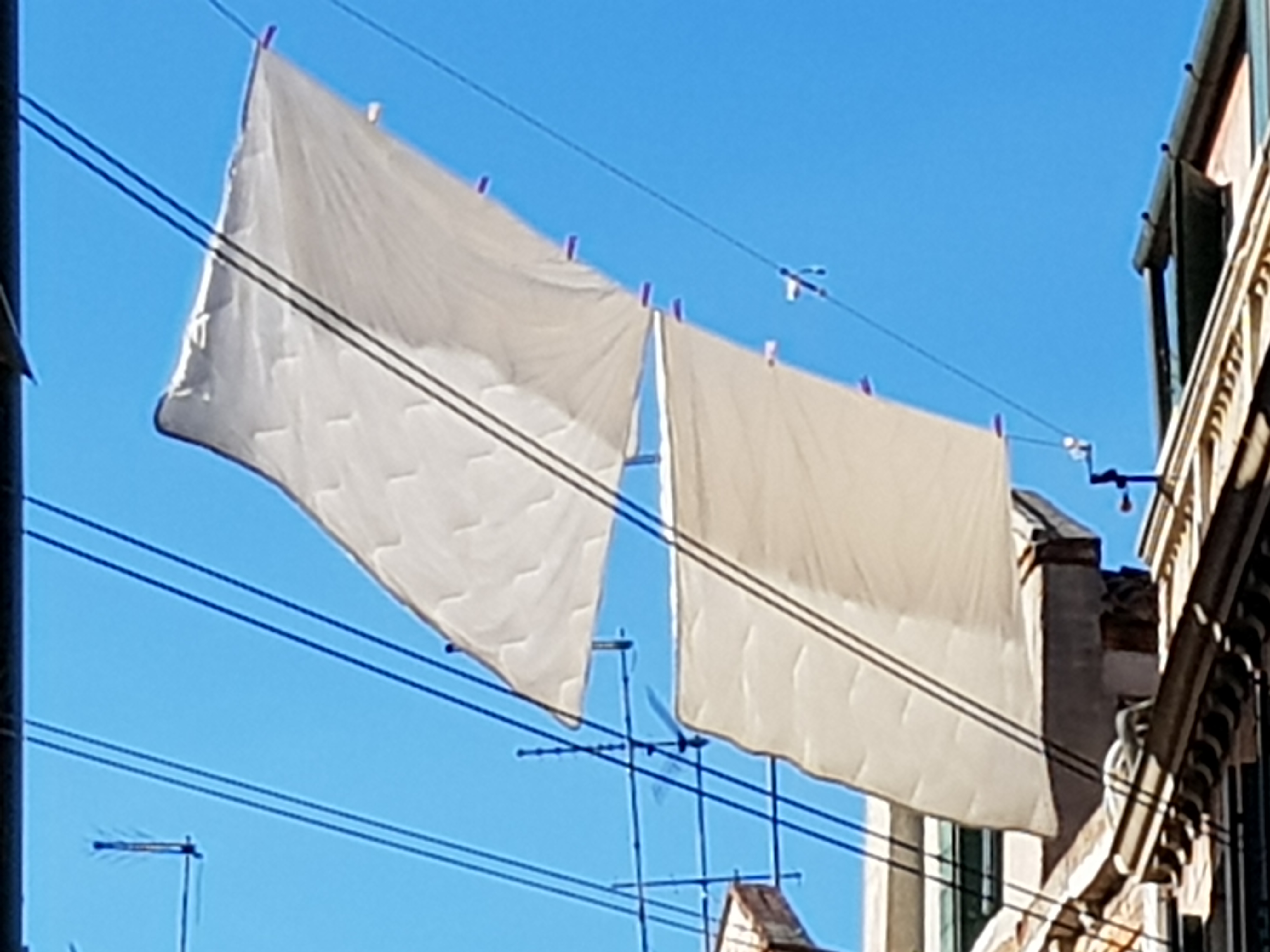
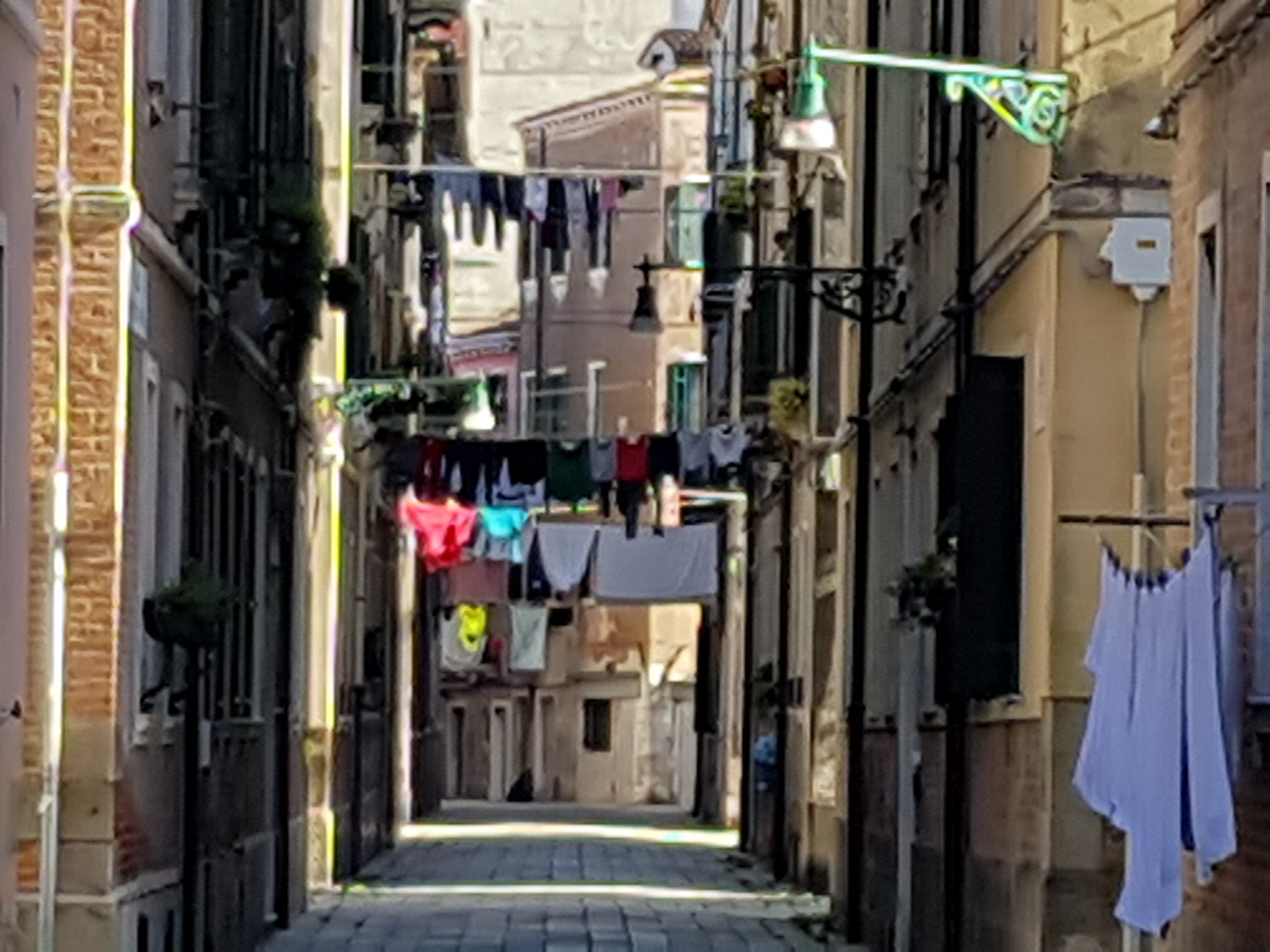
There was a lot of washing hung out to dry:-

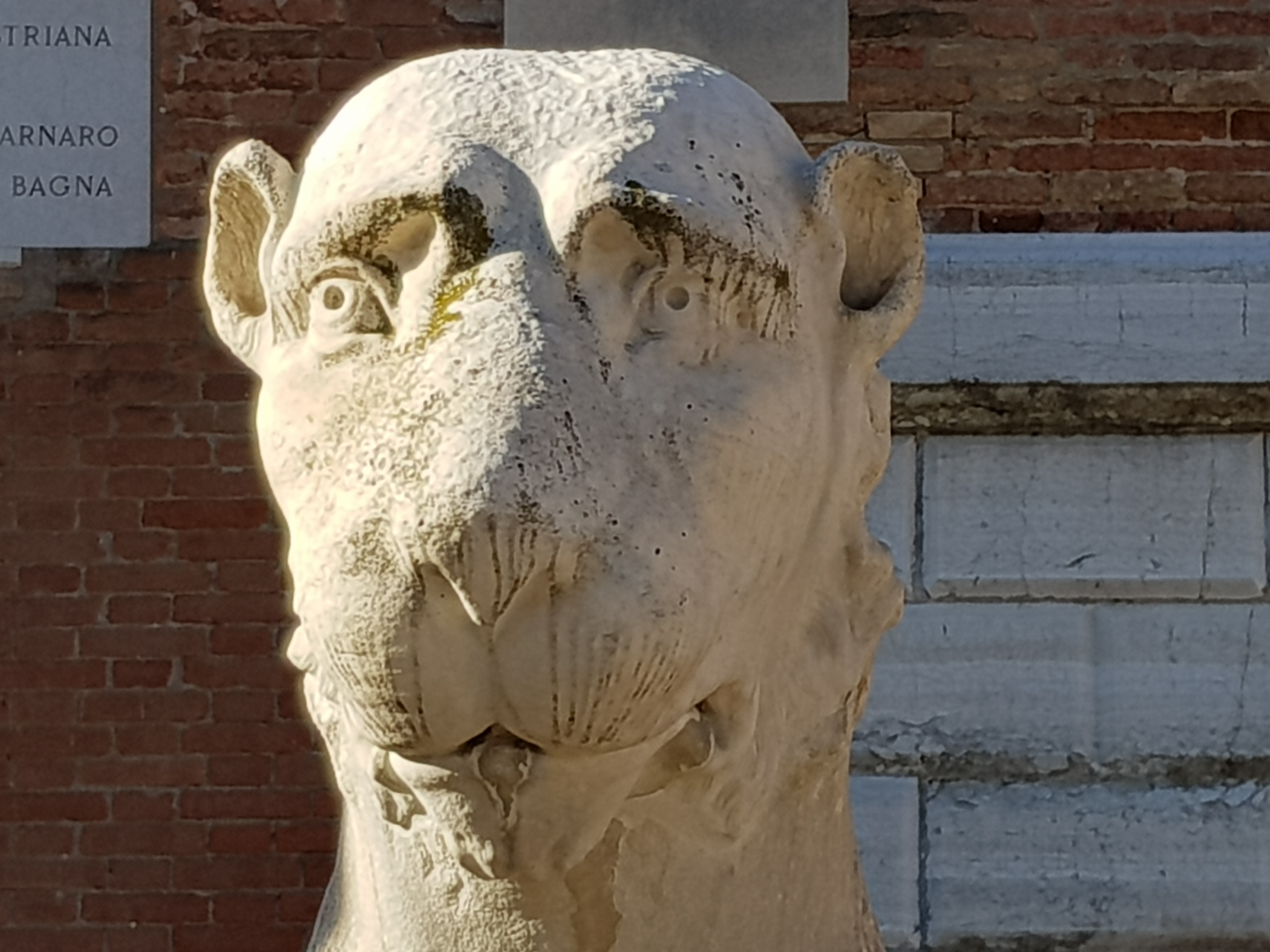
And I admired the many lions guarding the gates to the Arsenale:-

I wanted to find the Chiesa di San Francesco della Vigna.   But, instead, got lost:-

And ended up in the Campo di SS. Giovanni e Paolo by mistake:-

Standard

Sir Hugh Casson PRA

We had an event last night to celebrate the launch of our now annual Friends’ Week, together with a small, pop-up display of work relating to the life of Hugh Casson PRA, part of a recent gift of his sketchbooks by his three daughters.   Neil Bingham, the Curator of Contemporary Architectural Collections in the Department of Design, Architecture and Digital at the V&A (I forgot to give him his full title) spoke about Casson’s life and work:  how he had been trained as an architect at Cambridge by Kit Nicholson (he wrote a book in the late 1930s called New Sights of London);  worked during the war as a camouflage artist;  and was appointed Director of Architecture at the Festival of Britain when only 38 (he was knighted in 1952).   Bingham made the point that, from the beginning, he was very good at connecting the different factions of architecture, writing as Astragal in the Architects’ Journal.   I think of him as being responsible for the financial sustainability of the RA after being elected President in 1975, founding the Friends in 1977, the Royal Academy Trust in 1981, and its American Associates in 1983 (he liked nothing better than touring America).   But Neil Bingham made the point that he was at least as important as a connector – of people and ideas – being so well connected himself.

Standard

Churnet Valley

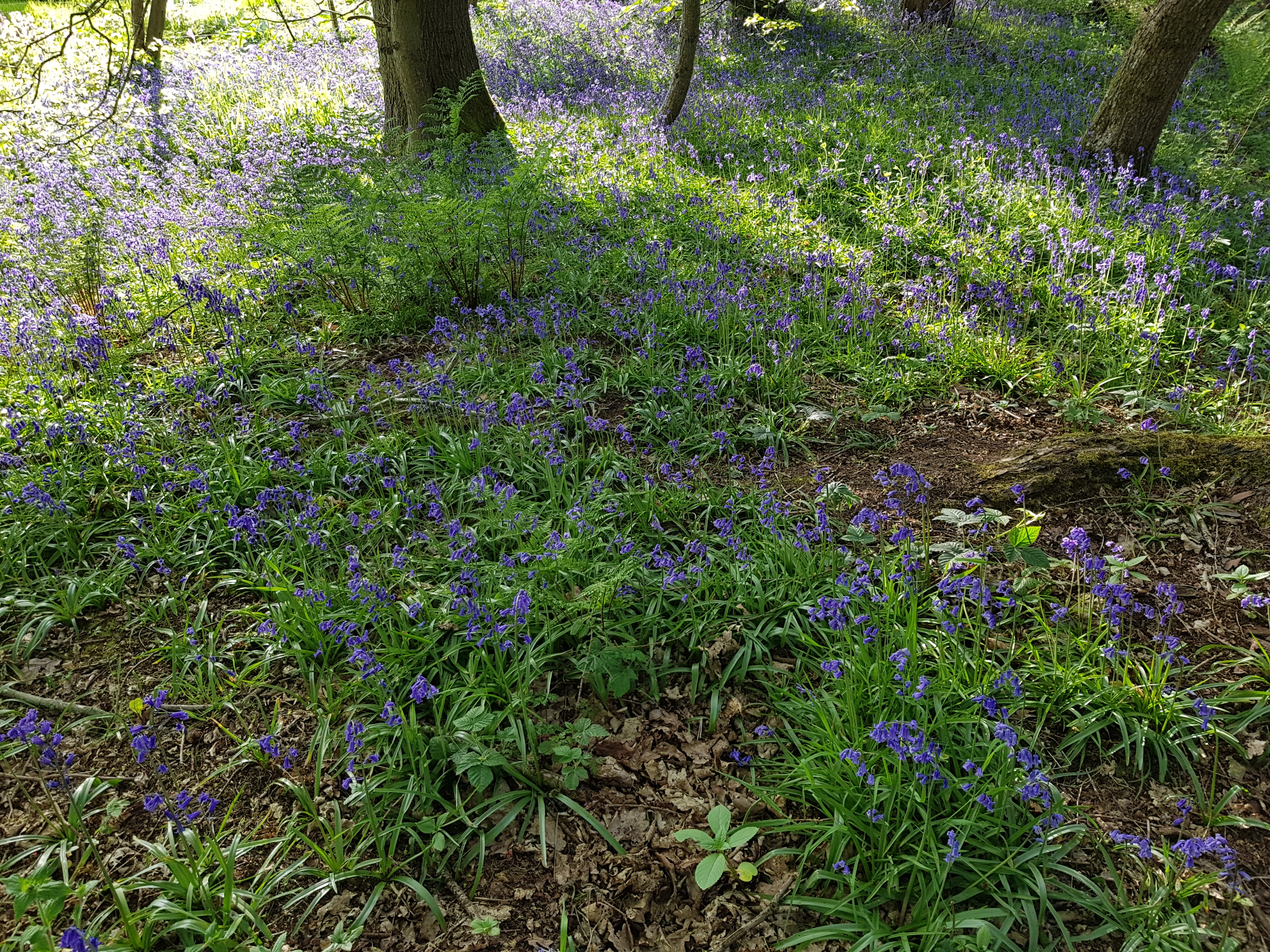
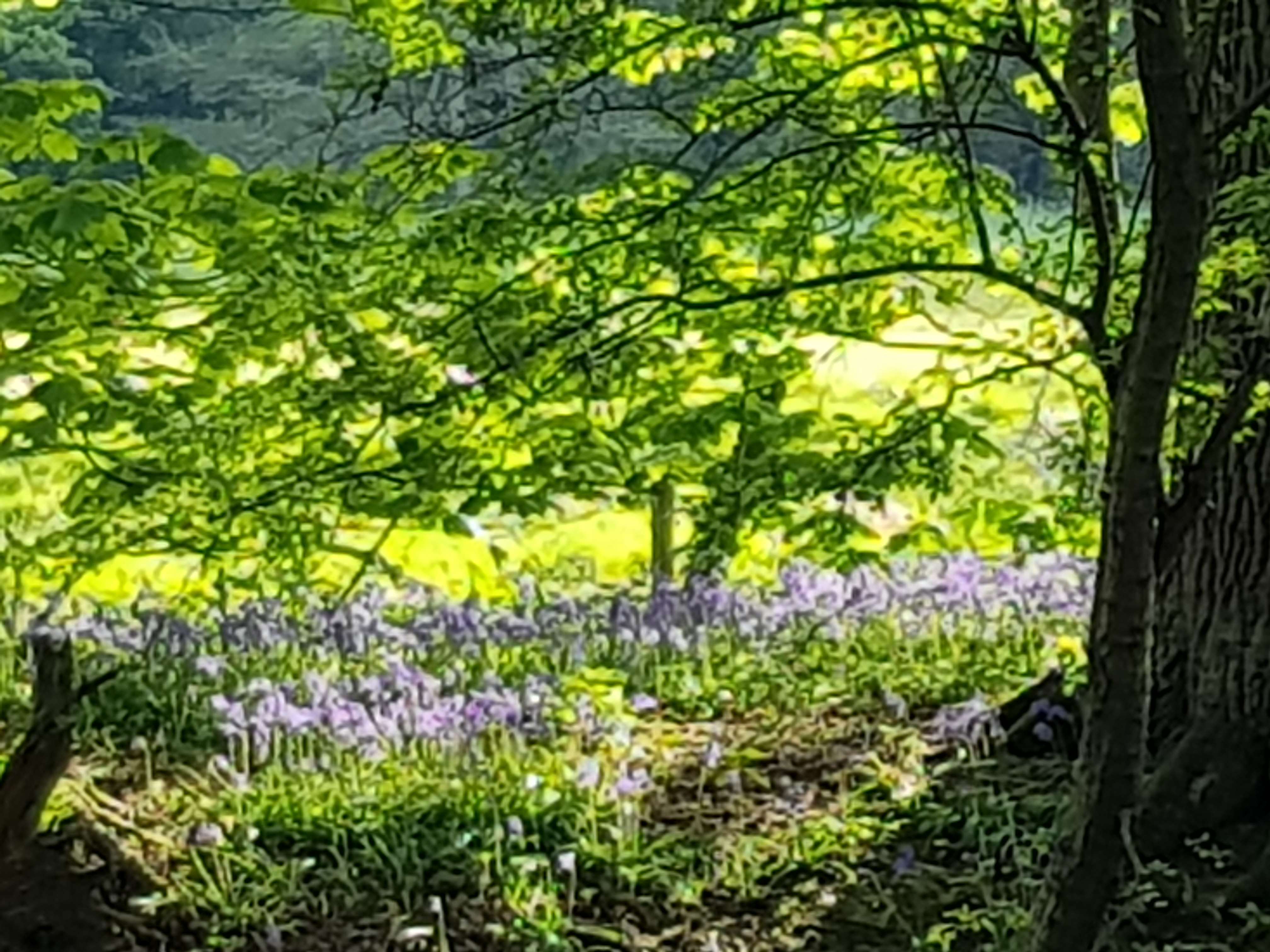
Alongside the pleasures of exploring Stoke-on-Trent, I was able to walk up the old railway track which runs beneath Alton Towers by the river and enjoy the banks of bluebells and the field laid out for archery:-

Standard