The plutocracy of museums

Earlier in the week, I was involved in a discussion organised by Thomas Marks, the former editor of Apollo about the structure of governance in museums: what works and what doesn’t and how to improve it. I had a sense that some things are improving: more board training; more role definition; a greater sense of legal and fiduciary duties; a bit more transparency, but oddly this may be handicapped rather than improved by the requirement to publish board minutes (anything sensitive is redacted and minutes are often summary). We stopped a long way short of any radical suggestions as to how systems of governance might change. So, I was interested by the attached article about how to make American boards more representative. In Britain, we already have a good tradition of having artists on Boards – three at the Tate, one at the National Gallery. The suggestion is that there should be more staff or union representation. From my limited experience of this, the relationship tends to be adversarial rather than constructive, but maybe we should be paying more attention to the operation of staff councils in Germany.

By the way, John Tusa’s book, On Board: the Insider’s Guide to Surviving Life in the Boardroom is being published in paperback next week. It’s much the best guide to all these issues, based on Tusa’s own long experience of the pitfalls.

https://www.frieze.com/article/why-are-museums-so-plutocratic-and-what-can-we-do-about-it?amp=

Standard

German lorry drivers

I have refrained from commenting on politics recently since I find myself amongst the 48% of the population who were cautious or sceptical about the benefits of Brexit and so are deemed by government as having views which have proved to be illegitimate. But it is hard not to see the polity unravelling, when even Nigel Farage is complaining that he can’t buy petrol. Of course, I am aware that we are being encouraged to believe by assorted MPs that none of what is happening has anything to do with Brexit, although the current situation bears an uncanny resemblance to politics pre-1973: a general air of malaise and extreme government incompetence.

This morning I can’t help laughing that the Department of Transport has written to thousands of Germans in the UK asking them to help out by driving Heavy Goods Vehicles. It’s an odd appeal to German patriotism to ask them to help us out of our self-induced national crisis.

https://www.independent.co.uk/news/uk/politics/hgv-lorry-driver-shortage-germans-b1930558.html

Standard

Bevis Marks Synagogue (3)

It looks pretty clear that there is a big battle going on over the future of the Bevis Marks Synagogue and its access to natural daylight. On the one side, you have the City’s planning department and councillors, determined to have their way, who maintain that, post-COVID, you must have development at all costs, as big and brash as can be. There don’t seem to be enough people on the other side questioning this strategy. I have been twice recently to meetings in big City law firms. They have been totally deserted. It looks to me at least possible that people will decide that it is nicer to work as much as possible from home and not in some bleak inhospitable 68-floor monster surrounded by other monsters in an area where history and culture and human memory have been effectively eradicated. A bit of me hopes this happens to demonstrate the penalties of greed.

https://www.cityam.com/city-of-londons-planning-processes-questioned-in-fight-to-save-uks-oldest-synagogue/amp/?__twitter_impression=true&s=09

Standard

Denise Scott Brown

Having recently re-read the secondary literature on the Sainsbury Wing, my own included, and seen the extent to which Robert Venturi is credited with it and not the firm of Robert Venturi and Denise Scott Brown jointly, I was pleased to read the attached long and thoughtful discussion as to how their collaboration worked from when they first met in Philadelphia in 1960, to her invitation to him to come and visit her in Los Angeles which is when they first travelled out to see Las Vegas to her pioneering work on the preservation of South Street, Philadelphia in 1968 and their joint work on Learning from Las Vegas. It documents the atrocious way she was treated on the publication of Learning from Las Vegas, most of all by Colin Rowe. It’s a bit shocking to read it.

Standard

Shoreditch

I walked through south Shoreditch, where the warehouses of Shoreditch meet the northern fringes of the City, where there is a battle between the new and the old, but where enough of the old survives in terms of low-built warehouses juxtaposed with new infill development to retain a sense and character of a neighbourhood:-

Standard

St. Mary Abchurch

I don’t think I had ever been to St. Mary Abchurch, one of the best preserved Wren interiors, very atmospheric with its large dome, painted by a parishioner, William Snow, who was paid £178 in 1708:-

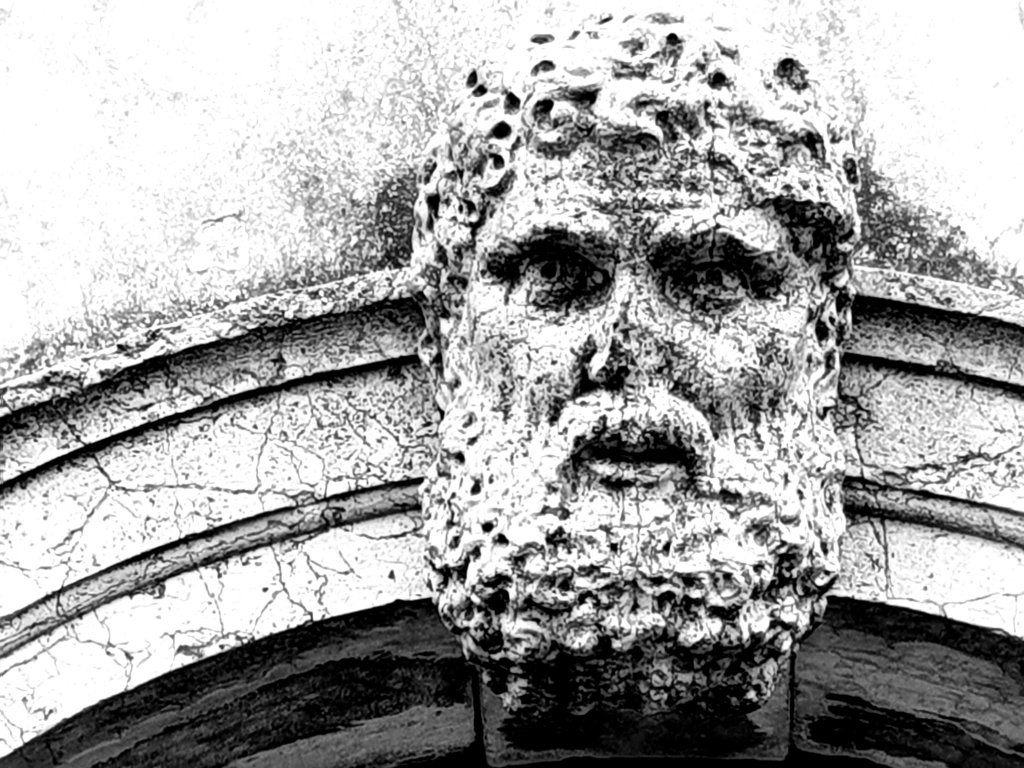
A very plain exterior, with carved heads, presumably by Christopher Kempster, the mason:-

The ‘olter pees’ is by Grinling Gibbons himself:-

There is other good woodwork by William Emmett:-

Altogether highly atmospheric:-

Standard

St. Mary Woolnoth

We started a tour of City Churches with St. Mary Woolnoth, Hawksmoor’s taut, abstract composition which was nearly demolished when they built the Northern Line – the City and South London Railway – directly underneath.

We saw the twin church towers from the east:-

Strong Corinthian columns define cubic  authority of the interior space:-

Woodwork by John Meard:-

The memorial of John Newton, a slaver who was converted and became a prominent abolitionist:-

Standard

How to Rebuild a City

A very informative programme on the redevelopment of Coventry. I hadn’t realised the extent to which plans for its redevelopment were drawn up before the war, following the appointment of Donald Gibson as city architect and planning officer in 1938 when he was only 29, full of idealism and plans for a more democratic future, which were then made possible by Hitler. The programme captures some of the hopes and aspirations of post-war reconstruction, much admired internationally, but it sounds as if it is not being well looked after and cared for now.

https://www.bbc.co.uk/programmes/m0010155

Standard

Nicholas Goodison (3)

It was the memorial service for Nicholas Goodison at St. Martin’s-in-the-Fields. He had chaired its art advisory committee which led to the selection of Shirazeh Houshiary to design the East Window. Oddly, I was on that committee, but missed the crucial meeting.

Sometimes, memorial services are a bit impersonal, but this felt deeply personal, as if he had chosen the music himself – perhaps he had ? – including César Franck, Messiaen, and a specially composed short voluntary for the baroque trumpet by Peter Maxwell Davies. He chaired the National Art-Collections Fund, the Burlington Magazine, the Crafts Council, the Furniture History Society and National Life Stories (I’ve probably left a few out). But he also liked salmon fishing and photography. It’s easy to forget that his professional career was as a stockbroker-turned-banker.

Standard

Leon Kossoff

I went to a tea ceremony in Arnold Circus to celebrate the erection of a sign to mark a cherry tree which was planted two years ago to commemorate Leon Kossoff, whose father came from Ukraine and ran Kossoff’s Bakery on Calvert Avenue, nearly opposite Leila’s. Kossoff apparently came back several times towards the end of his life to see the neighbourhood where he had spent so much of his childhood, including attending Rochelle School on the other side of the Circus, and he made drawings of the Boundary Estate, alongside his great series of paintings of Christ Church, Spitalfields:-

Standard