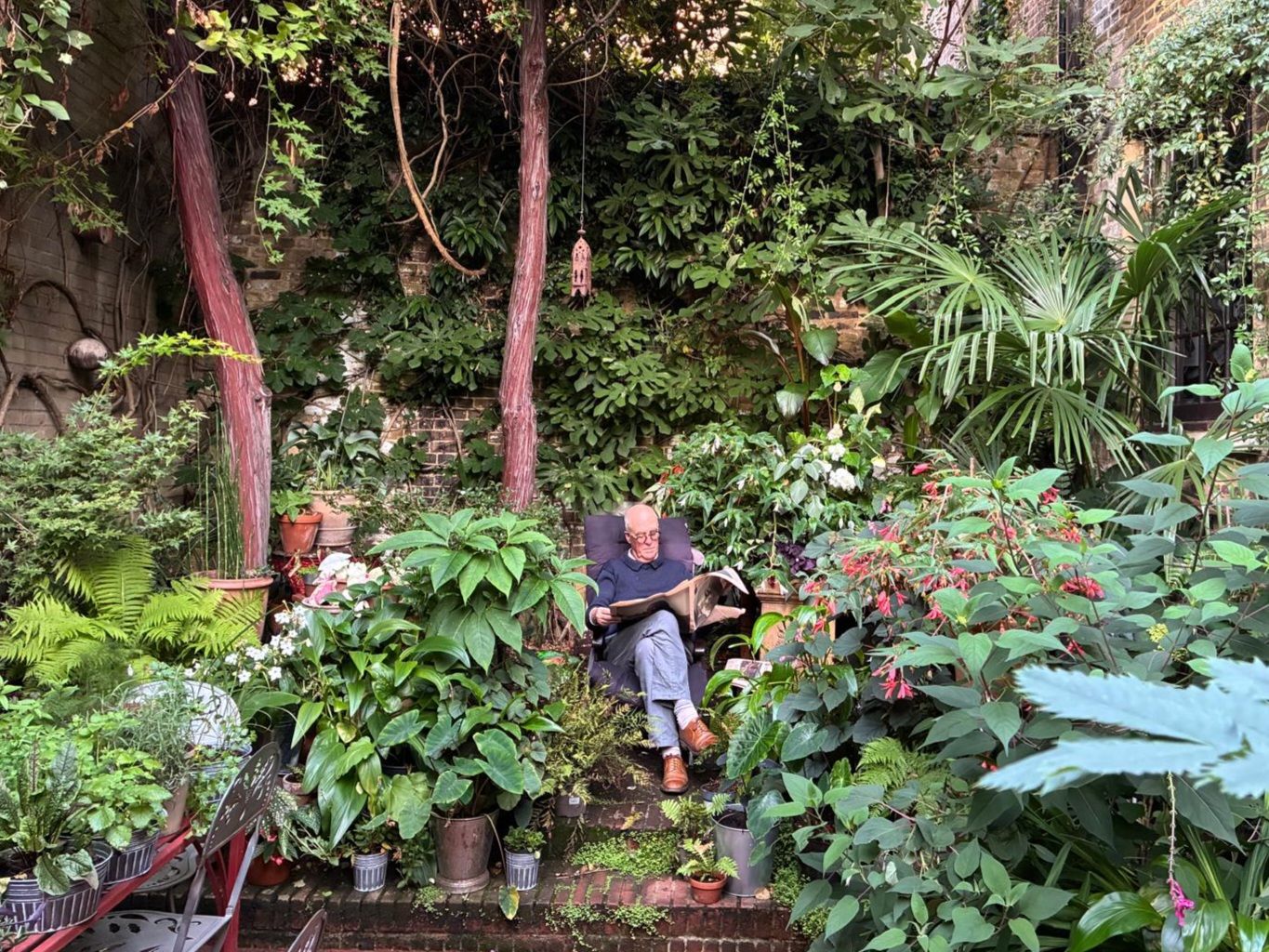
I finished reading Notes from Walnut Tree Farm on the flight to Los Angeles and have now completed my crash course in the works of Roger Deakin: sad to realise that he died ten years ago aged 63, so should have had twenty more years at least of rambling, meditative, descriptive writing about Suffolk and other places – his jottings on trees, insect life, memories of his north London childhood, travels in his Citroen, and things seen. Of the Australian writer Eric Rolls, he says that he writes ‘in a series of anecdotes and portraits that accrete bit by bit into a whole picture’ and that ‘his technique is disobedient in the best sense, for being his own man when it comes to writing’. He might have been writing about himself.
Author Archives: Charles Saumarez Smith
Kensington Gardens
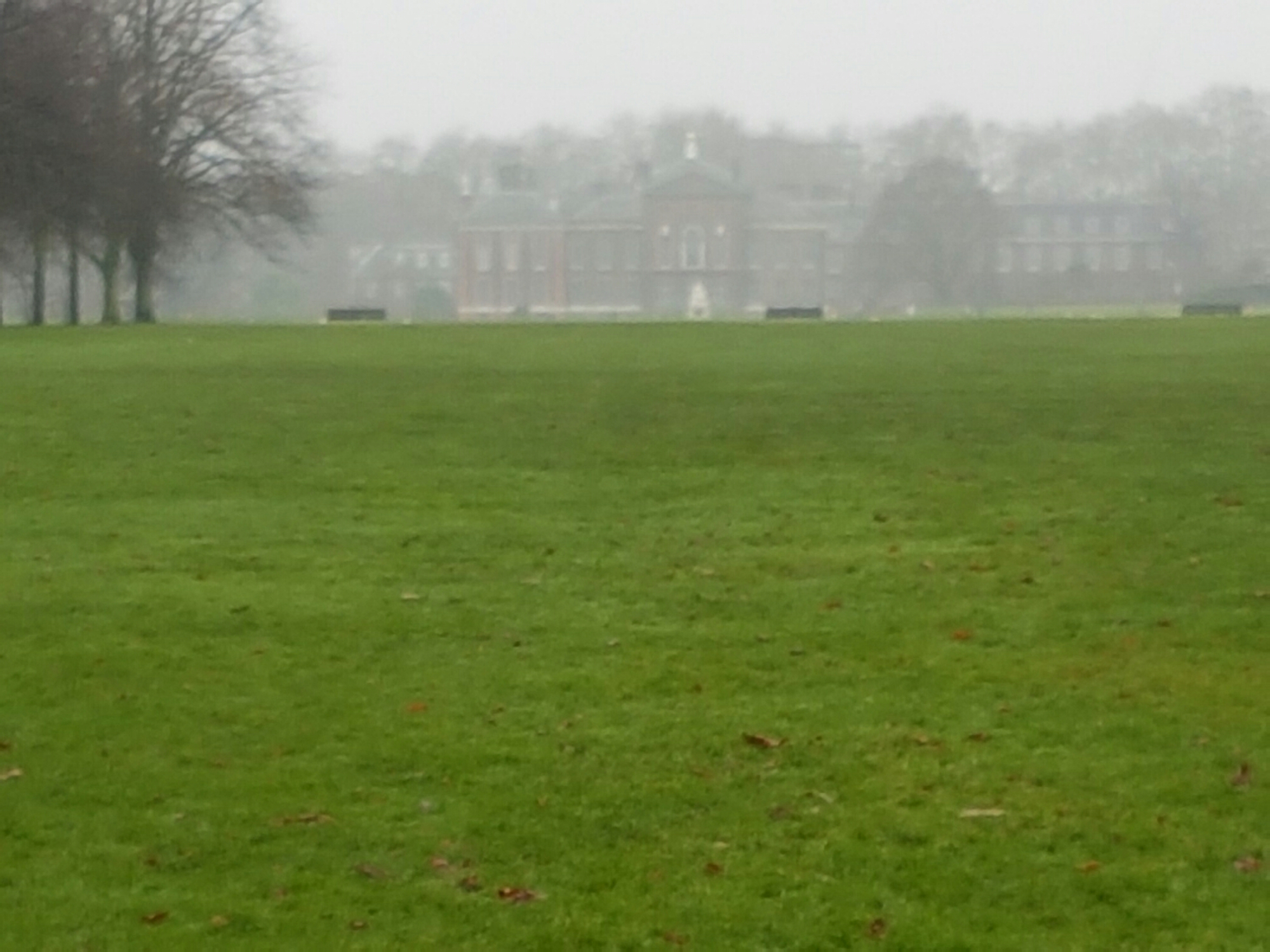
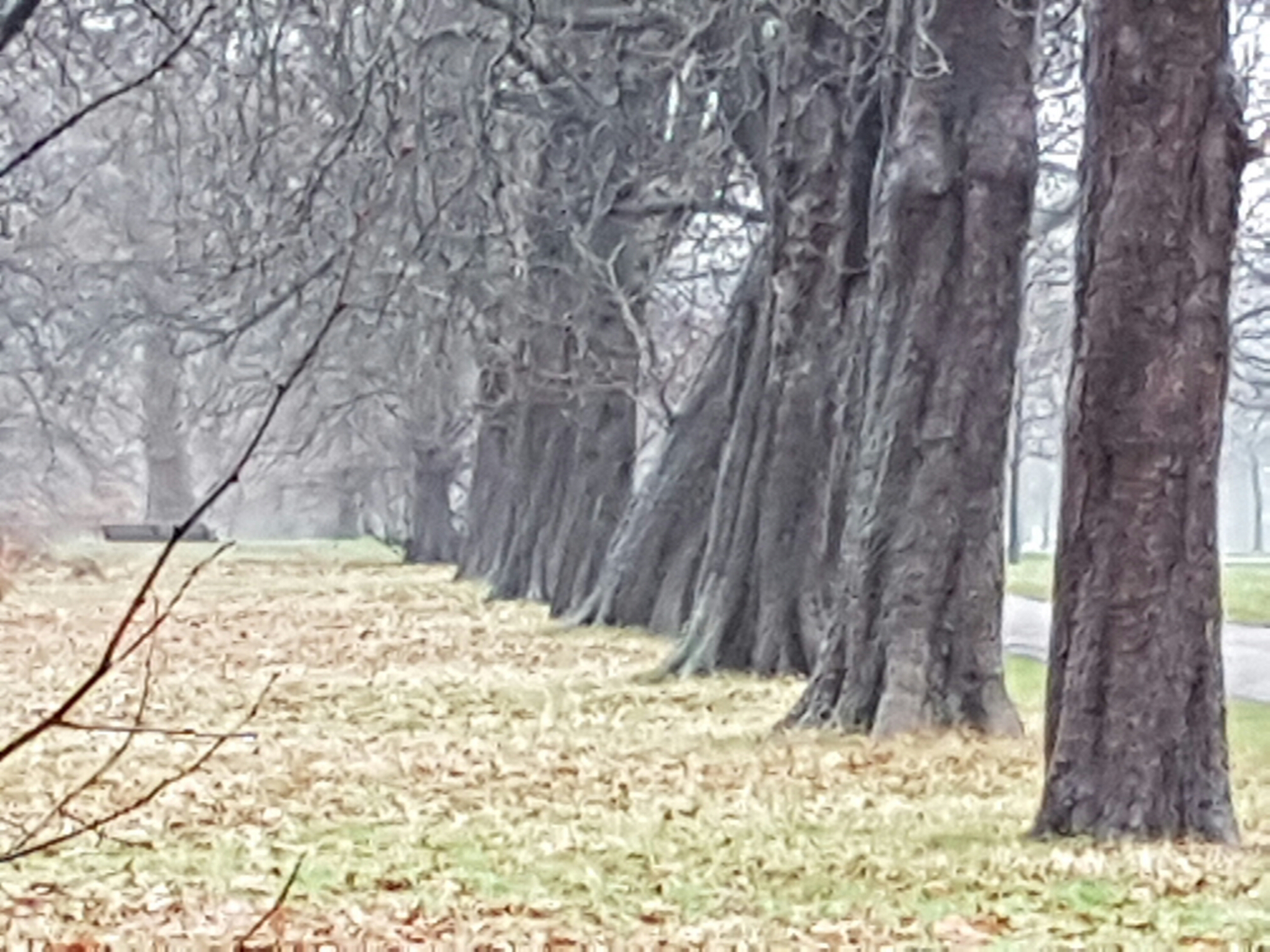
I know Hyde Park much better than I do Kensington Gardens, so took the opportunity of the closure of Lancaster Gate underground station to explore the area round Queensway, including Kensington Gardens, damp, grey and atmospheric on a wet Saturday morning, and including a curious mix of its original formal geometry, as originally laid out by George London and Henry Wise of the Brompton Nurseries, enlarged by Henry Wise for Queen Anne, and then adapted by Charles Bridgeman for Queen Caroline between 1727 and 1731, with grand avenues leading to Kensington Palace, dogs and big rotting trees:-
Whitechapel Bell Foundry (2)
For anyone who is interested in the fate of the Whitechapel Bell Foundry, I am attaching a link to the post I have written for the Apollo blog and which has just been published. It is similar to what I wrote at the weekend on my own blog, but with a touch more historical and other detail:-
Keeling House
I know I have written about Keeling House before, but I am posting some photographs I took of it on Monday which I hope demonstrate its utopian character (designed 1955) and crisp rectilinear geometry, a product of the care that Lasdun put into every aspect of its design to ensure a combination of privacy (every maisonette had its own balcony) and community. Lasdun wrote, ‘These were people who came from little terraced houses or something with backyards. I used to lunch with them and try and understand a bit more what mattered to them, and they were proud people’:-


Hoxton (2)
Following my post about Hoxton, I have been trying to figure out more accurately the precise division between Hoxton and Haggerston, which were created as separate parishes out of Shoreditch in 1830. The problem seems to be that they are parishes, municipal neighbourhoods and, in the case of Hoxton, a state of mind. I had thought that the boundary lay north-south down the Kingsland Road, as suggested by the location of Haggerston Park and Haggerston School, but I’ve realised it could be east-west along the Regent’s Canal, as suggested by the names of the stations on the new Overground. Perhaps someone can enlighten me ?
To help confuse matters, I am adding (which I omitted from my previous post) the terracotta ornament on the building which was once the Shoreditch Electric Light Station, has the wonderful inscription E PULVERE LUX ET VIS on its façade, and is in Coronet Street, Hoxton:-

Gasholders
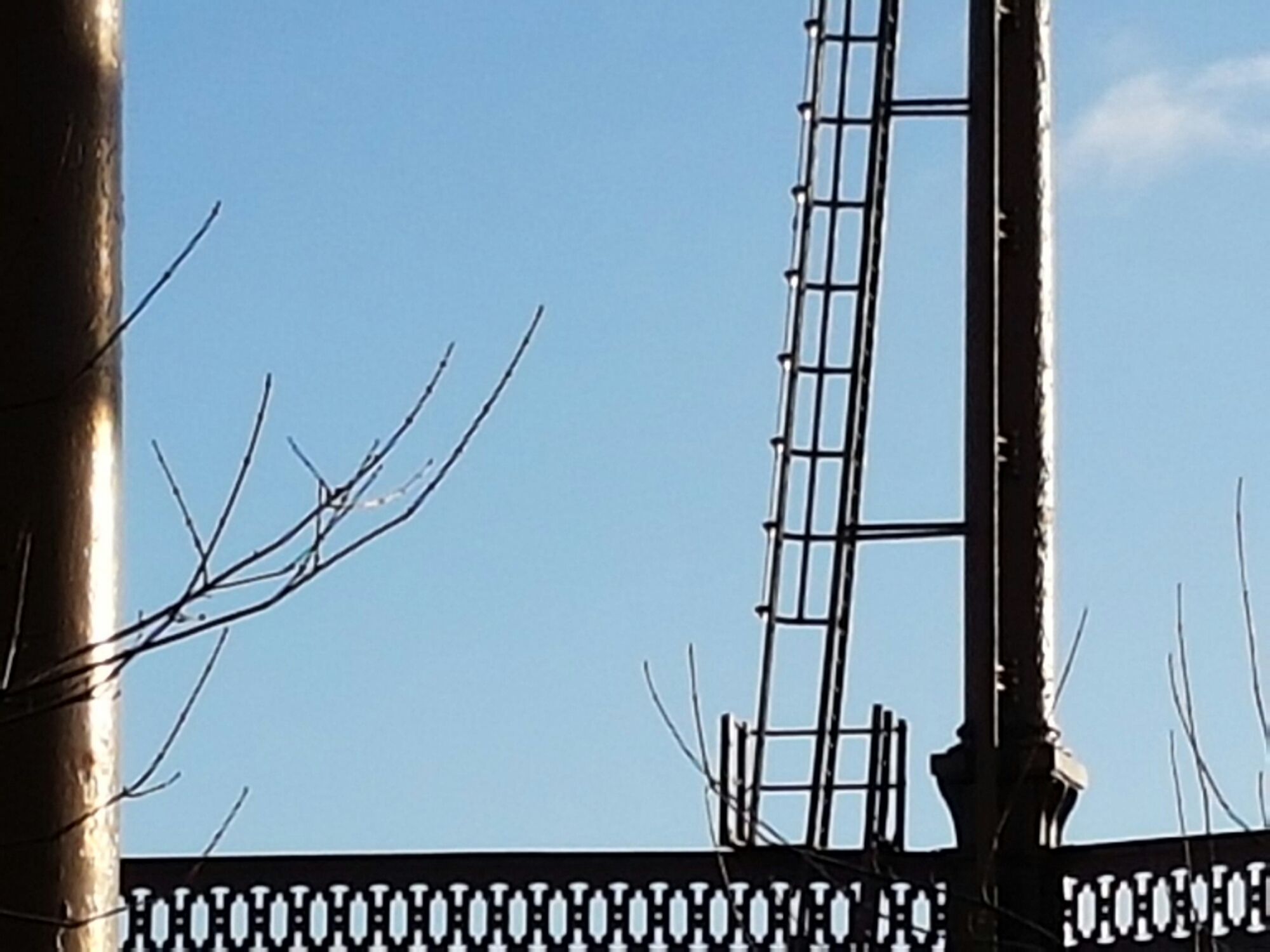
The last of my posts from what turned out to be a long walk on the last day of the Christmas holiday concerns the two great gasholders on the bend of the Regent’s Canal, just near Broadway Market. I received an email telling me – surprise, surprise – that they are likely to be demolished. The smaller one is the earlier, dating from 1866, designed by Joseph Clark, the chief engineer of the gasworks. The bigger one was added in 1889. They supplied gas to the Shoreditch gasworks, which in turn supplied gas for the street lighting of east London:-

Hoxton (1)
I feel slightly badly that Hoxton has so few entries in my book – only one – whereas neighbouring Haggerston has seven. So, I went to explore it.
I had never seen St. John the Baptist, Hoxton, a Commissioner’s Church built in 1826 to a design by Francis Edwards, a pupil of John Soane, with fantastic Ionic capitals and very good iron railings:-


Norton Folgate (3)
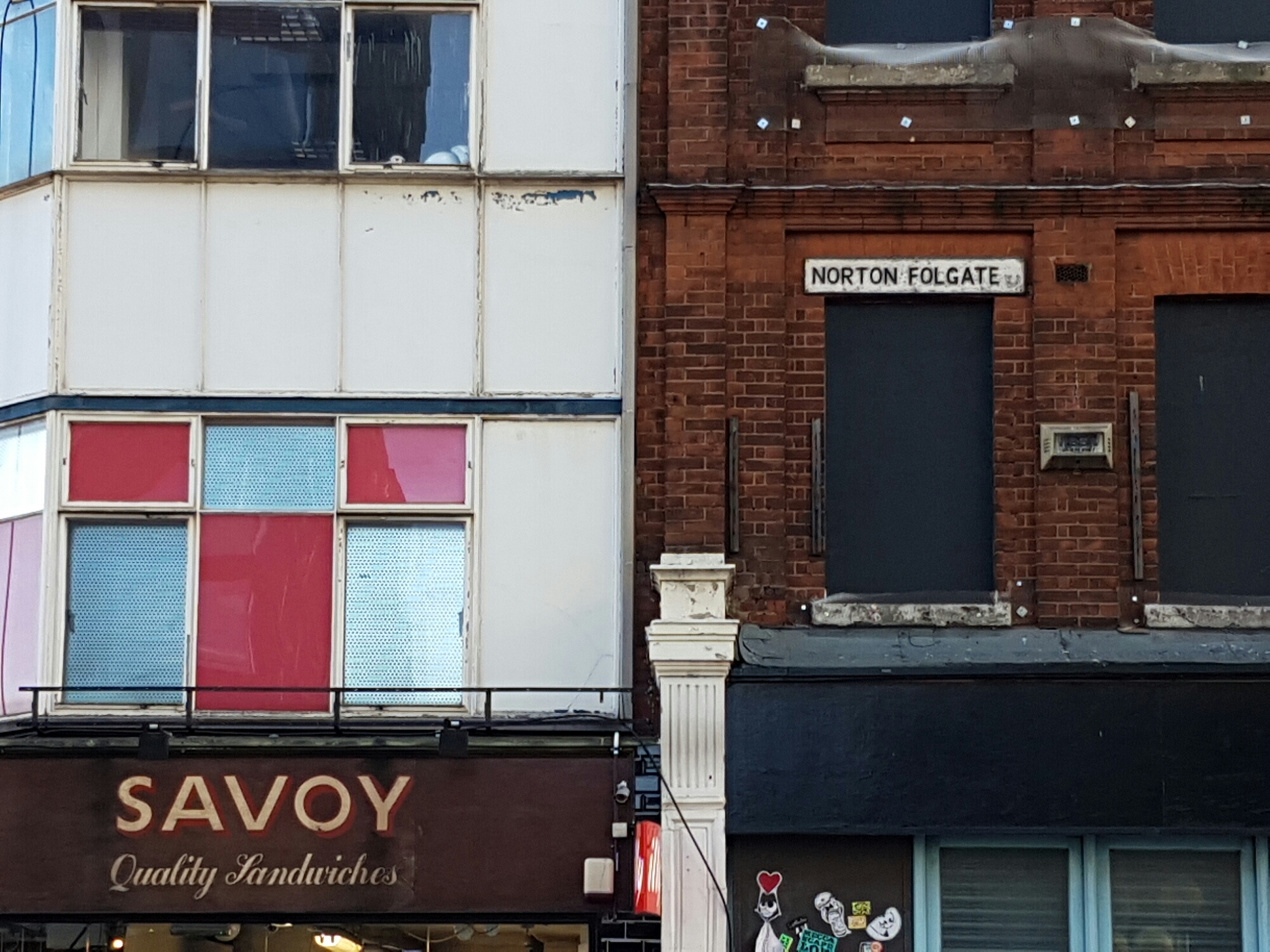
I walked past Norton Folgate today which still stands derelict, awaiting redevelopment after Boris gave the new scheme planning permission as one of his last acts as Mayor. Like the Whitechapel Bell Foundry, it’s a reminder that London’s prosperity was once industrial as well as commercial and is the reason why Dan Cruickshank’s recent book about Spitalfields ends so pessimistically. After forty years of fighting to save the historic character of Spitalfields, he feels the battle is now lost:-

Spitalfields
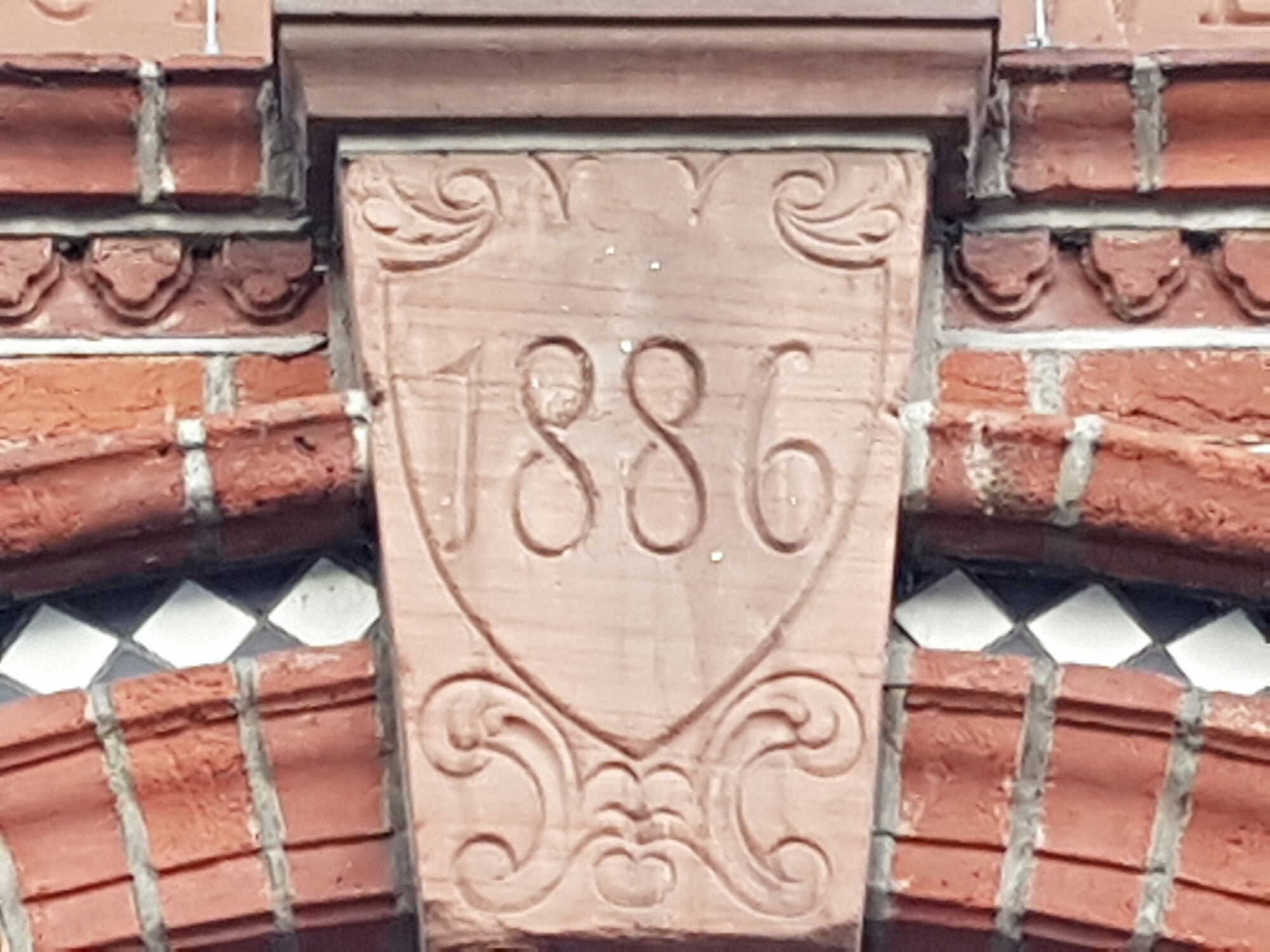
Since the weather was so fine, I walked up from the Whitechapel Bell Foundry into Spitalfields, passing the surviving entry to model dwellings constructed in 1886 by Nathaniel Rothschild’s Four per cent Industrial Dwellings Company:-
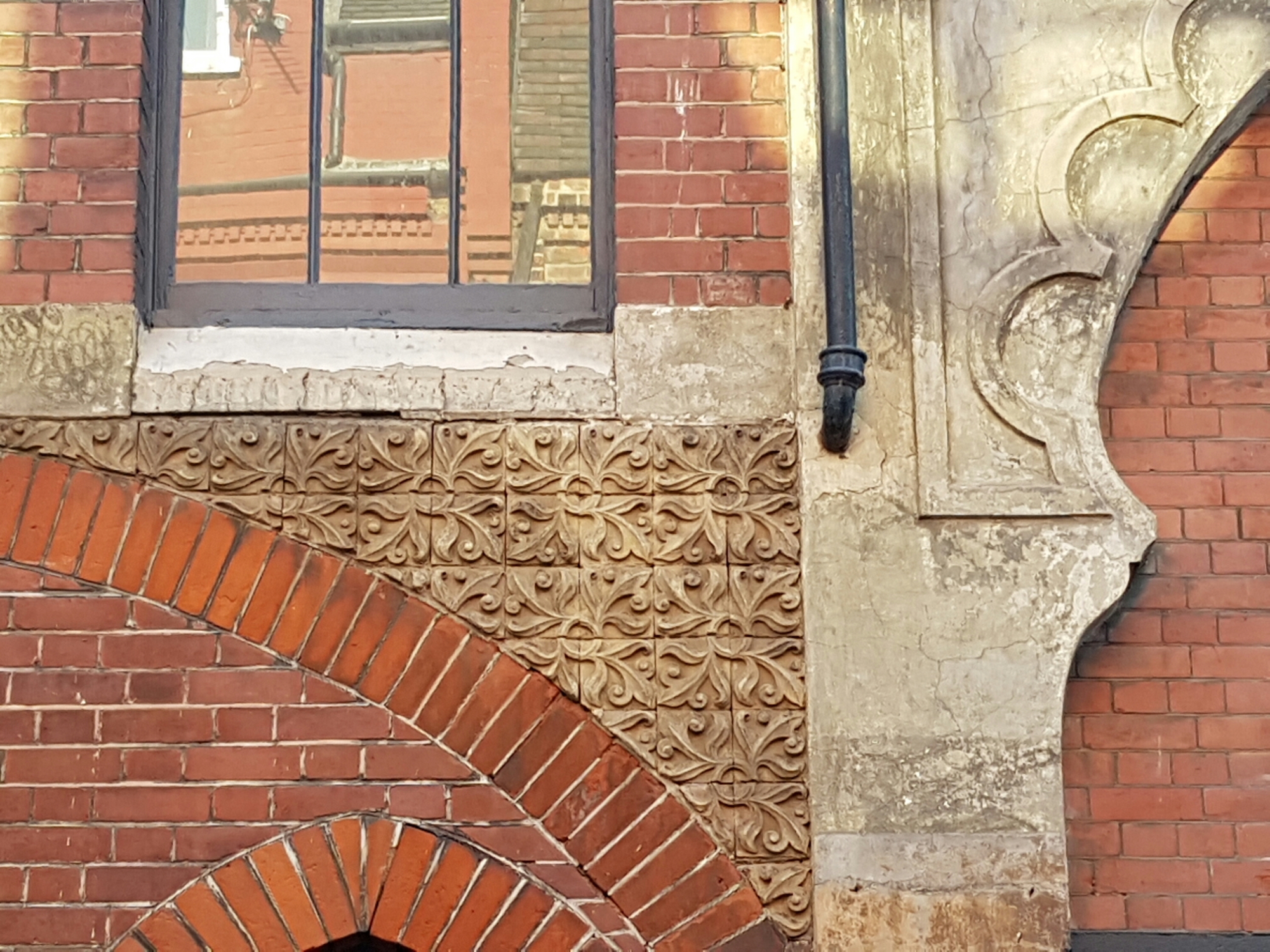
I had never actually walked down Fashion Street before, with its Moorish-style arcade of 1905:-
Whitechapel Bell Foundry (1)
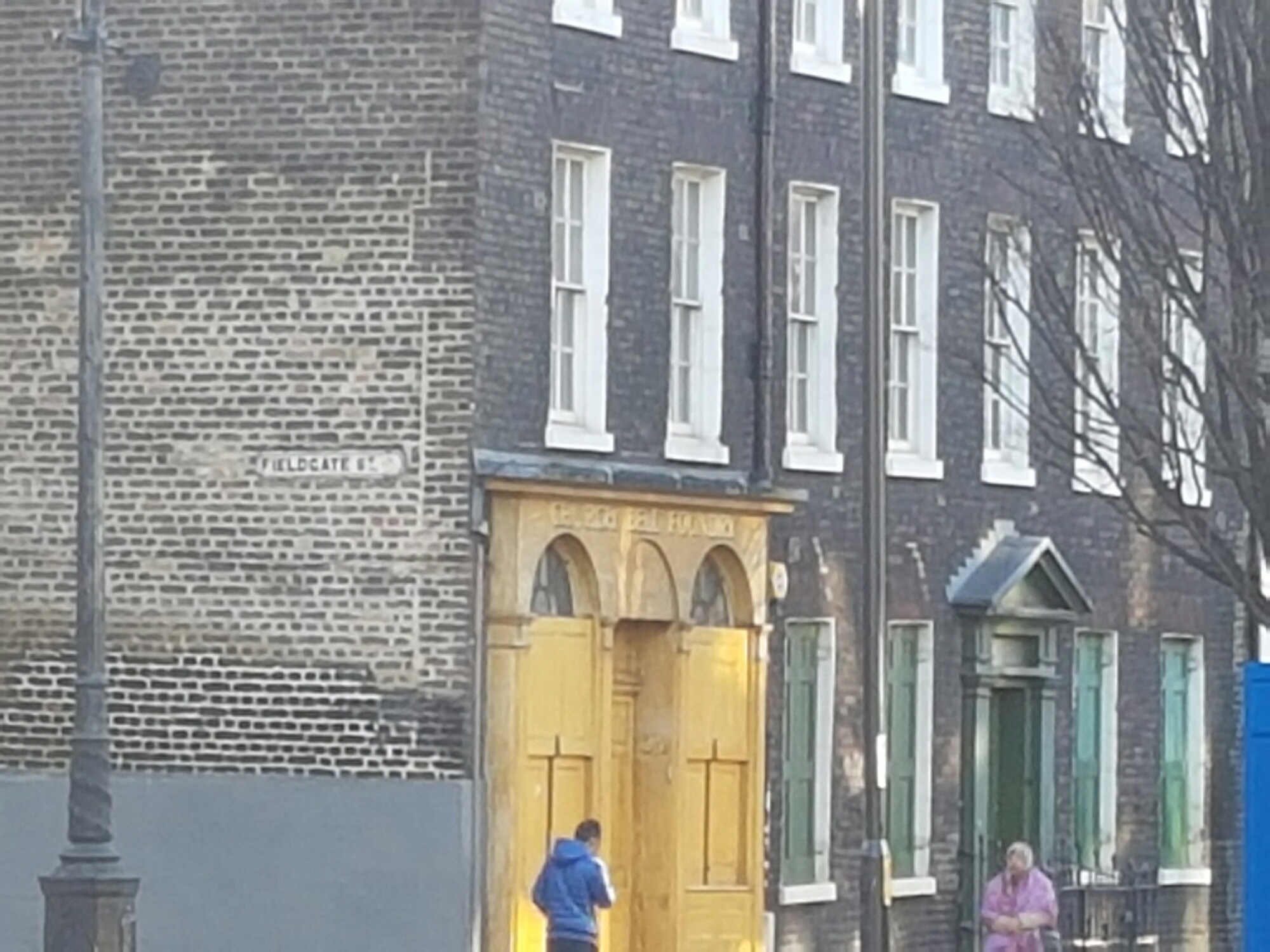
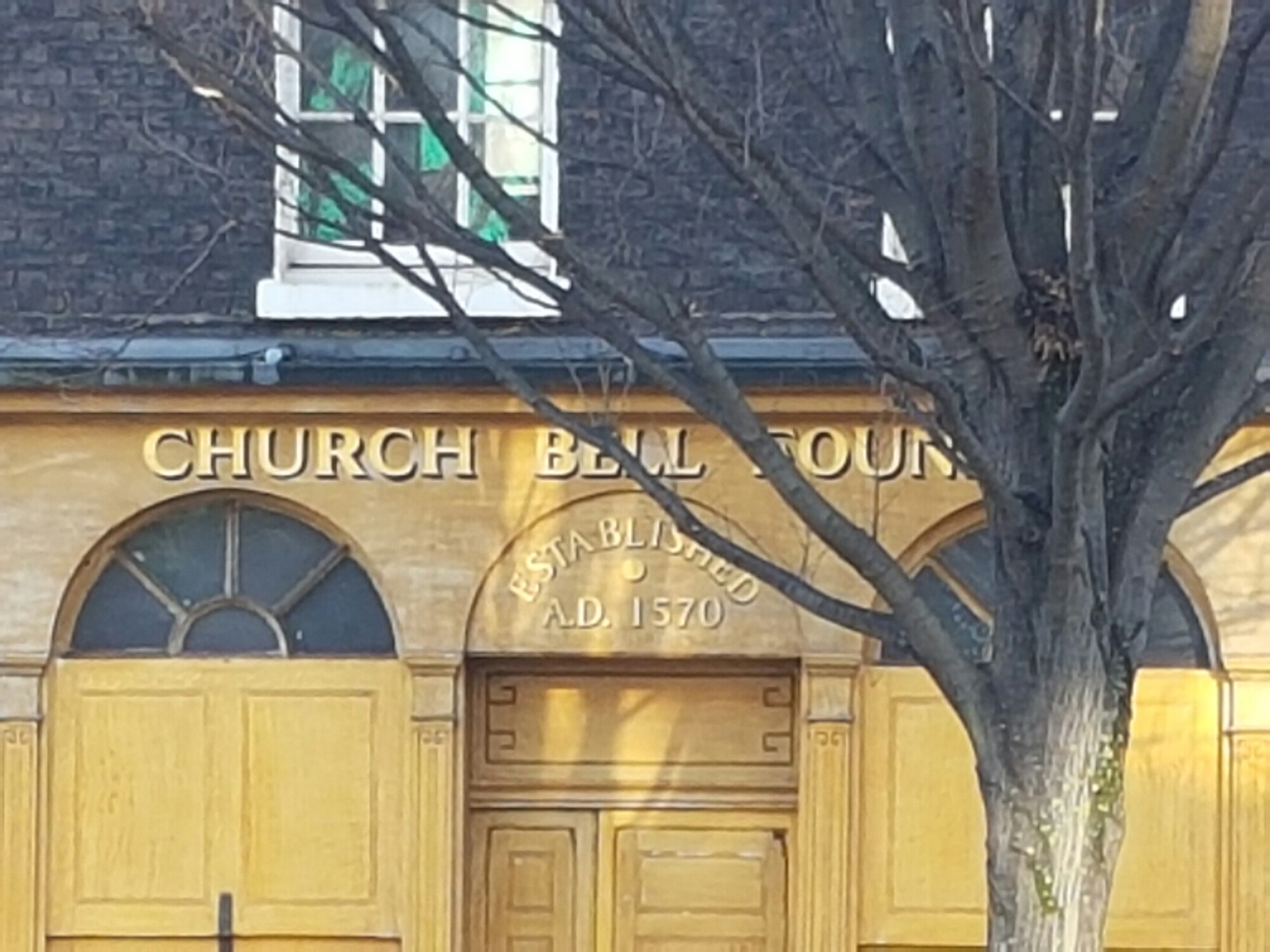
Having spent the morning writing about the fate of the Whitechapel Bell Foundry which is due to be either closed or moved in May this year, I thought I should go and have a look at it, even though I knew it would be closed. It’s always been said to be a building of 1738, owing to an entry in the company history, but recent research by the Survey of London has discovered that the lease on the so-called ‘Old Artichoke Alehouse’ was advertised in the Daily Advertiser on 31 August 1743 and it was only in 1747 that the site was described as ‘a new built messuage’. It’s a remarkably well preserved piece of industrial architecture and good if it can be preserved as a working museum, as the SPAB apparently plan:-
 | Charles | Saumarez | Smith |
You must be logged in to post a comment.