
I have written before about the battle raging over the future of the Wolseley. I don’t think I had quite registered the enormity of what was at stake until I read that Jeremy King will no longer be allowed to enter the restaurants he co-founded: not just the Wolseley, but Zédel, the more democratic alternative, and Delaunay, where headhunters do business, and Fischers at the top end of Marylebone High Street, more truly Viennese. I’m sure they will carry on in some form, but they will have lost something of their character and family feel, which, as the accompanying article well describes, was owing to Jeremy King and Chris Corbin’s benign stewardship and sense that running a restaurant was about atmosphere and the quality of service, the greeting at the door, at least as much as the food, which they first taught London at the Ivy and Caprice, now sadly a part of folklore and restaurant history.
The Burrell Collection (3)
A month or so ago, I went to see the Burrell Collection for the press opening and before the collection had been fully installed. I was very impressed: by its scale; by the amazing quality and range of the collection; and by the way it had been restored, although I was already aware that one of the three architects, John Meunier, was critical of its restoration.
The biggest change is to open a new front entrance. This makes good sense – to make it look and feel more accessible to the surrounding park. The second big change is to remove the old lecture theatre and replace it with an open forum space in the centre of the building. Again, this makes good sense. And I think maybe one or two of the period rooms have been removed. The result has been to open the building up and make it feel more generous. I hope John Meunier will visit it and be pleased by the result.
Below is my considered verdict:-
Frank Auerbach
There is a wonderful small, but very focussed and thoughtful exhibition of the work of Frank Auerbach in the Newlands Gallery in Petworth. It is based on two groups of work. The first is his long-standing fascination with the composition of works in the National Gallery – Constable’ Hay Wain, his Salisbury Cathedral from the Meadows (1831) and the work of Turner, including The Fighting Temeraire. The second is a very substantial group of paintings collected by David Wilkie, an insurance clerk in Brentwood who befriended Auerbach, paid for work over time and bequeathed his collection to the Tate where it is mostly unseen, although it includes some excellent and memorable pictures.
This is the picture he commissioned of Rimbaud:-

This is a painting he asked Auerbach to do of a painting Titian might have done – Callisto’s death – but as seen from Hampstead Heath (it includes Michael Foot in the foreground):-
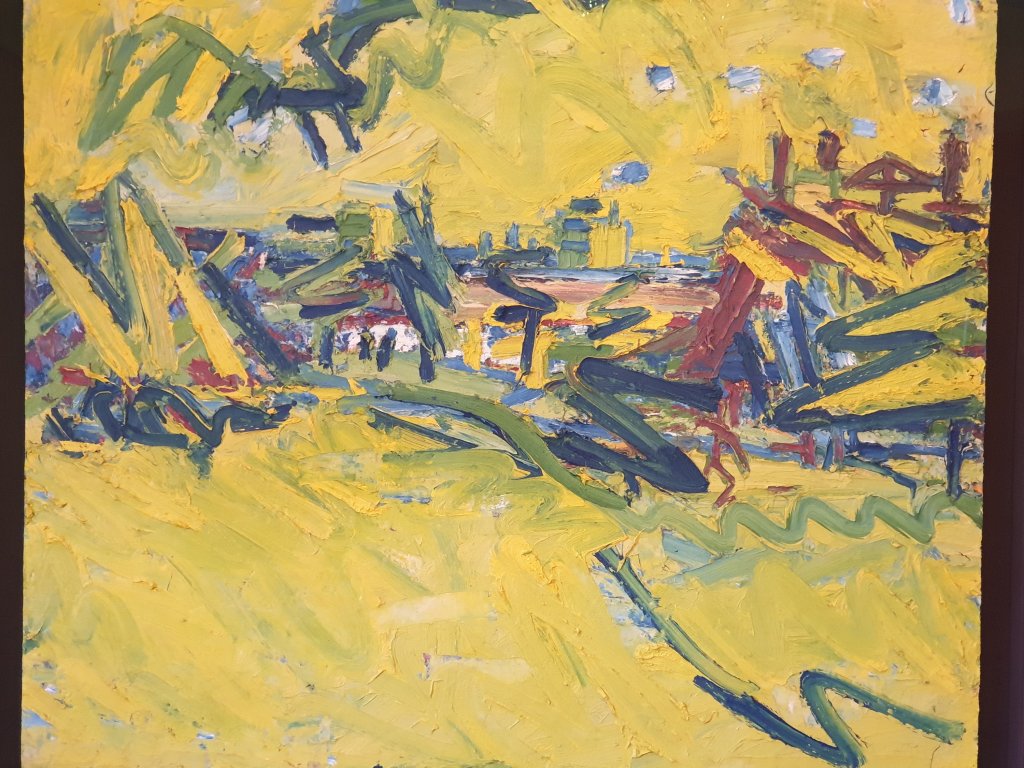
Nithurst Farm (1)
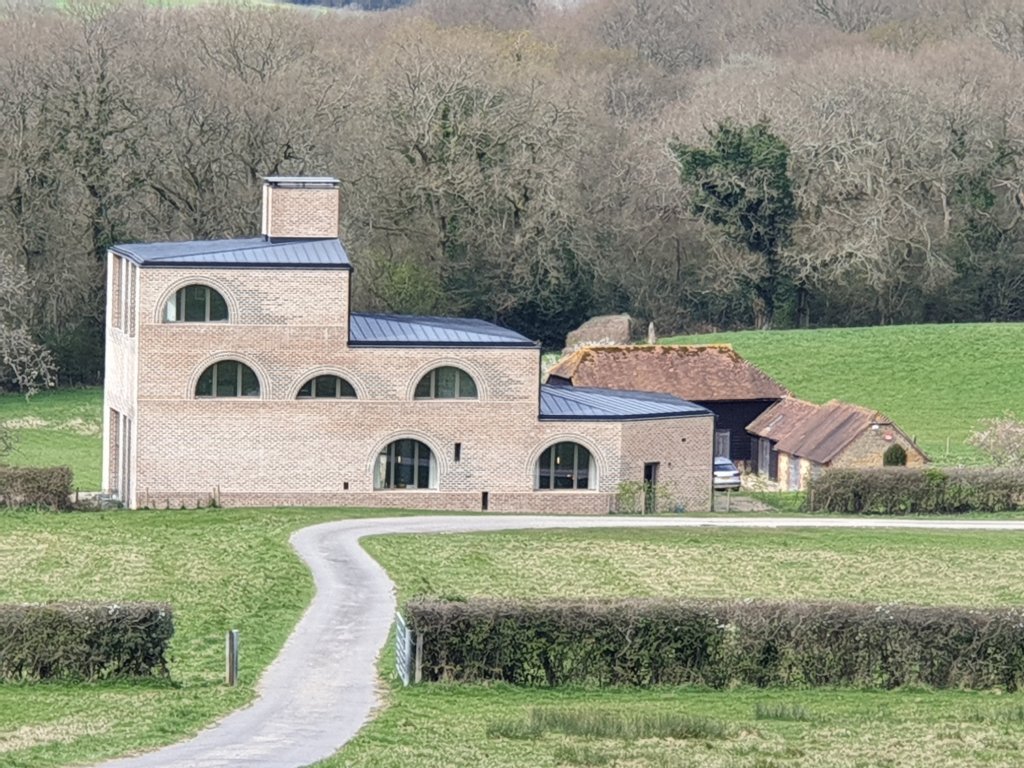
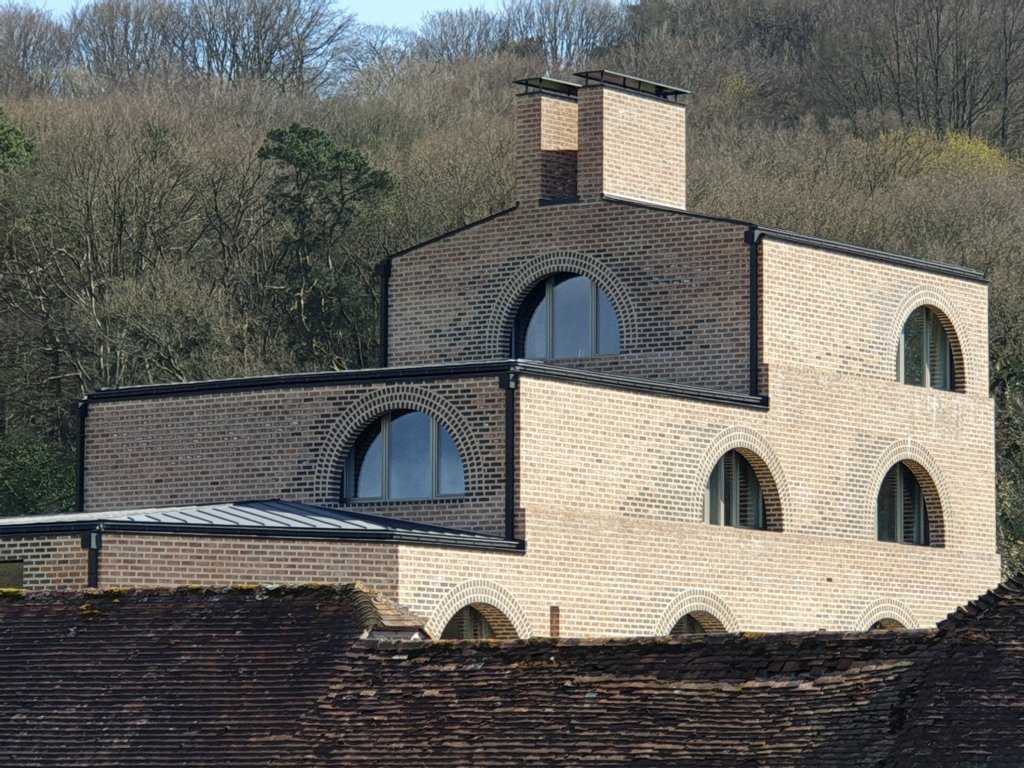
I arranged to see Nithurst Farm, Adam Richards’s strange and brilliant house buried in a secret valley surrounded by woods just outside the park at Petworth.
Apparently, a balloonist fell down in the fields nearby and said that he always told people that it was the pumping station for Petworth. This is indeed its idiom: an abstracted form of industrial geometry; partly as if it was a classical survival with its deeply recessed Diocletian windows; partly based on Palladio in that its ground plan echoes the big central ground floor space of the Villa Maser, but is very slightly tapered, with rooms offset; and it is partly maybe also a subconscious – or conscious – homage to Vanbrugh as if it is a project which has strayed from Vanbrugh’s estate of abstract castellated buildings on a hill overlooking Greenwich (Richards himself references Vanbrugh’s garden tower at Claremont).
Richards was a student of Dalibor Vesely at Cambridge and the house is deeply influenced by a belief that architecture is not just a question of solving problems, but about the language of architectural form. This was apparently Vesely’s first lesson, as Vesely was a philosopher, teacher and engineer, interested in the poetry of architecture, its hermeneutics.
This is the approach from the hill above:-
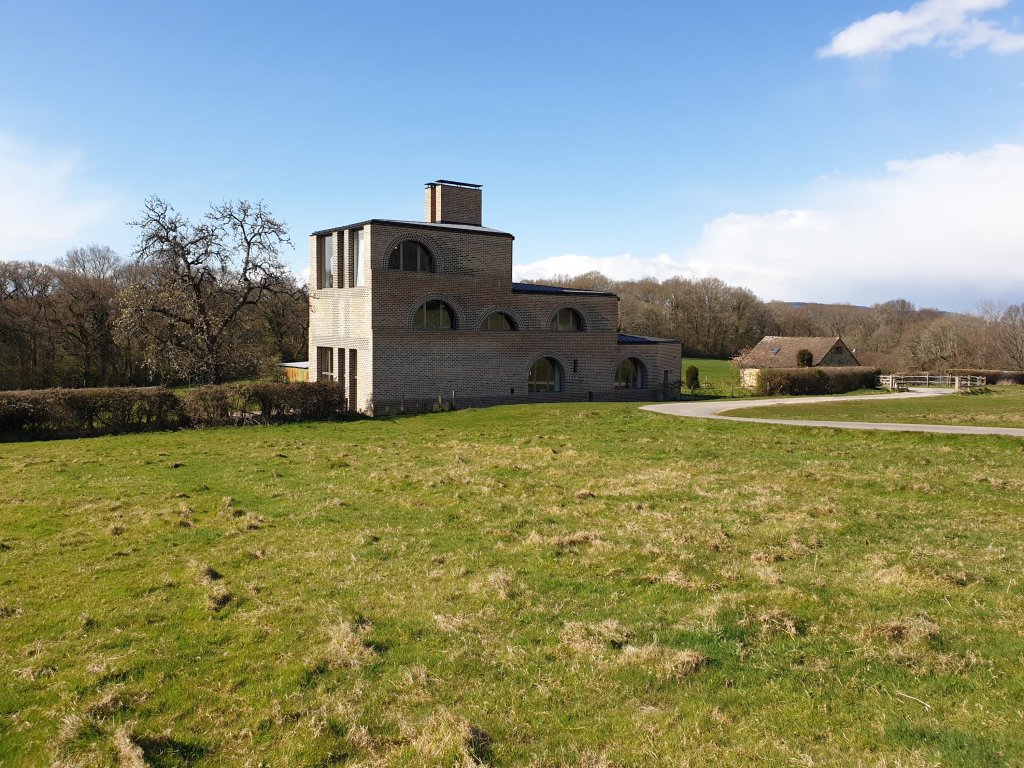
This is a view of the garden façade, pure Aldo Rossi, with the windows of the garden room full height and asymmetric:-
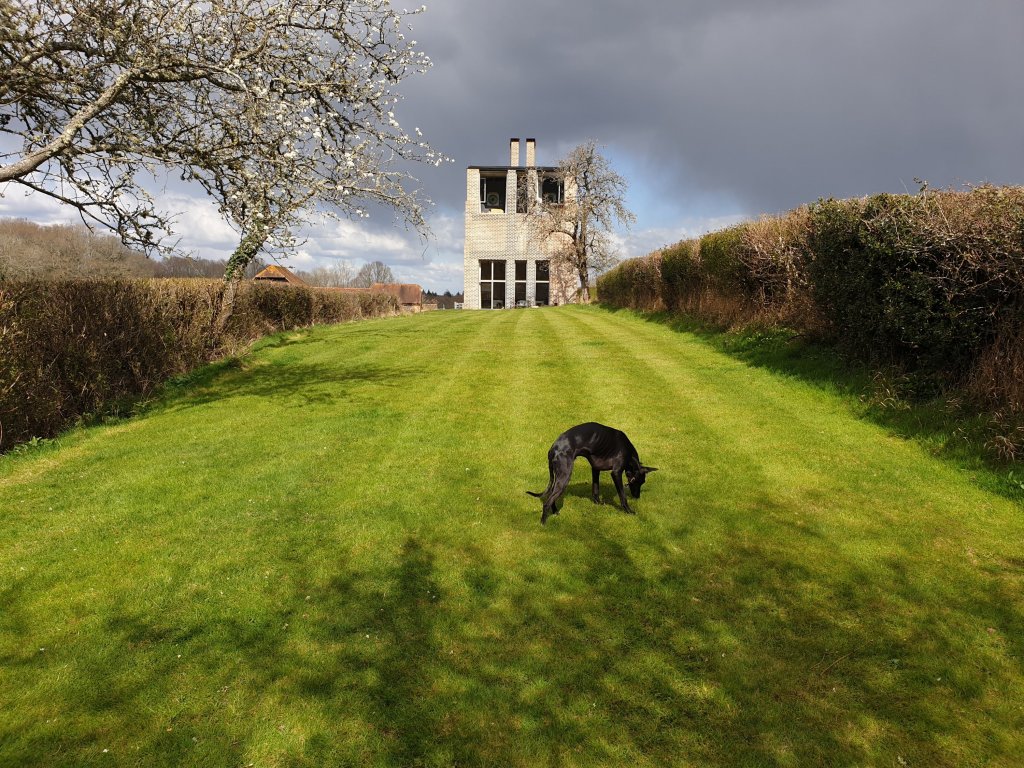
Like Vanbrugh, it manages to be both miniature and monumental:-
This is the view of it as a tug boat, an analogy I didn’t initially recognise until I saw the model:-
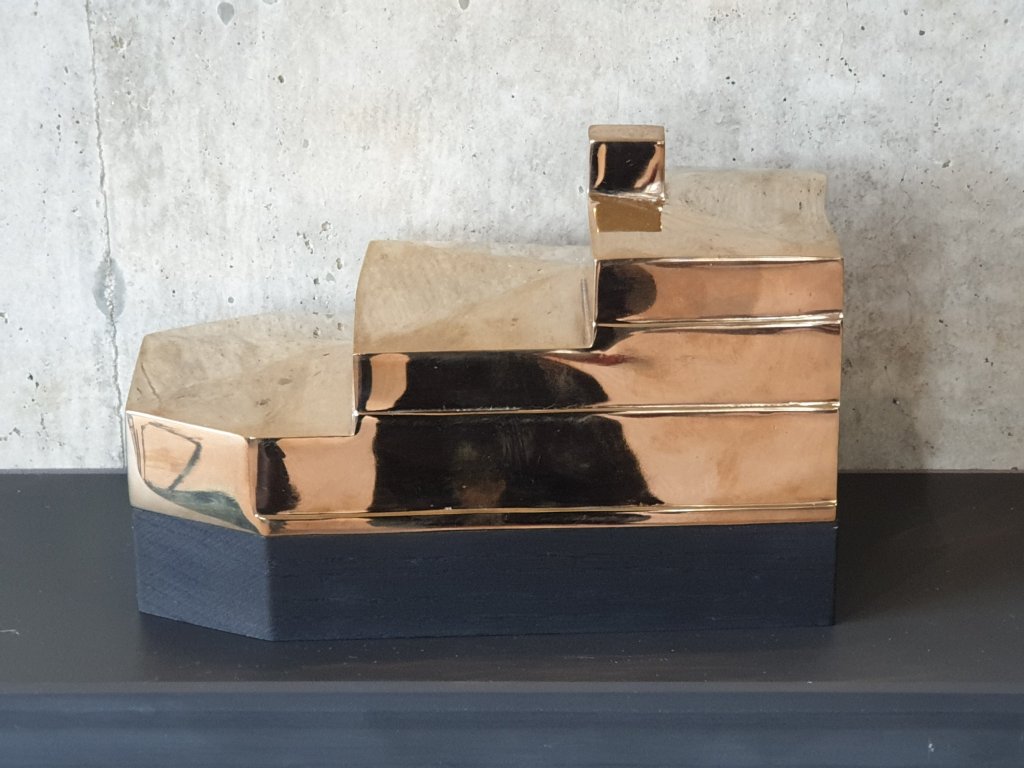
It’s a rich project, but also quite simple, both at the same time, which is what makes it memorable.
Petworth Park
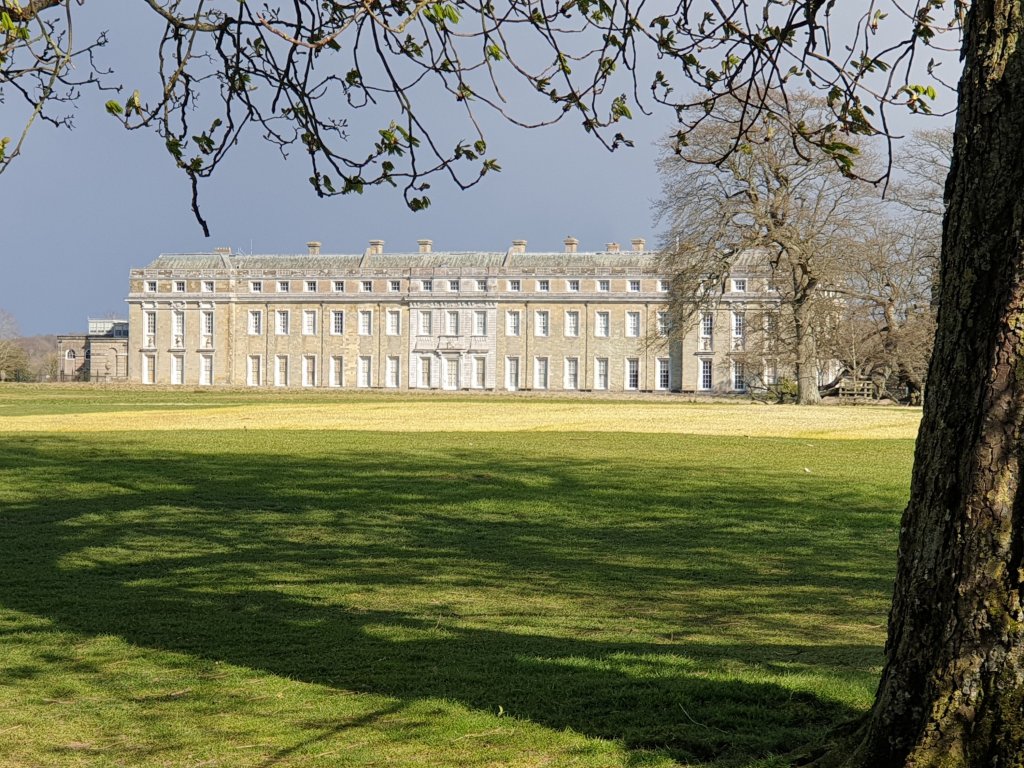
I’ve never seen Petworth House from its park before: so austerely French, a long linear façade in the cold April sun, thought possibly to have been designed by the Monsieur Pouget who was credited with the design of Montagu House in Vitruvius Britannicus.
It is certainly very French in character – smarter and more sophisticated than its English equivalent, more coolly classical and by someone who knew what he was doing:-
The Russian Connection
The attached video, made by Led by Donkeys, is well worth watching. It details the long-standing and close links between the current government and Putin’s regime. What stands out is that if Boris Johnson was a junior operative in MI6, he would have been fired long ago as a security risk. But as Foreign Secretary, he was able to take strictly confidential NATO papers with him from a NATO conference to a weekend in the Umbrian mountains to meet with the former head of the KGB in London, Colonel Lebedev, where he got so drunk that he can’t remember what happened or what was discussed and whether or not his briefcase was read while he was asleep because he had left his security detail in London. Of course, he regards Colonel Lebedev as a close friend and totally trustworthy and has accepted his hospitality on multiple occasions. We can now never know the truth of what happened because he has lost his mobile phone. This is the Prime Minister, remember.
Make destroys the National Theatre (2)
I have been thinking about this building since seeing that it had been given planning permission last night. If built, it will be one of the most prominent buildings in London. Yet, one wonders, is it the result of a public competition ? The developers are Mitsubishi Estates. It’s designer, Ken Shuttleworth, is called ‘Ken the Pen’ and no doubt stands to make a vast amount of money from this necropolitan development, but it will totally dwarf the Houses of Parliament, as well as the National Theatre. What were the planners thinking ? A monster monument to the Age of Boris Johnson, totally soul-less like the new Broadgate which is also designed by Make.
It is now up to Michael Gove to call it in and reject it. And create new planning laws at the same time.
Make destroys the National Theatre (1)
I am mildly shocked by this approval of a massive new development which will dwarf the National Theatre and the Royal Festival Hall and will totally dominate the bend in the river from all directions, sucking energy out of everything in the vicinity, including Tate Modern. As in all new building schemes, the decision is made by the planning committee of a single London borough, whereas this is a development which will affect London as a whole – views from Parliament Hill, views from the terrace of the Palace of Westminster. It will pulverise the National Theatre by imitating it, but four times as high. The decision was made by seven people: six in favour, one against. They were no doubt influenced by the enormous number of jobs created. But the number of jobs is a signal of the Brobdingnagian scale of this development.
Has any idea of planning gone down the chute? https://www.london-se1.co.uk/news/view/10644?s=09
Courtauld Institute Galleries
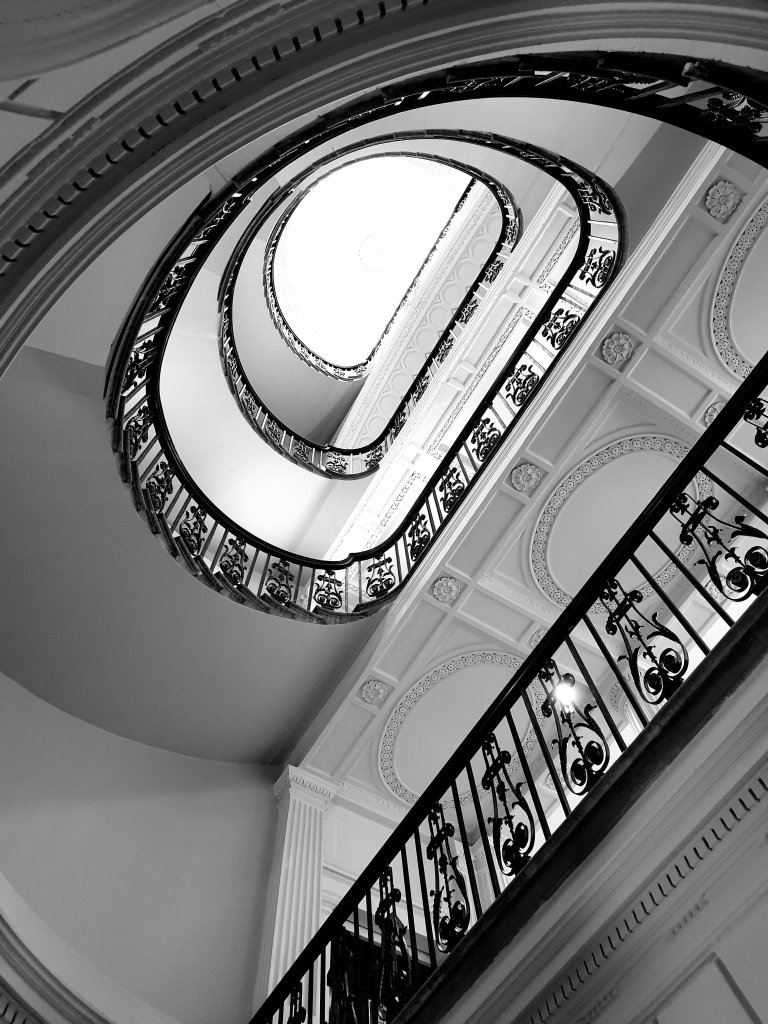
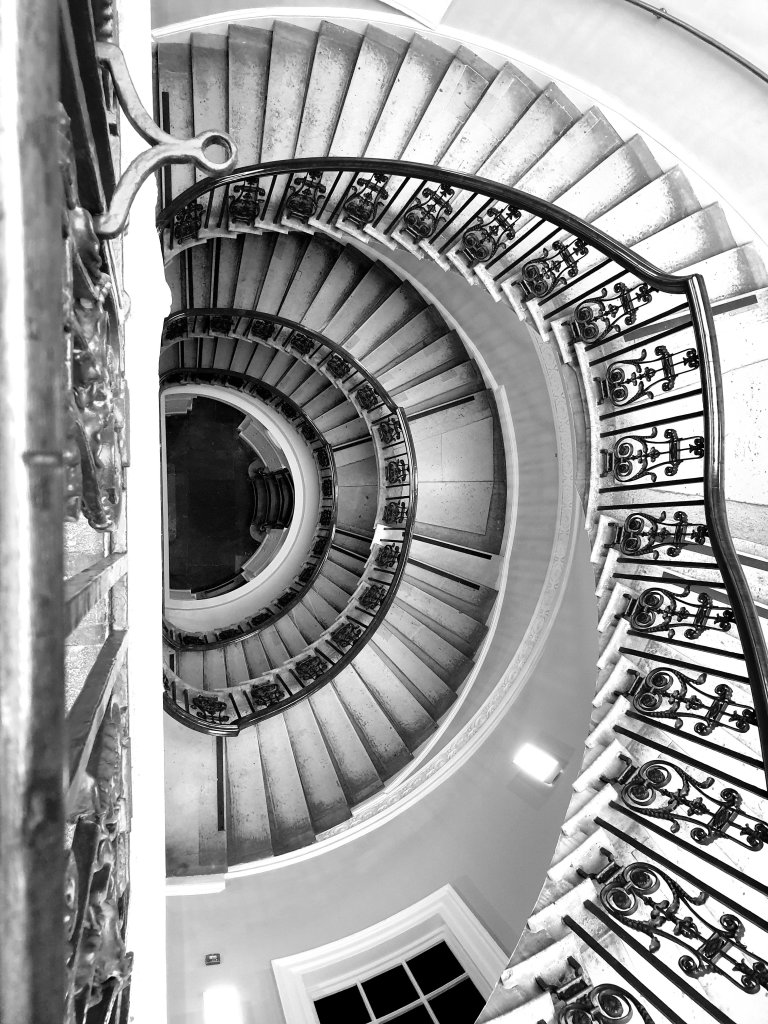
I went on a tour of the newly refurbished Courtauld Institute Galleries with Stephen Witherford of Witherford Watson Mann, architects to the project, which is in two phases – the second phase renovating the Institute still to come.
The building is an odd and complex jigsaw puzzle, as designed by William Chambers a) because it had to accommodate the terrace houses on the Strand and b) because it was designed for three institutions – the Royal Academy, the Royal Society and the Society of Antiquaries, each of which was separate from one another. It’s an ingenious renovation project, recovering some of the character of the original gallery spaces, adding new galleries where possible, particularly on the top floor, and opening up the basement, which I hadn’t seen on my previous visit, all of it done with intelligent ingenuity.
Postwar Modern
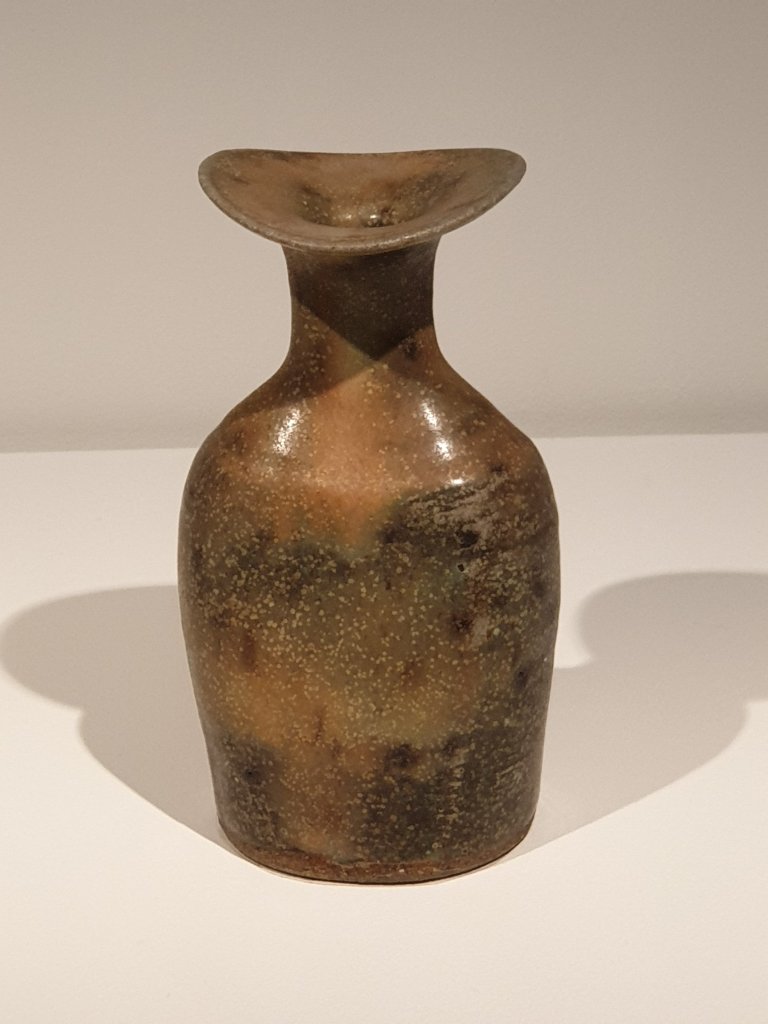
We went to the exhibition at the Barbican on postwar painting, which is in many ways a revelation: half familiar because so many of the artists have remained well known – Francis Bacon, John Bratby, Eduardo Paolozzi, Prunella Clough; half deeply unfamiliar because so much of the work is little seen and not well known. I thought the organisation of the exhibition by topic worked really well, like the section on Cruising which gets one to view the paintings of Bacon and Hockney purely in terms of their sexuality and the following section, Surface/Vessel which combines the work of Lucie Rie and William Scott, obvious as a pairing when one sees it, but not necessarily seen before. No catalogue available as yet.
Lucie Rie, Bottle, Dolomite Glaze:-
 | Charles | Saumarez | Smith |
You must be logged in to post a comment.