I have just been alerted to the fact that there was a television documentary which went out on BBC2 on 8 June 1977 about the Whitechapel Bell Foundry described as ‘In the Making – A Visit to the Whitechapel Bell Foundry where some of the most famous bells in the world have been made’. I have no experience of retrieving documentary footage, apart from knowing that much of the archival material relating to the Bell Foundry is held by the London Metropolitan Archives, which, by chance, re-opens tomorrow. So, I am hoping that one of my readers might know how to locate the original film and ideally whether it can be put on to YouTube, since one of the things that I have noticed about the Bell Foundry is that it was essential to have visited it to understand its appeal; although there are wonderful and atmospheric photographs of it, they do not convey the noise and activity of a working foundry, the people. A film would help remind us of what is in danger of being lost
Category Archives: Uncategorized
The Isle of Grain
We went on an expedition to the Isle of Grain, the nondescript, but unexpectedly atmospheric peninsula which juts out into the Thames Estuary north of Rochester, full of flat farmland until one comes to a massive Electricity generating station and oil refinery before a village street which leads on past the parish church to a view across the Thames to Southend-on-Sea:-
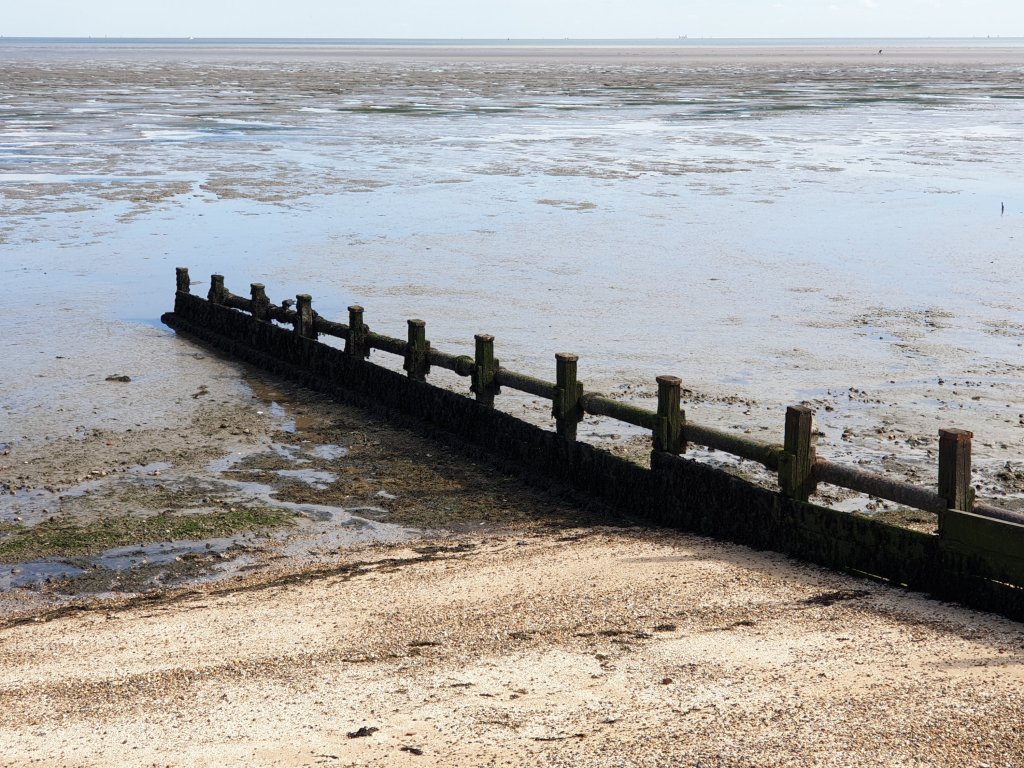
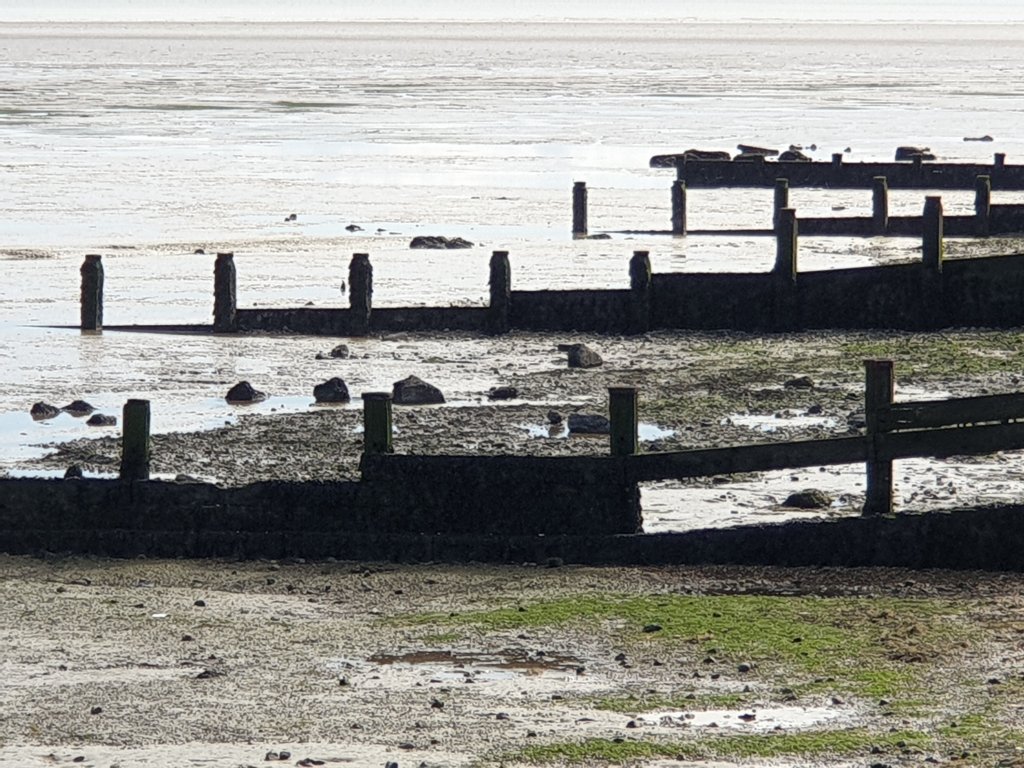
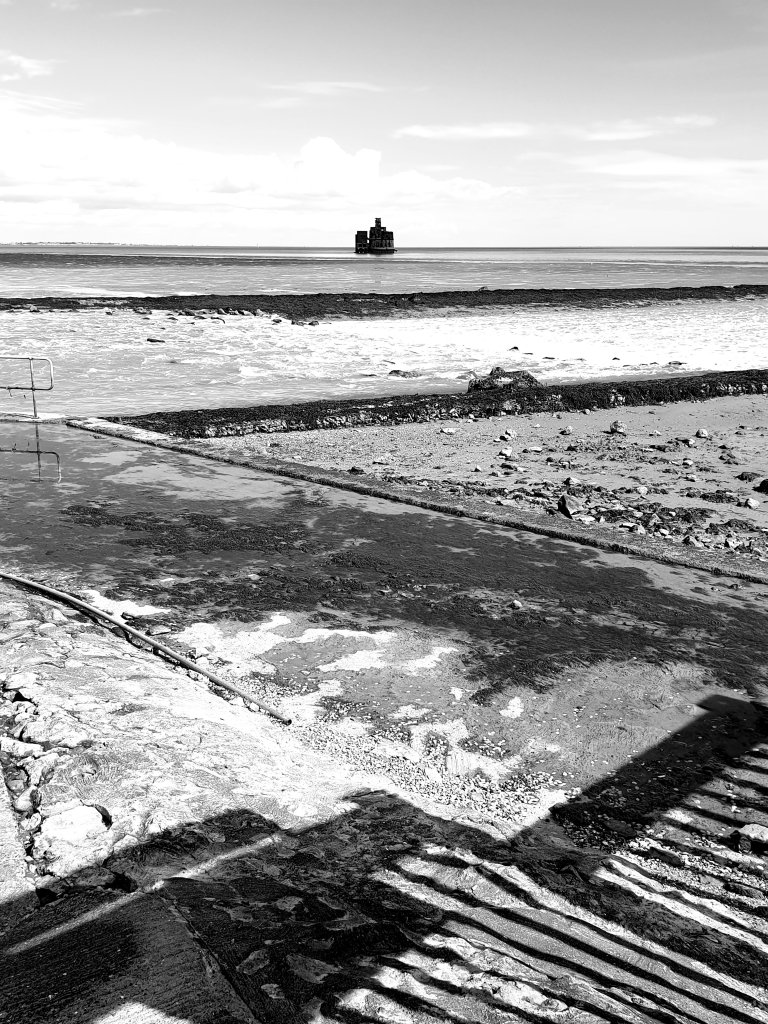
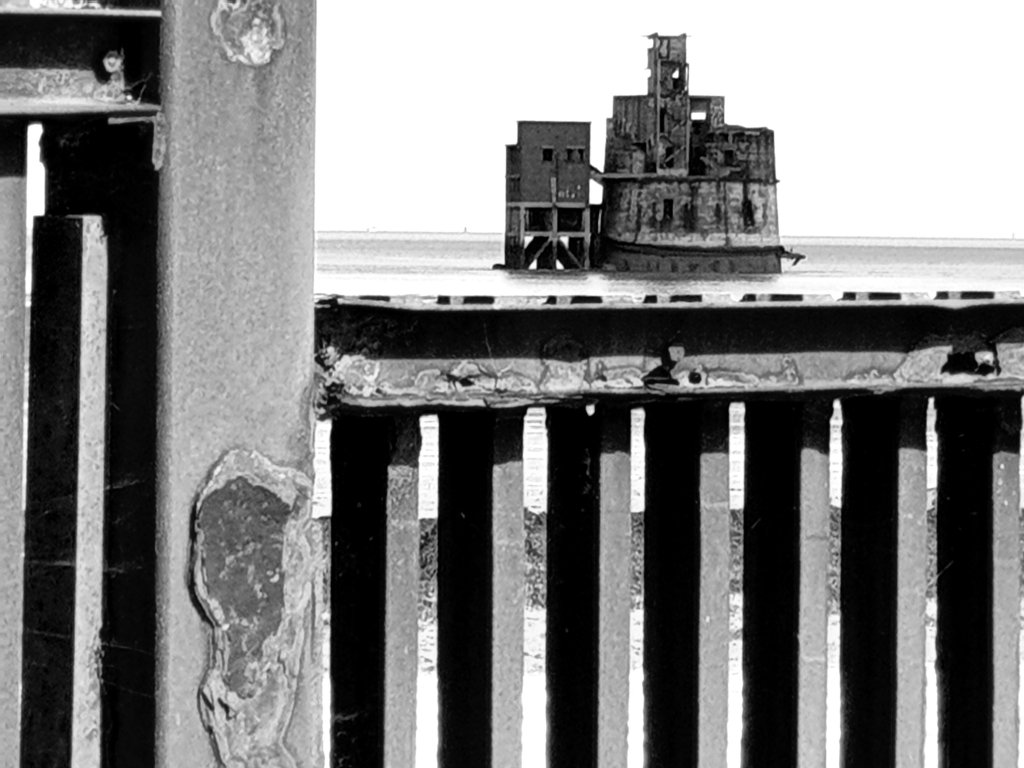
In the middle of the mouth of the River Medway is Grain Tower, a fortification built by Palmerston to protect the dock yards of Chatham and Sheerness:-
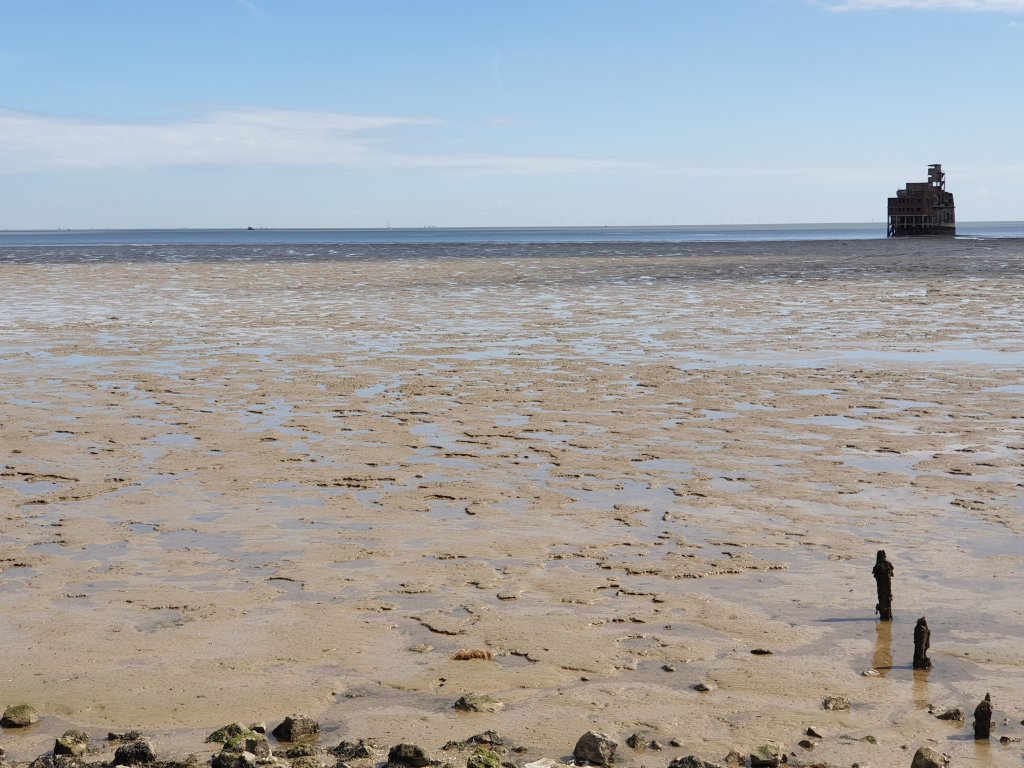
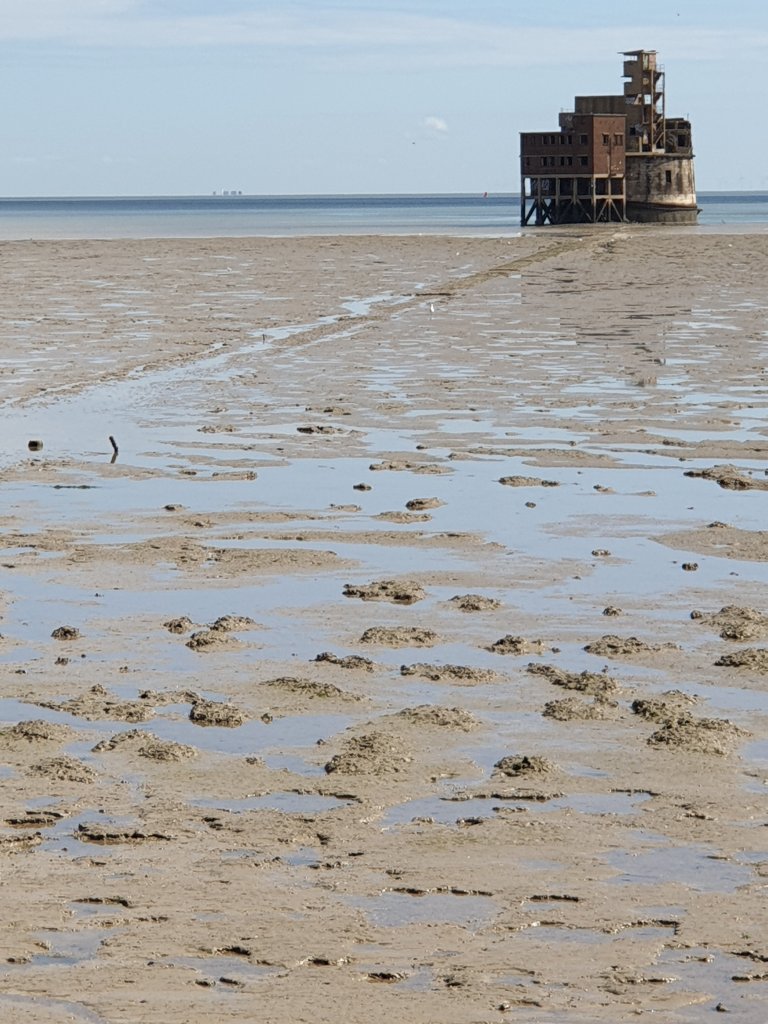
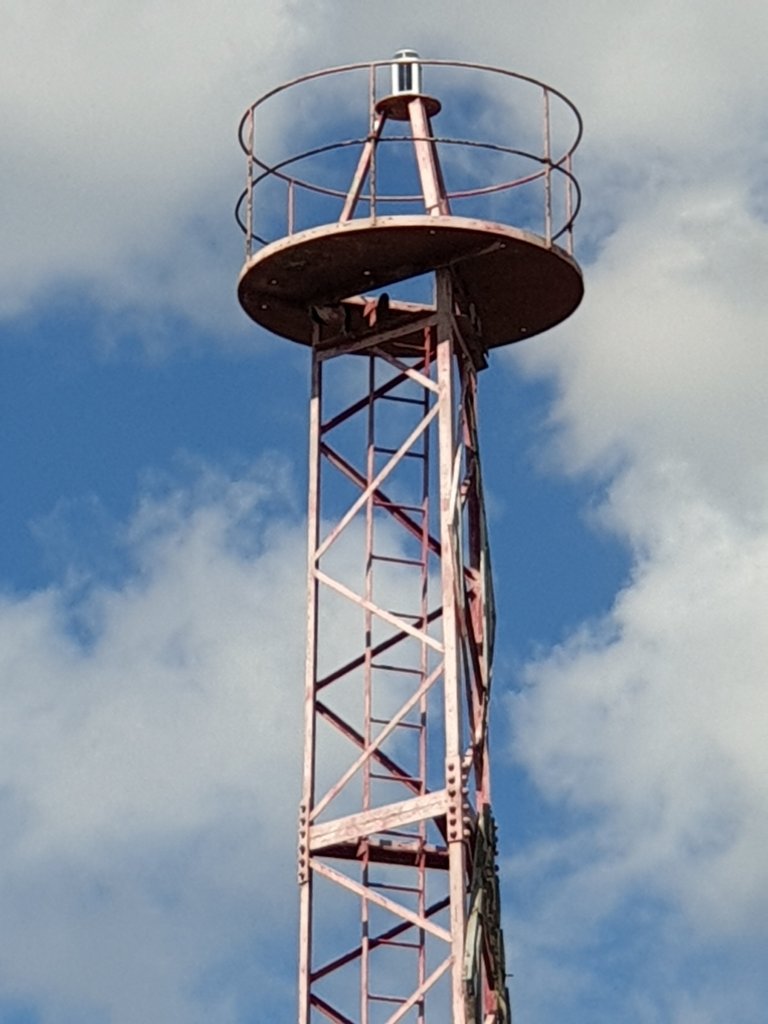
It was a strange and romantic industrial landscape:-

JOY
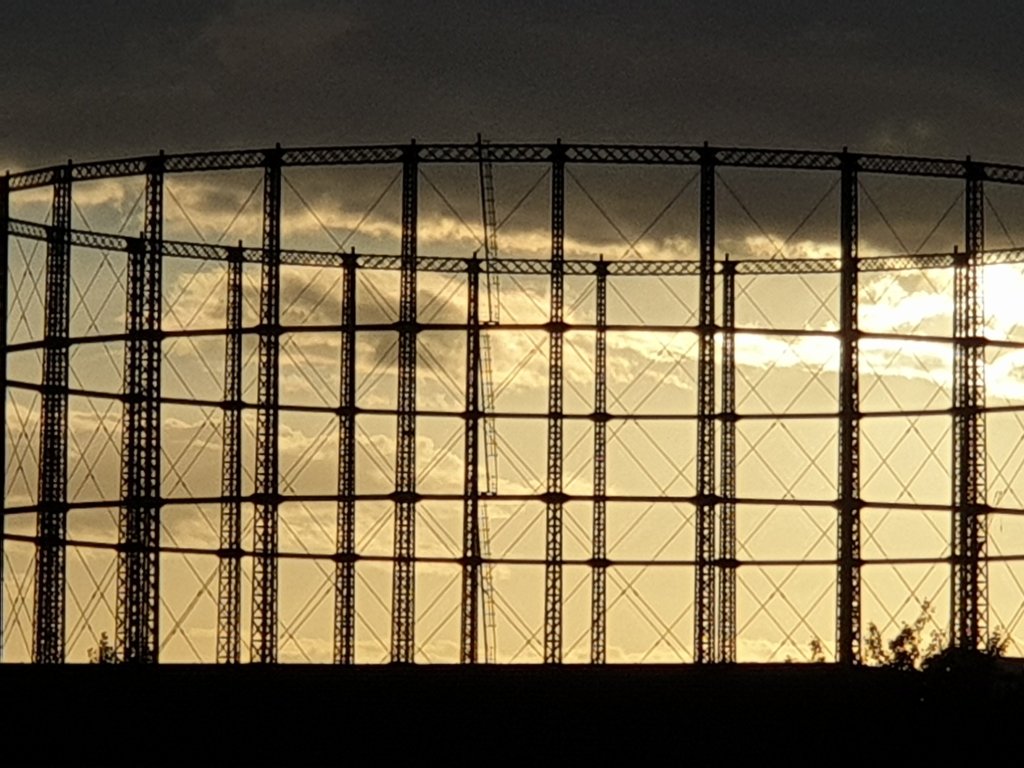
We had our first night out, eating in the open air in a pop-up restaurant called – appropriately – JOY just by the canal at the top of Ladbroke Grove where Dock Kitchen used to be. In fact, it’s been set up by Stevie Parle, who originally established Dock Kitchen, and who has returned to serve the freshest of fresh food in the courtyard outside. Luckily it was a beautiful evening as the sun set behind the gasometers beyond the cemetery:-
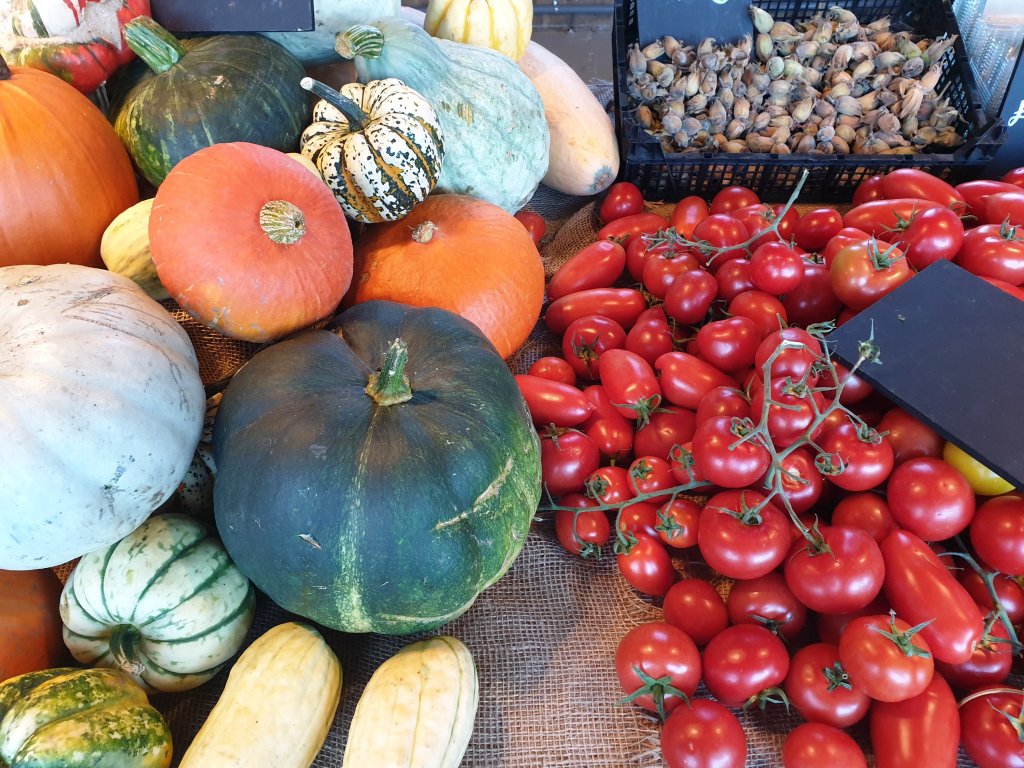
We were greeted by piles of fresh food where we bought apples and plums:-
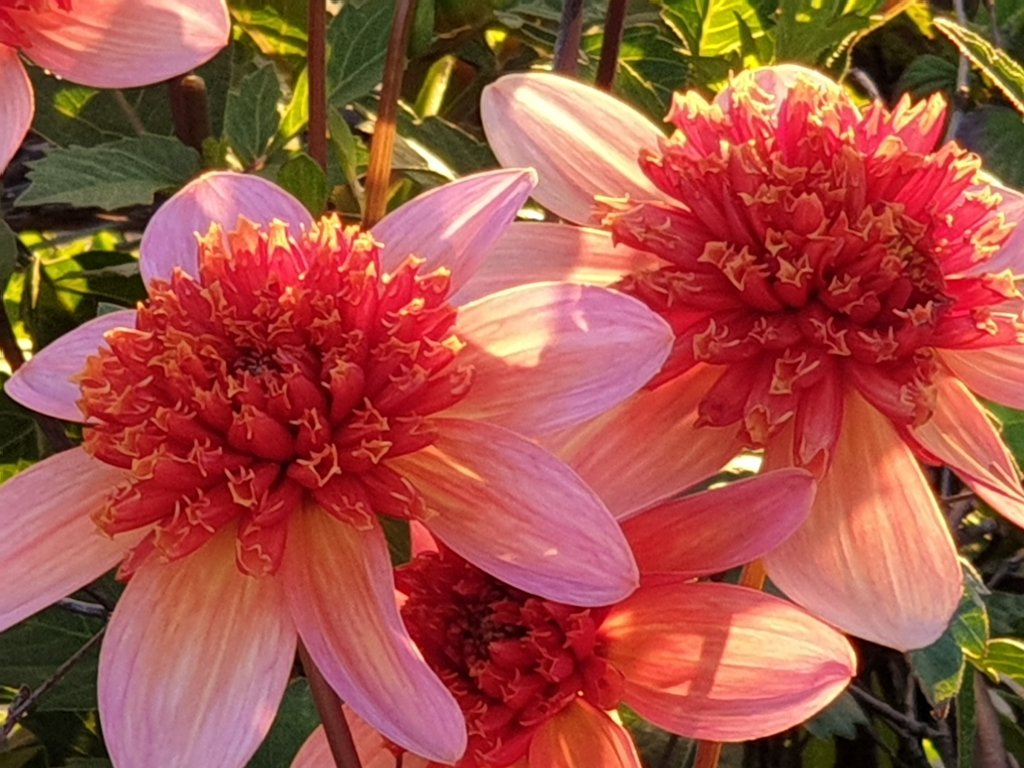
And fresh flowers everywhere:-
The food was delicious. It felt quite like old times, every table taken as the sun went down and we ate strawberries and beef.
Eileen Hogan
We listened to Eileen Hogan discuss the work she showed in her exhibition at the Yale Center for British Art in a discussion with Elizabeth Fairman, its curator. It was particularly rewarding to see recent work, including multiple portraits of Alan Rusbridger which are part of an official commission from Lady Margaret Hall, but which are being done as a set of multiple sketches, originally done in Oxford, but more recently, during lockdown, have had to be done on Zoom, as his hair got longer and wilder. It’s a pity that the exhibition was shown only in New Haven and in a cut-down version at Browse and Darby and hasn’t been seen as much as it deserves to be this side of the Atlantic – not least, her royal portraits, now regarded as the kiss of death for an artist, her portraits of Ian Hamilton Finlay, and, which I particularly like, the meditative portraits of her wardrobe, which demonstrate the conflicts between realism and abstraction, which she described as dating back to the debates when she was a student at Camberwell. I am reproducing the Self-Portrait from the exhibition in the hope that I am not breaching the copyright:-

Whitechapel Bell Foundry (39)
Here’s the latest on the Bell Foundry. The public appeal is being held in early October, beginning on Tuesday 6th. October. We have lined up expert consultants to represent us, but one of the injustices of the current planning system is that developers can easily afford the high costs of planning consultants and expert lawyers, whereas for members of the public to do the same is incredibly difficult.
We have already raised a lot of money from the wonderful generosity of friends, blog readers and most of all the Weston Foundation, who came in with a commitment to help us right at the beginning, for all of which I am incredible grateful. But I have just been told that we need to raise an extra £20,000. I have committed myself to do this. What I have discovered is that a surprising number of people have been willing to donate £1,000. I just need twenty more people to add their names to the roll of honour.
You can do it with supreme ease through Re-form’s website, ideally ticking the box for Gift Aid as well. The link is:-
https://re-form.org/whitechapel/donate
For those who prefer to do it by a bank transfer, you make a donation to the Re-form bank account, but please include the letters ‘WBF’ followed by your name so that they know who has given the money and for what purpose.
Account name: Re-Form Heritage
Sort code: 60 40 05
Account: 32067062
Peter Avery
A footnote to my reference to the late Peter Avery. I have never quite known or understood what he did in Iran, but the Encyclopedia Iranica makes it pretty clear: that he went out to Iran in 1949 to work for the Anglo-Iranian Oil Company and was expelled by Mosadeqq in autumn 1951, at which point he taught English in Baghdad, returning in 1955 to work for Mowlem. I didn’t mean to impugn his memory by suggesting he might have had links to MI6, merely to suggest that he was a Persianist and they might well have benefitted from his knowledge and advice either in the early 1950s or later. I think he was pretty pro-Shah.
Coup 53
We watched the film, Coup 53, which reveals how Norman Darbyshire, an MI6 officer stationed originally in Teheran after the war and then in Cyprus engineered the brutal assassination of Mahmoud Afshartous, the chief of police under Mohammad Mossadegh, and the subsequent military coup d’etat, the first of many to protect American interests, but in this case was as much to protect access to the oil wells at Abadan, which had been under the control of Anglo-Iranian oil until nationalised by Mossadegh. We found it fascinating not least for the film footage of Peter Avery, who worked for Anglo-Iranian oil in the early 1950s before teaching Persian at Cambridge and who in retrospect may have maintained some level of contact with MI6.
Winchelsea
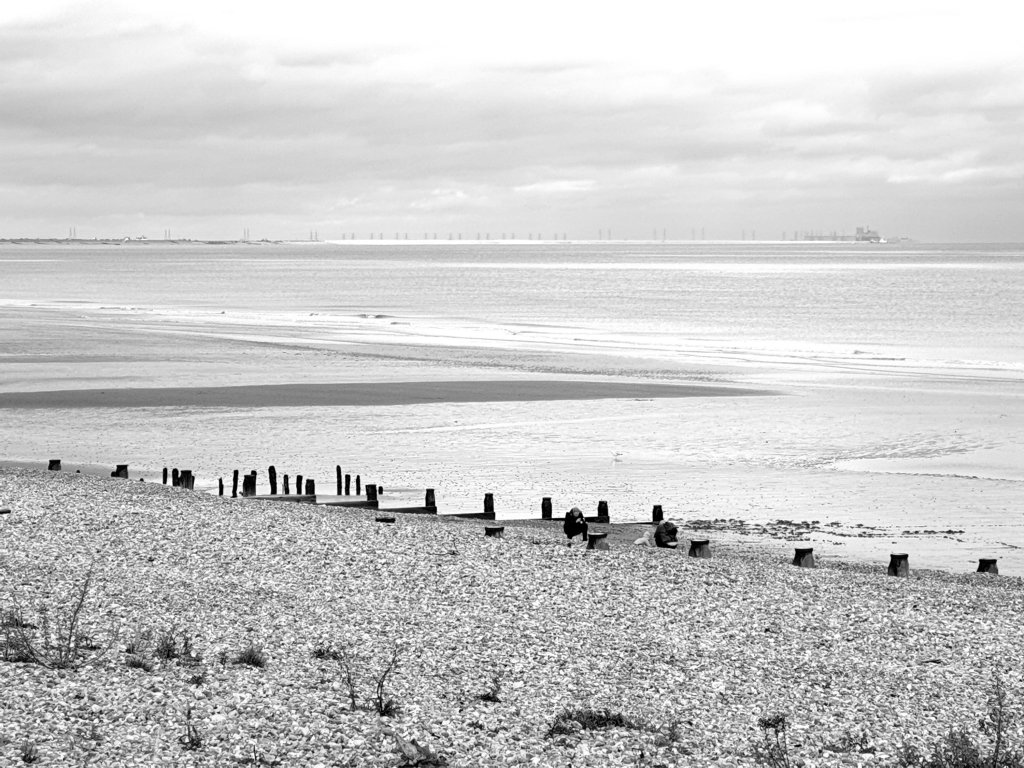
We drove down to Winchelsea to see the sea, through the lush villages of the Weald – all barge boards and village greens – to the bleak view of Winchelsea beach, looking out across pebbles and sand, past Rye and Camber Sands, to a distant view of Dungeness:-
Hugh Casson
I have been reading the diary which Hugh Casson kept and published in 1980 when he was President of the RA. Of course, I should have read it when I was at the RA – all the usual problems, not enough money, exhibitions over-budget, helpful people from the City, differences of opinion over enlargement of the membership; but what I hadn’t expected was the catholicity of his architectural taste – a great enthusiast for Lutyens’s Delhi, making a television programme about Castle Drogo, unexpectedly knowledgeable about Thomas Archer’s personal circumstances, writing a booklet about St. John, Smith Square, keen on the Frogmore mausoleum which he drew for a Christmas card, knew about the Farnborough mausoleum, was involved with the National Trust as well as an ex officio trustee of the National Portrait Gallery. I thought he was a modernist, but if he was, a modernist with wonderfully catholic architectural taste.
Whitechapel Bell Foundry (38)
We are gathering our forces for the forthcoming public hearing about the fate of the Whitechapel Bell Foundry. I thought I knew most of what there is to know about its history, but have been impressed by the fact that Thomas Marks, the editor of Apollo, has spotted that John Summerson, the greatest historian of eighteenth-century London, described the group of buildings occupied by the Bell Foundry as ‘the most remarkable group of its kind in London’. This is not insignificant. He described the buildings thus in 1945. He was a modernist, a member of the MARS Group. Historic England has consistently argued that the buildings themselves are of no architectural interest or significance, only the contents, and refused to upgrade them to Grade 1. Why the disparity ? It must be that Summerson recognised and understood the importance of eighteenth-century industrial architecture, as did Ian Nairn, in a way that Historic England has not.
The hearing is on October 6th. Let’s hope the buildings can be properly preserved as working industrial architecture, not an ersatz hotel.


You must be logged in to post a comment.