I’ve been encouraged to do a post about Brexit Day, but I don’t have anything to say about it. The only sign of it that I have seen on the streets of London was a perfectly preserved bubble car driving down Pall Mall flying two ostentatious Union Jacks, which I took to be a perfect emblem of the public mood: a small minority with an entirely outdated and somehow diminished jingoism driving at high speed into irrelevance; but I am trying not to be pessimistic.
Category Archives: Uncategorized
Odo Cross
The mention of Odo Cross, who was sufficiently well-to-do to finance the purchase of Benton End for Cedric Morris and Lett Haines in 1939 (Cedric Price was, after all, rich enough to buy it himself), has sparked interest in who he was. I don’t know much. He was painted by Cedric Morris in an undated portrait in the National Museum of Wales and appears in Bill Feaver’s biography of Lucian Freud living in Jamaica in great style with Angus Wilson (from New Zealand, not the novelist), surrounded by Impressionists and looked after by black house boys. His money apparently came from Crosse and Blackwell soups, a big and international company which made Lea & Perrins sauce and Branston Pickle and he is said to have been an ex-ballet dancer, as well as Morris’s lover. In 1947, he published The Snail that Climbed the Eiffel Tower, illustrated by John Minton and the inspiration for John Lennon’s ‘I am the Walrus’. Any other information would be welcome.
Benton End (1)
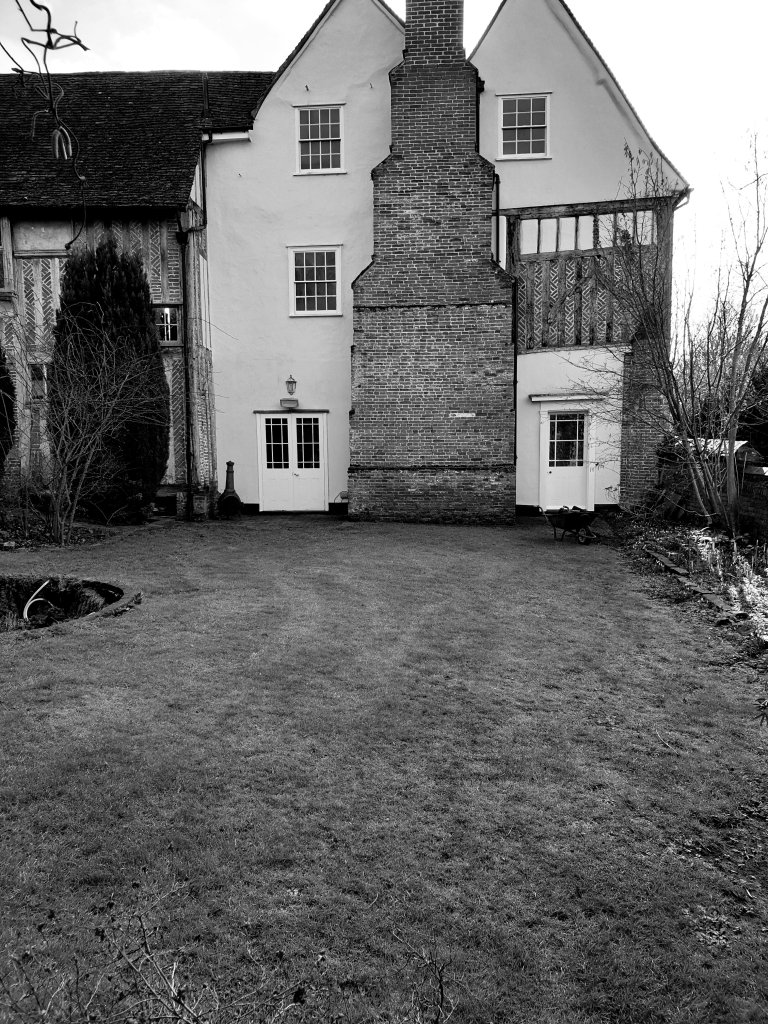
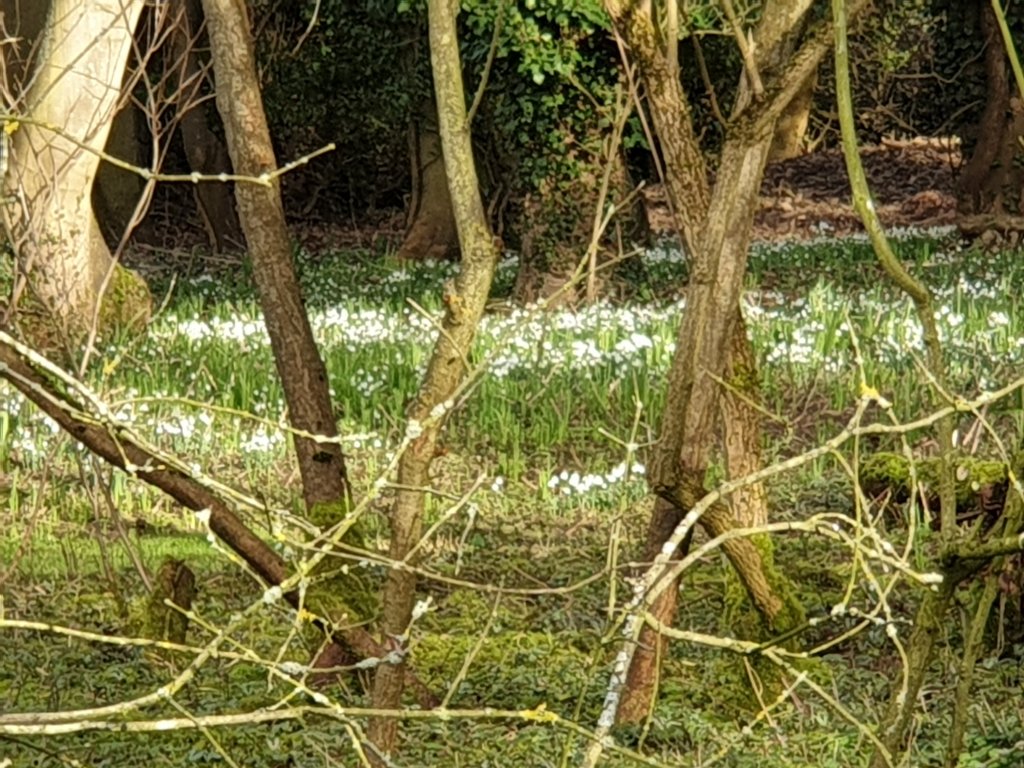
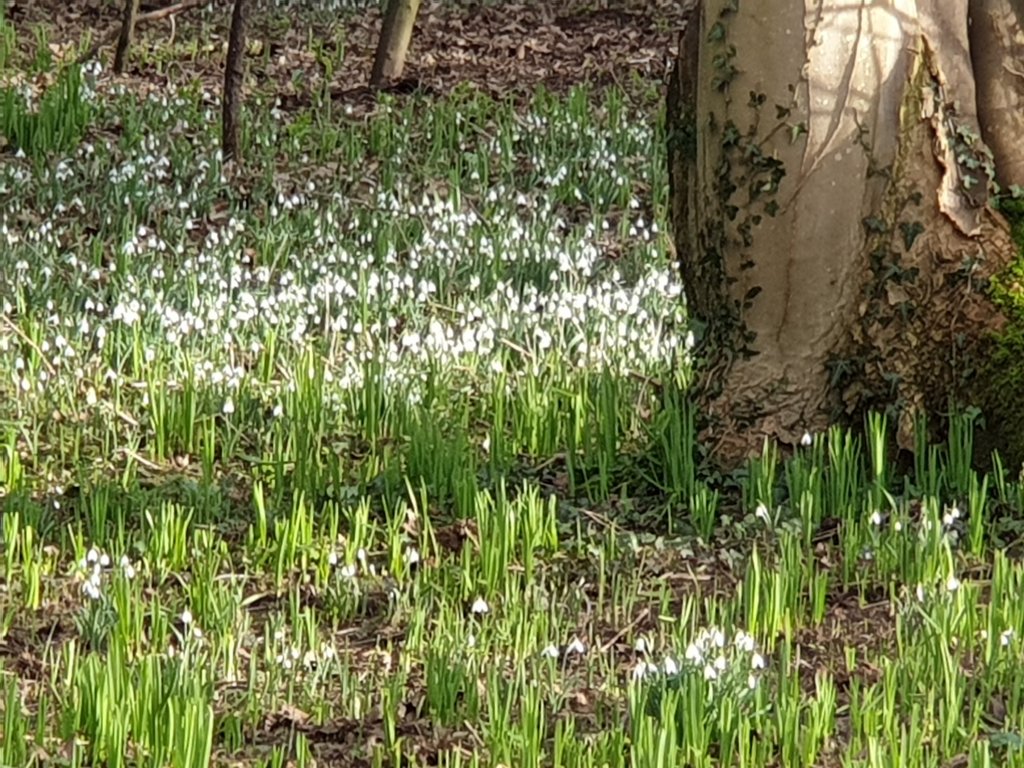
I spent the middle part of the day at Benton End, the house which Odo Cross bought for Cedric Morris and Lett Haines, after Lucian Freud had burned down their School of Painting and Drawing in Dedham. The house is more atmospheric than I had expected, with Tudor bits at the back and their garden still semi-extant just under the surface of the lawns and snowdrops – Morris having been one of the great post-war plantsmen, known not just for his irises, his mentoring of Beth Chatto, but for his early interest in semi-wild planting:-



Very fine snowdrops:-
Christine Keeler
Now that I’m back in Old Blighty, suffering from almighty jetlag, we watched the final episode of The Trial of Christine Keeler with fascination, not least because I hadn’t realised that Jeremy Hutchinson had acted in her defence, apparently, as shown in the film, brilliantly, but not enabling her to escape prison, by suggesting that Stephen Ward had not been her friend, as he previously appears in the film, nor encouraging her in prostitution, for which he was prosecuted, but had been grooming her for high society, an older man corrupting a younger girl, as she apparently thought by the end of her life. It’s a very effective critique of double standards in the early 1960s, before a more liberal society.
Whitechapel Bell Foundry (30)
Jeremy Dixon kindly alerted me to this article, which appears in today’s Daily Mail. It demonstrates the extent to which the public mood is now wholly in favour of retaining the Whitechapel Bell Foundry as a foundry and hostile to Historic England encouraging its sale to a venture capitalist as a hotel. Let’s hope the planning inquiry shares this view !
Whitechapel Bell Foundry (29)
The decision of Robert Jenrick to call in planning permission for the Whitechapel Bell Foundry will, I assume, place Historic England in an odd and potentially indefensible position of being required to publicly account for why they have consistently supported the redevelopment and effective destruction of such a historically important and valuable site.
After a bit of judicious digging, it has become clear to me that when this was first discussed by the London Advisory Committee, one of the officers argued that since it was not originally designed as a Foundry (in 1744), it was hard for them to argue for its retention as a Foundry. Isn’t this view going to look faintly ludicrous in court ? It’s been Britain’s – and, indeed, the world’s – most important Bell Foundry for over 250 years, a piece of industrial heritage of incomparable historic importance. But Historic England whose job it is to defend the heritage have never even discussed the issue at a meeting with their Commissioners, although it is hard to find this out because they don’t publish their minutes.
Sydney (2)
I wanted to write another entry on Sydney, but it was hot – hot beyond anything I have ever experienced, hot like sitting in the performance of Alfredo Jaar’s Inferno where the follicles on the top of my head were frizzled by the electric elements overhead. If this is what global warming is going to be like, I don’t recommend it. I walked down from the Art Gallery of New South Wales – the temple in the park – to the Museum of Contemporary Art – the warehouse on the harbour. It was a big mistake. I was wiped out and spent the afternoon watching Cornelia Parker’s film of Noam Chomsky talking about vested corporate interests unable to handle anything beyond the Chief Executive’s next pay check with gloomy fascination.
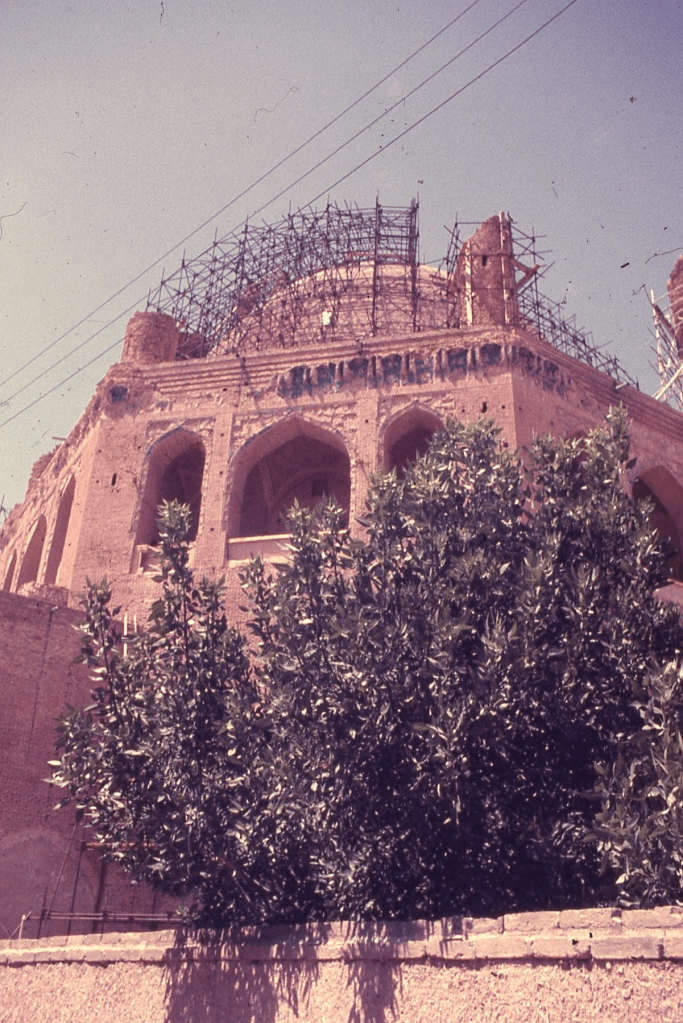
Soltaniyeh
Prompted by what was happening in Iran a couple of weeks ago, I wrote about the experience of visiting the mosque at Soltaniyeh in the summer of 1973. I had only the haziest recollection of what it looked like, but now my friend, Adam Bennett, with whom I was travelling, has sent me a digitised image of the Ektachrome slide he took then, now a bit faded, like my memory:-
Whitechapel Bell Foundry (28)
I have only just heard that Robert Jenrick, the Secretary of State for Housing, Communities and Local Government, has decided to call in the application to turn the Whitechapel Bell Foundry into a hotel for review and to hold a local inquiry.
This is wonderful news for all those who have campaigned against the scheme not just at local level, as Historic England has erroneously maintained, but nationally and indeed internationally; and it is very good that Jenrick has listened and admirable (and right) that he has intervened.
Now, the hard work begins, because the case against the plans will have to be made, using the best possible lawyers. The United Kingdom Historic Building Preservation Trust have been leading the legal side of the case and are very good at it. My next post will be about how to donate to an appeal.
MONA (2)
I had a break before going in to Oliver Beer’s Confessional. You have to because only one person can go in at a time and, of course, everyone wants to go in. It’s worth it – in a way, it’s the archetype of the MONA art work – experimental, using sound and experience to extend the boundaries of normal perception (maybe that’s ‘art wank’). Any way, I can’t illustrate it.
The last thing I went to was Alfredo Jaar’s performance piece based very loosely on The Divine Comedy. The most extreme of the installations, again pushing the boundaries of mood and sensory experience in ways which are deliberately intriguing, disturbing and simultaneously stimulating and unpleasant: a version of art which, like so much of MONA, is as much sixteenth century as twenty first.


You must be logged in to post a comment.