Rottingdean

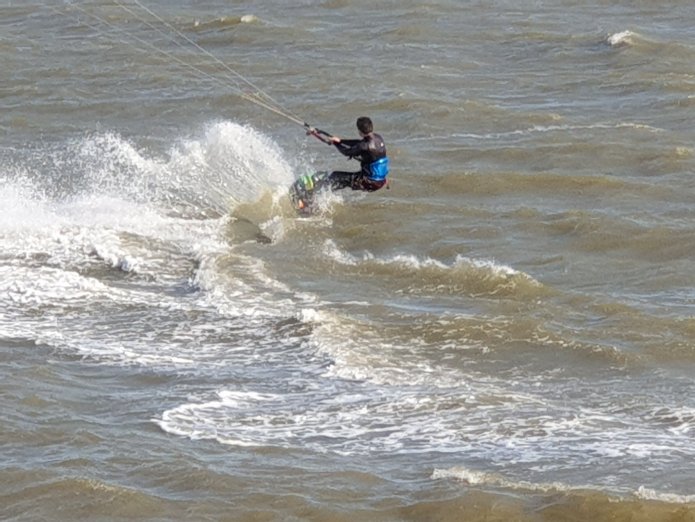
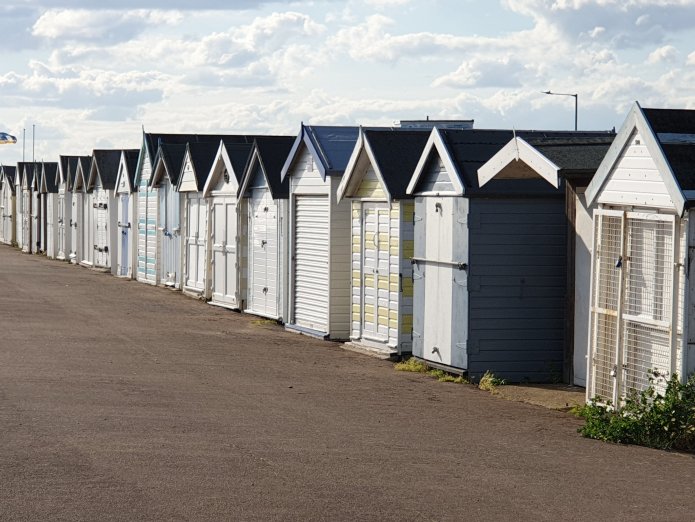
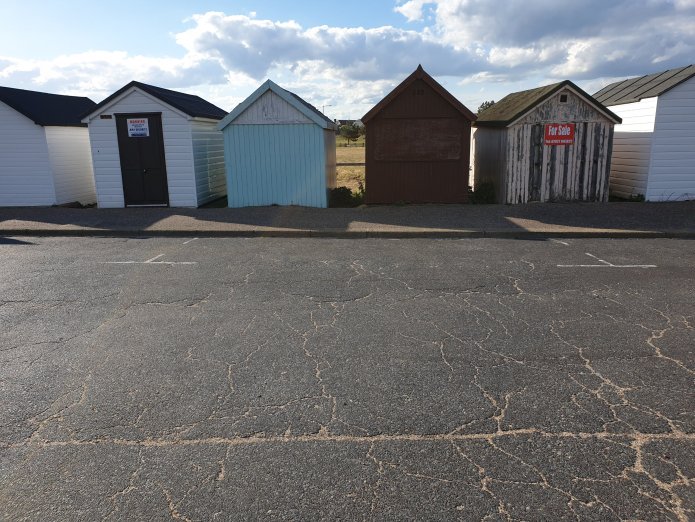
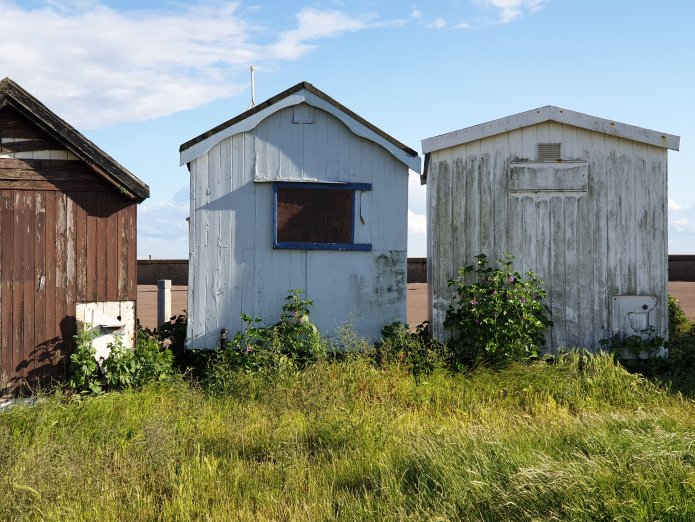
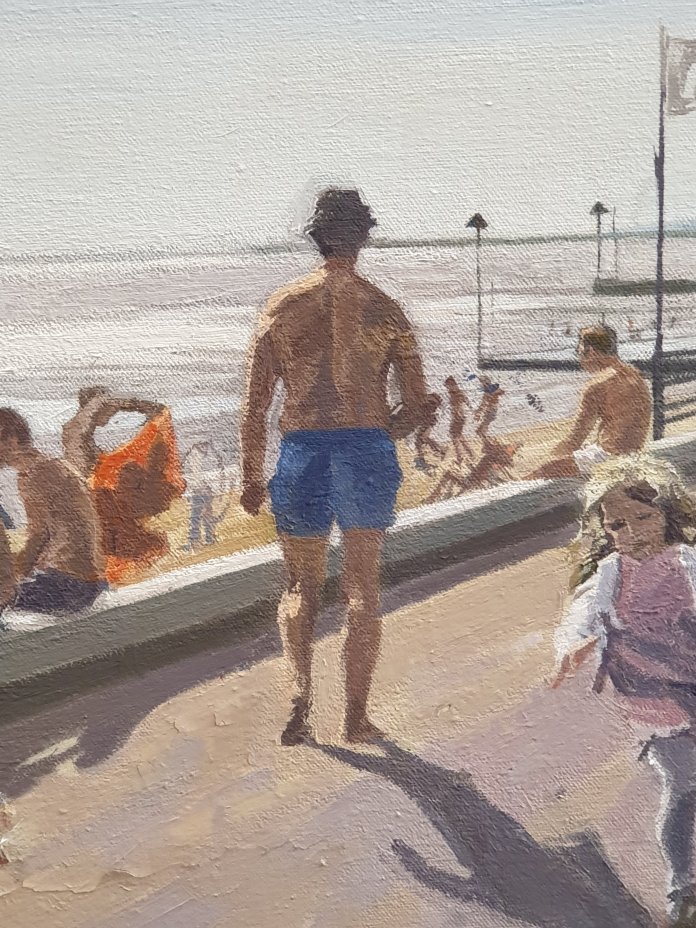
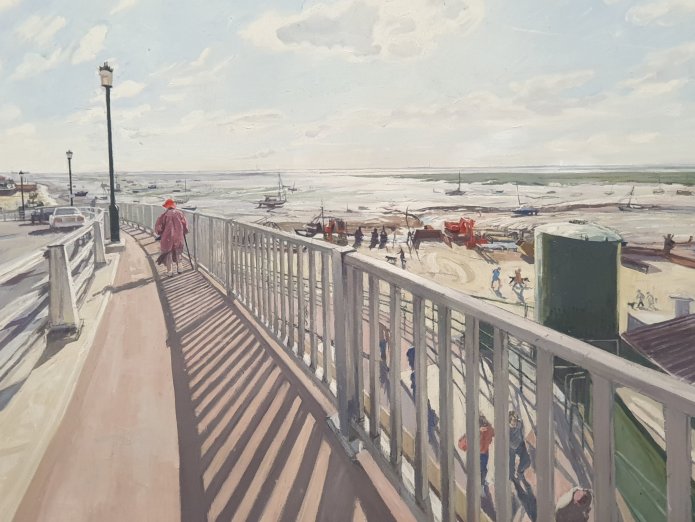
We walked by the sea in Rottingdean, which I have not visited since playing away matches at St. Aubyns (they dropped the apostrophe in 1940), one of those prep schools, which chose the bracing sea front to stiffen the sinews of its pupils, although I read that it has now been closed, in spite of having educated Vaughan Williams, no doubt for the huge commercial value of its site:-

Standard

Charleston (2)

An additional pleasure not to be missed in Jamie Fobert’s new gallery at Charleston is Cressida Bell’s beautiful and highly appropriate exhibition on Colour: Sickert to Riley. Her work is genetically imbued with her grandparents’ escape from the safety of English art. She has painted the galleries in fierce and intense, bright colours. And she has made an intelligent selection of partly Bloomsbury-era art, including Roger Fry’s The Farm Pond at Charleston, borrowed from Hepworth, Wakefield, and a bold Portrait of Eve Kirk by Augustus John, and partly post-Bloomsbury, including a beautiful Howard Hodgkin and a Bridget Riley whose colours dominate the third room.

The exhibition is unorthodox in the ways that it has been selected and hung, but all the better for it.

Standard

Charleston (1)

We went to a magical evening in the newly refurbished barn at Charleston in which Melvyn Tan played music which was in some way redolent of the Bloomsbury group, who were early twentieth century, freeform and all so passionately Francophile – Poulenc, Debussy, Eric Satie – interwoven by texts selected by Virginia Nicholson and Paul Boucher and performed with great spirit and equal brio by Eve Best, who was Vanessa Bell in Life in Squares and Wallis Simpson in The King’s Speech. It was the purest, high-minded synaesthesia, apart from the occasional birdsong and passing aircraft: T.S. Eliot, Virginia Woolf and Proust.

Standard

Great Yarmouth (2)

After lunch (The Courtyard – highly recommended), we walked down to the sea front.Past the old Wax Museum:-

The old Regent Cinema (1914):-

To Britannia Pier, much rebuilt:-

We wanted to get into the Hippodrome (1903), but couldn’t:-

Wilkins of the National Gallery designed a grand commemorative monument to Admiral Nelson in 1817, long before Trafalgar Square. I knew lots of such grandiose designs were exhibited at the RA, but not that this was completed:-
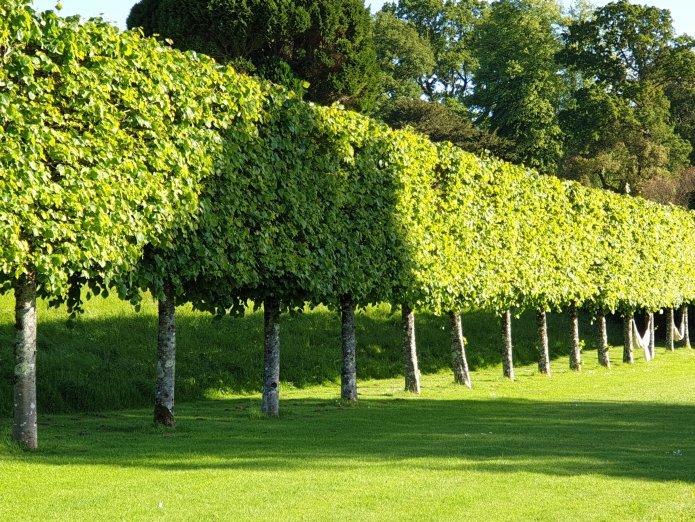
Then on to St. Nicholas’s Hospital, another monument to the Napoleonic Wars, designed by William Pilkington:-
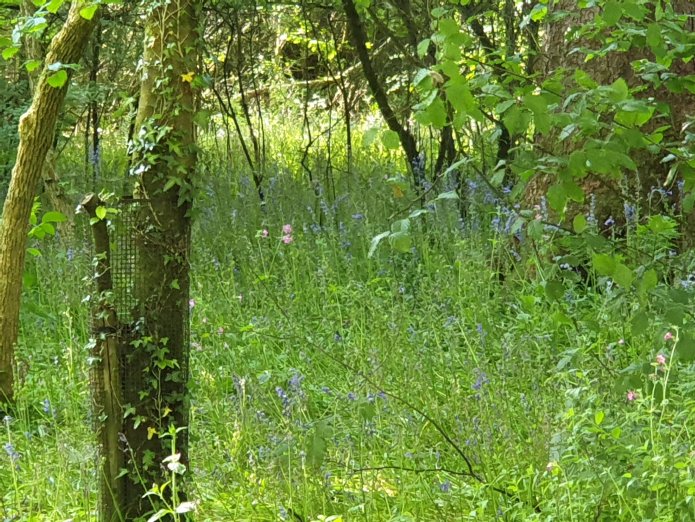
Last stop the Winter Garden, re-erected from Torquay:-

What a great city !

Standard

Great Yarmouth (1)

Once a year, I go on an excursion to an east coast resort: this year to Great Yarmouth, an unexpectedly interesting large and historic town, with a huge medieval parish church, the remains of its town walls, complete with surviving circular brick-and-flint towers, and the so-called Rows, little medieval alleyways which connected the three main streets until heavily bombed in the war. Much good eighteenth-century building, when the town was prosperous from the herring trade. And grand nineteenth-century pleasure palaces, including a hippodrome, dating from when the railway arrived and the day tripper.

We started at the Fishermen’s Hospital, almshouses provided by the Corporation for retired fishermen in 1702. Good plasterwork decoration and a statue of Charity in the middle:-

Pevsner is a bit sniffy about St. George, but it was designed by John Price, a London architect, and has a good English baroque quality, now turned appropriately into a theatre:-

Later, we poked our nose inside to see the lightly adapted interior, now well used:-

Opposite, on King Street, are the old Church Rooms, all brick and terracotta, now decayed:-

These are two shots of the Rows, each with their number prominently displayed:-

Then we came across the first of the surviving medieval towers, now inhabited:-

The last stop before lunch were the two Row Houses which were preserved by the Office of Works after the war, with their good surviving woodwork and plasterwork ceilings:-

Standard

Malasaña (3)

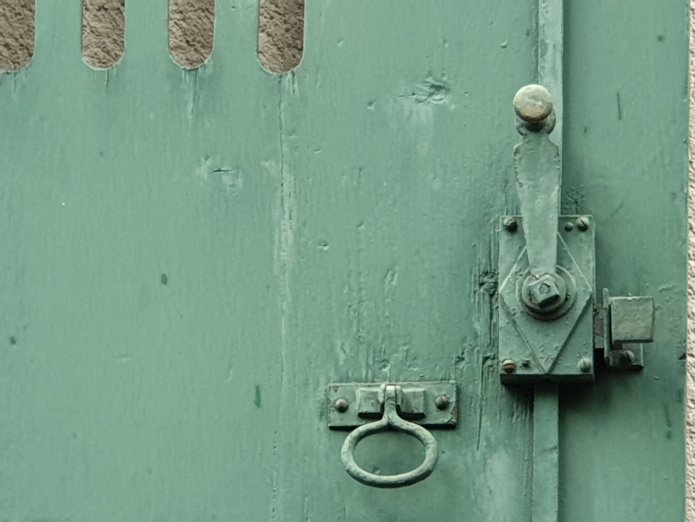
I made the mistake of walking back to the hotel through the centre of Madrid, which was hot.Not least I was keen to see the Oratorio de Caballero de Garcia, also designed by Juan de Villanueva, but in a straight and not especially interesting neoclassical style. I only photographed the door locks :-

I passed the Iglesia de Las Calatravas, which is in restauro:-

The big and unexpected treat was wandering in to S. Antonio de los Portugueses – small and early seventeenth century in architectural form, with surprisingly elaborate later frescoes by Luca Giordano and a ceiling by Francisco Rizi and Juan Carreño, all very complete and well preserved, if restored:-

Standard

Mat Collishaw

I was able to call in briefly at Mat Collishaw’s exhibition Dialogues, organised by the Fondació Sorigué in the Pavillón Villanueva. It shows his deep fascination with birds and animals in captivity and the organic life of plant forms – beautiful, prelapsarian, slightly dangerous, mobile:-

Standard

Real Jardín Botánico

I left the conference in order to see Mat Collishaw’s exhibition in the Royal Botanical Garden, which I have never seen before: still a working botanical garden, well-kept, sandwiched between the Prado and Atocha Station, pretty much as originally laid out by Francesco Sabatini and Juan de Villanueva, on Linnaean principles, in 1781:-

Standard

Malasaña (1)

After an afternoon attending the keynote speeches of a conference on The Museum for all, nearly all of it in Spanish, I took myself off to do the Spanish equivalent of the passeggiata in Malasaña, the district closest to my hotel and, according to my guide book (Michael Jacobs, Madrid Observed), an area which is happily down-at-heel, criss-crossed by long, still mostly cobbled streets.

I started at the Barracks of the Conde Duque, most of which is newly and blandly restored, but which retains its elaborate entrance gateway by Pedro de Ribera:-

Nearby is the Plaza de Las Comendadoras:-

Down the Calle de Quiñones, alongside the church of Las Comendadoras:-

To Santa Maria la Real de Montserrat:-

Nice tiling on the Laboratorio de Espacialidades Juanse, a disused pharmacy:-

Everywhere nice lettering:-

Back to the lovely Café Moderno:-

Standard