
Nine years ago, I was invited by the Japan Foundation to visit, at my request, smaller art museums outside Tokyo, as I had been very impressed by a visit in 1994 to the Koriyama City Museum of Art, designed by Takahiko Yanagisawa. But I found it very hard to find out about them, other than Kengo Kuma’s very beautiful Bato Hiroshige Museum of Art in Nakagawa, north of Tokyo, pictures of which I had seen as part of his entry to the competition for the Hepworth Wakefield Museum, and SANAA’s Museum of the Twenty First Century in Kanazawa, which had, rightly, a great deal of publicity in the west for its very lightweight use of interlinked glass pavilions. So, I was both pleased and faintly depressed to be sent a small booklet recently published by the Japanese Tourism Organisation, called Japan: Traveling through Art, Design and Architecture, which includes not just the Museum of the Twenty First Century and the Miho Museum, designed by I.M. Pei up in the mountains near Kyoto, which one can’t visit in the winter months, but a host of museums, small and large, many designed by major international architects, from the Aomori Museum of Art, designed by Jun Aoki, in the north to the Kirisima Open-Air Museum, designed by Kunihiko Hayakawa, in the south: hundreds of new museums which I would now like to visit, but probably can’t; and it doesn’t even include Hiroshi Sugimoto’s Enoura Observatory, which opens this autumn.
Category Archives: Uncategorized
Robert Elms
I was interviewed today at great and surprising length by Robert Elms on his eponymous morning radio show. I would provide the link, but don’t know how to, so if by any chance you are interested in listening you will need to google the Robert Elms show and click on the relevant page on BBC iPlayer. He starts with a wide-ranging discussion of aspects of East London and then goes on to ask a series of prescripted questions – what’s my favourite building, what’s my most hated one, what’s my favourite fictional London character (that’s not so straightforward) and what moment in history I would most like to be transported to (1768, of course). I was impressed by how incredibly knowledgeable he is about all aspects of London, but then he’s been asking the same questions for twenty three years. He told me at the end that at any moment in the programme, about 250,000 people might be listening, so I hope one in a thousand might go out and buy my book.
PS It’s on http://www.bbc.co.uk/programmes/p001d7kb
We went to see Tatlin’s Tower today, a version of which was designed by Jeremy Dixon for the Royal Academy’s exhibition, Building The Revolution, in 2011, based on the original drawings (he had previously made one nearly forty years previously for an exhibition Art and Revolution at the Hayward Gallery). After the exhibition, it needed a home and has now been re-erected next door to Norman Foster’s Sainsbury Wing, but just out of sight of it, and looks suitably magnificent, particularly when lit pink in the night:-


Tatlin’s Tower
Pevsner does not mention the formal walled garden at Houghton which it surely should as an extraordinarily ambitious example of a recent formal garden, designed by Julian and Isabel Bannerman, complete with a monumental wooden fruit cage:-

Much clipped topiary:-

The Rustic Temple with antlers in the pediment:-

And good formal planting with golden hornet crab apples:-


The Houghton Garden
I found it very hard not to be distracted by the visual pleasure of Robert Walpole’s great mansion, whose interiors are so surprisingly well preserved.
We went upstairs in the old 1920s service lift:-

Robert Walpole himself presides over the Stone Hall in a bust by Rysbrack:-

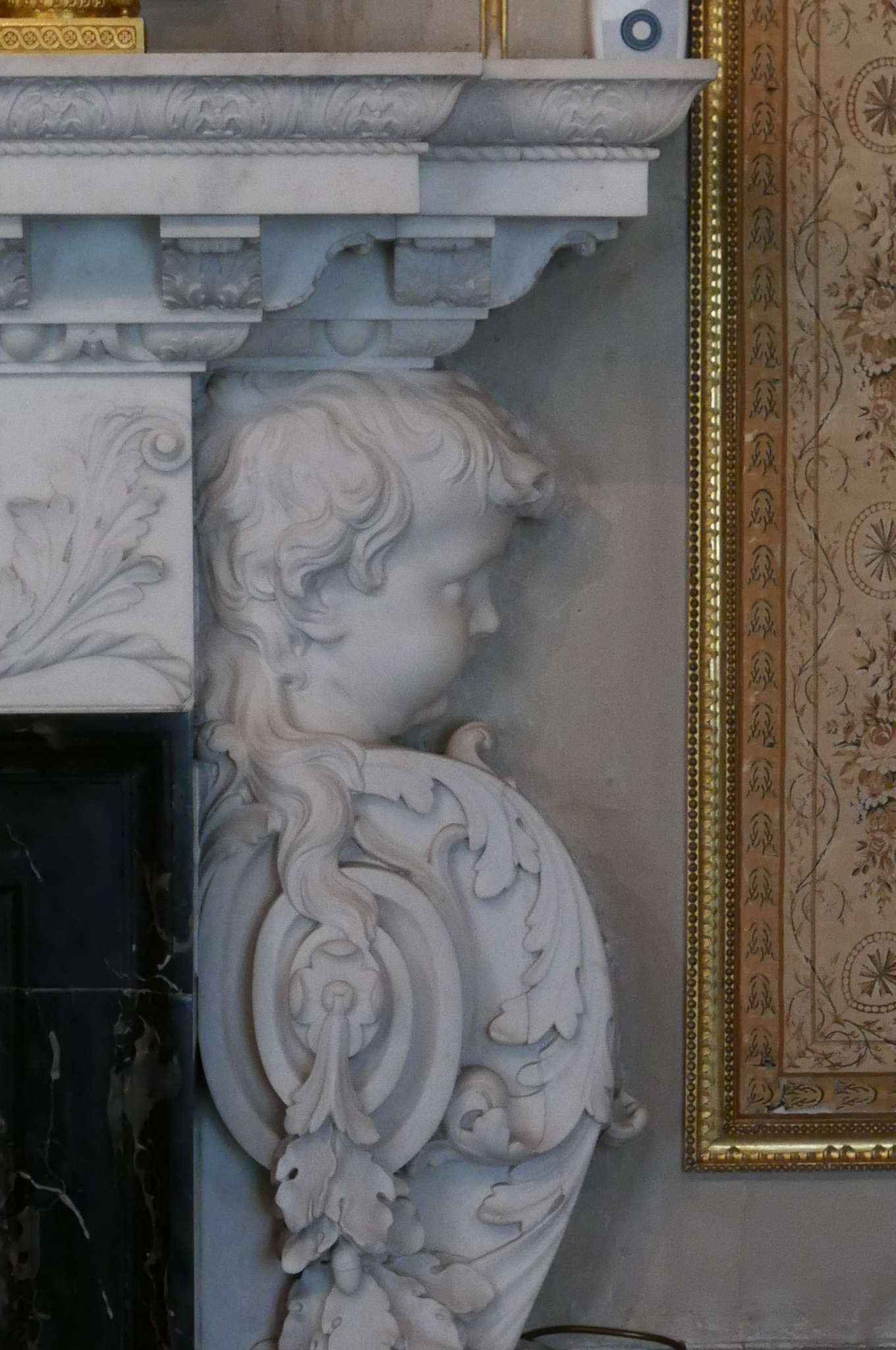
Through the Saloon is the White Drawing Room with a chimneypiece of Aurora, flanked by Caryatids:-

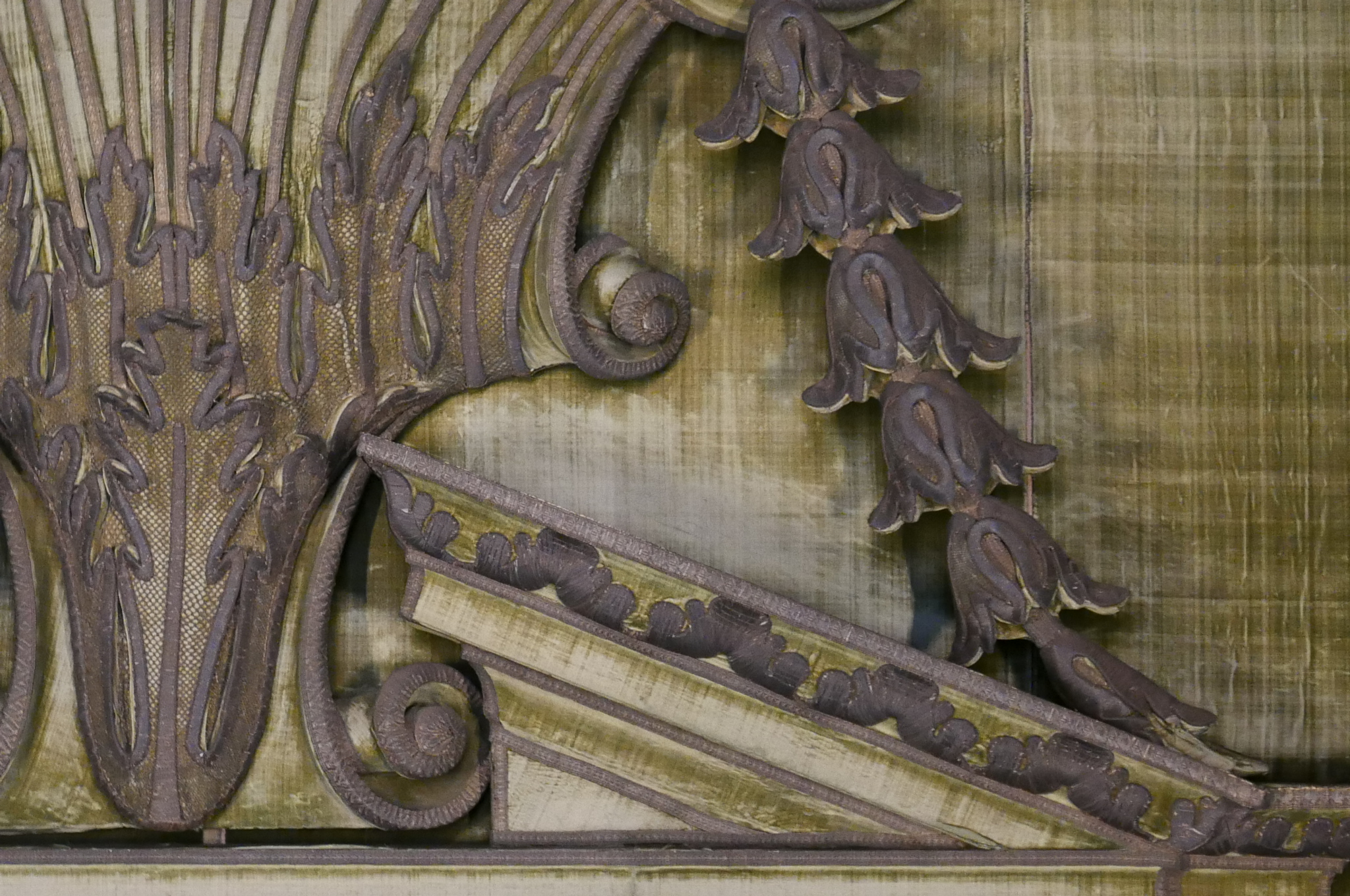
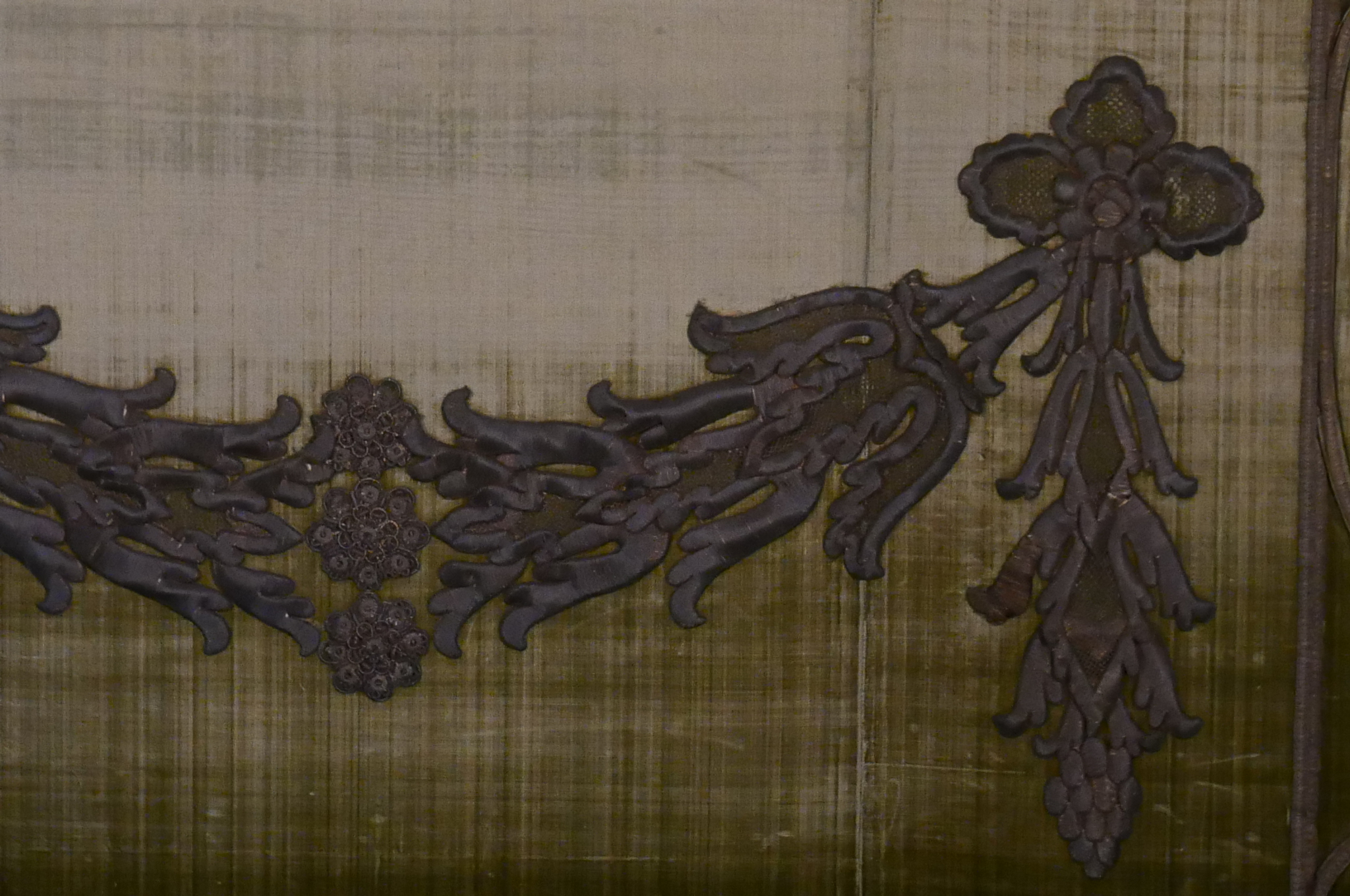
Beyond is the Green Velvet Bedchamber, with one of the best state beds I have ever seen, still opulently baroque and apparently designed by William Kent:-

Good tapestry too:-

In the north-east corner is the Cabinet Room, originally hung with pictures, but now with a dressing table looking out to the park:-

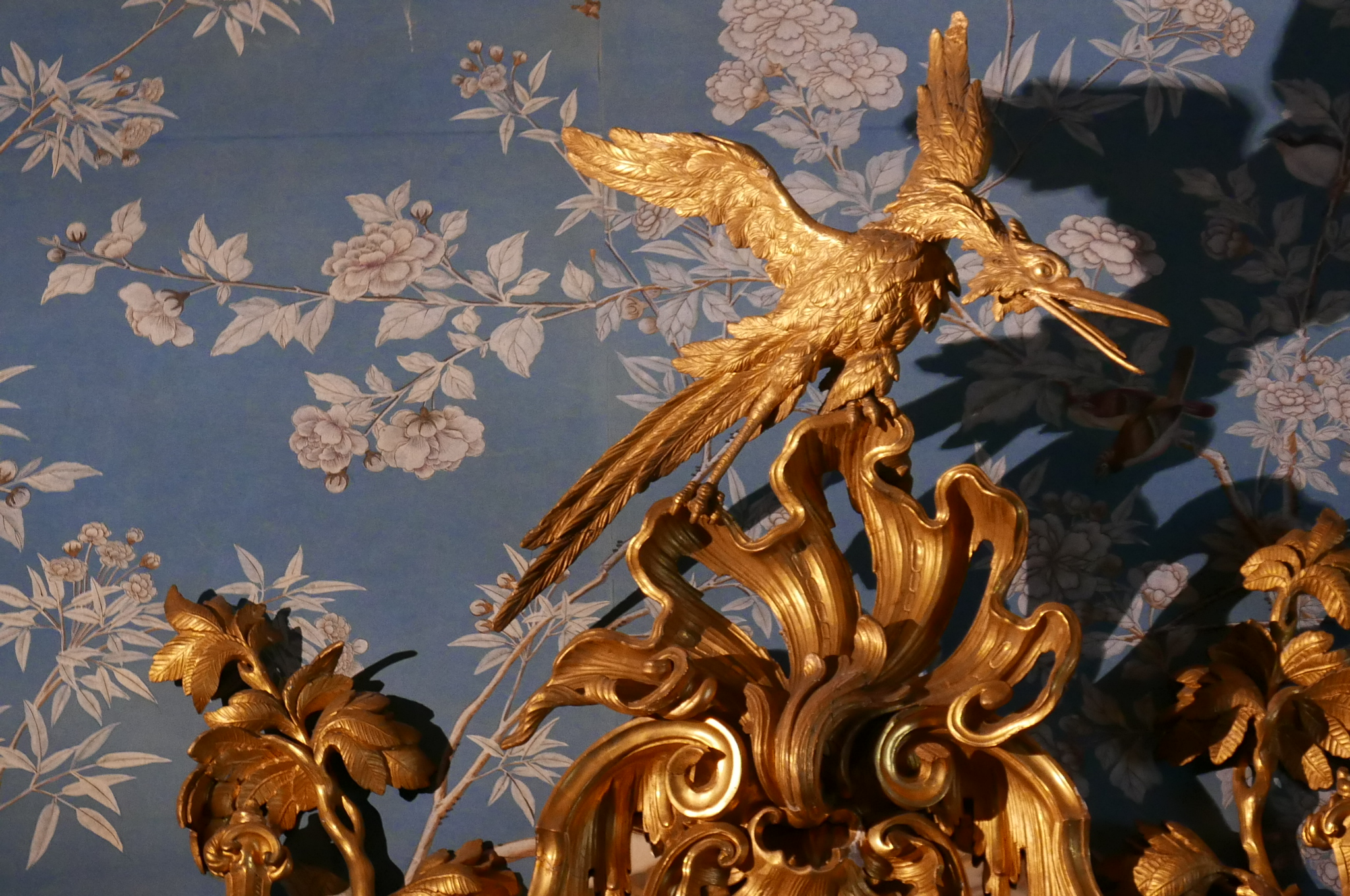
And a carved bird which I was told was a Ho Ho bird:-
Both up and down the lift, I admired the log basket:-

Houghton (2)
We drove up to Houghton to see their exhibition EARTH SKY of work by Richard Long in the house and gardens.
First, a large work, North South East West, dominating the palatial Palladianism of the central Stone Hall:-

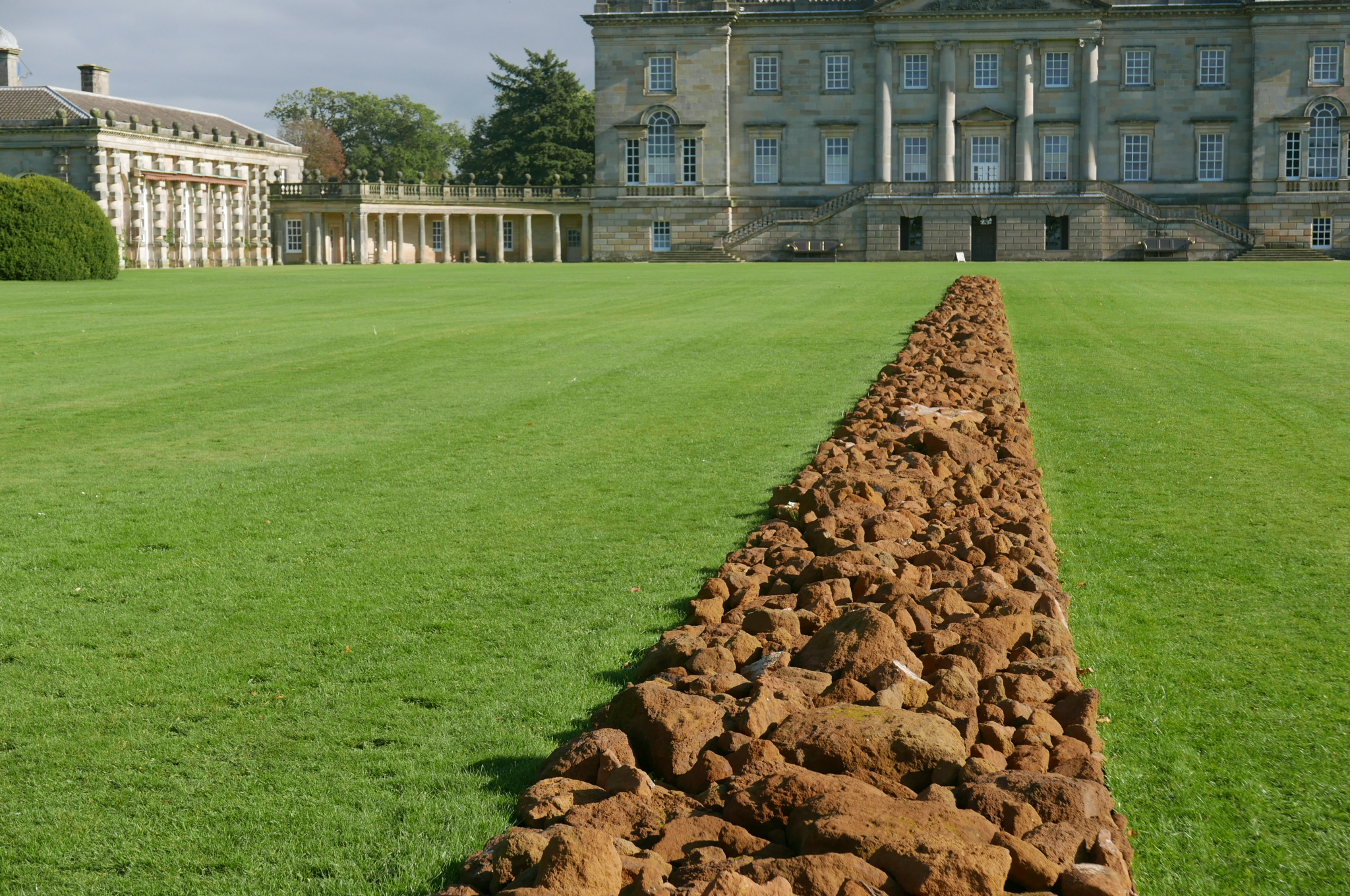
Outside, immediately in front of the house on the long lawn stretching out to a distant ha-ha is A Line in Norfolk:-
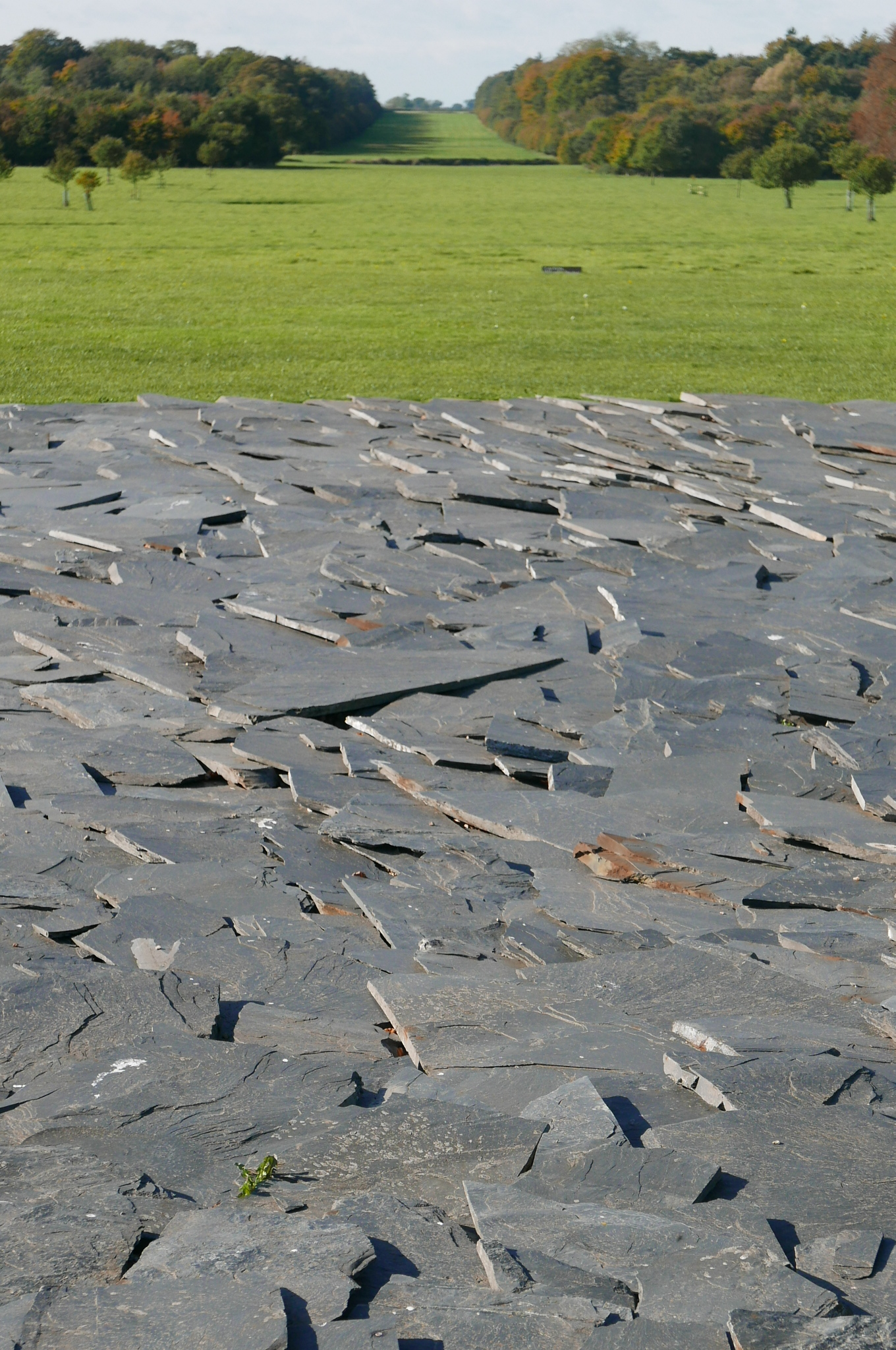
Beyond, at the end of the formal garden in front of the house with the ride beyond, is Full Moon Circle:-
In the two service ranges flanking the house were White Water Falls:-


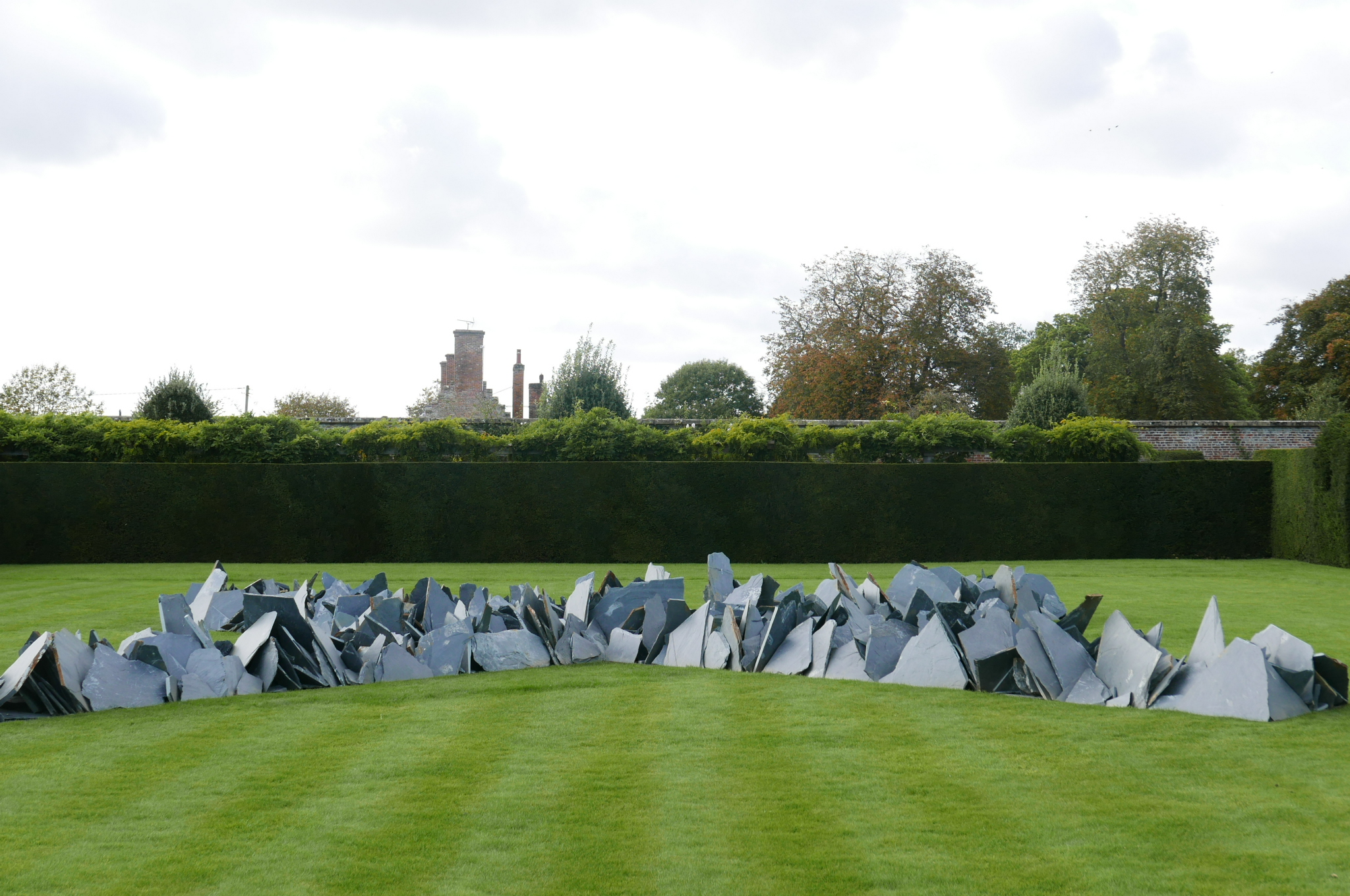
Remote in a corner of the formal garden was Houghton Cross :-

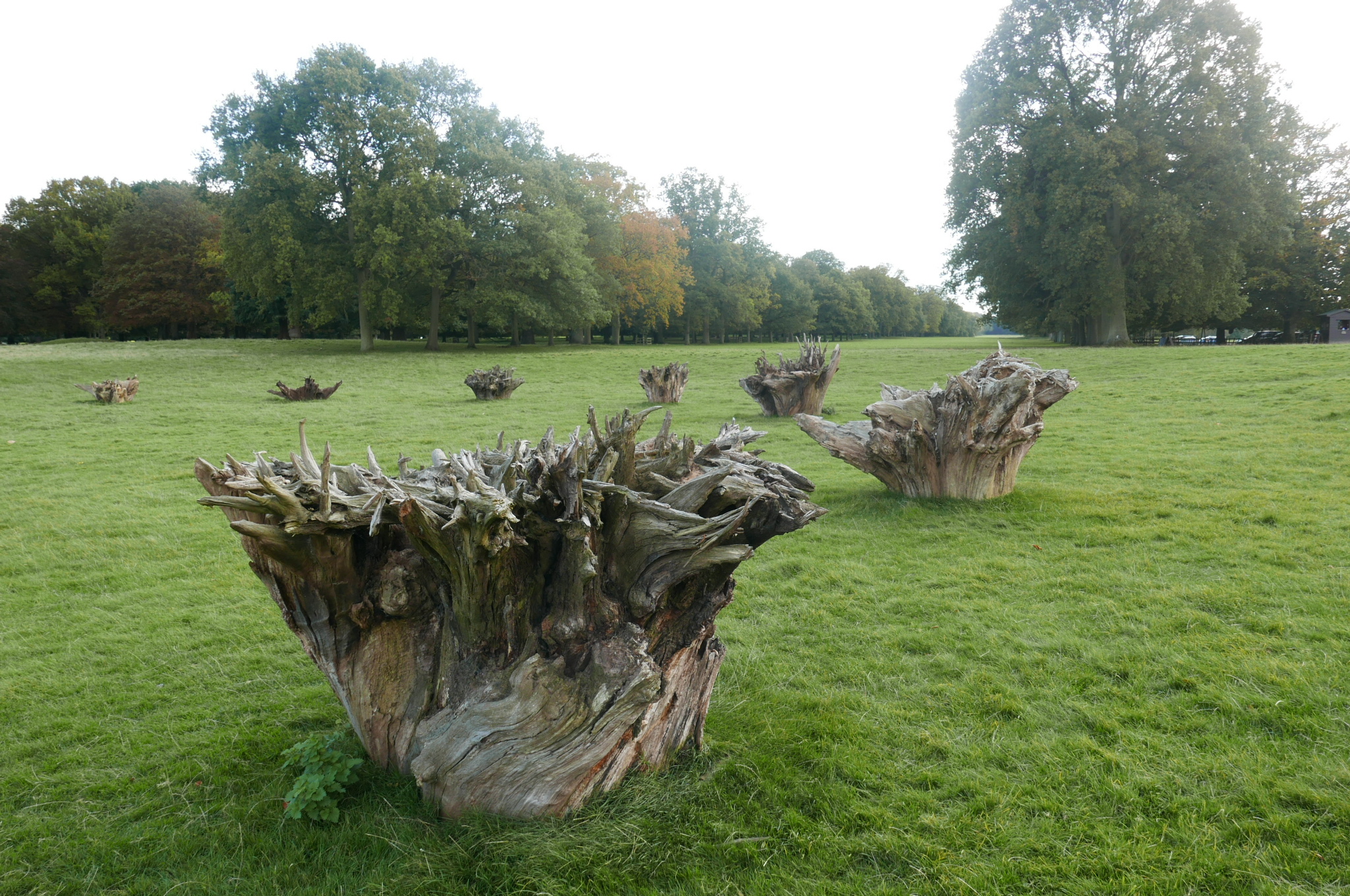
And in the parkland White Deer Circle:-


Richard Long
I have been reading Mark Girouard’s Friendships, soon to be published, which records his very extensive circle of friends, all now dead, from the 1950s onwards. Some of them are already well known, like John Betjeman with whom he collaborated on the establishment of the Victorian Society (‘dear little Mark, so good, and never says a word’) and Denys Lasdun, whose National Theatre both Betjeman and Girouard admired. But some of them are much less well known, like Gervase Mathew, the grubby Byzantinist and author of Byzantine Aesthetics and Dominic de Grunne, a Belgian Catholic who taught Indian art at the Royal College of Art. He has an obvious penchant for scatty upper class girls, but there is not much love interest apart from an unexpected confession that in the 1990s his marriage was in trouble, when he went on long walks with a Belgian ex-hippy who he had met in Ethiopia. It shows that there was much more to his life than writing about Victorian country houses and saving Spitalfields.
Mark Girouard
Saint-Sulpice
My last post from Paris is of the side façade of Saint-Sulpice. I had misremembered the history of the church. The bulk of it is seventeenth-century, designed by Daniel Gittard, who completed the north portal between 1670 and 1678. It was in 1732 that a competition was held for the design of the west façade, won by Giovanni Servandoni and based on the façade of St. Paul’s:-


I was walking down a street near the Musée de Cluny (the Rue de l’Ecole de Médicine to be precise), I spotted an inscription recording that it was the location of the Ancienne Ecole Royale de Dessin, which was established in 1767. In all the literature about the establishment of the Royal Academy (which is itself devoted to ‘the arts of design’), I have never seen any reference to the fact that the French King had given his blessing to an official drawing school which had been established in 1766 in what was then the rue des Cordeliers by Jean-Jacques Bachelier. After various increases in its responsibilities to include the mechanical arts in 1823, it became L’École nationale des arts decoratifs’ in 1873. But it still retains a fine relief of Architecture flanking its entrance portal and inside is what I suspect is the original drawing school:-


École Royale de Dessin
Left Bank
I have tended to avoid the left bank in recent years, having long ago been put off the tourist aspects of the Boulevard Saint-Germain and Les Deux Magots. But staying next to the Sciences Po meant that I have had a chance to get to know the Faubourg Saint-Germain better, with its well preserved side streets, its antiquaires, its courtyards and gardens. I liked the scientific bookshop at 48, Rue Jacob with its display of old opticians’ equipment and eyeballs:-
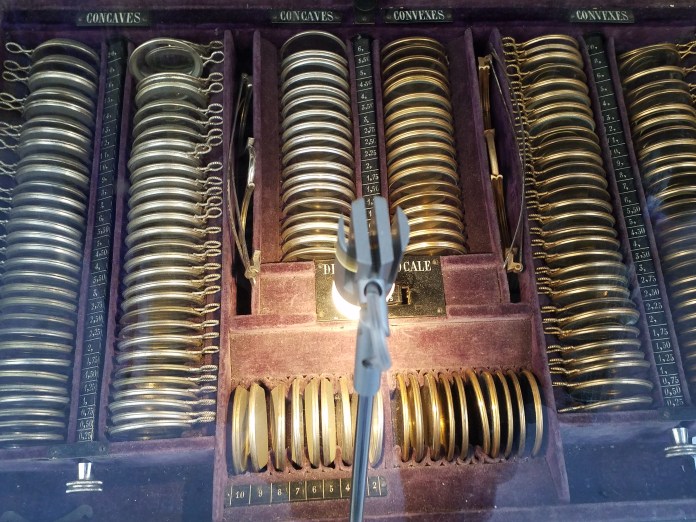

The doorways further down the street in the Rue Jacob and surrounding neighbourhood:-


The Square Gabriel-Pierne at the end of the Rue Mazarine:-

And the Musée Delacroix:-


You must be logged in to post a comment.