Michael Baxandall

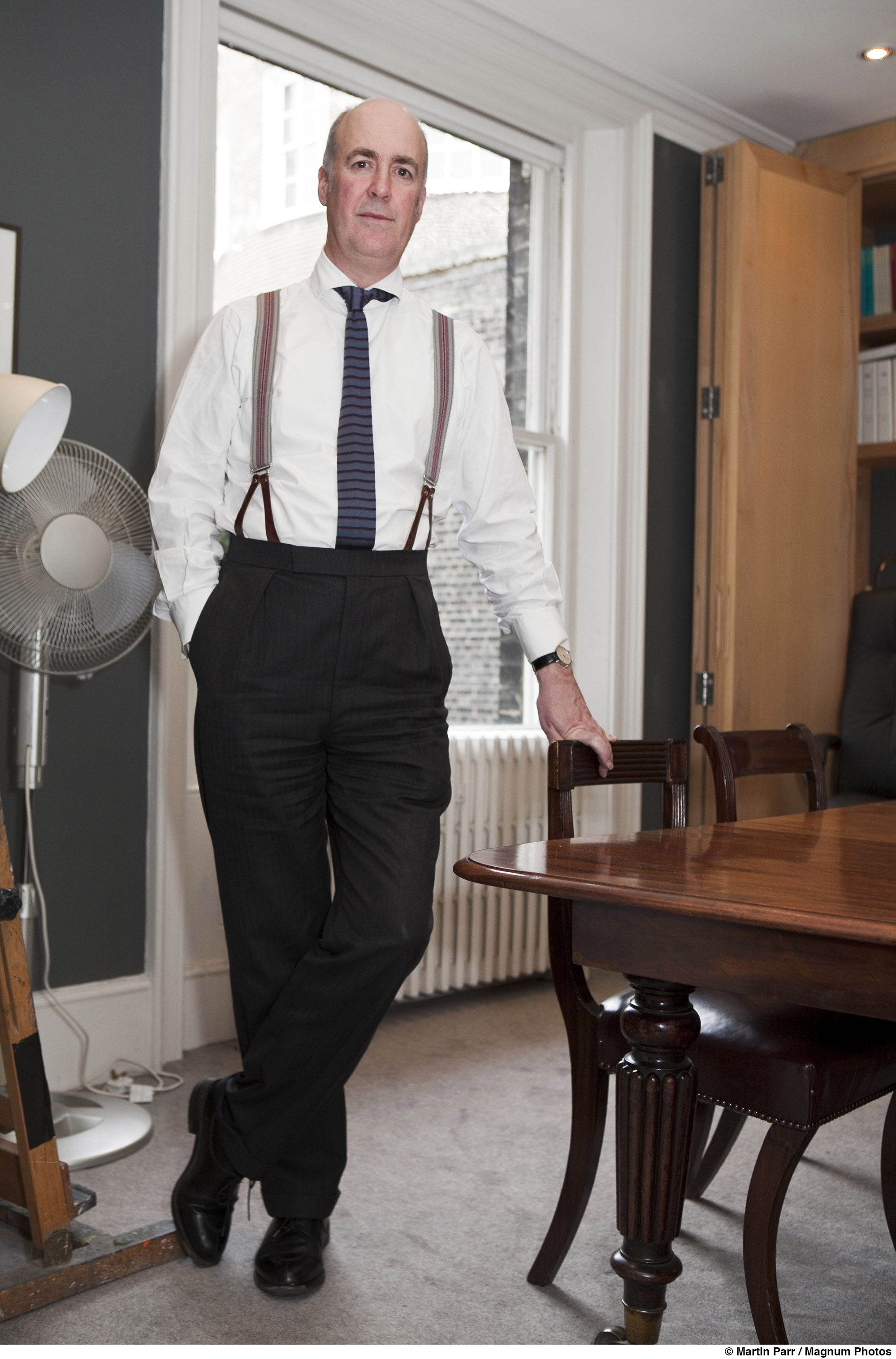
At the conference on Leonardo last week Jules Lubbock reminded me that he had written an essay on Michael Baxandall, my Ph.D supervisor and still an intellectual hero to me.   It’s called ‘To Do a Leavis on Visual Art:  The Place of F.R. Leavis in Michael Baxandall’s Intellectual Formation’ and is published in a volume of essays about Baxandall called Michael Baxandall, Vision and the Work of Words, based on a conference I wasn’t able to go to at the Warburg in May 2012.   What the essay demonstates very clearly is Baxandall’s debt to Leavis who taught Baxandall as an undergraduate at Downing in the early 1950s and was presumably the reason why he went to Downing in the first place.   Leavis gave Baxandall his deep attentiveness to the language of criticism and the modes of engagement in works of art and his ambiguous relationship to what he described as ‘Courtauld stuff’;  also, his moral high mindedness and contempt for the more belle lettriste tradition of writing about art.   Lubbock’s essay brought back to me the occasional supervisions I had with Baxandall which were nearly silent, puntuated by occasional disdainful comments about much writing about the eighteenth century, until he produced a thimbleful of whisky.   What he did convey in all that he didn’t say was the importance and essential complexity of the task of criticism and the need, as Lubbock demonstrates, for tact and restraint (not Leavis-ite characteristics) and for critical enquiry through encounter as opposed to laboured systems of art historical interpretation.

Standard

Michael Sandel

Michael Sandel, the Harvard political philosopher, talked this evening about the topic of his most recent book on the subject of What Money Can’t Buy:  the moral limits of markets, first published in 2012 and based on his Reith Lectures.   It was an amazing performance, using the Socratic method (now the Harvard method) of using the audience to vote and then argue about moral issues.   The first one was whether or not the city of Detroit faced by bankruptcy should plunder the pension payments of long-standing city employees or sell works from the Detroit Institute of Fine Arts.   The vote was split.   The argument was fierce and articulate about what value should be placed on works of art and to what extent they can, and should, be treated as commodities.   The second issue was the extent to which citizenship should be available for purchase to the highest bidder, a case study from his book.   Again there was rich discussion.   It hardly needed the concluding remarks about the impoverishment of public discourse;  and the alienation which results from the dependence of economists on markets as an instrument to determine the allocation of public goods.

Standard

Leonardo and the Freemasons (2)

Whilst on the subject of the interest in Leonardo amongst the early members of the Grand Lodge, I have checked that Thomas Coke, Earl of Leicester, who bought the Codex Leicester whilst on the Grand Tour, was also prominently involved with the freemasons during the 1720s.   He was, including being Grand Master in 1731.   Is there a connection or was it just part of the general milieu of those with scientific interests round Newton ?  He certainly was pretty deeply knowlegeable about antique and Renaissance culture, having spent six years on the Grand Tour, departing in 1712 aged fifteen with a tutor, Thomas Hobart, who was a Fellow of Christ’s, and a valet, Edward Jarret, who kept detailed accounts.   A year later, aged only sixteen, he described himself as ‘a perfect virtuoso, and a great lover of pictures’.   He attended the Academy in Turin in 1715 and wrote how ‘one of the greatest ornaments of a gentleman or his family is a fine library’.   The second part of the year he spent in France and Germany, but returned to Italy in 1716 ‘to confirm myself in the language and virtuosoship of that Country’.   He acquired the Codex in 1717 from Giuseppe Ghezzi, whilst also employing Joseph Smith to act as his agent in Venice , learning about architecture from ‘Signor Giacomo’ and spending time in Naples with William Kent.

Standard

Rug Chapel

We stopped on the way back to London at Rug Chapel, the private chapel of Colonel William Salesbury, the Governor of Denbigh Castle.   It’s an astonishing and ecclesiastically extravagant display of carved and painted woodwork, dating from 1637, just before the Civil War.

This is the painted decoration on the roof trusses:-

image

image Continue reading →

Standard

Anglesey (3)

After a day spent lounging about doing nothing except reading and eating hard boiled eggs, I thought I would go explore the less familiar south bank of the River Afon down towards the mussel beds and the Menai Straits:-

image

There were geese on the river:-

image Continue reading →

Standard

Marram Grass

We managed to book with the utmost difficulty a table at The Marram Grass which till quite recently was the café at the local caravan site, but once it was listed by the Good Food Guide became wildly popular.

One sees what one about to eat en route:-

image

We like the atmosphere which is as much middle America as north Wales:-

image Continue reading →

Standard

Leonardo and the Freemasons

In discussing the first English translation of Leonardo’s Trattato in 1721, I had a faint idea that it might be connected to the early development of freemasonry because I remembered that John Senex, the bookseller, globemaker and mapmaker, who published the translation, was also the publisher of James Anderson’s Constitutions of the Free-Masons in 1723.   Indeed, he was.   Senex was an ardent Newtonian as well as freemason and was keen to promote the practice of experimental science based through his publications.   In 1721, he also published a translation of the work of Claude Perrault on the Order of five species of columns according to the method of the ancient.  But, as Harry Mount brilliantly suggested in his paper in the conference yesterday, the application of a rigorously experimental method to the practice of architecture and fine art had very limited success in the era of Lord Shaftesbury and Palladianism.

Standard

Anglesey (1)

We have escaped to Anglesey for the bank holiday weekend where our cottage is thick with cow parsley.

This is the view out of the back door:-

image

Before breakfast, I walked out to the beach to see the sea:-

image Continue reading →

Standard