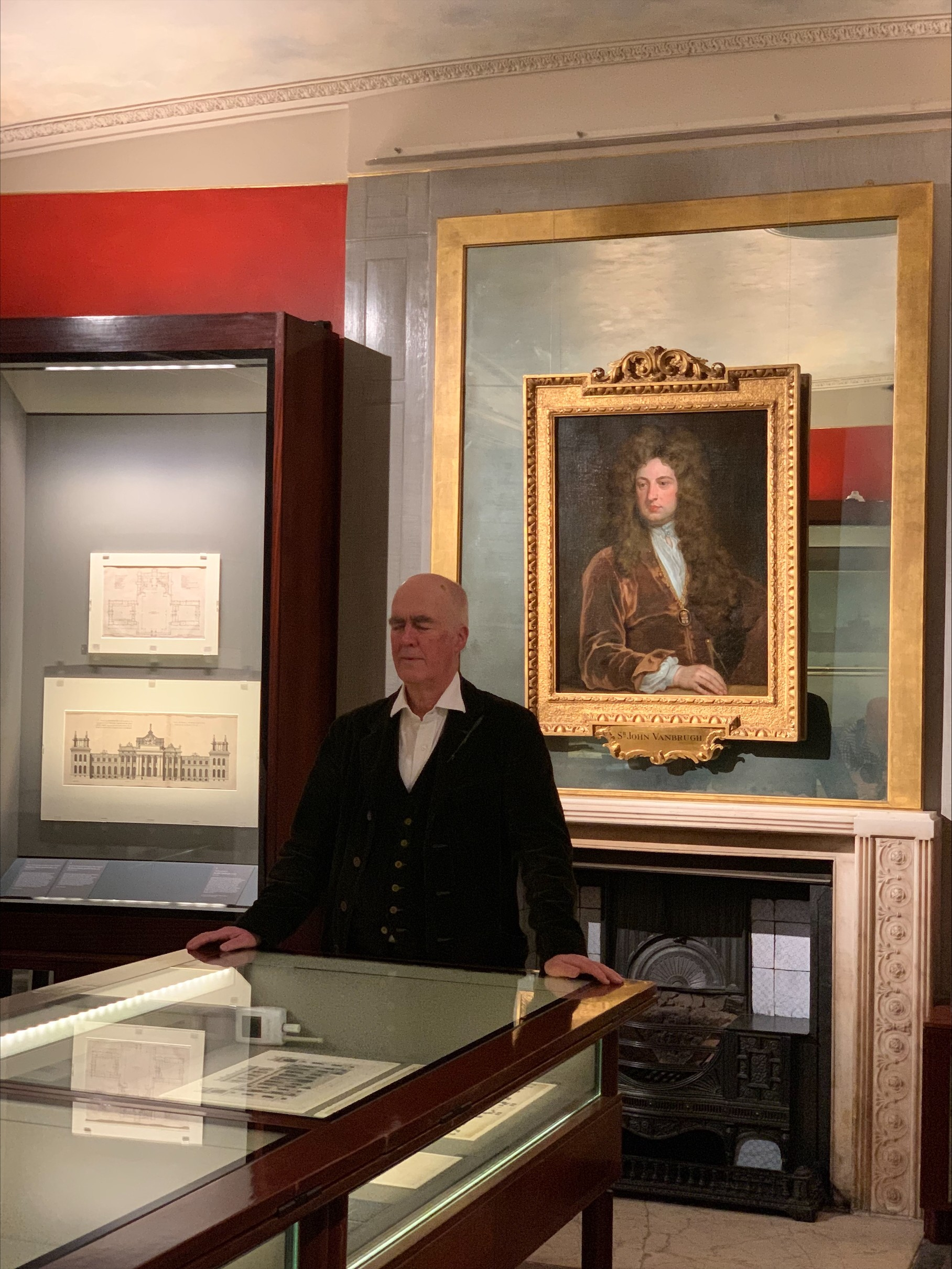
I sat next to Timothy Brittain-Catlin last week at an event to celebrate the 100th. birthday of his cousin, Leonard Manasseh. I had previously only known him as a reviewer in The World of Interiors, but I have since been lent a copy of his book, Bleak Houses: disappointment and failure in architecture. It covers the history of architecture since Pugin and the way in which in each generation a small number of aggressive modernising architects have tended to elbow out others who have therefore subsequently been regarded as failures and lost to history. His first example is George Basevi, the architect of the Fitzwilliam Museum, who failed to adapt to the new Puginesque Gothic and fell to his death from the roof of Ely Cathedral. Before the first world war, Horace Field, one half of Field and Bunney, who published an excellent book on Domestic Architecture of the XVII and XVII Centuries, went on to be chief architect for Lloyds Bank, but is now forgotten. In the 30s, he cites Seely and Paget, grand social architects who were responsible for Eltham Palace, but do not appear in any standard narrative. After the war, his examples, less convincing, are Hugh Casson, who won’t have been forgotten and certainly wasn’t a failure, and Raymond Erith, who will almost certainly be remembered as an austere classicist outside the mainstream. It’s a very clever book, making one think about the way architectural history is written.
Category Archives: Uncategorized
Keeper’s House Garden
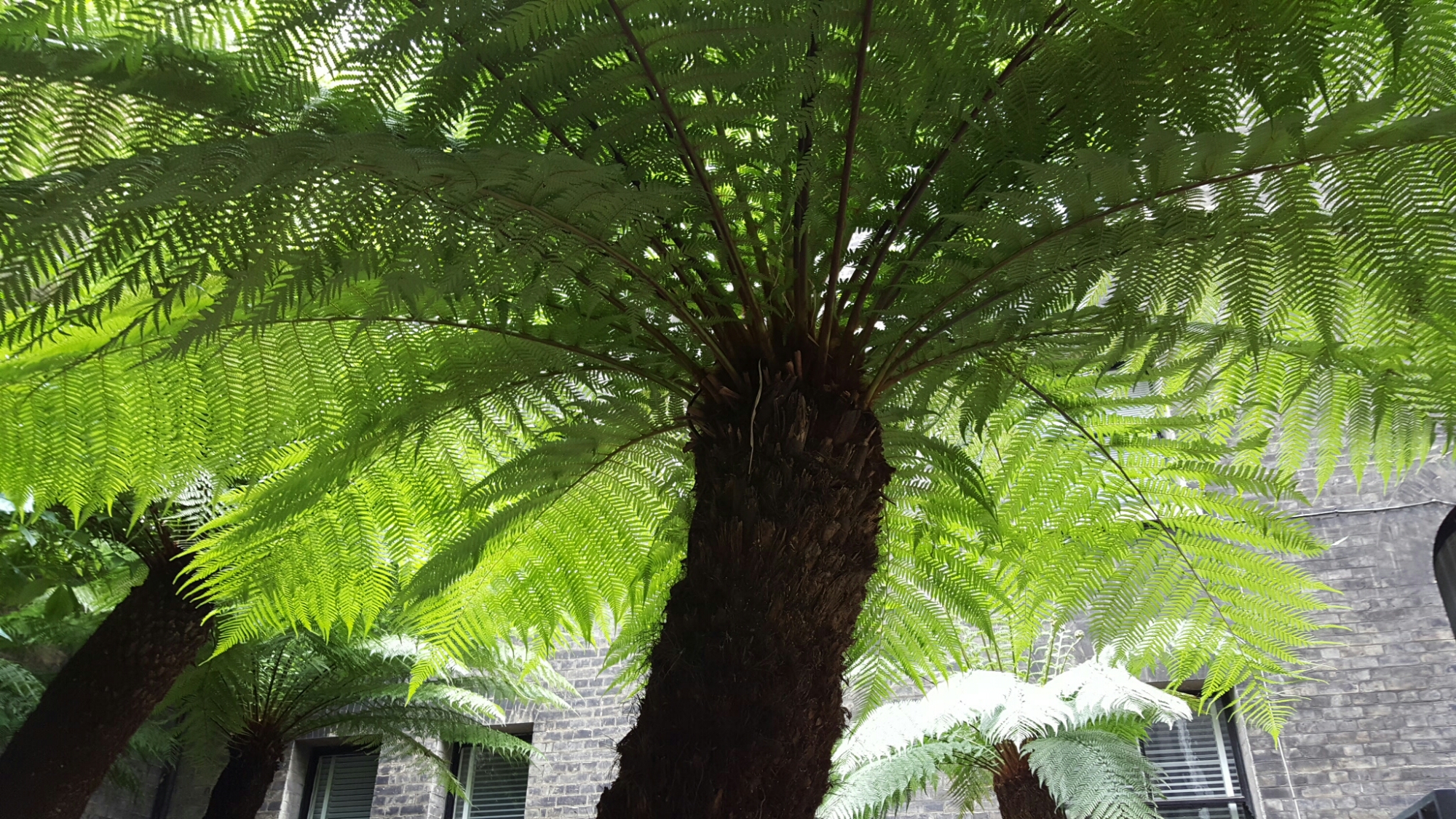
We had lunch in the garden of the Keeper’s House, which I never think of doing in the week, under the shade of Tom Stuart-Smith’s increasingly magnificent New Zealand tree ferns which are growing apace:-

Giorgione
Realising that In The Age of Giorgione closes tomorrow, we spent the morning in it. A few comments. The astonishing generosity of the lenders, particularly the Royal Collection and the Accademia. The complexities of attribution, beyond the Terris portrait, which has an inscription ascribing it to Giorgione. The fact that after more than a century of post-Morellian discussion and debate around attribution, there is no more certainty than when Berenson decided to dedicate his life to its study. The tension between the influence of Durer who visited Venice in 1505 and described Bellini as ‘still the best’ and the influence of Leonardo who had visited a few years earlier. The extraordinary realism and poignancy, particularly in the eyes, of La Vecchia, which I had not realised was described in a sixteenth-century inventory as a portrait of Giorgione’s mother. Hard to imagine the range of works in the exhibition ever being easily repeated.
The Gimlet Bar
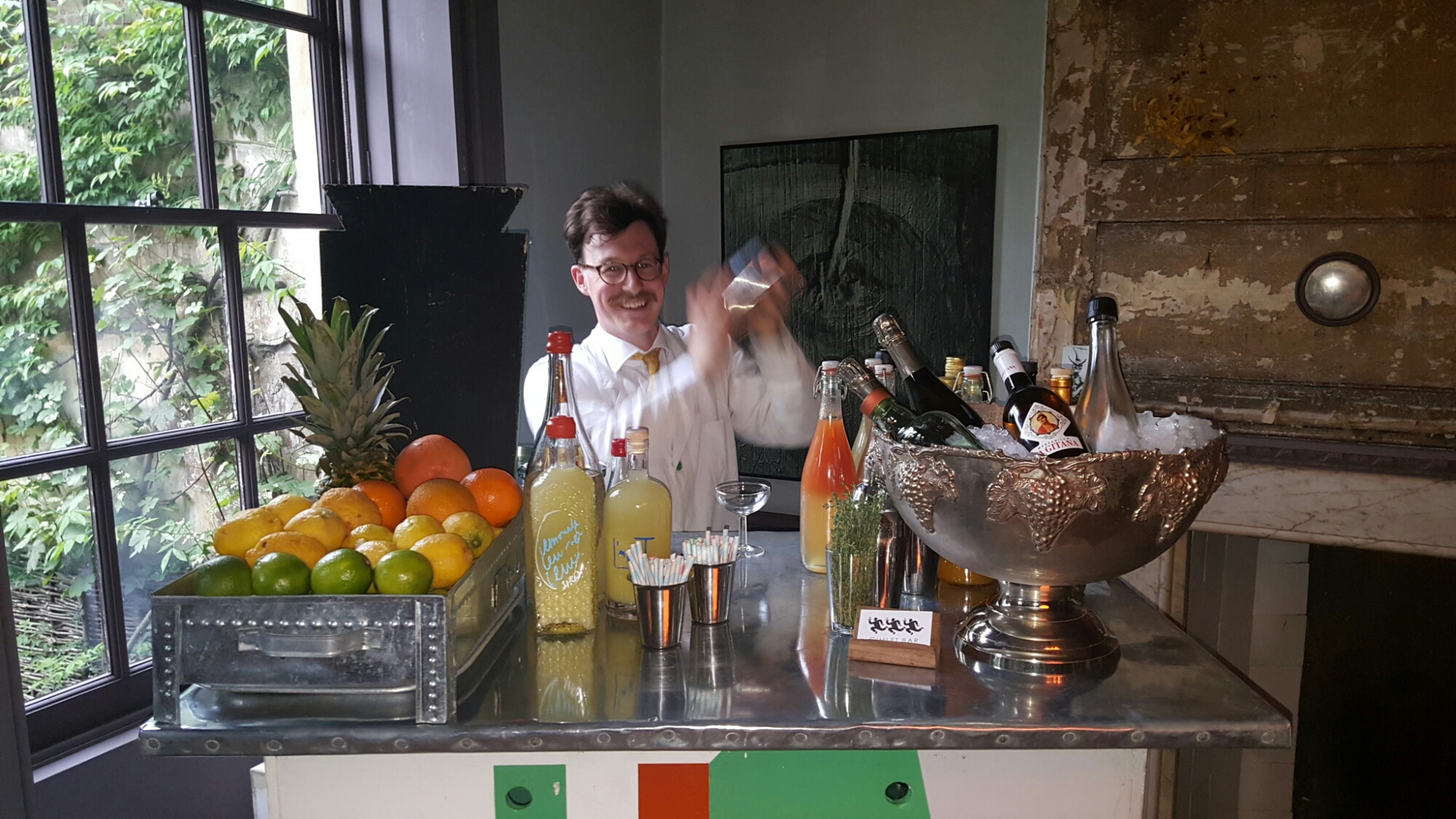
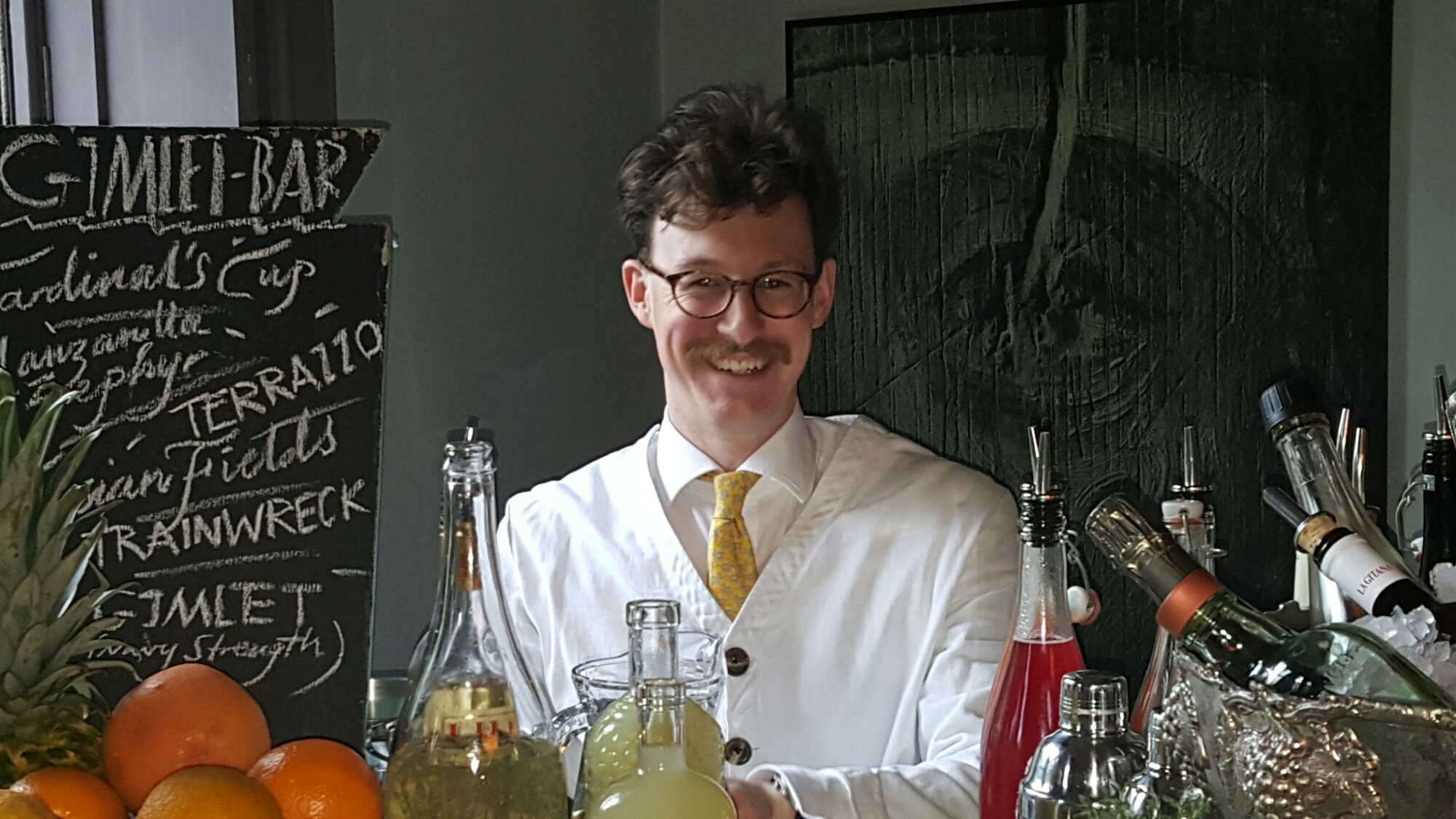
We had an evening of cocktails with a bar set up in the dining room by Charlie Gouldsbrough, who learned his trade in the States and prepares his own lethal mixtures with navy strength gin, first devised for Nelson who didn’t want his gunpowder to be contaminated. He does pop-up bars at art and other events:-
Non-members Varnishing Day
We had Non-members Varnishing Day today which gives non-members an opportunity to see where their work has been hung and a first chance to see and assess the exhibition. The theme is duos – those artists who work in partnership – although I’m not absolutely convinced that one would realise this if one wasn’t told it:-

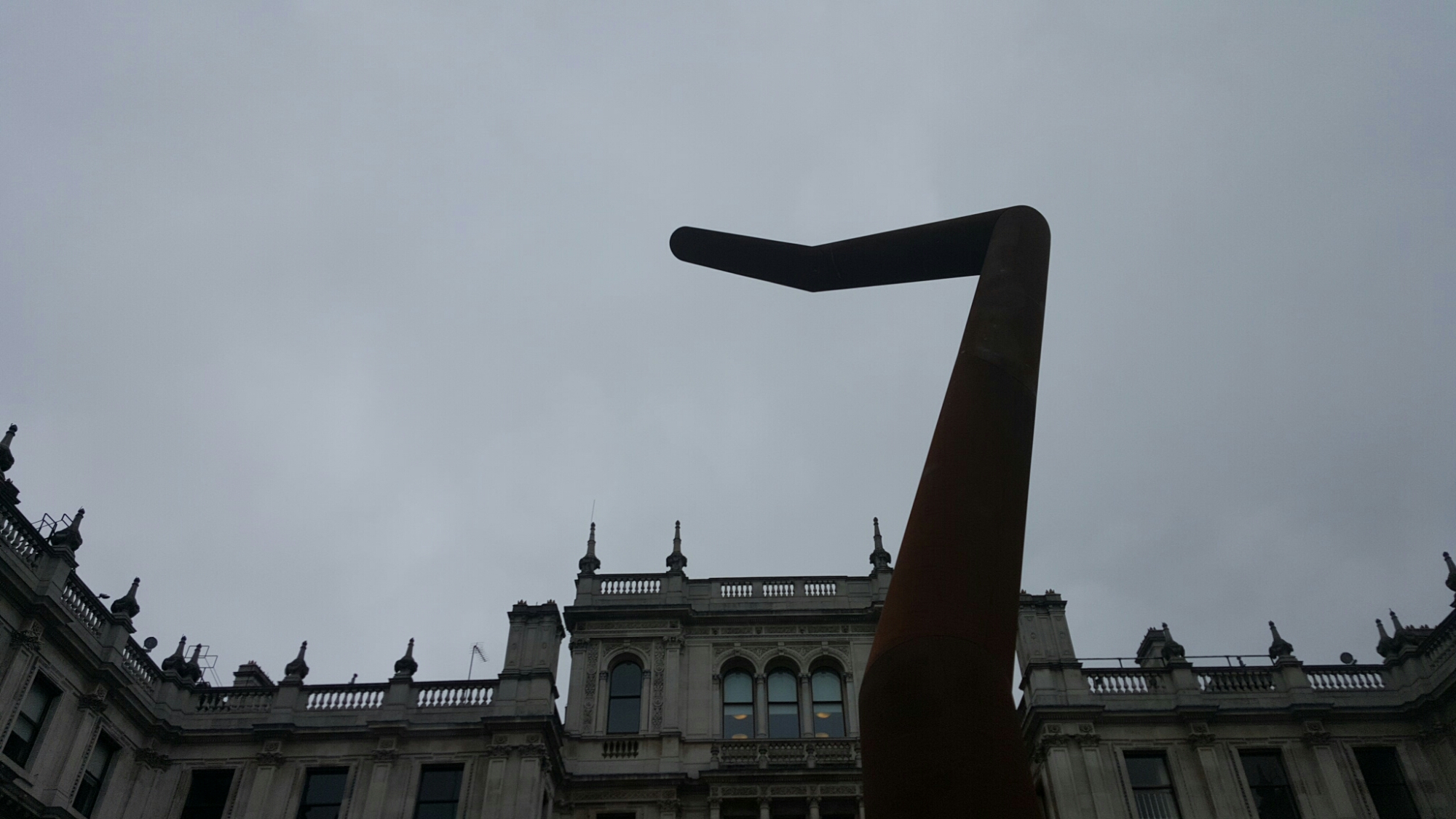
Outside Ron Arad’s Spyre was waving at the spectators, but not in the sun:-
Nicholas Serota
Talking of the influence of Cambridge on ways of thought, I went last night to a dinner to mark the fact that Nick Serota is getting a Cambridge honorary degree. He was an undergraduate at Christ’s the year below Simon Schama (they had been to the same school), switched from economics to art history at a time when very few people studied the subject, and spoke of two formative influences: the first was Jim Ede living in Kettle’s Yard and lending works of art to undergraduates to hang in their rooms (Serota borrowed a Gaudier-Brzeska); and the second was Michael Jaffé who stood undergraduates in front of works of art in the Fitzwilliam and compelled them to talk about them.
Michael Baxandall
At the conference on Leonardo last week Jules Lubbock reminded me that he had written an essay on Michael Baxandall, my Ph.D supervisor and still an intellectual hero to me. It’s called ‘To Do a Leavis on Visual Art: The Place of F.R. Leavis in Michael Baxandall’s Intellectual Formation’ and is published in a volume of essays about Baxandall called Michael Baxandall, Vision and the Work of Words, based on a conference I wasn’t able to go to at the Warburg in May 2012. What the essay demonstates very clearly is Baxandall’s debt to Leavis who taught Baxandall as an undergraduate at Downing in the early 1950s and was presumably the reason why he went to Downing in the first place. Leavis gave Baxandall his deep attentiveness to the language of criticism and the modes of engagement in works of art and his ambiguous relationship to what he described as ‘Courtauld stuff’; also, his moral high mindedness and contempt for the more belle lettriste tradition of writing about art. Lubbock’s essay brought back to me the occasional supervisions I had with Baxandall which were nearly silent, puntuated by occasional disdainful comments about much writing about the eighteenth century, until he produced a thimbleful of whisky. What he did convey in all that he didn’t say was the importance and essential complexity of the task of criticism and the need, as Lubbock demonstrates, for tact and restraint (not Leavis-ite characteristics) and for critical enquiry through encounter as opposed to laboured systems of art historical interpretation.
Michael Sandel
Michael Sandel, the Harvard political philosopher, talked this evening about the topic of his most recent book on the subject of What Money Can’t Buy: the moral limits of markets, first published in 2012 and based on his Reith Lectures. It was an amazing performance, using the Socratic method (now the Harvard method) of using the audience to vote and then argue about moral issues. The first one was whether or not the city of Detroit faced by bankruptcy should plunder the pension payments of long-standing city employees or sell works from the Detroit Institute of Fine Arts. The vote was split. The argument was fierce and articulate about what value should be placed on works of art and to what extent they can, and should, be treated as commodities. The second issue was the extent to which citizenship should be available for purchase to the highest bidder, a case study from his book. Again there was rich discussion. It hardly needed the concluding remarks about the impoverishment of public discourse; and the alienation which results from the dependence of economists on markets as an instrument to determine the allocation of public goods.
Leonardo and the Freemasons (2)
Whilst on the subject of the interest in Leonardo amongst the early members of the Grand Lodge, I have checked that Thomas Coke, Earl of Leicester, who bought the Codex Leicester whilst on the Grand Tour, was also prominently involved with the freemasons during the 1720s. He was, including being Grand Master in 1731. Is there a connection or was it just part of the general milieu of those with scientific interests round Newton ? He certainly was pretty deeply knowlegeable about antique and Renaissance culture, having spent six years on the Grand Tour, departing in 1712 aged fifteen with a tutor, Thomas Hobart, who was a Fellow of Christ’s, and a valet, Edward Jarret, who kept detailed accounts. A year later, aged only sixteen, he described himself as ‘a perfect virtuoso, and a great lover of pictures’. He attended the Academy in Turin in 1715 and wrote how ‘one of the greatest ornaments of a gentleman or his family is a fine library’. The second part of the year he spent in France and Germany, but returned to Italy in 1716 ‘to confirm myself in the language and virtuosoship of that Country’. He acquired the Codex in 1717 from Giuseppe Ghezzi, whilst also employing Joseph Smith to act as his agent in Venice , learning about architecture from ‘Signor Giacomo’ and spending time in Naples with William Kent.
Rug Chapel
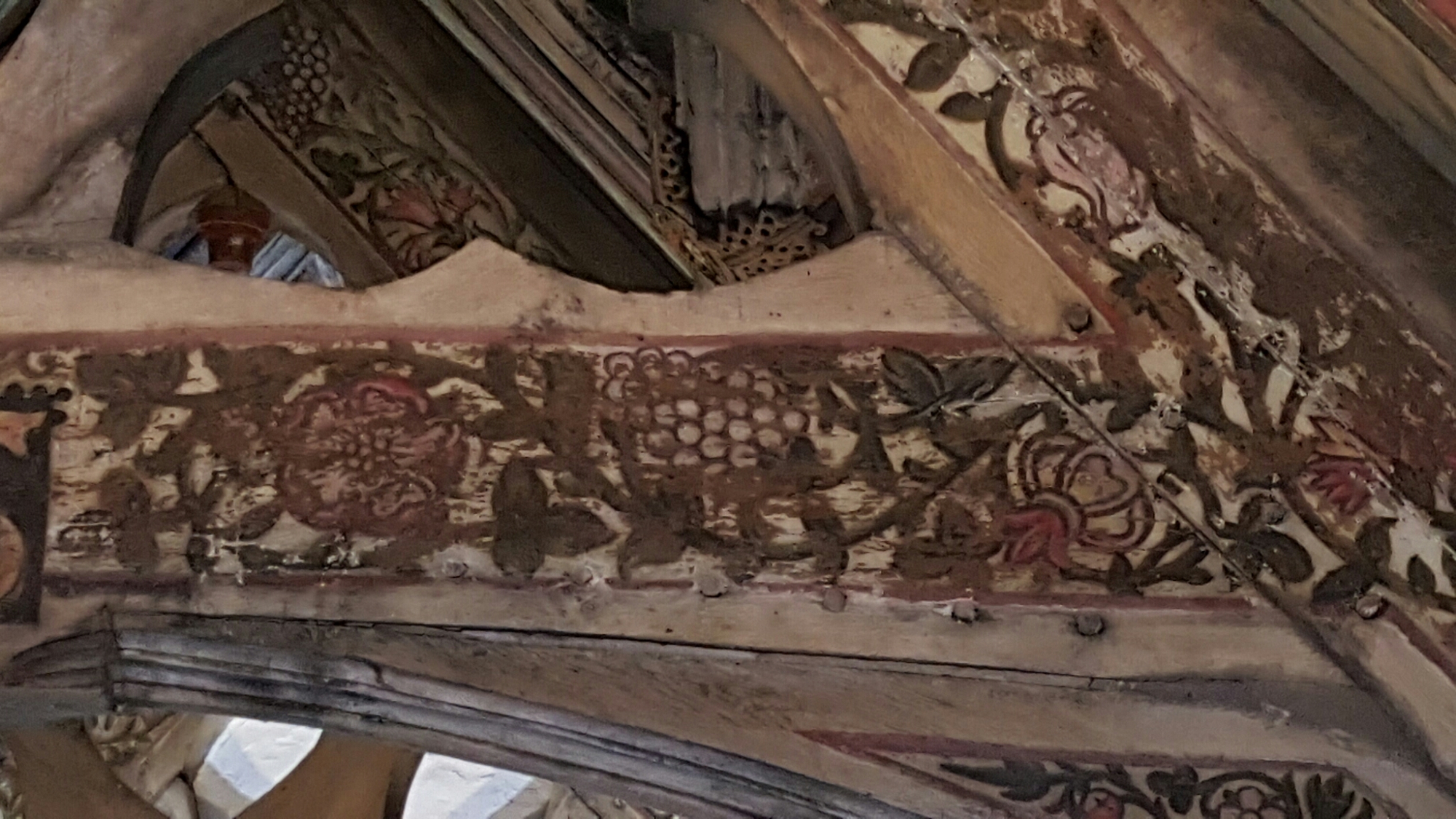
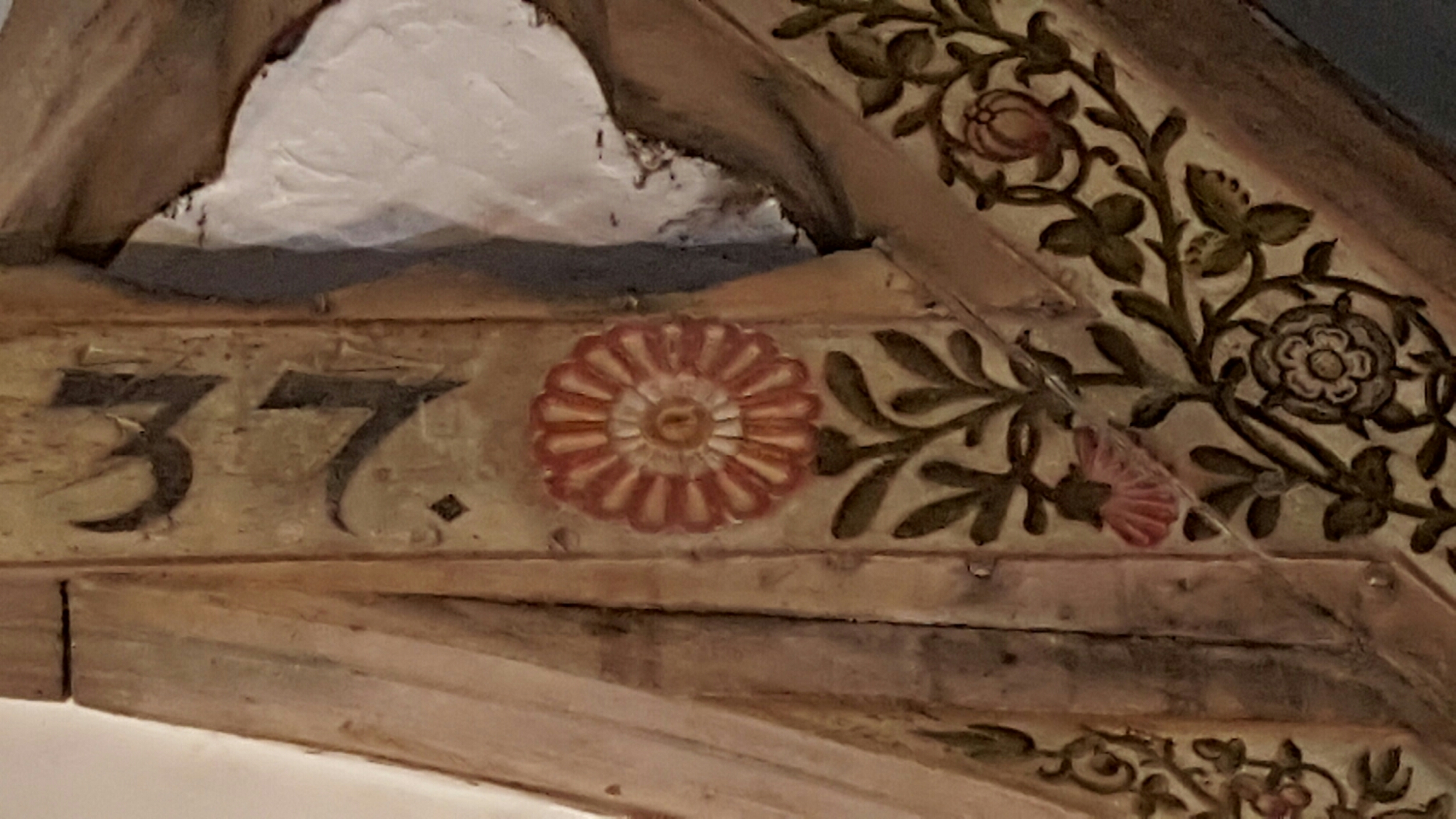
We stopped on the way back to London at Rug Chapel, the private chapel of Colonel William Salesbury, the Governor of Denbigh Castle. It’s an astonishing and ecclesiastically extravagant display of carved and painted woodwork, dating from 1637, just before the Civil War.
This is the painted decoration on the roof trusses:-


You must be logged in to post a comment.