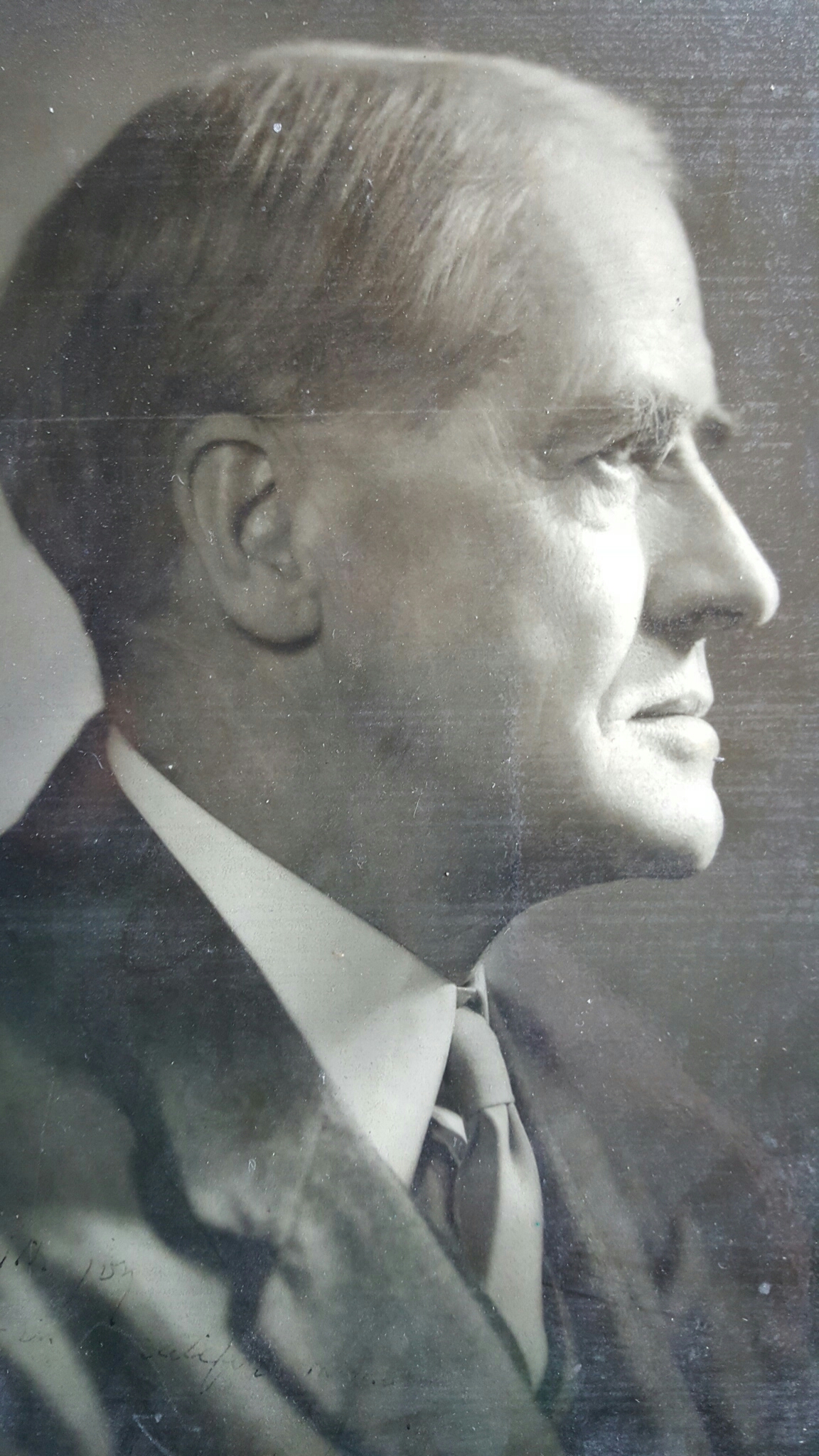
Next door to St. Anne’s, Limehouse, I discovered a charming small set of circular benches dedicated to the memory of Doc Widgery, who I discover died as long ago as 1992. He was a big figure in Limehouse when we moved there in the early 1980s, as a GP at the local Gill Street Health Centre and ex revolutionary socialist (not very ex). He published a book about his medical practice called Some Lives: a GP’s East End in 1991, not long before he died of some form of overdose. I never met him, but he clearly belonged to the era of passionately committed and socially oriented GPs who came into medicine as much to change society as prescribe paracetamol. The formative moment of his youth was having sex with Allen Ginsberg:-
Category Archives: Uncategorized
St. Anne, Limehouse
I went this morning to have a look at St. Anne, Limehouse. I occasionally do, to restore my faith in humanity and architecture. I discovered they now keep the gates to the churchyard locked except for church services. Of course, I understand why. When we lived next door, there were always a few murders on Saturday nights. But as I used to walk through the churchyard every morning of my life en route to the Docklands Light Railway, I felt a slight frisson of sadness and am posting pictures of what the church looks like from outside the gates:-
Thinking with Your Hands
We spent the afternoon at an event at the Art Workers’ Guild called ‘Thinking with Your Hands’ which is about the way traditional craft skills and working with one’s hands remain as relevant to aspects of science as the arts. I hadn’t known that Nicky Morgan as Secretary of State for Education has been quoted as saying that ‘arts education will hold you back for the rest of your life’, which, if true, is grotesque. So, the point of the afternoon was to suggest ways in which hand skills are not just a recreation, but an essential resource, not least in surgery (maybe the Secretary of State hasn’t thought of this). There were a series of tables with two or three people, each of whom was working in an area which involves a relationship between science and craft practice.
First, thread management, with a needleworker alongside a theatre nurse:-
Visitor Numbers
I have only just got round to studying the annual charts of visitor numbers which are inserted into the April issue of the Art Newspaper. The National Palace Museum in Taipei takes the top eight places. Chanel at the Saatchi Gallery came twelfth in the world, way above the wonderful Alexander McQueen exhibition at the V&A. I initially thought that Ai Weiwei came top amongst UK exhibitions, but then spotted that it had been beaten by six exhibitions at the Saatchi Gallery, including Skate Girls of Kabul. I’m also pleased to see the Summer Exhibition up there in the top fifty in the world with 230,483 visitors. William Kentridge did well in Beijing, but so, I thought, did Sean Scully at the Himalyas Museum in Shanghai. Maybe they don’t supply the statistics. The National Portrait Gallery got over 2 million visitors, nearly double Tate Britain. Nearly 200,000 people went to see Grayson Perry in Margate. Some people think museum directors are obsessed with visitor numbers. I am.
Liane Lang
I went to the opening of Liane Lang’s exhibition at the James Freeman Gallery in Upper Street, but had got the time wrong, so had the space to myself. I’ve always liked and admired her work. She was a student at the RA Schools before I started there, but plays games with the classical cast collection which are intriguing, if occasionally deliberately sinister. I originally wanted to buy her work based on the Laocoön, all writhing limbs with modern ones, including hands and feet, interpersed. But I ended up buying a later work based on a cast of The Faun in the collection in, I think, Mannheim, which again intermingles a classical sculpture with the contemporary in a way which is intriguing, if faintly bizarre. It’s in the gallery window in Upper Street and looks better there than in our bedroom.
Zaha Hadid RA (3)
Having been unable to attend the memorial service for Zaha Hadid yesterday, I went to pay my respects at the Serpentine Pavilion today, which gave me a chance to admire her lightweight built structure – a pavilion – and to honour her memory:-
Zaha Hadid (2)
I wasn’t, sadly, able to attend Zaha Hadid’s memorial event in the London Central Mosque today. One of the things I found fascinating in reading about her after her death was the story of her failed project to design the Cardiff Opera House. I hadn’t known that she won the competition not once, but three times, because it kept on being re-run to get a different result. I had forgotten that its funding was turned down by the Millennium Commission on the grounds that its design was ‘insufficiently distinctive’, a hilarious rationale given that this was the one thing it most certainly wasn’t. And I liked her comment after she won the competition that ‘The problem is that people in this country have seen so much garbage for so long they think life is a Tesco. When the highest aspiration is to make a supermarket, then you have a problem’.
Catania (2)
We decided to spend our last day back in Catania. Not that there was a lot more to see, but to check that it wasn’t a mirage.
We started at the Porta Garibaldi which is just visible in the distance from the Duomo. Built in 1768 to commemorate the wdding of Ferdinand I of the Two Sicilies to Maria Carolina of Habsburg-Lorraine, it was designed in full neo-classical glory by Stefano Ittar and Francesco Battaglia:-
Catania (1)
We went to Catania in order to go to the railway station. None of the guidebooks had prepared us for how astonishing the historic centre is – grand, extensive, blackened with age and the use of lava stone, full of dilapidated churches, long axial streets and well preserved squares (the Cadogan Guide describes it as ‘a blackening lava-paved inferno of trash, crime and despair’). The presiding genius is not Gaglieri, but Giovan Battista Vaccarini, who was born in Palermo, trained in Rome under Carlo Fontana and settled in Catania in 1730 where he was responsible for much of the best architecture and town planning.
We began and ended at the Cathedral by Vaccarini:-
Rosario Gagliardi
I realise that we have seen nearly the entire oeuvre of Rosario Gagliardi in the last few days. He was born in Syracuse, worked as a carpenter with his father in the years immediately following the 1693 earthquake, trained with the Jesuits in Palermo, but from 1712 worked mainly in Noto, where he became municipal architect giving him some level of oversight over work in the city as a whole. He is documented as ‘M. Rosario ingeniero’ when working on S. Salvatore in Mòdica in 1723. In Noto, he is said to have benefitted from membership of its academy and access to various private libraries, but there is no evidence that he travelled outside Sicily. In 1762, he appointed Vincenzo Sinatra, his nephew, as his successor and since there is no further documentary mention of him, it’s assumed that this was the year of his death.
What then are the characteristics of his style ? Grand curved façades. A certain freedom in the use of architectural form. Elaborate oversize spiral volutes. Tiered composition. Great sculptural complexity. An original.


You must be logged in to post a comment.