Norton Folgate Almshouses

Whilst thinking about the pros and cons of the development of Norton Folgate, I noticed that the small group of Victorian almshouses in Puma Court, just off Commercial Road, is called Norton Folgate Almshouses.   As the inscription reveals, they replace an earlier group of almshouses built in 1728, but demolished to create ‘The New Street’ – presumably the north half of Commercial Street laid out by James Pennethorne in the 1850s to connect the docks to Great Eastern Street:-

image

The new almshouses were designed by T.E. Knightley and opened in 1860:-

image

Standard

11, Princelet Street

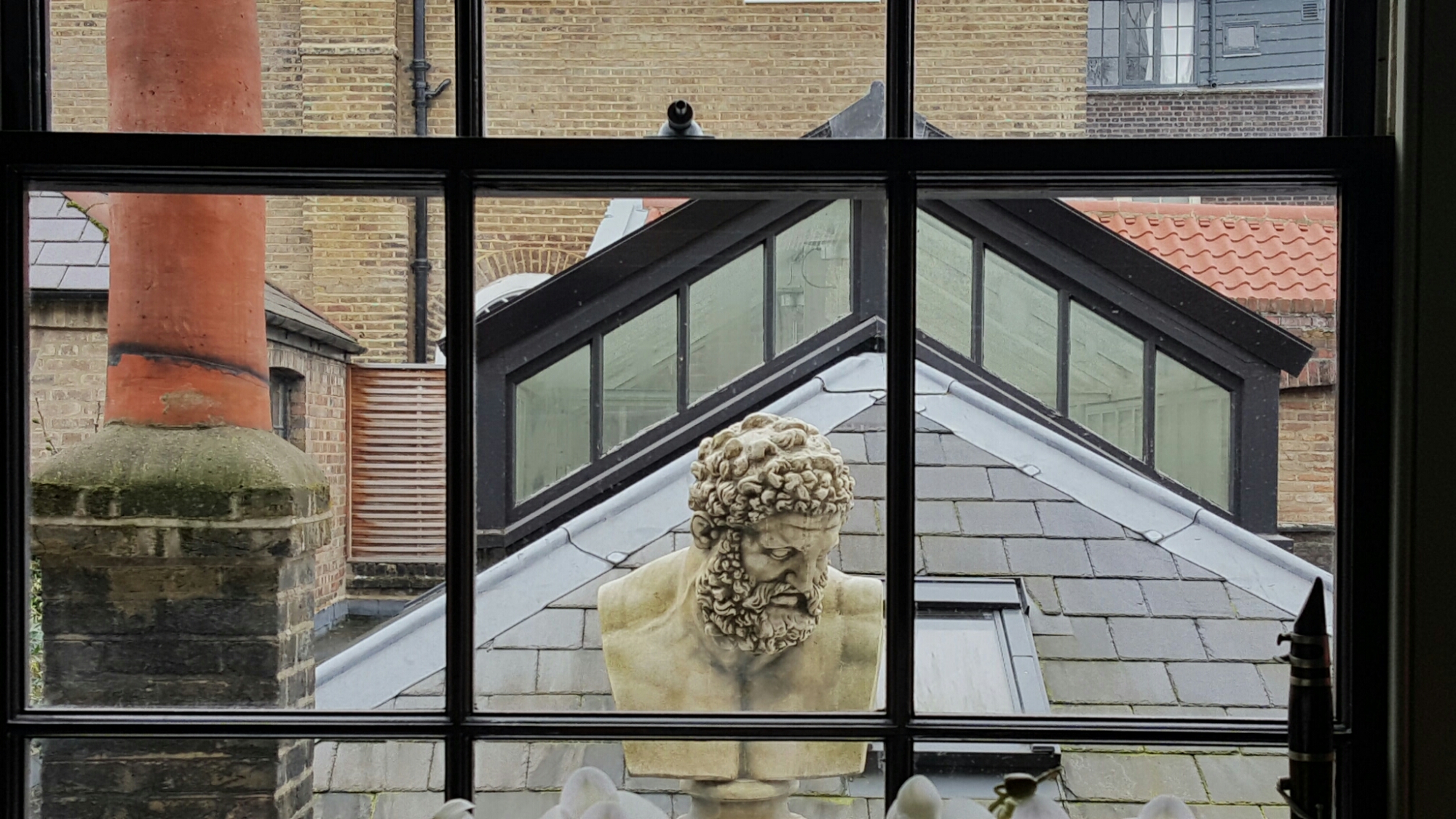
I went to see Miranda Argyle’s very nice small exhibition upstairs in Chris Dyson’s drawing room at 11, Princelet Street.   I should probably have photographed the work, but it is quite delicate, made up in many cases of stitching on linen, intermingled with dark and atmospheric photographs.   Instead, I took photographs out of the window at the back:-

image

image

Standard

Sheerness

We have often meant to leave the M2 to see the old harbour buildings at Sheerness which have been restored by the Spitalfields Trust.   The dockyard was built by John Rennie in the 1820s, terrace houses for the naval officers at the same time.   These survive and have been renovated, but not yet the church:-

image

image Continue reading →

Standard

Rose Wylie RA

We went down to Margate yesterday to hear Rose Wylie be interviewed by Alastair Sooke.   She has had a remarkable career.   Born in 1934 (of course, he was not so ungallant as to reveal this), the seventh child of the Director of Ordnance in India and granddaughter of James Hamilton Wylie, historian of the late middle ages, she went to Folkestone School of Art and – I think she said – Goldsmith’s, where she met her husband Roy Oxlade, also a painter.   She married aged 23, had three children and then went to the Royal College of Art in her late 40s (this to me is the most unusual thing about her career).   I first saw her work in the 1990s when she was represented by Stephen Lacey.   But it is only in the last few years that she has become famous, following a solo exhibition at the Jerwood Gallery in 2012.   She was elected as a Senior RA last year.

Standard

Ye Olde Axe

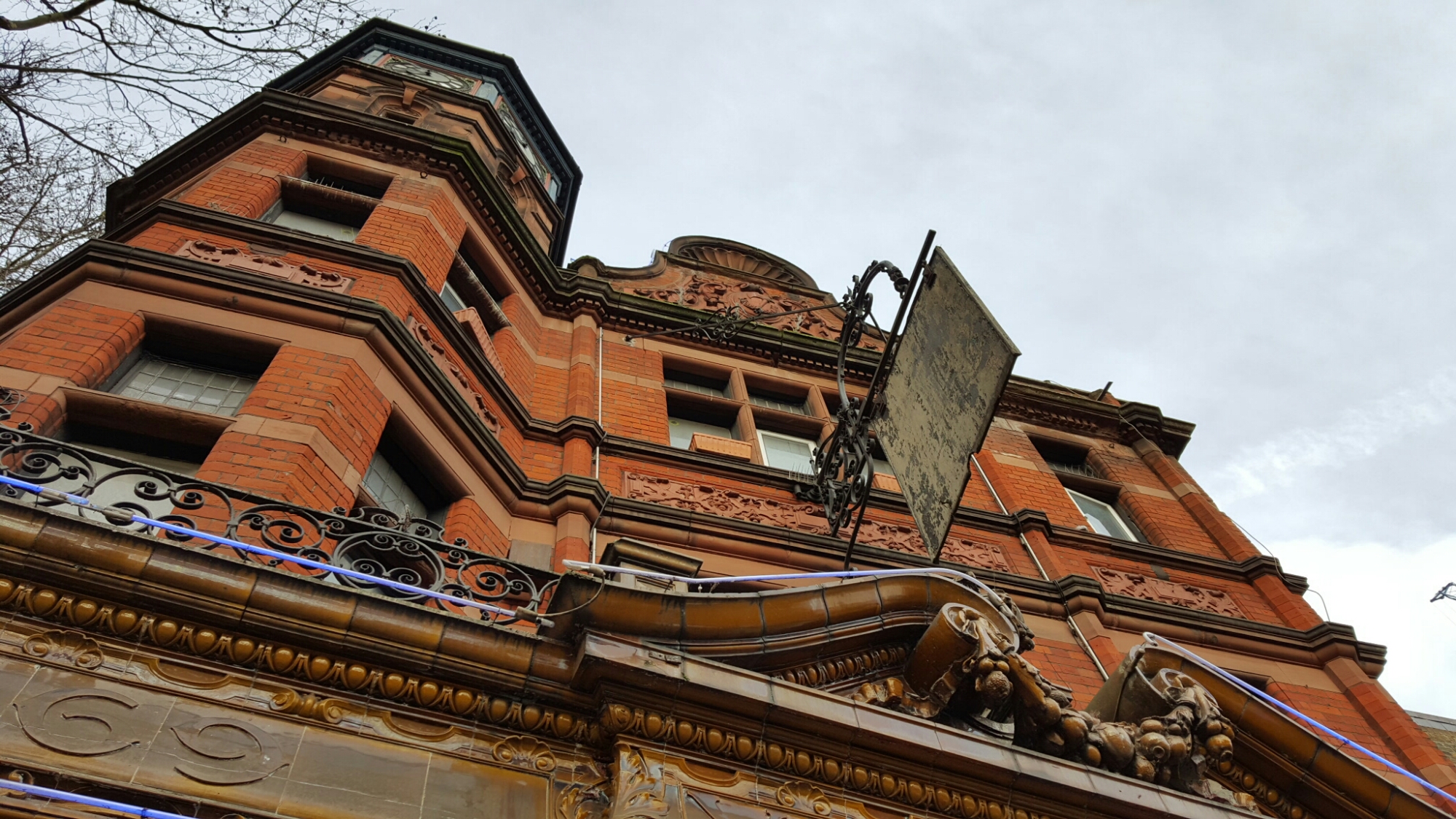
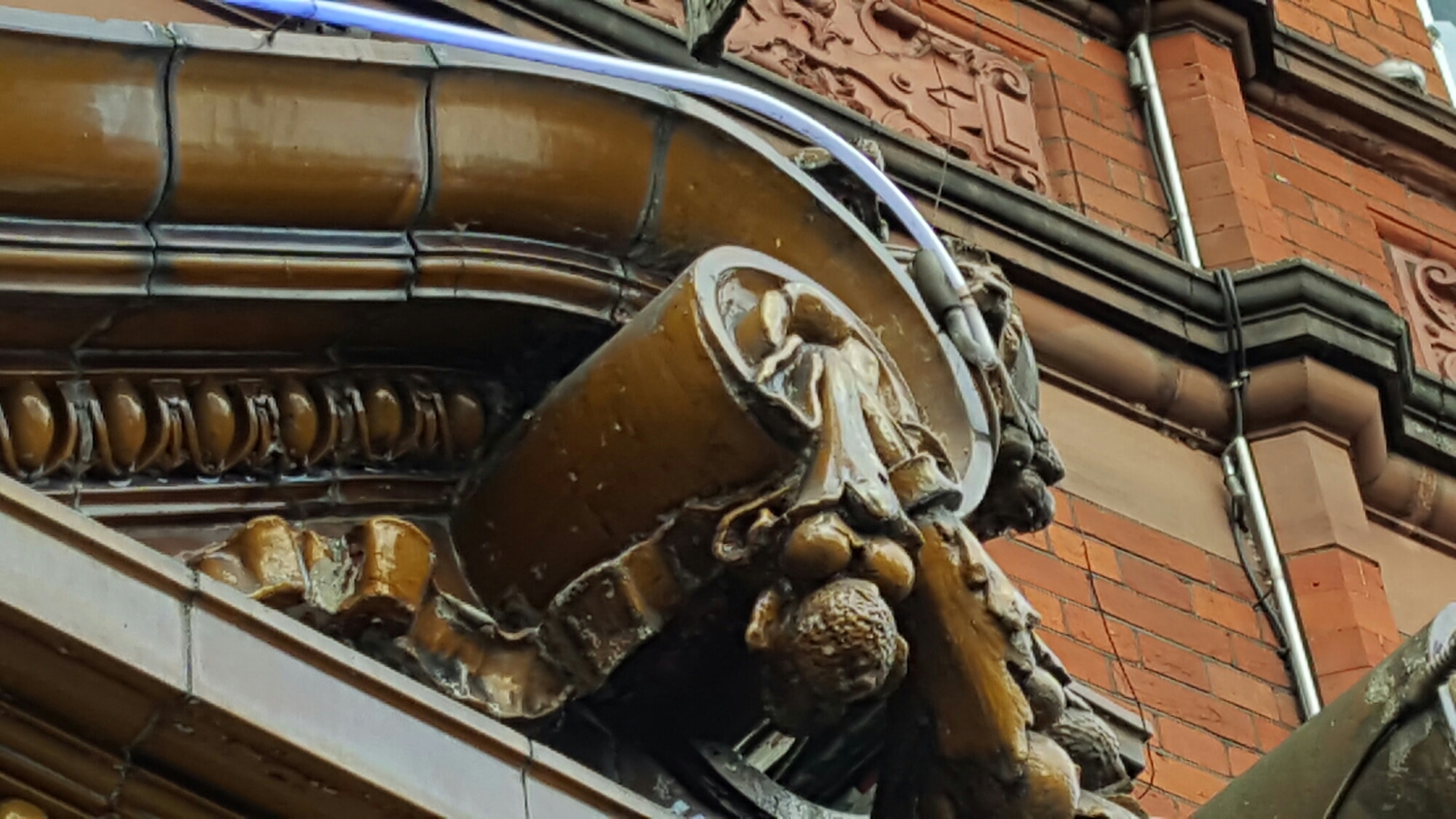
At the lower end of the Hackney Road where it meets Shoreditch, there is what I thought was a deserted pub, but turns out to be a striptease joint, called Ye Olde Axe, which looks slightly as if it belongs in the Wild West with its turret and pub sign swinging in the wind, but has good terracotta lettering and very fine capitals:-

image

image Continue reading →

Standard

Wells & Company

I have been meaning to do a blog about Wells & Company, the old commercial ironmongers opposite St. Leonard, Shoreditch.   It was opened in 1877 for Edward Wells & Company, which sold stoves, gutters, pipes and decorative ironwork to the building trades.   The building, designed by Fowler & Hill, is part-Gothic, part- Moorish, with a surviving mosaic inscription, ‘Wells & Company Commercial Iron Works’, in spite of the fact that it ceased trading in 1895 and became a bank:-

image

image Continue reading →

Standard

Salle

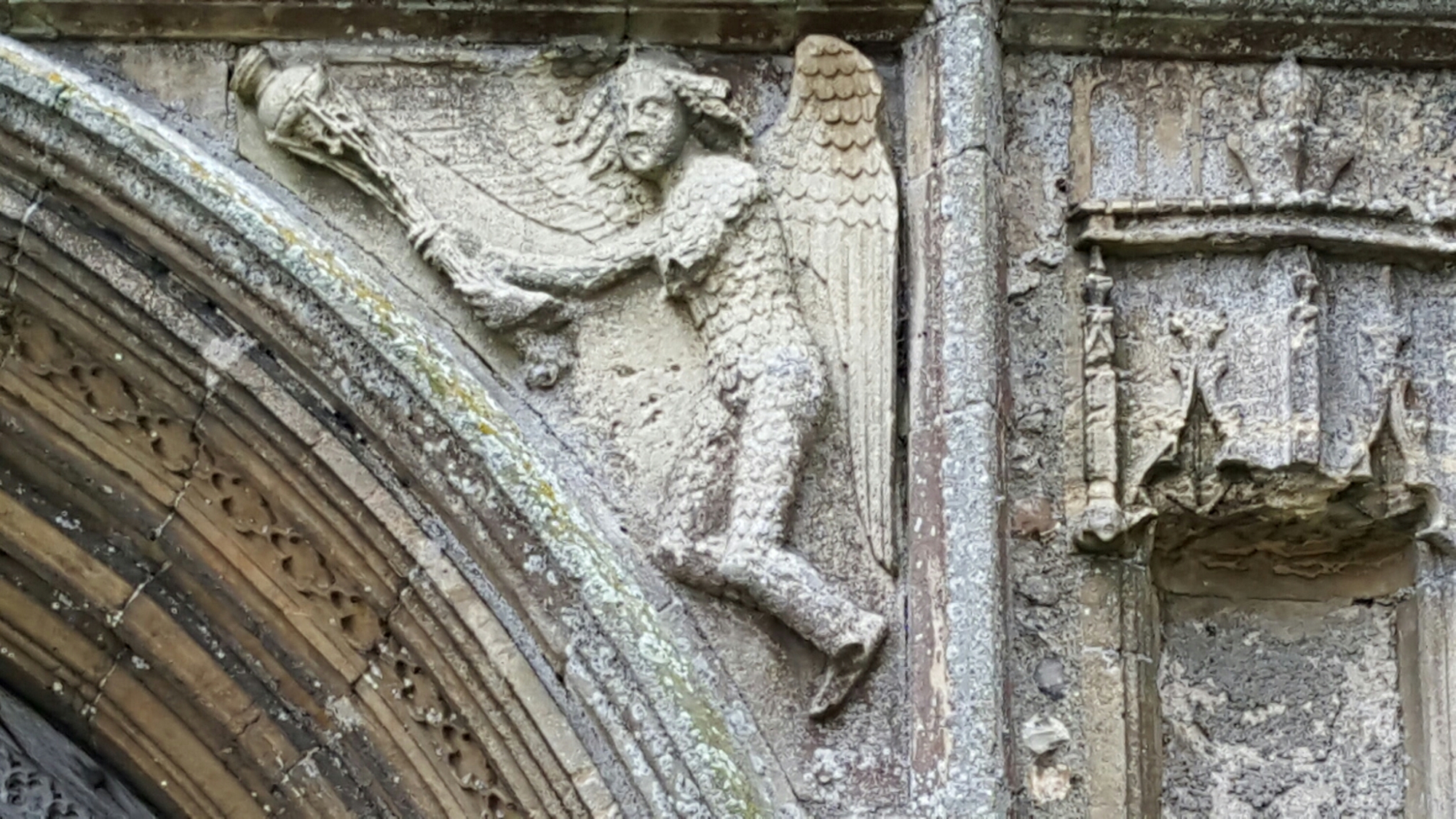
I was keen to see Salle parish church which I remembered as being on its own in the middle of a field, which is not quite true.   It was surrounded by snowdrops.   A fine west door with two angels in the spandrels above:-

image

image Continue reading →

Standard

Cromer

I had a romanticised idea of Cromer as a late nineteenth-century seaside resort, opened up by the railway which arrived in 1877, with a direct service from Liverpool Street from 1897, stopping only at North Walsham.   The pier was opened in 1897:-

image

Nice brickwork lettering in one of the side streets:-

image

Standard

Michael Sandle RA

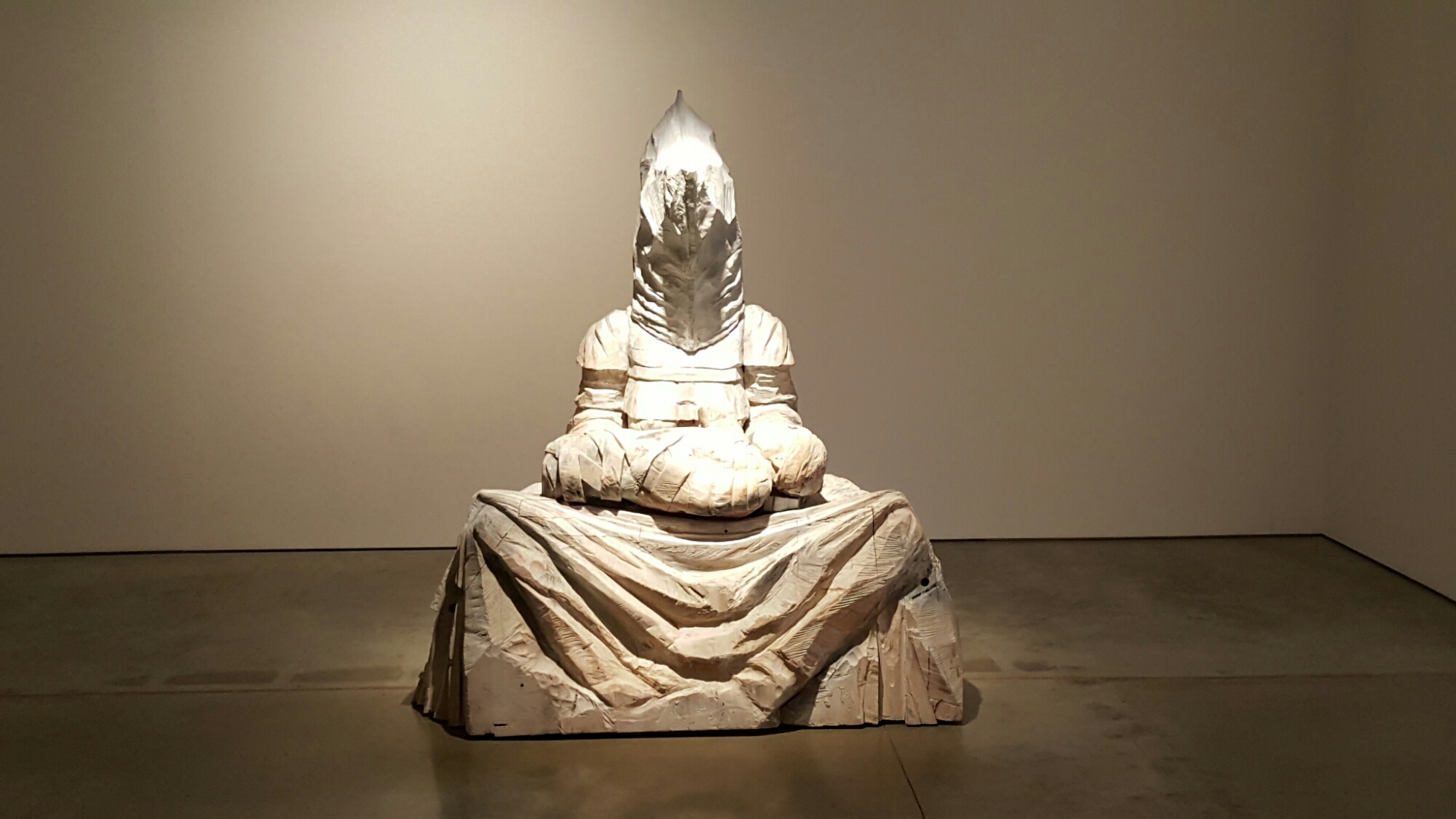
I wanted to see Michael Sandle’s exhibition at Flowers East, as I am a long-standing admirer of his work, having tried – and failed – to get him to undertake a commission for the NPG (the Trustees turned down a proposal that Michael should do a bust of W.G Sebald on the grounds that Sebald was insufficiently British).   Much of the work is from the 1980s, dark and monumental, and now wildly and magnificently unfashionable.   Particularly strong is his limewood carving Iraq – The Sound of Your Silence (2009) which was shown at the Summer Exhibition:-

image

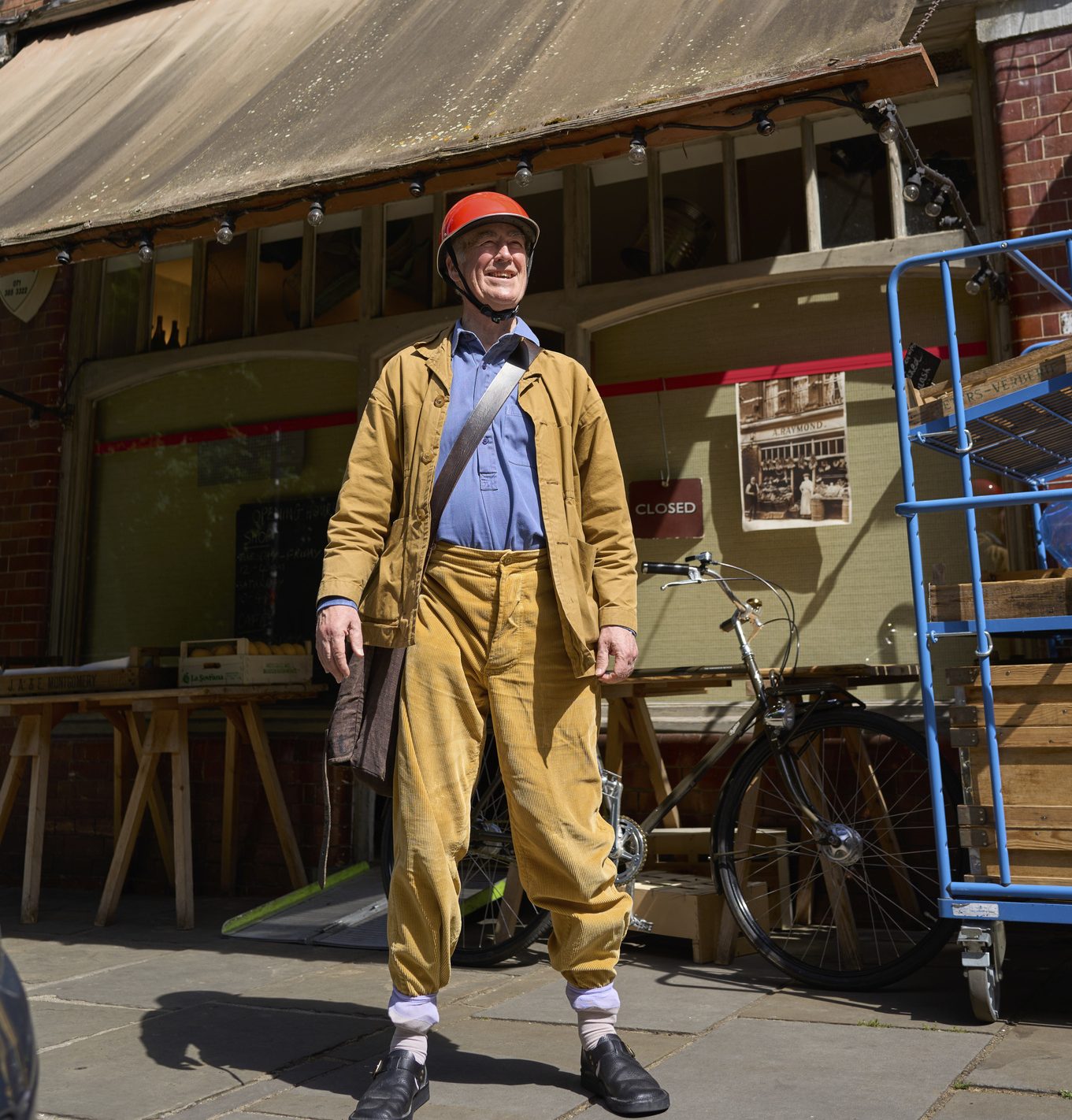
The artist happened to be there, looking a bit dark himself:-

image

Standard

Norton Folgate (2)

I have been drawn, without particularly intending to, into the controversy surrounding the development of Norton Folgate, an ancient liberty immediately north of the City, where a group of old houses on what was once Ermine Street have been gradually bought up by the City for ruthless commercial development.   Rather than the City developing the properties themselves through their architecture and planning department, they are doing it in conjunction with British Land.   What is unusual is that the houses are nearly adjacent to a street of old industrial warehouses, relics of the industrial and trading roots at the fringes of the City.   One street away is Elder Street, one of the most important historic streets in Spitalfields.   An alternative plan for the development of the neighbourhood has been drawn up by Burrell Foley Fischer which respects its original mixed character.   The plans drawn up by British Land were rejected by Tower Hamlets, but have now been passed by Boris Johnson over the heads of local planning.   It’s a battleground between two forms of development, one monolithic and corporate and the other low rise and conservationist.   The paradox is that the latter is almost certainly better at preserving the long-term prosperity and energy of the City as an engine of economic growth.
Standard