Albany

We had a party last night for the residents of Albany, to reassure those people who occupy the highly desirable bachelor sets on either side of the historic ropewalk that we will try to ensure that our major building project involves minimum disruption.   I was told that the only sound that is heard at night is seagulls hunting for rubbish.

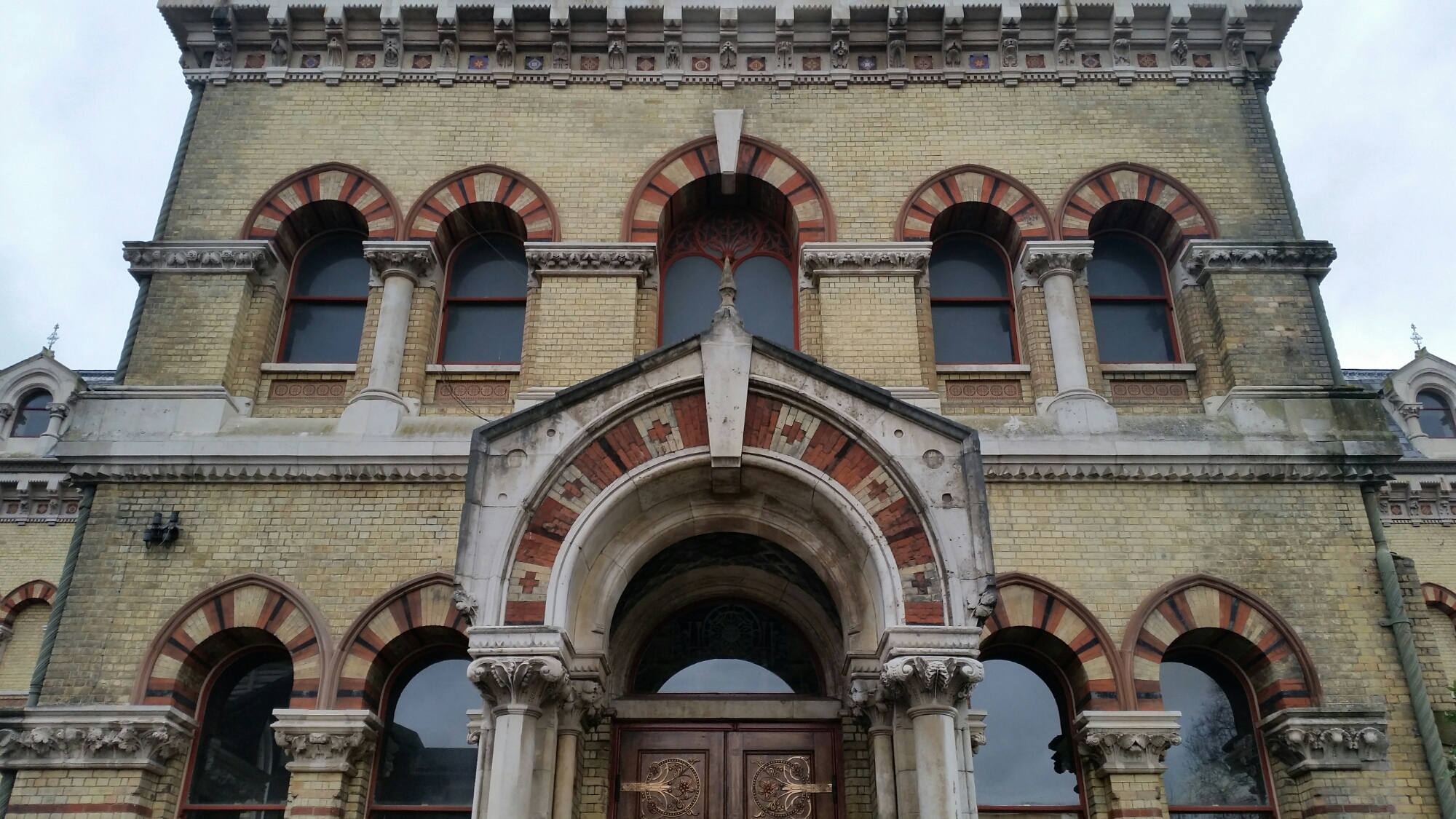
This is the façade of Melbourne House as it was designed by William Chambers in the early 1770s, just before he embarked on the project of designing Somerset House.   It is the residue of one of those grand aristocratic houses which lined the north side of Piccadilly and was converted by Henry Holland in 1802 by the addition of 69 bachelor sets on either side of a courtyard at the back:-

image

Standard

Edmund de Waal (5)

Breakfast with Edmund.   He told the story which I hadn’t heard before as to how his exhibition at the RA came about:  that as he was undertaking the journeys which led to the writing of his book White, he kept a checklist of objects that he would like to include in an imaginary exhibition.   And that he then looked for an appropriate space to show the exhibition, liking the idea of somewhere which was silent and secret, a space for contemplation.   But, paradoxically, the exhibition has inspired in its visitors not so much silent contemplation as conversation and discussion:-

image

Standard

Paul Huxley RA

We went to see the group of works which Paul Huxley had assembled in his studio before they are shipped for an exhibition in Santa Fé.   It was a treat to see the work, as well as his studio, designed for him by M.J.Long and featured in her book on Artist’s Studios.

This is the studio:-

image

image Continue reading →

Standard

London Burning

I spent part of yesterday looking at and leafing through an absurdly fat, but in many ways fascinating book of interviews with the leading figures in the arts, including many RAs (Ron Arad, David Chipperfield, Antony Gormley, Thomas Heatherwick, Grayson Perry, not to forget several recent graduates of the RA Schools – Eddie Peake, Prem Sahib and Lynette Yiadom-Boakye).   Half way through reading it, I realised that it is as close as we are likely to get to an analysis as to what makes for the success of London’s creative economy.   And what are the answers ?  Easy immigration, access to cheap housing and studio space, good quality free art education, a premium on, and belief in, creativity independently of economics, the melding of fashion, the performing and the visual arts.   Now there’s an interesting lesson.

Standard

Gatekeepers

I realise that it was fatal to refer to the sociological theory of gatekeepers in a blog.  I knew it only by reference to the idea that in any organisation some people have disproportionate influence by acting as a point of intersection, both to people outside the organisation, but, more importantly, to those within.  I now discover that the idea stems from the social psychologist Kurt Lewin who published a study of the distribution of food in 1943 and that there have been multiple interpretations of the term ever since.

Standard

Ai Weiwei (10)

It was still dark in Piccadilly as I walked down to find out how our all night opening of Ai Weiwei had gone.   It was apparently busy till 2 o’clock in the morning, then an opera singer performed Elgar’s Sea Pictures at 3, 4 and 5 o’clock, whilst people lay down and had a mystical experience under the chandelier in the Central Hall.   The trees will go on Monday:-

image

It may be my last glimpse of the installation:-

image Continue reading →

Standard

Abbey Mills Pumping Station

Brendan Finucane very kindly arranged for us to have a private tour of Abbey Mills Pumping Station, the so-called ‘Cathedral of Sewage’ which stands proud in the valley of the river Lea on the site of a monastic water mill.   It’s an amazing building, with so much decorative care and Byzantine and Gothic detail lavished on Sir Joseph Bazalgette’s powerhouse of engineering.   Inside is full of hand dials and maps of London’s sewers and Piranesian vistas down to the big pipes which transport London’s sewage out to Beckton, all of it constructed after the Great Stink of 1858.

This is the grand entrance:-

image

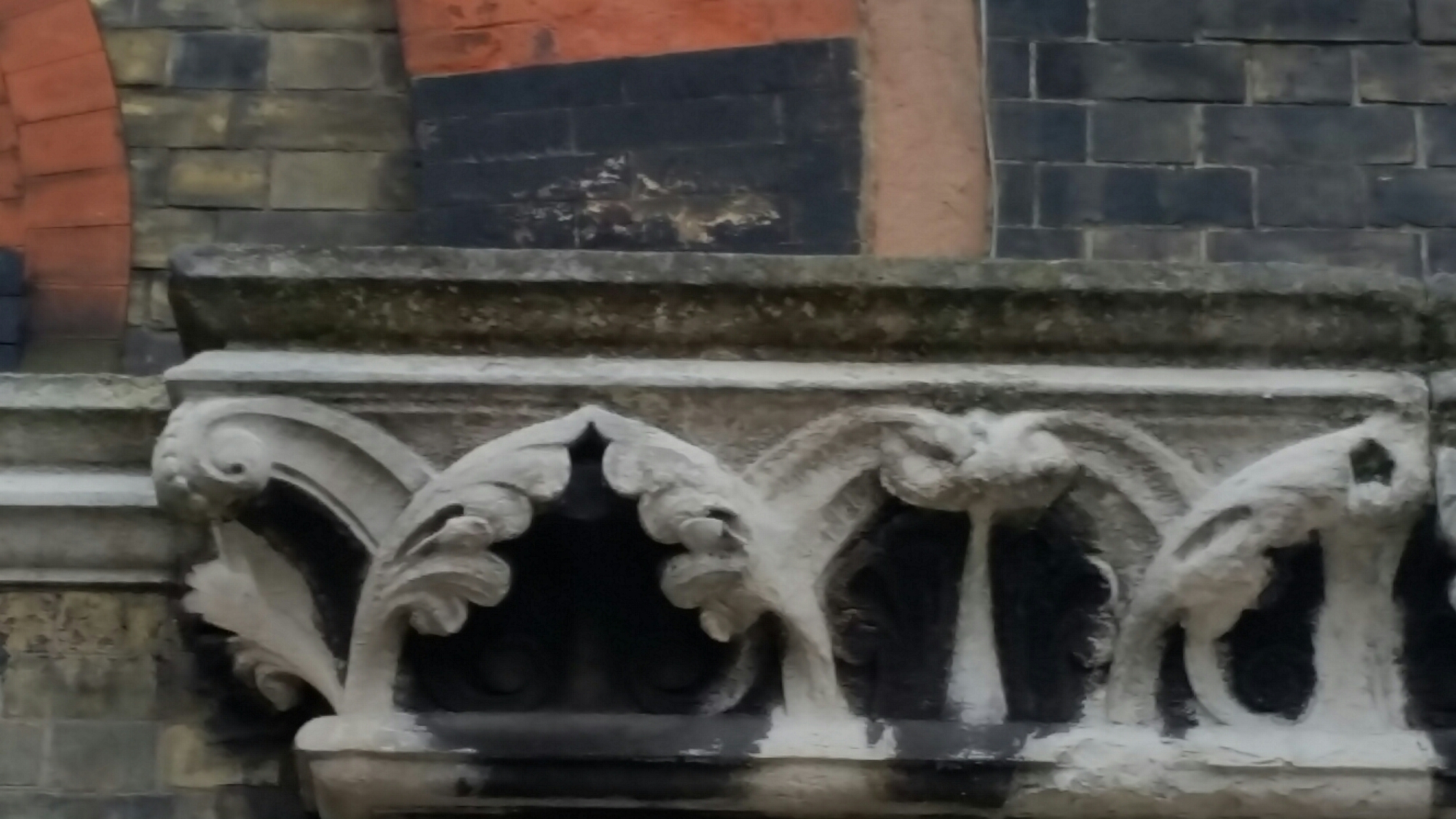
Details of the decorative carving:-

image Continue reading →

Standard

Pickled Walnuts

We had a party last night at which we served pickled walnuts, not my favourite delicacy, but a stalwart of Royal Academy events and always an accompaniment to varnishing day lunch which is when the RAs view the work they have submitted to the Summer Exhibition for the first time.   We normally get them from Fortnum & Mason, although recently they have been supplied by Stephen Cox RA.

Standard

V&A/RCA History of Design

I went back to the V&A to the leaving party of Katrina Royall who I recruited as Course Adminstrator to the V&A/RCA MA Course in the History of Design in July 1987 and has remained a pillar of the Course ever since, looking after the needs of students, not just intellectual, but also social and organisational, and particularly the annual study trips.   I remember Clive Wainwright, the V&A’s great furniture historian, telling me about a theory of organisations that they are dependent on people who are gatekeepers.   Katrina was a gatekeeper.

Standard

New European Galleries

I missed the opening of the new European Galleries at the V&A eatlier this week, so took the opportunity of a visit to South Kensington to see them.   They have been designed by ZMMA, who were responsible for the redesign of the Watts Gallery.   I liked the range of objects on display, including a lot of fabrics and also the very faint austerity of the display which offsets the luxe of the objects themselves.   The galleries always felt darkly subterranean, but not any more.   And it’s particularly nice to see clothes in what were the Jones Galleries as they give a human dimension to the furniture.

This is a very beautiful Spanish sculpture c.1720:-

image

I liked this Goan ivory:-

image Continue reading →

Standard