Chichester Cathedral

I wish I had read Ian Nairn’s paean to Chichester Cathedral in his aborted contributions to Pevsner’s Sussex, 33 pages of vigorous eulogy, including what he describes as an Aesthetic Summary, not something one normally gets in Pevsner.   He describes Bishop Luffa’s original design as ‘paying for its balance and reasonableness with a lack of intensity:  good committee-man’s Romanesque’.   We only had time to drift in just before evensong, admiring the exterior, much of which is a replica following the collapse of the crossing tower and its reconstruction in the 1860s:-

image

The Romanesque decoration of the porch at the west end of the south aisle:-

image Continue reading →

Standard

Chichester

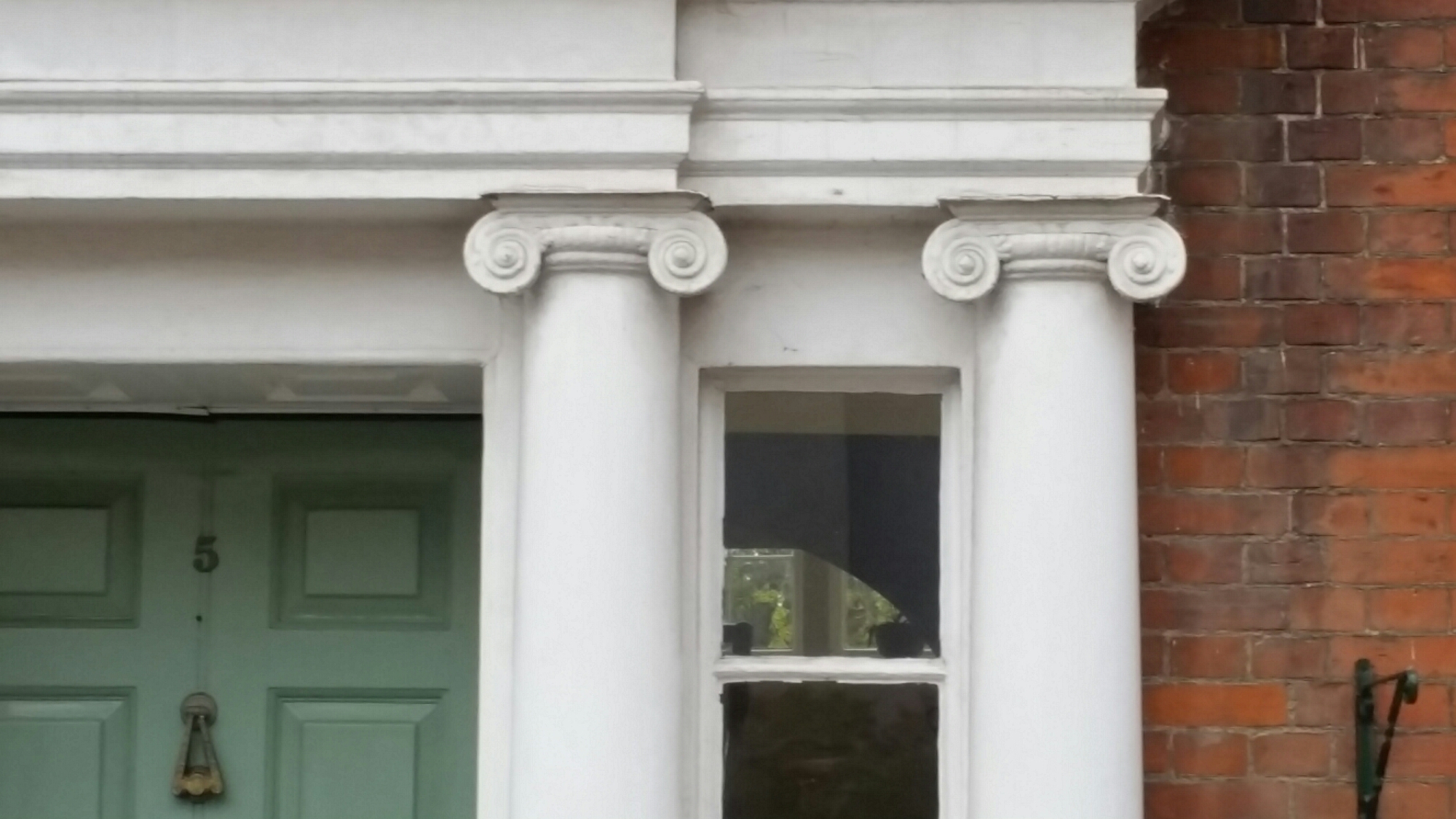
I had remembered Chichester as a nice, small, provincial city, with a good medieval street plan.   What I hadn’t realised is that the town centre has been turned into a pedestrian shopping mall.   There are vestiges of its eighteenth-century grandeur in some of the streets and door surrounds:-

image

image Continue reading →

Standard

David Jones

We missed the private view of the David Jones exhibition at Pallant House last night so travelled down for lunch today.   The exhibition helps make sense of his career, less as an outsider, more as someone connected to, and aware of, the mainstream of twentieth-century art, schooled at Camberwell before the First World War and at Westminster School of Art after service in the trenches, working for Eric Gill at Ditchling, the most obvious source of influence on him,  exhibiting widely during the 1920s and recruited by Ben Nicholson to the Seven & Five Society in 1928.   He has been adopted as a Welsh artist because his father was Welsh and he was passionate about Celtic legend, but he was born in Brockley, lived after the war in Harrow, his mother was a Cockney, and he bought his shoes in Lobb’s.

Standard

Cambridge University Library

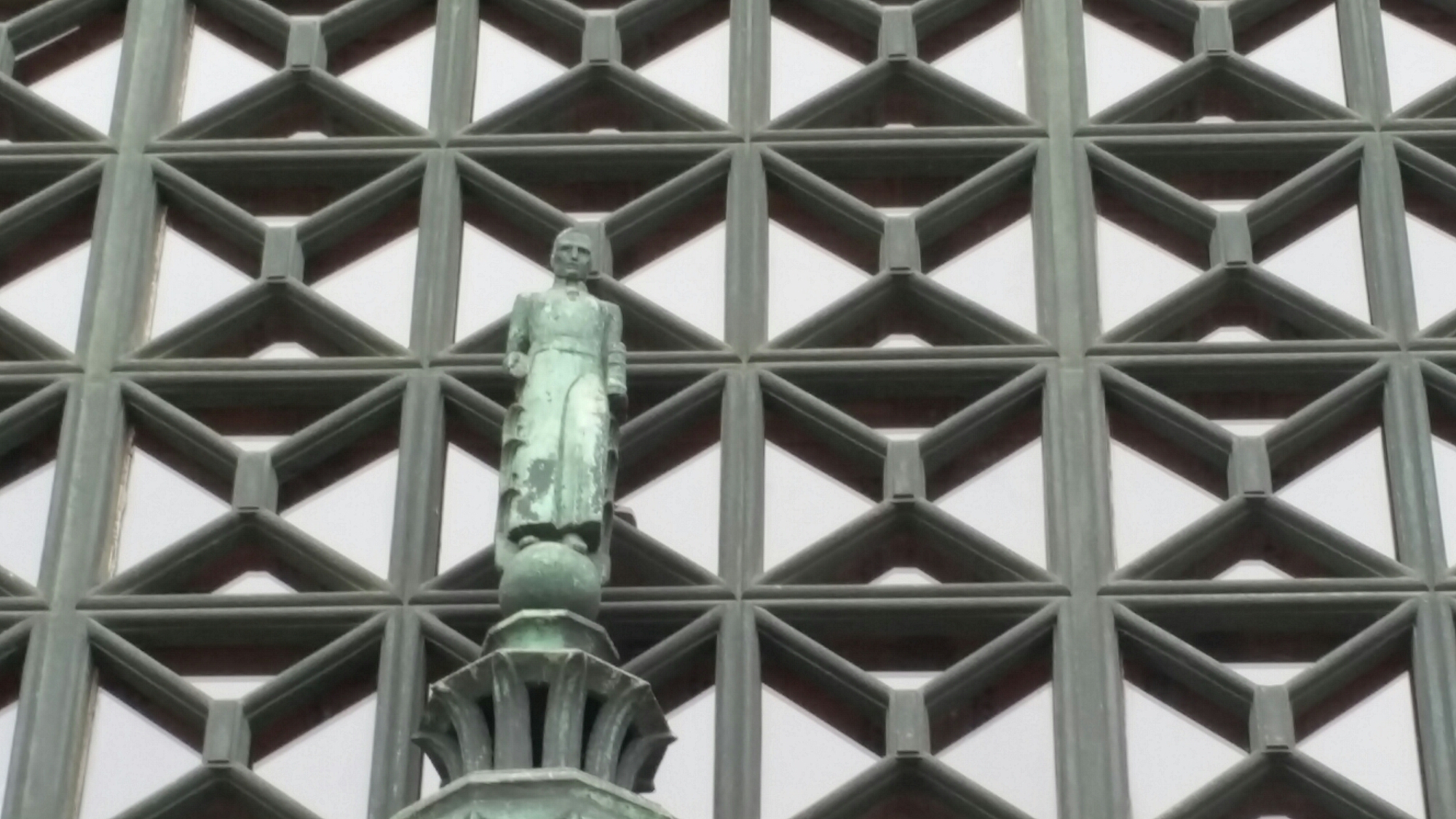
I interviewed Judith Aronson this afternoon in Cambridge University Library where her photographs are on display in the entrance lobby.   I was brought up to regard it as an extremely ugly building, ‘this magnificent erection’ as it was reputedly called by Neville Chamberlain when he opened it in 1934 (or was it George V ?).    I’m not sure how far my views have changed.   But at least I was able to revisit the tearoom and enjoy some of the classical deco, even neo-Egyptian detailing:-

image

image Continue reading →

Standard

J.H.Plumb

Seeing the set of photographs of the Fellows of Christ’s reminded me very forcefully of the personality of J.H.Plumb, the Master, who is commemorated in two photographs which he vetoed, but which effectively show his personality – short, funny, quizzical, sometimes benign, at least to me, occasionally sarcastic, a very good writer and historian, friend of Princess Margaret and Harold Wilson.   Not everyone cared for him, but I did, not least for his passionate interest in, and writing about, eighteenth-century cultural history.

Plumb 1 300 dpi

© Judith Aronson

Standard

Judith Aronson

I spent the evening in Cambridge at a dinner in honour of Judith Aronson, the American portrait photographer, who in 1979 was asked by J.H. Plumb, the Master, to document the Fellows of Christ’s.   She had set up her studio in the rooms of her husband, Christopher Ricks (her darkroom was in the kitchen), and we were each allocated 15 minutes in quick succession, photographed against a plain white background in the tradition of Richard Avedon.   But, unlike Avedon, she liked an atmosphere of informality and employed someone to make conversation.   It’s intriguing to see the set, thirty six years on, Jack Plumb seen from a side view, David Cannadine in a wide lapelled suit, some people easily recognisable.   I only half recognise myself.

Standard

Jean-Etienne Liotard (2)

Our Liotard exhibition has arrived from Edinburgh.   It looks wonderful in the Sackler galleries with their good height and generous proportions, enhanced by clever but low-key design by Eric Pearson with minimal red banding in the first gallery to give a sense that they are works for private rather than public space.   The exhibition gives a particularly good view of the aristocracy in the late 1730s, grand tourists in Rome and Constantinople, cultivated and louche, members of the Society of Dilettanti (Viscount Duncannon was a founder member) and of the Hellfire Club (Simon Luttrell founded the Dublin Hellfire Club).   Viscount Mountstuart stayed in Geneva with the Pictet family, whose bank are sponsoring the exhibition.

Standard

Marina Abramović

Marina Abramović came to talk to the students of the Royal Academy Schools this evening.   She started by showing a picture of her great uncle, who was a patriarch of the Orthodox church, and her parents, her father who was a devoted communist and her mother who was Director of the Museum of the Revolution and Art in Belgrade.   She fell in love with Ulay, a performance artist in Amsterdam (she left out the fact that she had already been married) and they lived and worked together until she was 40.

I was left with the strongest possible impression that she is a high priest herself – of a cult devoted to silence and contemplation, the turning inwards to experience, performance art as a version of what Simeon Stylites practised so successfully, the flagellation of the body as a cure for the ills of society.

Standard

Frank Auerbach

I liked and admired the intensity and viscosity of the Auerbach exhibition, treating the same subjects over and over again, the view from Mornington Crescent or Primrose Hill, his wife Julia or, much less often, Jake, and his regular sitters, Catherine Lampert and David Landau, described in the commentary as a businessman, but, just as importantly, an art historian.   I particularly admired the two Self Portraits, one early one from 1958, chalk and charcoal, and a later drawing which ends the exhibition from only last year.   It’s quite reassuring to see someone so consistently responding only to the challenges of the interpretation and layering of paint as decade follows decade in the sequence of rooms.

Standard