
I had read somewhere that the back elevation of the recently renovated Bethnal Green Town Hall is one of the top ten pieces of new architecture in London. I was intrigued as I hadn’t registered this elevation (one enters on the opposite side). It’s a fine, aluminium, if (at least in the photograph) slightly surreal, sheath designed by Michel da Costa Gonçalves and Nathalie Rozencwajg of rare:-
Category Archives: Uncategorized

Nettleswell House
I wish we had been able to afford to buy Nettleswell House when it was sold by the V&A for what now seems like a song in the late 1980s. I don’t think I quite appreciated its significance as a relic of sixteenth-century Bethnal Green when the ground was leased by Sir Ralph Warren, a former Lord Mayor. The house itself is part mid-seventeenth-century, part 1705 and part 1862. I remember it as the site of gloomy meetings:-


Bethnal Green Museum
I’ve always liked Bethnal Green Museum of Childhood and now the new decorated entrance façade by Caruso St. John:-


Hackney Road
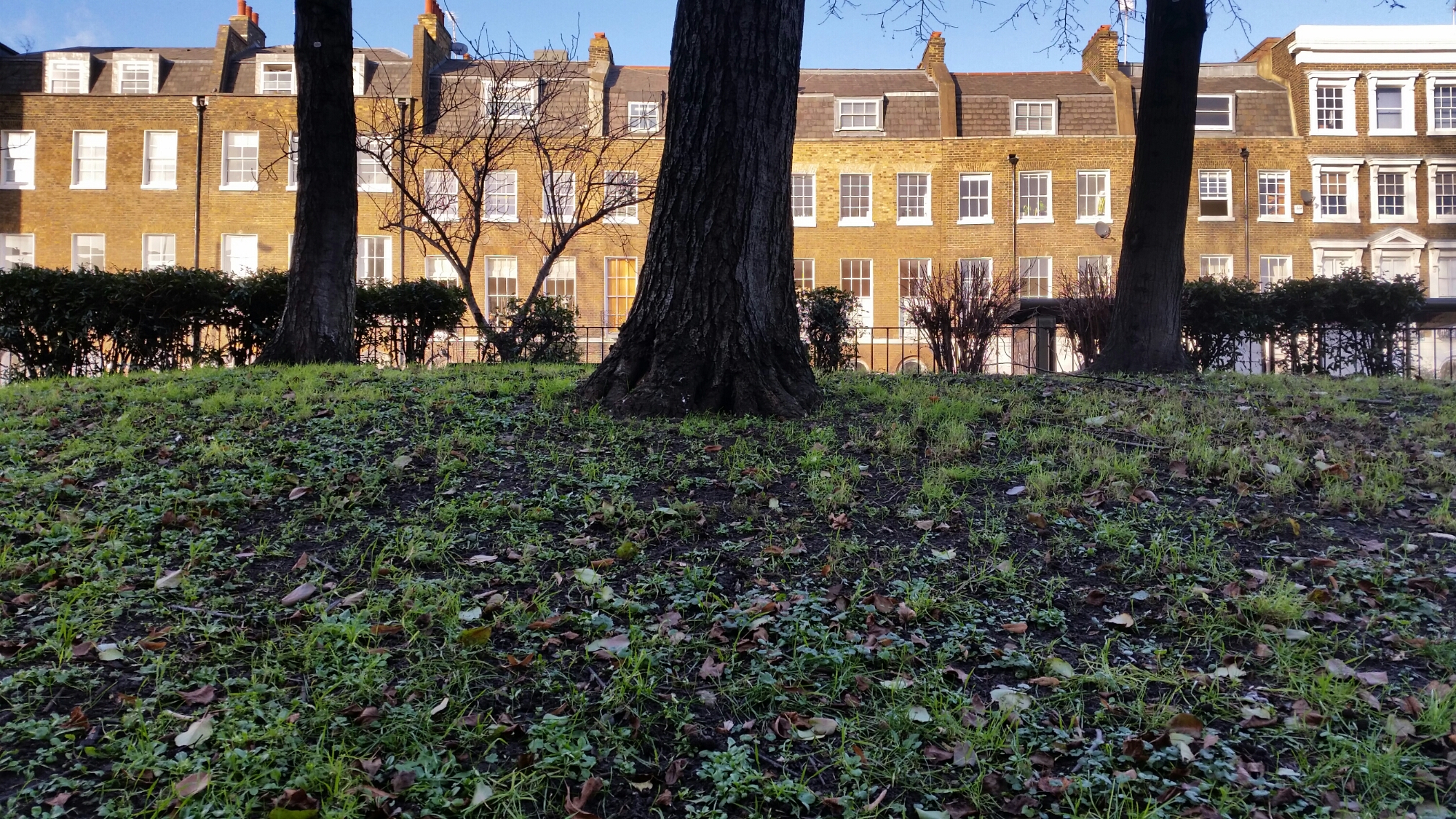
Pevsner (or, more likely, Bridget Cherry) is dismissive of Hackney Road, but it has good examples of early Victorian terrace housing on the north side, surprisingly grand for the neighbourhood, which at the time was beginning its slide into slumdom:-
Keeling House
I was only shown Keeling House recently: a muscular and ingeniously geometric, early example of work by Denys Lasdun, when he was working for Fry, Drew, Drake & Lasdun in the mid-1950s. It’s more purely architectural than the standard LCC blocks, still surrounded by what would have been regarded as Victorian slum housing, now being done up, as has Keeling House itself:-

St. Peter, Bethnal Green
St. Peter’s, Bethnal Green is unexpectedly rustic, as if lost down a leafy, Norfolk lane, not surrounded by tough housing estates. It was designed by Lewis Vulliamy for Bishop Blomfield and built in knapped flint and stock brick:-

St. Matthew, Bethnal Green
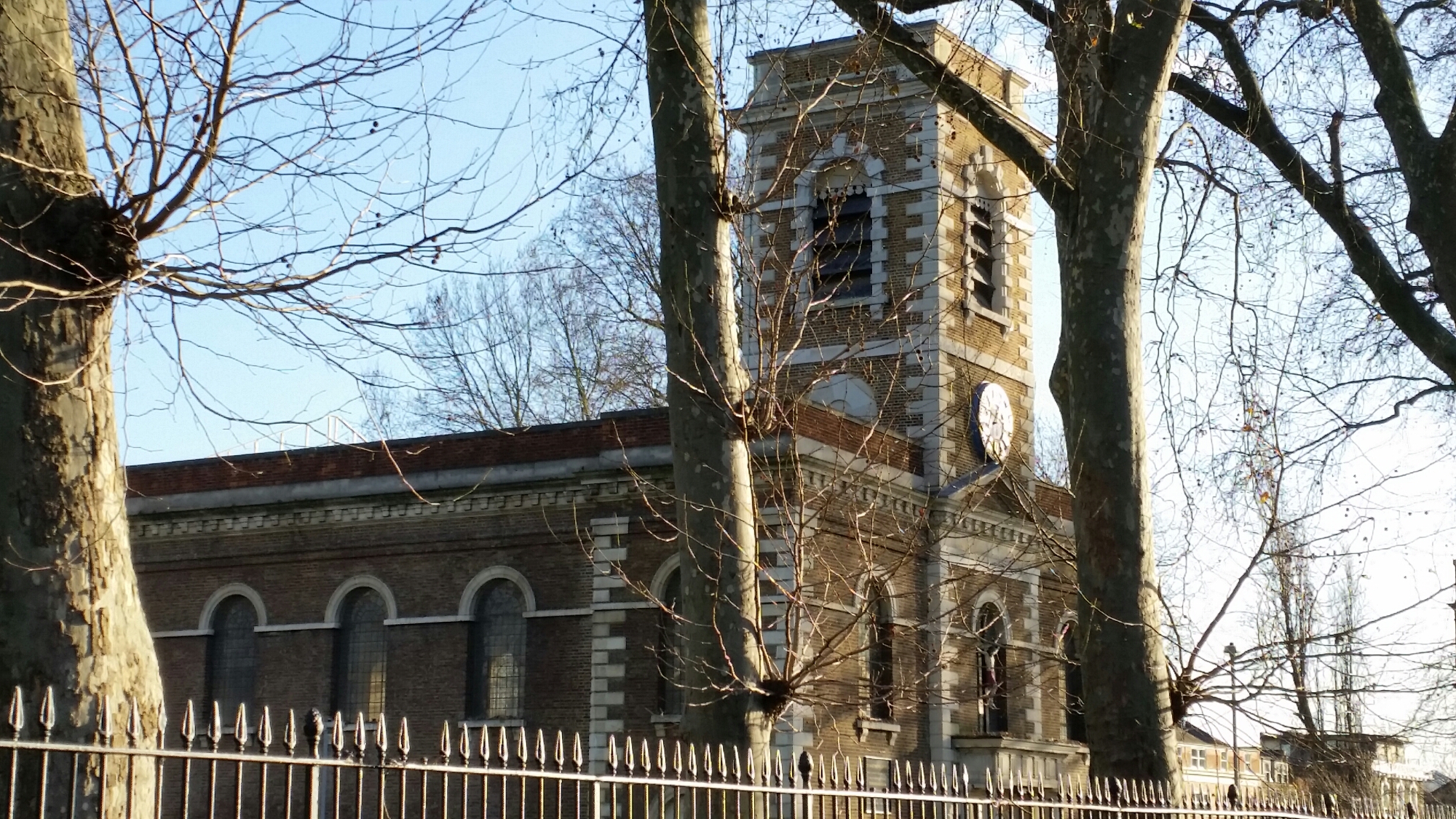
As therapy for the New Year, I took myself on an unplanned walking tour of Bethnal Green. I started at St. Matthew’s, the parish church, which was originally planned to be one of the Fifty Churches designed by Hawksmoor. But the parishioners objected to the cost and the Rector of Stepney didn’t want to lose his income from tithes. Instead, a more modest church was commissioned from George Dance Senior. Work started in 1743, but funds were inadequate. An Act of Parliament provided funds on the grounds of the ‘dissoluteness of morals and a disregard for religion, too apparent in the younger and poorer sort’. In the 1850s, the interior was destroyed by fire and, again, by Hitler. It was reconstructed in the 1950s by Antony Lewis of Tapper and Lewis with work commissioned from young artists. It’s a good example of 1950s ecclesiasticism:-
Tredegar Square
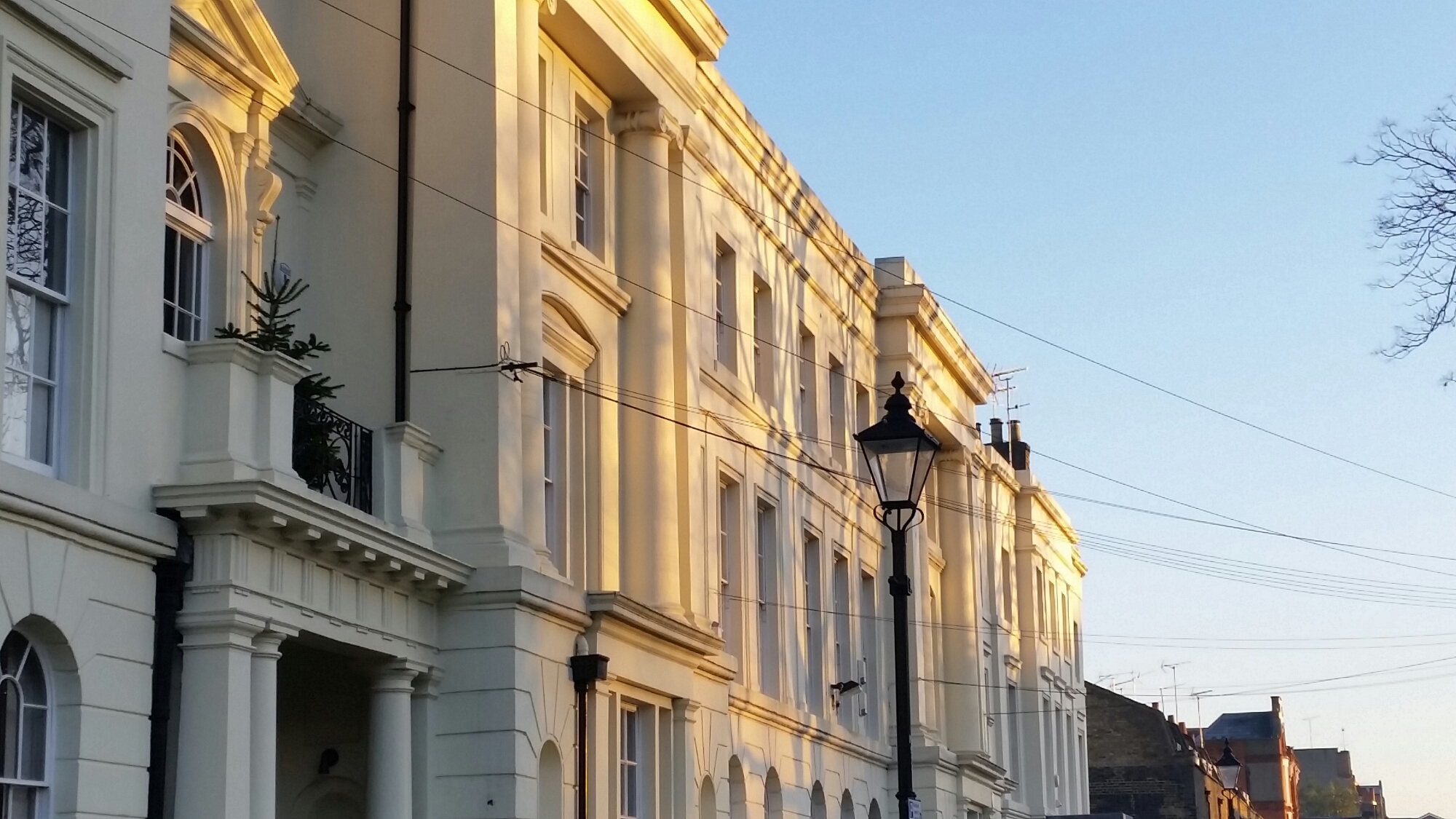
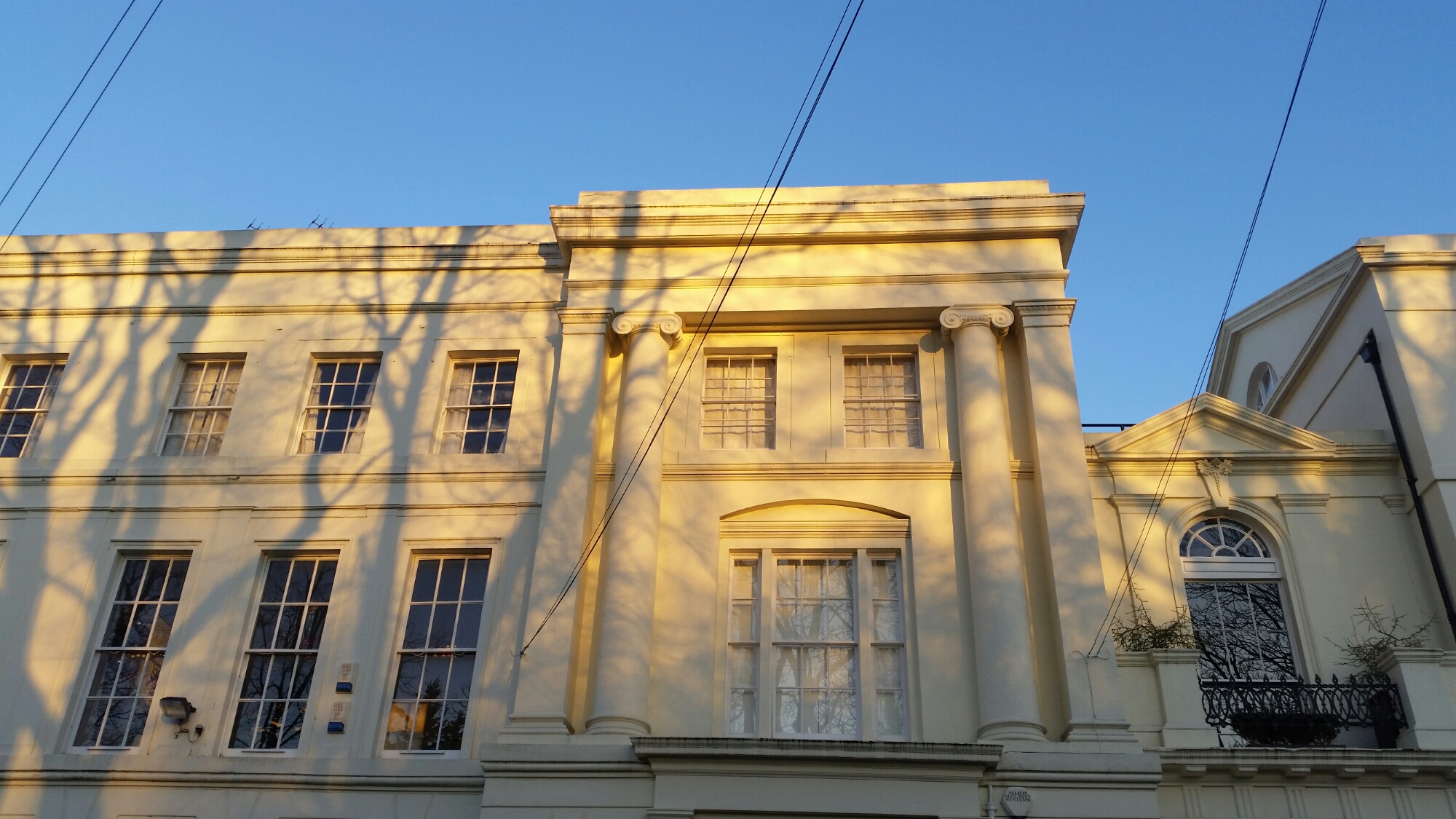
Much the grandest of the east end squares is Tredegar Square, where the bishop used to live, just north of Mile End tube. It was laid out on land belonging to Sir Charles Morgan of Tredegar House, a large Caroline house just outside Newport, by William King, an architect-cum-surveyor. The houses were stuccoed in the 1830s giving it a whiff of the Brighton seafront and it was always gentrified by comparison to the surrounding neighbourhood:-
Novo Cemetery
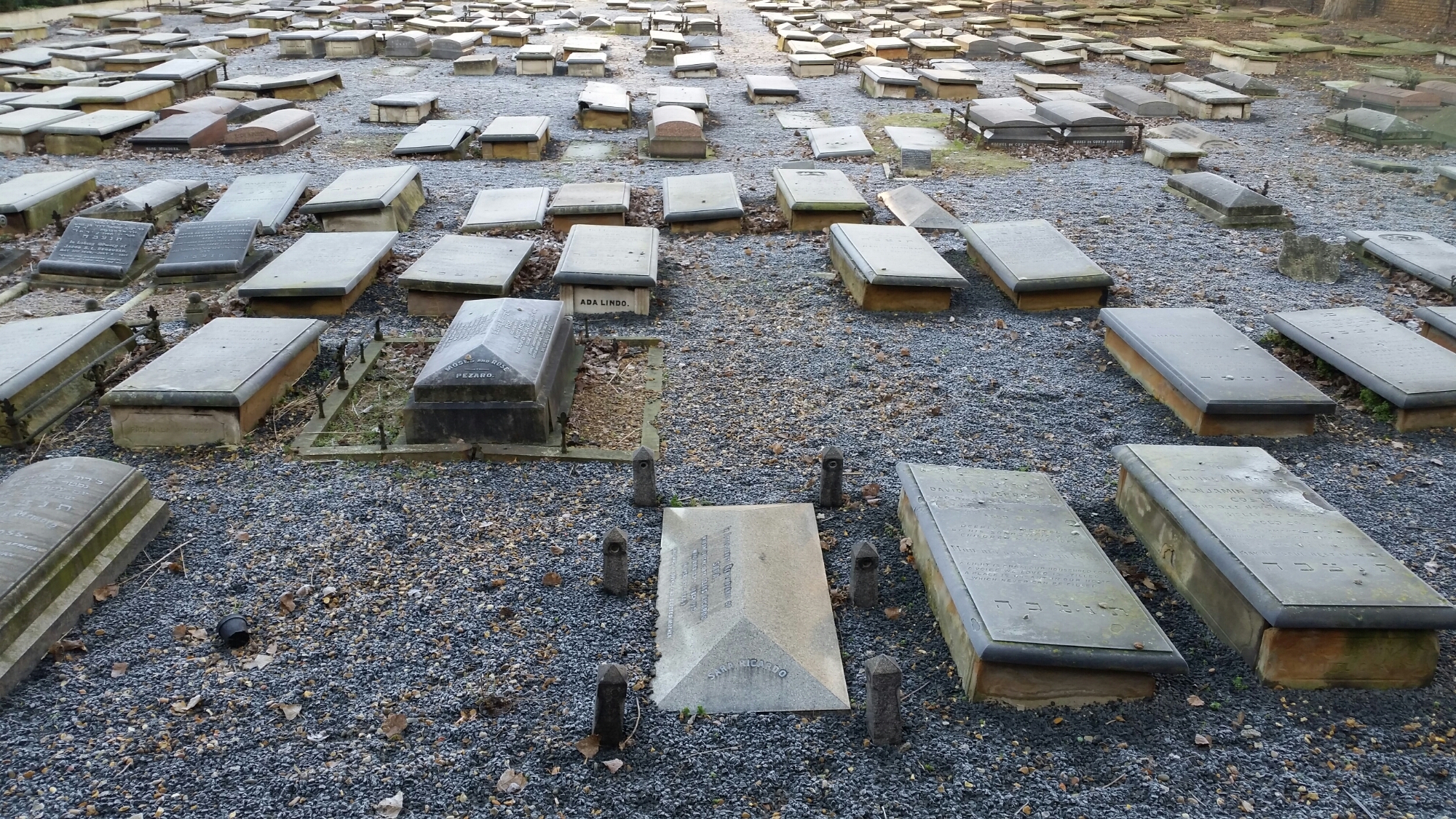
I always find it odd that, as one walks through the grounds of Queen Mary, past the engineering and next to the arts and law faculties, one finds a large Jewish burial ground, well preserved. It was opened in 1733, next door to Bancroft’s Hospital, and is shown clearly on Roque’s map the following decade. Closed for burial in 1905, Queen Mary acquired the site in 1984 when half the graves were removed to Brentwood:-
Oxford
It was a perfect day to walk round Oxford. The colleges were closed. The streets were empty. We walked down Brasenose Lane, past the walled gardens of Exeter. The sun was shining on the Radcliffe Camera and the west wall of the Codrington, with Hawksmoor’s gothic towers for All Souls beyond:-


You must be logged in to post a comment.