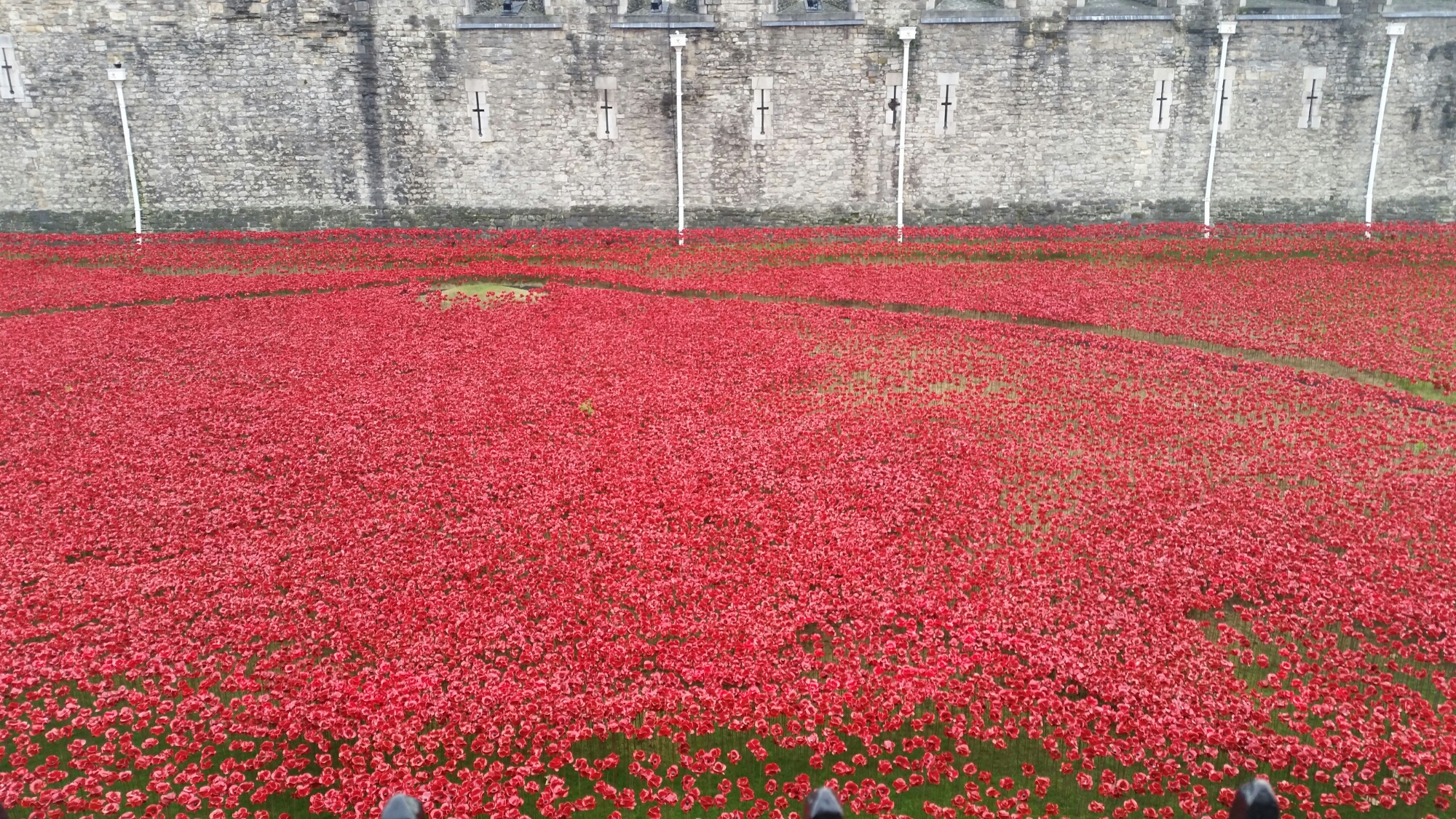
Before the crowds got up, I thought I should go and pay my respects to the poppies at the Tower. There was already a great sea of people standing silent with their cameras, milling about, acres of poppies stretching out all around the bastions of the Tower. It’s a very simple commemorative device and extremely effective:
Category Archives: Uncategorized
Mr. Turner (3)
We had a very good event this evening in which three of the actors who appeared in Mr. Turner – Martin Savage who played Benjamin Robert Haydon, Mark Stanley who played Clarkson Stansfield and Timothy Spall himself – came to the RA to talk about the work which went into the film: the amount of background reading, two and a half years in which Timothy Spall was taught the craft of painting, the extent to which the actors were required to think themselves into their roles, the research which went into the reconstruction of the 1832 exhibition (filmed at Wentworth Woodhouse), and the task of improvisation which led to the final script. I had not known that Turner had actually met Reynolds as well as being a huge admirer of Reynolds’s Discourses – indeed, that Reynolds had chaired the panel which led to Turner’s acceptance into the Royal Academy Schools aged fourteen and Turner attended the last of his Discourses in December 1790. The event convinced me, if I had had any doubts, of the seriousness of the film as an exercise in research-based and intelligent, as well as intuitive, reconstruction.
Gallery SO
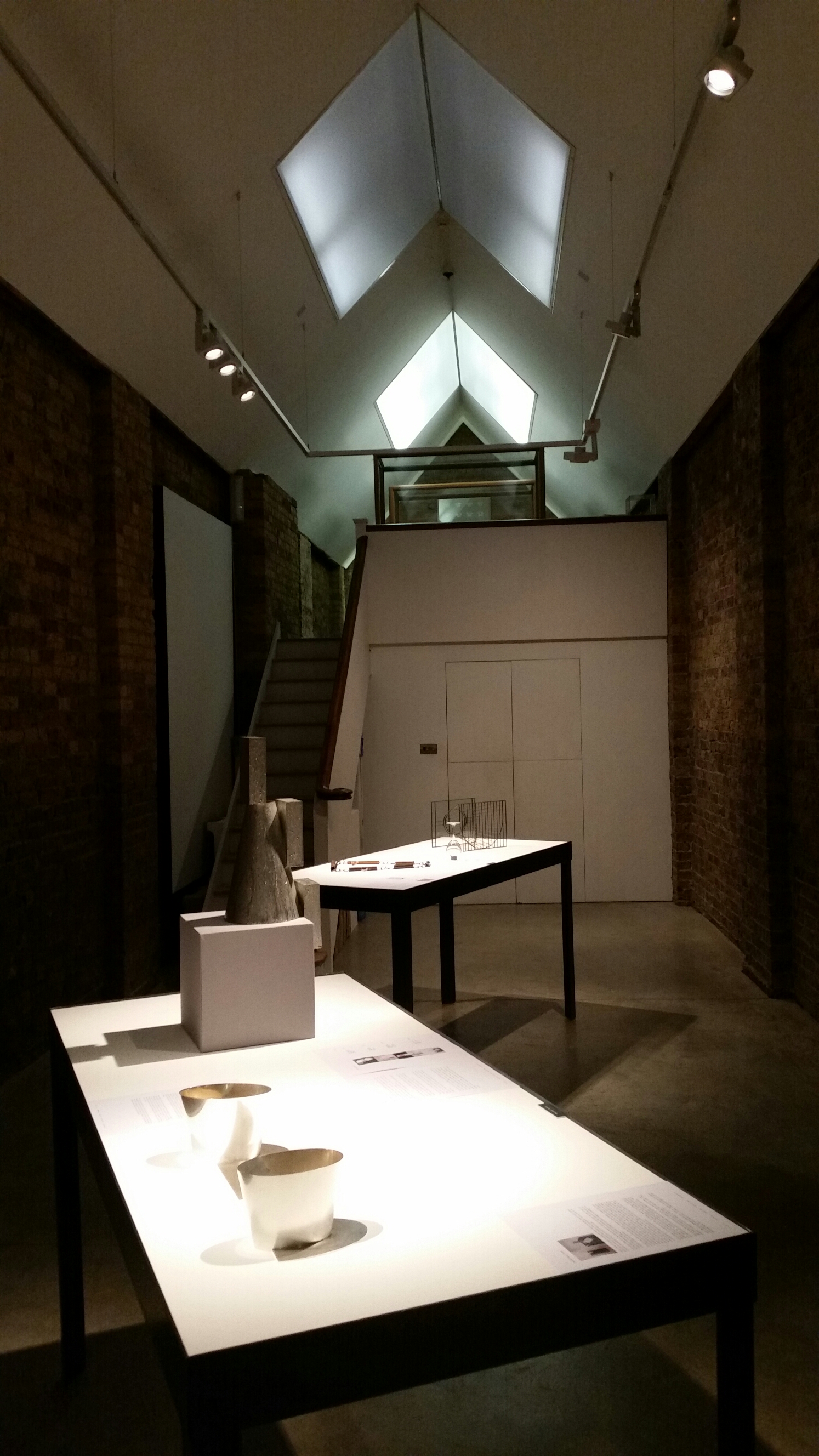
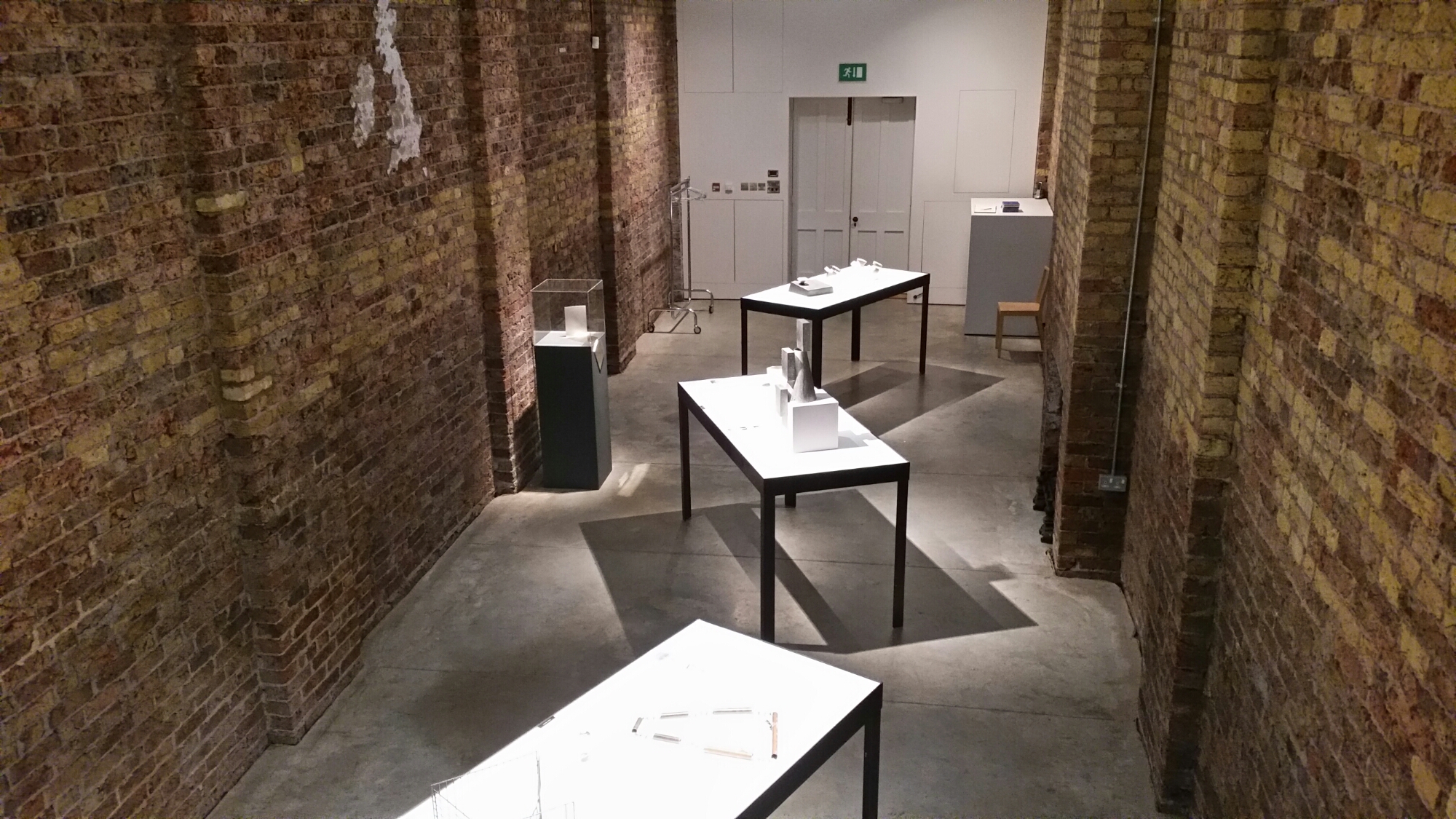
As I walked down Brick Lane, I discovered to my surprise that Gallery SO, the jewellery gallery sandwiched amongst the Indian restaurants, was open on the first Thursday of the month. They had a beautiful mixed display of new work by mainly German jewellers, including Bernhard Schobinger whose exhibition we saw recently at Manchester City Art Gallery:
Anthony Eyton RA
I spent much of the evening in Chris Dyson’s lovely, small gallery, ELEVEN SPITALFIELDS, a Huguenot weaver’s house in Princelet Street, with his architectural practice at the back and a display of Anthony Eyton’s recent drawing in the rooms at the front. Chris had asked Anthony to draw Hawksmoor’s churches, which he’s done with astonishing vigour and enthusiasm. He first visited Spitalfields in 1947 and took a studio in Hanbury Street in 1962, so his love and knowledge of the area and its churches antedates the gentrification of the surrounding streets. He was encouraged to paint and draw in his youth by Augustus John and represents an old tradition of endless careful, but now in old age, freer observational drawing, which is wholly admirable.
Smith Square
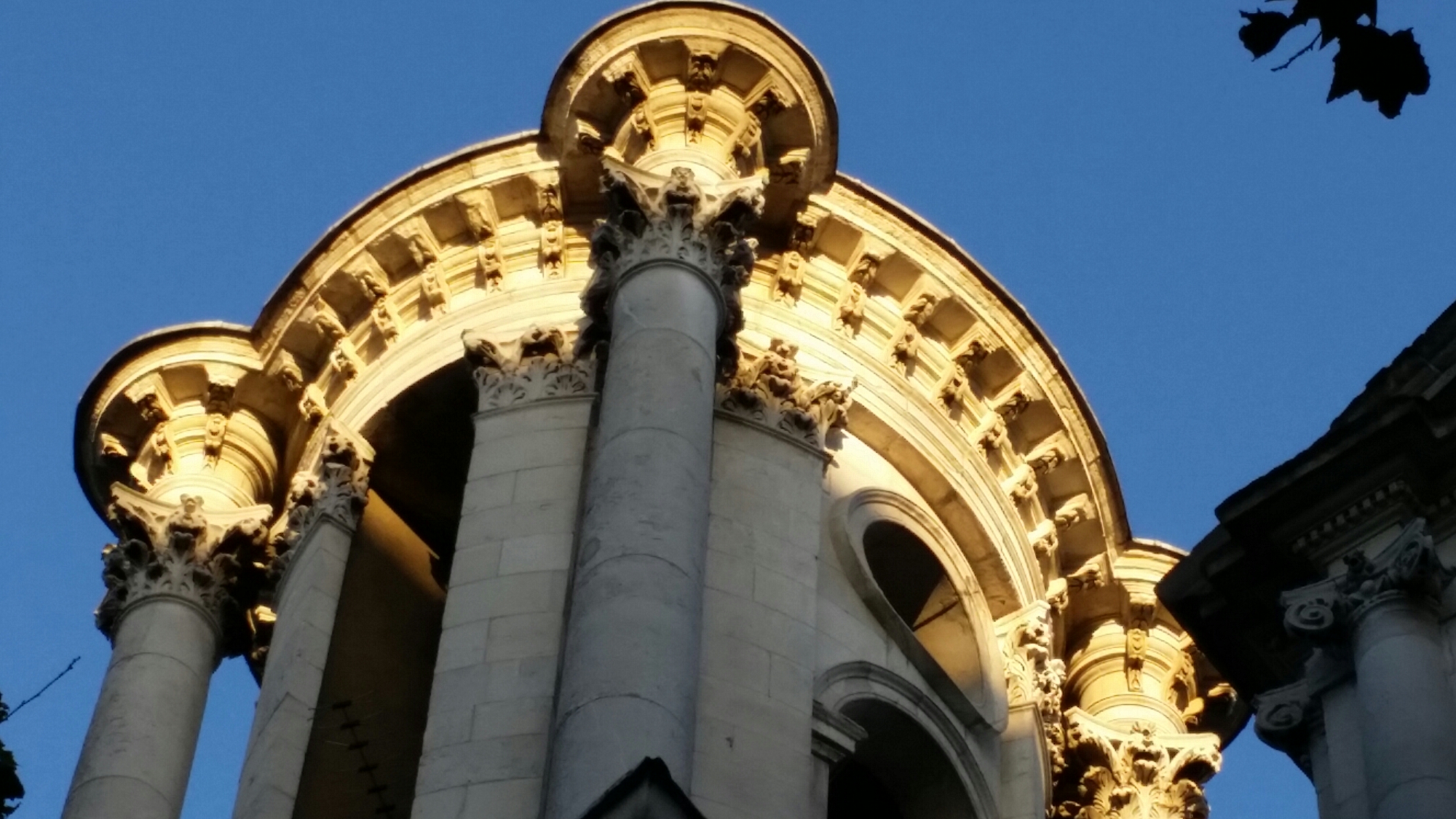
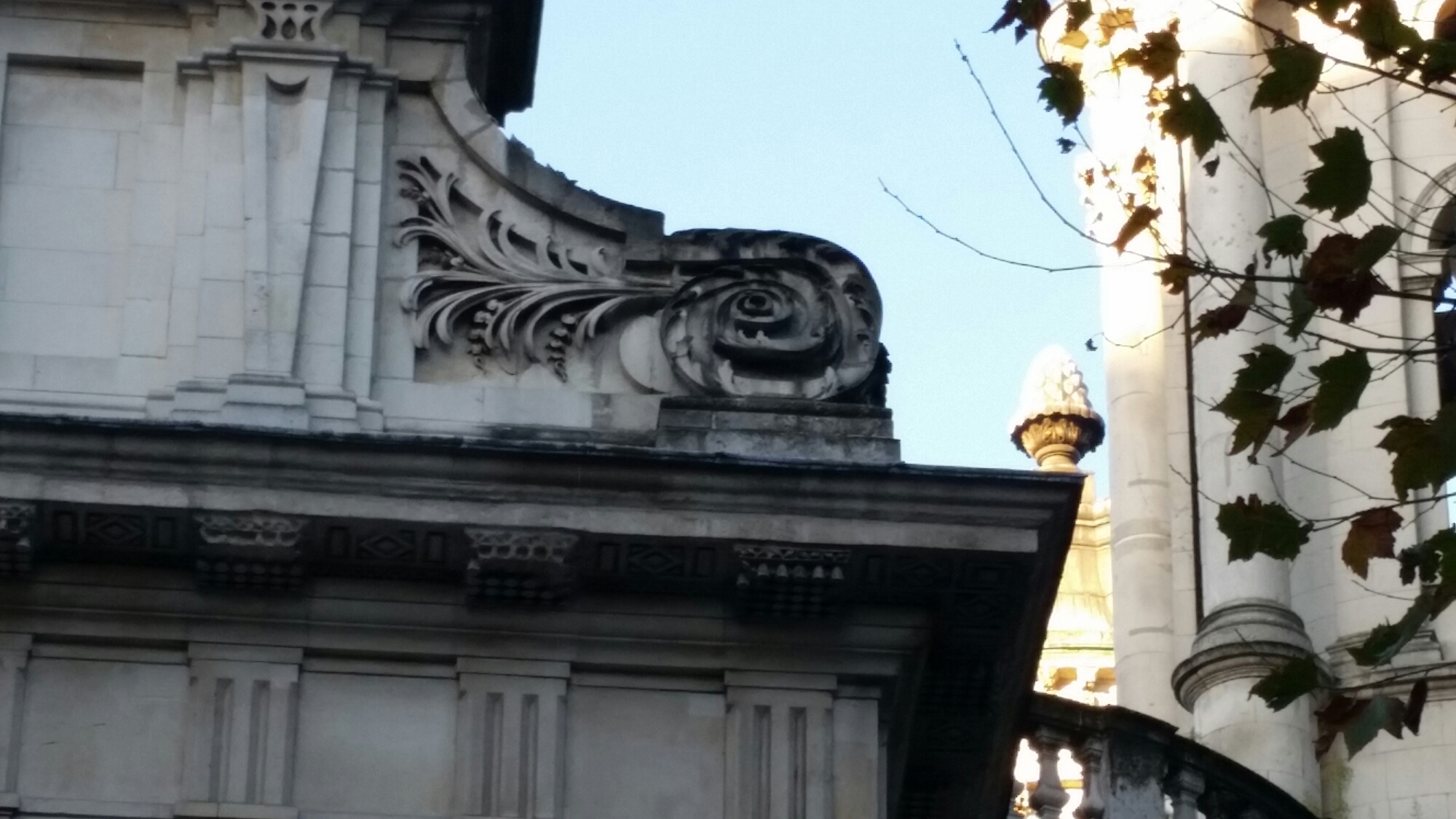
As I had an early morning meeting at Tate Britain, I thought I would walk down from Westminster tube station through the streets round Smith Square. I have always liked this unexpected survival of early Georgian London: the great Roman Baroque church by Thomas Archer surrounded by streets – Barton Street, Cowley Street, Lord North Street – lived in by plotting parliamentarians and grace-and-favour houses owned by Westminster School.
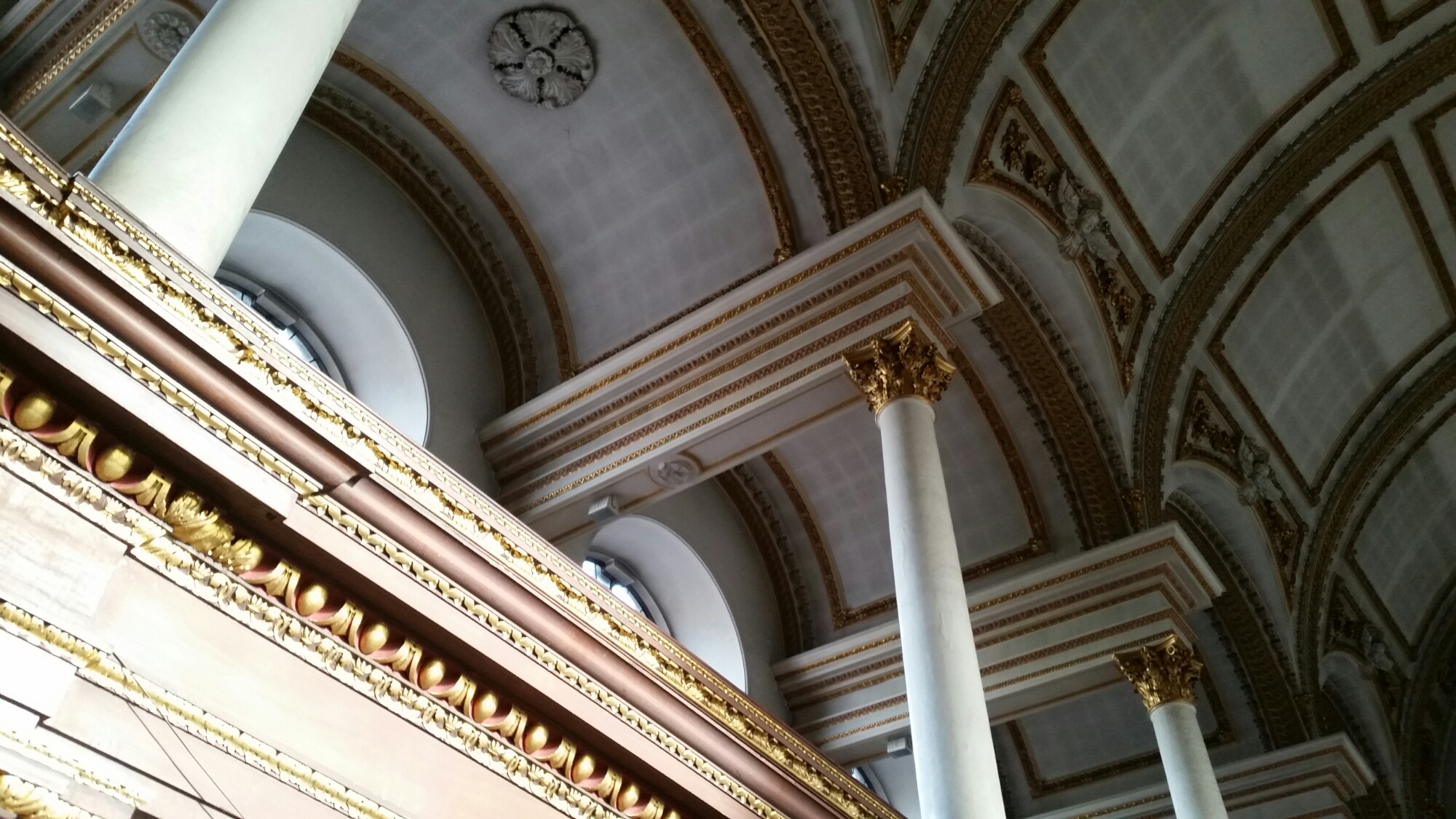
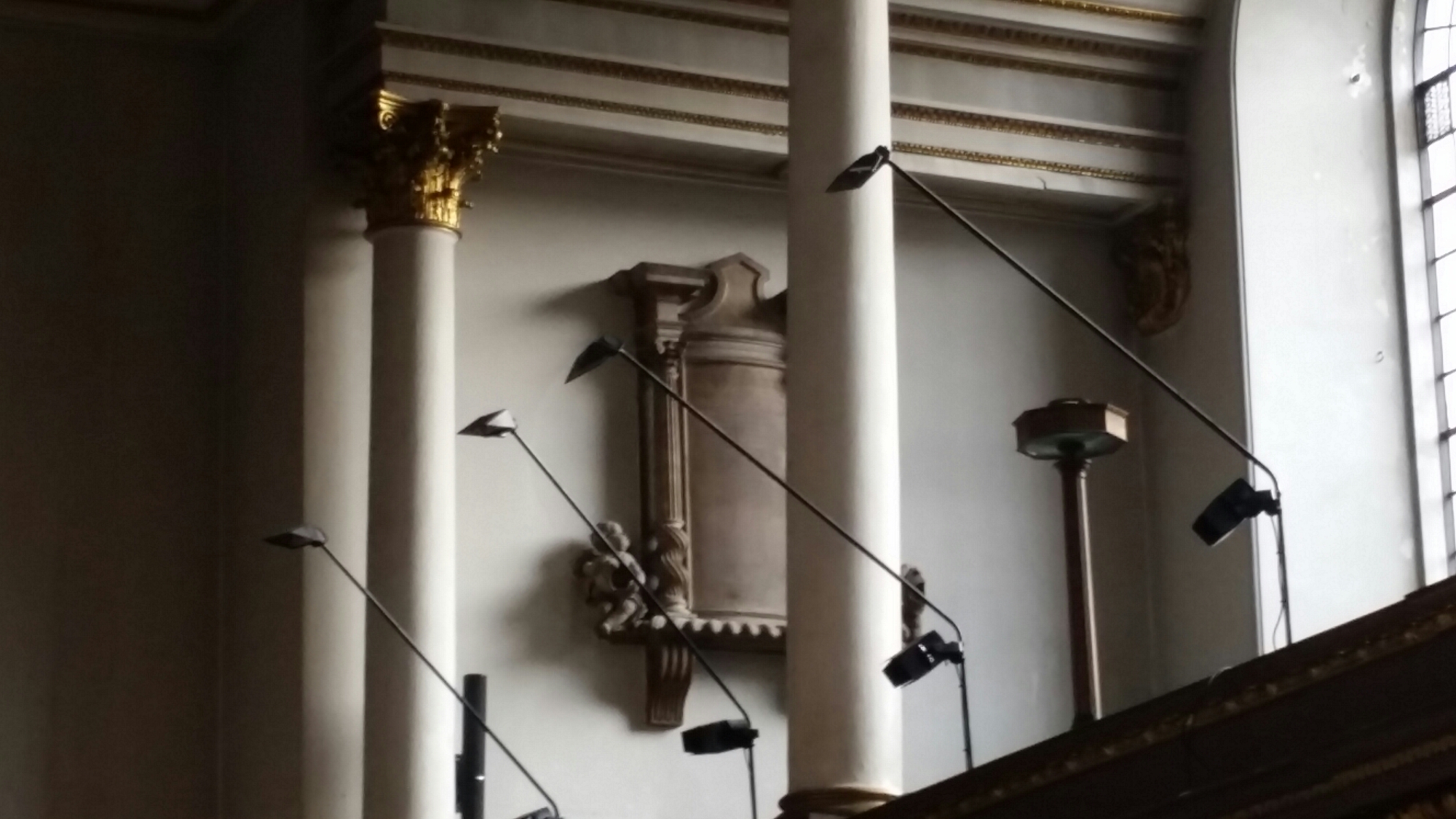
These are details of the church:
Hanover Chapel
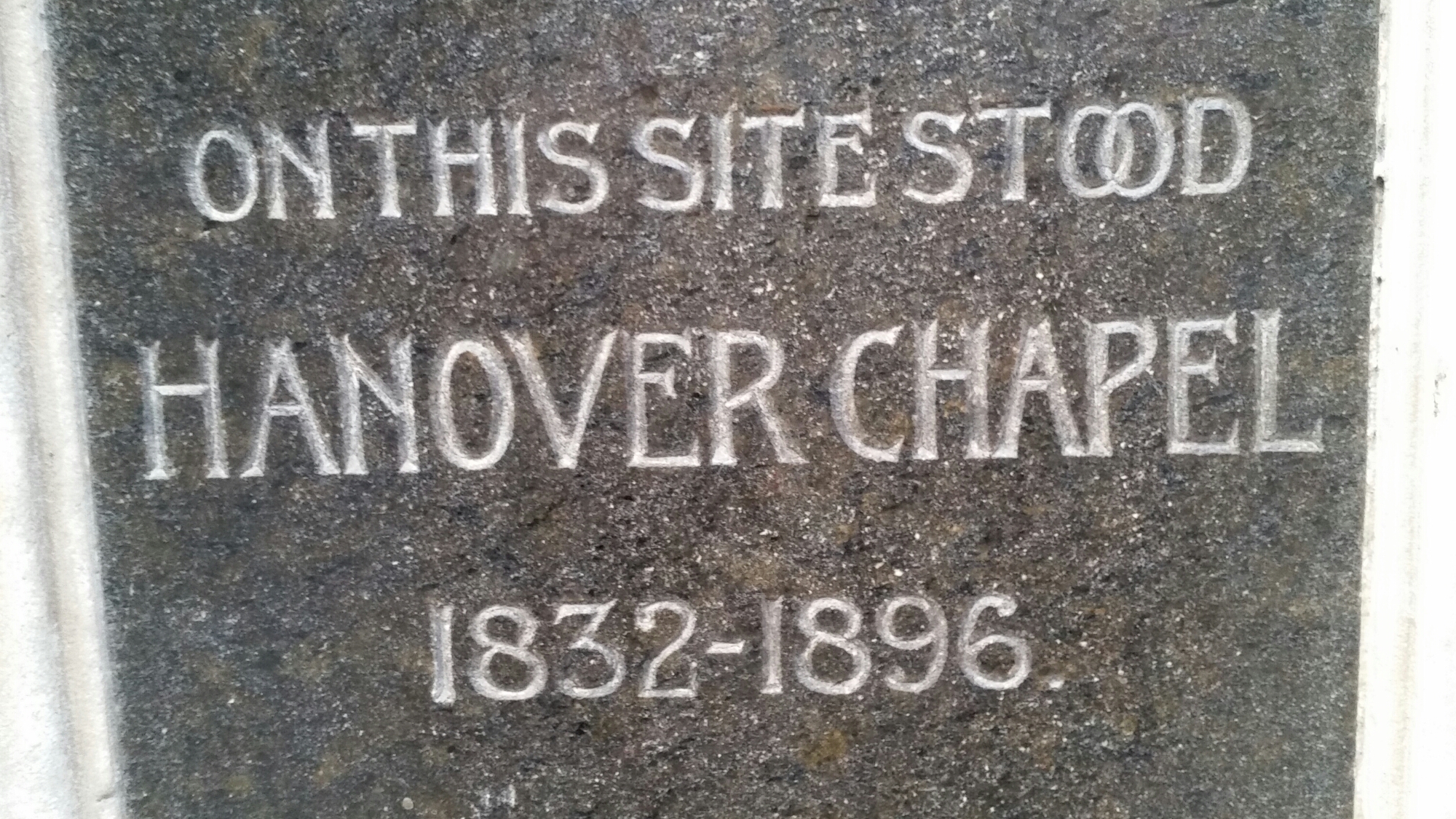
Hanover House on Regent Street replaced Hanover Chapel, an extremely grand, early nineteenth-century place of worship which was designed by the great Charles Cockerell in 1823 (not 1832 as the inscription states) soon after his return from a prolonged Grand Tour. The first stone was laid on 20 June 1823. It opened in 1825. Its design was applauded by J. Britton and A.C. Pugin in their book The Public Buildings of London, published shortly afterwards: ‘At a time when the extravagant and corrupt style of Louis XIV, or the architecture of our less cultivated ancestors, engage by turns the taste of the public, we hail, with the utmost satisfaction every endeavour to naturalise to our climate and our uses the purer taste displayed in Greek buildings…’
Allen Jones
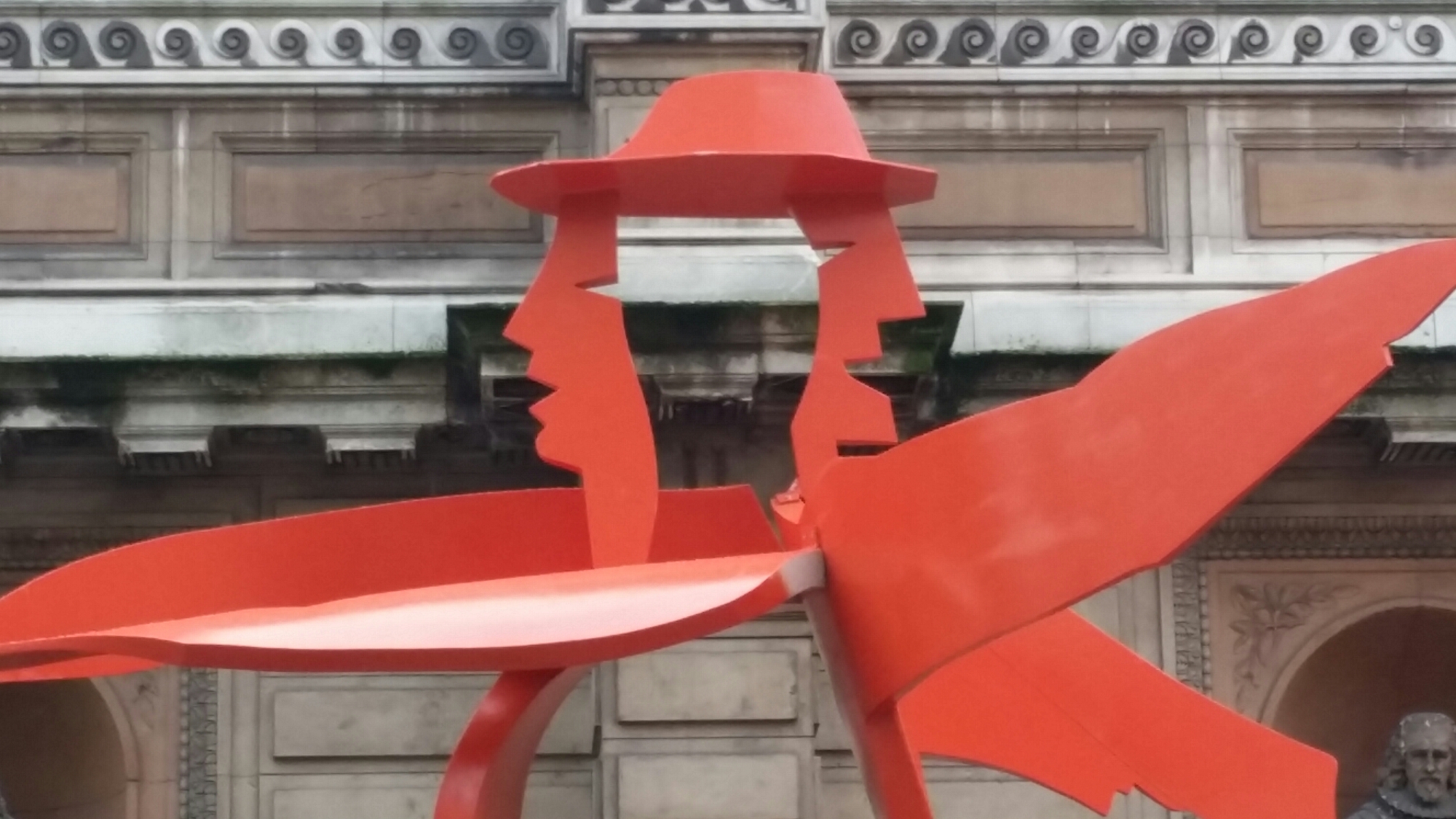
As we build up to the opening of our Allen Jones exhibition in Burlington Gardens next week, a lone statue has appeared in front of our building. It looks impressive, hydra-headed, as if it doesn’t know whether to belong to Bond Street or Regent Street. We have been discussing with a number of local bodies, including Westminster City Council and the New West End Company, how to improve the look-and-feel of the neighbourhood. One public sculpture shows what a difference a well chosen intervention can make:
Regent House
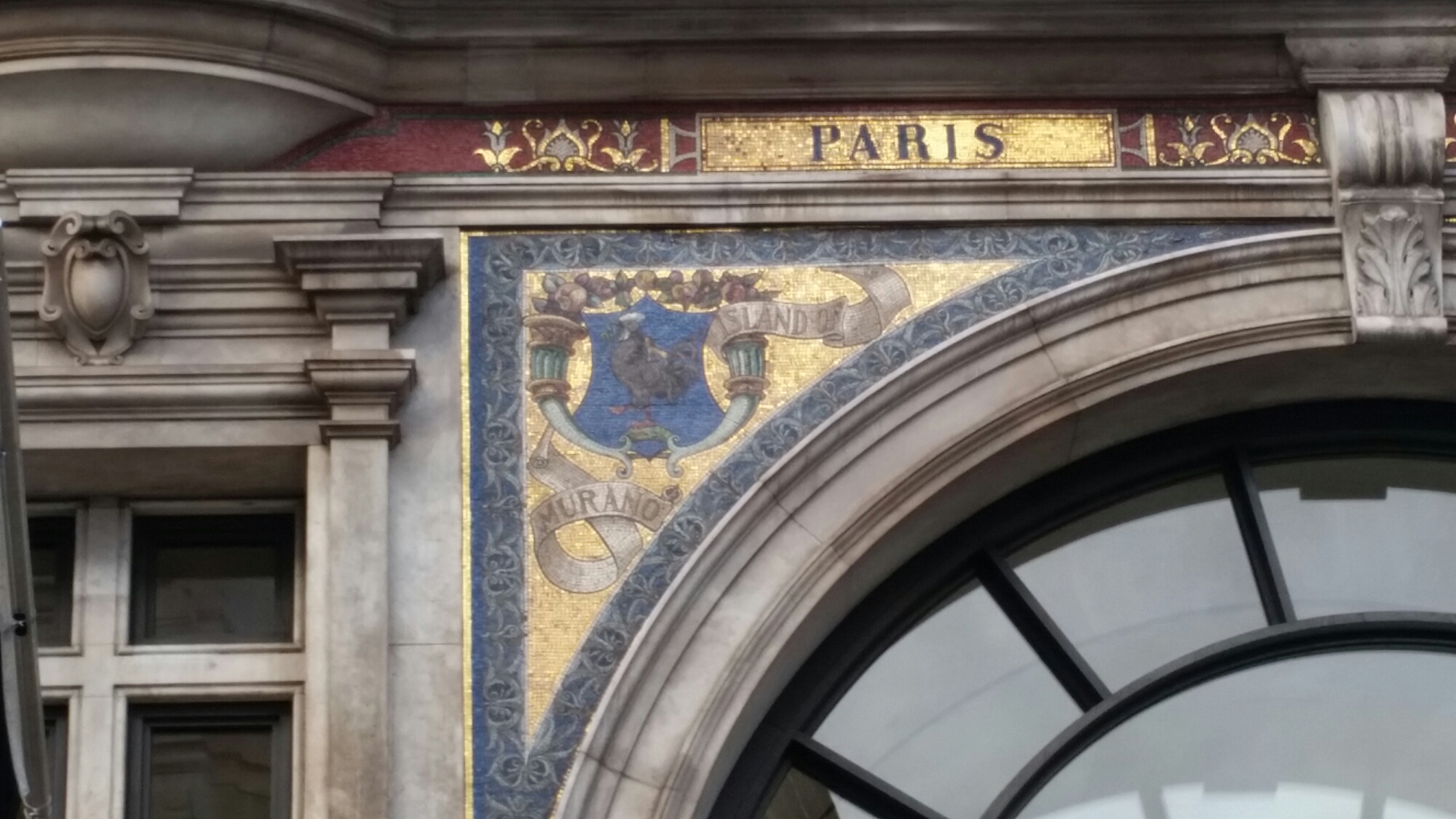
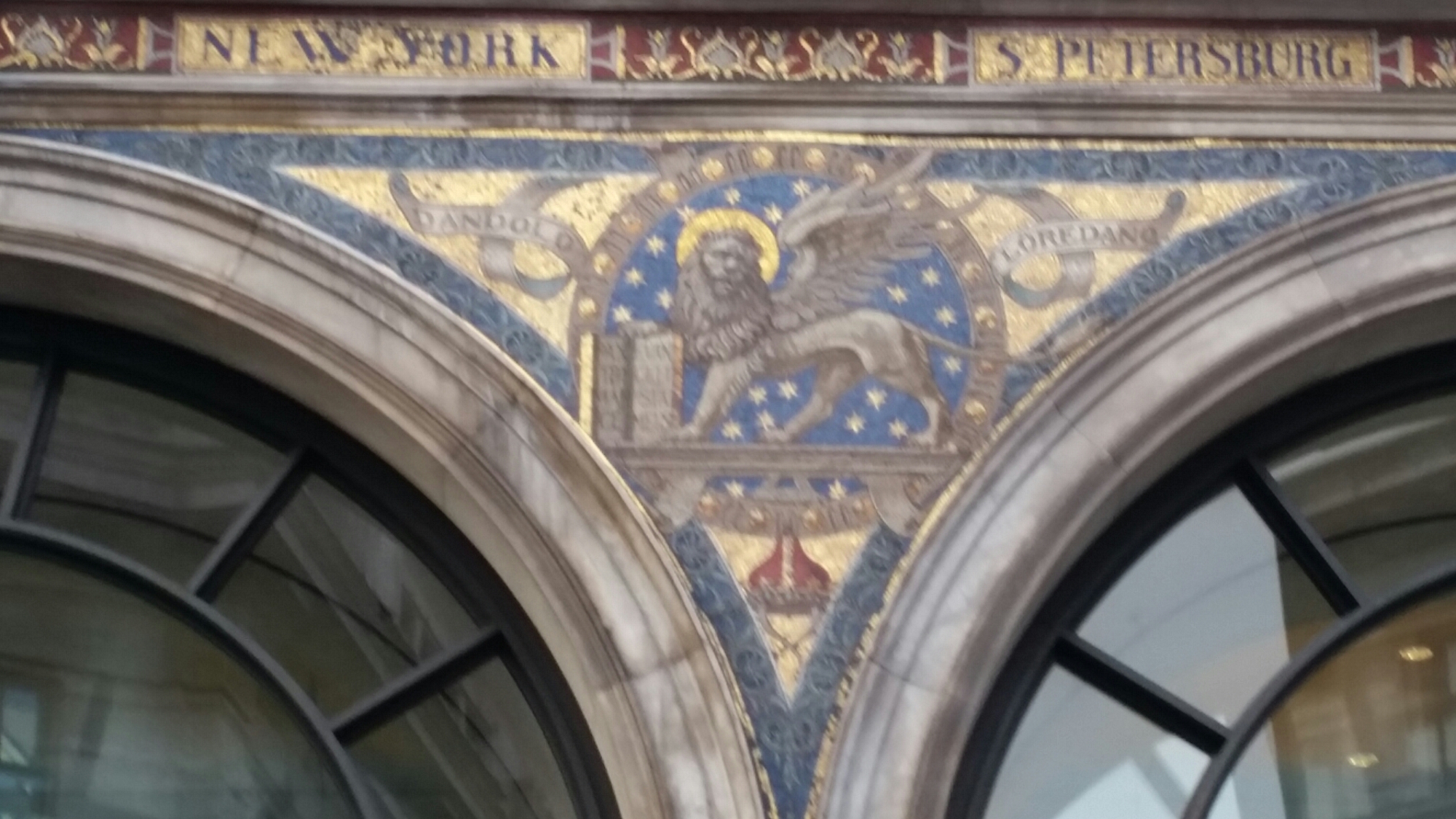
On the occasions when I travel to Oxford Circus (it’s marginally quicker), my eye is often caught by the mosaics above the Apple Store on Regent Street: PARIS NEW YORK ST. PETERSBURG BERLIN. It gives me a momentary twinge of disappointment that I’m not standing on a platform at Waterloo or the Gare du Nord. I have often wondered what the building used to be. The answer is not that it was the headquarters of Thomas Cook, but instead advertised the work of Dr. Antonio Salviati, a Venetian mosaicist who restored the mosaics of St. Mark’s and went on to work on the Albert Memorial and St. Paul’s. The cities listed above the windows were the cities where the Compagni Salviati had shops:
Mr. Turner (2)
I have been cogitating about the comment from Edward Chaney that Mr. Turner is too focussed on issues of class. But there surely was, and is, a class aspect to the fact that Turner was born the son of a Covent Garden barber, retained a working class accent throughout his life, but owed much of his early success to the support of major collectors, including Richard Colt Hoare, the antiquary and owner of Stourhead, Edward Lascelles, heir to Harewood, the Earl of Yarborough of Brocklesby, as well as William Beckford and John Julius Angerstein, less aristocratic collectors. I thought that two of the convincing scenes in the film were, first, the way that Lord Egremont supported Turner at Petworth and, second, the way that Turner was supported at the RA over Constable, who was the same generation, but slightly more middle class. It demonstrates the way that talent beat class.
St. James’s, Piccadilly
Whilst waiting for Hatchard’s to open one day last week, I wandered in to St. James’s, Piccadilly, which I pass so often, but scarcely go into except for memorial services. I know from Lucy Winkett, its wonderful Rector (and chaplain to the RA), that the PCC are grappling, and have been for a long time, how to restore it:


You must be logged in to post a comment.