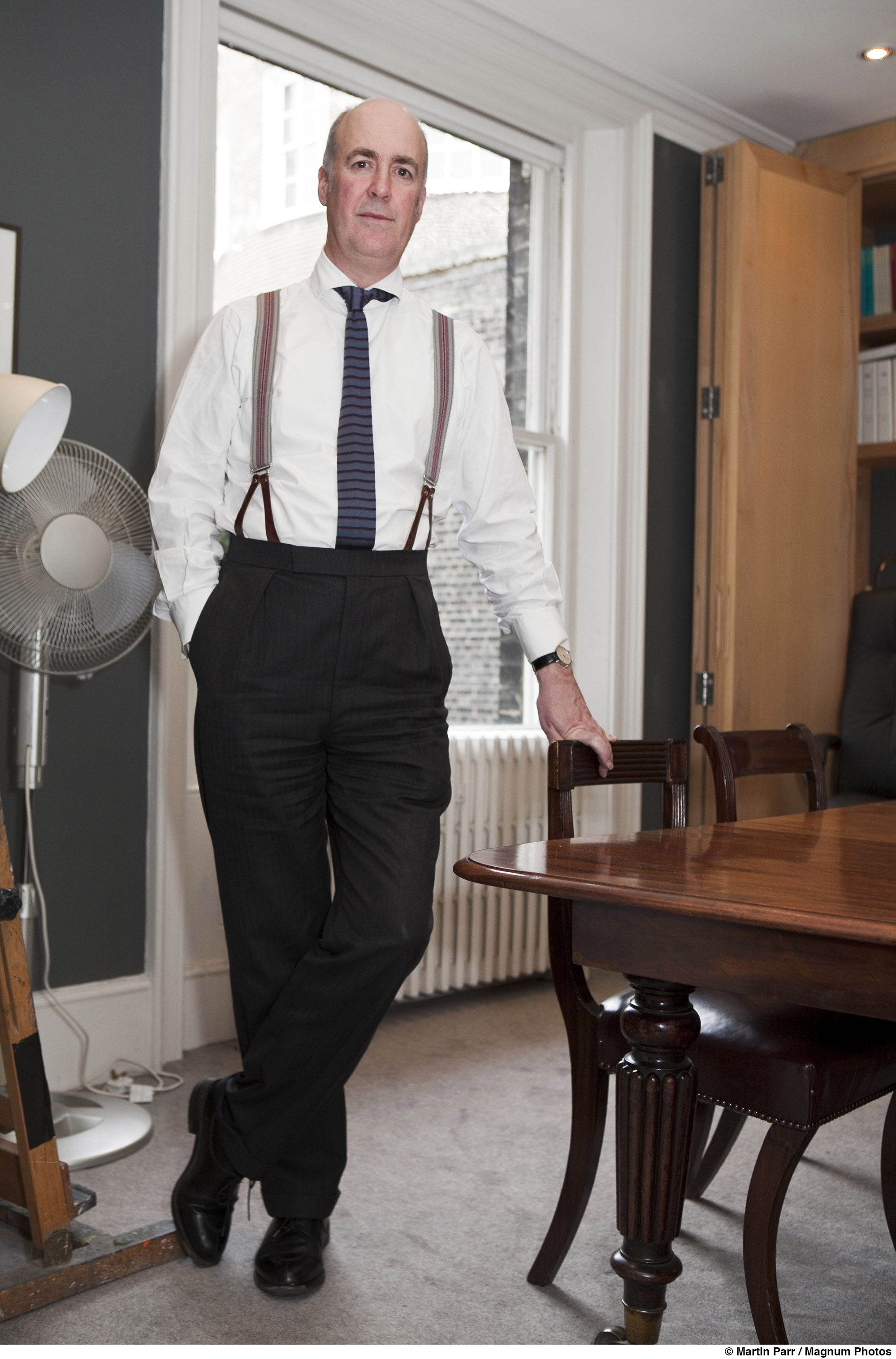
We spent the morning in 798 district – larger, more established and more obviously a tourist destination than it was three years ago (and perhaps inevitably less interesting). I’m finding it hard to make sense of the different strands of Chinese art practice. There’s a traditional strand of beaux arts practice brought in by the French in the 1940s and represented by the amazing rotunda of casts in the Academy, and which was added to recently from Copenhagen (hard to imagine us adding to our collection of casts). It seems that students are still encouraged to – or possibly required to – draw from the antique following the conventions of traditional academic practice, now abandoned in the west. There’s traditional Chinese ink painting, still practised traditionally, but also being reinvented, as evident in a recent exhibition Ink Art in Contemporary China at the Met. There’s contemporary abstract art. And there’s art in a more international, experimental manner as represented in private collections. But it’s very hard to work out how they interact, if at all, except all strands seem to be represented at the Academy.
Category Archives: Uncategorized
The Private Museum of Mr. Zhu
We have just come back from a wonderful outing to meet Mr. Zhu. We drove deep into the countryside outside Beijing where the landscape becomes hilly and full of vineyards. This is where Mr. Zhu has the headquarters of his agricultural empire, including camels. When the communist regime began to encourage private enterprise, he saw the opportunity of marketing juice. Now he supplies all the fruit juice in China. From this benign agricultural activity, he has built his own private museum of geological specimens, the most remarkable fossils, as well as rare bottles of wine and juice packaging from around the world. The British Ambassador arrived and we had the most delicious meal of the finest thin beef and fresh vegetables gathered straight from the fields, cooked in little stewpots in front of one. We drank the best French and Italian wines washed down with plentiful toasts.
Ai Weiwei (1)
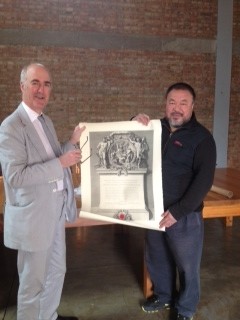
Ai Weiwei receiving his RA diploma
We took Ai Weiwei’s diploma to his studio in a house somewhere in the deep outskirts of Beijing. He was elected an RA a couple of years ago, just after he came out of prison, but we don’t like to consign the diploma to the vagaries of the international post. It was unexpectedly moving handing it over to him. He asked how many there are. The answer is not many, about 25, because we are only allowed to elect two a year, and we don’t always remember those two. He is the first Asian artist. I read out the Obligation, which I luckily remembered was printed in the copy of my book which I had brought to give him, although I’m not convinced it was strictly necessary. Continue reading
Whang Atong
By a weird coincidence, as I arrive in Beijing, I am reading an excellent biography of Sir William Jones by Michael Franklin and discover that Jones was not only interested in Persian and Arabic, which I already knew, but translated a Chinese ode when he was in Paris in 1770 having had dinner at the house of Joshua Reynolds with Whang Atong, a visitor from Canton. Jones collected Chinese manuscripts whilst a judge in Calcutta and tried to persuade Whang to translate more early Chinese poetry into English, long, long before Arthur Waley.
Hong Kong (2)
On Sunday morning, we were taken for a basic Chinese breakfast of excessively sweet tea and dumplings by the sea in Shek-O.
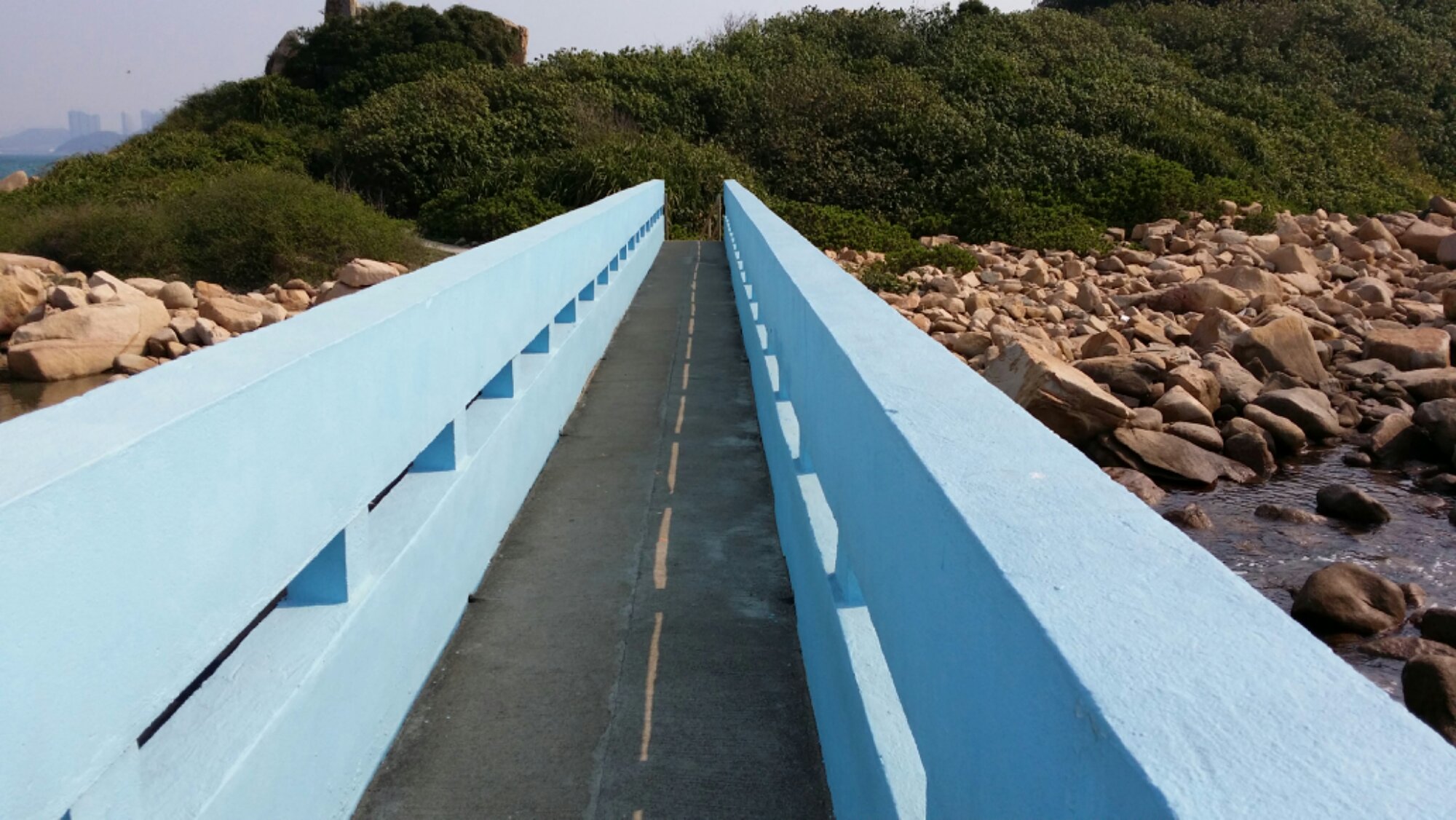
We then had a breezy walk by the cliff across a blue modernist bridge built by the Japanese during the war.
Beijing
It all came back to me from my one and only previous visit to Beijing: the immensity: the airport which is twice as big as any airport anywhere; the ten lane highways; not knowing where one is going, north or south. Luckily, Philip Dodd was there to meet us, tell us our schedule and explain the ropes. My hearing has gone altogether and it is eerily quiet.
Hong Kong (1)
I’ve always liked Hong Kong; the sense of concentrated energy, the ever higher high-rise buildings in the folds of the hills, the way that the man at the Mandarin greets one by saying ‘Welcome back, sir’ as if he remembers the last time. It’s not been so easy this time because I arrived with a streaming cold which only got worse, but this has not prevented the usual overwhelming hospitality: lunch with David Tang in honour of Zaha Hadid who has opened a new design building earlier in the week; a talk at the Fringe Club in which I tried to describe the history of the RA and its current interest in Hong Kong, followed by a talk on the history of art in Hong Kong by Victor Lai which I was luckily able to follow thanks to simultaneous translation; and lunch with Adrian Cheng, our new, energetic and capable trustee who seems to own half of Hong Kong including the Grand Hyatt where we had lunch. Continue reading
Catherine Goodman (3)
Have just been for my third sitting. I was asked to take a picture of the studio which is magnificent in its picturesque neglect, but it feels intrusive to ask, disturbing the privacy not just of the studio, but of the sitting. We listened to Mahler’s third symphony in the intervals of painting and desultory talking of music, friends, the Veronese exhibition at the National Gallery and why I had never visited India.
Burlington Project (1)
We have just had a breakfast for our patrons encouraging them to come up with the last £6 million required to fund the Burlington Project. At last, it looks and feels like reality: a project team in place; £30 million raised; the plans all in place; all we need is the remainder of the funding. I was asked what would happen if we don’t have all the funding in place by the autumn. I’m confident that we will. For anyone who is interested in what we are up to, we’ll provide a link to the little film which explains the project.
 (full video)
Catherine Goodman (2)
I’ve just been for my second sitting with Catherine, bicycling all the way from Stepney to Flood Street in the early morning sun. I’ve realised that it’s different sitting to a woman than to a man: more companionable; more about psychology than pure observation. She switches between conversational mode and painting and I learn a bit about what it was like to be at the Royal Academy Schools in the early 1980s when Peter Greenham was Keeper and it was all about figurative painting, no abstraction allowed, and the staff included Anthony Eyton and Olwen Bowey, both long – standing RAs. There’s an invisible community amongst those of us being painted for Catherine’s exhibition at the NPG, as we exchange places in her studio, talk about one another, but never meet. I can’t help wondering if it was like this for Reynolds’ s sitters as they went in and out of his studio on Leicester Fields, very punctually on the hour. We had Delius today, rather than Bach.


You must be logged in to post a comment.