Anglesey Beef

We went to pick up some Christmas beef, which we’d pre-ordered from a farm in the centre of the island, which involved a long journey through the beautiful, nondescript farmland in the northern part of Anglesey – small, deserted lanes with big tractors shooting past. Eventually, we arrived at the wrong place. Our second attempt took us down a long muddy track which led nowhere. A passing vehicle directed us to Beef Direct, where a huge piece of beef was waiting for us:-

Standard

Blain|Southern (2)

I’ve spent the first part of the morning clearing my desk at Blain|Southern – surprisingly easy all things considered, just putting a mountain of redundant invitations into the watepaper bin – as I prepare for my new life in the New Year: what is euphemistically called ‘a portfolio career’. I have enjoyed my time at Blain|Southern: short, but sweet, getting to know the operation of the contemporary art world. For anyone who did not get my change-of-address email, I am contactable in future on c@charlessaumarezsmith.com. Happy Christmas to all my readers and best wishes for the New Year !

Standard

Whitechapel Bell Foundry (22)

Looking at David Levenson’s very beautiful documentary photographs of the Whitechapel Bell Foundry this morning, taken (amazingly) on his iPhone, I suddenly had an idea. This picture in particular is of the rear section, which Raycliff are planning to demolish, as ‘of no historical or aesthetic interest’:-

Yet, I am increasingly of the view that this part of the building, although put up in the late 1970s by James Strike, a conservation architect, is of considerable historical and indeed some aesthetic interest not on its own, but as an integral part of a combined historical and industrial whole – a relic of the history of London’s craft industries on which its economy was built and of the turn to conservation in the late 1970s. Not least it essentially replicates what was there before, so part of the building’s history.

If we could persuade Historic England to spotlist it, as part of the Bell Foundry, then the hotel scheme, butchering the fabric of the building and converting the rear section into the foyer of the hotel, would collapse. It would be a good way for Historic England to salvage its tattered reputation and a way for the conservation agencies to work together mobilising support.

Standard

Edmund de Waal

Alongside the Tessa Traeger’s exhibition, there were some very beautiful works by Edmund de Waal upstairs in the artist’s house, all the better for being displayed domestically, each one carefully placed, some in alcoves:-

Standard

Tessa Traeger

We travelled down to Wiltshire in the floods and pelting rain to see Tessa Traeger’s beautiful exhibition at Roche Court – photographs of prehistoric trees and untrammeled undergrowth in west Devon, printed on aluminium, and massed flocks of starlings crowding the sky.

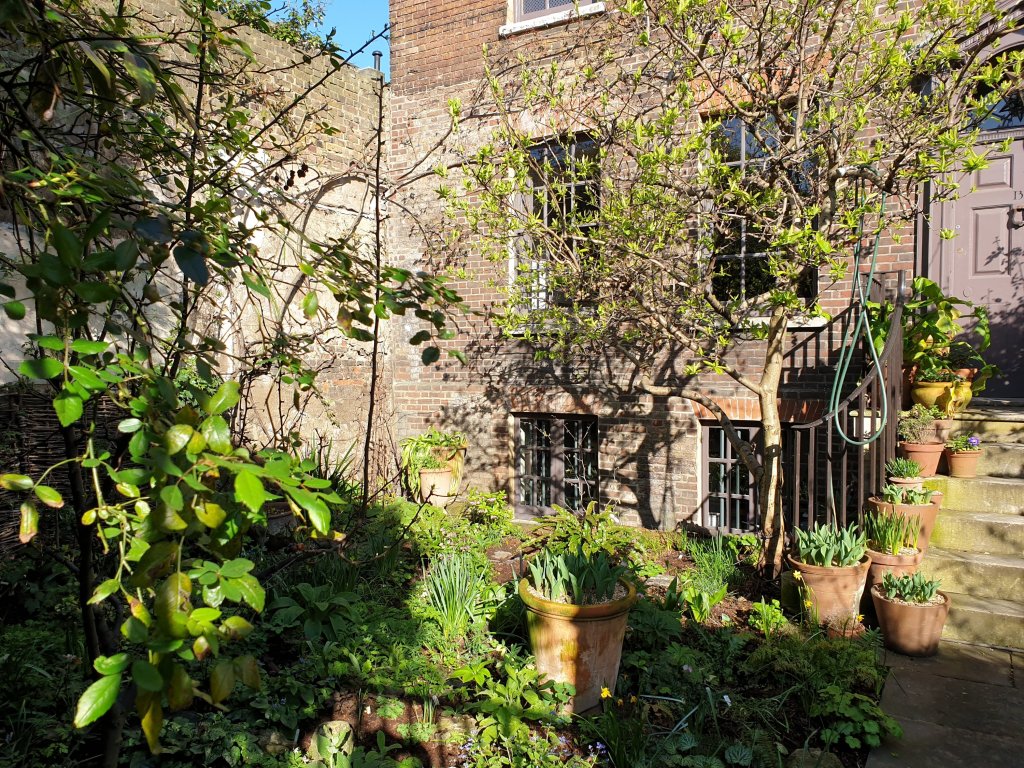
Since I can’t reproduce her photographs, I can only reproduce mine of trees in the brief interval between the rain storms:-

And the landscape looking south from Roche Court:-

Standard

Whitechapel Bell Foundry (21)

Of the many photographs taken the day before yesterday by Andrew Baker, the semi-official photographer, of Rory Stewart’s visit to the Whitechapel Bell Foundry, I like this one the best, because it expresses his empathetic understanding of the potential fate of the Bell Foundry, now stripped out and in deep danger of being turned into a boutique hotel, instead of, as he would like – revived, revitalised, and allowed to flourish for the protection and preservation of the crafts as an active part of the life of the local community:-

Standard

Deyan Sudjic/Alice Black

It has been a fortnight of leaving parties as familiar faces move on and new faces replace them. One of the most touching was the double departure of Deyan Sudjic and Alice Black, the co-Directors of the Design Museum, who had the great benefit of being able, rather touchingly, to sing each other’s praises: so completely different in every aspect of their personalities, but so apparently complementary, respecting each other’s virtues and occasional weaknesses. It’s such a difficult thing to do to work as a double act and so admirable if it can be done successfully, as they moved the museum from Shad Thames when Tony Blair was still Prime Minister to the old Commonwealth Institute with Peter Mandelson as chairman.

Standard

Whitechapel Bell Foundry (20)

A brief public appearance by Rory Stewart in front of the Bell Foundry:-

As expected, he completely understood the importance of the Bell Foundry in terms of retaining traditional craft skills, whilst simultaneously allowing them to develop in a modern way, using new technology: work which he himself has been doing in Afghanistan. Let’s hope its development becomes part of his Mayoral programme.

Standard