St. Giles-in-the-Fields was designed, as is prominently revealed on its blackened west façade, by Henry Flitcroft, who I had thought of as one of those rather dull, first generation Palladians, who made architecture less interesting than it was when Vanbrugh and Hawksmoor were at the Office of Works. But I now discover that he was more interesting than I had thought. His father, Jeffery, was Lancashire born and worked as a gardener at Hampton Court. Young Henry, later known as Harry, was trained as a joiner, apprenticed to Thomas Morris in 1711. Whilst working as a carpenter at Burlington House in 1719, he fell off the scaffolding (there is an entry in Burlington’s accounts for the medical care of an injured workman). While he was recuperating, Lord Burlington realised his talents as a draughtsman and he began to work as Burlington’s factotum, superintending work at Tottenham House in Savernake, as well as Westminster Dormitory. St. Giles was one of his early works, won in competition with James Gibbs. The prominent inscription H. FLITCROFT ARCHITECTUS shows consciousness of his own talent. The design is much less pure pattern book than much contemporary Palladianism.
Author Archives: Charles Saumarez Smith
Denmark Street
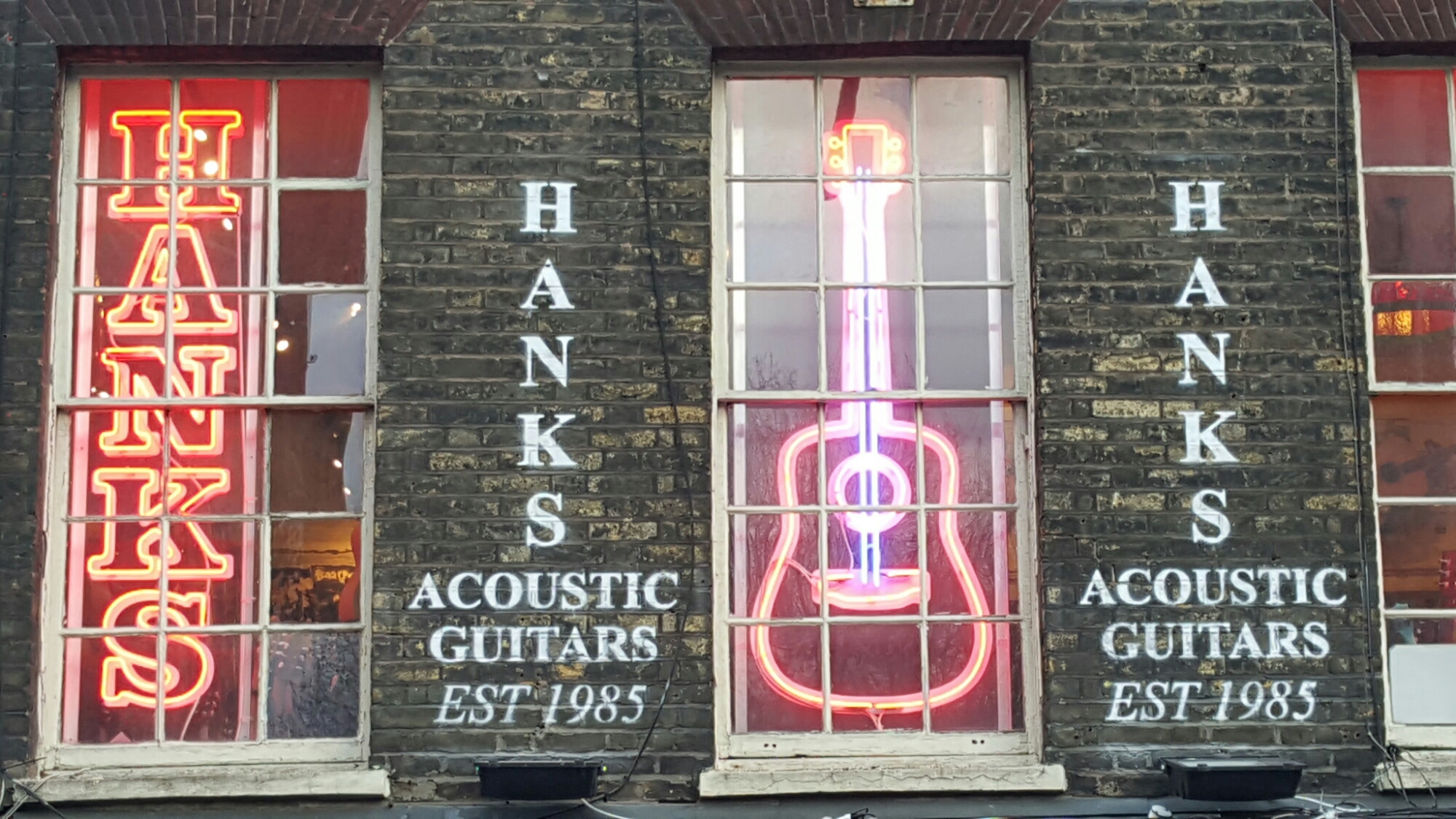
By chance, I found myself in the same neighbourhood tonight as last night because I went to see Eileen Cooper’s exhibition at Rook & Raven in Rathbone Place. It was closed. So, I took the opportunity of checking out how Denmark Street was faring under the strain of redevelopment. I thought remarkably well:-

London redevelopment
Whilst walking down Oxford Street earlier this evening, I spotted a hollow façade, propped up with nothing behind it, which struck me as an emblem of the volume and scale of the current reconstruction of London. There is a lot of discussion of the huge number of new tower blocks (see the vigorous and sarcastic denunciation of Boris Johnson’s planning policy by Rowan Moore in the Observer last Sunday), but much less commentary that I am aware of about the amount of rebuilding which is going on at the moment. Is it a boom ? Are we about to have a crash ? Aren’t these things cyclical ?

Post Office Tower (3)
After years of paying no attention to the Post Office Tower, I keeping seeing it – an emblem of postwar optimism floating above the rooftops of central London like a visitor from outer space. Tonight I spotted it down a side street off Oxford Street, looking ethereal:-

147, Oxford Street
One of the consequences of taking photographs for this blog and paying more attention to the detail of urban fabric is that I have become aware how much fine, but neglected, late nineteenth-century terracotta decoration there is in London. Tonight I walked down from Simon Lewty’s exhibition in Eastcastle Street and was confronted by a building on Oxford Street which was neglected, but with interesting detailing. As ever, I checked in Pevsner to find out about its history and discovered it is described somewhat dismissively as nothing more than ‘a Jacobean phantasmagoria’. I have discovered a little bit more about it from its listing. Designed by Gordon, Lowther and Gunton, it was constructed in 1897 for a firm of chemists called John Robbins. They vacated it the following year and it was taken over by the Wholesale Co-operative Wine Association. At least, English Heritage aporeciates its Jacobethan strapwork decoration:-


Regent Street
I like seeing London from unexpected angles. Today I was at a lunchtime meeting in an anonymous office block on Cavendish Square T.P. Bennett 1957) and looked out of the window to see Regent Street (originally called New Street) from above – John Nash’s noble intervention into the complex streetscape of the West End, connecting Regent’s Park to Carlton House and separating the sinks and stews of Soho from the rich residents of Mayfair:-

Painting the Modern Garden
At lunchtime, we had a lecture in which I learned much that I didn’t know about Monet: that he tricked the authorities into allowing him to construct a large lily pond by pretending that it was going to be a swimming pool; and that he had a state funeral in which Clemenceau whipped the black awning off his coffin outside the Madeleine on the grounds that black was an inappropriate colour for him. Then tonight I went to what may be a last visit to Painting the Modern Garden. The party included at least two ardent and knowledgeable horticulturalists, so the discussion was not so much about the quality of the art as the particular species of rose depicted, the extent of the influence of Gertrude Jekyll, and the glories of Emil Nolde’s garden in Seebüll, in Schleswig-Holstein just south of the German border. I found it curiously refreshing – and in the spirit of the exhibition – to look at Monet not for his handling of paint, but how accurately he painted lilies.
Whitechapel Road
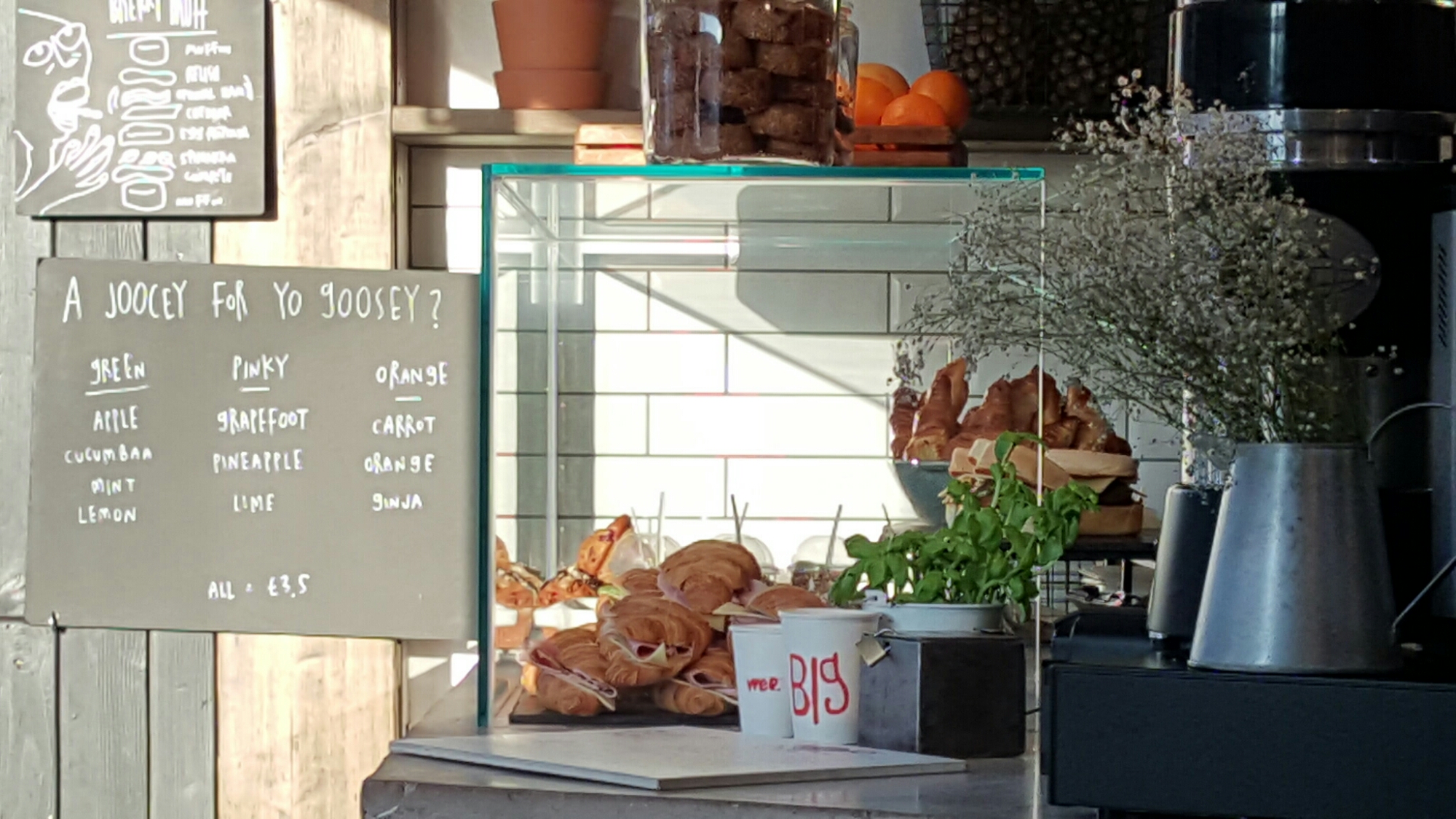
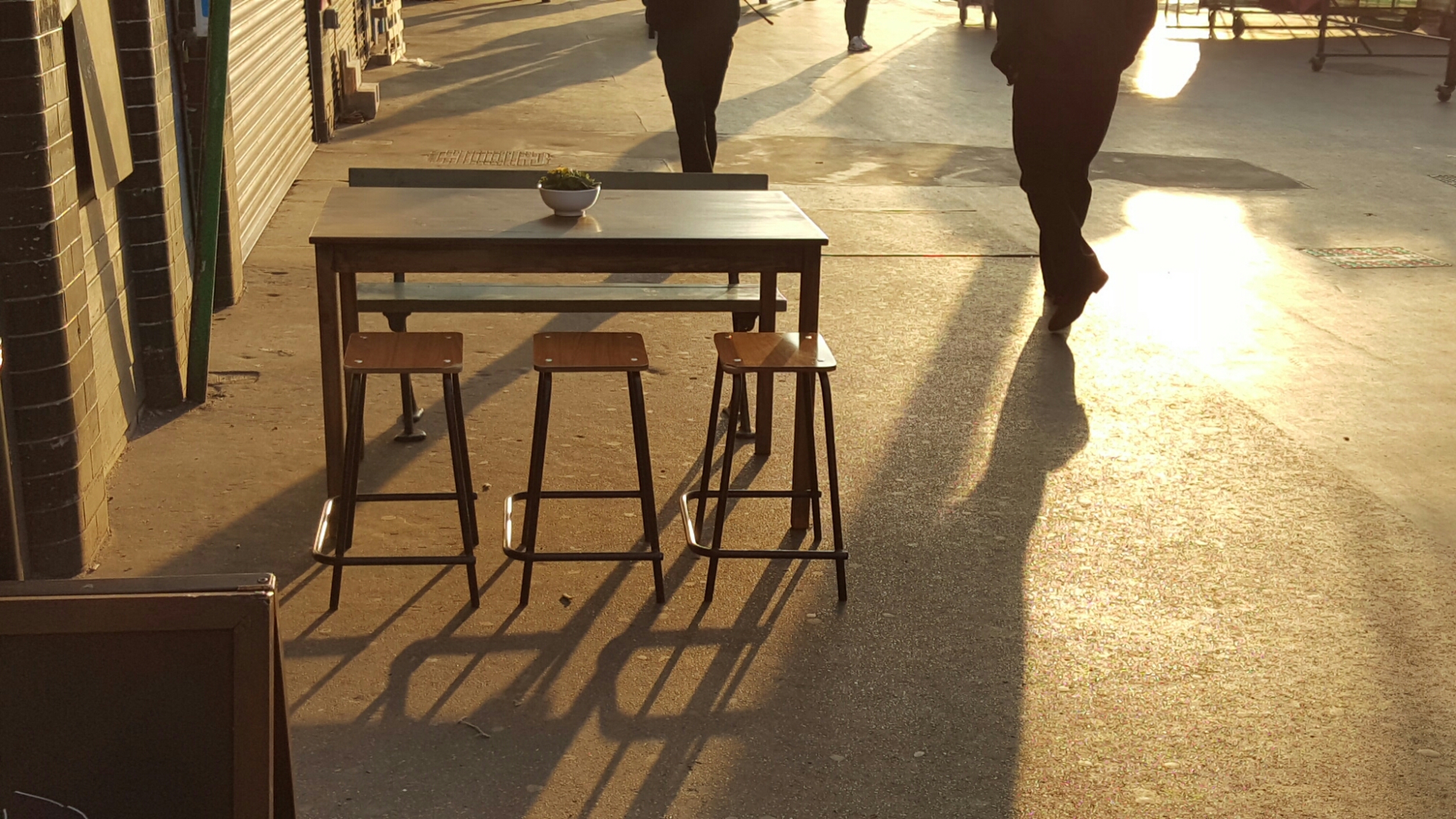
I had to deliver some dry cleaning early in the morning and was impressed by how lively Whitechapel is first thing in the morning when the street market is being set up and a new wave caff called Mouse Tail is serving sandwiches, lattes and freshly squeezed orange juice to local commuters:-
Terracotta detailing
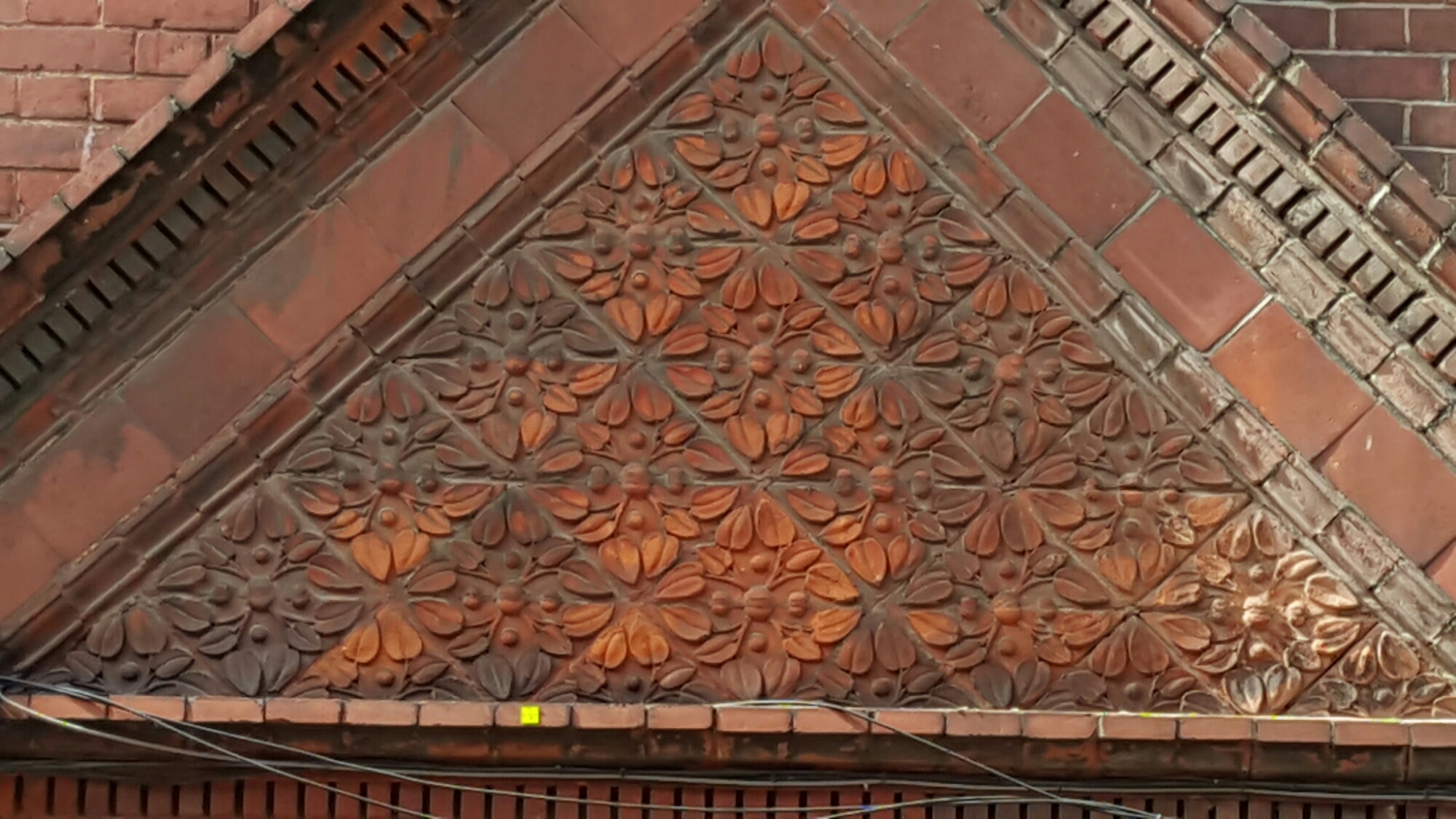
In wandering round Whitechapel this morning, I found a rather fine bit of old social housing where Chicksand Street meets Casson Street (formerly George Street) in amongst the rather bleak stuff from the 80s and possibly later (it’s at the heart of what Tower Hamlets calls Bangla Town). I think it must be what Pevsner describes as ‘a survival from the dense urban pattern of c.1900: close-set tenement building, 1901 by H. Chatfield Clarke, given some architectural pretension by terracotta trim’. This is the trim:-

Dr. David Widgery
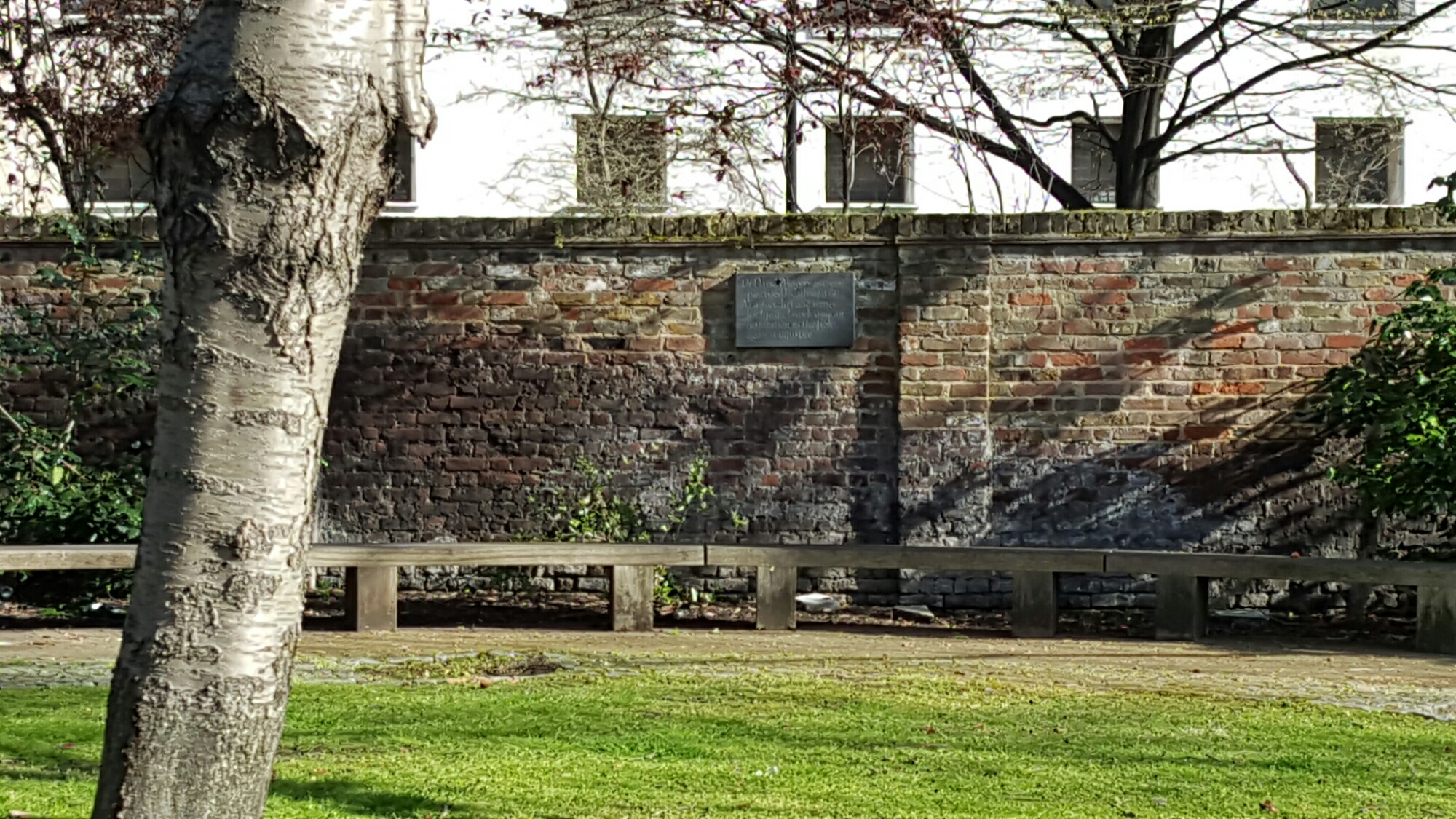
Next door to St. Anne’s, Limehouse, I discovered a charming small set of circular benches dedicated to the memory of Doc Widgery, who I discover died as long ago as 1992. He was a big figure in Limehouse when we moved there in the early 1980s, as a GP at the local Gill Street Health Centre and ex revolutionary socialist (not very ex). He published a book about his medical practice called Some Lives: a GP’s East End in 1991, not long before he died of some form of overdose. I never met him, but he clearly belonged to the era of passionately committed and socially oriented GPs who came into medicine as much to change society as prescribe paracetamol. The formative moment of his youth was having sex with Allen Ginsberg:-


You must be logged in to post a comment.