
I’ve written about Crûg before. We go there every year. It’s a nursery and garden which even I, as a botanical ignoramus, enjoy, dense with rare species collected by the Wynne-Joneses on plant-hunting expeditions, most recently in Colombia:-

I’ve written about Crûg before. We go there every year. It’s a nursery and garden which even I, as a botanical ignoramus, enjoy, dense with rare species collected by the Wynne-Joneses on plant-hunting expeditions, most recently in Colombia:-
While on the subject of the difference between natural and farmed food, I should do a post on Hooton’s Homegrown Farm Shop which has for a long time, and continues to, contribute to the pleasures of Anglesey. It began as field on a local farm where you could pick your own strawberries and has grown into a big commercial enterprise (their shop opened in 1998) selling chickens and Welsh lamb, fresh broad beans, biscuits and lemon cake. It’s probably the biggest change since we started coming in the 1970s that one can eat really well, better than in London.
I walked past the ruins of St. Nidan at Llanidan today. The church was demolished in 1844 in order to allow the construction of a new Gothic church at Brynsiencyn up the hill in spite of the fact that its origins were Anglo-Saxon and it had been the parish church of Henry Rowlands, the antiquary, who published Mona Antiqua Restaurata in 1723 which claimed erroneously that Anglesey was the centre for the Druids:-
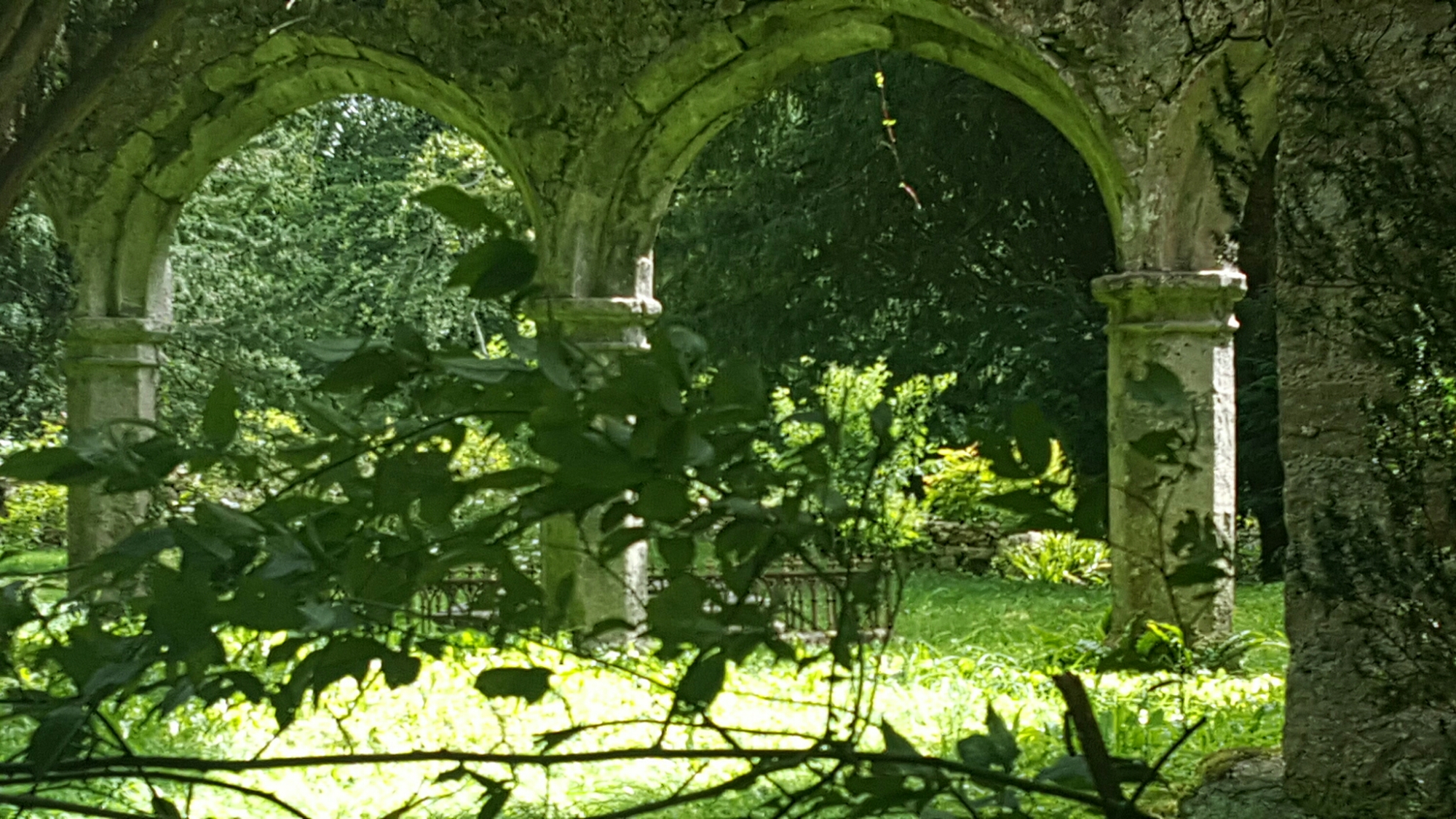
Next door is Llanidan Hall, which is invisible apart from the seventeenth-century stables which were used as the vicarage:-

I had read on the web about Menai Oysters and we went in search of them down an unpromising driveway outside Dwyran. They have oysters in big tanks under UV light and we were allowed to buy a dozen:-
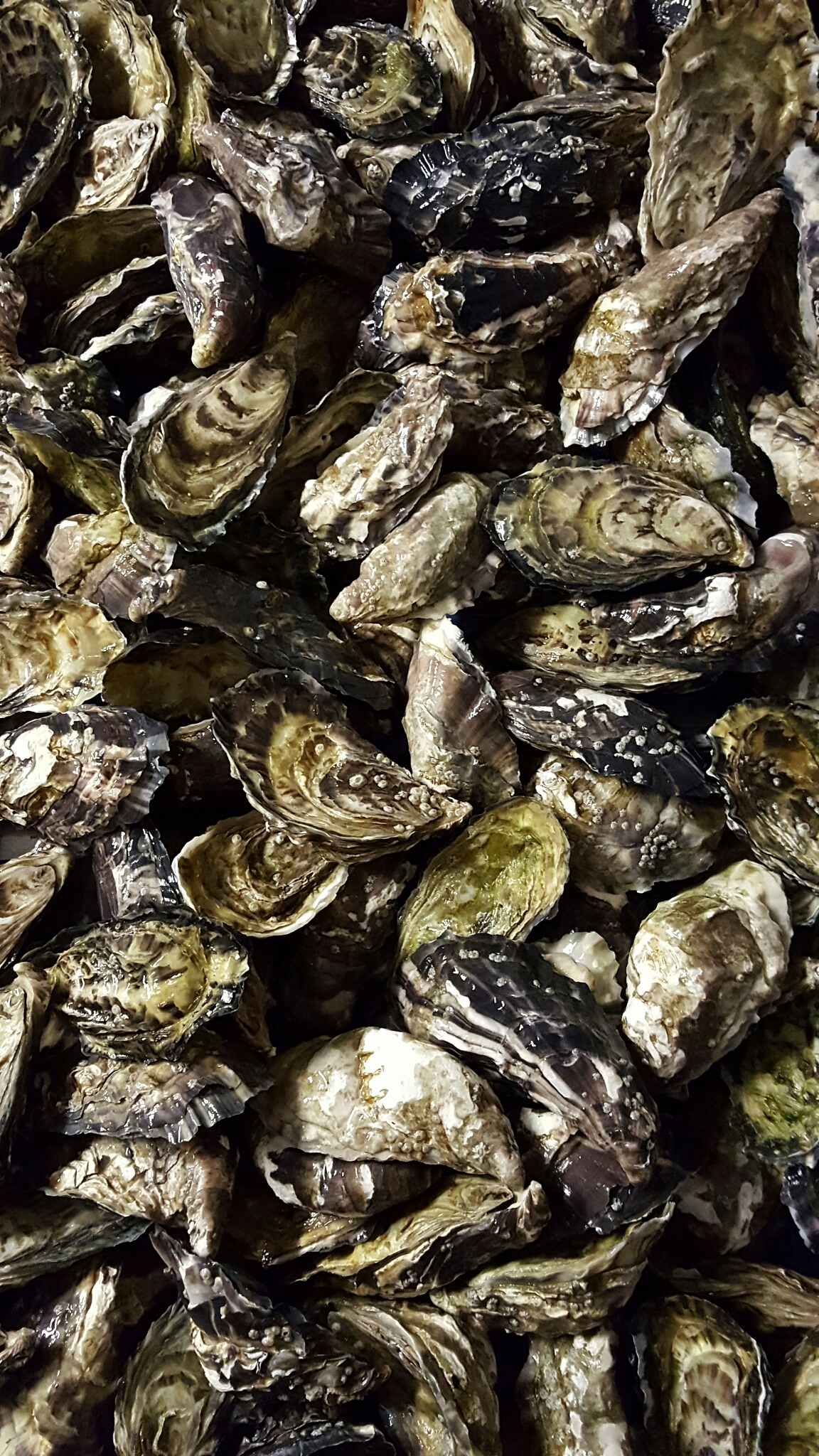
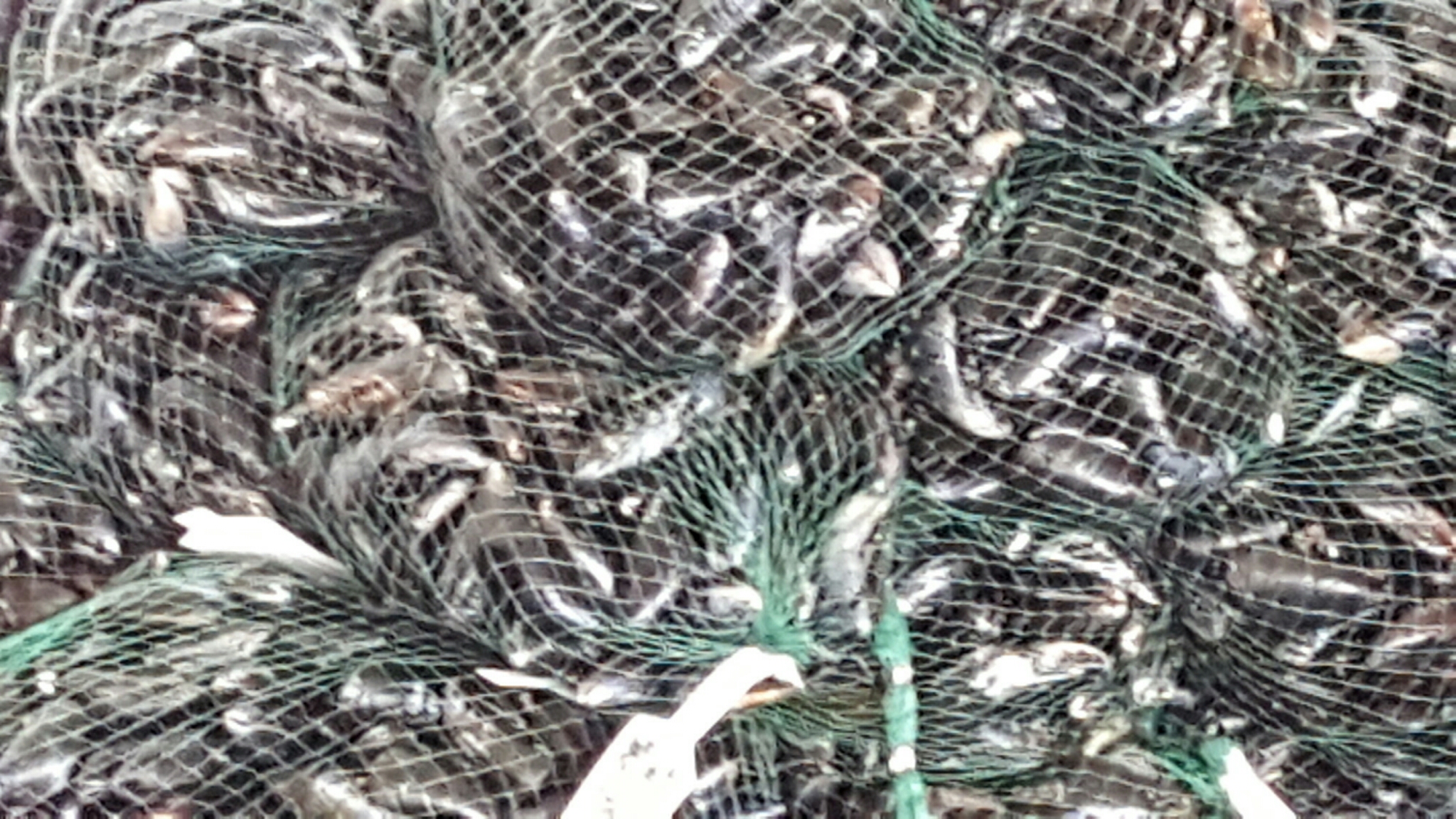
We could have bought mussels from the stacks which were being shipped off to restaurants:-
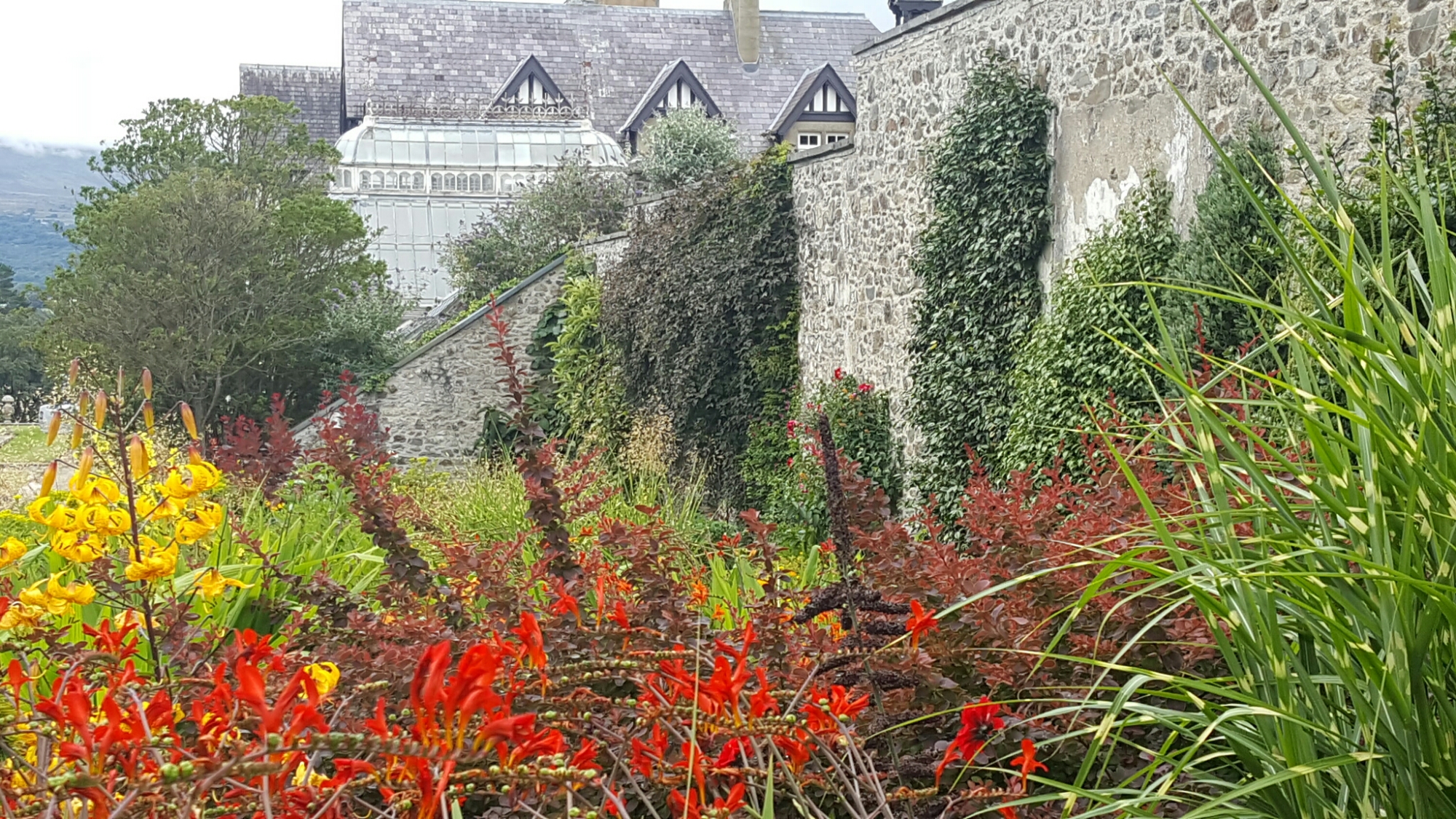
We went to Bodnant to see the garden, first established by Henry Pochin, a successful industrial chemist who bought the estate and employed Edward Milner, a pupil of Paxton, to lay out the garden in grand Victorian style with a water garden, pinetum, and The Poem, the family mausoleum down by the River Hiraethlyn. His daughter, Laura, married the first Lord Aberconway and it was the second Lord Aberconway who built the layers of terraces, sponsored plant hunting exhibitions in China and the Himalayas and gave the garden to the National Trust in 1949. The garden is huge and rather gloomy, a monument to grand Victorian arboricultural taste with pine trees from around the world, all protecting the visitor, and presumably the original owners, from the Welsh countryside around. What I really liked was the bark of the trees:-
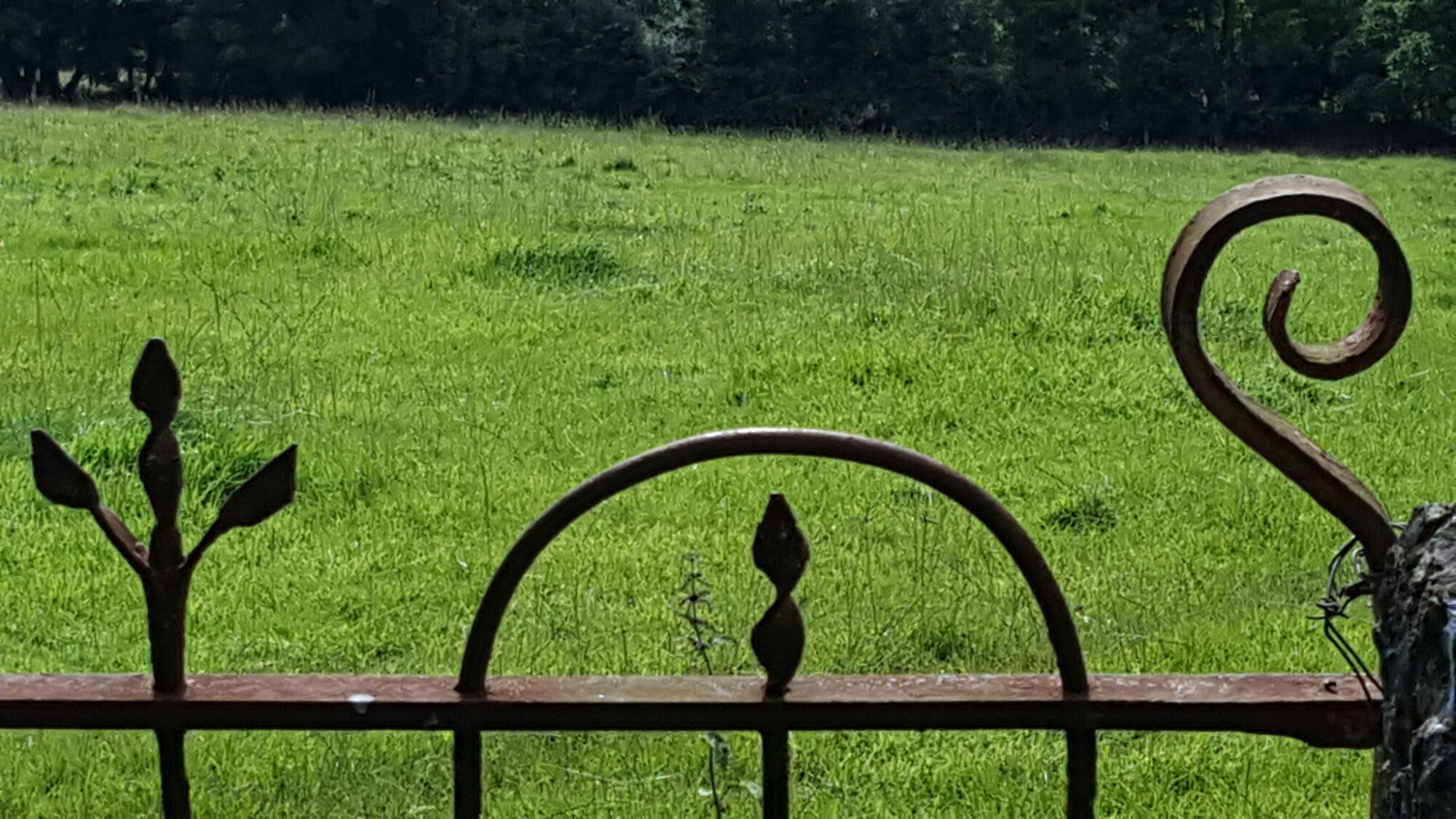
One of the pleasures of walking inland is that one sees the old farms, uncontaminated by modern farming techniques. The first was heralded by a good example of an old cast iron gate:-
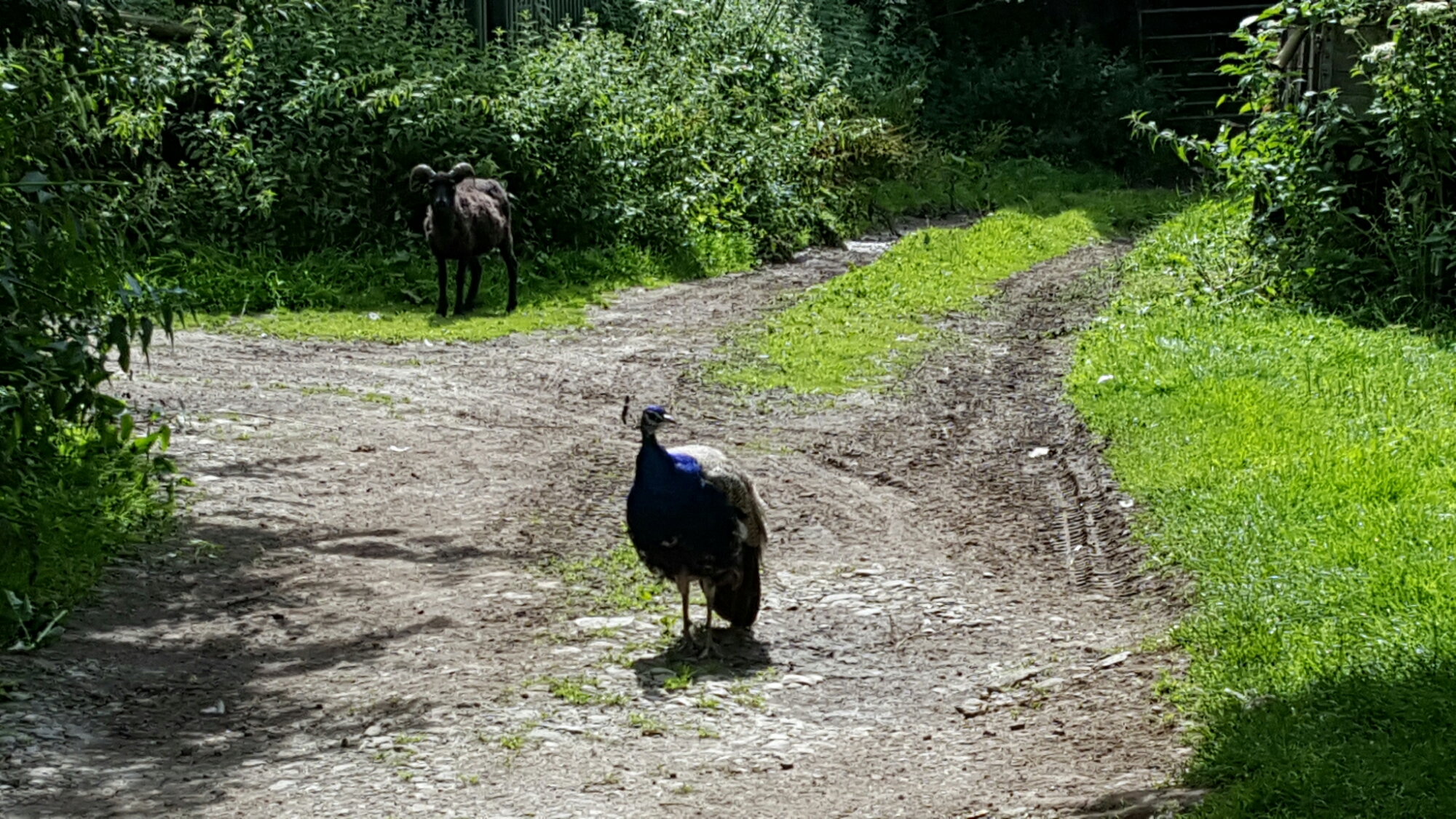
I was surprised to find a peacock in the farmyard, as well as an elderly Hebridean sheep:-
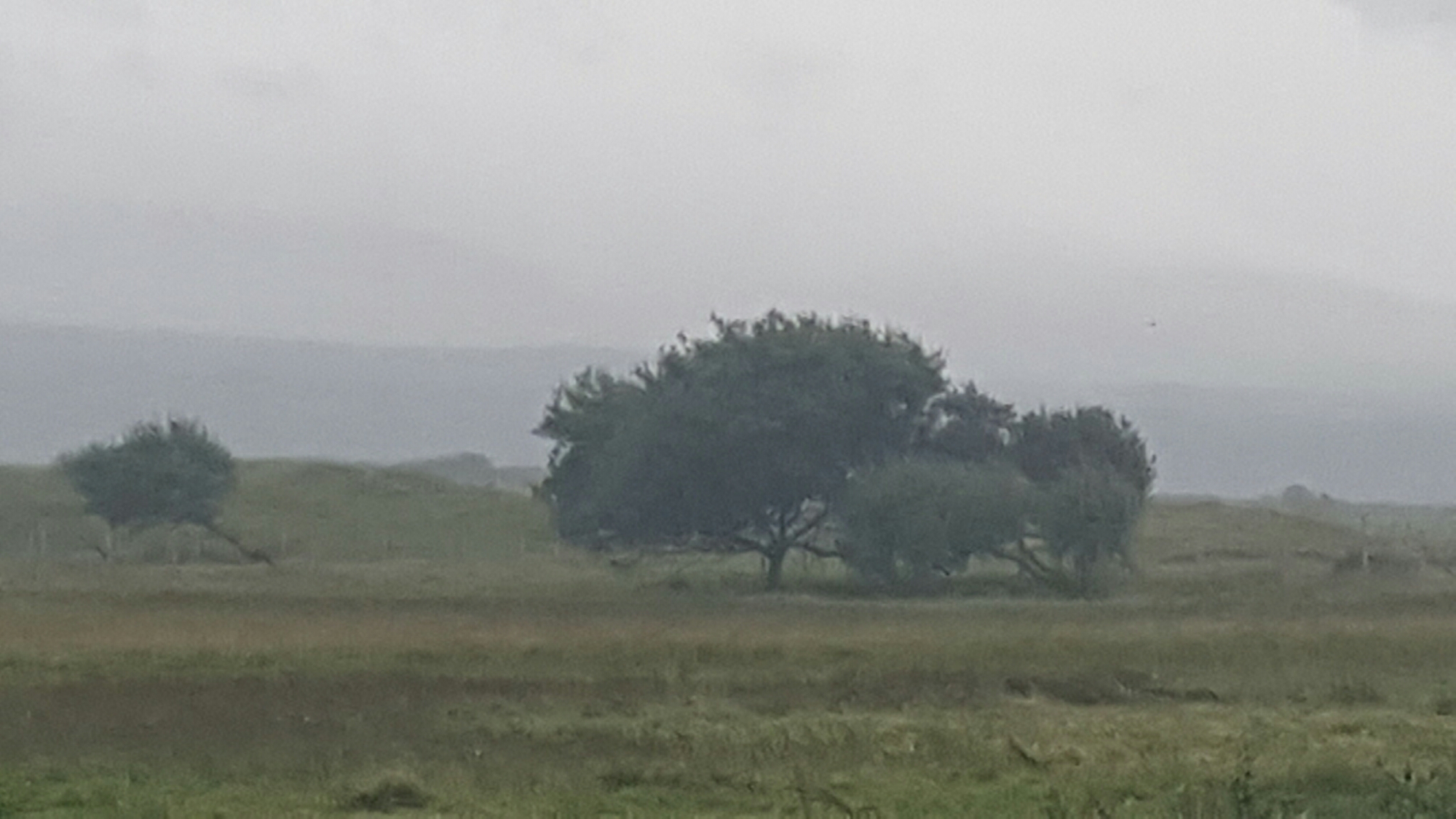
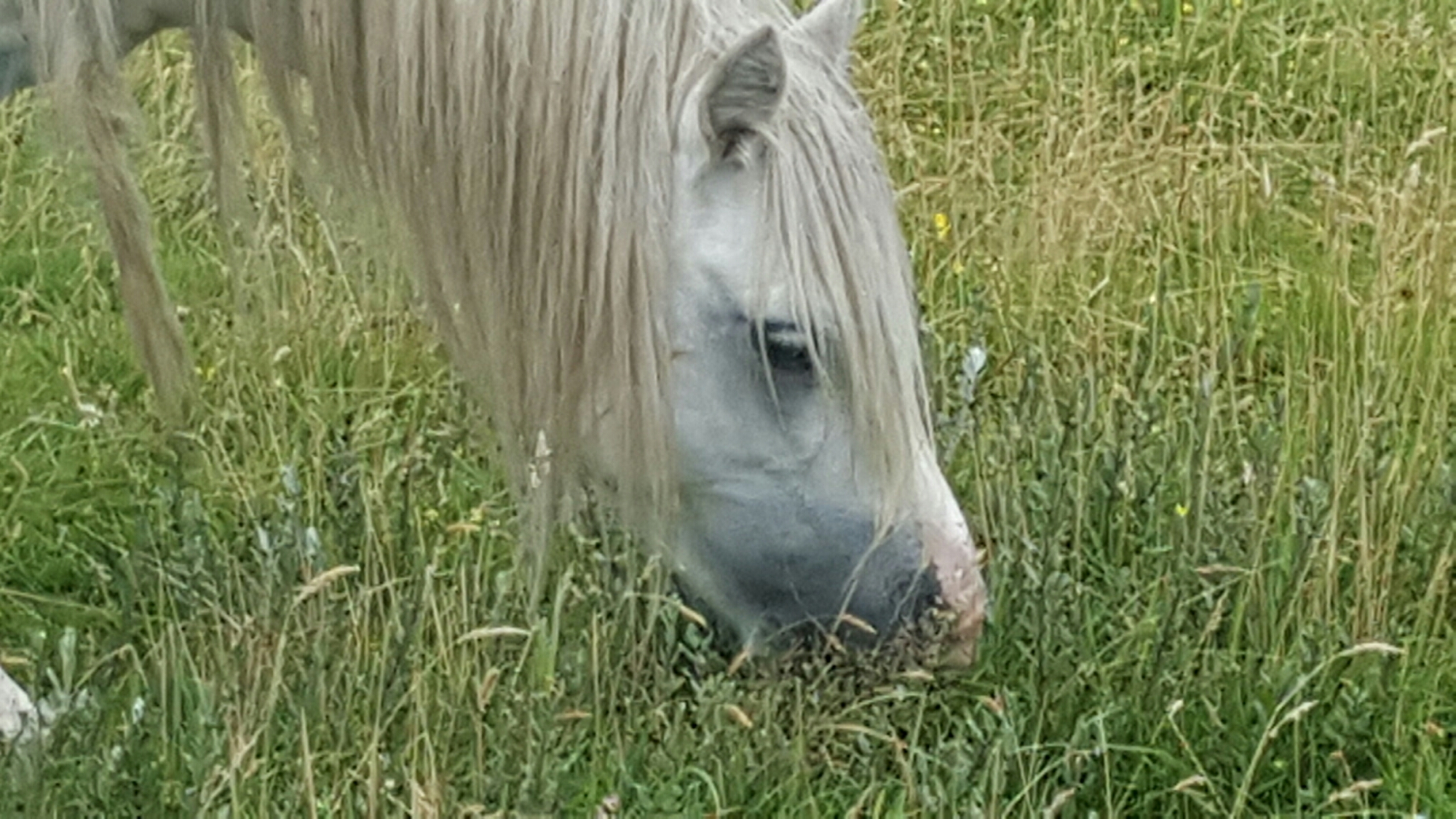
I went for a walk in the evening drizzle across Newborough Warren. It was a mistake. An area of desolate sand dunes, like a moonscape, populated only by a few ponies munching grass, one is guided from hillock to hillock by a set of wooden posts since otherwise one would be entirely disoriented. The hills were no more than distant shadows as I looked across the mudflats to Abermenai Point:-
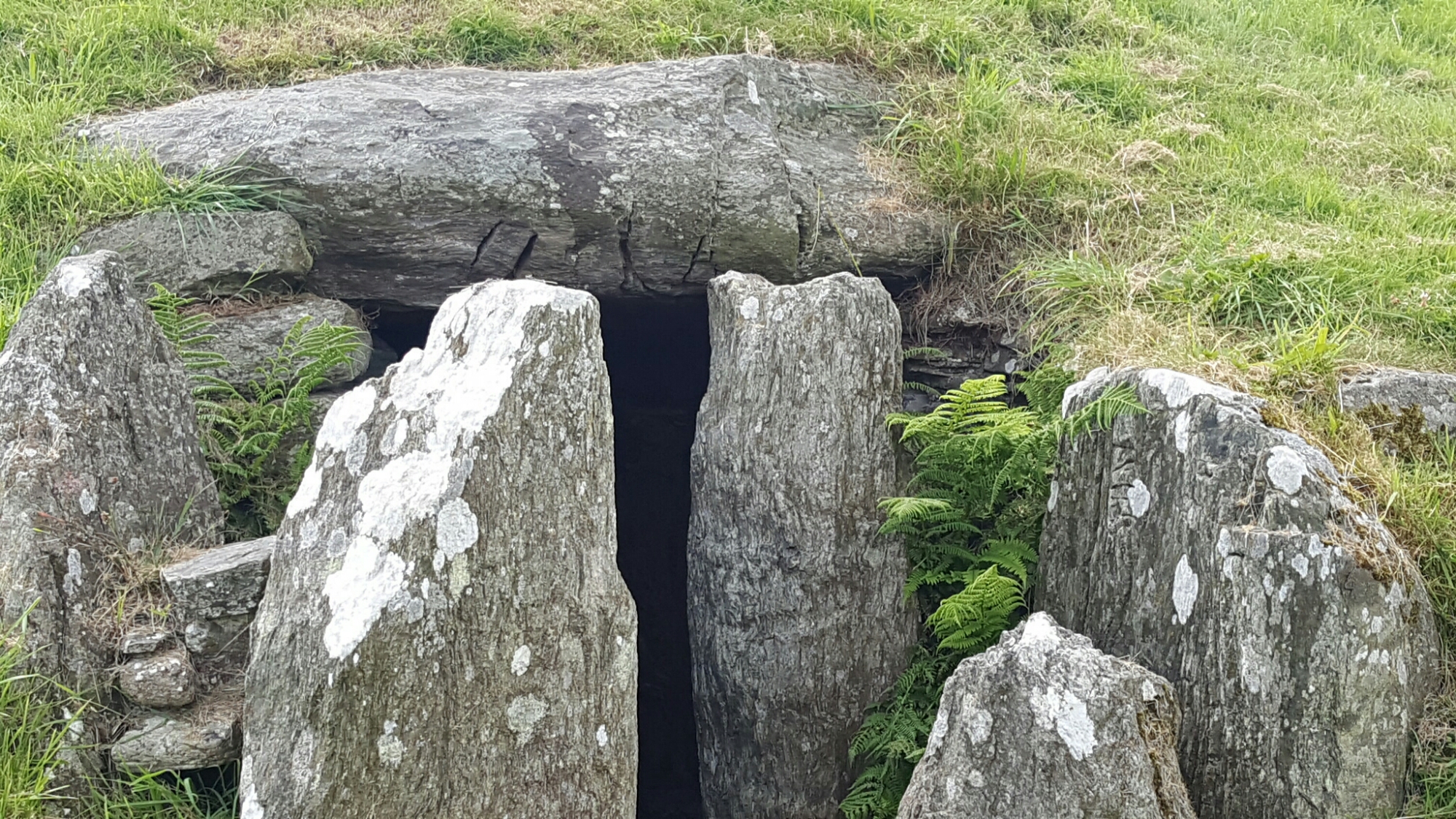
I have in the past tended to ignore the monuments of prehistoric Anglesey which lie scattered amongst the fields throughout the island. But on this occasion, encouraged by a book called The Modern Antiquarian by Julian Cope which lists and documents them, we went to see Bryn Celli Ddu, which was being used as a picnic site for a group of Welsh witches. It is not much more than a tump, with stones on either side through which the sun shines at the winter solstice:-
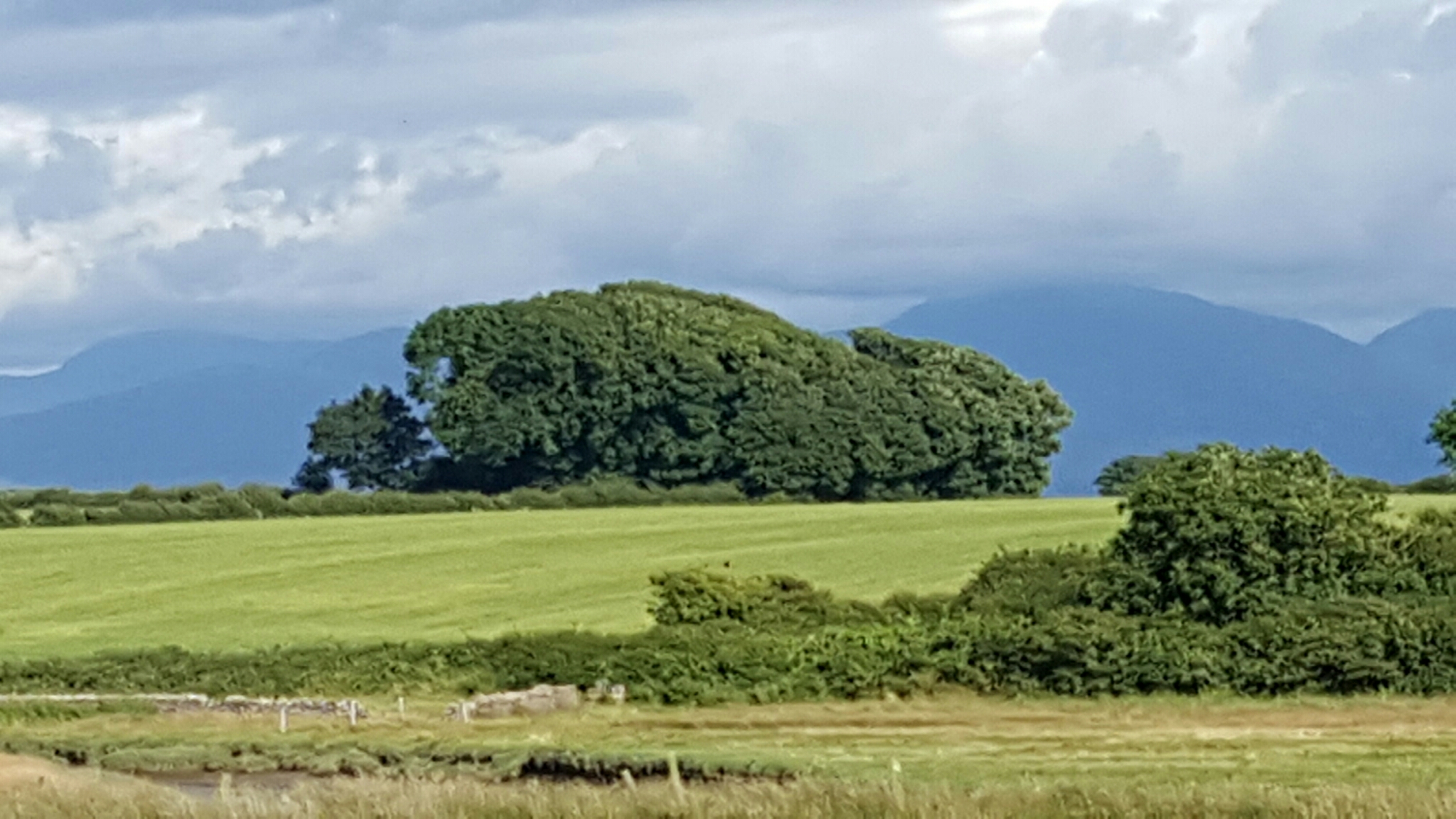
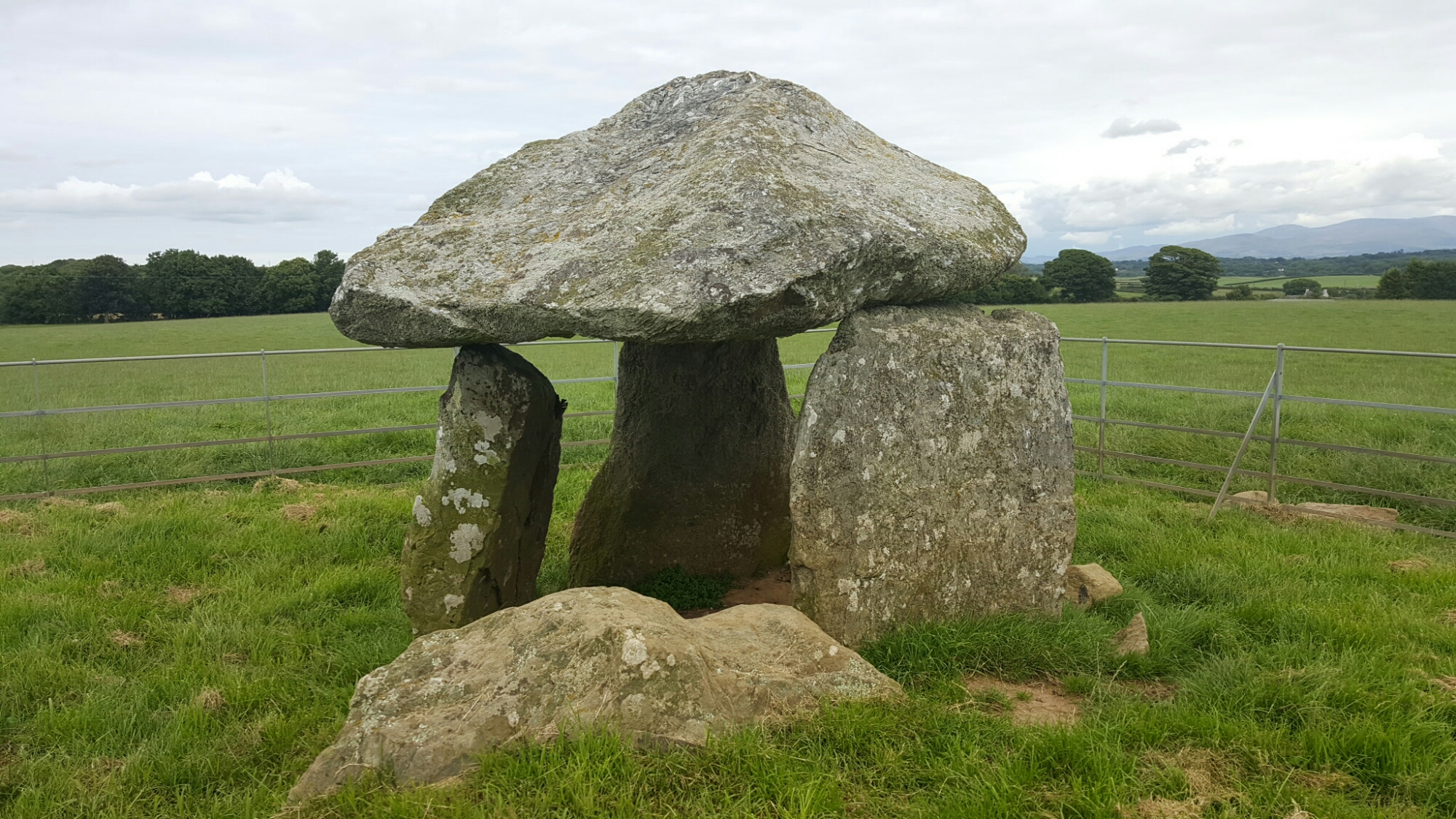
Afterwards I walked along paths through farmland, only managing to fall backwards into a stream, to Bodowyr, a small group of Neolithic stones stranded in the middle of a field and protected by an old Ministry of Works fence:-
We went down to the river Braint to see the two egrets and the stepping stones which were said to be Roman, but were replaced a few years ago:-
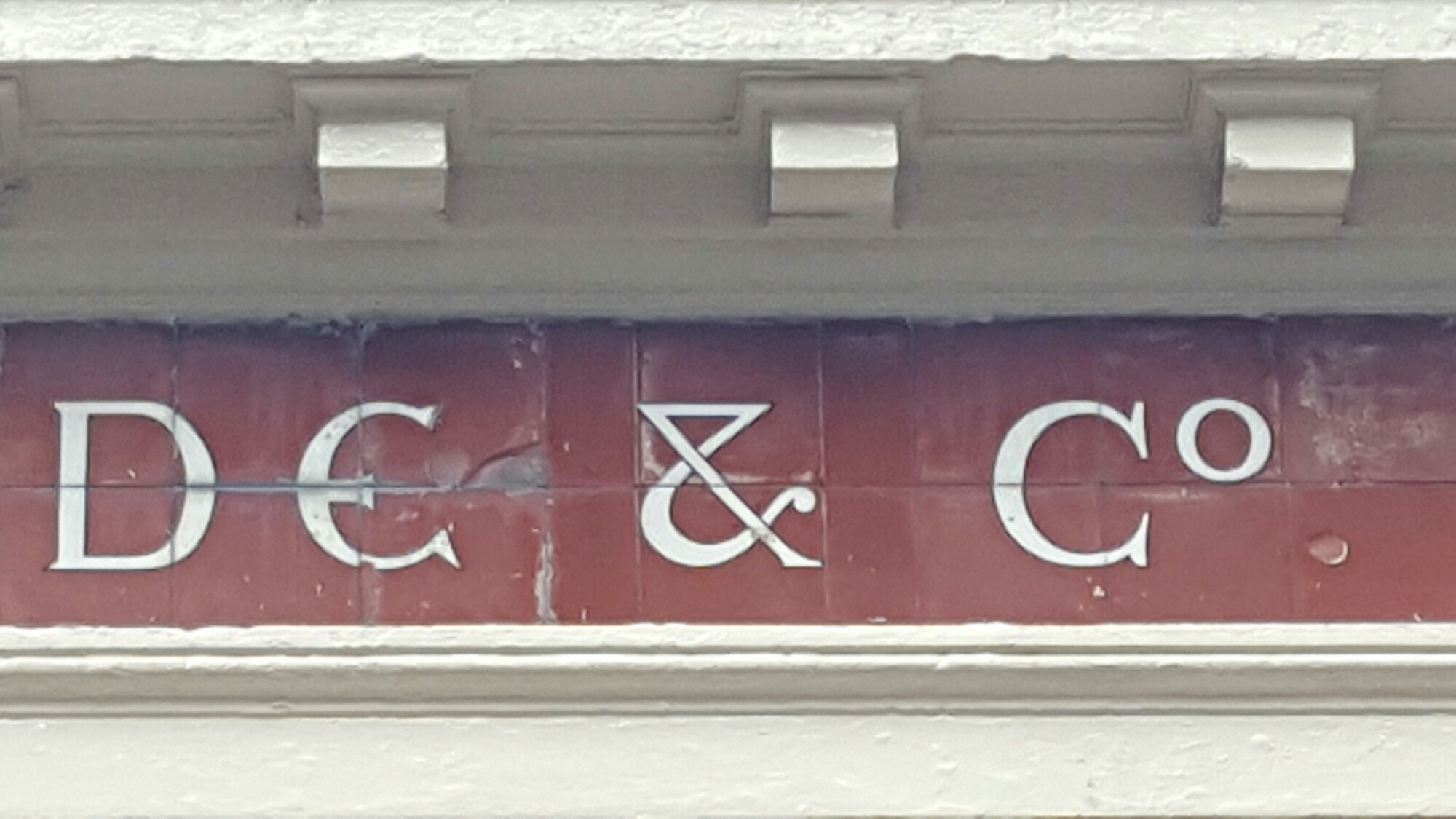
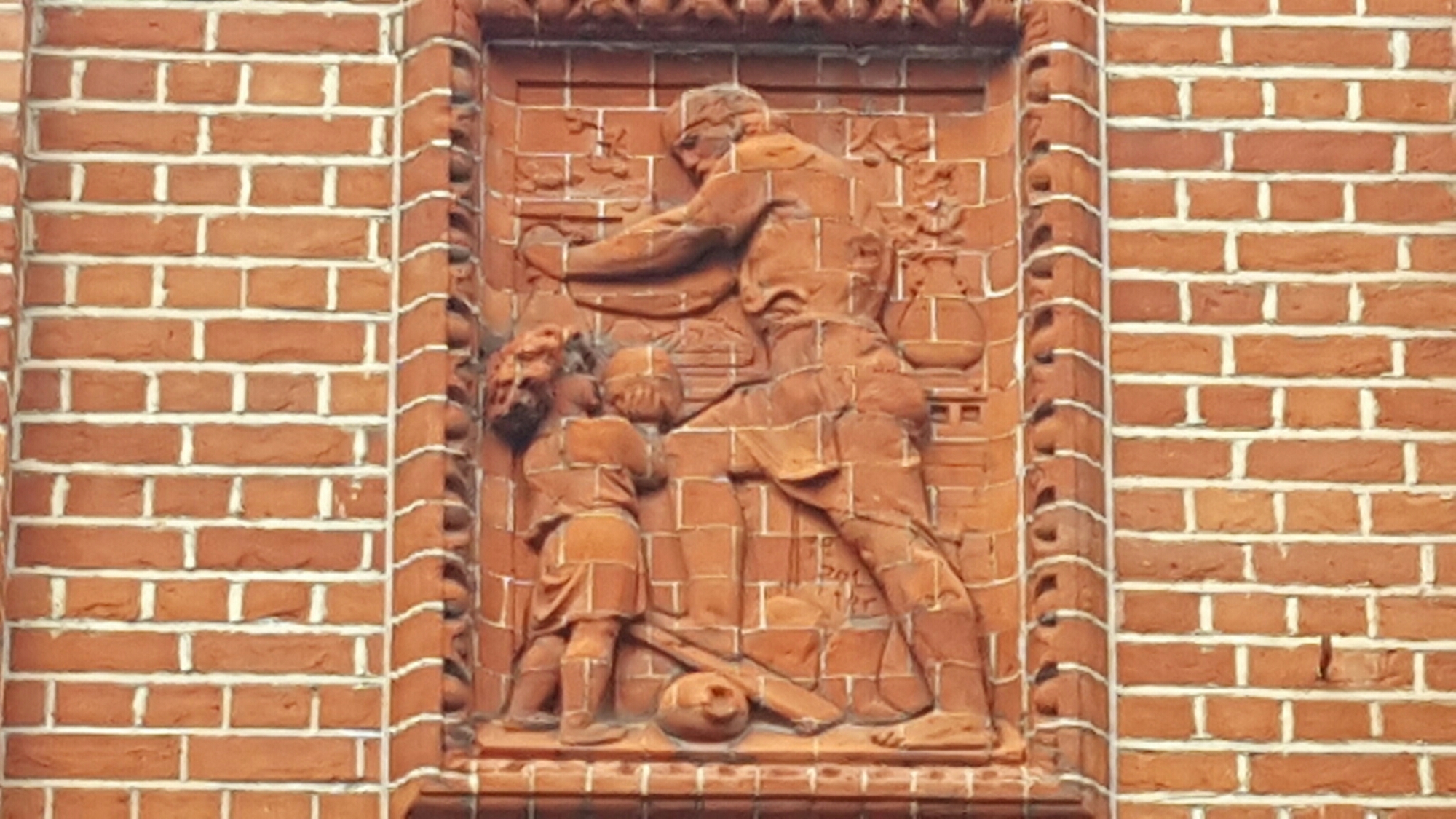
My last post from London for a few weeks is of details from the façade of Thomas Goode & Co., which I passed en route to lunch at Le Gavroche. I stopped to admire the ornament of its façade which, like so much of Victorian ornament, is not much described by Pevsner. The architect of the building was Ernest George who was commissioned by the Duke of Westminster to design a building in the Queen Anne style ‘of red brick and terra cotta’, based on a building in Kensington (most likely 1, Palace Gate) which George was instructed to inspect. The brickwork decoration was by Harry Hems who ran a large sculpture workshop in Exeter called ‘The Ecclesiastical Art Works’. Who did the beautiful ironwork ? I rely on one of my readers to tell me:-



You must be logged in to post a comment.