
Hong Kong (1)

I had recovered just enough to get the evening flight to Hong Kong.   I was dosed up with gin by Cathay Pacific and not disappointed to be greeted by a green Rolls Royce in Hong Kong.

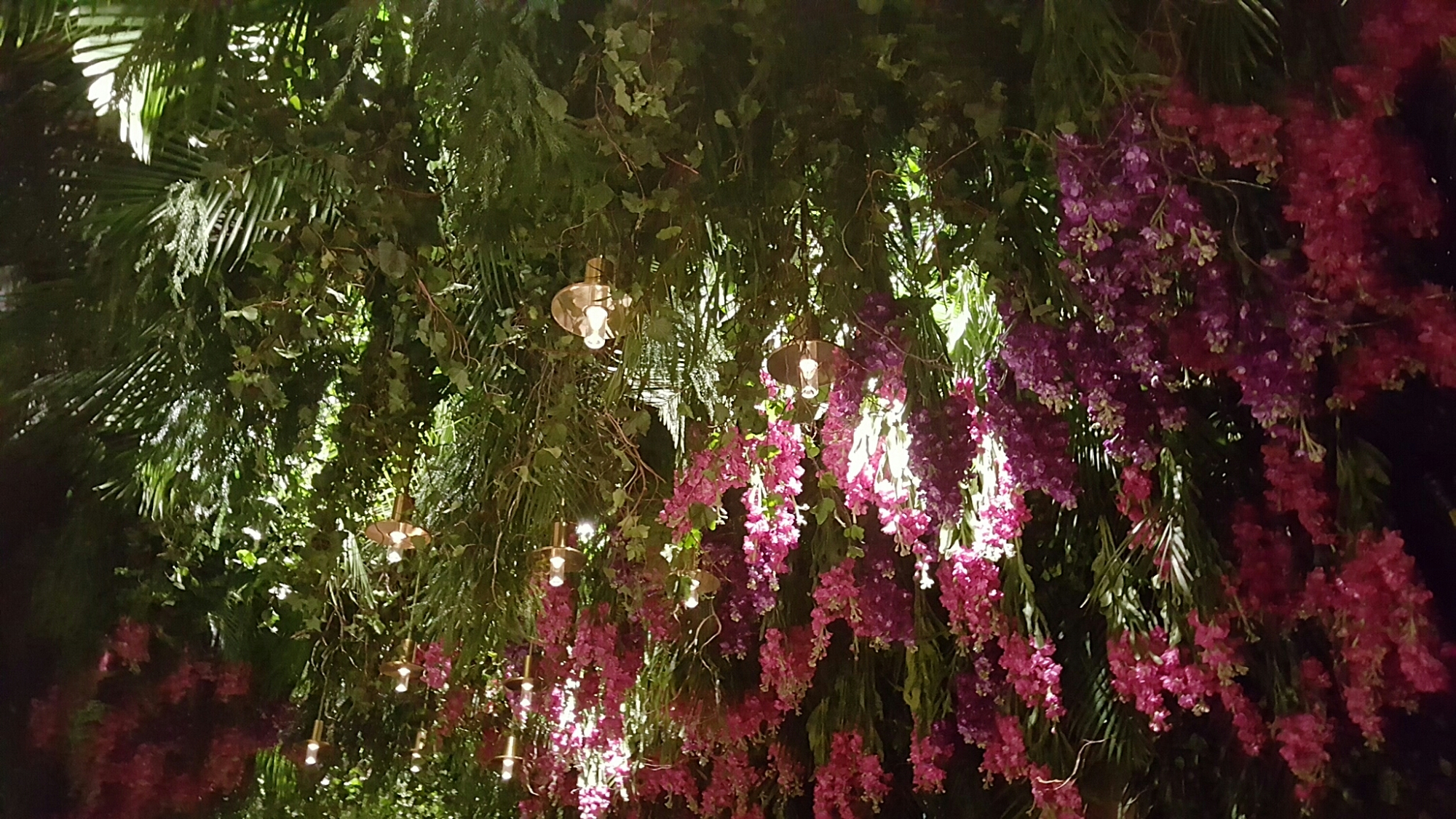
I arrived just in time to attend a pop-up event organised by Adrian Cheng on the ground floor of the Cosco Tower in Sheung Wan, jointly hosted bt Hans-Ulrich Obrist, and followed by a mystery dinner which we were taken to by bus, held in the Cobo House in Kennedy Town for which Janice Wong, a Singaporean pastrycook, had been especially flown in to organise the catering:-
image

Standard

The silence of the blog

I apologise to my readers for the silence of the blog.   On Sunday evening I got sick and have been suffering all week with some form of virulent flu, so have not been able to do anything other than lie in bed feeling miserable, not helped by the fact that it has become so nearly impossible to be seen by a doctor in the modern day NHS.   I hope to resume normal service next week.

Standard

River Thames

I have been reading Rowan Moore’s new book about London, Slow Burn City, which, like every book about London, includes a chapter about the role of the Thames and the grand transformation of its sewerage by Joseph Bazalgette.

On Friday, I looked down river towards the changing skyline of the City:-

image

Today, as the towpath was covered in mist and the tide was turning, I saw the sun break out over Canary Wharf:-

image Continue reading →

Standard

Oxo Tower

I look out of the window at work across to the Oxo Tower.   The building was apparently originally a power station to supply electricity to the post office and was only acquired by the Liebig Extract of Meat Company, who make Oxo, in the 1920s.   They then converted the building into a cold store, adding the art deco tower in 1929.   They had been refused permission to have an illuminated sign as advertising is forbidden, so the way the windows spell out OXO is a visual cheat:-

image

By chance, my prep school was in a country house previously owned by Charles Gunther, chairman of the Leibig Extract of Meat Company in the 1920s.   It had OXO as a decorative motif on some of the stone balconies.   Was this coincidental ?  The house had been built for a Birmingham industrialist called William Cotterill in 1870.   Or did the balconies belong to the great ballroom (Pevsner calls it ‘elephantine’) which was added by the Gunthers just after they bought the house in 1903 ?

Standard

Unilever House (5)

I have been meaning to do another blog about Unilever House because there is a widespread misapprehension repeated in our annual report (in my section no less) that it was designed by James Burnet & Partners who were the executant architects of the building after the Crash.   It wasn’t.   It was designed by James Lomax-Simpson, who, as I’ve written before, was a member of the board of Lever Bros. and designed many of the houses at Port Sunlight.   He handed over a set of signed drawings in October 1929, as reported by Charles Reilly in Progress, the in-house company magazine, in an article in Summer 1932.   Reilly described how ‘in all its essential lines and in the plan of the building it is the conception of the architect-director of Unilever House, Mr. J. Lomax Simpson, who realised the whole project and worked it out in a remarkably short space of time, while carrying out the ordinary work of the company’.   I am grateful for this correction to his daughter, Rosemary Lomax-Simpson, and apologise for the mistake:-

image

Standard

Jim Grover

I crossed Blackfriars Bridge this morning to see the exhibition of photographs by Jim Grover in the gallery on the ground floor of the Oxo Tower.   He has documented a year in the life of Kit Gunasekera, the vicar of St. James’s Church in Clapham, in black-and-white on a digital Leica camera.   What comes across is the toughness of the life of the clergy nowadays, administering to a shrinking and generally elderly congregation, documenting every service and the numbers attending.   It’s an effective piece of photo-realism, helped by the Sri Lankan saintliness of the clergyman’s face.

Standard

El Anatsui Hon. RA

One of the more unexpected aspects of my job is that whenever a new RA is elected, I read the so-called Roll of Obligation which was written on 14th. December 1768, four days after the foundation of the RA, and requires the newly elected RA to obey a set of duties and obligations – ‘Laws, & Regulations…and other Laws, By Laws, or Regulations, either made, or hereafter to be made’.   Although I have now read it many times, I still find it somewhat inscrutable, heavy with a sense of duty and responsibility which is not quite specified.   Last night I read it out in honour of El Anatsui, the great Ghanaian/Nigerian artist who was elected as an Honorary RA two years ago:-

image

image Continue reading →

Standard

The Post Office Tower (2)

In doing some background reading on the Post Office Tower (thank you, Otto) I have discovered, which I did not know, that the Treasury was implacably hostile to the use of telephones in the 1950s, did not allow them to be advertised and kept the cost of calls artificially high.   In 1961, the Post Office freed itself from Treasury control with the Post Office Act.   So, the Post Office Tower can be viewed as a single digit gesture of defiance on the part of the GPO again the constraints of Treasury control.  The best description of it came from Tony Benn who opened it to the public as Postmaster General in 1966 and described it as ‘lean, practical, futuristic, symbolises the technical and architectural skill of this new age’.

Standard

St. Mary Aldermary

I was lurking around Bow Lane waiting for my breakfast meeting when I wandered into St. Mary Aldermary, which is a Wren church which has been half turned, rather successfully, into a coffee bar.   It must have been the recent memory of the several medieval churches on the site, as well as a generous legacy from a citizen whose widow is said to have insisted on a stylistic reconstruction, which led Wren to provide a much more scholarly version of fan vaulting than would have been possible a century later:-

image

Standard

The Age of Giorgione (2)

Having now read the catalogue of In the Age of Giorgione with admiration and care, I have realised how uncertain are the sands of attribution.   Each generation has obviously treated differently the relationship between late Bellini, early Titian, Dosso Dossi and Giorgione somewhere in between.   From the catalogue, it feels as if the current generation has expanded early Titian at the expense of Giorgione and emphasised the influence of Durer to Venetian art above that of Leonardo, which is more documented.   One of the problems is the lack of availability for loan of the Castelfranco Altarpiece, which marks most clearly the break from the style of Bellini – the softer style of painting, the dreamy landscape, the Madonna set high on her throne.   This ought to anchor the radicalism of the young Giorgione.

Standard