The Post Office Tower (1)

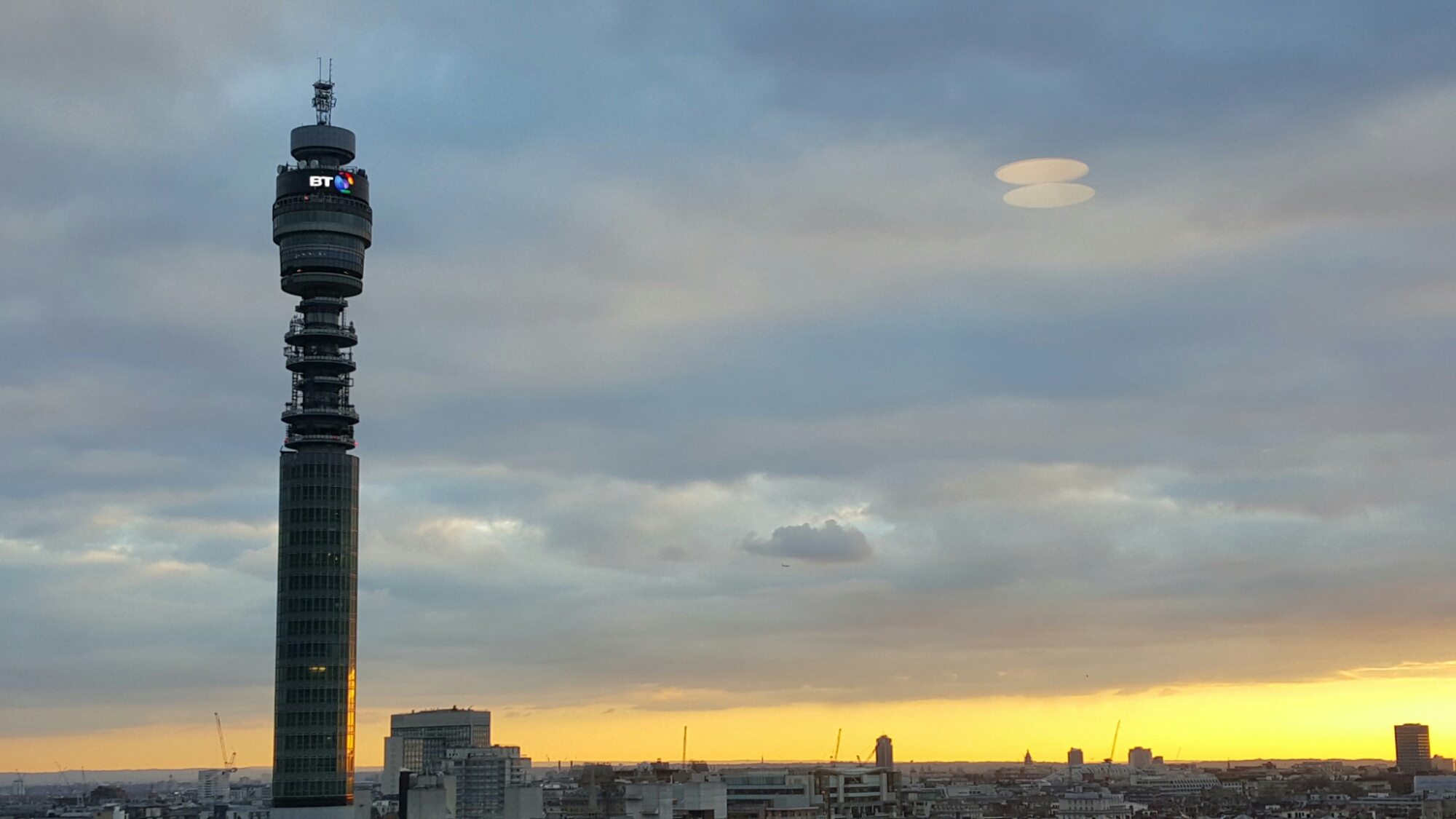
The Post Office Tower is a building which I have cheerfully ignored throughout my adult life.   I suppose there was a time when I might have hankered to have lunch in its revolving restaurant, but never did.   Then, its restaurant was closed by the threat of IRA terrorism since which the Tower has been strangely invisible even if – perhaps especially if – one is walking up Cleveland Street.   So, it was with a slight sense of awe that I looked out of a nearby tower block and saw it pencil-thin, still vaguely futuristic, silhouetted against the evening sky and dominating everything around it:-

image

The view of the Euston Road wasn’t bad either:-

image

Standard

The Age of Giorgione (1)

I have been doing background reading for our exhibition, In the Age of Giorgione, which opens on Wednesday to Friends of the RA and on Saturday to the wider public.   That the exhibition is happening at all is a triumph of diplomacy by its two curators, Simone Facchinetti from the Museo Adriano Bernareggi in Bergamo and Arturo Galansino, formerly of the RA and now in charge of the Palazzo Strozzi in Florence.   There have been previous exhibitions of Giorgione, most recently at the Kunsthistorisches Museum in Vienna.   But the presumption is that it should be impossible, given the lack of availability of loans and the general uncertainty of attribution.   Arturo originally wanted to do a monographic exhibition on Giovanni Cariani.   We all said it was much too specialist.   So, instead he has made a virtue of the general uncertainty surrounding Giorgione and it is now the central subject of the exhibition.   Who was Giorgione ?  And to what extent is it possible to distinguish his paintings from those of his contemporaries ?

In the Age of Giorgione: 12 March 2016 – 5 June 2016

Standard

The Cloakroom

I have just had what was probably the most stressful morning I have spent at the RA.   I was working in the cloakroom on a wet Saturday morning during one of the busiest exhibitions we have ever had.   I had forgotten how completely cack handed I am.   Also, I had never experienced how many coats people expect to leave – coats, jackets, bags, rucksacks, newspapers, gloves, scarves, umbrellas and hats (what to do with the hat ?).   It’s nearly impossible to find the sleeves on the more elaborate coats, which most of them are, in a jungle of fake fur.   Then, the bags go in lockers while the coats go on hangers.   After a bit, the place fills up so it’s hard to find a hanger.   As one takes the hanger out, the coat next door falls off.   Someone asked me if I was looking for diamonds in the pockets.   On the contrary, I was just trying to find a way to hang her coat up.   It made me full of admiration for the calm and sang froid with which the others – artists – behind the counter operated.

Standard

Maggs Bros.

I went last night to what I thought was the grand re-opening (it was the grandest invitation) of Maggs Bros in its new premises on Curzon Street opposite Trumpers, the royal barbers.   But it turns out that it has been open since Christmas.   I scarcely penetrated its magnificent former town house on the west side of Berkeley Square as it always felt too forbiddingly antiquarian even for a bookaholic like me.   But the new premises is more easily visited with the best library steps that I have seen, a yellow lacquer library table designed by Marianna Kennedy, saucy French pornography on the top shelves and an unexpectedly strong holding of twentieth-century Japanese photography.

Standard

The Garden Bridge (2)

I realise from the ferocity of the comments on my post about the Garden Bridge what strong feelings it arouses.

I would merely comment:-

1.  As attentive readers of my blog will have read, the idea of a bridge between Temple and the South Bank dates back to the 1940s when it first appeared as an aspiration in the 1943 County of London plan.

2.  Much of the thrust of the book published by Mark Fisher and Richard Rogers on The New London in 1992 relates to the opportunities provided by the deindustrialisation of the Thames and the benefits of treating it as a central artery to be enjoyed and appreciated instead of us just turning our backs on it.

3.  The exhibition organised by Peter Murray at the Royal Academy in 1996 floated the idea of Living Bridges, which could be inhabited rather than treated as a way of getting from A to B.

4.  The area between Blackfriars and Charing Cross can feel slightly dead.   Someone told me that Temple underground station is the least used on the network, which I find hard to believe, but is suggestive that Aldwych, Somerset House and Temple could benefit from more convenient access.

5.   As I understand it, the bulk of the funding is private apart from an initial investment of £30 million from the Treasury.   So, it costs the public purse £30 million which is not disproportionate.

All of this is a way of saying that it represents more than the childhood dream of Joanna Lumley.
Standard

The Garden Bridge (1)

Tonight I went to a fundraising dinner in support of the Garden Bridge.   I was, and remain, in support of it, in spite of the protesters picketing outside.   Joanna Lumley spoke of her original dream of an English garden in the hills of Malaysia.   Thomas Heatherwick spoke of the importance of joining the two sides of the river by having somewhere to linger as one crosses it.   I know there are lots of people who oppose it, who think that it is a folly.   But there is something attractively mad about planting an English garden in the middle of the Thames.

Standard

London Fruit and Wool Exchange

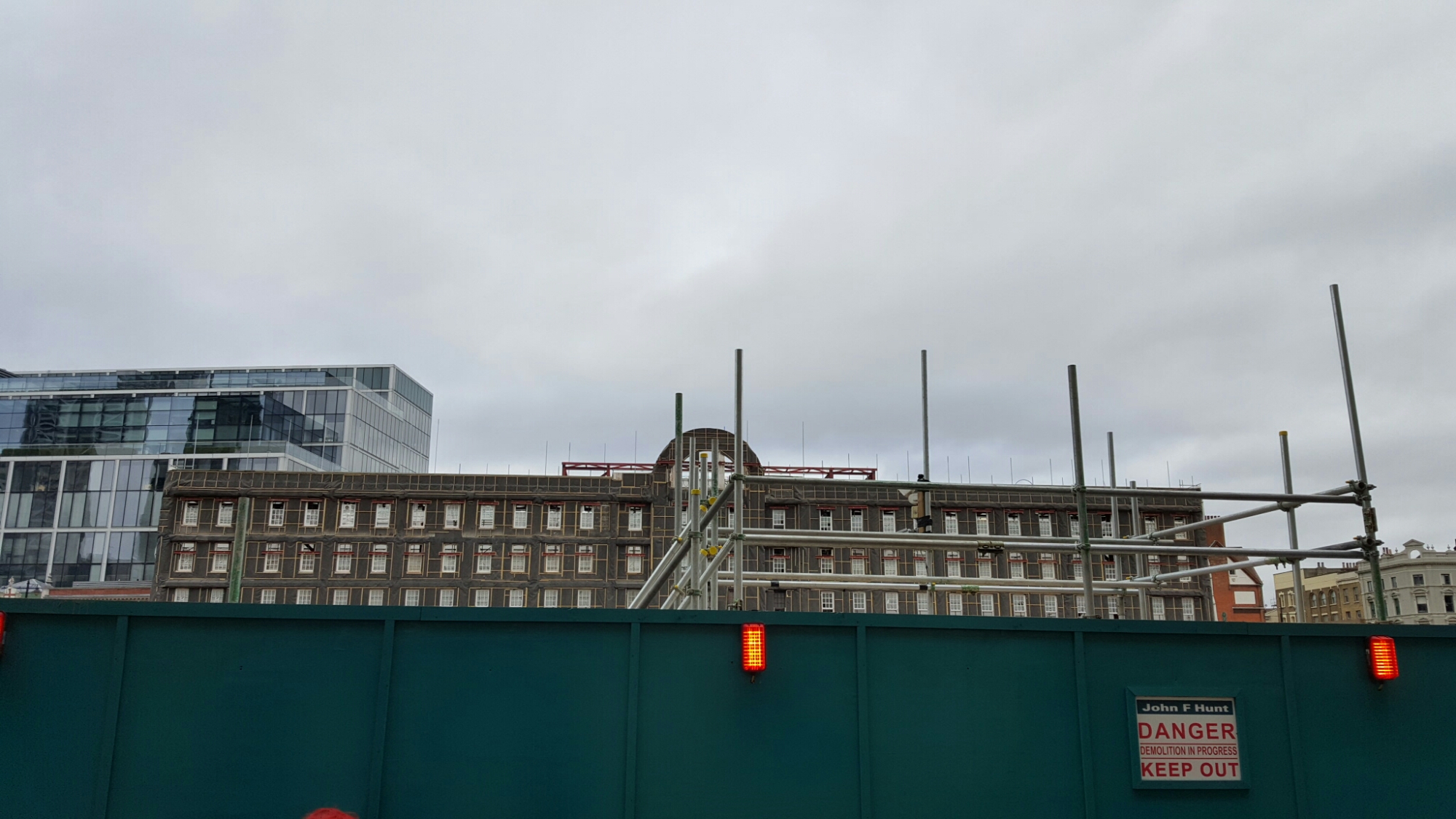
It’s odd how one can think one knows a London neighbourhood and then discover that an enormous chunk of it has disappeared for redevelopment.   This is true of the massive site immediately opposite Spitalfields Market which was previously a multi-storey car park (I remember that) and the London Fruit and Wool Exchange, a not especially distinguished 1920s classical building which opened in 1929 for fruit and vegetable auctions.   The façade facing on to Brushfield Street has been kept and looks faintly surreal, propped up on the other site of the vacant building site which is being redeveloped by Rab Bennetts:-

image

Standard

The New London

Since he is such a loyal and knowledgeable commentator on my blog, I have been reading the book that Mark Fisher wrote jointly with Richard Rogers and published in 1992, presumably as a prelude to the General Election which Labour was expecting to win.   It is interesting being reminded of a period when London was lagging far behind the municipal planning of European cities, with no grand projets and a sense of general decay and decline in its public realm, not least in Hoxton which is used as a case study.   Much of what they advocated has now been implemented (one wonders how much as a result of their passionate advocacy):  better use of the river;  a greater interest in architecture;  more international competitions;  bicycle lanes.   There is a Mayor with responsibility for co-ordinating policy in the boroughs.   There are more street markets.   Cultural institutions have been renovated through the lottery.   Schools have been renovated through central government funding.   Now the big issue is affordable housing, which was a big problem then and a bigger, more intractable problem now.

Standard

Libreria

We heard about Libreria from the man who made the cocktails at its opening.   It’s the new, über-trendy bookshop in Hanbury Street with mirrored black ceiling and yellow, packing case shelves and stock which is categorised according to unconventional subject matter rather than traditional subject headings.   They don’t allow wi-fi and photography is banned, so the only way I can record it is by a picture of its paper bag:-

image

Standard

Green Lanes Pumping Station

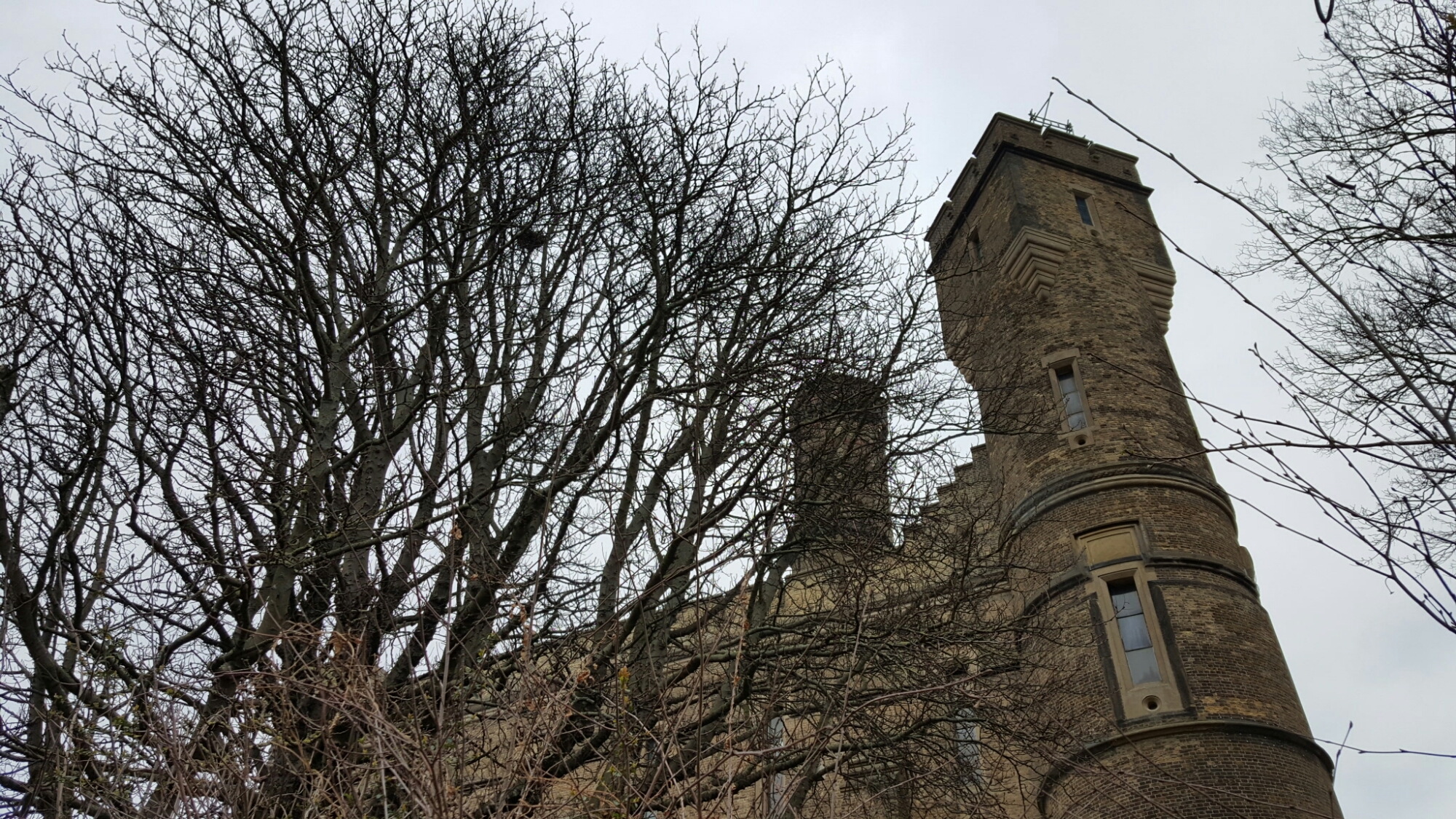
I have occasionally driven past the Green Lanes Pumping Station, a mad, grand Scottish baronial folly which was designed by Robert Billings in 1856 to draw water from the adjacent reservoirs which had been laid out in the late 1820s to supply water to central London.

image

image

Standard