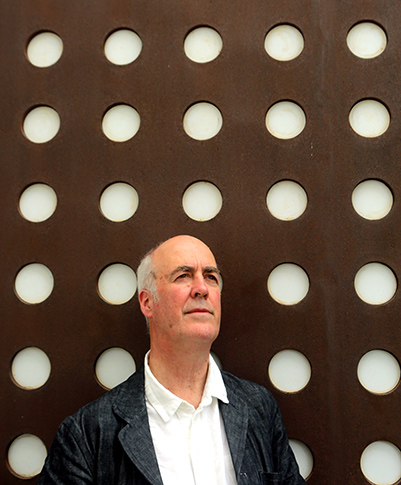
I have been meaning to re-read Jonathan Raban’s classic study of the literary and psychological characteristics of city life, Soft City, as I remember enjoying its exploration of how individuals relate to the city in the construction of their private identity when it was first published in 1975. Raban had left teaching literature at East Anglia and settled for a life as a freelance writer in Islington and Earl’s Court, exploring the characteristics of the city with a mixture of Barthian fascination and nineteenth-century horror. It’s anti-modernist, anti-Corbusian and anti-Mumford, regarding the city as more an irrational psychological construct than a rational physical construction.
Category Archives: Uncategorized
LDDC (2)
I learned more about the early history of the LDDC from Gregory Penoyre who was employed by the LDDC straight out of Sheffield School of Architecture as an architectural designer. He worked under Ted Hollamby, the ex-communist and owner of the Red House, who had been recruited as Chief Architect from Lambeth Borough Council, and alongside Gordon Cullen, the great proponent of townscape who liked to conduct meetings in pubs. I remember Greg saying that he was employed to draw ley lines connecting the Mudchute to the tower of St. Anne’s Limehouse (this was before the publication of Peter Ackroyd’s Hawksmoor), but he denies this.
11, Princelet Street
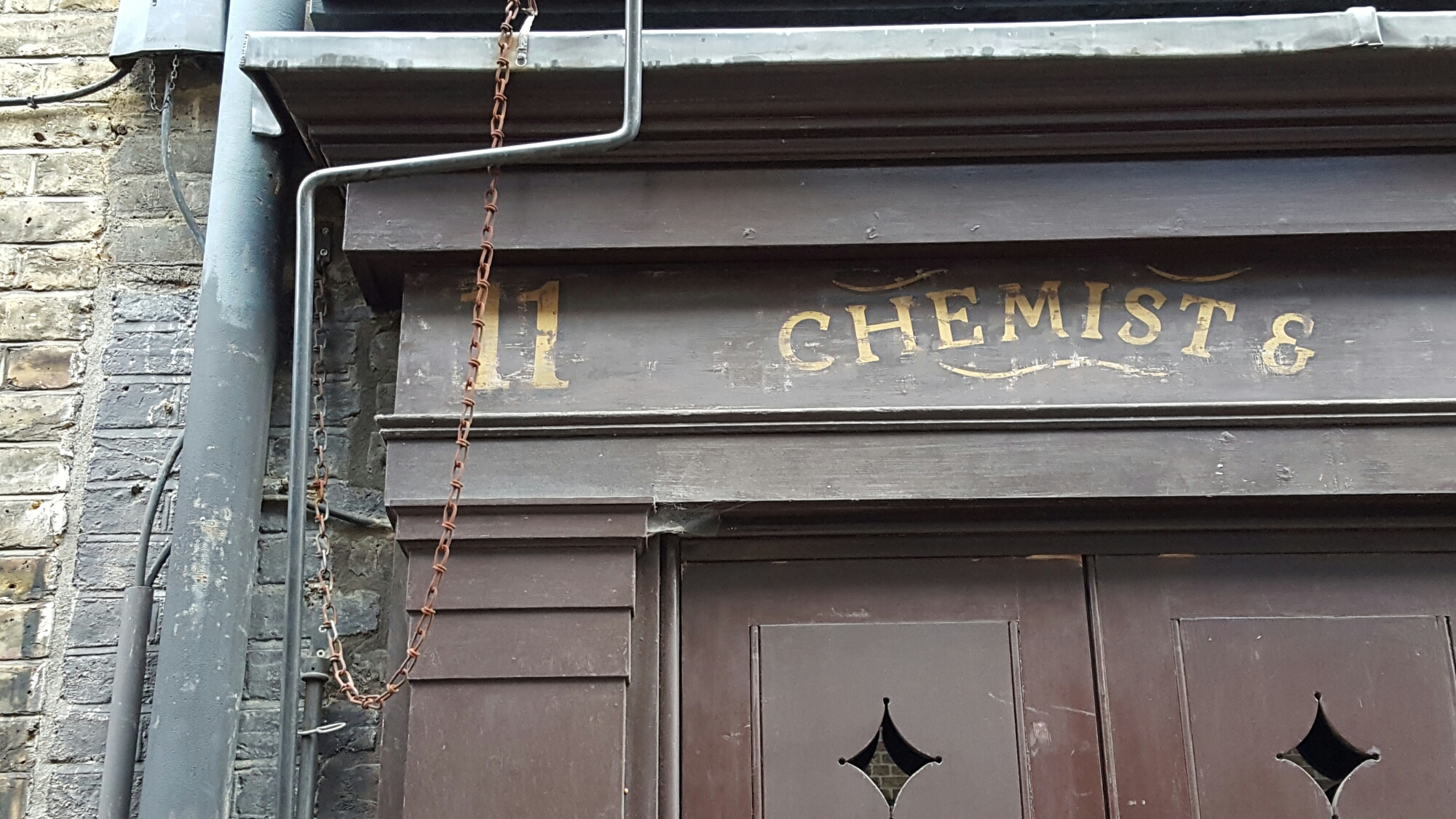
I have never previously walked past Chris Dyson’s architectural practice in Princelet Street when it has been closed, so have not had an opportunity of admiring its fine shop lettering, nor its fine fire insurance plaques (first introduced by Sun Fire Office in 1710), nor the poster recording its history:-

Cereal Killer Café
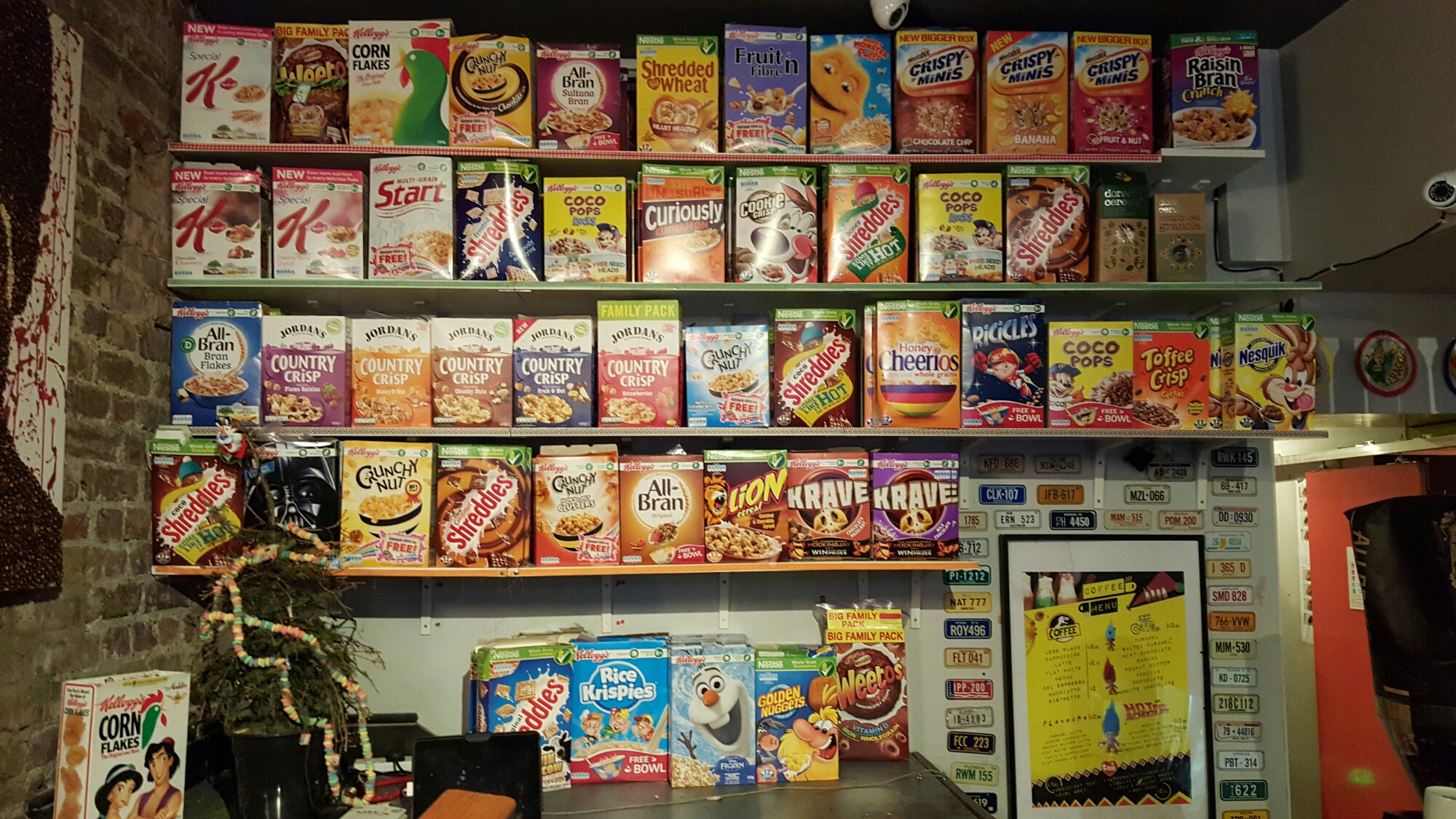
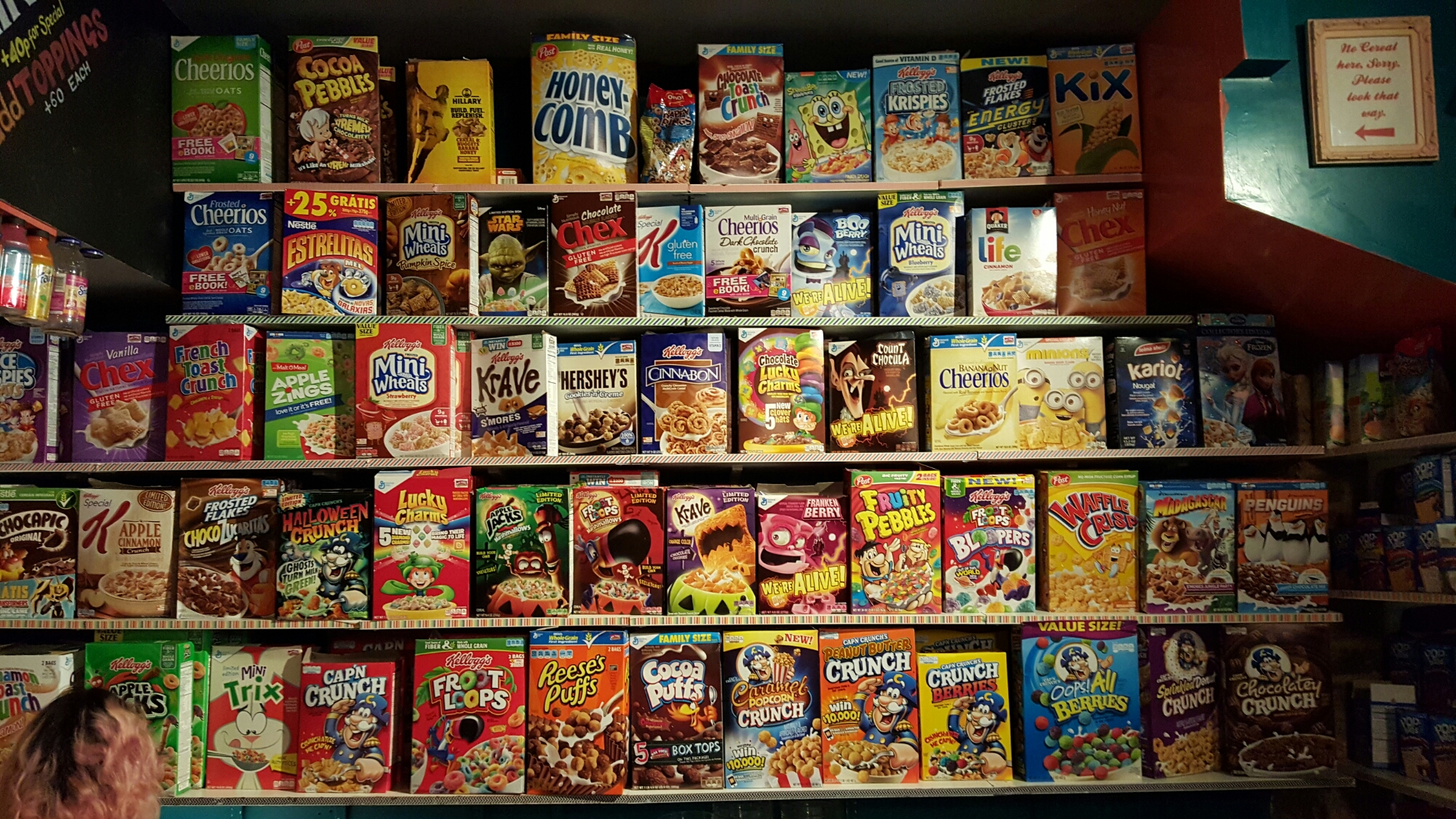
I had read about the shop in Brick Lane which sells nothing but Kelloggs’ breakfast cereals and thought that it was nothing but a modern urban myth until I passed it, looked through the window, and saw people enjoying their morning breakfast cereal. I was told recently that Kelloggs cornflakes were invented by religious fundamentalists to suppress the libido and have discovered to my amazement that this is true: that John Harvey Kellogg was a virulent anti-masturbator. But I can’t see why anyone would want to masturbate at breakfast:-
River Lea
Having had a rather sedentary Christmas, I decided to get out early on New Year’s Day. I walked eastwards along the Hertford Union Canal not quite sure which direction to go and then headed northwards up the River Lea beyond the Olympic Park to where the landscape resumes its character of industrial wastelands. There were not many people about, only the woodsmoke from the canal boats, the occasional swan, debris in the pubs, and a lone sculler. I went as far as Tottenham Hale. Next time I must go to Broxbourne:-


Lasdun and the English Baroque
Part of the argument of Owen Hopkins’s new book about Hawksmoor is that Hawksmoor influenced a generation of modern and postmodern architects, including Denys Lasdun, Robert Venturi and James Stirling. All those strong black-and-white shadows. As it happens, the only time I met Lasdun was at a dinner held to commemorate the death of Thomas Archer held, I think, in May 1983 and organised by, amongst others, Loyd Grossman who was planning to do a PhD on Archer:-


Wickham’s Department Store
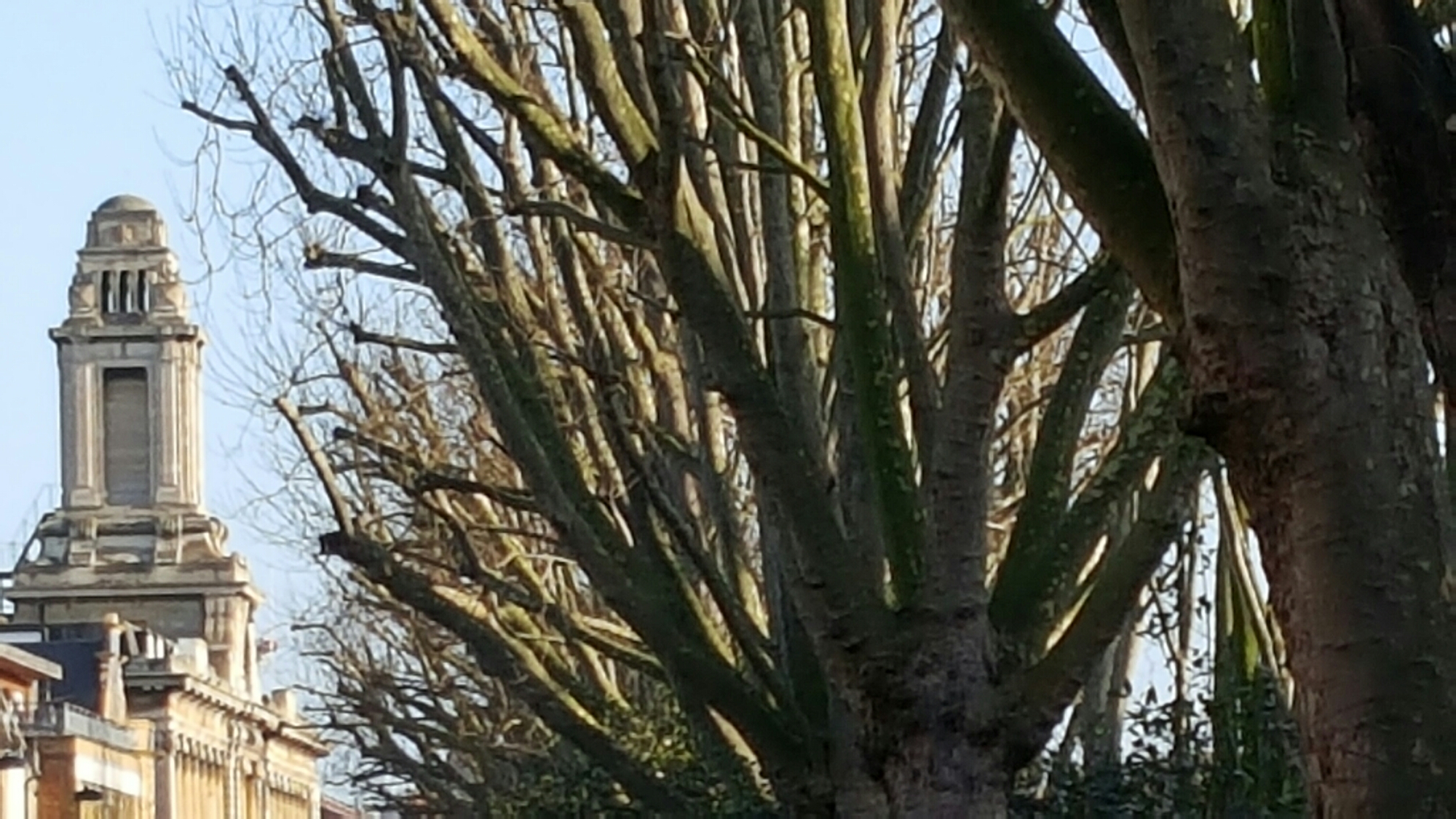
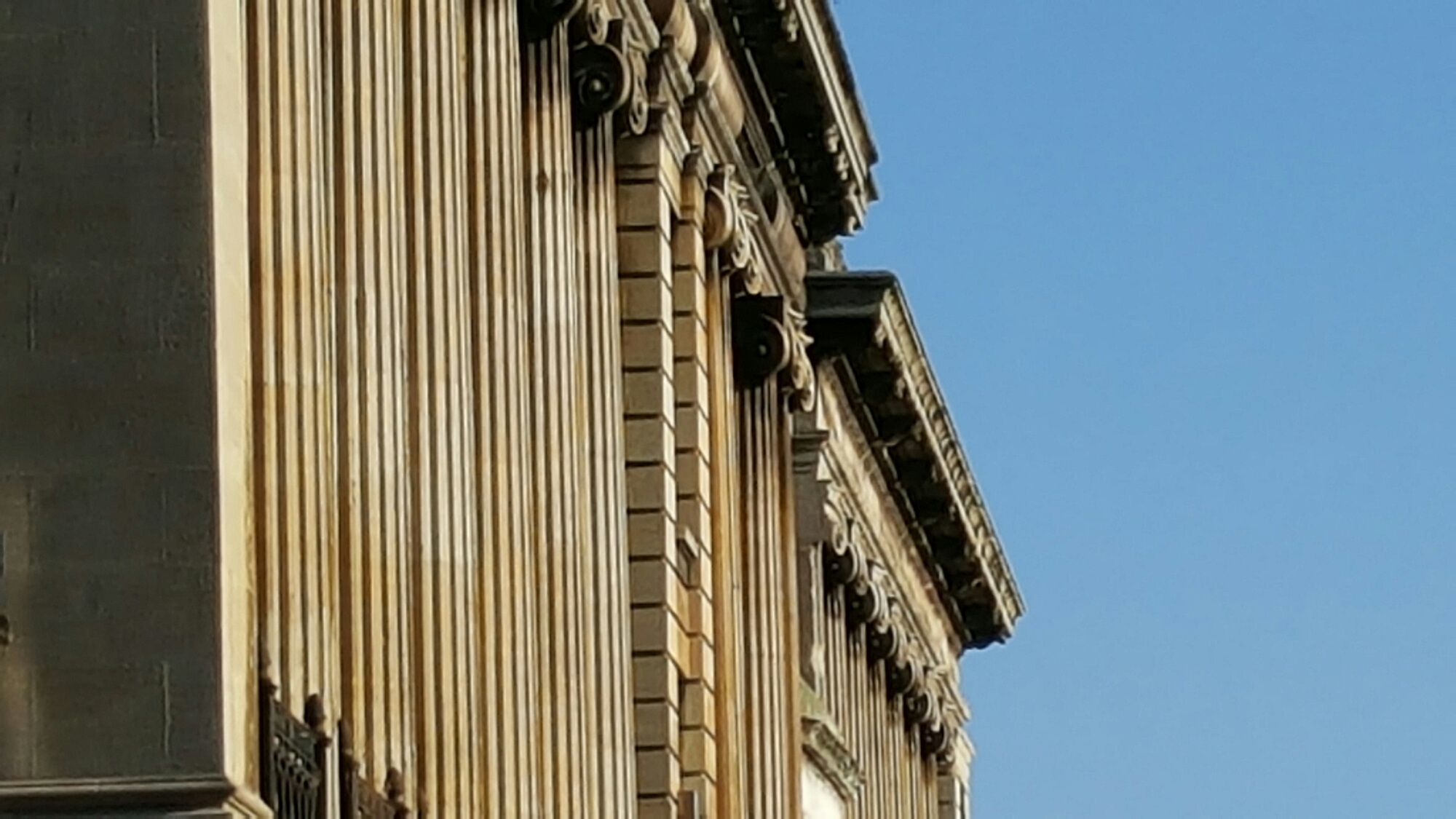
I have seldom seen Wickham’s look so magnificent as it did this morning in the winter sun, its tower seen from a distance alongside the line of plane trees planted in 1910 on Mile End Waste:-
Jubilee Street
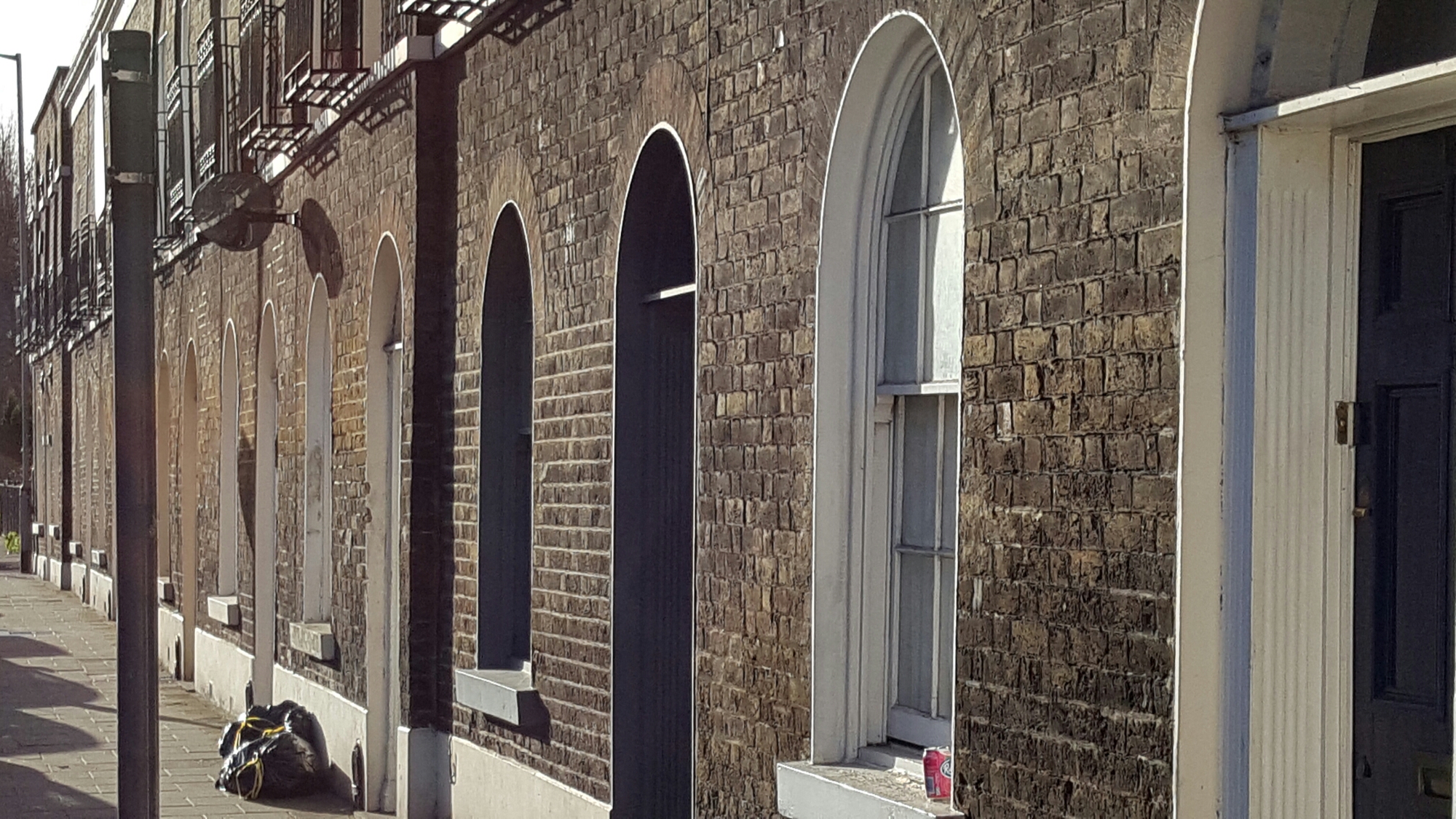
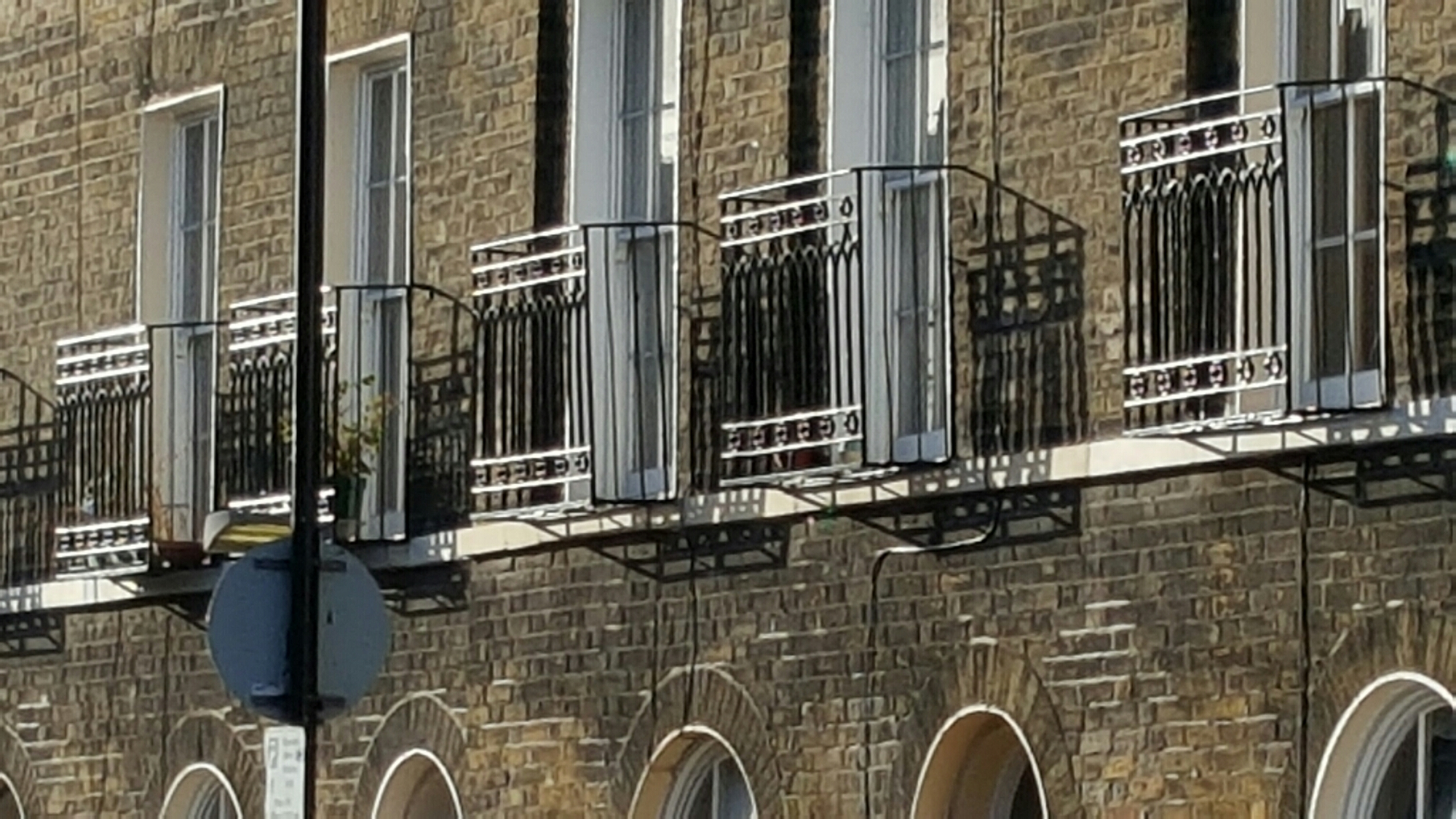
There are good surviving nineteenth-century terrace houses on Jubilee Street, as well as being the former site of the New Alexandra Hall, where Lenin spoke on 21 March 1903 at a meeting to celebrate the 32nd. anniversary of the Paris Commune and which was then leased by an anarchist club. No.193 was lived in, according to the 1881 Census, by John Abbott, a cowkeeper and owner of Abbott’s Yard behind with a dairy which supplied fresh milk to the City:-
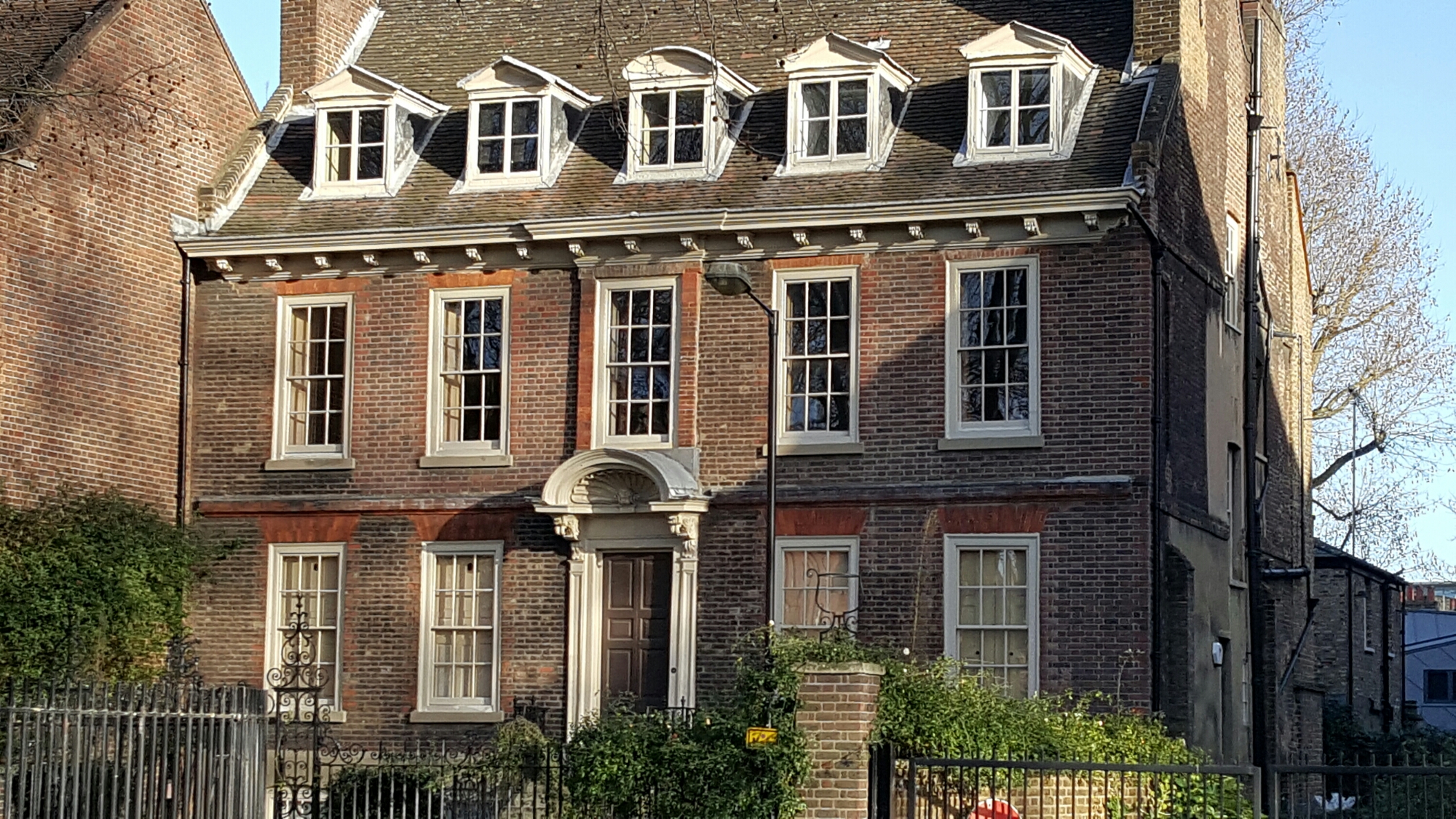
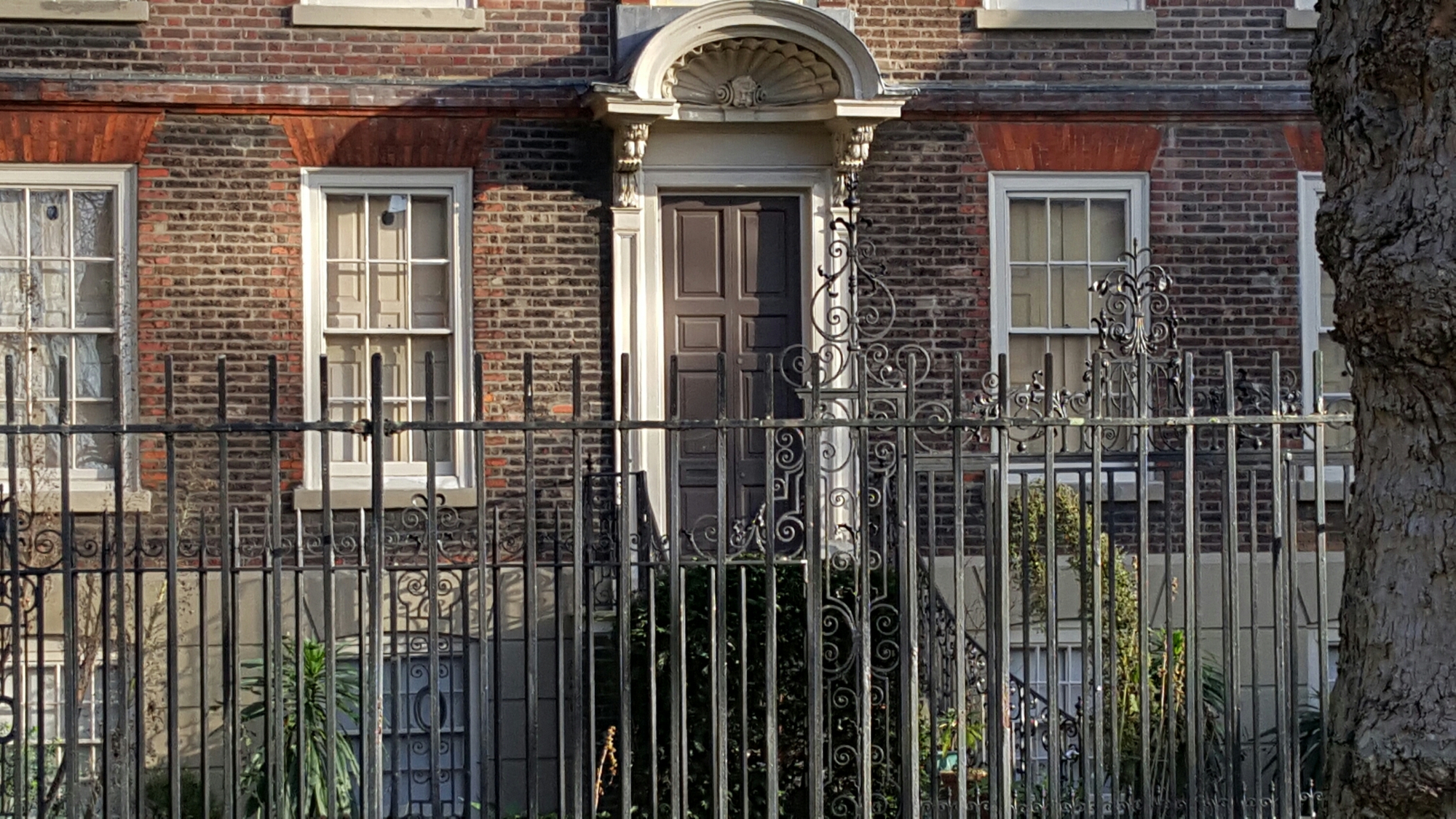
37 Stepney Green
I have managed to acquire a second-hand copy of a Central Stepney History Walk, written by Tom Ridge and published by the so-called Central Stepney Regeneration Board in 1998. It has a usefully concise account of the previous owners of 37, Stepney Green, the grandest of the houses in the neighbourhood. It was built for Dormer Sheppard, a London merchant and slave owner who twice advertised for the return of ‘a black Boy named Lewis, about 15 years old, in a Fustian Frock with Brass Buttons, Leather Breeches and blue stockings’. In 1714, it was bought by Lady Mary Gayer, the widow of General Sir John Gayer who had been Governor of Bombay. From 1757 to 1763, it was owned by Lawrence Sulivan, a Director and Chairman of the East India Company, from 1764 to 1811 by Isaac Lefevre, a banker and distiller, and, from 1812 to 1819, by Nicholas Charrington, proprietor of the local brewery. It ended up as a Jewish Home, then The Craft School, and finally Council Offices before being sold to the Spitalfields Trust in the mid-1990s:-
LDDC
The reason I was given Andy Beckett’s book is that it has the best recent account of the founding of the LDDC. I had always thought that the LDDC was Heseltine’s baby. It turns out that the idea was at least as much Geoffrey Howe’s, based on a meeting of the Bow Group at the Waterman’s Arms in June 1978 which led to the idea of an Enterprise Zone, free of planning restrictions. The LDDC itself was founded in November 1980 with Reg Ward as its first Chief Executive and its headquarters in a Norman Foster building in Millwall Docks designed as the passenger terminal for Fred Olsen Lines in 1969, one of his first major buildings, since demolished (it’s oddly not recorded in the practice’s list of projects). LDDC’s first projects were the red roads, new housing in Beckton (Savage Gardens) and Limehouse studios designed by Terry Farrell in a playful postmodern style on the site of one of the banana warehouses.


You must be logged in to post a comment.