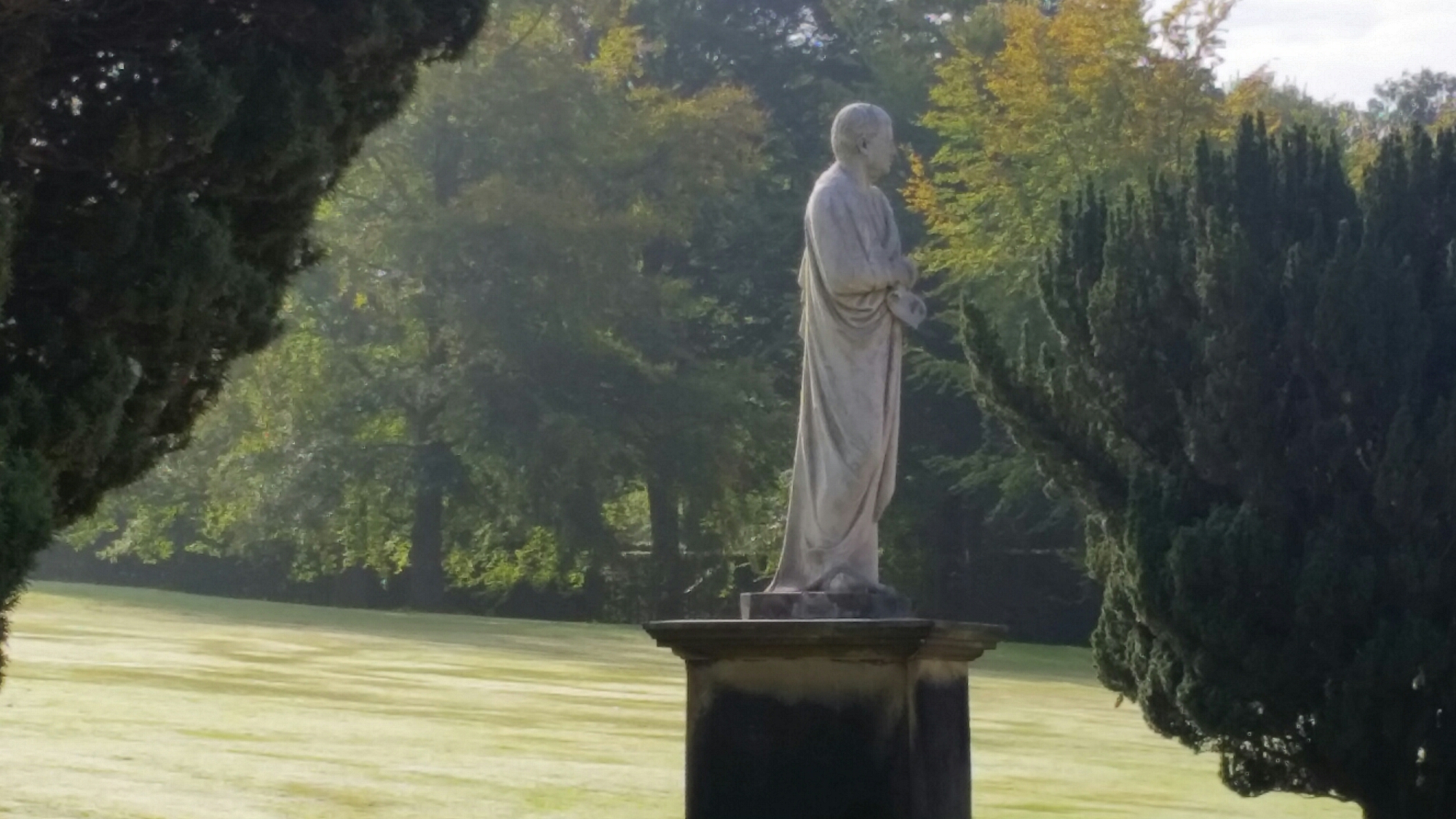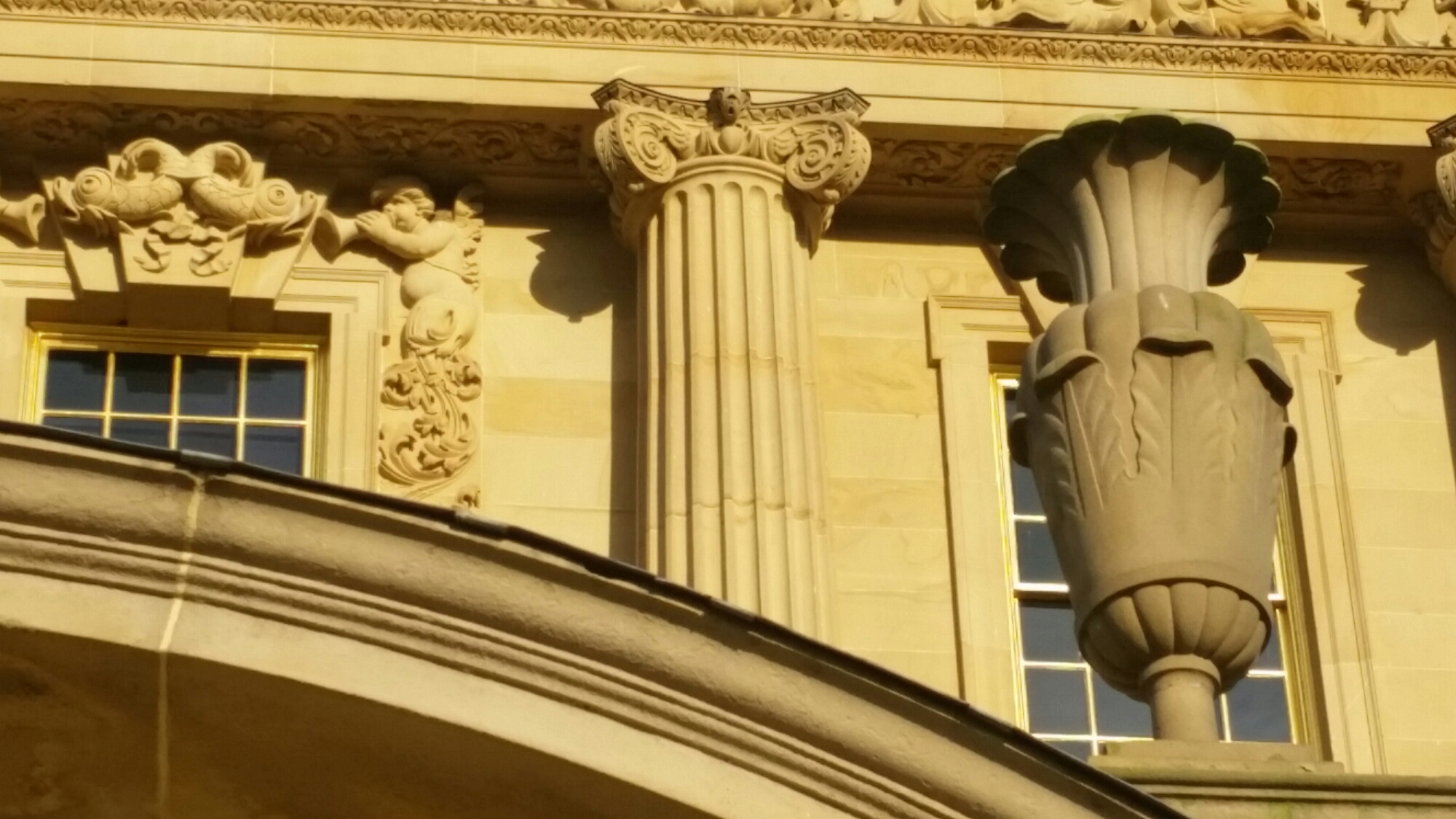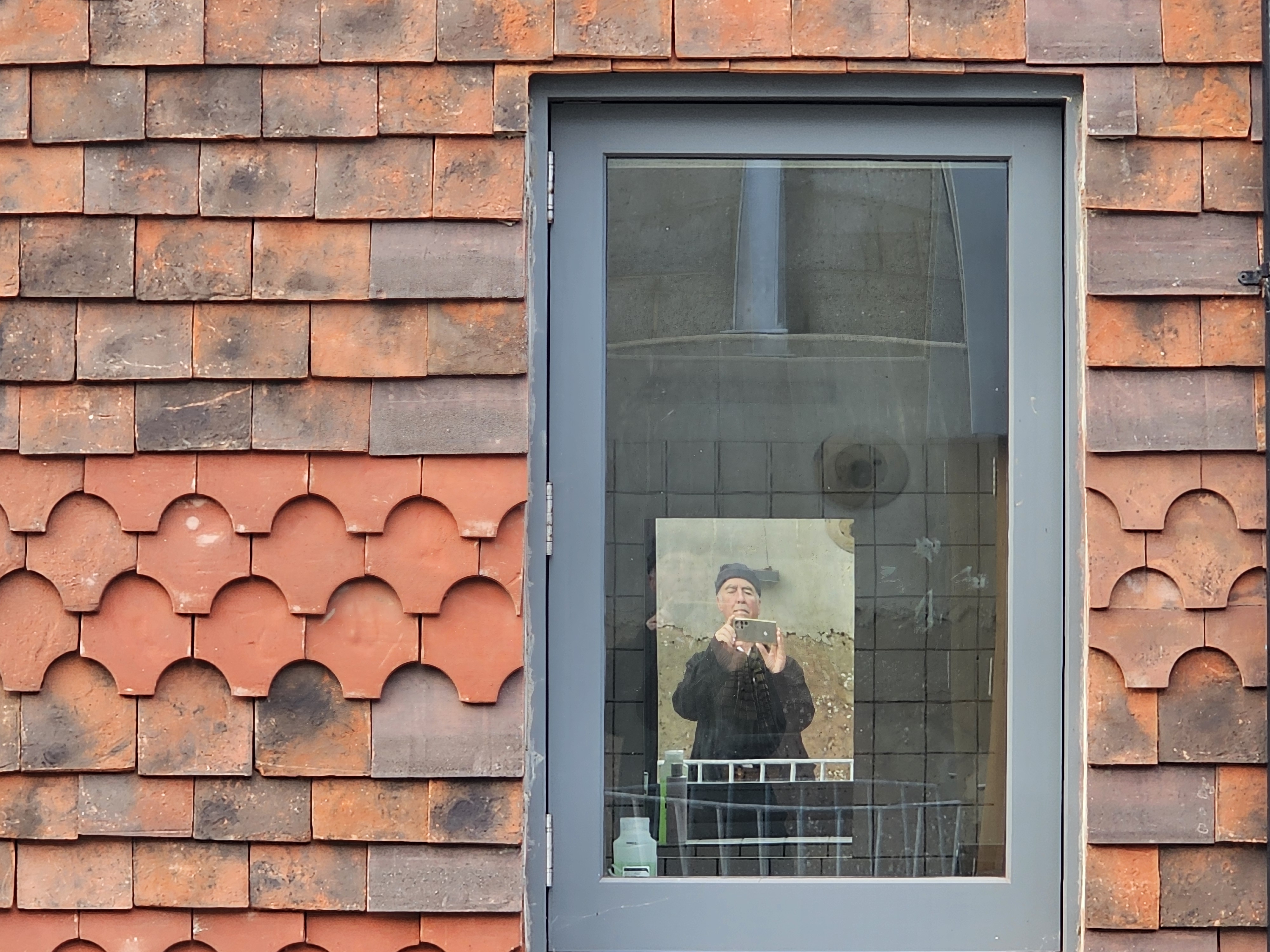
Today, in the brilliant sun, I became interested in the quality and range of the original garden statuary. I’ve found it hard to find out about them. Caius Gabriel Cibber was paid to supply Flora, Diana, Venus and other classical subjects between 1687 and 1690 and an otherwise unknown sculptor, Augustine Harris, was paid £44 18s. 6d. in 1688 for seven statues. But some look later. They presumably provided ornament and diversion to the original formal gardens, mostly as copies of famous antique sculptures (see Haskell and Penny). Any further information and identification would be gratefully received:-
Category Archives: Uncategorized
Michael Craig-Martin (2)
The first talk this morning was Michael Craig-Martin talking about his long career as an artist: starting at Yale where Josef Albers was a dominant influence with the teaching which led to The Interaction of Color; his first teaching job at the Bath Academy of Art, where he was hired in 1966 by Clifford Ellis who had established the school on the lines of the Bauhaus (he started teaching on the same day as Tom Phillips); how small the art world was in those days and how centred on the art schools; how he was taken up by the Rowan Gallery, which was run by Alex Gregory-Hood, an army officer; the success of An Oak Tree, an ultra-minimalist work which was bought by the National Gallery of Australia; and how he turned to the representation of everyday objects and colour in the late 1970s. There was almost no reference to his importance as a teacher, only to his current international success, in Bregenz, Shanghai and Chatsworth.
Chatsworth (4)
The first talk of the morning was the Duke of Devonshire talking about the evolution of his taste and what he is doing in terms of the acquisition of contemporary art at Chatsworth. He gave a robust description of his interest in contemporary art, influenced by his father’s decision to commission a portrait of his wife by Lucian Freud in 1958 and they way they ignored the criticism of their friends and by his parents-in-law who lived in a flat designed by Chermayeff in Chelsea. Then as a student he discovered contemporary work in Kasmin’s Gallery, but now contecentrates more on furniture and ceramics. I found it intriguing hearing a description of the difference in attitude between his father (and his generation) who concentrated on the task of preservation and protection after the depredations of the war and the current Duke’s generation which is as interested in making its own contribution through a process of organic change.
Chatsworth (3)
I slept as near as could be to the Sabine Room, one of the state rooms on the third floor on the west front, which was decorated not by Verrio and Laguerre, who had been employed in the previous phases of construction, but by James Thornhill. Thornhill was unusual at this period in being English, born to a Dorset gentry family in 1675, apprenticed to Thomas Highmore, and completing his apprenticeship in 1696. This is one of the grandest of his decorative schemes, painted with much more flair and vigour than I would have expected from him, and depicting the Rape of the Sabine Women. It was done in 1706, just before he was commissioned to paint the hall at Greenwich Hospital, and before the death of the first Duke.
Hannah Rothschild (2)
In the first session of Art Out Loud Hannah Rothschild talked about the intellectual origins of her novel The Improbability of Love: her early experience of museums and galleries, being taught by Francis Haskell, touring the art galleries of Europe with her father and her interest in provenance. But most of the discussion was about the different ways that people experience pictures in museums and galleries and, most especially, the National Gallery. Is it because they are moved by the biblical narrative ? Unlikely. Is it about the quest for authenticity in a digital world ? Is it because visitors relate emotionally to what is going on in the picture ? I was reminded of an experiment at the time of Rembrandt’s 400th anniversary when visitors were asked to describe their experience of the paintings and how varied – and unpredictable – the responses were.
Chatsworth (2)
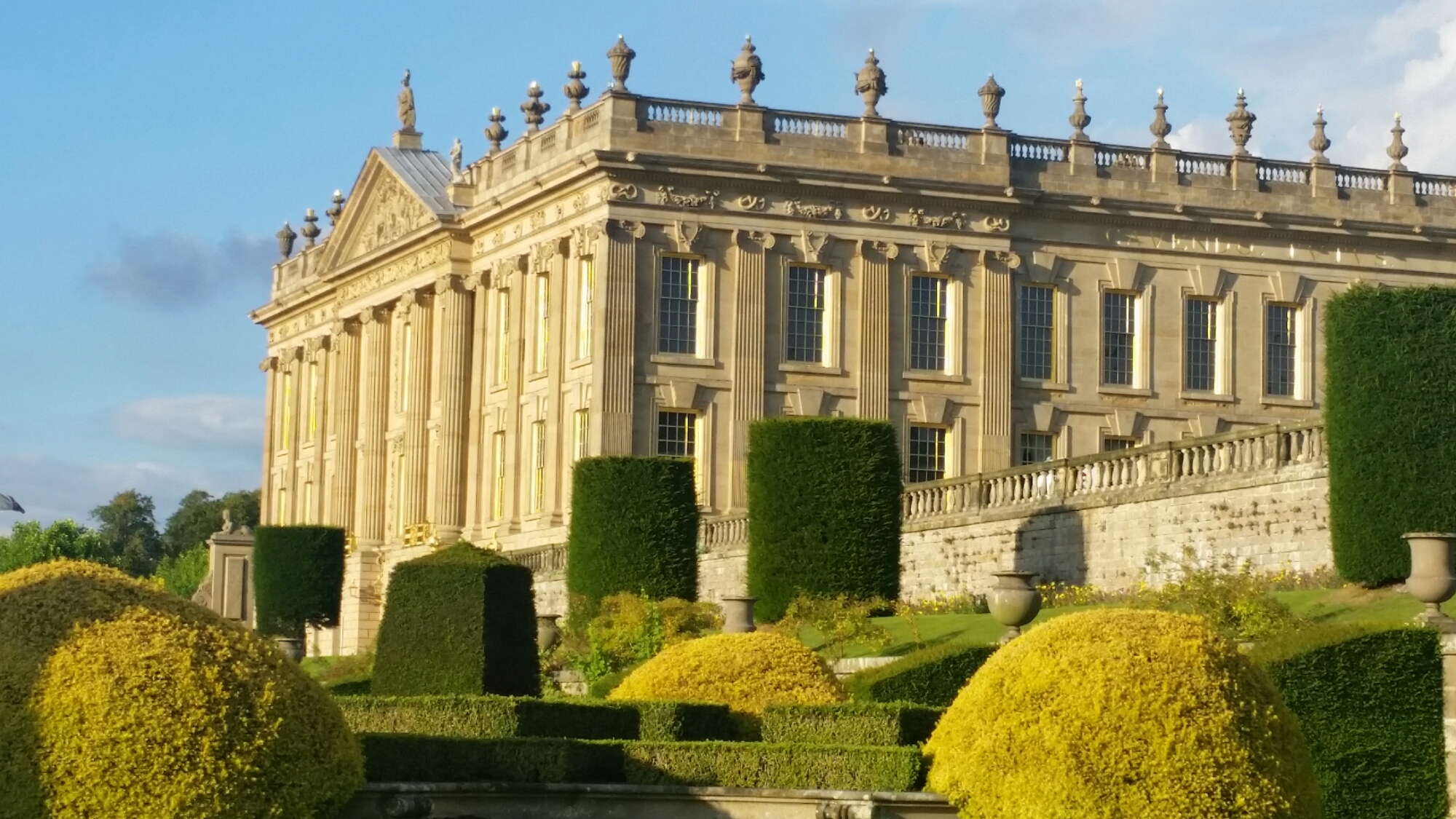
One of the pleasures of attending the Chatsworth Arts Festival, Art Out Loud, is the opportunity to explore the grounds in between sessions. I have never really had a chance to appreciate the great West Front, which one sees from across the river and was designed post-Talman, possibly by Archer, or even the first Duke himself:-
Chantal Joffe/Ishbel Myerscough
I was loitering on the ground floor of the National Portrait Gallery waiting for the doors of the National Gallery to open when I discovered a display on the ground floor devoted to work inspired by the long-standing friendship between Ishbel Myerscough and Chantal Joffe. I hadn’t known that they knew one another or that they were at Glasgow School of Art together. I found it oddly powerful to see the way the work of two very different artists interrelates, each one painting themselves alone and together, with children and from behind, totally different in technique, but touching in the way they depict themselves.
Ai Weiwei (8)
This may be my last post about Ai Weiwei, because, after a very full-on couple of days, the exhibition is now open to Friends for a few days before opening to the public on Saturday. It has been fascinating watching someone of such international celebrity remain so calm and unexpectedly low key, pleased mainly to be free and with his son. I finally succumbed to the universal urge to photograph him when he met Edmund de Waal. There was an encounter between two people with a particular interest in the craft of making:-
Ai Weiwei (7)
Now that the exhibition is installed, it is possible to get a sense of the full scope of its ambition before the crowds descend. It’s on a grand scale, as Sidney Smirke’s galleries both allow and encourage, each space discreet, but flowing fluidly into the next. The grandest of the galleries is devoted to an arrangement of metal bars in a wave, symbolising the lost lives of children in the 2008 earthquake in Sichuan owing to poor building construction. 96 tons:-
Ai Weiwei (6)
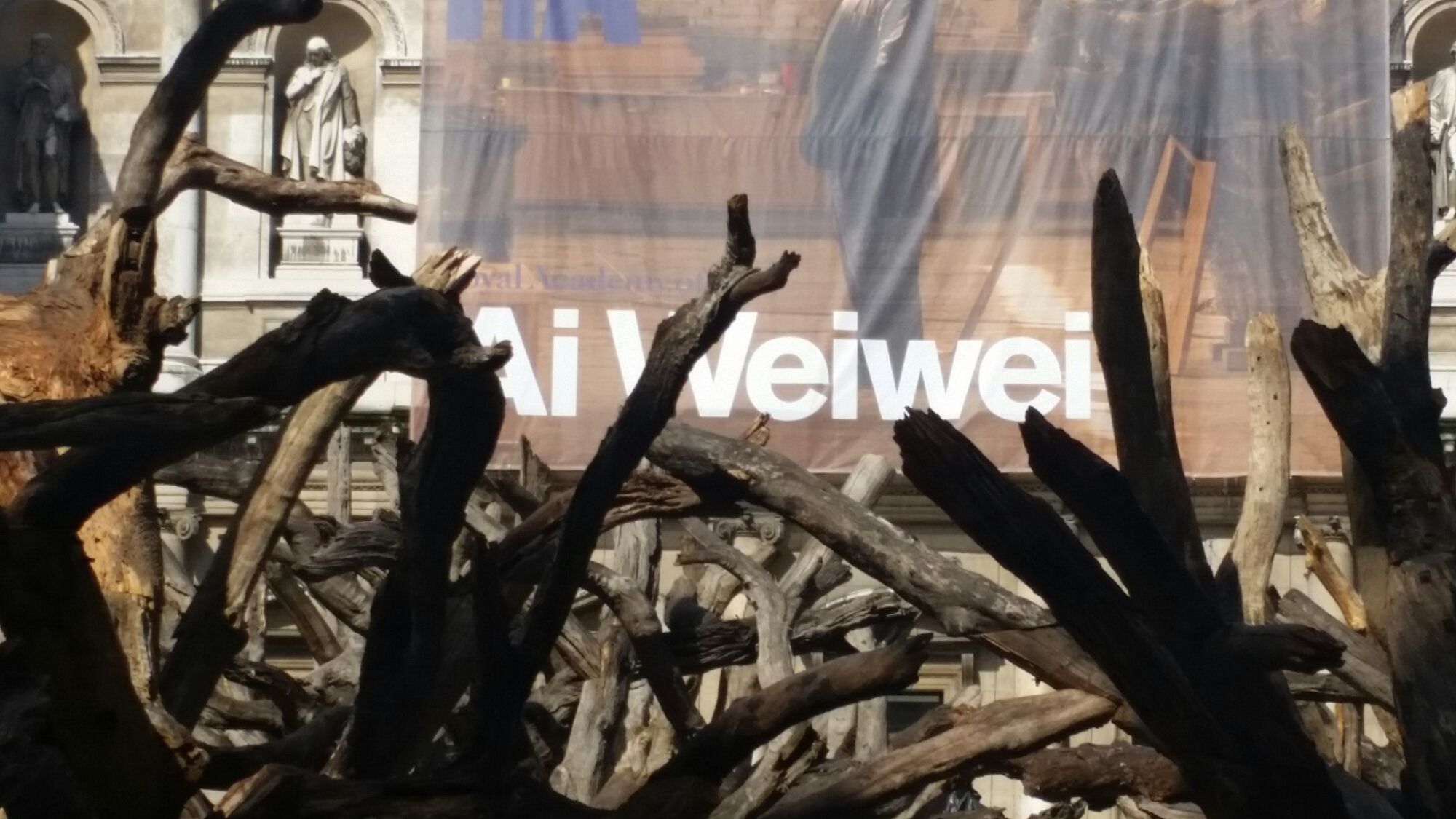
Trees are up in the courtyard, thanks to the contributions of more than 1,000 people to our Kickstarter campaign. The paraphernalia of installation has been removed and the surrounding barricades, but not the old black armchair which this morning looked like a piece of detritus, but turns out to be carved in marble and based on Ai Weiwei’s father’s armchair:-


You must be logged in to post a comment.