
I went into our exhibition first thing this morning to see how it looks and how those who have been installing it have fared over what has obviously been a long weekend. I found the exhibition hard to judge last week because the process of installation has been so long and complicated with our own art handlers supplemented by others from the studio. It’s nearly there, just waiting for the finishing touches and probably work on the lighting. I like seeing exhibitions going up and how they come together. This exhibition has, of course, been conceived and planned remotely which makes it all the more remarkable.
Category Archives: Uncategorized
Martinsell
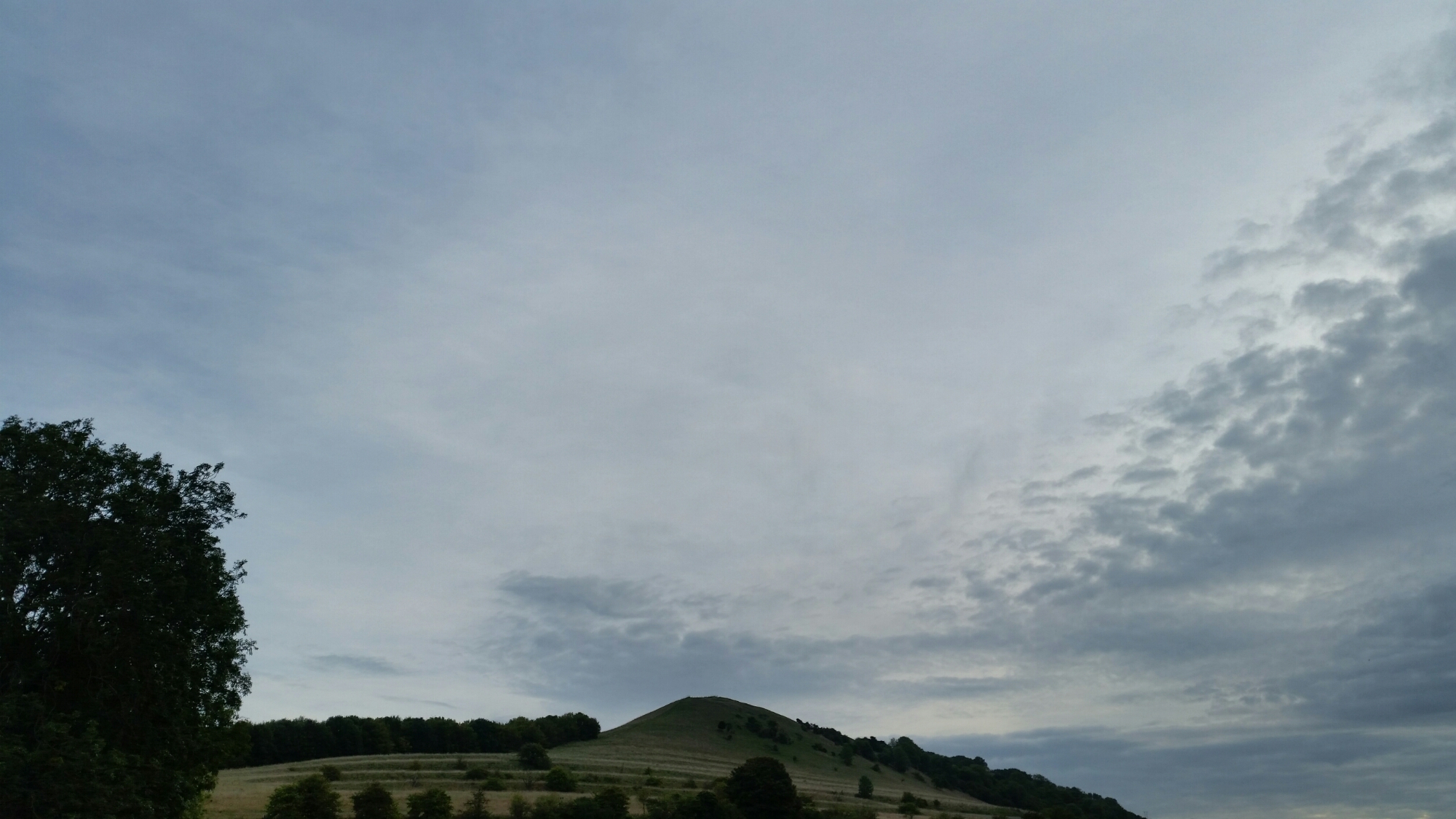
I woke up early in order to be able to climb Martinsell, one of the neolithic promontories on the southern edge of the Marlborough Downs. I was taught to revere these hills by my mother who remembered them from her youth when her brother was at school and she must have accompanied him on botanical expeditions as she was able to locate the orchids on Milk Hill forty years afterwards.
This is Giant’s Grave:-
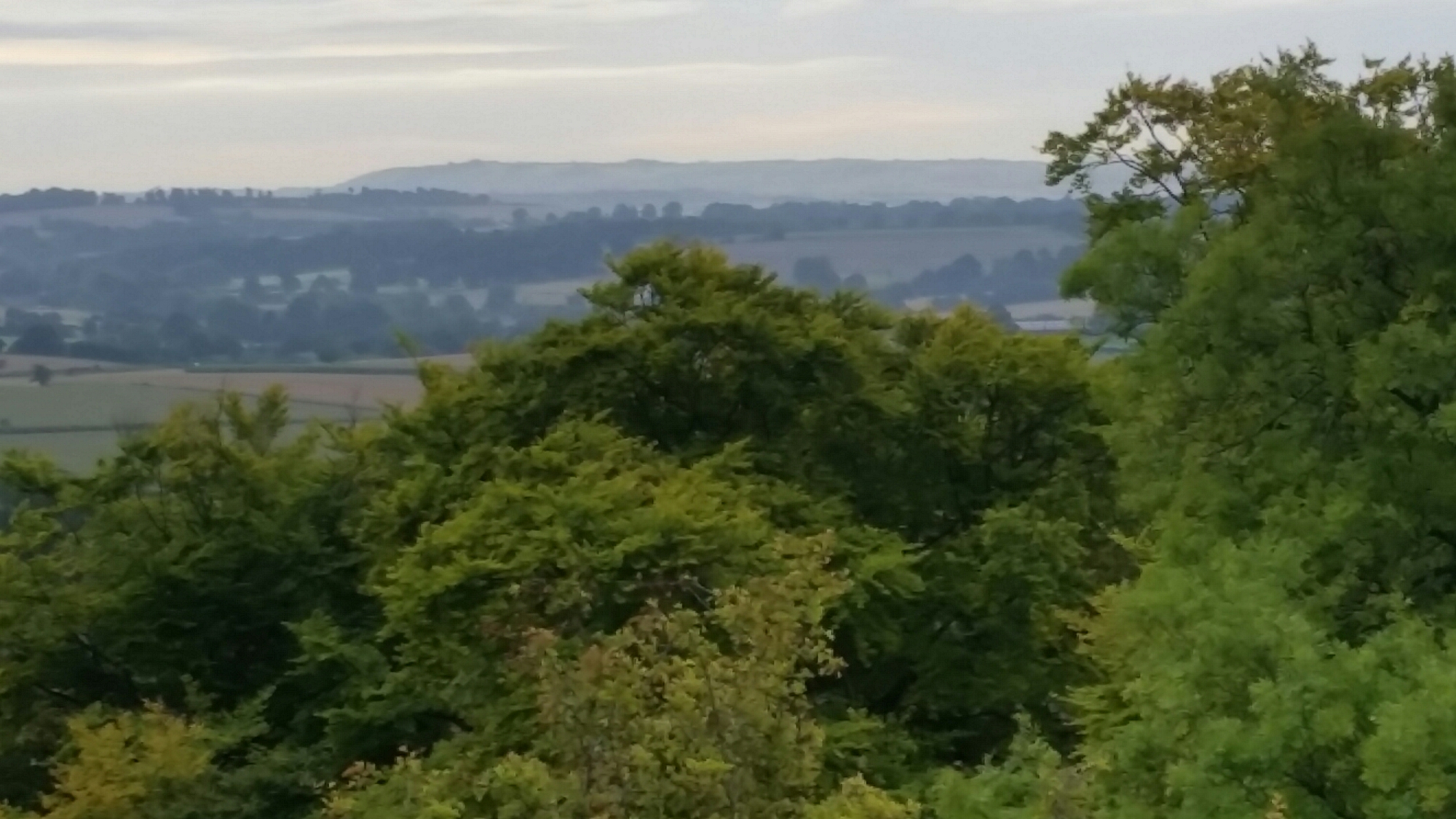
The view eastwards towards Burghclere:-
The Gardens at Oare (3)
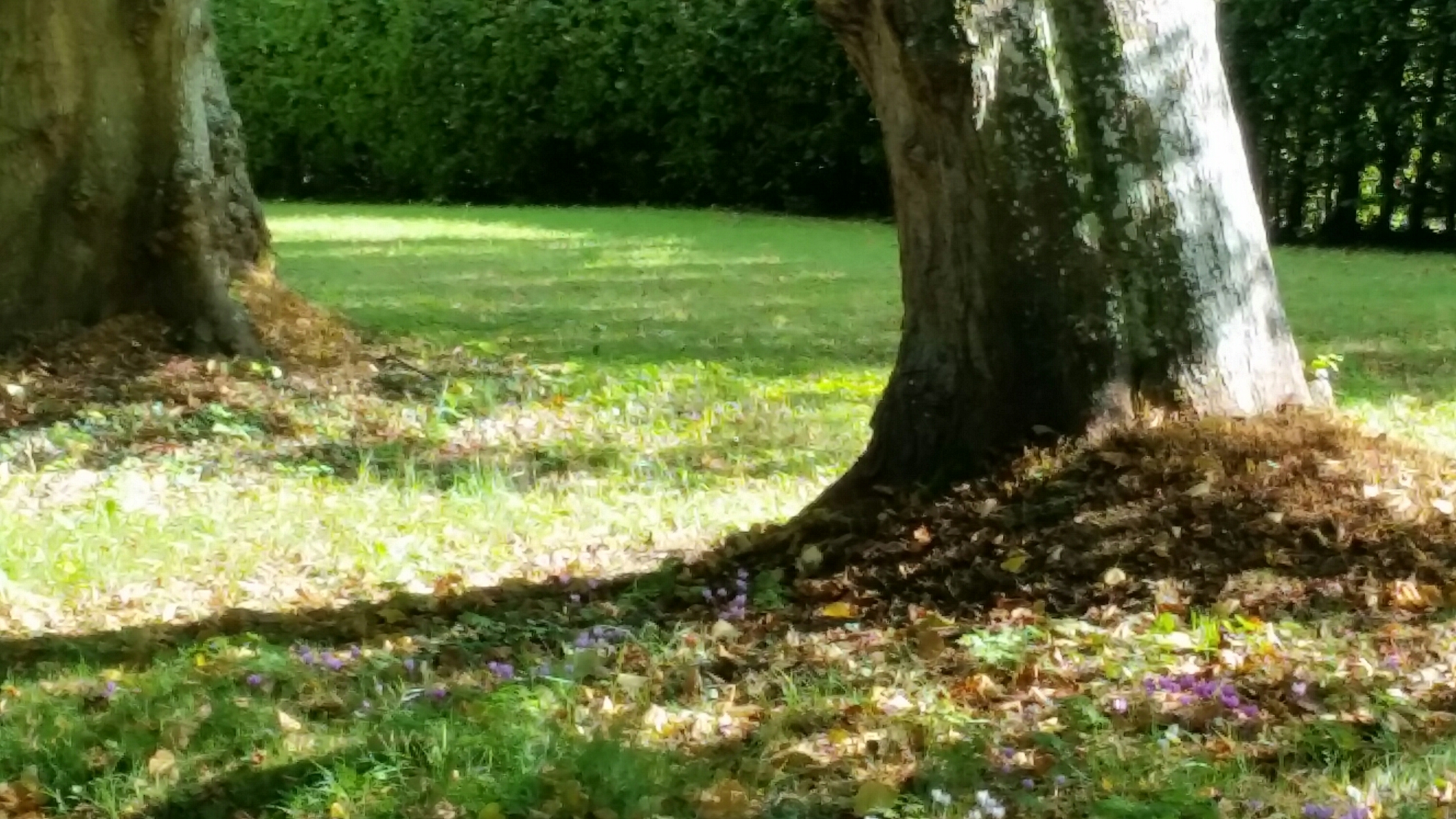
We had our annual visit to Wiltshire to the gardens at Oare, where the trees are turning to autumn and where there are exotic species collected by plantsmen.
The cyclamen was out in the avenue:-

Ai Weiwei (4)
We had the press conference this morning for our Ai Weiwei exhibition in which all of the world’s press, including the television stations, descended on the RA, as will probably be evident from the news programmes later today. What was interesting was the quality of the discussion and the fact that it was as much political and cultural as it was artistic. There was repeated questioning about the emotional impact of his incarceration and inability to travel and a dawning recognition of the significance of the fact that, after more than a hundred exhibitions which he has done internationally over the last four years, this is the first one that he has actually been able to see.
One Pancras Square
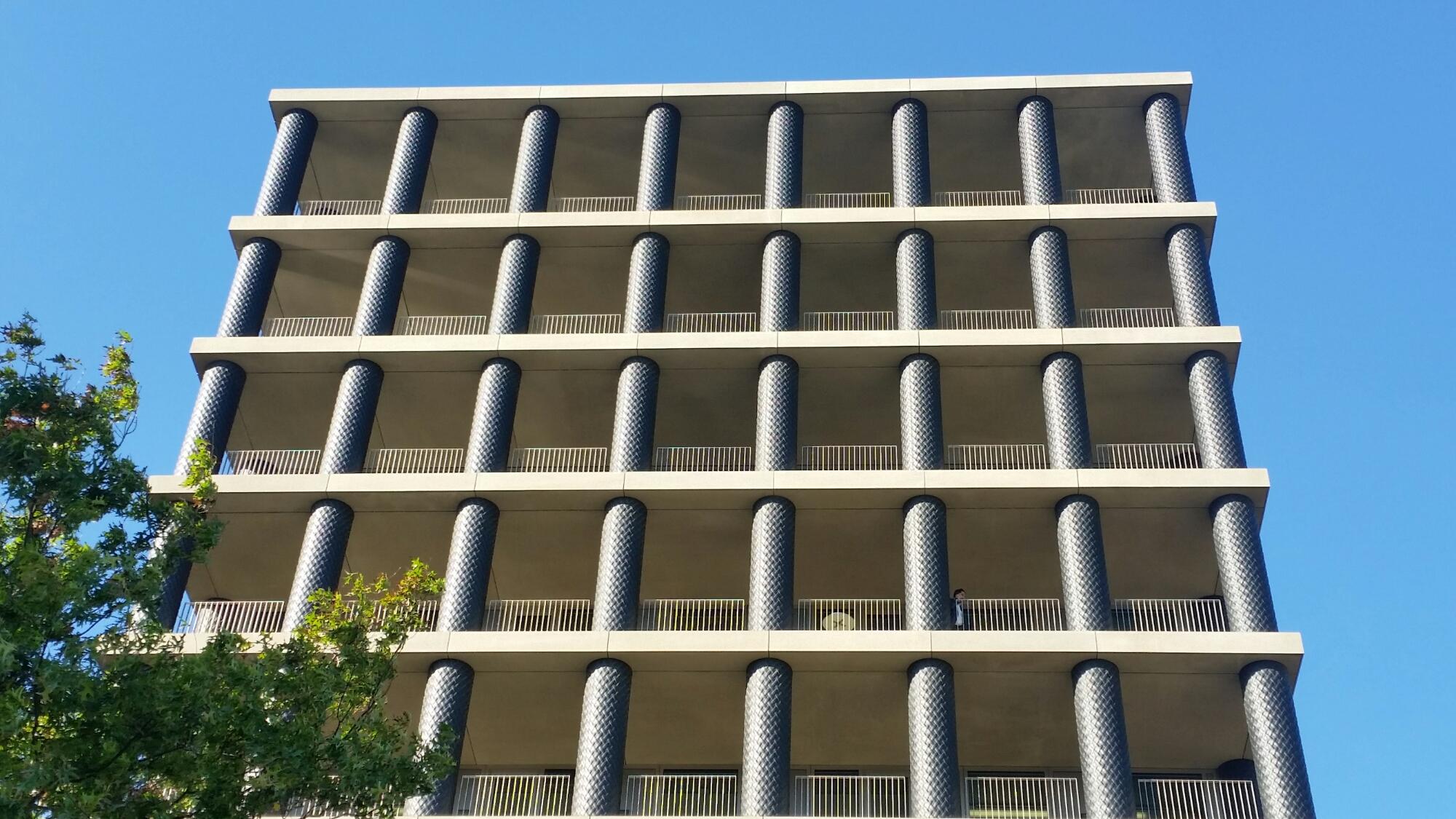
I have only recently realised that the very Aldo Rossi-like building which greets one’s arrival to the increasingly impressive set of developments by Argent north of King’s Cross is by David Chipperfield. With tubular cast iron columns, cast by the Hargreaves Foundry in Yorkshire, set out in a rigid rectilinear geometry, it could easily have come out of postwar Italy:-
Rodney Fitch
I went earlier this evening to a memorial event for Rodney Fitch at Central St. Martin’s. As often happens on such occasions, I learned much about him which I should have known, but didn’t: that he had himself been at the Central School of Arts and Crafts; had been a key person in the early history of the Conran empire as Managing Director of the Conran Design Group; and what an important person he was in the retail revolution – the transformation of the high street through better shops. I first met him in the early 1980s (I think when his company had just gone public) when he funded a studentship on the recently established V&A/RCA MA Course in the History of Design. His interest and emphasis was on the training of students with a good knowledge of the history of industrial and product design and he was then, and remained, passionately interested in the professionalisation of design education, not least through the University of the Arts.
Somerset House
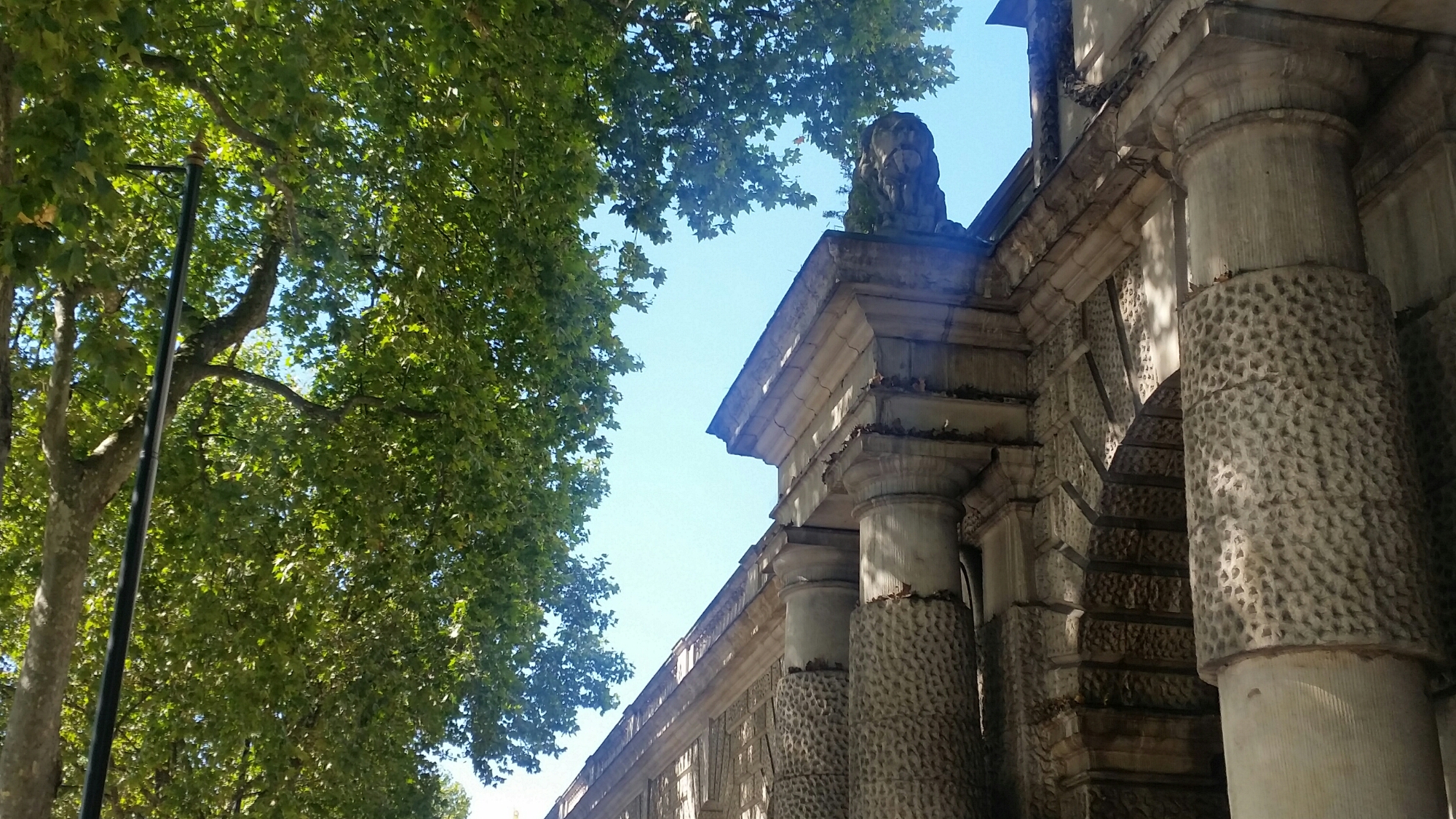
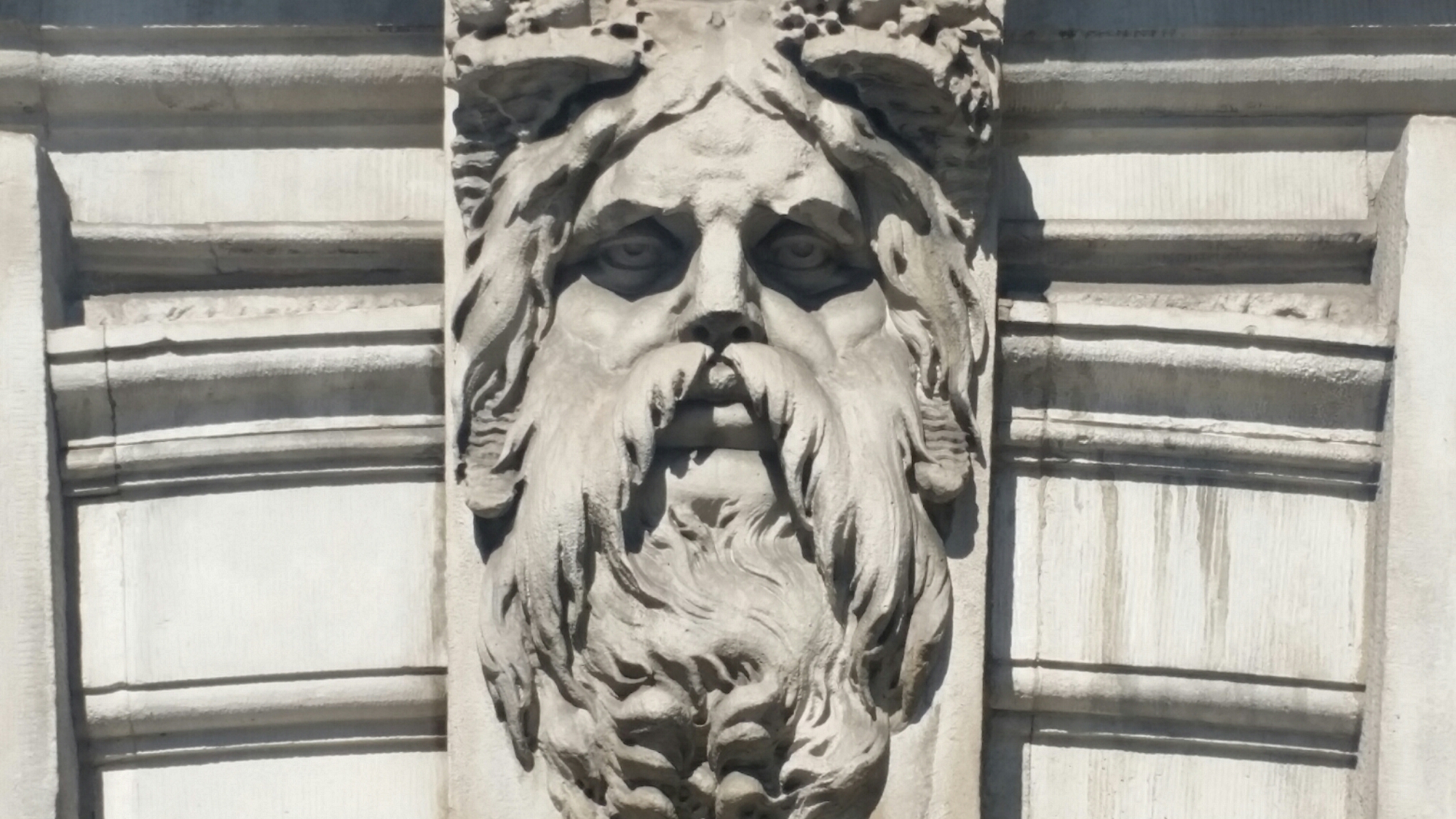
Lunch at Spring in the New Wing of Somerset House (the work of James Pennethorne, not Chambers) gave me a chance to admire some of the detailing of the stonework in the river entrance off Embankment and round the courtyard, which was the work of some of the sculptors of the early Royal Academy. The keystone over the entrance on the river front was by Joseph Wilton, a friend of Chambers and was probably to Chambers’s design. It depicts Ocean and was flanked the the English rivers, mostly carved by Wilton, but three by Carlini. The urns flanked by tritons are likewise by Wilton:-
Alderbrook
I went today with a group of patrons to Alderbrook Park in Surrey to see the Ai Weiwei pavilion which was originally designed as one of the Serpentine pavilions jointly with Herzog and de Meuron. Alderbrook is in deepest Surrey, in that area of the North Downs beloved of late nineteenth-century industrialists where Norman Shaw built a characteristically large, tile-hung, Tudor-style house for Pandeli Talli, a Greek merchant banker, MP and bachelor. It was bought by Albert van den Bergh, who had a margarine fortune, in 1936 and was demolished by his grandson in the late 1960s. The pavilion, largely made of cork, is buried half underground on the slope of the Downs.
Gordon Darling AC
I have been mourning the death of Gordon Darling, who, together with his wife Marilyn, was responsible for the establishment of the National Portrait Gallery in Canberra. I first met them in 1994 when they came to visit me at the National Portrait Gallery in London. A portrait gallery had been established in Canberra under the auspices of the National Library, but it wasn’t as they wanted it – too documentary and not at all celebratory. They looked to the NPG in London as the best model and – it being Australia and as they had the best possible contacts in government (Gordon had been chairman of the NGA) – it was set free under its own Board of Trustees not long afterwards. Gordon and Marilyn became, and have remained, great friends as passionate supporters not just of portraiture, but of Australian art and of the relationship between the British and Australian art worlds.
Maurice de Sausmarez
A request to borrow a work by Maurice de Sausmarez made me realise that my namesake – but not a blood relation – had been an ARA. I’ve always thought of him primarily as the author of Basic Design: the Dynamics of Visual Form, a key work in bringing the ideas of the Bauhaus to England, and, also, as the person who established the teaching of art in Leeds University before Quentin Bell. But I hadn’t realised that he had an affair with Bridget Riley in the 1950s, was a very capable portrait painter (see his painting of Bonamy Dobrée), and became an ARA in April 1964.


You must be logged in to post a comment.